‘Personalisation’ and choice
       in social care


   Professor Caroline Glendinning
    Social Policy Research Unit
         University of York
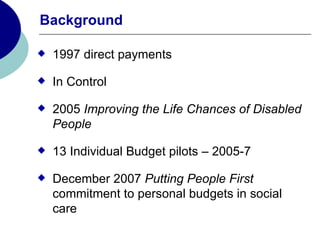
Background

   1997 direct payments

   In Control

   2005 Improving the Life Chances of Disabled
    People

   13 Individual Budget pilots – 2005-7

   December 2007 Putting People First
    commitment to personal budgets in social
    care
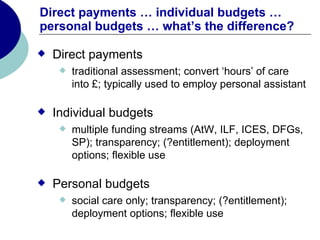
Direct payments … individual budgets …
personal budgets … what’s the difference?

   Direct payments
        traditional assessment; convert ‘hours’ of care
         into £; typically used to employ personal assistant

   Individual budgets
        multiple funding streams (AtW, ILF, ICES, DFGs,
         SP); transparency; (?entitlement); deployment
         options; flexible use

   Personal budgets
        social care only; transparency; (?entitlement);
         deployment options; flexible use
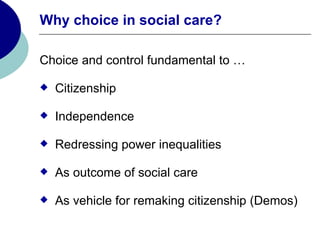
Why choice in social care?

Choice and control fundamental to …

   Citizenship

   Independence

   Redressing power inequalities

   As outcome of social care

   As vehicle for remaking citizenship (Demos)
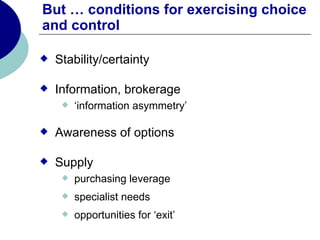
But … conditions for exercising choice
and control

   Stability/certainty

   Information, brokerage
        ‘information asymmetry’

   Awareness of options

   Supply
        purchasing leverage
        specialist needs
        opportunities for ‘exit’
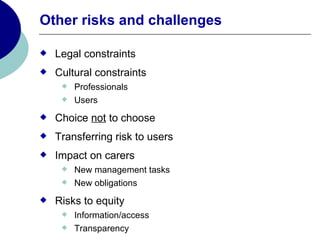
Other risks and challenges

   Legal constraints
   Cultural constraints
        Professionals
        Users
   Choice not to choose
   Transferring risk to users
   Impact on carers
        New management tasks
        New obligations
   Risks to equity
        Information/access
        Transparency
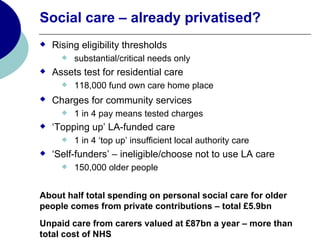
Social care – already privatised?
   Rising eligibility thresholds
         substantial/critical needs only
   Assets test for residential care
         118,000 fund own care home place
   Charges for community services
         1 in 4 pay means tested charges
   ‘Topping up’ LA-funded care
         1 in 4 ‘top up’ insufficient local authority care
   ‘Self-funders’ – ineligible/choose not to use LA care
         150,000 older people


About half total spending on personal social care for older
people comes from private contributions – total £5.9bn
Unpaid care from carers valued at £87bn a year – more than
total cost of NHS

Personalisation and Choice in Social Care

  • 1.
    ‘Personalisation’ and choice in social care Professor Caroline Glendinning Social Policy Research Unit University of York
  • 2.
    Background  1997 direct payments  In Control  2005 Improving the Life Chances of Disabled People  13 Individual Budget pilots – 2005-7  December 2007 Putting People First commitment to personal budgets in social care
  • 3.
    Direct payments …individual budgets … personal budgets … what’s the difference?  Direct payments  traditional assessment; convert ‘hours’ of care into £; typically used to employ personal assistant  Individual budgets  multiple funding streams (AtW, ILF, ICES, DFGs, SP); transparency; (?entitlement); deployment options; flexible use  Personal budgets  social care only; transparency; (?entitlement); deployment options; flexible use
  • 4.
    Why choice insocial care? Choice and control fundamental to …  Citizenship  Independence  Redressing power inequalities  As outcome of social care  As vehicle for remaking citizenship (Demos)
  • 5.
    But … conditionsfor exercising choice and control  Stability/certainty  Information, brokerage  ‘information asymmetry’  Awareness of options  Supply  purchasing leverage  specialist needs  opportunities for ‘exit’
  • 6.
    Other risks andchallenges  Legal constraints  Cultural constraints  Professionals  Users  Choice not to choose  Transferring risk to users  Impact on carers  New management tasks  New obligations  Risks to equity  Information/access  Transparency
  • 7.
    Social care –already privatised?  Rising eligibility thresholds  substantial/critical needs only  Assets test for residential care  118,000 fund own care home place  Charges for community services  1 in 4 pay means tested charges  ‘Topping up’ LA-funded care  1 in 4 ‘top up’ insufficient local authority care  ‘Self-funders’ – ineligible/choose not to use LA care  150,000 older people About half total spending on personal social care for older people comes from private contributions – total £5.9bn Unpaid care from carers valued at £87bn a year – more than total cost of NHS