Glass transition
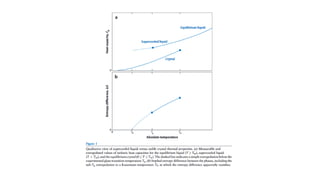
Glass transition is a phenomenon that occurs in amorphous
materials, such as polymers, glasses and some ceramic
materials, when they are cooled from a liquid or molten state.
It refers to the process in which a material changes from a
liquid or highly viscous state to a solid state. a solid or rigid
state, similar to glass .
Main features of the glass transition:
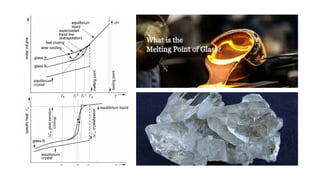
1.Not a true phase transition : Unlike a phase transition such as melting or solidification, where
there is an abrupt change of state, the glass transition is more gradual. There is no change in
the ordered atomic structure, since the material is amorphous.
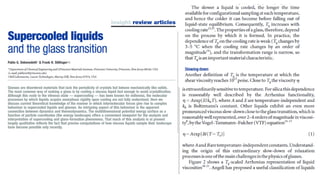
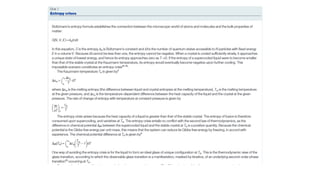
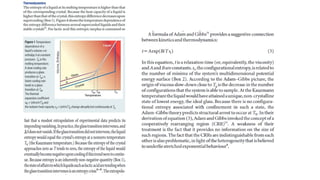
2.Glass transition temperature ( Tg ) : The temperature at which this phenomenon occurs is
called the glass transition temperature ( Tg ).
Below Tg , the material behaves like a brittle solid, while above Tg , it behaves like a liquid or a more flexible
solid.
3.Change in mechanical properties : When cooling below the Tg , the material experiences an
increase in its stiffness and brittleness. Whereas above the Tg , it becomes more flexible and
rubbery.
4.Reversible processes : The glass transition is a reversible process. If a glassy material is heated
above Tg , it returns to its more flexible state and if it is cooled again, it regains its rigidity.
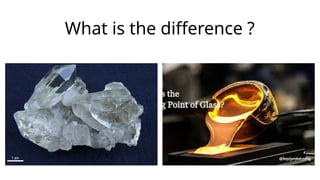
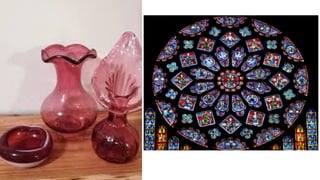
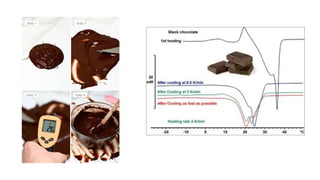
What is the difference ?
A good example is plastic polymers. When heated above their
Tg , they can be easily molded because they are flexible.
However, when cooled below that temperature, they harden
and become brittle.
It is an important concept in materials science and has many
applications in the engineering of polymers and other
amorphous materials.
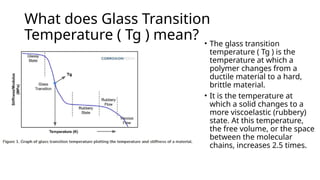
What does Glass Transition
Temperature ( Tg ) mean? • The glass transition
temperature ( Tg ) is the
temperature at which a
polymer changes from a
ductile material to a hard,
brittle material.
• It is the temperature at
which a solid changes to a
more viscoelastic (rubbery)
state. At this temperature,
the free volume, or the space
between the molecular
chains, increases 2.5 times.
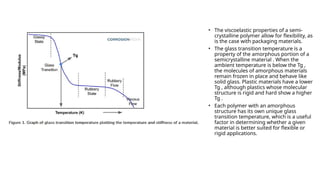
• The viscoelastic properties of a semi-
crystalline polymer allow for flexibility, as
is the case with packaging materials.
• The glass transition temperature is a
property of the amorphous portion of a
semicrystalline material . When the
ambient temperature is below the Tg ,
the molecules of amorphous materials
remain frozen in place and behave like
solid glass. Plastic materials have a lower
Tg , although plastics whose molecular
structure is rigid and hard show a higher
Tg .
• Each polymer with an amorphous
structure has its own unique glass
transition temperature, which is a useful
factor in determining whether a given
material is better suited for flexible or
rigid applications.
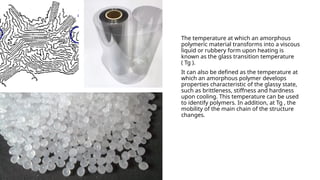
The temperature at which an amorphous
polymeric material transforms into a viscous
liquid or rubbery form upon heating is
known as the glass transition temperature
( Tg ).
It can also be defined as the temperature at
which an amorphous polymer develops
properties characteristic of the glassy state,
such as brittleness, stiffness and hardness
upon cooling. This temperature can be used
to identify polymers. In addition, at Tg , the
mobility of the main chain of the structure
changes.
At lower temperatures, there is still molecular motion, but
the backbone chain is frozen in place. The Tg of a given
plastic can be modified by incorporating a plasticizer, as is
the case with PVC. The Tg value depends strongly on the
mobility of the polymer chain, and for most synthetic
polymers lies between 170 °K and 500 °K (-103 °C and 227
°C).
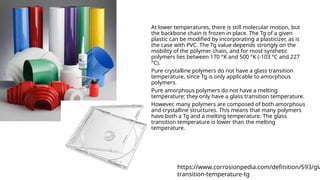
Pure crystalline polymers do not have a glass transition
temperature, since Tg is only applicable to amorphous
polymers.
Pure amorphous polymers do not have a melting
temperature; they only have a glass transition temperature.
However, many polymers are composed of both amorphous
and crystalline structures. This means that many polymers
have both a Tg and a melting temperature. The glass
transition temperature is lower than the melting
temperature.
https://www.corrosionpedia.com/definition/593/gla
transition-temperature-tg
The different glass transition temperatures of different
polymers make some polymers more suitable for certain
applications than others.
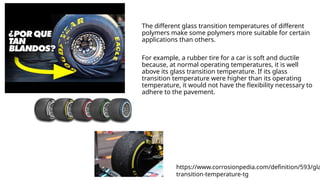
For example, a rubber tire for a car is soft and ductile
because, at normal operating temperatures, it is well
above its glass transition temperature. If its glass
transition temperature were higher than its operating
temperature, it would not have the flexibility necessary to
adhere to the pavement.
https://www.corrosionpedia.com/definition/593/gla
transition-temperature-tg
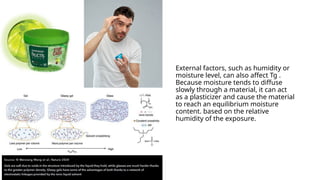
External factors, such as humidity or
moisture level, can also affect Tg .
Because moisture tends to diffuse
slowly through a material, it can act
as a plasticizer and cause the material
to reach an equilibrium moisture
content. based on the relative
humidity of the exposure.
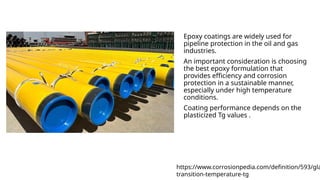
Epoxy coatings are widely used for
pipeline protection in the oil and gas
industries.
An important consideration is choosing
the best epoxy formulation that
provides efficiency and corrosion
protection in a sustainable manner,
especially under high temperature
conditions.
Coating performance depends on the
plasticized Tg values .
https://www.corrosionpedia.com/definition/593/gla
transition-temperature-tg
•What is glass transition temperature ( Tg ) and how does it affect polymers?
•How does Tg influence the flexibility or stiffness of a polymeric material? Give an example of
its application in daily life.
•What is the difference between amorphous and crystalline polymers in terms of their glass
transition and melting temperatures?
•How can external factors such as humidity influence the Tg of a material? What role does
humidity play in this process?

Glass transition temperature and main features.pptx

  • 1.
  • 2.
    Glass transition isa phenomenon that occurs in amorphous materials, such as polymers, glasses and some ceramic materials, when they are cooled from a liquid or molten state. It refers to the process in which a material changes from a liquid or highly viscous state to a solid state. a solid or rigid state, similar to glass .
  • 3.
    Main features ofthe glass transition: 1.Not a true phase transition : Unlike a phase transition such as melting or solidification, where there is an abrupt change of state, the glass transition is more gradual. There is no change in the ordered atomic structure, since the material is amorphous. 2.Glass transition temperature ( Tg ) : The temperature at which this phenomenon occurs is called the glass transition temperature ( Tg ). Below Tg , the material behaves like a brittle solid, while above Tg , it behaves like a liquid or a more flexible solid. 3.Change in mechanical properties : When cooling below the Tg , the material experiences an increase in its stiffness and brittleness. Whereas above the Tg , it becomes more flexible and rubbery. 4.Reversible processes : The glass transition is a reversible process. If a glassy material is heated above Tg , it returns to its more flexible state and if it is cooled again, it regains its rigidity.
  • 4.
    What is thedifference ?
  • 8.
    A good exampleis plastic polymers. When heated above their Tg , they can be easily molded because they are flexible. However, when cooled below that temperature, they harden and become brittle. It is an important concept in materials science and has many applications in the engineering of polymers and other amorphous materials.
  • 9.
    What does GlassTransition Temperature ( Tg ) mean? • The glass transition temperature ( Tg ) is the temperature at which a polymer changes from a ductile material to a hard, brittle material. • It is the temperature at which a solid changes to a more viscoelastic (rubbery) state. At this temperature, the free volume, or the space between the molecular chains, increases 2.5 times.
  • 10.
    • The viscoelasticproperties of a semi- crystalline polymer allow for flexibility, as is the case with packaging materials. • The glass transition temperature is a property of the amorphous portion of a semicrystalline material . When the ambient temperature is below the Tg , the molecules of amorphous materials remain frozen in place and behave like solid glass. Plastic materials have a lower Tg , although plastics whose molecular structure is rigid and hard show a higher Tg . • Each polymer with an amorphous structure has its own unique glass transition temperature, which is a useful factor in determining whether a given material is better suited for flexible or rigid applications.
  • 11.
    The temperature atwhich an amorphous polymeric material transforms into a viscous liquid or rubbery form upon heating is known as the glass transition temperature ( Tg ). It can also be defined as the temperature at which an amorphous polymer develops properties characteristic of the glassy state, such as brittleness, stiffness and hardness upon cooling. This temperature can be used to identify polymers. In addition, at Tg , the mobility of the main chain of the structure changes.
  • 12.
    At lower temperatures,there is still molecular motion, but the backbone chain is frozen in place. The Tg of a given plastic can be modified by incorporating a plasticizer, as is the case with PVC. The Tg value depends strongly on the mobility of the polymer chain, and for most synthetic polymers lies between 170 °K and 500 °K (-103 °C and 227 °C). Pure crystalline polymers do not have a glass transition temperature, since Tg is only applicable to amorphous polymers. Pure amorphous polymers do not have a melting temperature; they only have a glass transition temperature. However, many polymers are composed of both amorphous and crystalline structures. This means that many polymers have both a Tg and a melting temperature. The glass transition temperature is lower than the melting temperature. https://www.corrosionpedia.com/definition/593/gla transition-temperature-tg
  • 13.
    The different glasstransition temperatures of different polymers make some polymers more suitable for certain applications than others. For example, a rubber tire for a car is soft and ductile because, at normal operating temperatures, it is well above its glass transition temperature. If its glass transition temperature were higher than its operating temperature, it would not have the flexibility necessary to adhere to the pavement. https://www.corrosionpedia.com/definition/593/gla transition-temperature-tg
  • 14.
    External factors, suchas humidity or moisture level, can also affect Tg . Because moisture tends to diffuse slowly through a material, it can act as a plasticizer and cause the material to reach an equilibrium moisture content. based on the relative humidity of the exposure.
  • 15.
    Epoxy coatings arewidely used for pipeline protection in the oil and gas industries. An important consideration is choosing the best epoxy formulation that provides efficiency and corrosion protection in a sustainable manner, especially under high temperature conditions. Coating performance depends on the plasticized Tg values . https://www.corrosionpedia.com/definition/593/gla transition-temperature-tg
  • 22.
    •What is glasstransition temperature ( Tg ) and how does it affect polymers? •How does Tg influence the flexibility or stiffness of a polymeric material? Give an example of its application in daily life. •What is the difference between amorphous and crystalline polymers in terms of their glass transition and melting temperatures? •How can external factors such as humidity influence the Tg of a material? What role does humidity play in this process?