Getting Started With OpenStack
‫تربیت‬ ‫دانشگاه‬ ‫ابری‬ ‫رایانش‬ ‫درس‬ ‫کالسی‬ ‫ارائه‬‫مدرس‬
‫دهنده‬ ‫ارائه‬:
‫فتحی‬ ‫فرهاد‬
‫درس‬ ‫استاد‬:
‫نوگورانی‬ ‫دری‬ ‫صادق‬
‫دوم‬ ‫نیمسال‬97-1396
‫ارائه‬ ‫تاریخ‬:1397/01/28
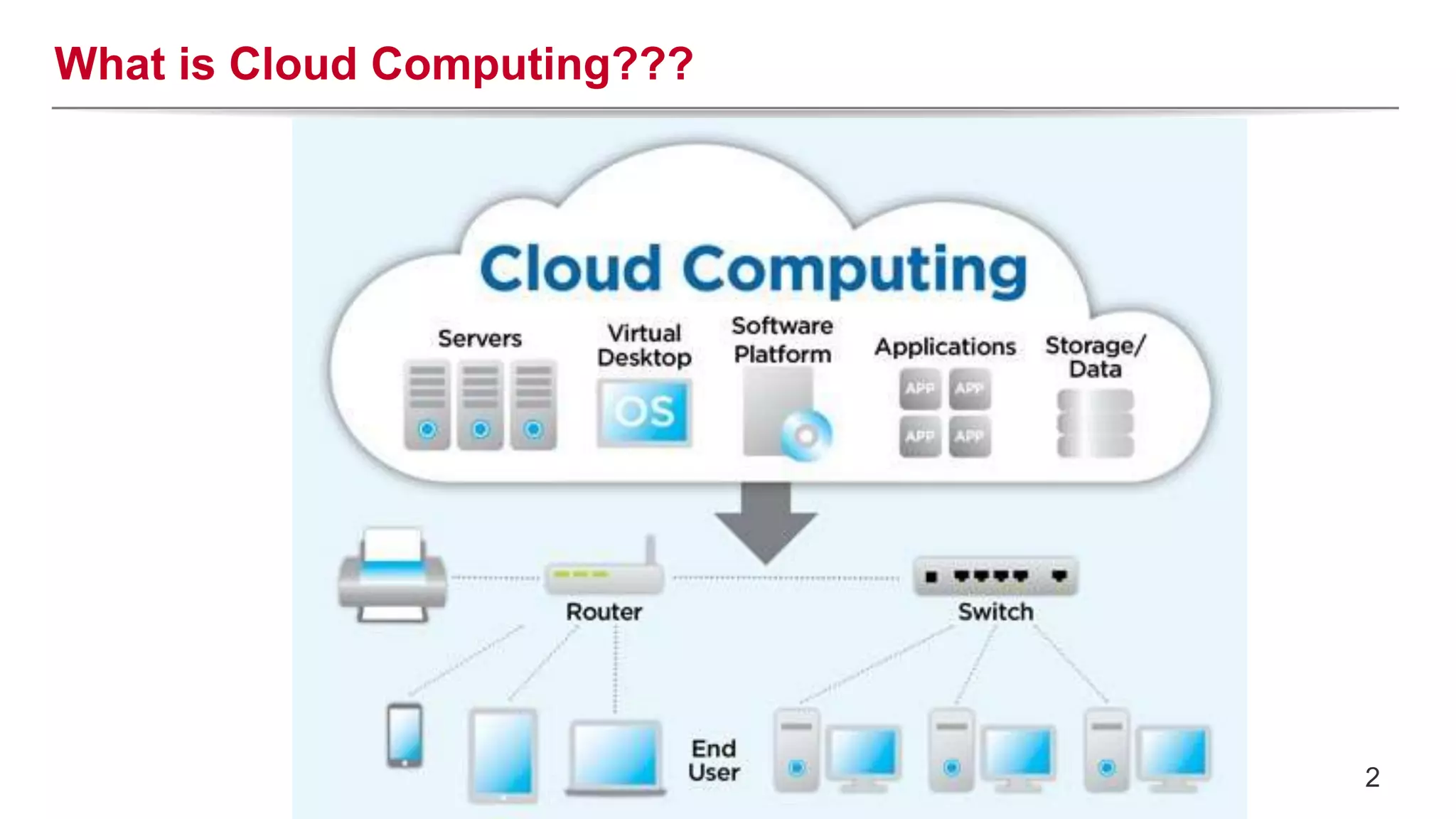
What is Cloud Computing???
2
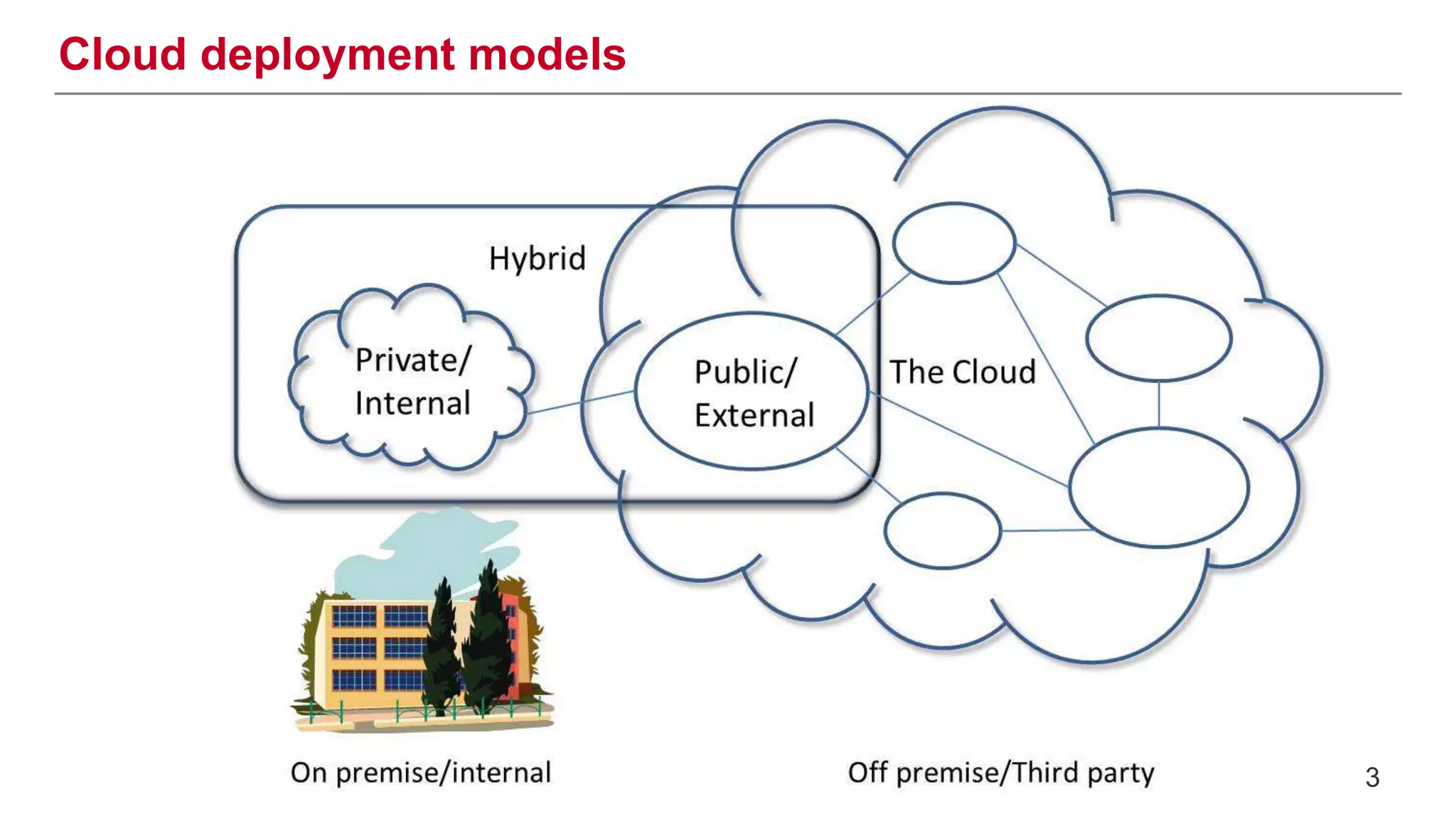
Cloud deployment models
3
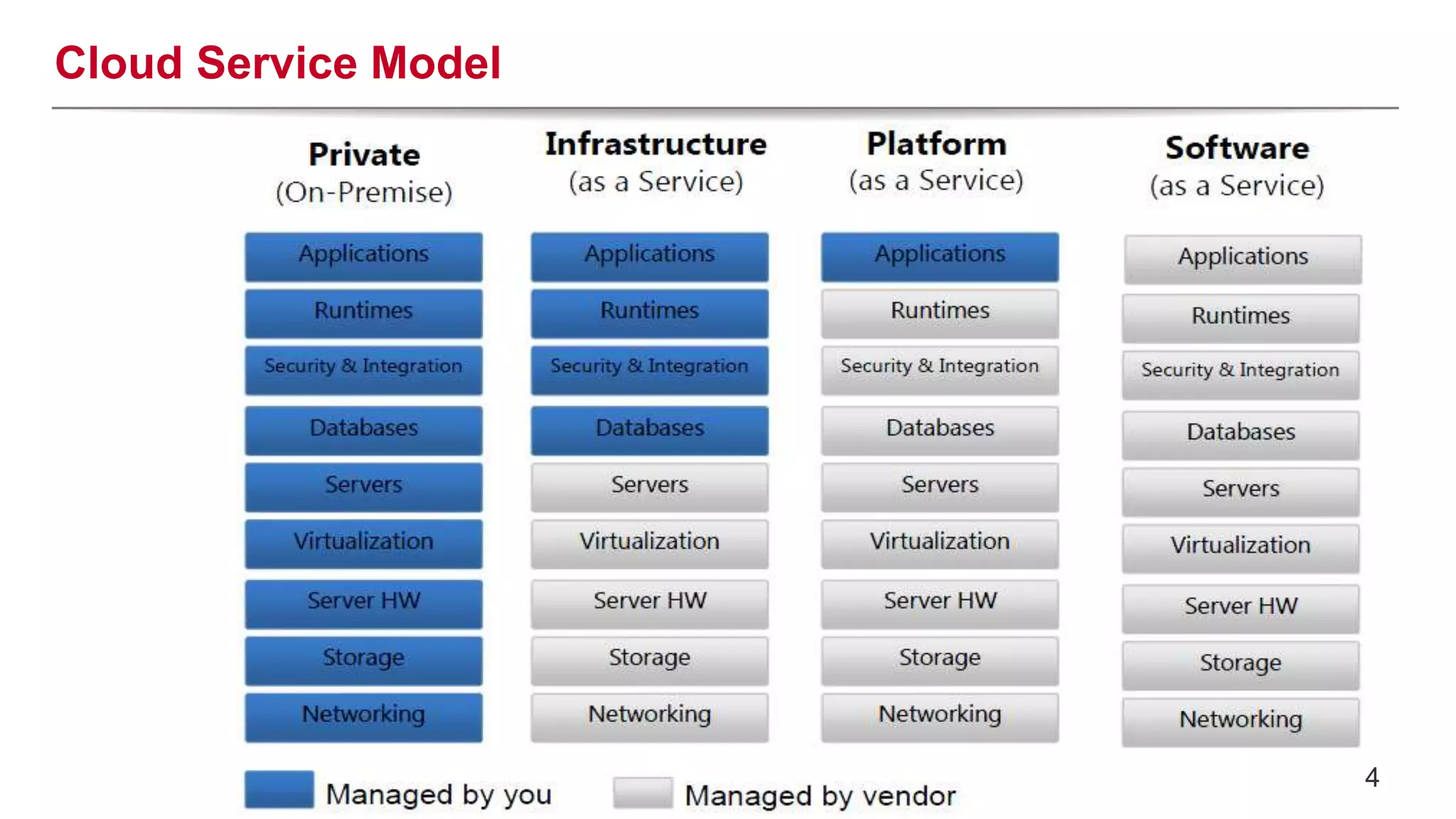
Cloud Service Model
4
VM Creation in VMware
5
6
What is OpenStack?
Introduction to OpenStack …
OpenStack is ...
Public or Private Cloud
7
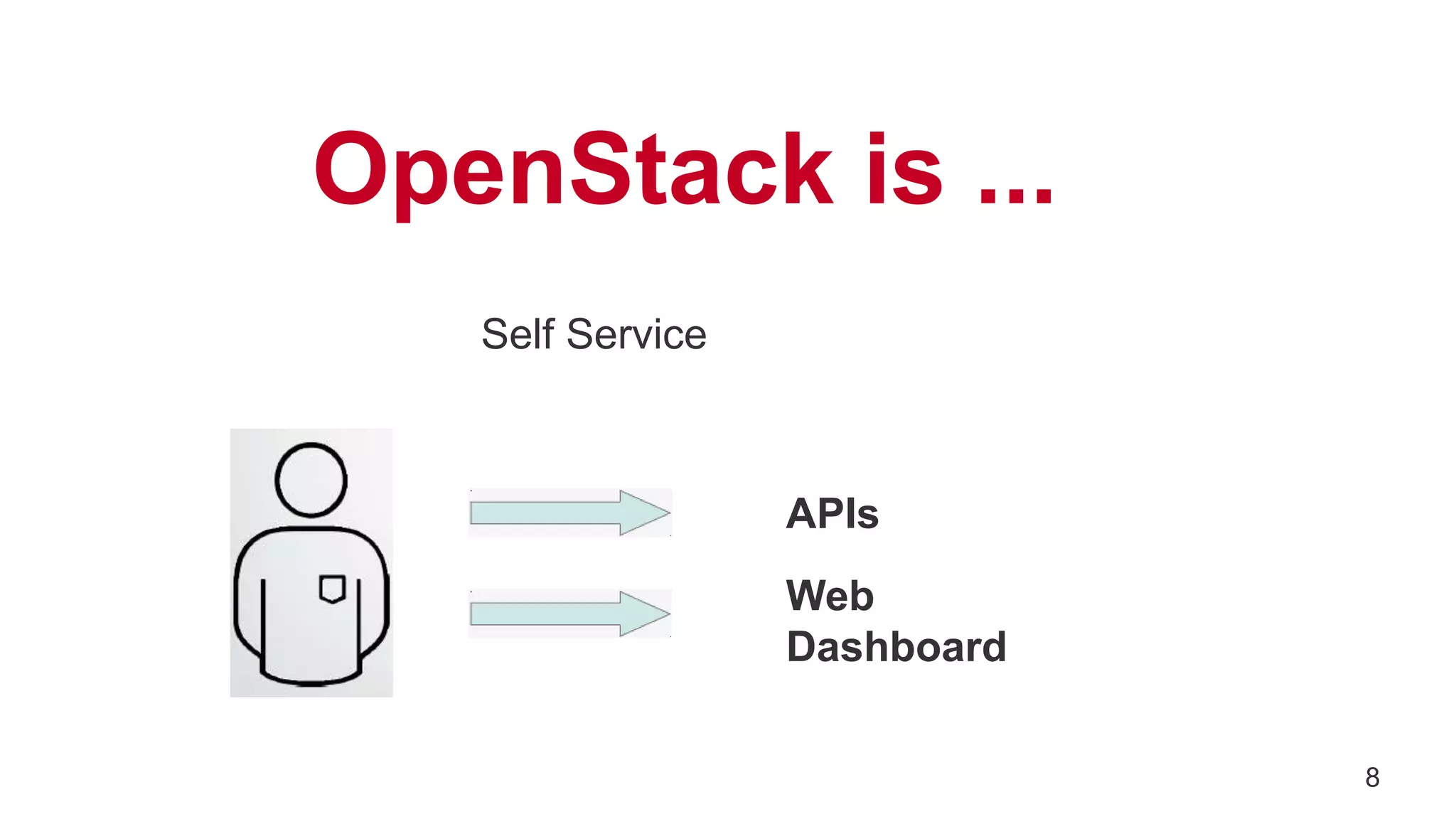
OpenStack is ...
Self Service
APIs
Web
Dashboard
8
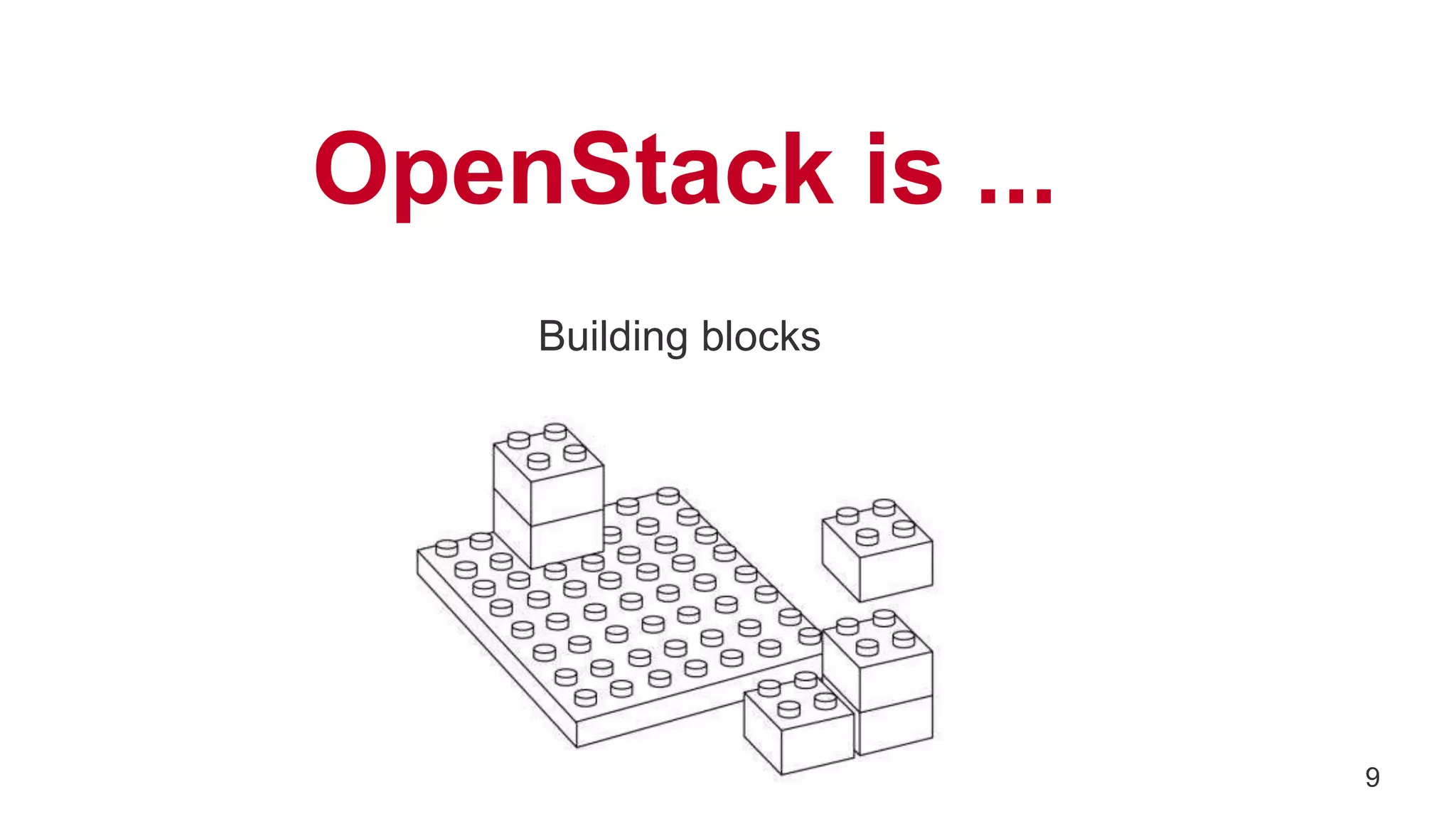
OpenStack is ...
Building blocks
9
OpenStack is ...
Massive Scale
10
OPENSTACK
COMMUNITY
In 4 years
The second largest after Linux
11
OPENSTACK COMMUNITY
1
OPENSTACK COMMUNITY
13
OPENSTACK COMMUNITY
14
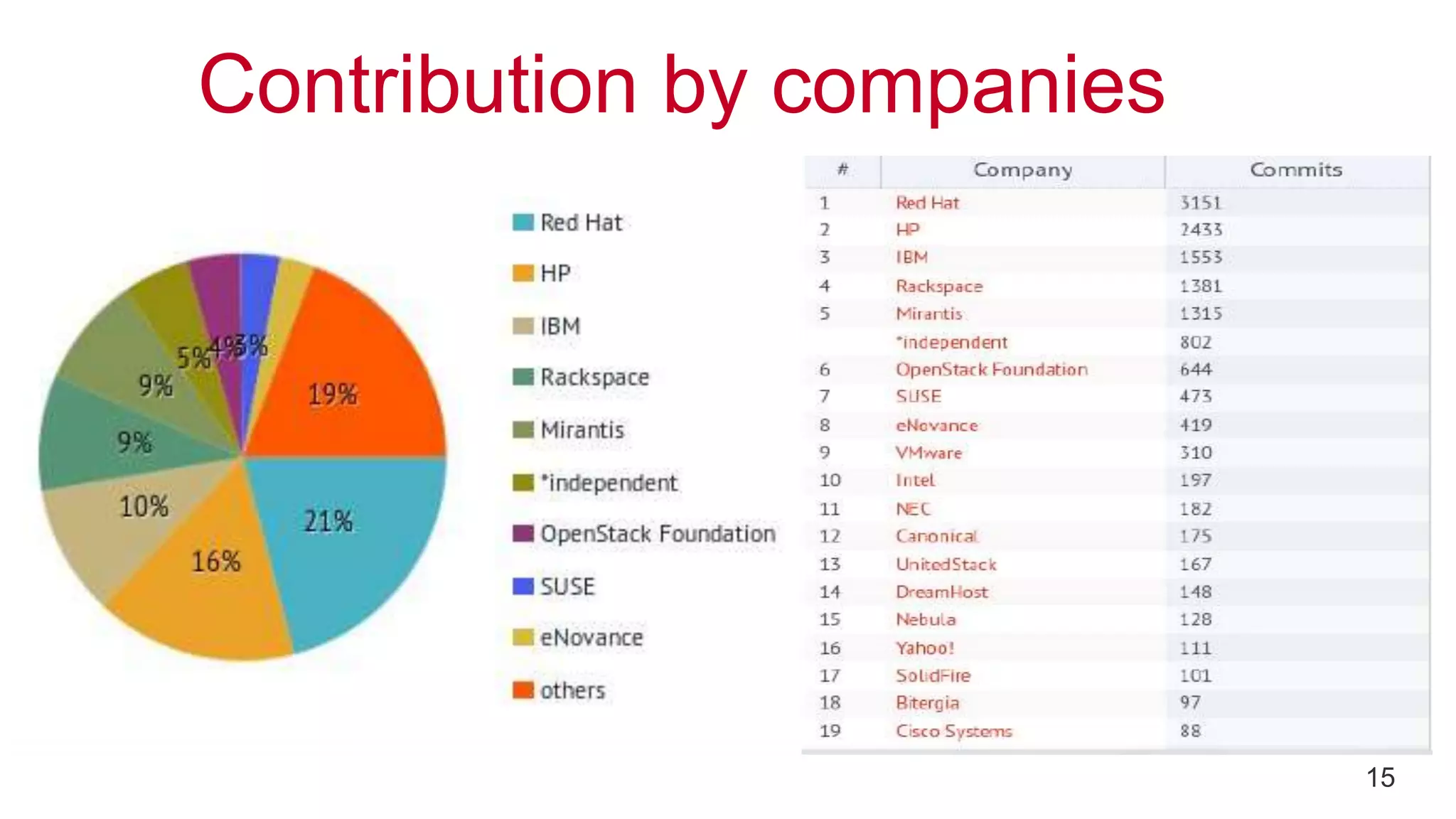
Contribution by companies
15
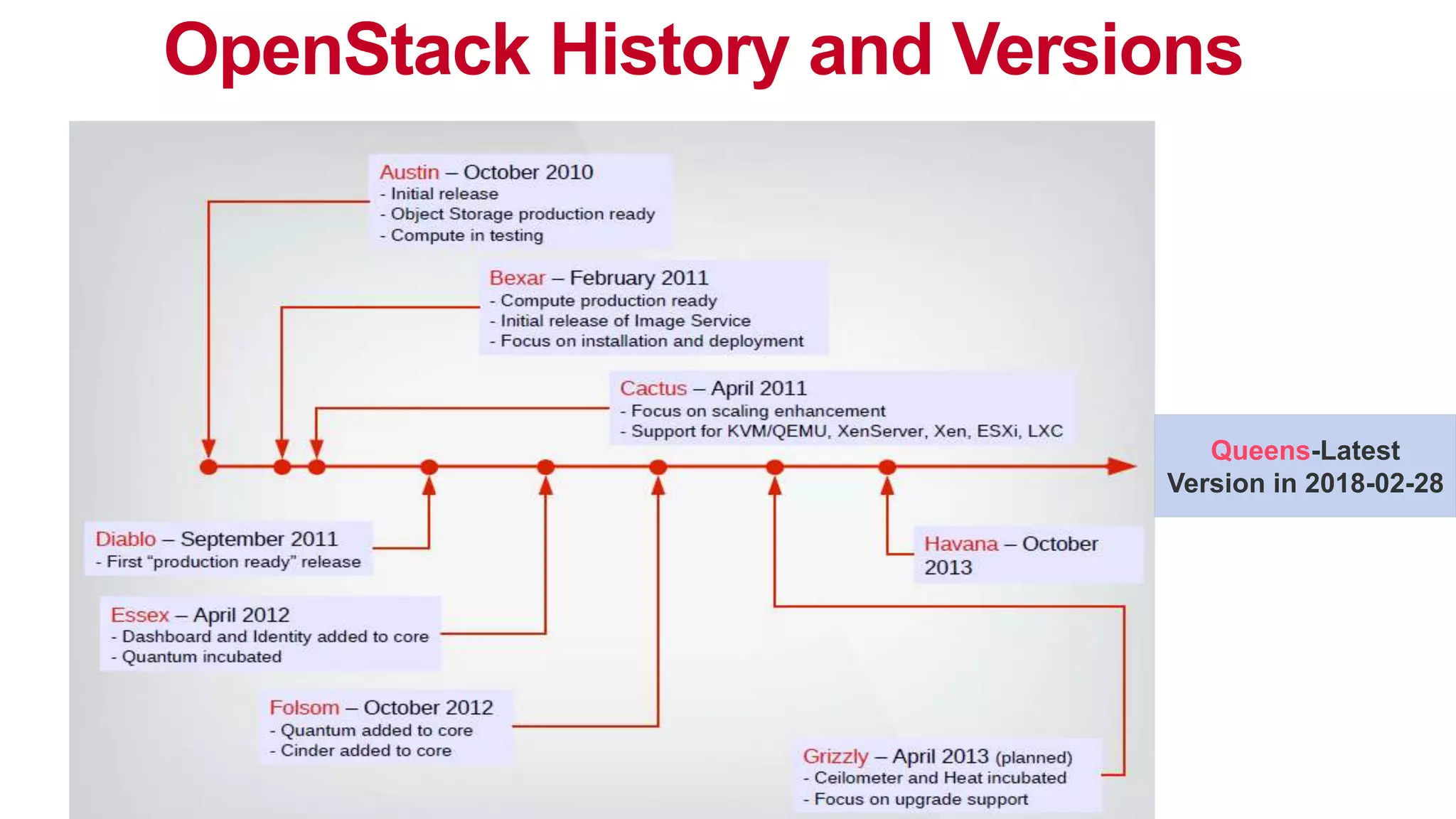
OpenStack History and Versions
Queens-Latest
Version in 2018-02-28
“I need a different VM
placement policy”
“I’ll build in a way to
share revenue with my
customer’s”
“I want to report on my
customers SLAs”
“My UI will be easier to use”
“I have a much better way to
snapshot machine images”
“I let my customers span
multiple clouds”
Why OpenStack???
17
1
What is OpenStack?
OpenStack Architecture …
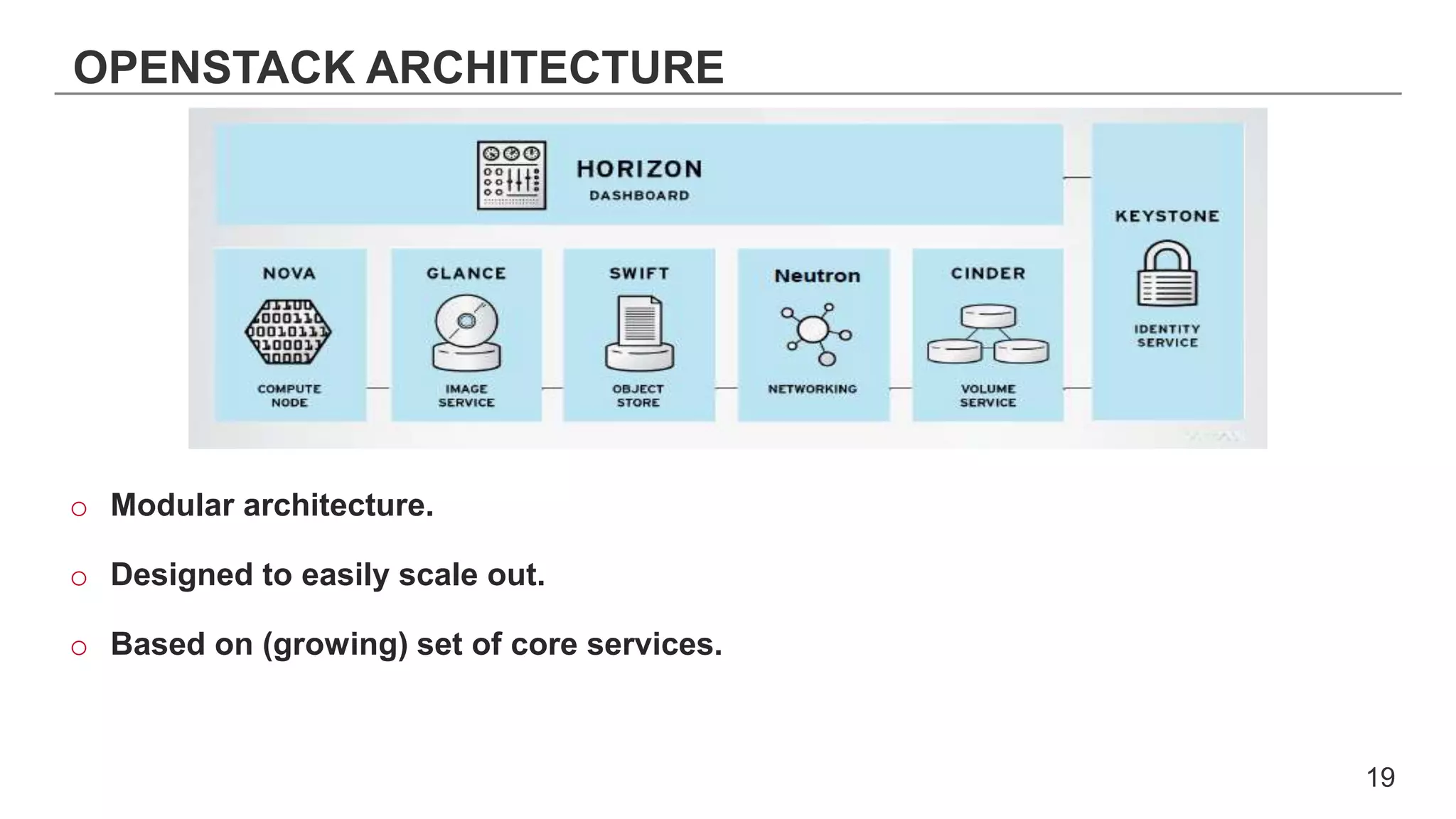
OPENSTACK ARCHITECTURE
o Modular architecture.
o Designed to easily scale out.
o Based on (growing) set of core services.
19
OPENSTACK ARCHITECTURE
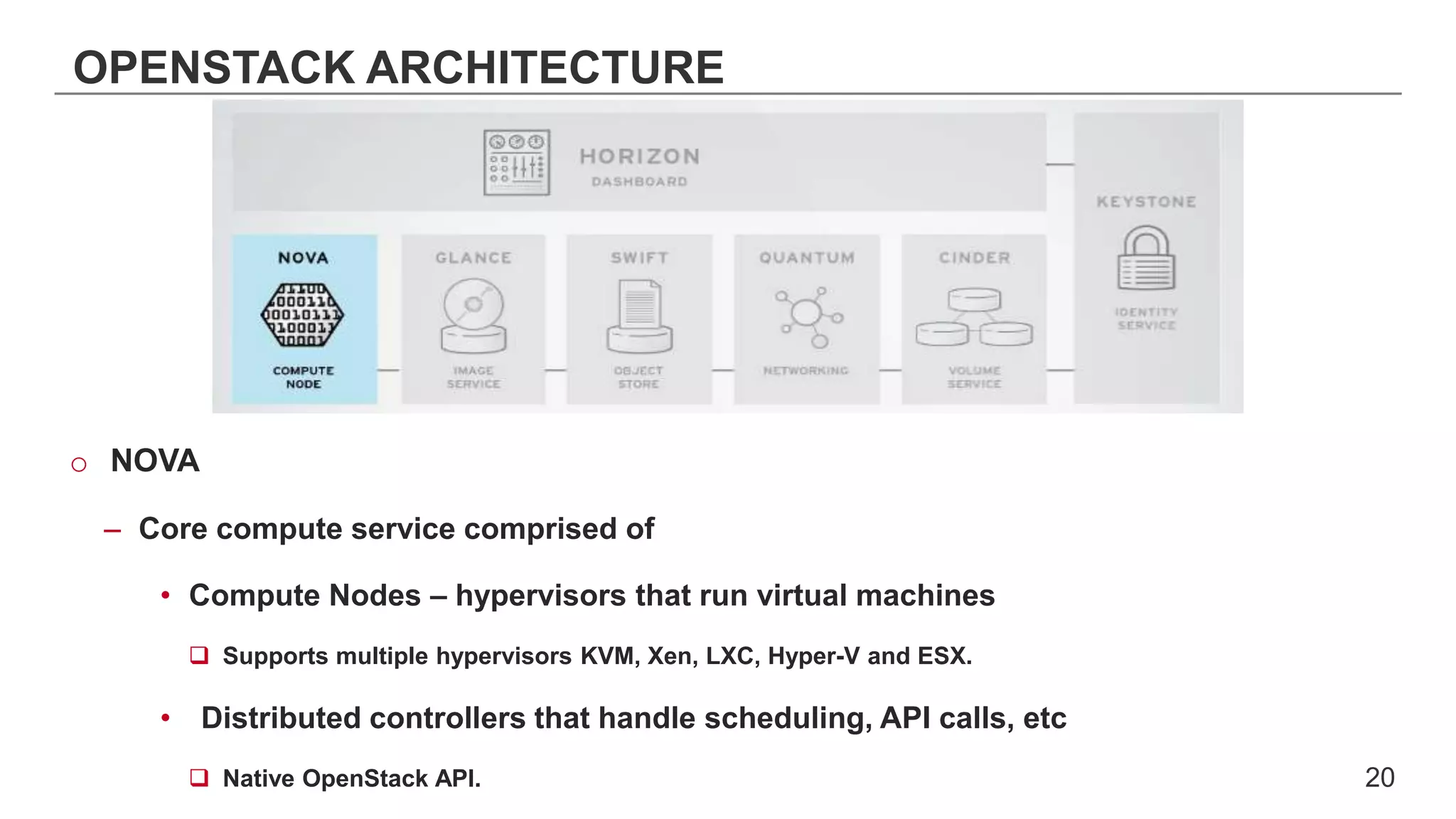
o NOVA
– Core compute service comprised of
• Compute Nodes – hypervisors that run virtual machines
 Supports multiple hypervisors KVM, Xen, LXC, Hyper-V and ESX.
• Distributed controllers that handle scheduling, API calls, etc
 Native OpenStack API. 20
OPENSTACK ARCHITECTURE
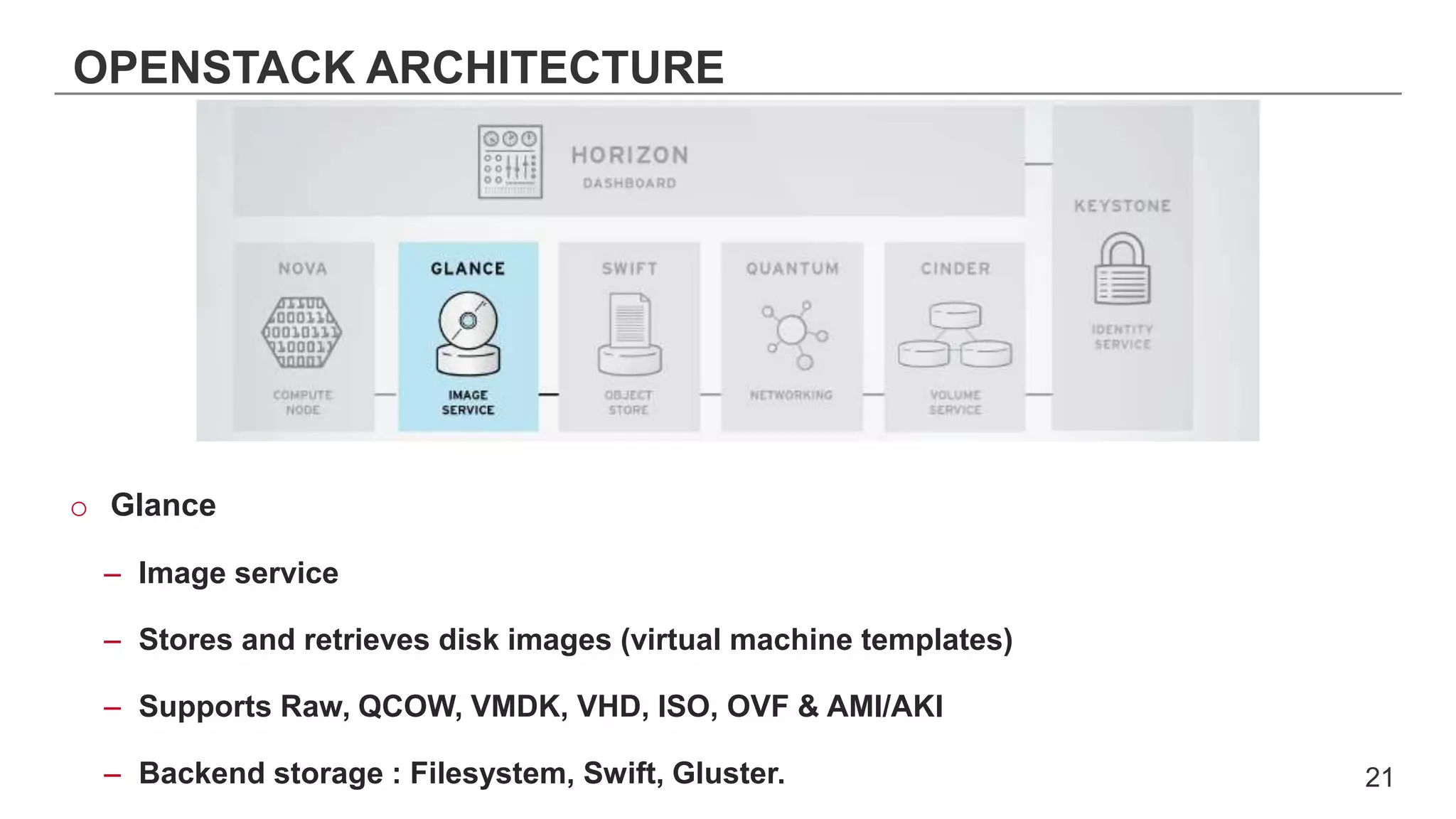
o Glance
– Image service
– Stores and retrieves disk images (virtual machine templates)
– Supports Raw, QCOW, VMDK, VHD, ISO, OVF & AMI/AKI
– Backend storage : Filesystem, Swift, Gluster. 21
OPENSTACK ARCHITECTURE
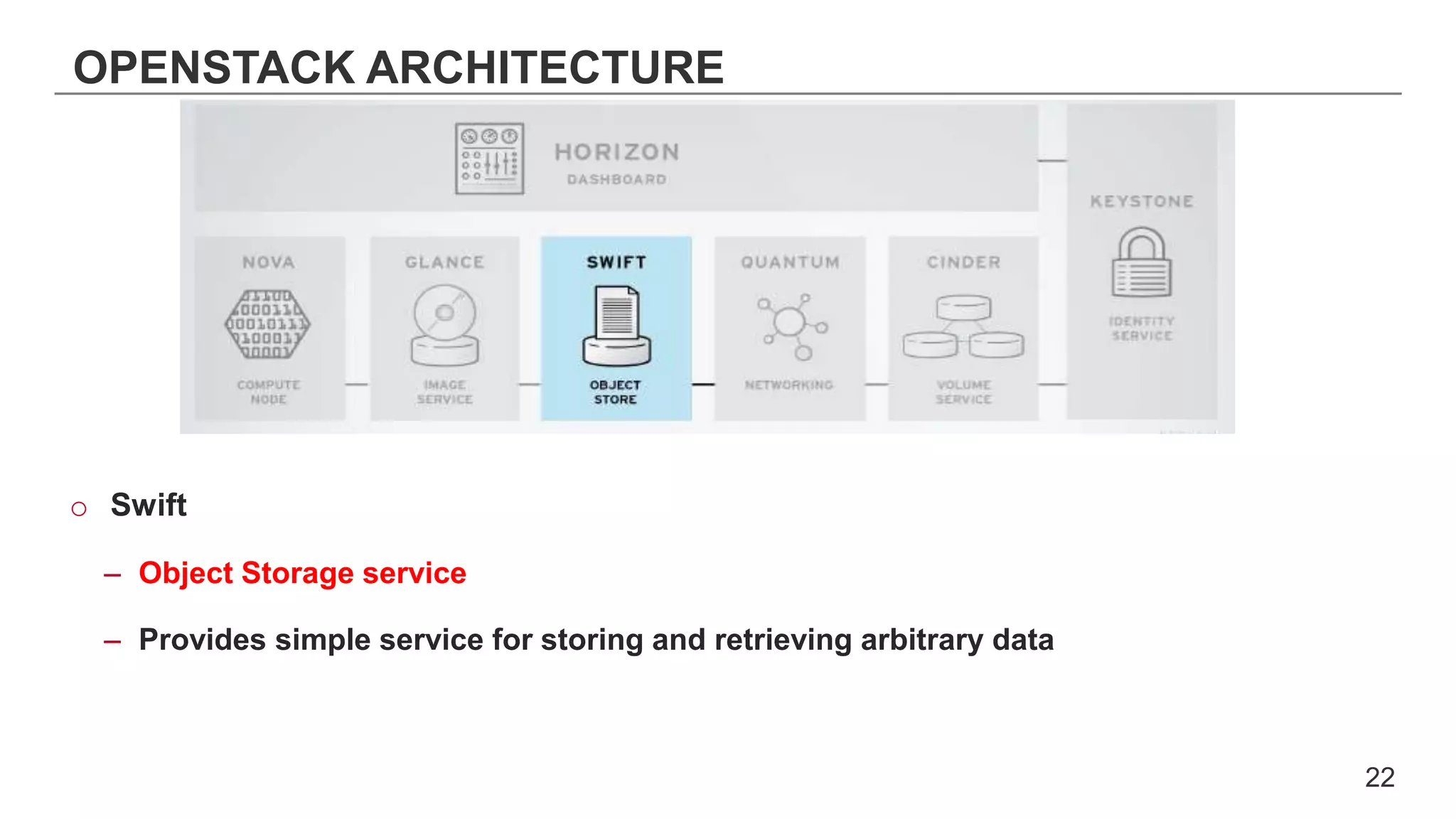
o Swift
– Object Storage service
– Provides simple service for storing and retrieving arbitrary data
22
OPENSTACK ARCHITECTURE
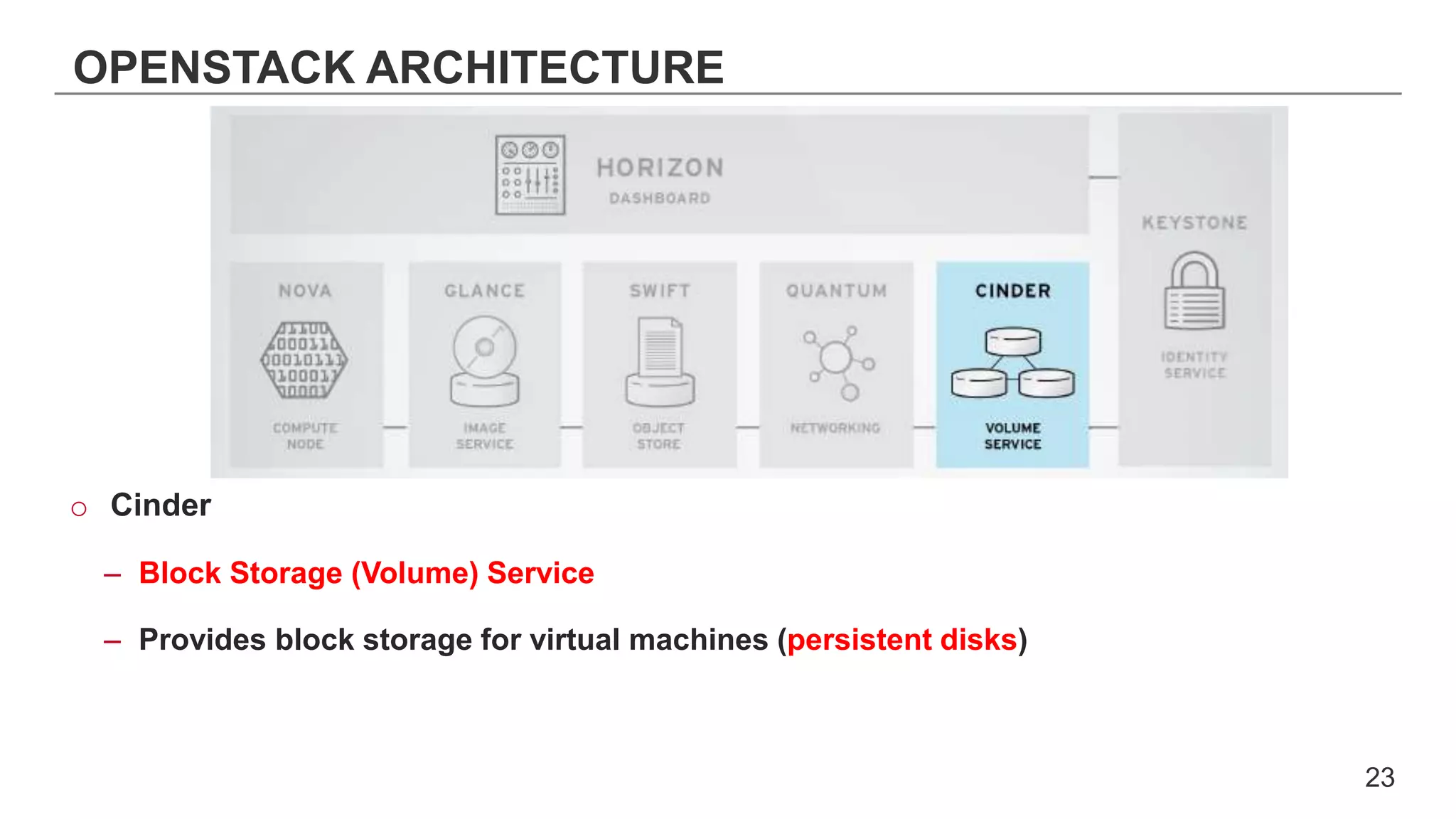
o Cinder
– Block Storage (Volume) Service
– Provides block storage for virtual machines (persistent disks)
23
OPENSTACK ARCHITECTURE
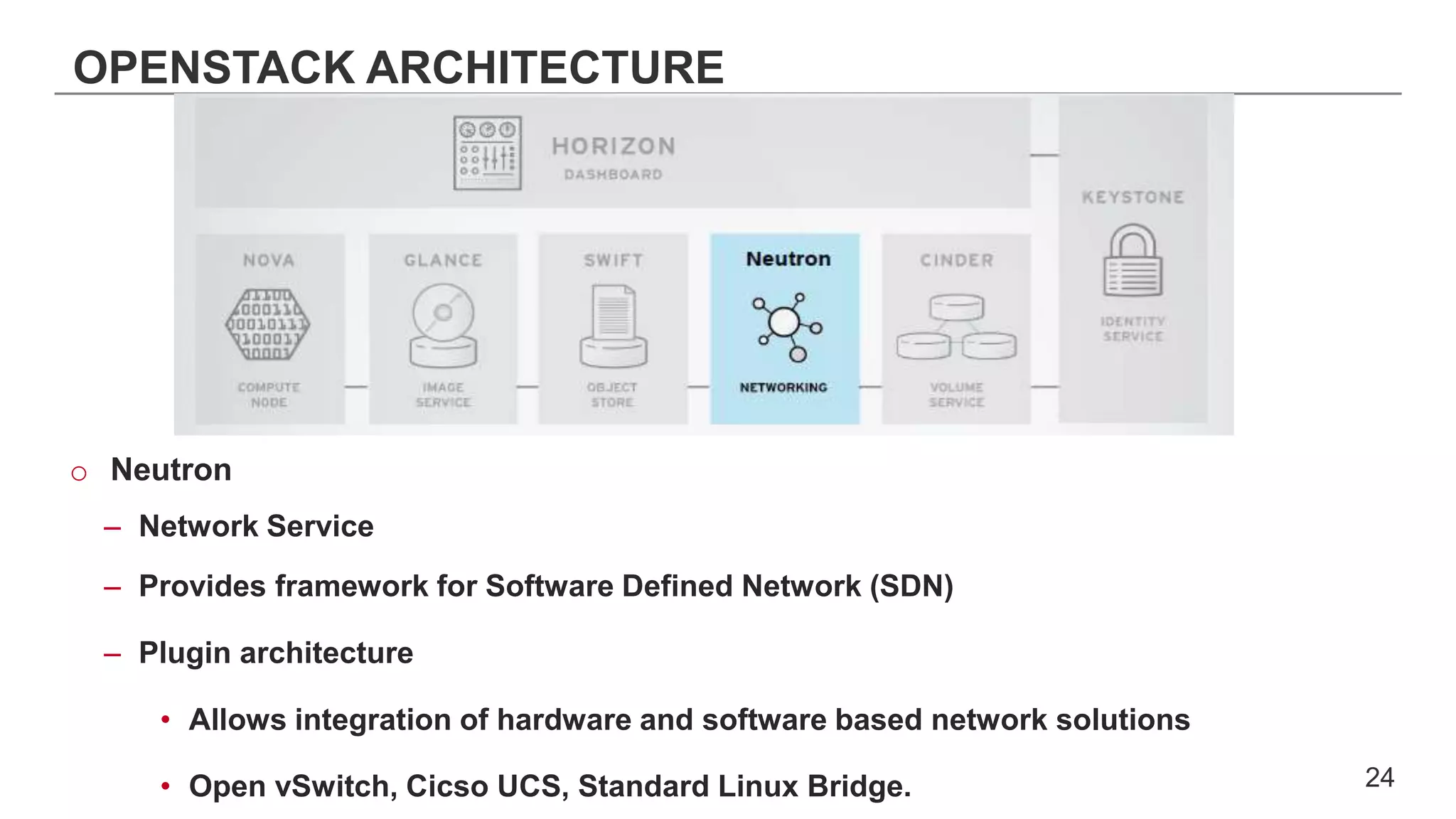
o Neutron
– Network Service
– Provides framework for Software Defined Network (SDN)
– Plugin architecture
• Allows integration of hardware and software based network solutions
• Open vSwitch, Cicso UCS, Standard Linux Bridge. 24
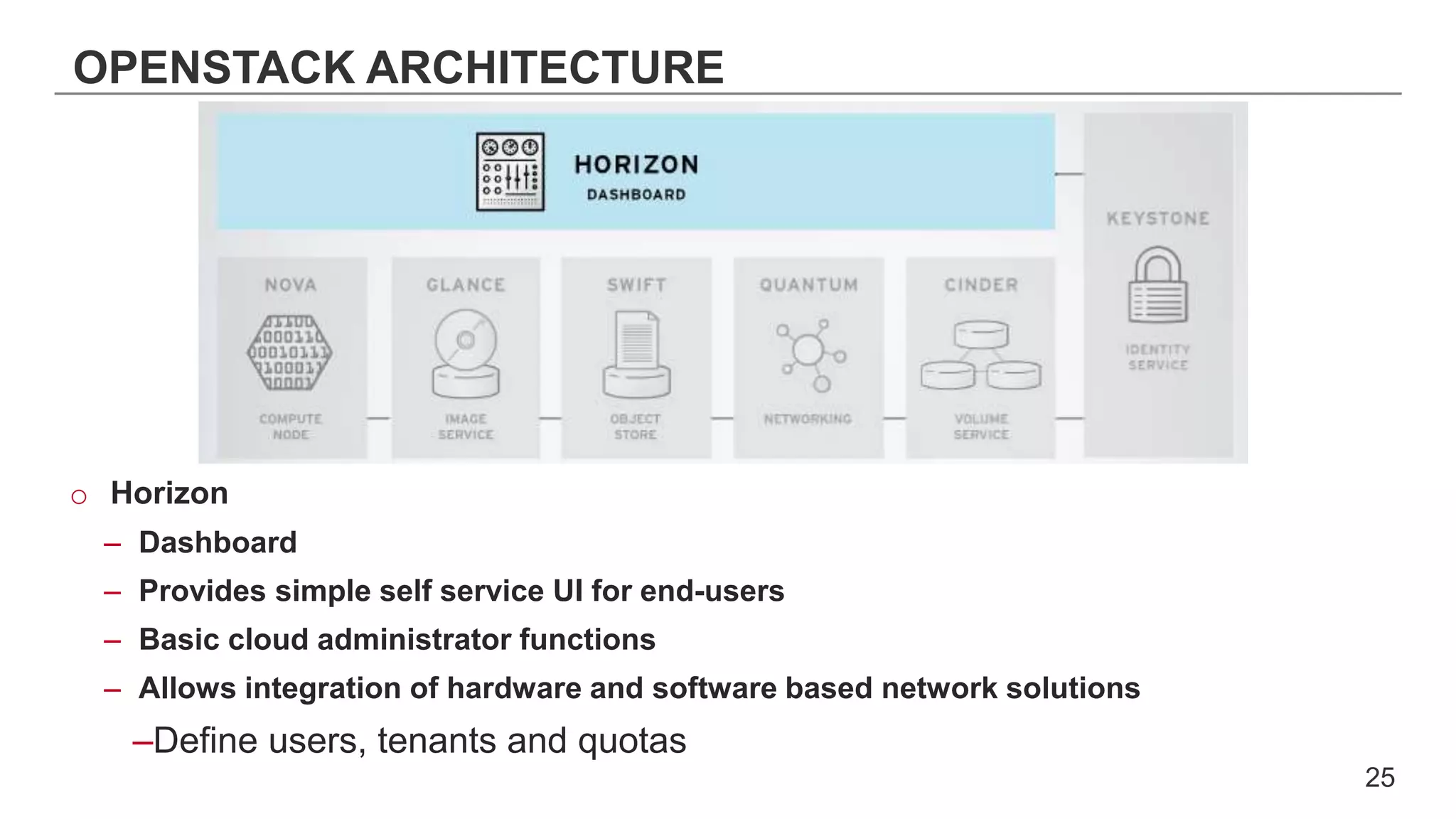
OPENSTACK ARCHITECTURE
o Horizon
– Dashboard
– Provides simple self service UI for end-users
– Basic cloud administrator functions
– Allows integration of hardware and software based network solutions
–Define users, tenants and quotas
25
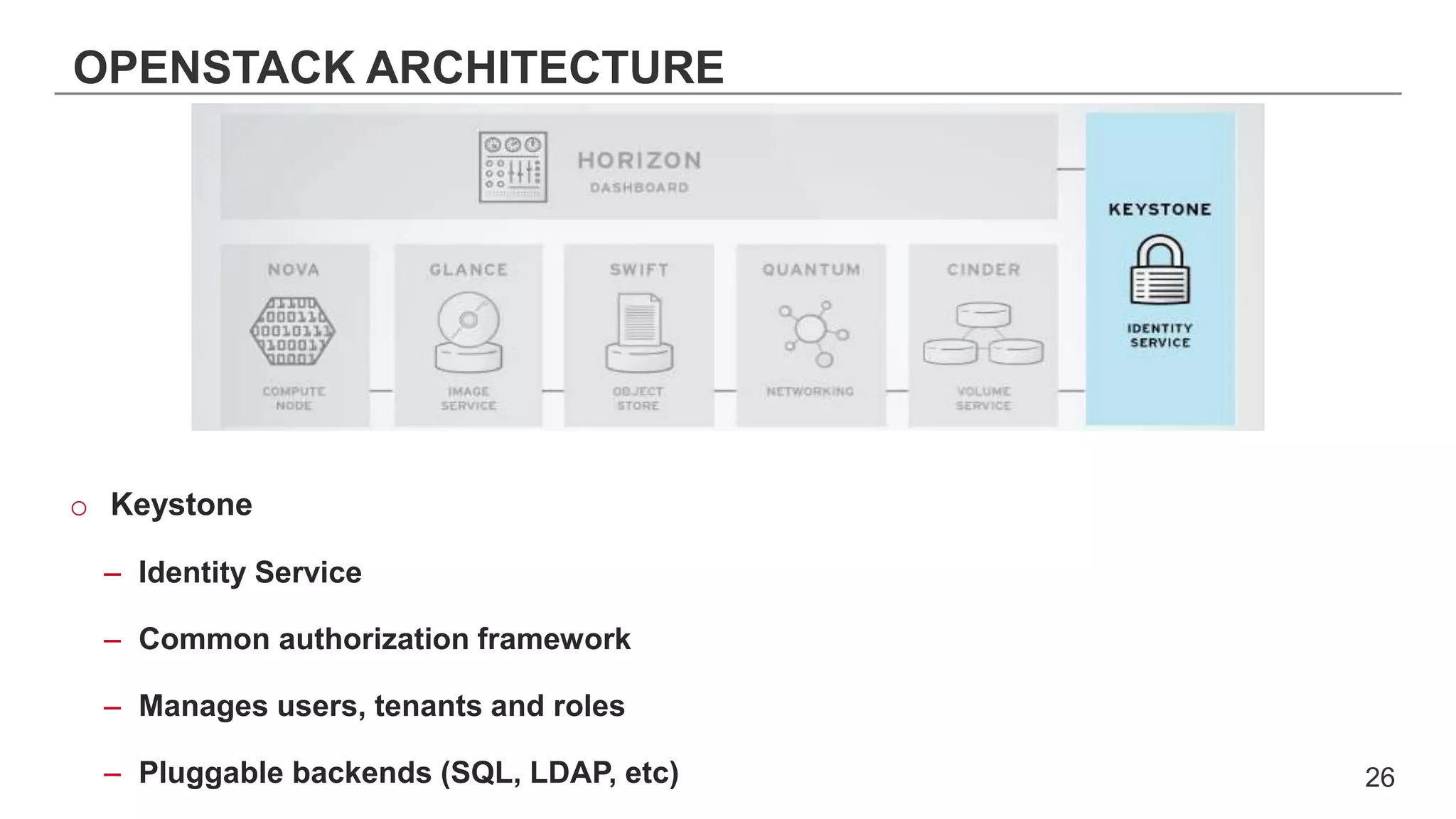
OPENSTACK ARCHITECTURE
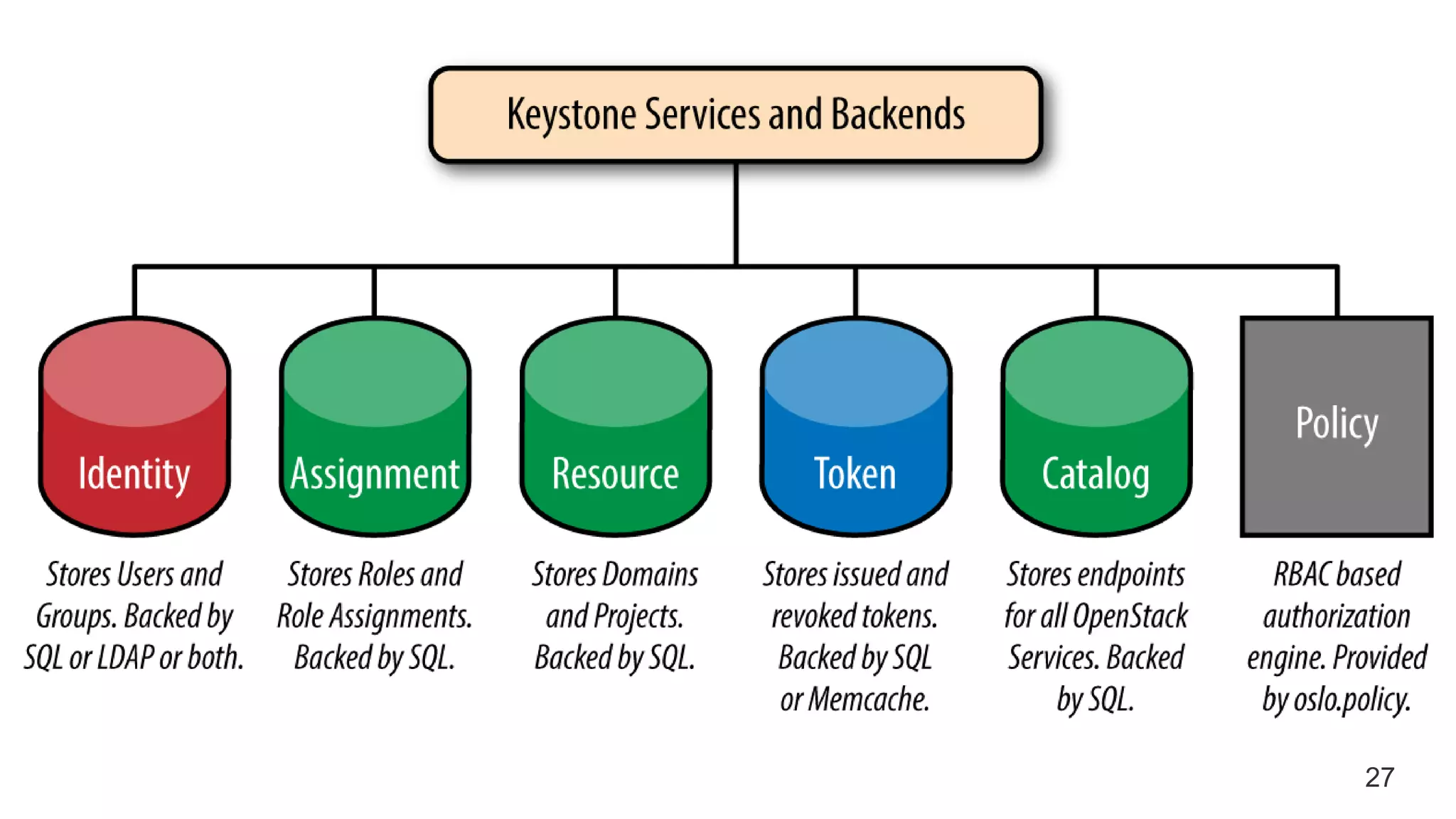
o Keystone
– Identity Service
– Common authorization framework
– Manages users, tenants and roles
– Pluggable backends (SQL, LDAP, etc) 26
27
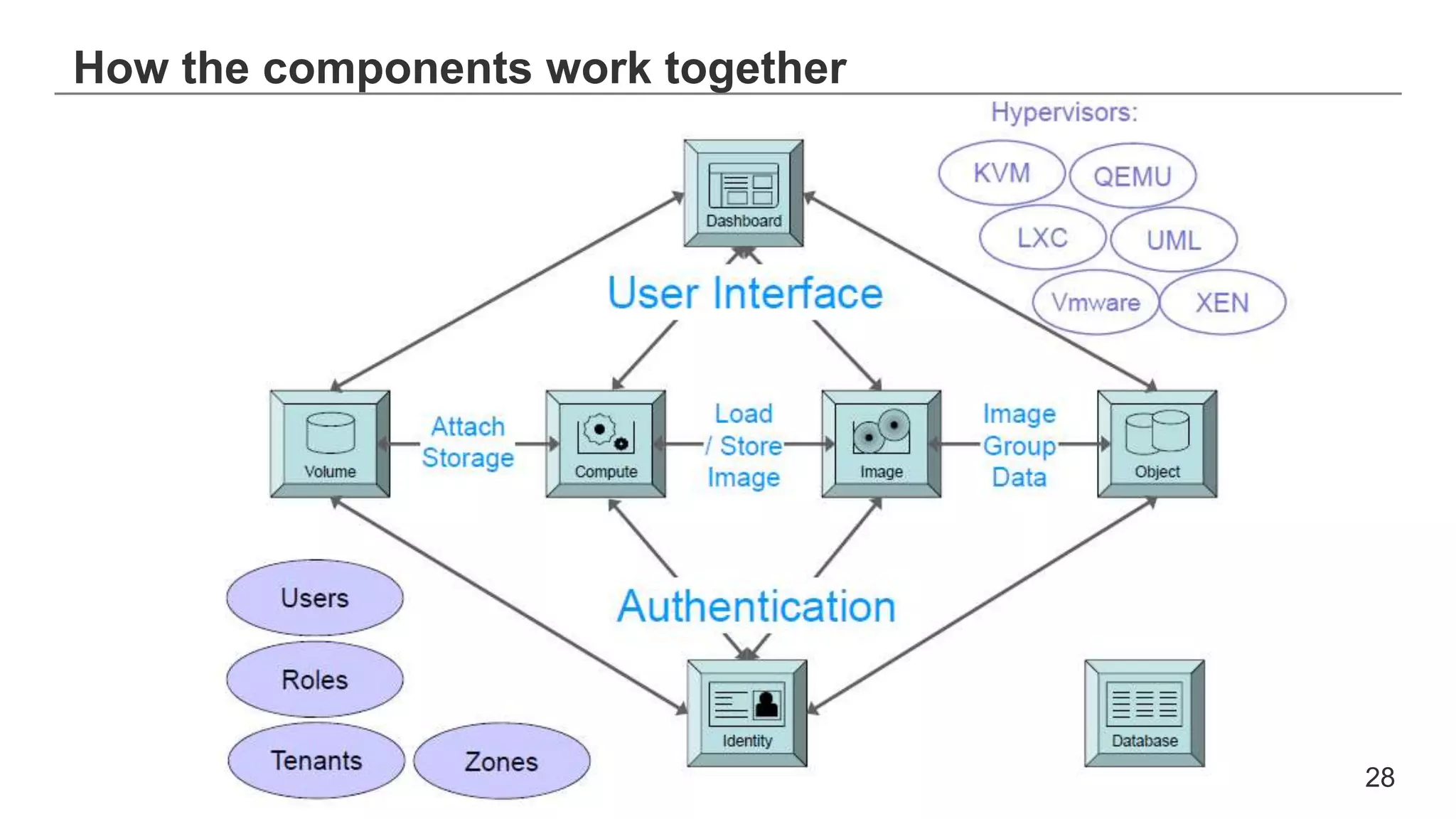
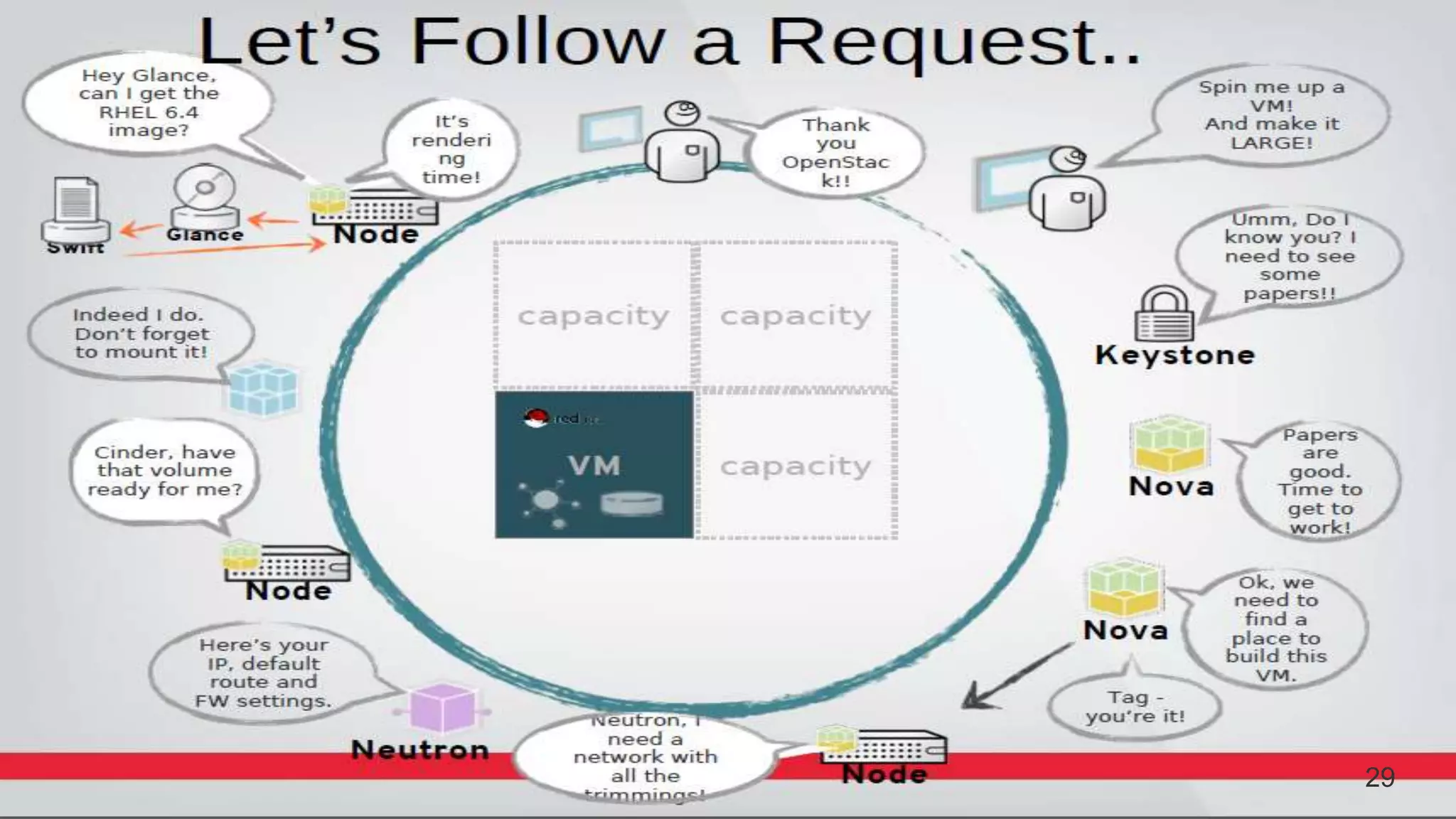
How the components work together
28
29
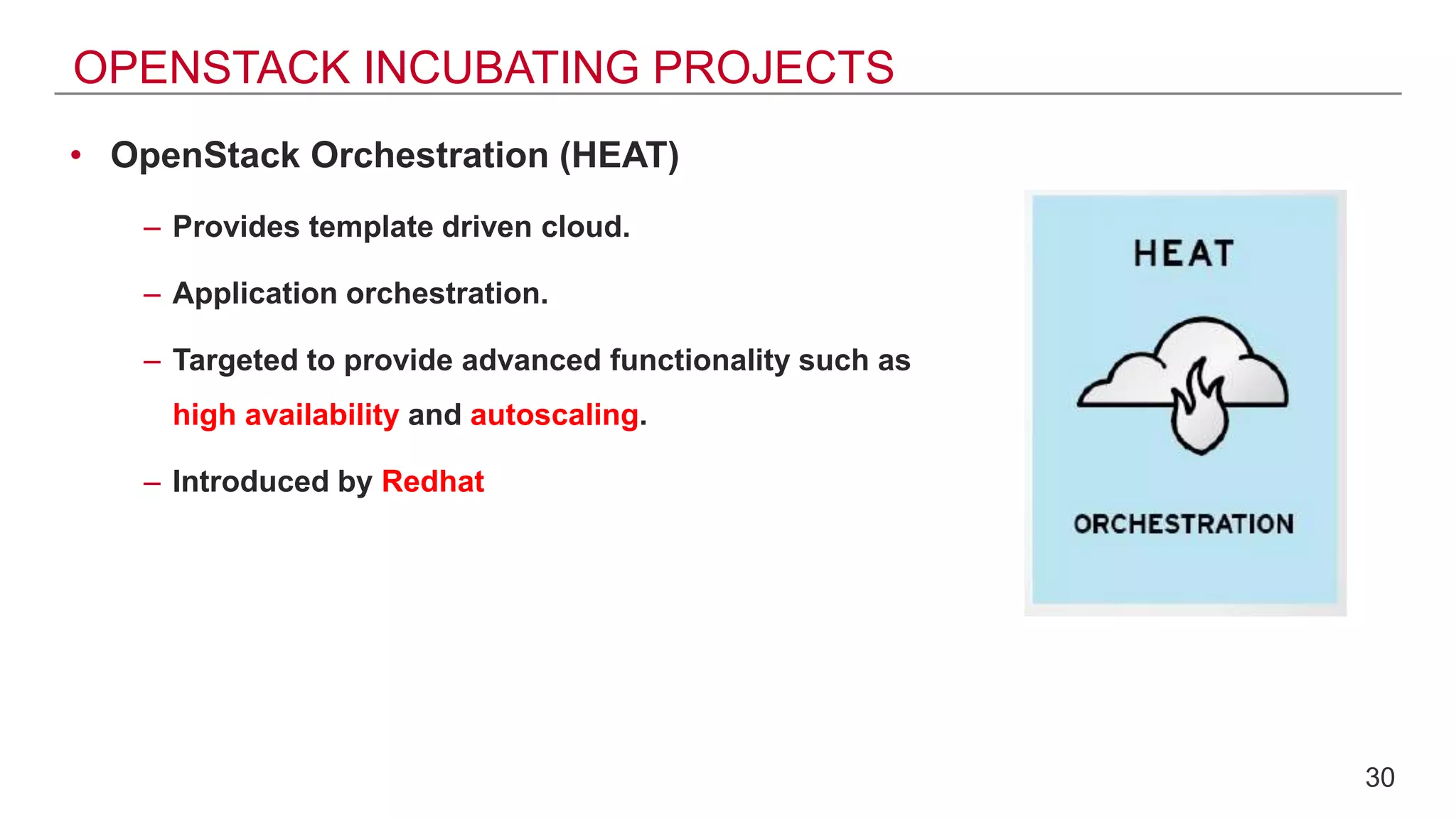
OPENSTACK INCUBATING PROJECTS
• OpenStack Orchestration (HEAT)
– Provides template driven cloud.
– Application orchestration.
– Targeted to provide advanced functionality such as
high availability and autoscaling.
– Introduced by Redhat
30
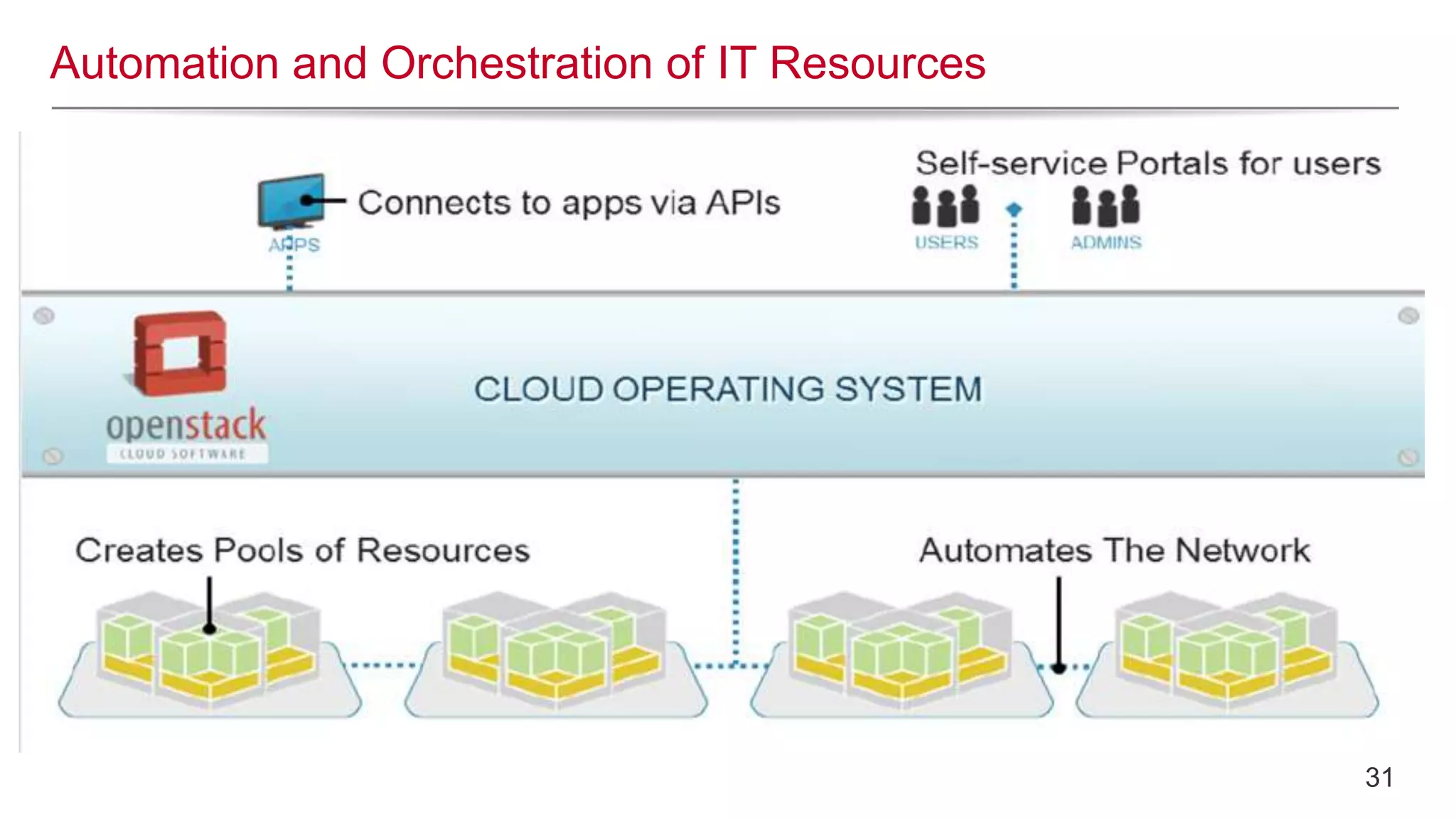
Automation and Orchestration of IT Resources
31
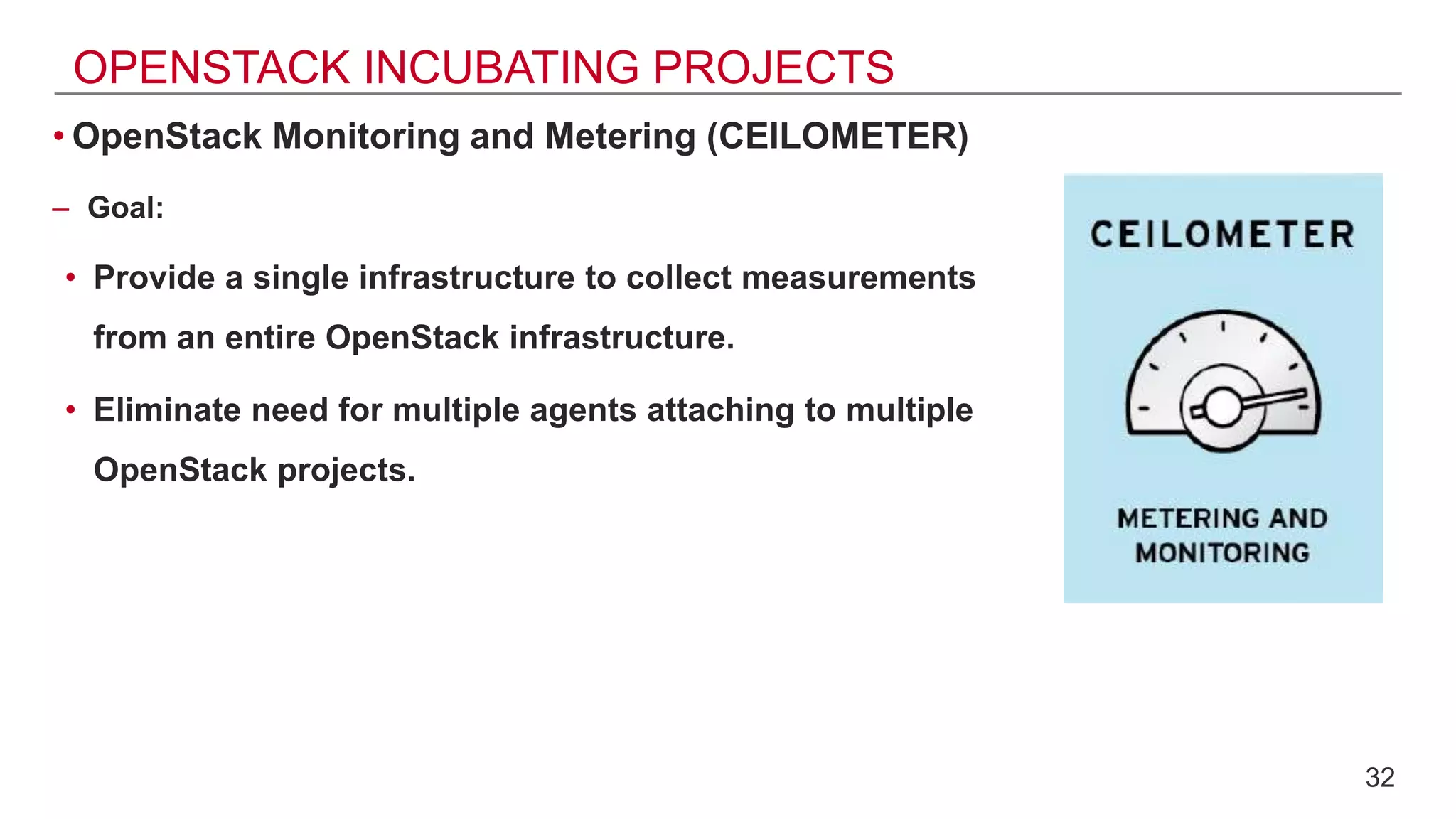
OPENSTACK INCUBATING PROJECTS
• OpenStack Monitoring and Metering (CEILOMETER)
– Goal:
• Provide a single infrastructure to collect measurements
from an entire OpenStack infrastructure.
• Eliminate need for multiple agents attaching to multiple
OpenStack projects.
32
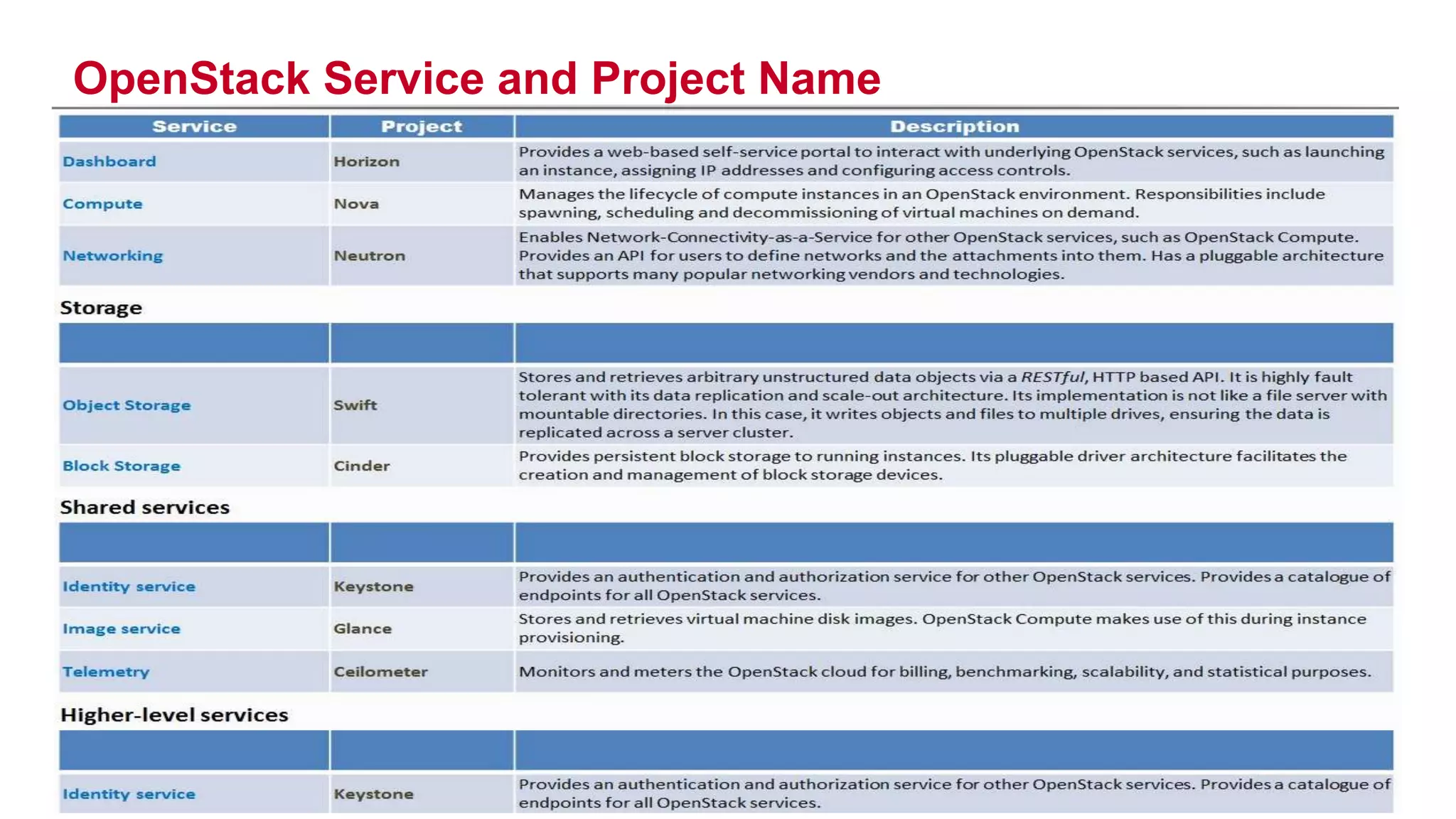
OpenStack Service and Project Name
33
34
Reading About OpenStack
The OpenStack Foundation
http://www.openstack.org/
Official OpenStack Documentation
http://docs.openstack.org/
The OpenStack Cloud Computing Cookbook (Second Edition)
http://www.amazon.com/OpenStack-Cloud-Computing-Cookbook-
Jackson/dp/1782167587/ref=sr_1_1?s=books&ie=UTF8&qid=1382033707&sr=1-1
35
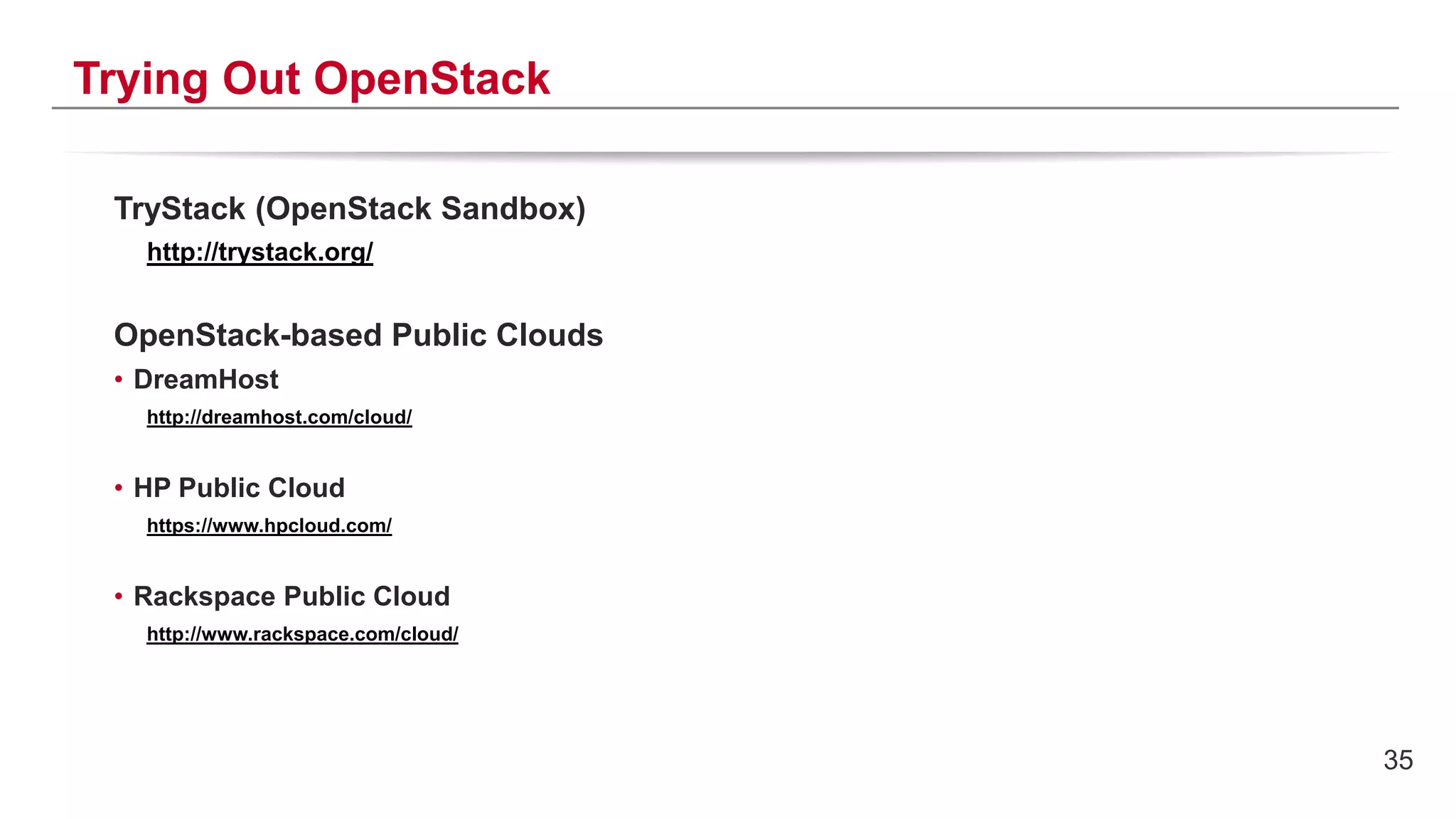
Trying Out OpenStack
TryStack (OpenStack Sandbox)
http://trystack.org/
OpenStack-based Public Clouds
• DreamHost
http://dreamhost.com/cloud/
• HP Public Cloud
https://www.hpcloud.com/
• Rackspace Public Cloud
http://www.rackspace.com/cloud/
36
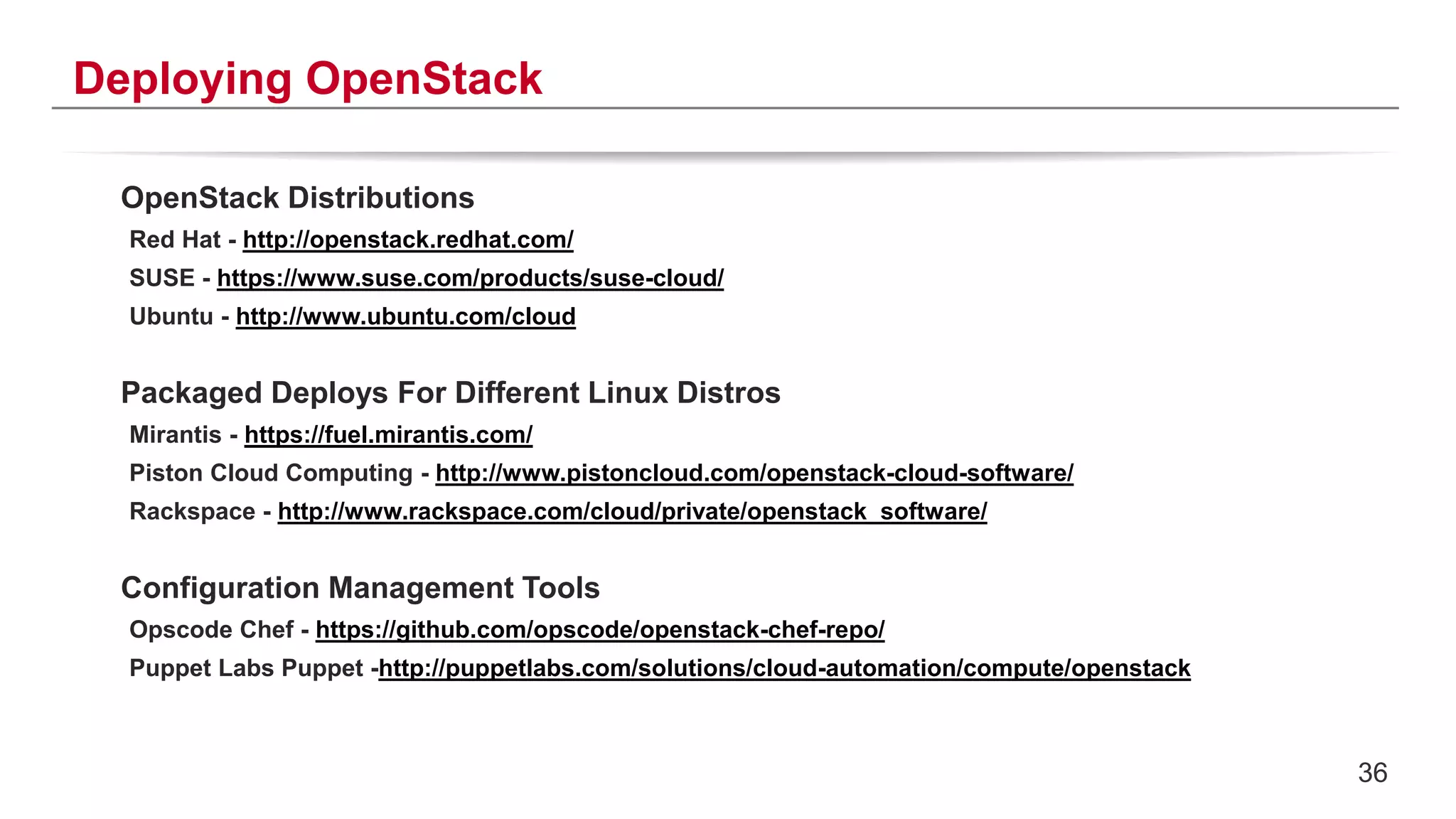
Deploying OpenStack
OpenStack Distributions
Red Hat - http://openstack.redhat.com/
SUSE - https://www.suse.com/products/suse-cloud/
Ubuntu - http://www.ubuntu.com/cloud
Packaged Deploys For Different Linux Distros
Mirantis - https://fuel.mirantis.com/
Piston Cloud Computing - http://www.pistoncloud.com/openstack-cloud-software/
Rackspace - http://www.rackspace.com/cloud/private/openstack_software/
Configuration Management Tools
Opscode Chef - https://github.com/opscode/openstack-chef-repo/
Puppet Labs Puppet -http://puppetlabs.com/solutions/cloud-automation/compute/openstack
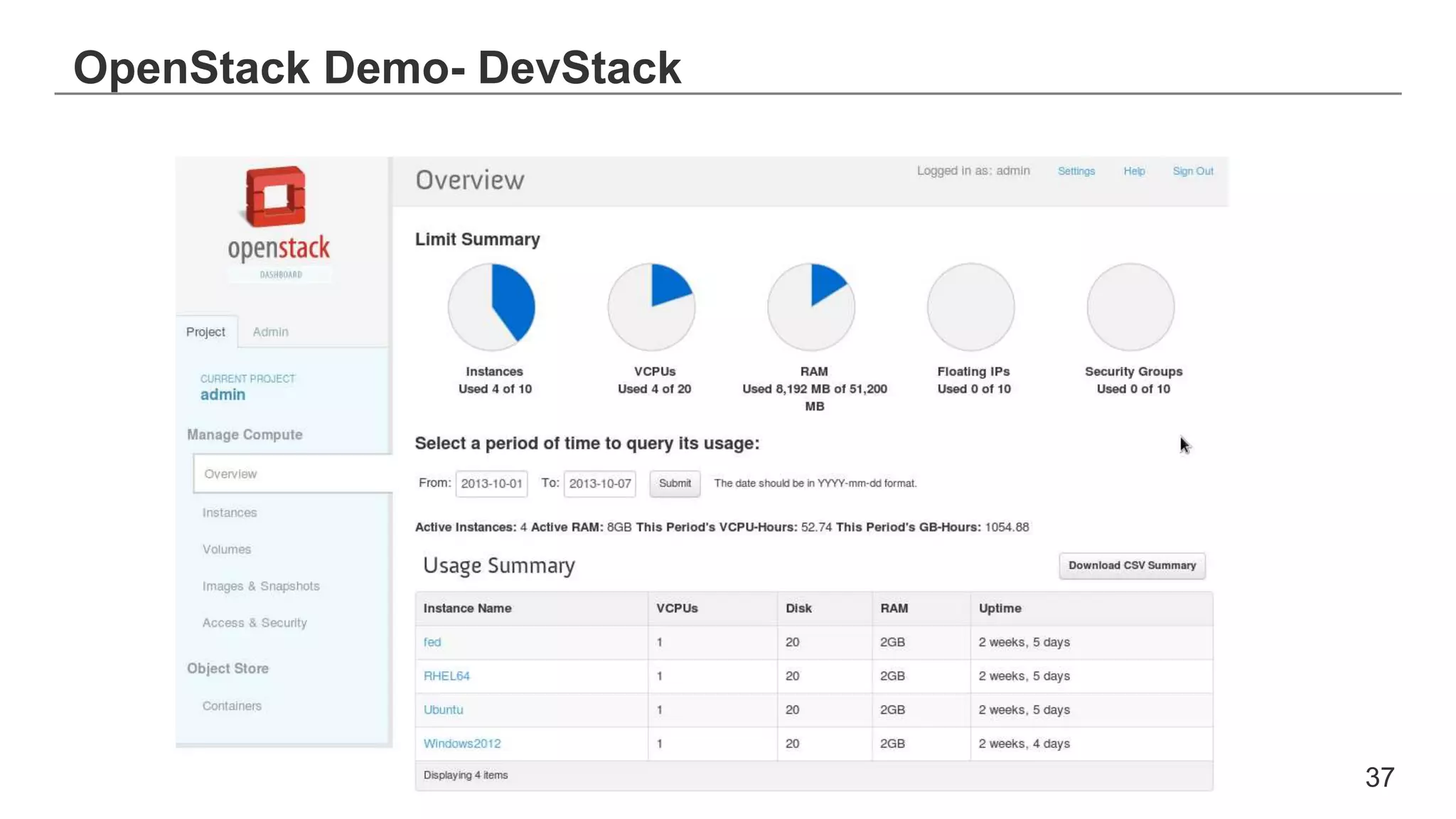
OpenStack Demo- DevStack
37
Thank You !!!
38

Getting-Started-With-Openstack

Editor's Notes

  • #3 A Cloud Computing platform sits above the virtual data center and provides both a control plane over and resource access to the virtualized data center. OpenStack, as a Cloud Computing platform, manages virtualized resources, such as virtual machines exported by a hypervisor, network overlays created by Software-Defined Network devices, and volumes exported by virtual storage arrays. OpenStack takes these data center resources and automates and orchestrates them so they can be accessed on demand and be scaled up and down as needed, turning these resources into consumable services.
  • #4 مفاهیم اولیه سرویس ها و مدل های مشخصی وجود دارند که رایانش ابری را برای کاربران نهایی امکان پذیر و قابل دسترس می¬نمایند. مدل های رایانش ابری عبارتند از: • مدل های توسعه (Deployment Models) • مدل های سرویس (Service Models) مدل های توسعه مدل های توسعه نوع دسترسی به ابر را مشخص می¬کنند. به عبارت دیگر ابر برای استفاده چه کسانی طراحی شده است. ابر می¬تواند هر یک از چهار مدل دسترسی را داشته باشد: عمومی(Public)، خصوصی (Private)، ترکیبی (Hybrid) و انجمنی (Community) ابر عمومی (Public) ابر عمومی اجازه می دهد که سیستم ها و سرویس هایش به سادگی در دسترس عموم قرار بگیرد. به دلیل باز بودن ممکن است امنیت کمتری داشته باشد. ابر اختصاصی (Private) سیستم ها و سرویس های ابر اختصاصی تنها در دسترس یک سازمان بخصوص قرار دارد. به دلیل ماهیت خصوصی بودن، امنیت بیشتری دارند. ابر ترکیبی (Hybrid) ابر ترکیبی، آمیزشی از ابر اختصاصی و عمومی است که در آن فعالیت های حساس و محرمانه با استفاده از ابر اختصاصی و فعالیت های غیر حساس با استفاده از ابر عمومی انجام می گیرد. ابر انجمنی (Community) سیستم ها و سرویس های ابر انجمنی قابل دسترسی در مجموعه ای از سازمان ها هستند. مدل های سرویس: رایانش ابری بر اساس مدل های سرویس استوار است. مدل های سرویس به صورت پایه به سه دسته تقسیم می شوند: زیرساخت به عنوان سرویس (IaaS) Infrastructure-as-a-Service بستر به عنوان سرویس (PaaS) Platform-as-a-Service نرم افزار به عنوان سرویس (SaaS) Software-as-a-Service البته سرویس دیگری با عنوان هر چیز به عنوان سرویس یا (XaaS) Anything as a Service وجود دارد که شامل شبکه به عنوان سرویس (Network-as-a-service)، کسب و کار به عنوان سرویس (Business-as-a-service)، نهاد به عنوان سرویس (Identity-as-a-service)، پایگاه داده به عنوان سرویس (Database-as-a-service) و یا استراتژی به عنوان سرویس (Strategy-as-a-service) می شود. زیرساخت به عنوان سرویس (IaaS) ساده ترین مدل سرویس است. هریک از مدل های سرویس مکانیزم مدیریت امنیت خود را از مدل های پایین تر خود به ارث می برد. همانطور که در شکل زیر نشان داده شده است. زیرساخت به عنوان سرویس (IaaS) IaaS دسترسی به منایع پایه نظیر کامپیوترهای فیزیکی، ماشین های مجازی، فضای ذخیره سازی مجازی و از این قبیل را فراهم می سازد. بستر به عنوان سرویس (PaaS) PaaS محیطی اجرایی برای برنامه های کاربردی و ابزارهای گسترش و توسعه فراهم می کند. نرم افزار به عنوان سرویس (SaaS) مدل SaaS امکان استفاده از نرم افزارهای کاربردی را به صورت یک سرویس برای کاربران نهایی فراهم می آورد. تاریخچه رایانش ابری مفهوم رایانش ابری در سال 1950 با پیاده سازی کامیپیوترهای Mainframe  که دسترسی به آنها از طریق Thin/Static Client انجام می‌شد، مطرح گردید. از آن به بعد رایانش ابری از کلانیت‌های ایستا به پویا و از نرم افزار به سرویس تکامل یافته است. دیاگرام زیر تکامل رایانش ابری را نشان می­دهد.
  • #5 A Cloud Computing platform sits above the virtual data center and provides both a control plane over and resource access to the virtualized data center. OpenStack, as a Cloud Computing platform, manages virtualized resources, such as virtual machines exported by a hypervisor, network overlays created by Software-Defined Network devices, and volumes exported by virtual storage arrays. OpenStack takes these data center resources and automates and orchestrates them so they can be accessed on demand and be scaled up and down as needed, turning these resources into consumable services.
  • #13 RackSpace
  • #27 In OpenStack a “tenant” is also called a “project.” I’ve always found the second name to be a clearer term and it appears that this is now the proper name going forward. From the OpenStack website glossary a tenant is “A group of users; used to isolate access to Compute resources. An alternative term for a project.” or a tenant/project is a set of any resources (compute, network, storage, etc.) assigned to an isolated group of users.
  • #32 A Cloud Computing platform sits above the virtual data center and provides both a control plane over and resource access to the virtualized data center. OpenStack, as a Cloud Computing platform, manages virtualized resources, such as virtual machines exported by a hypervisor, network overlays created by Software-Defined Network devices, and volumes exported by virtual storage arrays. OpenStack takes these data center resources and automates and orchestrates them so they can be accessed on demand and be scaled up and down as needed, turning these resources into consumable services.
  • #34 The OpenStack platform is actually composed of multiple components, called projects. Each project is managed by a technical committee and the OpenStack Foundation decides which projects are ready to be included in the OpenStack core. These projects work together to provide the services required to deliver the Cloud. Nova – The compute project responsible for on-demand creation and termination of compute instances. Nova leverage a number of hypervisors, including KVM, Xen, Hyper-V, and vSphere. Glance – The OS image management project responsible for storage and management of images used to create compute instances with OSes installed, such as Windows and Linux. Quantum – The network project that provides network access and security services to compute instances. Quantum uses plugins to leverage virtual switches and SDN-enabled devices. Swift – The object storage project that provides a scalable repository for storing large quantities of objects such as files and media content. It can also be used as an repository for Glance images. Cinder – The block storage project that provides a virtual storage array that can export out iSCSI volumes. A Cinder/virtual storage array server can be a server with local storage or a server using an external storage array. Horizon – The interactive dashboard project that provides users and admins provisioning and management access to the OpenStack Cloud via a web GUI. Keystone – The identity management project that provides authorization and access security control for all the other OpenStack projects. New projects are being added with each release and as the OpenStack community calls for them. New projects underway include metering, application orchestration, and database-as-a-service.