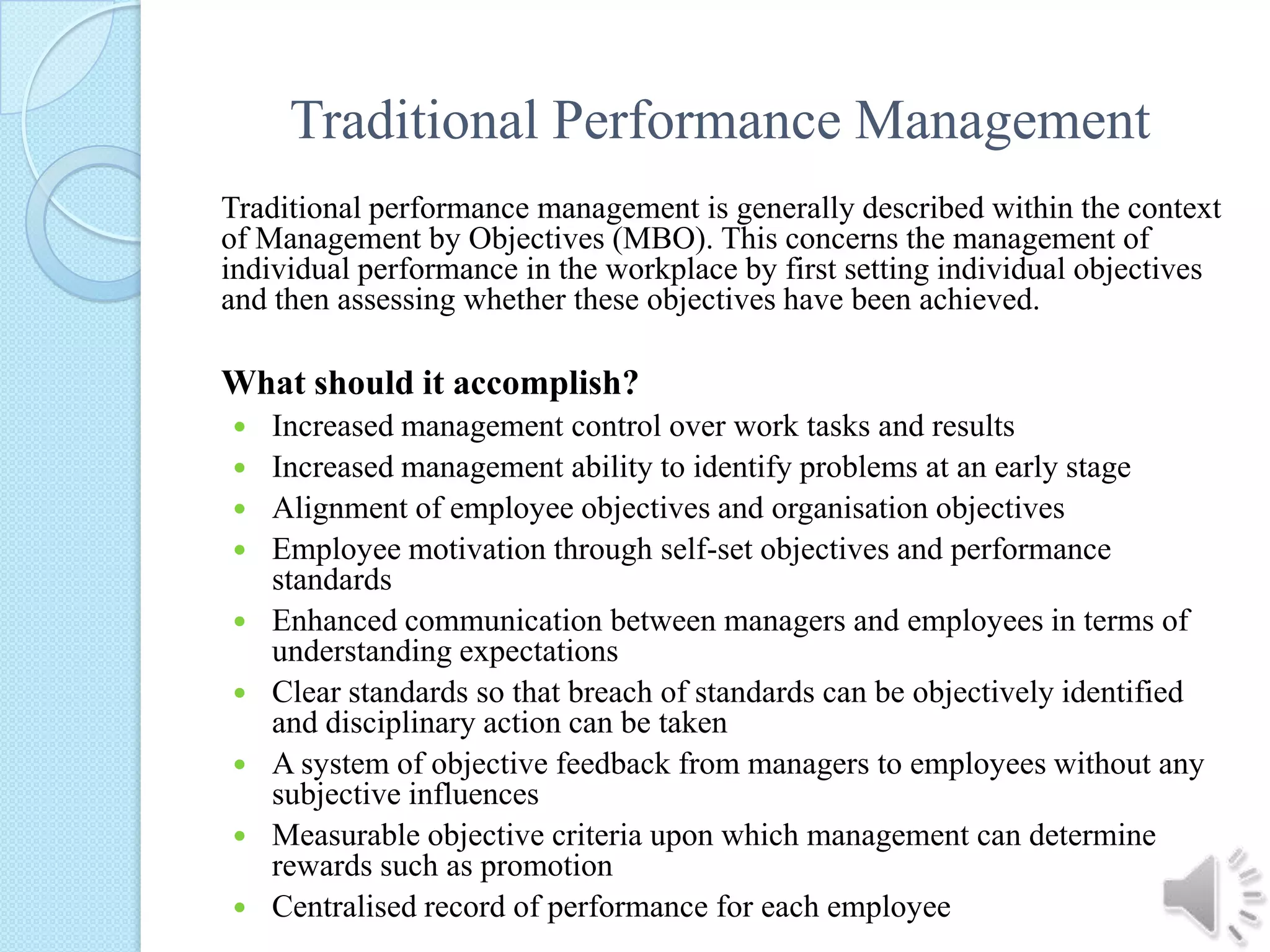
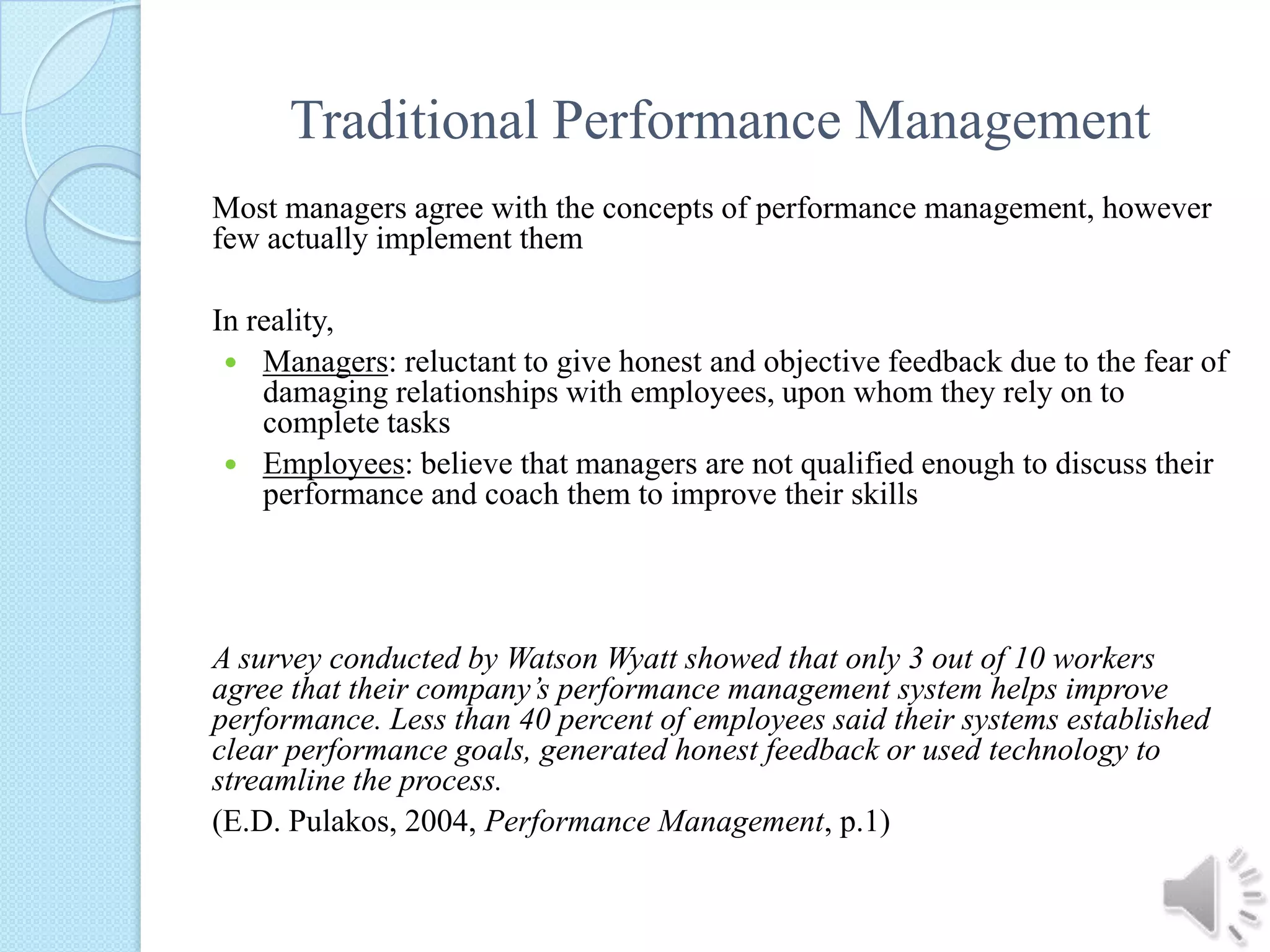
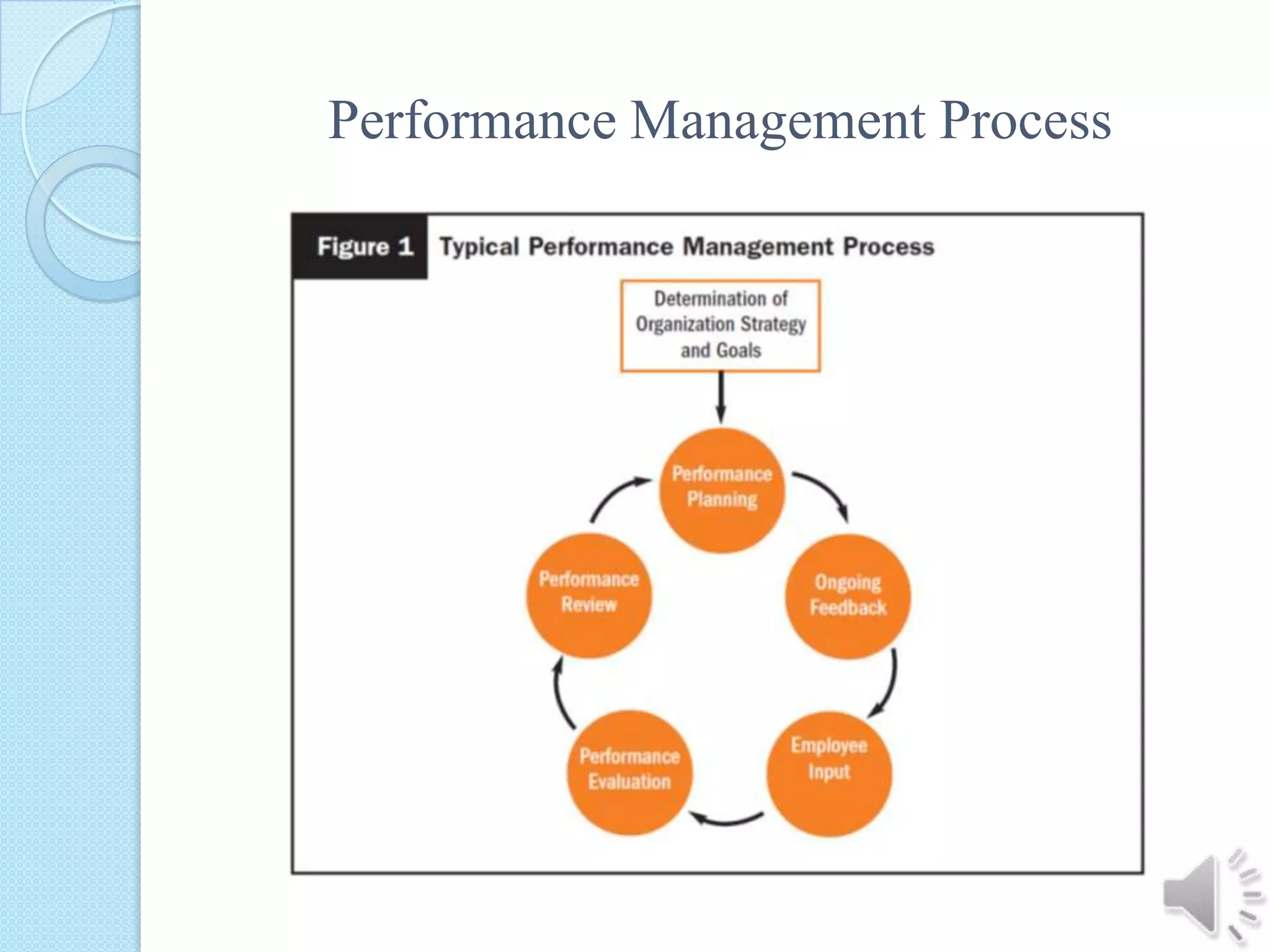
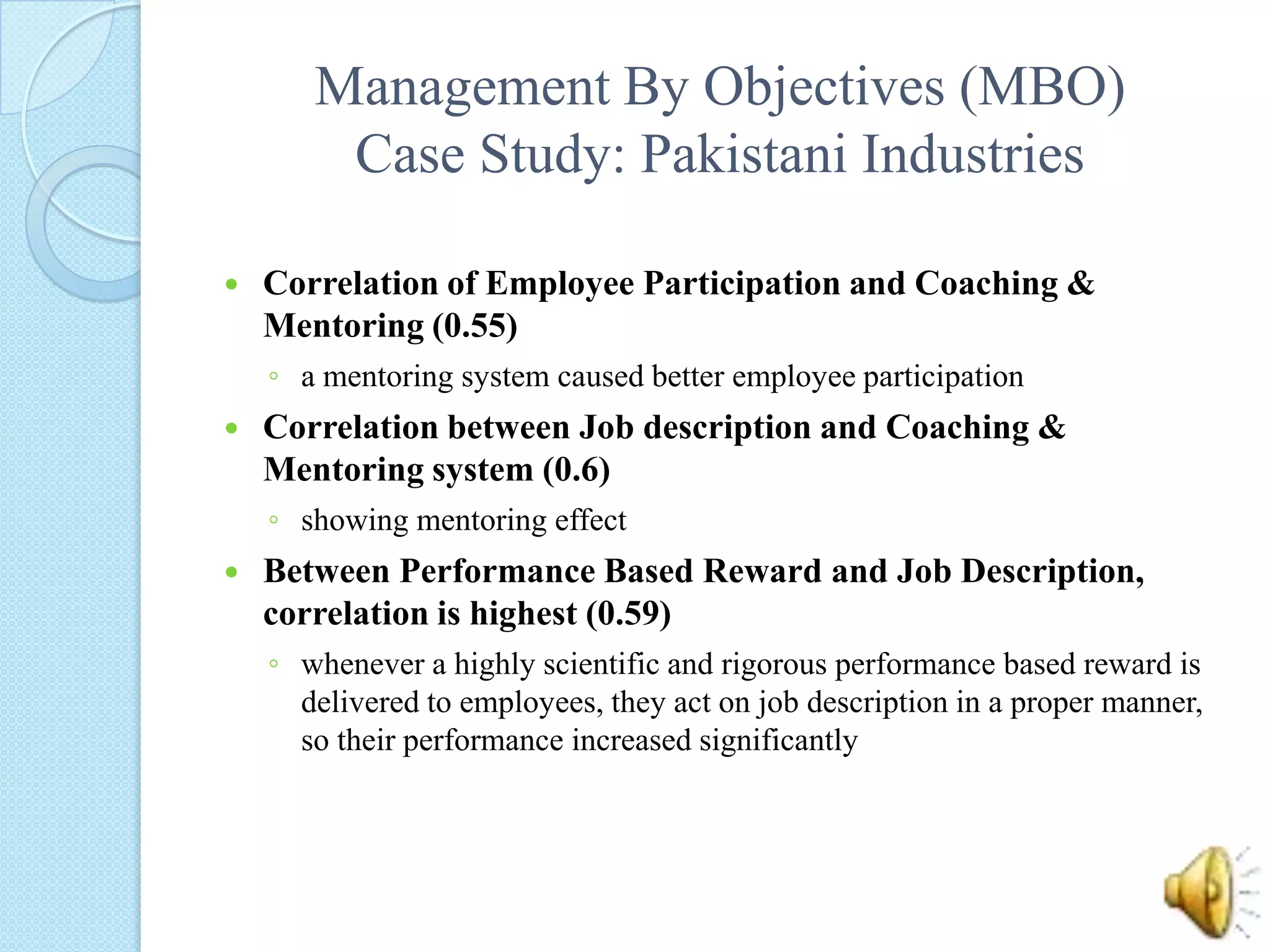
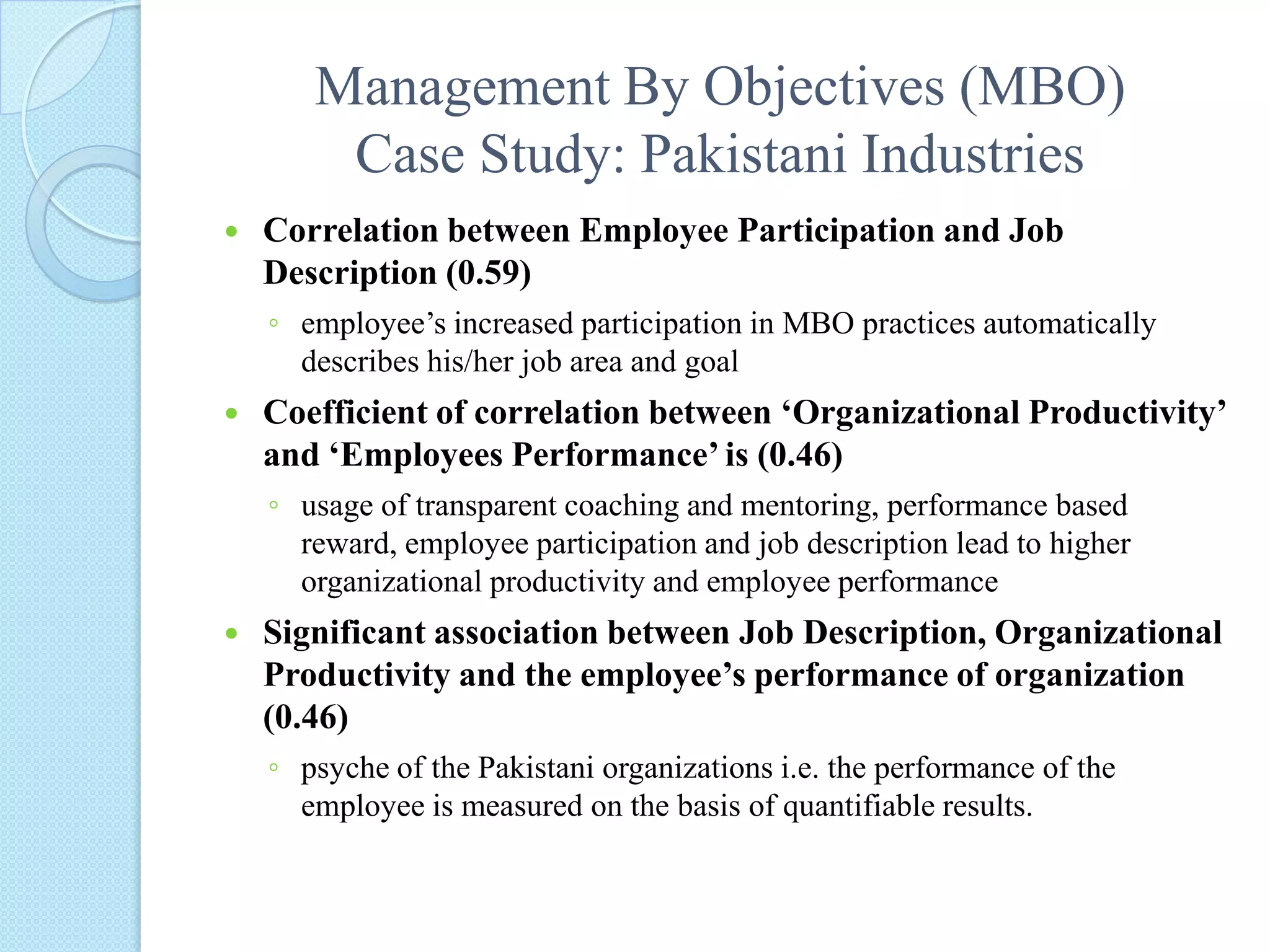
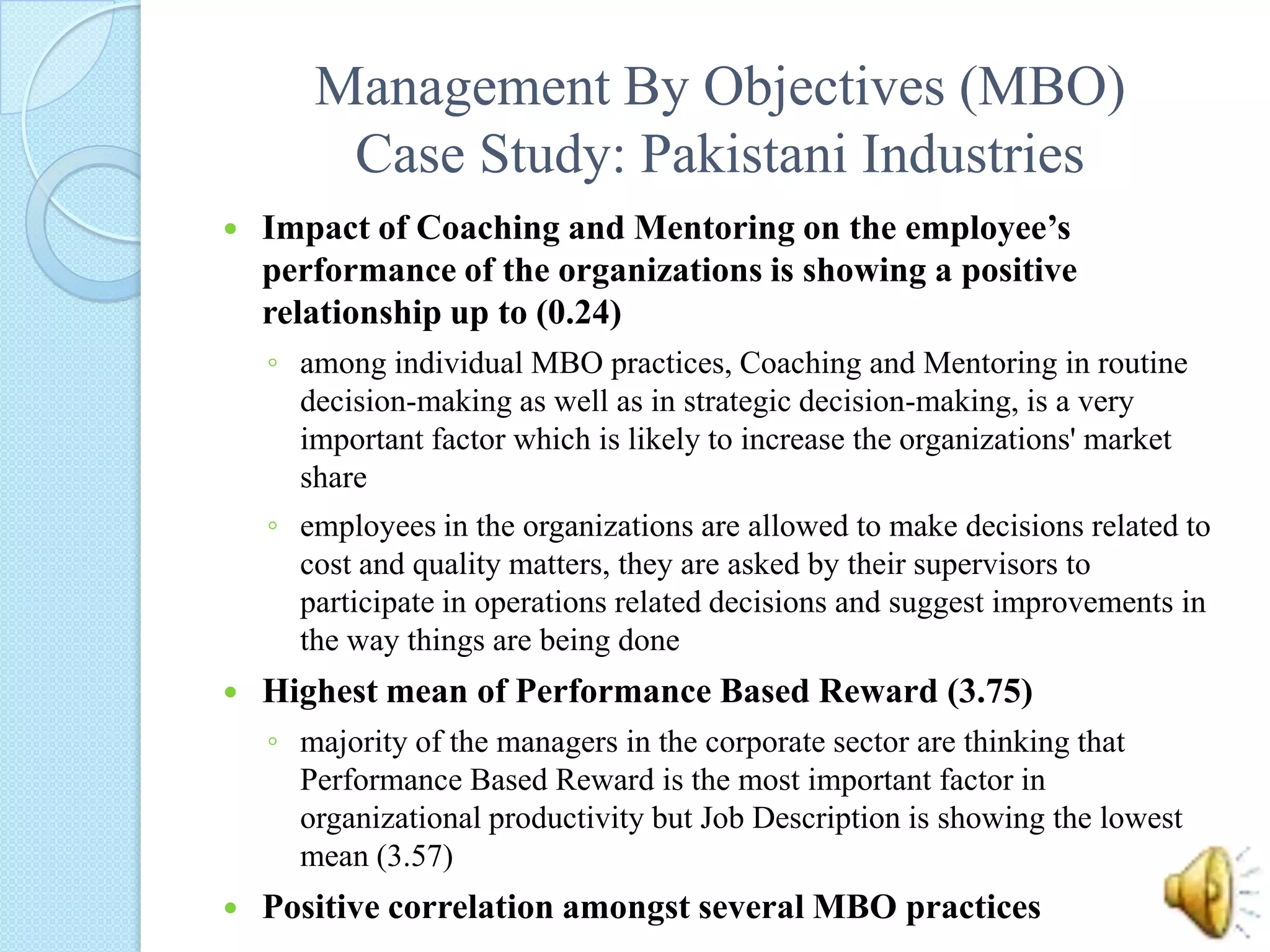
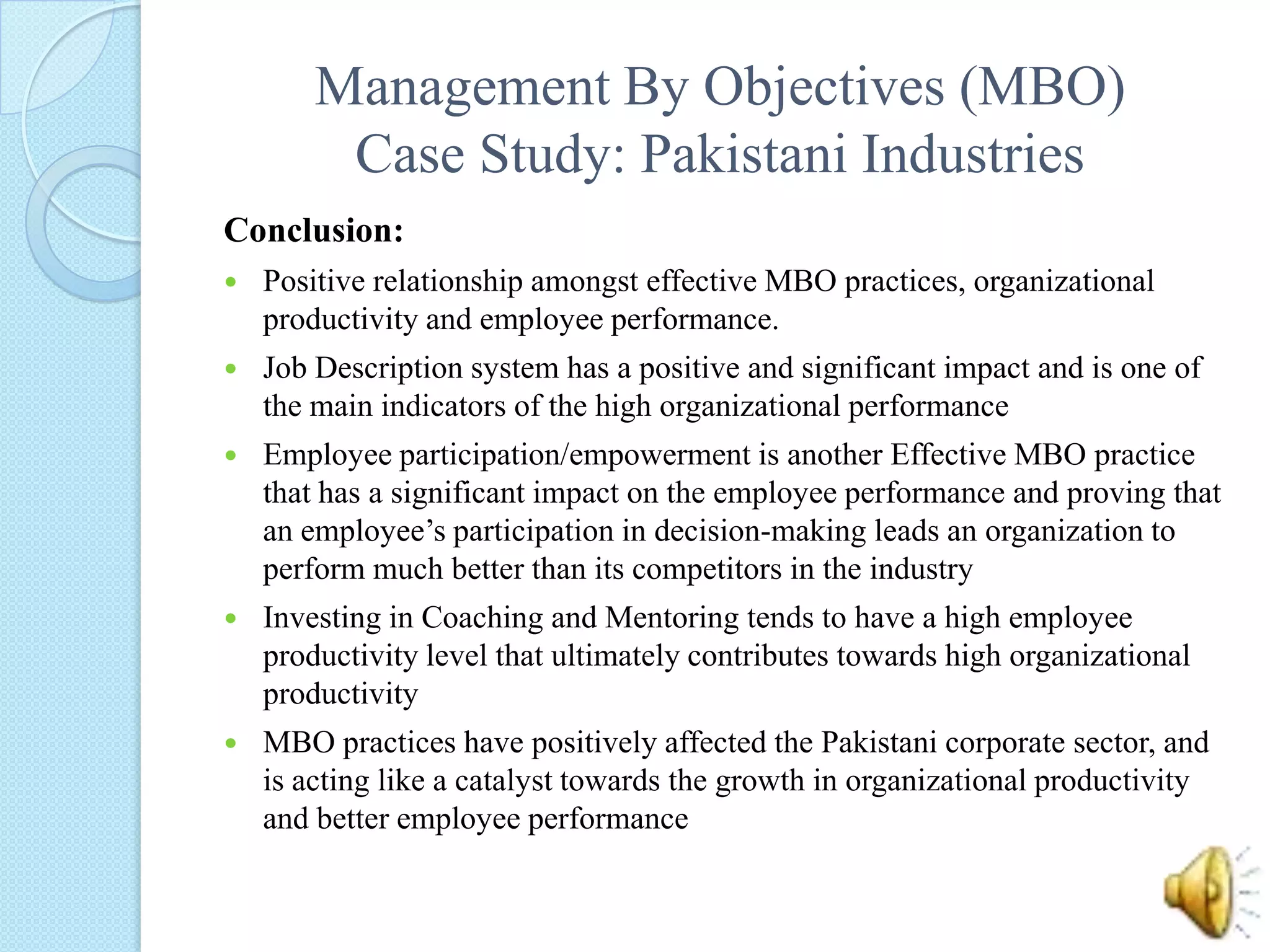
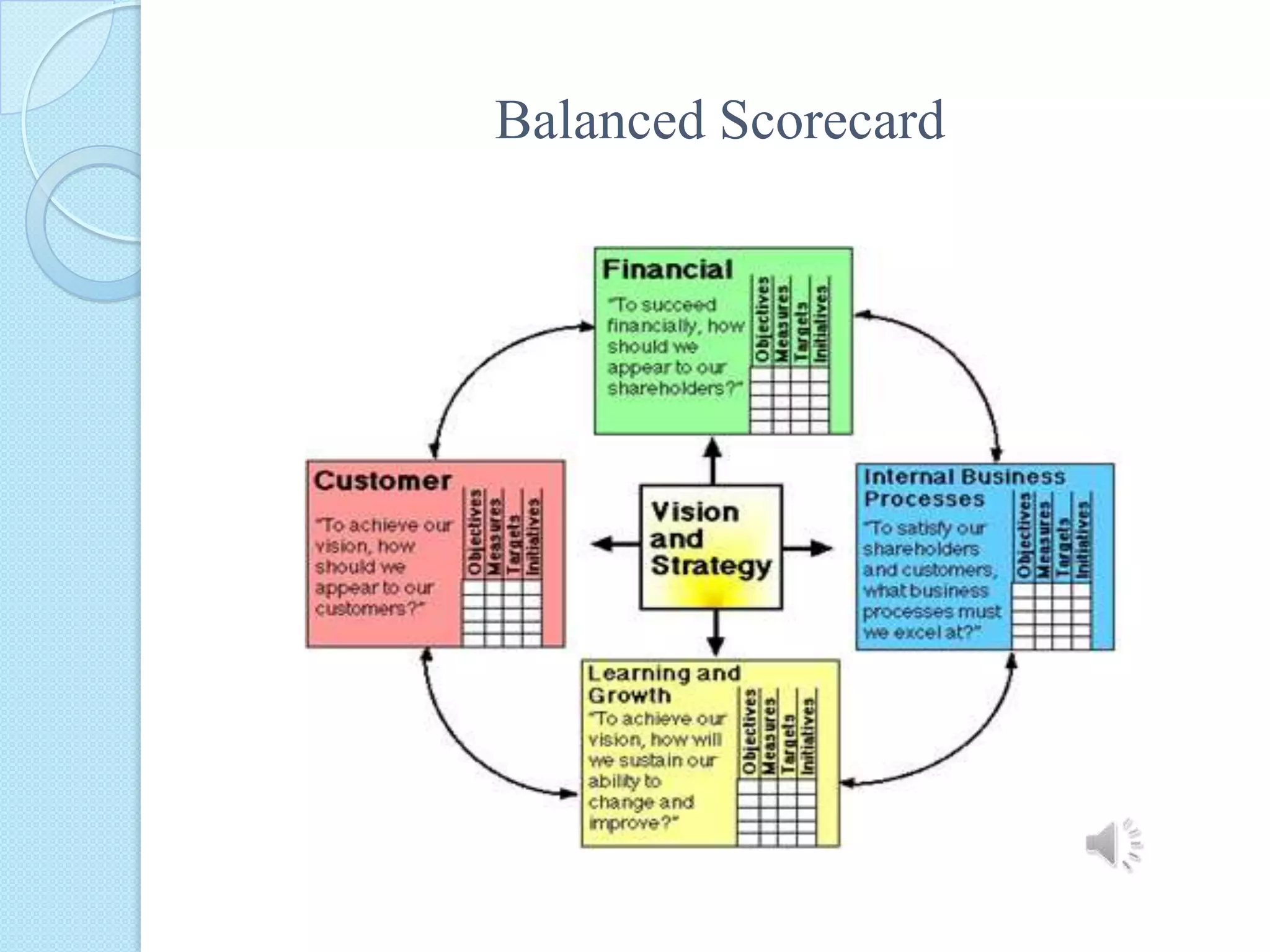
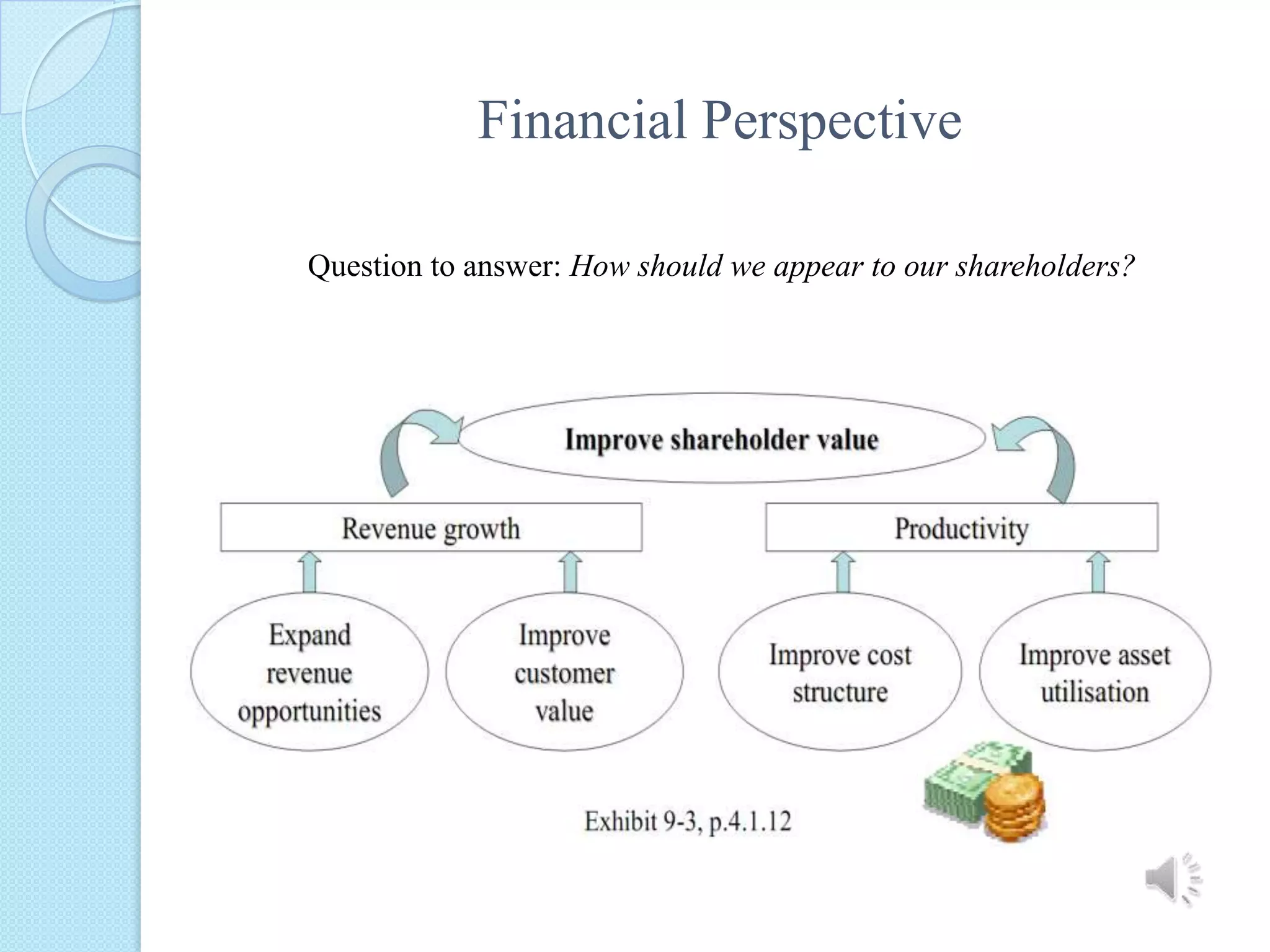
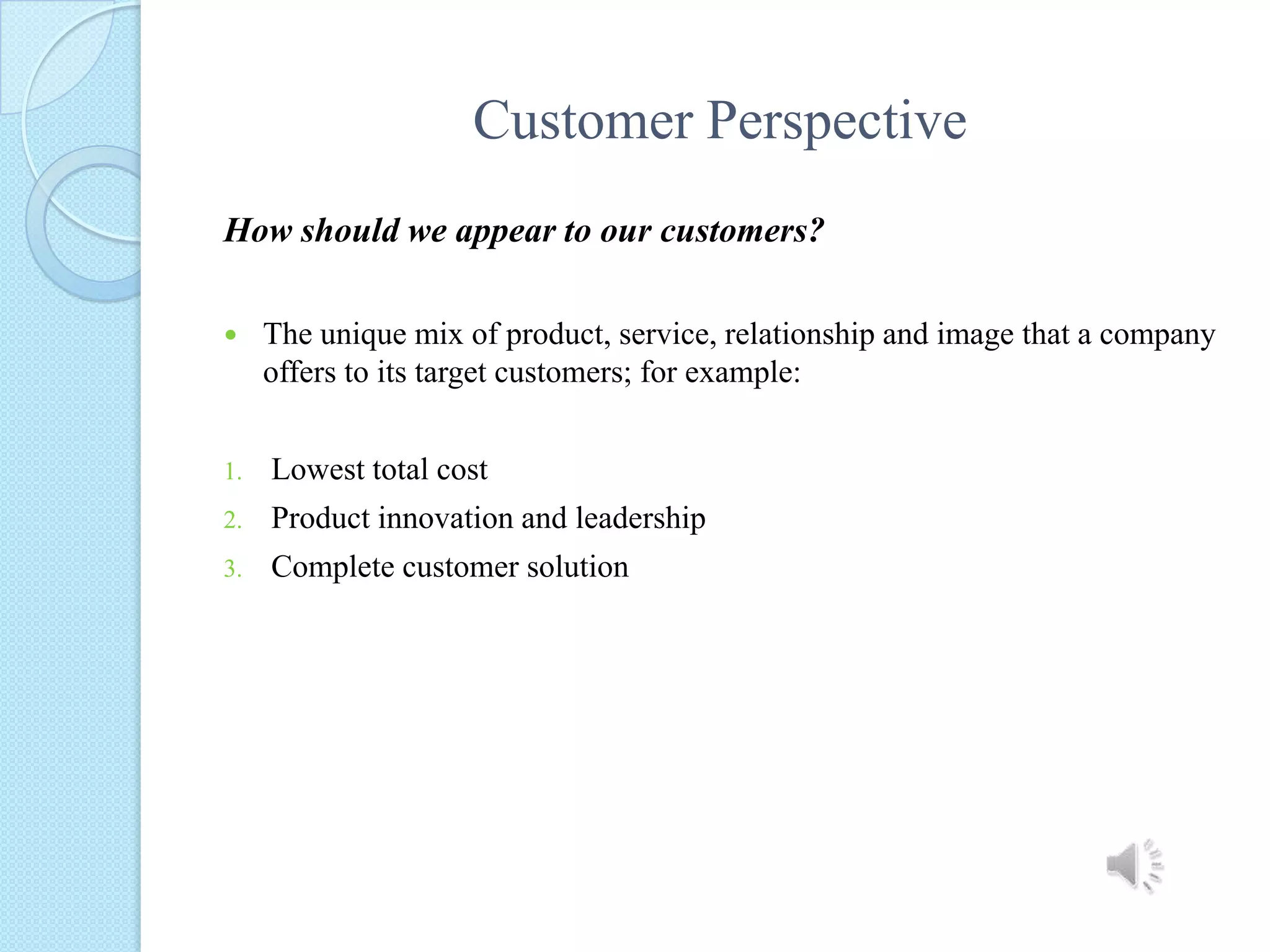
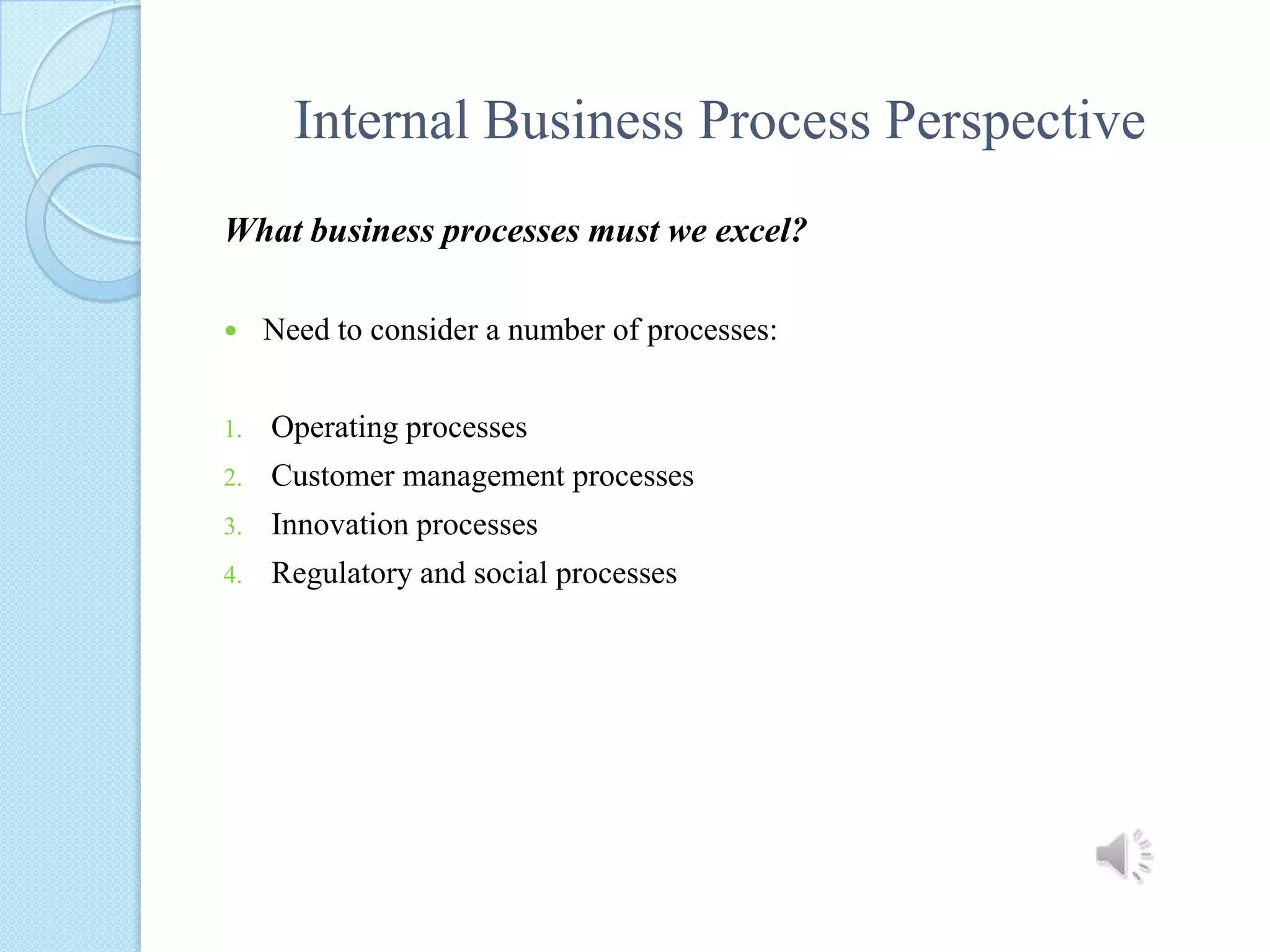
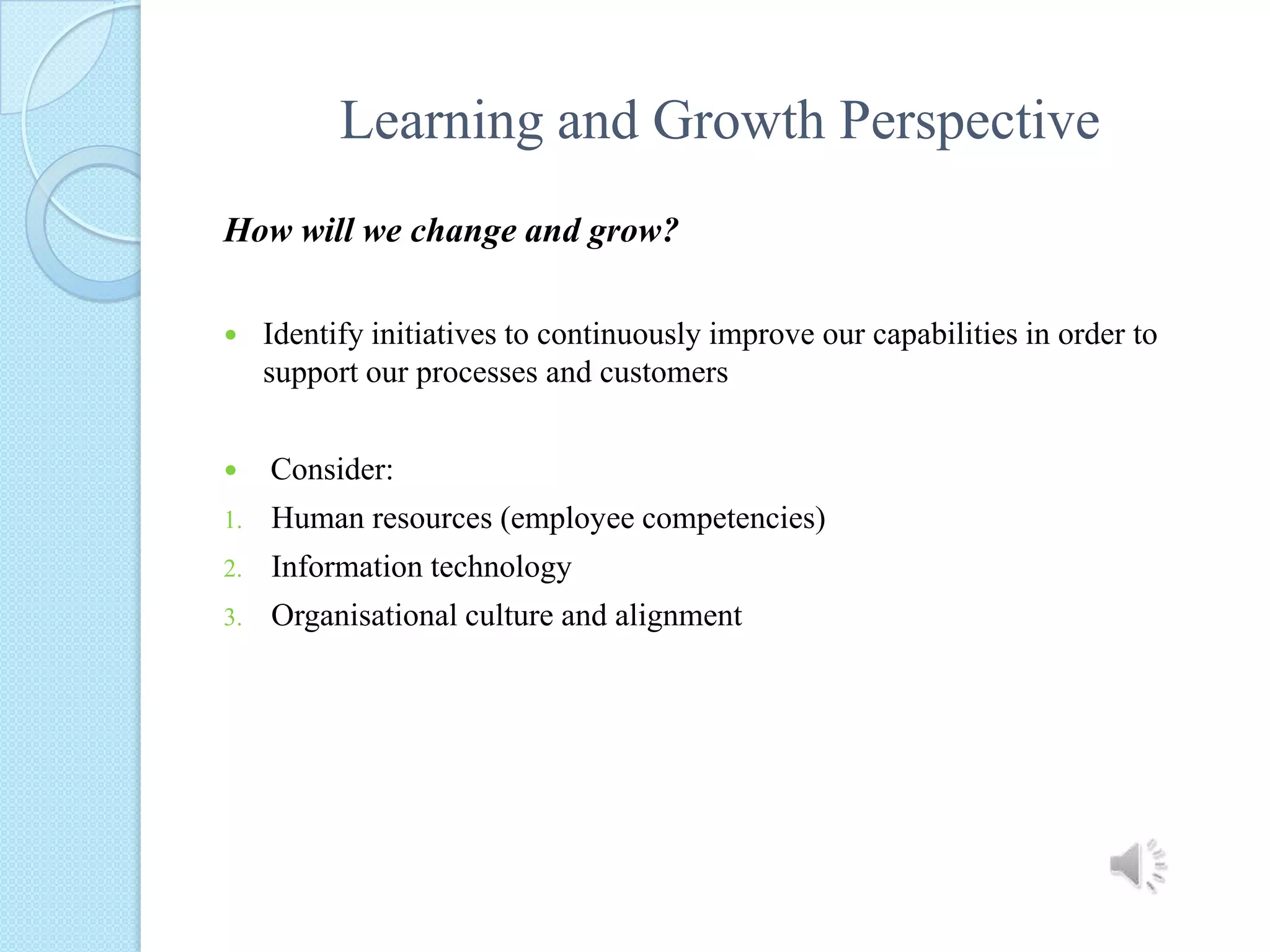
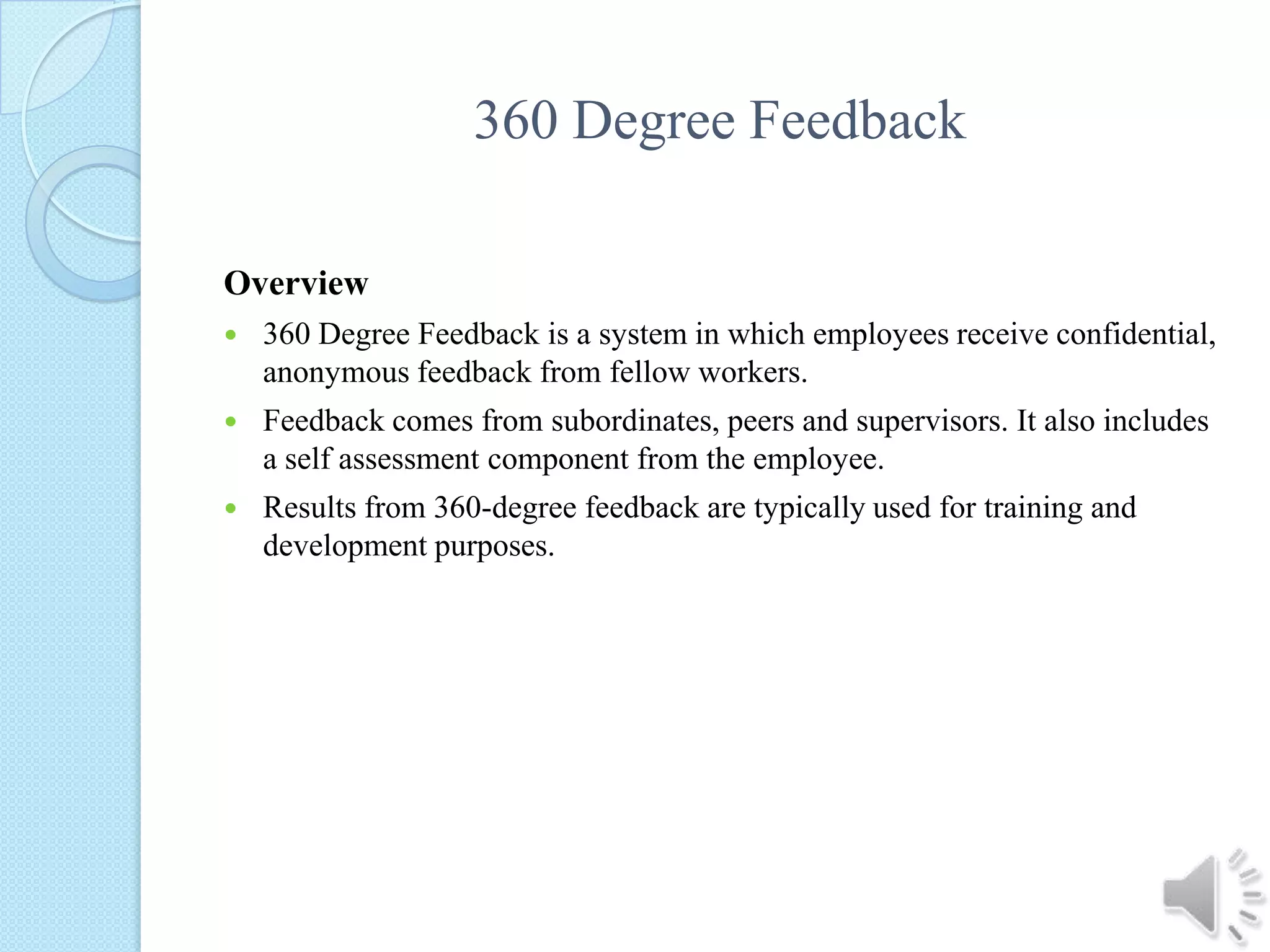
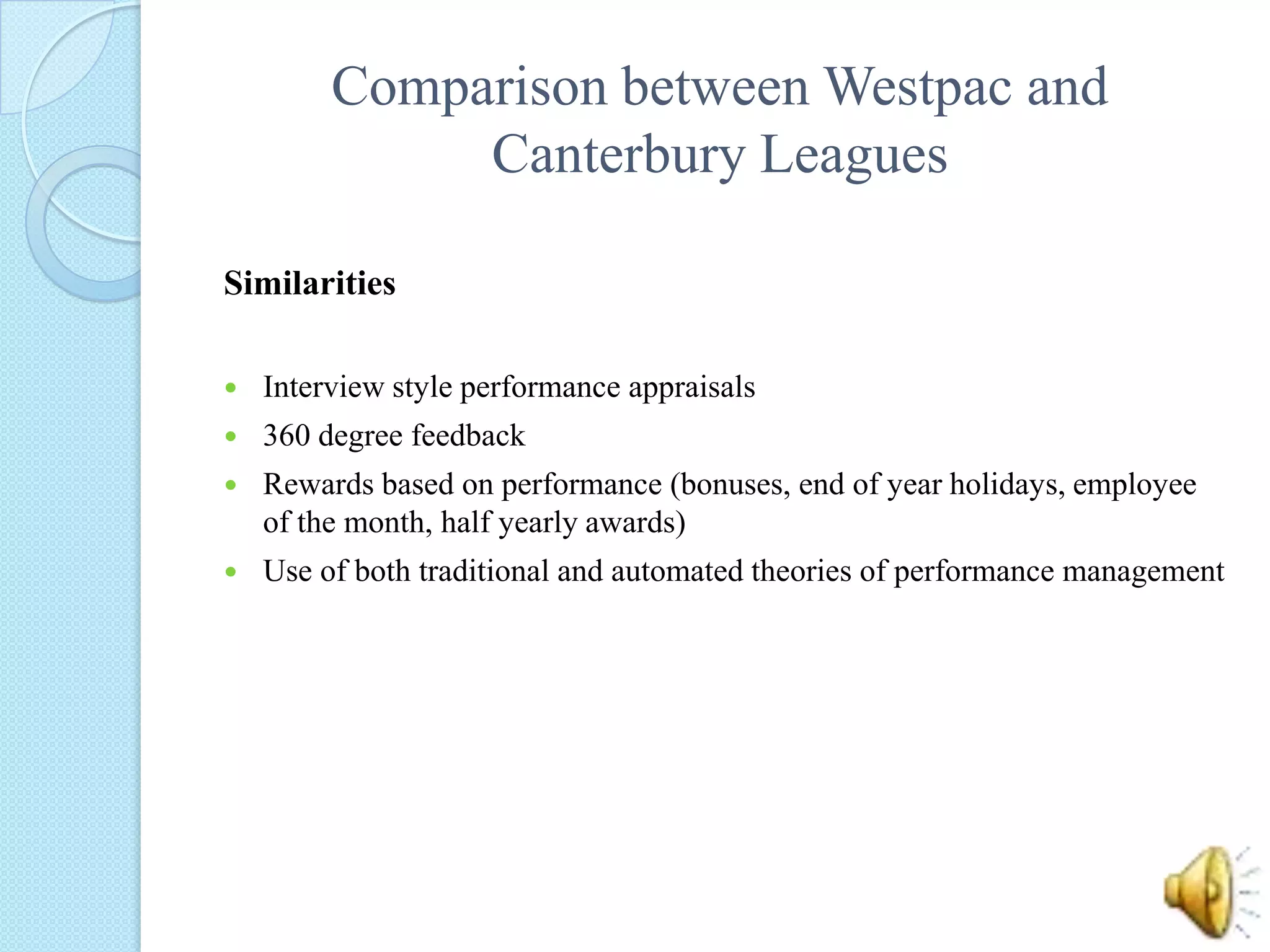
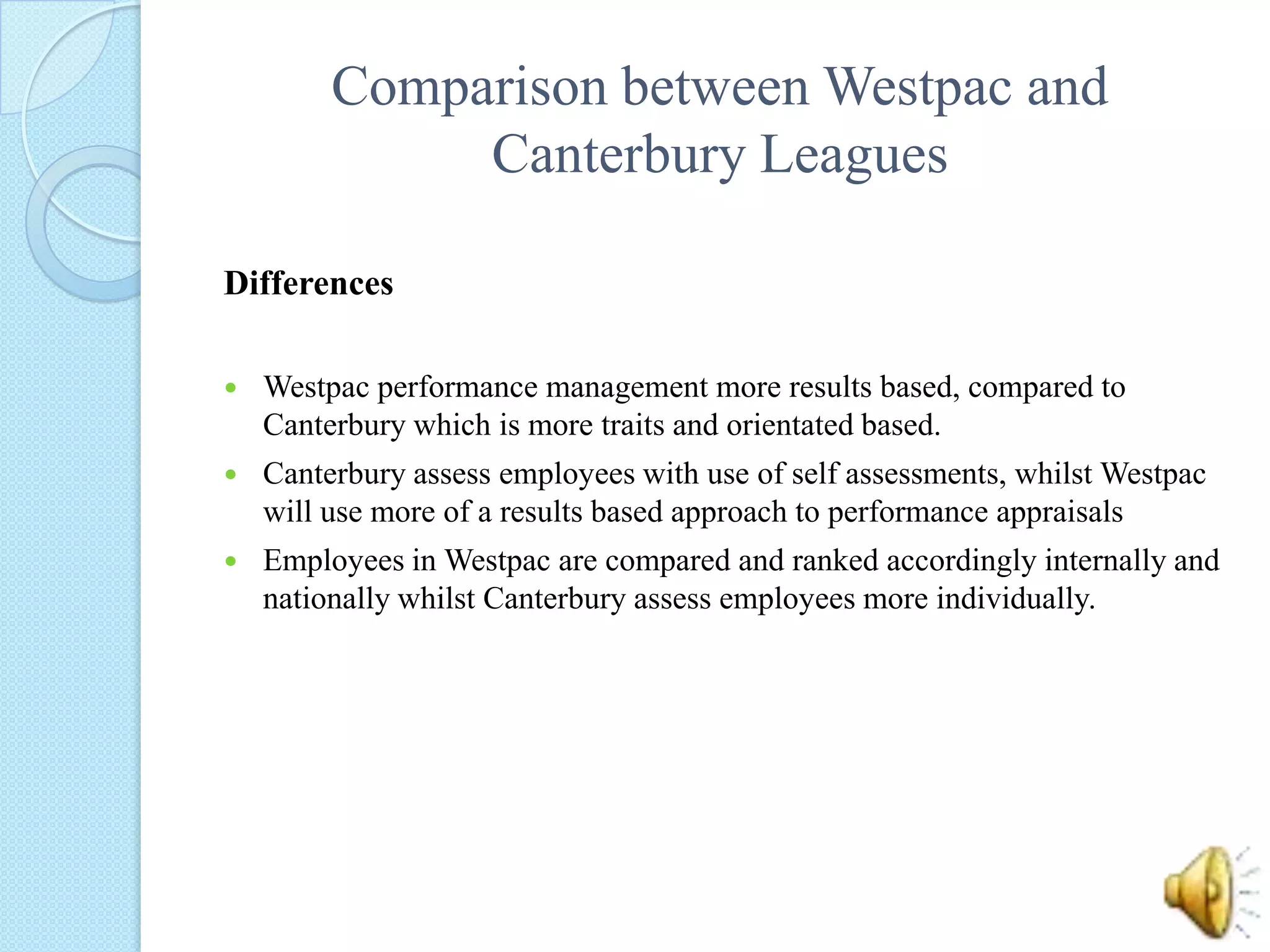
Traditional performance management focuses on setting individual objectives and assessing achievement. While intended to increase control, identify problems early, align goals, motivate employees, and provide clear standards, in reality managers are reluctant to give honest feedback and employees do not believe managers are qualified to evaluate them. Only 30% of workers feel performance management helps improve performance. Automated performance management aims to implement best practices more easily and improve feedback quality. A study of Pakistani industries found positive relationships between effective management by objectives practices, organizational productivity, and employee performance. The balanced scorecard measures performance across financial, customer, internal process, and learning/growth perspectives. 360 degree feedback involves confidential, anonymous feedback from subordinates, peers, and supervisors to provide development insights.


![Wk 2 - Apply Five Step Marketing Research Approach [due Mon]Top.docx](https://cdn.slidesharecdn.com/ss_thumbnails/wk2-applyfivestepmarketingresearchapproachduemontop-221225041108-7027de1a-thumbnail.jpg?width=640&height=640&fit=bounds)


