GENRE 
The Google definition of genre is ‘a style or category of art, music, or 
literature’. 
Meaning that the genre is a way of categorising art forms (such as films) 
into smaller groups, making them easier to decipher their contents. 
When deciding to watch a film the audience determines the answer from 
judging what mood they are in, and what type of genre would appeal to 
them. 
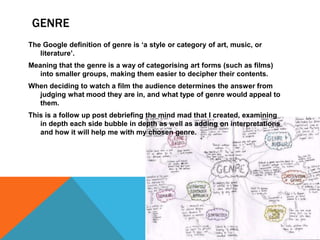
This is a follow up post debriefing the mind mad that I created, examining 
in depth each side bubble in depth as well as adding on interpretations 
and how it will help me with my chosen genre.
GENRE BASICS 
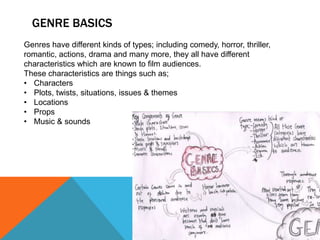
Genres have different kinds of types; including comedy, horror, thriller, 
romantic, actions, drama and many more, they all have different 
characteristics which are known to film audiences. 
These characteristics are things such as; 
• Characters 
• Plots, twists, situations, issues & themes 
• Locations 
• Props 
• Music & sounds
DANIEL CHANDLERS INTRODUCTION TO GENRE 
THEORY. 
Conventional definitions of genres are based on the notion 
that their contents consist of particular conventions that 
are associated with belonging to them. 
He stated that embedded within texts (in our case short 
films) are assumptions about the ‘ideal reader’ (target 
audience). These assumptions are what the creator 
believes their attitudes towards subject areas will be. 
These assumptions can be based on class, age, gender 
as well as ethnicity.
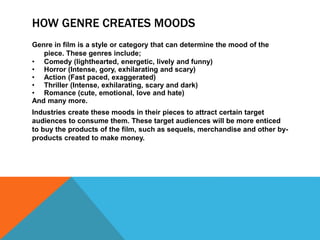
HOW GENRE CREATES MOODS 
Genre in film is a style or category that can determine the mood of the 
piece. These genres include; 
• Comedy (lighthearted, energetic, lively and funny) 
• Horror (Intense, gory, exhilarating and scary) 
• Action (Fast paced, exaggerated) 
• Thriller (Intense, exhilarating, scary and dark) 
• Romance (cute, emotional, love and hate) 
And many more. 
Industries create these moods in their pieces to attract certain target 
audiences to consume them. These target audiences will be more enticed 
to buy the products of the film, such as sequels, merchandise and other by-products 
created to make money.
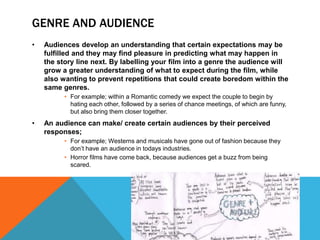
GENRE AND AUDIENCE 
• Audiences develop an understanding that certain expectations may be 
fulfilled and they may find pleasure in predicting what may happen in 
the story line next. By labelling your film into a genre the audience will 
grow a greater understanding of what to expect during the film, while 
also wanting to prevent repetitions that could create boredom within the 
same genres. 
• For example; within a Romantic comedy we expect the couple to begin by 
hating each other, followed by a series of chance meetings, of which are funny, 
but also bring them closer together. 
• An audience can make/ create certain audiences by their perceived 
responses; 
• For example; Westerns and musicals have gone out of fashion because they 
don’t have an audience in todays industries. 
• Horror films have come back, because audiences get a buzz from being 
scared.
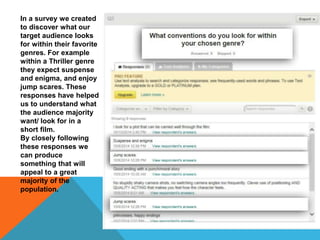
In a survey we created 
to discover what our 
target audience looks 
for within their favorite 
genres. For example 
within a Thriller genre 
they expect suspense 
and enigma, and enjoy 
jump scares. These 
responses have helped 
us to understand what 
the audience majority 
want/ look for in a 
short film. 
By closely following 
these responses we 
can produce 
something that will 
appeal to a great 
majority of the 
population.
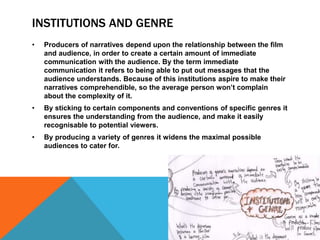
INSTITUTIONS AND GENRE 
• Producers of narratives depend upon the relationship between the film 
and audience, in order to create a certain amount of immediate 
communication with the audience. By the term immediate 
communication it refers to being able to put out messages that the 
audience understands. Because of this institutions aspire to make their 
narratives comprehendible, so the average person won’t complain 
about the complexity of it. 
• By sticking to certain components and conventions of specific genres it 
ensures the understanding from the audience, and make it easily 
recognisable to potential viewers. 
• By producing a variety of genres it widens the maximal possible 
audiences to cater for.
PROBLEMS WITH GENRE 
Defining a genre in itself is extremely problematic. What is the difference 
between a horror film and a thriller, they both have suspense and 
sometimes enigma associated with them. Genres can have similar 
characteristics that are associated with more than one genre. 
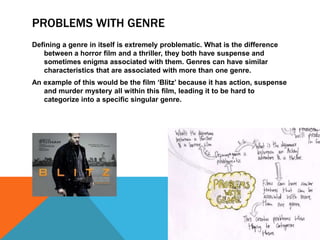
An example of this would be the film ‘Blitz’ because it has action, suspense 
and murder mystery all within this film, leading it to be hard to 
categorize into a specific singular genre.
CONVENTIONS OF A THRILLER MOVIE 
A thriller has certain conventions that the 
audience looks for within a film of this 
class. The main aim is to create 
suspense and excitement for the 
audience, based upon mystery, or the 
investigation of an enigma filmed from 
the point of a main character that is 
being eluded from the truth. 
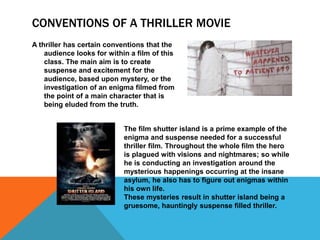
The film shutter island is a prime example of the 
enigma and suspense needed for a successful 
thriller film. Throughout the whole film the hero 
is plagued with visions and nightmares; so while 
he is conducting an investigation around the 
mysterious happenings occurring at the insane 
asylum, he also has to figure out enigmas within 
his own life. 
These mysteries result in shutter island being a 
gruesome, hauntingly suspense filled thriller.
A key convention that is important within a 
thriller film is that there be a large amount 
of violence within the film. Sometimes 
filmed within/ based around the inner 
workings of institutions such as the 
police, army and the government. Within 
these institutions it allows the writers to 
include violence and action pact scenes 
(such as shoot outs, car chases and 
vengeful scenes). 
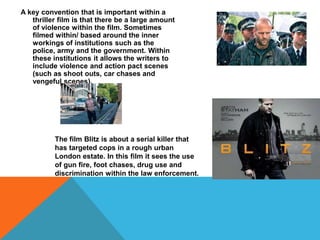
The film Blitz is about a serial killer that 
has targeted cops in a rough urban 
London estate. In this film it sees the use 
of gun fire, foot chases, drug use and 
discrimination within the law enforcement.
Within these films there is always a 
rational outcome, that can be 
comprehended without use of the 
supernatural or out of this world 
elements. And sometimes the hero 
and the villain share some similar 
characteristics, which causes the 
protagonist to face the hardest 
challenge he has ever faced. 
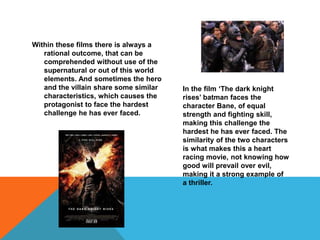
In the film ‘The dark knight 
rises’ batman faces the 
character Bane, of equal 
strength and fighting skill, 
making this challenge the 
hardest he has ever faced. The 
similarity of the two characters 
is what makes this a heart 
racing movie, not knowing how 
good will prevail over evil, 
making it a strong example of 
a thriller.

Genre Theories

  • 2.
    GENRE The Googledefinition of genre is ‘a style or category of art, music, or literature’. Meaning that the genre is a way of categorising art forms (such as films) into smaller groups, making them easier to decipher their contents. When deciding to watch a film the audience determines the answer from judging what mood they are in, and what type of genre would appeal to them. This is a follow up post debriefing the mind mad that I created, examining in depth each side bubble in depth as well as adding on interpretations and how it will help me with my chosen genre.
  • 3.
    GENRE BASICS Genreshave different kinds of types; including comedy, horror, thriller, romantic, actions, drama and many more, they all have different characteristics which are known to film audiences. These characteristics are things such as; • Characters • Plots, twists, situations, issues & themes • Locations • Props • Music & sounds
  • 4.
    DANIEL CHANDLERS INTRODUCTIONTO GENRE THEORY. Conventional definitions of genres are based on the notion that their contents consist of particular conventions that are associated with belonging to them. He stated that embedded within texts (in our case short films) are assumptions about the ‘ideal reader’ (target audience). These assumptions are what the creator believes their attitudes towards subject areas will be. These assumptions can be based on class, age, gender as well as ethnicity.
  • 5.
    HOW GENRE CREATESMOODS Genre in film is a style or category that can determine the mood of the piece. These genres include; • Comedy (lighthearted, energetic, lively and funny) • Horror (Intense, gory, exhilarating and scary) • Action (Fast paced, exaggerated) • Thriller (Intense, exhilarating, scary and dark) • Romance (cute, emotional, love and hate) And many more. Industries create these moods in their pieces to attract certain target audiences to consume them. These target audiences will be more enticed to buy the products of the film, such as sequels, merchandise and other by-products created to make money.
  • 6.
    GENRE AND AUDIENCE • Audiences develop an understanding that certain expectations may be fulfilled and they may find pleasure in predicting what may happen in the story line next. By labelling your film into a genre the audience will grow a greater understanding of what to expect during the film, while also wanting to prevent repetitions that could create boredom within the same genres. • For example; within a Romantic comedy we expect the couple to begin by hating each other, followed by a series of chance meetings, of which are funny, but also bring them closer together. • An audience can make/ create certain audiences by their perceived responses; • For example; Westerns and musicals have gone out of fashion because they don’t have an audience in todays industries. • Horror films have come back, because audiences get a buzz from being scared.
  • 7.
    In a surveywe created to discover what our target audience looks for within their favorite genres. For example within a Thriller genre they expect suspense and enigma, and enjoy jump scares. These responses have helped us to understand what the audience majority want/ look for in a short film. By closely following these responses we can produce something that will appeal to a great majority of the population.
  • 8.
    INSTITUTIONS AND GENRE • Producers of narratives depend upon the relationship between the film and audience, in order to create a certain amount of immediate communication with the audience. By the term immediate communication it refers to being able to put out messages that the audience understands. Because of this institutions aspire to make their narratives comprehendible, so the average person won’t complain about the complexity of it. • By sticking to certain components and conventions of specific genres it ensures the understanding from the audience, and make it easily recognisable to potential viewers. • By producing a variety of genres it widens the maximal possible audiences to cater for.
  • 9.
    PROBLEMS WITH GENRE Defining a genre in itself is extremely problematic. What is the difference between a horror film and a thriller, they both have suspense and sometimes enigma associated with them. Genres can have similar characteristics that are associated with more than one genre. An example of this would be the film ‘Blitz’ because it has action, suspense and murder mystery all within this film, leading it to be hard to categorize into a specific singular genre.
  • 10.
    CONVENTIONS OF ATHRILLER MOVIE A thriller has certain conventions that the audience looks for within a film of this class. The main aim is to create suspense and excitement for the audience, based upon mystery, or the investigation of an enigma filmed from the point of a main character that is being eluded from the truth. The film shutter island is a prime example of the enigma and suspense needed for a successful thriller film. Throughout the whole film the hero is plagued with visions and nightmares; so while he is conducting an investigation around the mysterious happenings occurring at the insane asylum, he also has to figure out enigmas within his own life. These mysteries result in shutter island being a gruesome, hauntingly suspense filled thriller.
  • 11.
    A key conventionthat is important within a thriller film is that there be a large amount of violence within the film. Sometimes filmed within/ based around the inner workings of institutions such as the police, army and the government. Within these institutions it allows the writers to include violence and action pact scenes (such as shoot outs, car chases and vengeful scenes). The film Blitz is about a serial killer that has targeted cops in a rough urban London estate. In this film it sees the use of gun fire, foot chases, drug use and discrimination within the law enforcement.
  • 12.
    Within these filmsthere is always a rational outcome, that can be comprehended without use of the supernatural or out of this world elements. And sometimes the hero and the villain share some similar characteristics, which causes the protagonist to face the hardest challenge he has ever faced. In the film ‘The dark knight rises’ batman faces the character Bane, of equal strength and fighting skill, making this challenge the hardest he has ever faced. The similarity of the two characters is what makes this a heart racing movie, not knowing how good will prevail over evil, making it a strong example of a thriller.