Genre Research
Emilia Waterhouse, Jack Archer
And Ed Cefai
Why?
 Social Realism is most fitting to our narrative.
 We considered this to be the most effective genre to display
our media skills.
 We had an original idea of a specific location and social
realism was most appropriate for this location.
 Each of us have an interest in this specific genre and the way
in which in rejects common conventions of film.
Previous ideas and how Social
Realism differs….
Action:
Our original idea was to create a product of the action genre. Common
conventions of action are violence. This would become a problem for us
because of the mis-en scene required, such as guns and other weapons. As
we do not have the necessary resources our production would be less realistic
and therefore would not display our talents so well.
Drama:
The purpose of the drama genre is to emotionally move an audience. It also
depends upon the development and growth of characters emotionally, which
provides personal identity and allows the audience to engage in the film. The
narrative of a drama film commonly includes a character dealing with
emotional issues.
Social Realism
Social realism is similar to the genre of drama; however it differs
because it focuses on topical issues that are alive in the society of that
time. Social Realism films often convey ideologies such as:
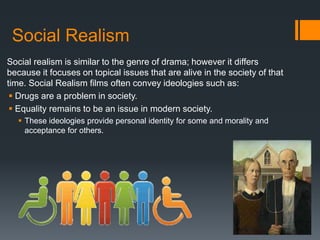
 Drugs are a problem in society.
 Equality remains to be an issue in modern society.
 These ideologies provide personal identity for some and morality and
acceptance for others.
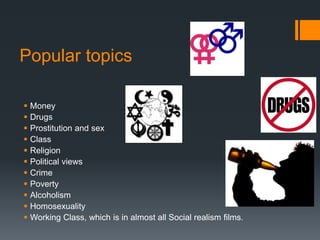
Popular topics
 Money
 Drugs
 Prostitution and sex
 Class
 Religion
 Political views
 Crime
 Poverty
 Alcoholism
 Homosexuality
 Working Class, which is in almost all Social realism films.
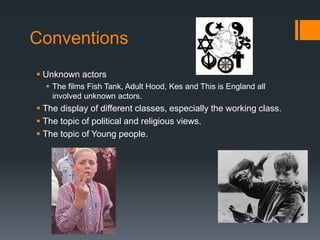
Conventions
 Unknown actors
 The films Fish Tank, Adult Hood, Kes and This is England all
involved unknown actors.
 The display of different classes, especially the working class.
 The topic of political and religious views.
 The topic of Young people.
Production Companies
Crown Film
A British organisation within the Ministry of Information. It was
created with the intention of producing films that appealed to the
public and people abroad during the First World war. It was
disbanded in 1952.
Film 4
It is owned by channel 4 and is a subsidiary company. It released
its first film in 1982 and produces films of a variety of different
genres. Film 4 have previously displayed an interest in focussing
on the genre of Social Realism.
Audience
The genre of Social Realism has a very
broad audience. This is because it appeals
to a higher income bracket because of the
rejection of common conventions of film and
traditional, more positive ideologies.
It also appeals to the lower, working
class income bracket because it
provides personal identity.
The age it appeals to is also
variable because Social Realism
films revolve very much around
a time period and can therefore
appeal to older people or
younger people if it is a modern
society film.
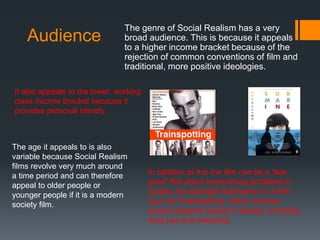
In addition to this the film can be a ‘feel
good’ film about overcoming problems in
society, for example Submarine or a film
such as Trainspotting, which revolves
around extreme issues in society, involving
drug use and swearing.
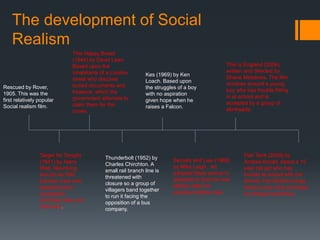
The development of Social
Realism
Rescued by Rover,
1905. This was the
first relatively popular
Social realism film.
Target for Tonight
(1941) by Harry
Watt. Revolving
around an RAF
bomber crew who
experienced a
successful
bombing rade over
Germany.
This Happy Breed
(1944) by David Lean.
Based upon the
inhabitants of a London
street who discover
buried documents and
treasure, which the
government attempts to
claim them for the
crown.
Thunderbolt (1952) by
Charles Chirchton. A
small rail branch line is
threatened with
closure so a group of
villagers band together
to run it facing the
opposition of a bus
company.
Kes (1969) by Ken
Loach. Based upon
the struggles of a boy
with no aspiration
given hope when he
raises a Falcon.
Secrets and Lies (1969)
by Mike Leigh. An
adopted black woman’s
attempts to find her real
Mother after her
adoptive Mother dies.
This is England (2006),
written and directed by
Shane Meadows. The film
revolves around a young
boy who has trouble fitting
in at school and is
accepted by a group of
skinheads.
Fish Tank (2009) by
Andrea Arnold. About a 15
year old girl who has
trouble at school with her
friends. Her Mother brings
home a man who promises
to change everything.
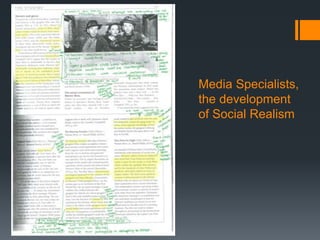
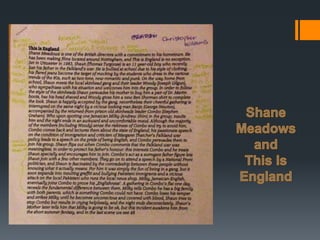
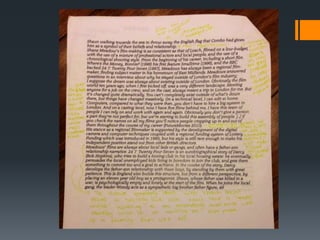
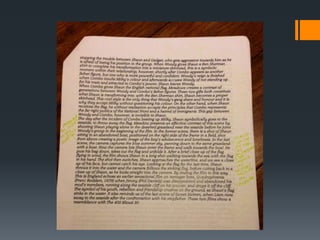
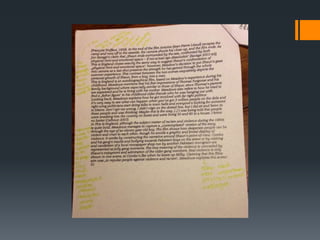
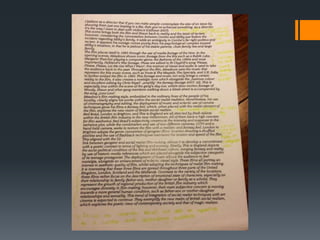
Media Specialists,
the development
of Social Realism
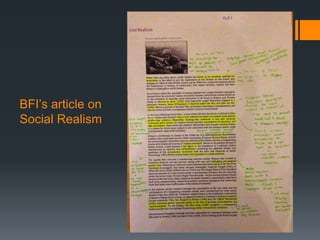
BFI’s article on
Social Realism
Continued…
Genre research... edited

Genre research... edited

  • 1.
    Genre Research Emilia Waterhouse,Jack Archer And Ed Cefai
  • 2.
    Why?  Social Realismis most fitting to our narrative.  We considered this to be the most effective genre to display our media skills.  We had an original idea of a specific location and social realism was most appropriate for this location.  Each of us have an interest in this specific genre and the way in which in rejects common conventions of film.
  • 3.
    Previous ideas andhow Social Realism differs…. Action: Our original idea was to create a product of the action genre. Common conventions of action are violence. This would become a problem for us because of the mis-en scene required, such as guns and other weapons. As we do not have the necessary resources our production would be less realistic and therefore would not display our talents so well. Drama: The purpose of the drama genre is to emotionally move an audience. It also depends upon the development and growth of characters emotionally, which provides personal identity and allows the audience to engage in the film. The narrative of a drama film commonly includes a character dealing with emotional issues.
  • 4.
    Social Realism Social realismis similar to the genre of drama; however it differs because it focuses on topical issues that are alive in the society of that time. Social Realism films often convey ideologies such as:  Drugs are a problem in society.  Equality remains to be an issue in modern society.  These ideologies provide personal identity for some and morality and acceptance for others.
  • 5.
    Popular topics  Money Drugs  Prostitution and sex  Class  Religion  Political views  Crime  Poverty  Alcoholism  Homosexuality  Working Class, which is in almost all Social realism films.
  • 6.
    Conventions  Unknown actors The films Fish Tank, Adult Hood, Kes and This is England all involved unknown actors.  The display of different classes, especially the working class.  The topic of political and religious views.  The topic of Young people.
  • 7.
    Production Companies Crown Film ABritish organisation within the Ministry of Information. It was created with the intention of producing films that appealed to the public and people abroad during the First World war. It was disbanded in 1952. Film 4 It is owned by channel 4 and is a subsidiary company. It released its first film in 1982 and produces films of a variety of different genres. Film 4 have previously displayed an interest in focussing on the genre of Social Realism.
  • 8.
    Audience The genre ofSocial Realism has a very broad audience. This is because it appeals to a higher income bracket because of the rejection of common conventions of film and traditional, more positive ideologies. It also appeals to the lower, working class income bracket because it provides personal identity. The age it appeals to is also variable because Social Realism films revolve very much around a time period and can therefore appeal to older people or younger people if it is a modern society film. In addition to this the film can be a ‘feel good’ film about overcoming problems in society, for example Submarine or a film such as Trainspotting, which revolves around extreme issues in society, involving drug use and swearing.
  • 9.
    The development ofSocial Realism Rescued by Rover, 1905. This was the first relatively popular Social realism film. Target for Tonight (1941) by Harry Watt. Revolving around an RAF bomber crew who experienced a successful bombing rade over Germany. This Happy Breed (1944) by David Lean. Based upon the inhabitants of a London street who discover buried documents and treasure, which the government attempts to claim them for the crown. Thunderbolt (1952) by Charles Chirchton. A small rail branch line is threatened with closure so a group of villagers band together to run it facing the opposition of a bus company. Kes (1969) by Ken Loach. Based upon the struggles of a boy with no aspiration given hope when he raises a Falcon. Secrets and Lies (1969) by Mike Leigh. An adopted black woman’s attempts to find her real Mother after her adoptive Mother dies. This is England (2006), written and directed by Shane Meadows. The film revolves around a young boy who has trouble fitting in at school and is accepted by a group of skinheads. Fish Tank (2009) by Andrea Arnold. About a 15 year old girl who has trouble at school with her friends. Her Mother brings home a man who promises to change everything.
  • 10.
  • 11.
  • 12.