GENETICS IN
PERIODONTICS
GUIDED BY PRESENTED BY
DR.P.SURESH, MDS CH.SUMA PRIYANKA
PROF & HOD 1 st YEAR PG
DEPT.OF PERIODONTICS DEPT.OF PERIODONTICS
GDC&H, KADAPA
2
CONTENTS
Add a Footer 2
 INTRODUCTION
 TERMINOLOGIES
 HUMAN GENOME PROJECT
 GENETICS & PERIODONTICS
 LEADING PERIODONTAL CONCEPTS
 EVIDENCE FOR THE ROLE OF GENETICS IN PERIODONTICS
 GENETIC TESTING
 GENES IN PERIODONTAL DISEASES
3Add a Footer 3
 GENETIC STUDY DESIGNS
 HERITABILITY
PERIODONTITIS IN GENETIC SYNDROMES & OTHER DISEASES
GENE LIBRARY
 GENE THERAPY
 CONCLUSION
 BIBLIOGRAPHY
4
INTRODUCTION
Add a Footer 4
Genetics is a branch of Biology concerned with the study of genes, genetic
variations and heredity in living organisms.
 “Gregor Johann Mendel” – “Father of Genetics”
 Trait inheritance
 Gene
5Add a Footer 5
• In humans, the genes are located on 23 pairs of “Chromosomes”.
• “GENOME”.
6Add a Footer 6
7Add a Footer 7
8Add a Footer 8
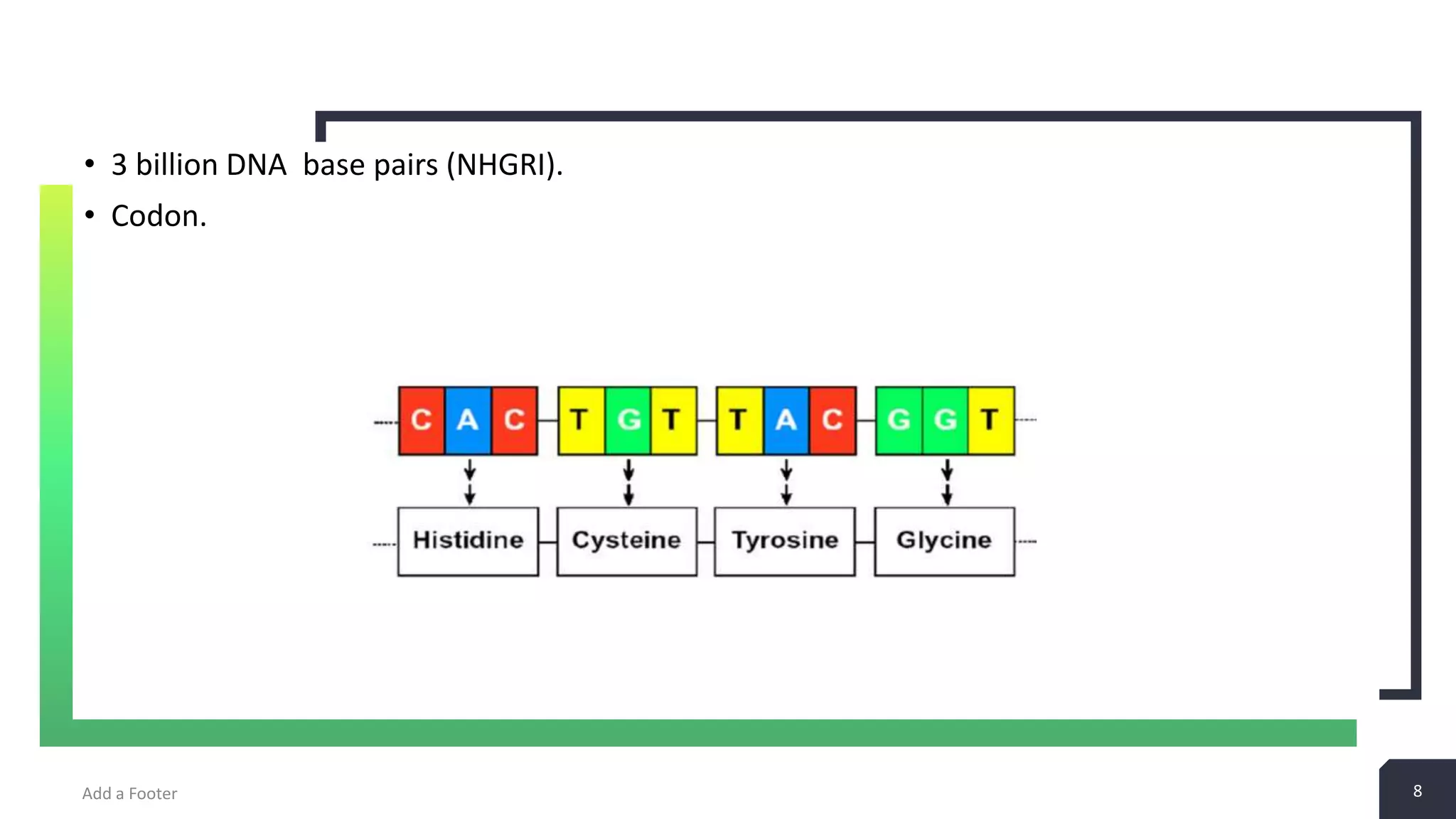
• 3 billion DNA base pairs (NHGRI).
• Codon.
9Add a Footer 9
10
TERMINOLOGIES
Add a Footer 10
GENE: The segment of the genome that carries the instructions for a specific protein is the
“Gene” for that protein.
GENOME: term used to refer all the genes carried by an individual or a cell.
GENOTYPE: genetic makeup of an organism or cell.
GENETIC CODE: the consecutive nucleotide triplets that specify the sequence of aminoacids
for protein synthesis.
ALLELE: Alternative forms of a given gene differing in DNA sequence.
LOCUS: the physical location of a gene occupies within a chromosome or portion of genomic
DNA.
LINKAGE: the tendency for certain genes to be inherited together due to their presence on
the same chromosome.
11Add a Footer 11
• POLYMORPHISM: When a mutation increases to a level involving >1% of the population, it is
referred to as polymorphism.
• SINGLE NUCLEOTIDE POLYMORPHISM: Polymorphism in individual bases.
-most common but minute.
-occur in a frequency of 1 in 1000.
12
HUMAN GENOME PROJECT
Add a Footer 12
GOALS:
• Identify all the approximate 30,000 genes in human DNA.
• Determine the sequences of the 3 billion chemical base pairs that make
up human DNA.
• Store this information in databases.
• Improve tools for data analysis.
• Transfer related technologies to the private sector, and
• Address the ethical, legal, and social issues (ELSI) that may arise from the project.
1313
Milestones:
• 1990: Project initiated as joint effort of U.S. Department of Energy and the National
Institutes of Health.
• June 2000: Completion of a working draft of the entire human genome (covers >90% of the
genome)
• February 2001: Analyses of the working draft are published.
• April 2003: HGP sequencing is completed and Project is declared finished two years ahead
of schedule.
14Add a Footer 14
CONCLUSIONS:
• The human genome is nearly the same (99.9%) in all people.
• Only about 2% of the human genome contains genes, which are the instructions for
making proteins.
• Humans have an estimated 30,000 genes; the functions of more than half of them
are unknown.
• Almost half of all human proteins share similarities with other organisms.
• About 75% of the human genome is “junk”.
15Add a Footer 15
FUTURE CHALLENGES:
• Gene number, exact locations, and functions
• Gene regulation
• DNA sequence organization
• Chromosomal structure and organization
• Noncoding DNA types, amount, distribution, information content, and functions
• Coordination of gene expression, protein synthesis, and post-translational events
• Correlation of SNPs with health and disease
• Genes involved in complex traits and multi-gene diseases
• Developmental genetics, genomics
16
DOES EVERYONE HAVE THE SAME GENES???
Add a Footer 16
• Differences among individuals are both genetically and environmentally determined.
• Differences due to genetics arise primarily because the same gene may differ in DNA
sequence between two individuals.
• These differences are termed as “Alleles”.
17
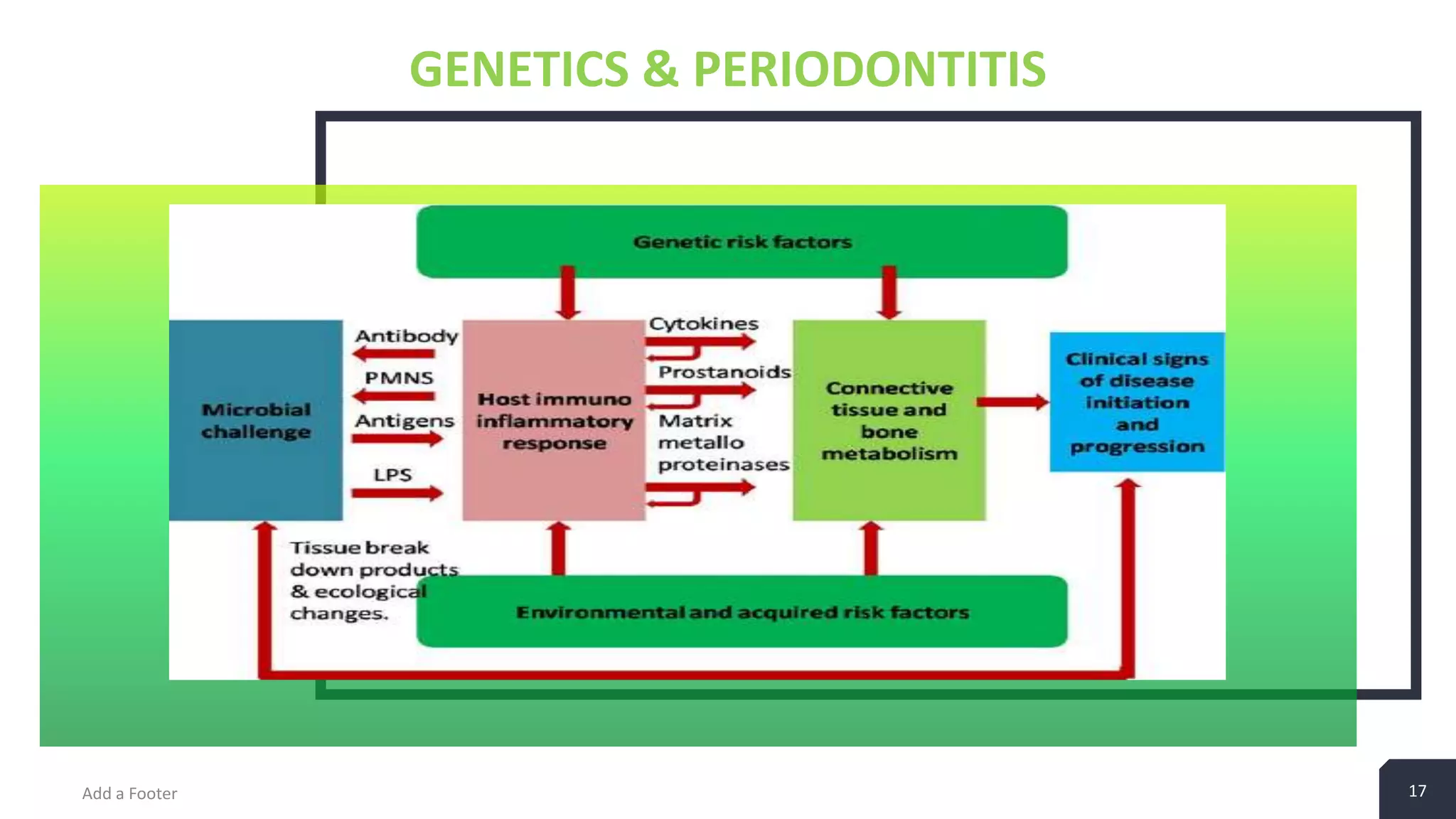
GENETICS & PERIODONTITIS
Add a Footer 17
18Add a Footer 18
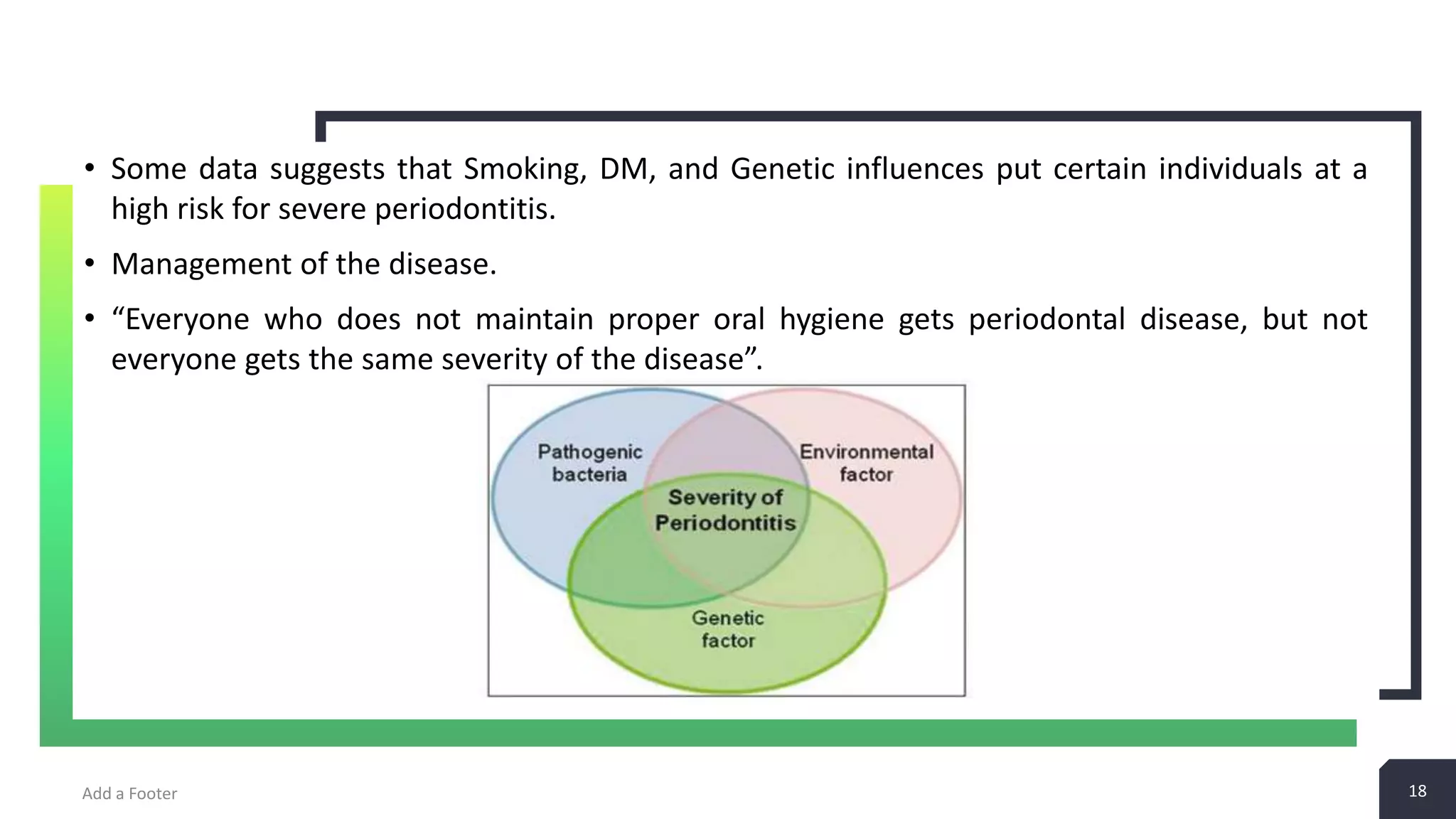
• Some data suggests that Smoking, DM, and Genetic influences put certain individuals at a
high risk for severe periodontitis.
• Management of the disease.
• “Everyone who does not maintain proper oral hygiene gets periodontal disease, but not
everyone gets the same severity of the disease”.
19
LEADING PERIODONTAL CONCEPTS
Add a Footer 19
1965-1995:
i. Populations with poor plaque control and limited professional dental care have
widespread severe periodontitis.
ii. Individuals with poor plaque control for many years have severe generalized periodontitis.
iii. The severity of the disease depends on the combination of the bacterial challenge and the
length of time of exposure to the bacteria.
20Add a Footer 20
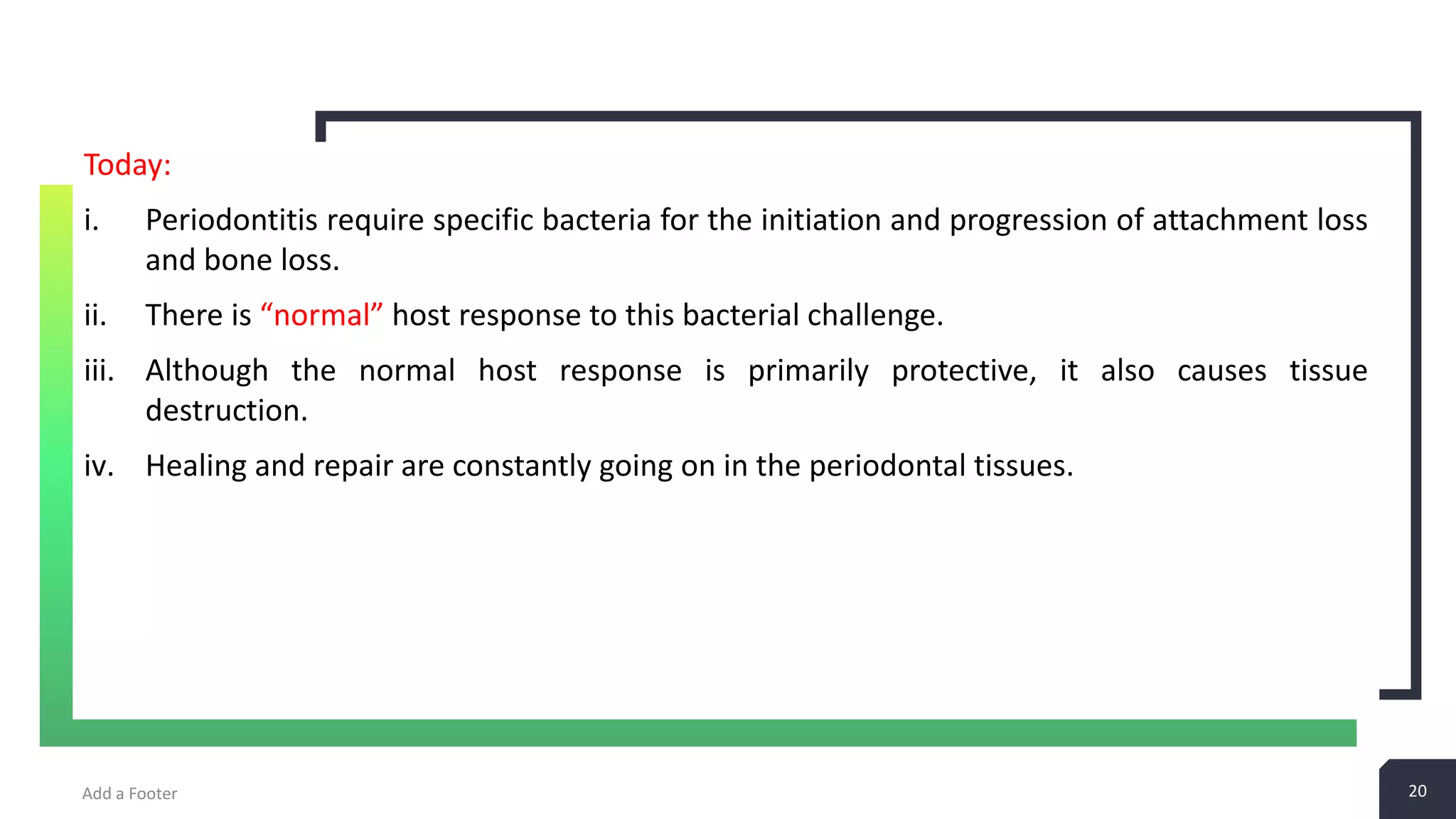
Today:
i. Periodontitis require specific bacteria for the initiation and progression of attachment loss
and bone loss.
ii. There is “normal” host response to this bacterial challenge.
iii. Although the normal host response is primarily protective, it also causes tissue
destruction.
iv. Healing and repair are constantly going on in the periodontal tissues.
21Add a Footer 21
V. In the majority of individuals with a moderate bacterial challenge, protection and repair
dominate destruction, and very little disease is clinically evident.
Vi. Some patients have “altered” host responses and develop more severe destruction.
Vii. Altered host responses may result from-
a) heavy bacterial challenges overwhelming the protective and repair
mechanisms.
b) the presence of disease modifiers that reduce the protective component of
the host response or amplify the destructive component.
22Add a Footer 22
MODIFYING FACTORS:
• The factors that determine the severity and response to treatment are often called “Disease
modifiers”.
• Will change the trajectory of the clinical disease expression over time.
• So, an individual with a disease modifier is at increased risk for more severe signs and
symptoms at any given time in the disease, as compared with an individual without that
modifier.
• Eg; Smoking & Periodontitis.
23Add a Footer 23
24
EVIDENCE FOR THE ROLE OF GENETICS IN
PERIODONTITIS
Add a Footer 24
In a study of 222 healthy children aged 0-18 years from Ohio, USA, pathogenic
strains of A.actonimycetemcomitans and P.gingivalis were detected in 48% and 36% of
children respectively, and both the species were detected in infants as young as 20 days old
(Lamell et al.2000).
Interestingly in a large group of subjects with gingivitis or minor periodontitis, A.a
and P.gingivalis were similarly prevalent 38% and 32% respectively. (Wolff et al.1993).
This shows that not only bacteria, but the host factors are also required for
periodontitis and this may lead to the development of the hypothesis that periodontitis may
have a genetic background.
25Add a Footer 25
Lindhe & co-workers, in an experimental periodontitis study in dogs, noted that
with long-term plaque accumulation and gingivitis development, some of the dogs developed
only minimal loss of attachment or none at all.
In a population in Srilanka without access to dental care and absence of oral
hygiene, “Loe et al. (1986) were able to identify 3 sub-populations:
a) a group with no progression (11%)
b) a group with moderate progression (81%)
c) a group with rapid progression of (8%) periodontal breakdown.
26Add a Footer 26
In a more recent study, the initiation and progression of periodontal breakdown
was studied in a remote village in West Java that was deprived of regular dental care (Vander
velden et al .2006). They found that 20% of the subjects developed severe periodontal
breakdown, whereas the remaining developed mild-moderate breakdown, suggesting that not
everyone is equally susceptible to periodontitis.
27Add a Footer 27
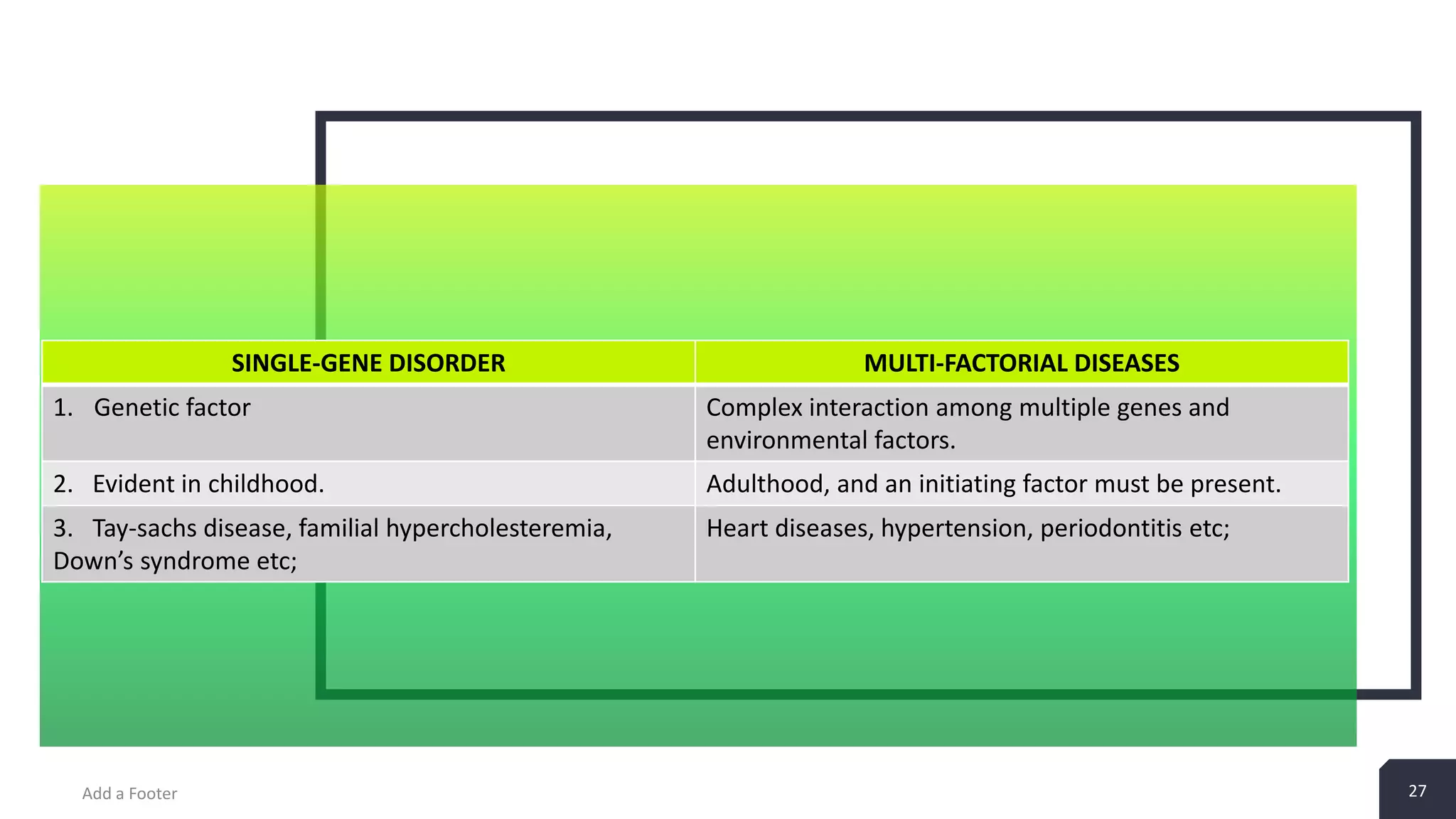
SINGLE-GENE DISORDER MULTI-FACTORIAL DISEASES
1. Genetic factor Complex interaction among multiple genes and
environmental factors.
2. Evident in childhood. Adulthood, and an initiating factor must be present.
3. Tay-sachs disease, familial hypercholesteremia,
Down’s syndrome etc;
Heart diseases, hypertension, periodontitis etc;
28
GENETIC TESTING
Add a Footer 28
• Any cellular material including a blood sample or a scraping of cells from the inside of the
cheek, may be examined.
• 3 types-
i. Testing for chromosomal abnormalities such as “Trisomy 21”.
ii. Testing for unusual mutations, such as BRCA1 as a risk factor for Breast cancer.
iii. Testing for common polymorphisms, such as those being studied for risk of severe
periodontal disease.
29
WHICH GENES ARE IMPORTANT FOR PERIODONTAL
DISEASES??
Add a Footer 29
i. IL-1
ii. PGE2
iii. Matrix Metallo-proteinases (MMP’s).
30Add a Footer 30
• There are many reports associating IL-1 levels in tissues and GCF with bone loss in more
advanced or severe periodontitis.
• Recent studies comparing the severity of bone loss with IL-1 levels in GCF showed essentially
a Straight-line relationship i.e; “the higher the levels of IL-1 in crevicular fluid, the more
severe is the bone loss”.
• Other studies showed that specific blocking of IL-1 & TNF-α in the gingival tissues, without
any plaque control measures, blocked a substantial part of the bone loss in a monkey model
of periodontal disease.
31Add a Footer 31
• The extensive research of the past 20 years considers the following as candidates for genetic
influences on periodontal disease differences among individuals:
i) IL-1
ii) TNF-α
iii) PGE2
iv) Cytokines that regulate immuno-inflammatory processes- IL-10, IL-4, IL-13, IL-12.
v) Growth factors involved in wound healing and CT and bone metabolism.
32
DETERMINING GENETIC VARIATIONS INVOLVED IN
PERIODONTAL DISEASES
Add a Footer 32
i. Use of Candidate genes
ii. Genomic scan
iii. Proteomics
33Add a Footer 33
CANDIDATE GENES: Genes which are known to influence some key aspect of the biology
involved in the disease.
• Candidate genes in SNP’s are studied for association with disease.
GENOMIC SCAN: Starts with specific variations in the nucleotide sequence that are located
along the entire genome.
• The markers that are found to be associated with the disease define the physical locations in
the genome that are more likely than others to influence that disease.
• Each physical location that is identified on the genomic scan must then be explored for
potential genes of importance.
PROTEOMICS: involves the analysis of those genes that are more activated during the disease.
34
GENETIC STUDY DESIGNS
Add a Footer 34
Once the genetic basis for a disease has been established, it is equally important
to determine-
i. Which alleles have measurable effect on phenotype
ii. Whether the prevention, diagnosis, or treatment of the disease can be improved, once
disease alleles are identified.
35Add a Footer 35
i) Segregation analysis
ii) Twin studies
iii) Linkage and Association studies
36Add a Footer 36
SEGREGATION ANALYSIS:
Inherited diseases “run” in families. The pattern of inheritance through
generations depends on-
i) Autosomes / Allosomes
ii) Dominant / Recessive
iii) Fully or Partially Penetrant
• A method of formal genetic analysis employed to determine whether or not a phenotype is
inherited.
• This method also allows the mode of inheritance to be determined i.e; AD/AR.
37Add a Footer 37
• “Penetrance” refers to the probability that a particular phenotype will result from a
genotype.
• “Partially penetrant” means that only a fraction of individuals who inherit the disease alleles
will be affected.
• Generally segregation analysis cannot distinguish between genetic effects and measured
environmental causes of disease.
38Add a Footer 38
TWIN STUDIES:
• The relative influence of genetic and environmental factors on complex diseases can be
estimated using twin studies.
• These studies are based on the fact that dizygotic twins share on average 50% of the genes
by descent, while the genes in monozygotic twins are identical.
• Thus, if heredity plays a significant role in periodontitis, the probability of having the same
disease in monozygotic twins will be much higher than in dizygotic twins.
39Add a Footer 39
LINKAGE AND ASSOCIAION STUDIES:
• Used to map disease alleles to specific regions on chromosomes.
• Uses sets of families or pedigrees containing multiple affected individuals.
• Parameters- a) Mode of inheritance
b) Frequency of the marker allele in the population
c) Disease penetrance.
• Linkage can be detected if the marker and disease alleles are within 20-30 centimorgans
(CM) of one another.
40
HERITABILITY
Add a Footer 40
• It measures the proportion of phenotypic variation that can be attributed to genetic
variation.
• Heritability is also always specific to a particular population in particular surroundings.
41Add a Footer 41
HERITABILITY OF AGGRESSIVE PERIODONTITIS:
• Numerous studies have reported familial aggregation for aggressive periodontitis.
Spektor MD in 1985 has shown that both forms of AP (LAP & GAP) has genetic
mode of inheritance within the families.
• Marazita et al. in 1994 had evaluated more than 100 US families, which included 527 cases
and healthy subjects with aggressive periodontitis and found the data to be more consistent
with an “Autosomal Dominant” transmission.
• Saxen et al. in 1980 showed an AR mode of inheritance of AP among Finnish populations.
42Add a Footer 42
• Schenkein et al. in 1994 proposed model of inheritance of LAP & GAP in families. He studied
that AP and IgG2 responsiveness to bacterial LPS are inherited independently as Dominant
traits within families.
• Segregation analysis with human families are hampered by various methodological factors,
which often are the lack of adequate statistical power due to small number of families, too
small or incomplete families, and a high heterogeneity between families.
43Add a Footer 43
TWIN STUDIES:
Ciancio et al. in 1969 addressed the concordance of the periodontal condition in
twins, but the study design and low sample (7 MZ & 19 DZ twin pairs of age 12-17 yrs) didn’t
allow a clear conclusion on the concordance rate of early-onset periodontitis.
44Add a Footer 44
LINKAGE & ASSOCIATION ANALYSIS:
• This method determines the chromosomal location of a gene that affects the specific
observable traits in the disease.
• For a gene that influences the disease to be identified by this technique, it must have a
“Substantial effect” on the disease, and its effects must be independent of other genetic and
environmental factors.
“Boughman et al; in 1986 reported genetic linkage for LAP in an extended family
from the Brandywine population in Eastern Maryland. They localized a major gene for LAP to
the vicinity of Vit.D binding protein on chromosome 4q.
• Recently, AP has been linked in 4 families with LAP marker located on chromospme1. ( Li Y in
2004).
45Add a Footer 45
• More recently, a powerful linkage analysis technique called “Transmission disequilibrium
testing” was used with AP cases and found a significant role for polymorphisms in IL-1 genes
on chromosome 2q.
• Polymorphisms in the genes for IL-1 & IL-1β were significantly associated with AP, with the
strongest effect for IL-1β.
46Add a Footer 46
ANTIBODY GENETICS (IgG2 & Fcγ receptors):
• IgG1, IgG2, IgG3.
• Serum IgG2 levels in LAP are higher than in GAP cases, and age-matched controls with no
disease, a finding that supports the concept that robust serum antibody response is
associated with protection in AP.
• Polymorphonuclear leucocytes.
• Antibody is critical to the efficiency of removing bacteria by specific binding to the bacterial
cell and binding to the surface receptors on PMN’s.
• The antibody, therefore amplifies the effectiveness of PMN’s by targeting specific bacteria.
47Add a Footer 47
• Segregation analysis studies of IgG2 levels for members of 123 families with AP supports the
association between antibody levels and disease and strongly support a role for both genetic
control of IgG2 and antibody genetics in AP.
• The surface receptor that allows the PMN to bind the IgG antibody and then phagocytize the
bacterial cell is called “Fcγ receptor”.
• Polymorphisms in Fc receptors expressed on the surface of phagocytic cells recently have
been shown to be important determinants of susceptibility to infection.
• Ig FcγRII genes are found on chromosome 1, and FcγRII a polymorphism has 2 variations,
R131 & H131.
48Add a Footer 48
Wilson & co-workers have shown that in patients with LAP, serum containing IgG2
antibodies is effective in phagocytizing A.a when employed in conjunction with neutrophils
that express Fcγ receptors capable of recognizing this antibody.
49Add a Footer 49
HERITABILITY OF CHRONIC PERIODONTITIS:
• Genetics has only recently emerged as a major consideration in chronic periodontitis.
i. Although bacterial plaque is essential for the initiation and progression of periodontitis,
the amount of plaque is not a good predictor of the severity of destruction.
ii. Studies of identical twins who were separated at birth and raised in different families
showed that they develop similar levels of periodontitis as adults.
50Add a Footer 50
• One of the studies included 110 pairs of adult twins (~40.3 yrs) , (63 MZ & 33 DZ pairs)
reared together and 14 MZ twins reared apart.
• Periodontal parameters- i) PPD
ii) CAL
iii) Plaque
iv) Gingivitis, and it was estimated that 38%-82% of the variance in
these measures could be attributed to genetic factors. (Michalowicz et al;1991).
51Add a Footer 51
Michalowicz et al; in 2000 in a population-based twin study on 117 twin pairs,
assessed the heritability of the genetic and environmental variation in chronic periodontitis
and gingivitis. It showed that the investigated MZ twins (64 pairs) were more similar than DZ
twins ( 53 pairs) for CAL, the severity and the extent of the disease.
• The heritability was estimated to be ~50%, which was unaltered for smoking, oral hygiene,
age and gender.
• This study also showed no evidence of heritability of gingivitis.
52Add a Footer 52
CANDIDATE GENES IN CHRONIC PERIODONTITIS:
i. IL-1 genotype
ii. Fcγ receptors in PMN’s
iii. HLA-DR antigens
iv. TNF
v. Vit.D receptor
53Add a Footer 53
Patients who are IL-1 genotype positive
-have an increased inflammatory response in the presence of bacteria.
-have increased bacterial counts and more pathogens associated with active
periodontal disease.
-are at increased risk for severe periodontal disease.
- are less likely to respond favorably to periodontal therapy.
54Add a Footer 54
• Findings from a systematic review of “Genetic factors and Periodontitis
development” by Silva MK et al, in 2017 concluded that among 25 polymorphisms in
7 interleukins (IL-1A, IL-1B, IL-4, IL-6, IL-8, IL-10, and IL-18)
3 cellular receptors (Fcγ receptors: FCGR2A, FCGR3A, and FCGR3B), and
5inflammatory mediators (COX-2, MMP-2, MMP-3, MMP-8, and MMP-9),
Polymorphisms in the IL-1A, IL-1B, IL-6, IL-10, MMP-3 (chronic form), and MMP-
9 (chronic form) polymorphisms were significantly associated with the risk of developing
periodontitis, whereas other polymorphisms in the IL-4, IL-8, IL-18, Fcγ, COX-2, MMP-2,
MMP-3 (aggressive), MMP-8, and MMP-9 (aggressive) polymorphisms had no
significant association with risk of developing periodontitis.
55
PERIODONTITIS IN GENETIC SYNDROMES AND OTHER
DISEASES
Add a Footer 55
PAPILLON-LEFEVRE SYNDROME
EHLERS – DANLOS SYNDROME
CHEDIAK HIGASHI SYNDROME
CYCLIC NEUTROPENIA
DOWNS SYNDROME
56Add a Footer 56
PAPILLON – LEFEVRE SYNDROME:
57Add a Footer 57
58Add a Footer 58
• PLS has been associated with-
i. Decreased neutrophil chemotaxis
ii. Reduced random neutrophil migration
iii. Impaired neutrophil phagocytosis
iv. Decreased myeloperoxidase activity
v. Increased superoxide radical neutrophil production, associated with a decreased
lymphocyte response to pathogens.
59Add a Footer 59
EHLERS-DANLOS SYNDROME:
• “Dystrophia mesodermalis”, “Fibrodysplasia elastica generalisatica”.
60Add a Footer 60
61Add a Footer 61
62Add a Footer 62
• “Defective Dentinogenesis”.
• “Ligneous periodontitis”.
63Add a Footer 63
CHEDIAK – HIGASHI SYNDROME:
64Add a Footer 64
65Add a Footer 65
CYCLIC NEUTROPENIA:
66Add a Footer 66
DOWNS SYNDROME:
67Add a Footer 67
68Add a Footer 68
69Add a Footer 69
70
GENE LIBRARY
Add a Footer 70
• In humans, approximately 25,000 genes exists among the 3 billion base pairs of DNA in the
genome.
• To study anyone of these genes, a researcher first isolates it from all of the other genes in an
organisms DNA.
• One isolation method has a relatively long history and involves the construction of a DNA
library.
• When a gene is identified and copied, it is said to have been “cloned”.
71Add a Footer 71
• Gene Library is a large collection of DNA fragments cloned from a given organism, tissue,
organ, or cell type.
• It may contain entire genomic sequences or complementary DNA sequences formed from
messenger RNA .
GENE
LIBRARIES
Genomic
library
cDNA
library
72Add a Footer 72
GENOMIC LIBRARY:
• A genomic library is a collection of bacteria which have been genetically engineered
to hold the entire DNA of an organism.
• For the construction of DNA library-
i. Size of the gene
ii. Capacity of the vector
iii. Molecular tools
iv. Vectors
73Add a Footer 73
STEPS OF GENOMIC LIBRARY CONSTRUCTION:
74Add a Footer 74
a. Isolation of DNA from cells
b. Digestion into small fragments
c. Introduction into suitable vectors
d. Insertion into bacteria
e. DNA isolation
f. Collection of Genomic DNA library
75Add a Footer 75
76Add a Footer 76
USES OF GENOMIC LIBRARY:
• first step in any DNA sequencing projects.
• helps in identification of the novel pharmaceutically important genes.
• can explore the genome of an organism to learn more about genomic structure and function.
• Gene mapping.
• Useful in Recombinant DNA Technology, helps to genetically modify organisms and produce
clones of desired types.
77
GENE THERAPY
Add a Footer 77
• Gene therapy is a technique for correcting defective genes responsible for disease
development.
• It involves the transfer of a therapeutic or working gene copy into specific cells of an
individual in order to repair a faulty gene copy, which is to cure or to favorably modify the
clinical course of a condition.
78Add a Footer 78
79Add a Footer 79
MECHANISM:
A vector delivers the therapeutic gene into a protein target
Target cells become infected with viral vector
Vector’s genetic material is inserted into the target cell
Functional proteins are created from the therapeutic gene
Cells return to a normal state
80Add a Footer 80
GOALS OF GENE THERAPY:
i. Replacing a mutated gene that causes disease with a healthy copy of the gene.
ii. Inactivating or “knocking out” a mutated gene that is functioning improperly.
iii. Introducing a new gene into the body to help fight a disease.
81Add a Footer 81
FUNDAMENTALS OF GENE THERAPY:
• A normal gene may be inserted into a non-specific location within the genome to replace a
non-functional gene.
• An abnormal gene could be swapped for a normal gene through homologous recombination.
• An abnormal gene could be repaired through selective reverse mutation, which returns the
gene to its normal function.
• The regulation ( the degree to which a gene is turned on/off) of a particular gene could be
altered.
• The spindle transfer is used to replace entire mitochondria that carry defective mitochondrial
DNA.
82Add a Footer 82
TYPES OF GENE THERAPY:
i. Germ line gene therapy
ii. Somatic gene therapy
83Add a Footer 83
84Add a Footer 84
GENE DELIVERY:
• The preferred strategy for gene transfer depends on the required duration of protein release
and the morphology of the target site production.
• There are various methods for gene delivery:
a) Viral
b) Non-viral.
85Add a Footer 85
VIRAL:
i. Retrovirus
ii. Adenovirus
iii. Adeno - associated virus
iv. Herpes simplex virus
NON-VIRAL:
i. Direct introduction of therapeutic DNA into target cells.
ii. Use of a liposome (artificial lipid sphere with an aqueous core).
86Add a Footer 86
IMPLICATIONS OF GENE THERAPY IN PERIODONTICS:
• In periodontics, currently genetic principles are being applied along with tissue engineering
for periodontal rehabilitation.
• Approaches-
i. Protein-based approach
ii. Cell-based approach
iii. Gene-delivery approach
87Add a Footer 87
PROTEIN-BASED APPROACH:
Growth & differentiation factors are used for regeneration of periodontal tissues like
TGF-β, BMP-2,6,7,12, bFGF, VEGF & PDGF.
CELL- BASED APPROACH:
Several studies using mesenchymal stem cells have demonstrated efficient
reconstruction of bone defect that are too large to heal spontaneously.
GENE DELIVERY APPROACH:
To overcome the short half-lives of growth factor peptides invivo, gene therapy that
uses a vector that encodes the growth factor is utilized to stimulate tissue regeneration.
88Add a Footer 88
1. Gene Therapeutics-Periodontal Vaccination
2. Genetic Approach to Biofilm Antibiotic Resistance
3. An In vivo Gene Transfer by Electroporation for Alveolar Remodeling
4. Antimicrobial Gene Therapy to Control Disease Progression
5. Designer Drug Therapy in Treating Periodontal Disease
89Add a Footer 89
Gene therapeutics-periodontal vaccination:
A salivary gland of a mouse when immunized using plasmid DNA
encoding the Porphyromonas gingivalis (P. gingivalis) fimbrial gene produces fimbrial protein
locally in the salivary gland tissue resulting in the subsequent production of specific salivary
immunoglobulin’s IgA and IgG, antibodies and serum IgG antibodies.
• This secreted IgA could neutralize P. gingivalis and limit its ability to participate in plaque
formation.
90Add a Footer 90
Genetic Approach to Biofilm Antibiotic Resistance:
Mah et al., identified gene ndvB encoding for glycosyltransferase required for the
synthesis of periplasmic glucans in wild form of Pseudomonas aeuroginosa RA14 strain. This
remarkably protected them from the effects of antibiotics and disinfectants.
91Add a Footer 91
An In vivo Gene Transfer by Electroporation for Alveolar Remodeling:
• Using an in vivo transfer of LacZ gene (gene encoding for various remodeling molecules) into
the periodontium and using plasmid DNA as a vector along with electroporation for driving
the gene into cell, has shown predictable alveolar bone remodeling.
• Step A- Cells obtained from outpatient skin biopsy
• Step B- Gene of therapeutic interest is introduced into cells by electroporation
• Step C- Genetically engineered cells are propagated and characterized
• Step D- Genetically engineered cells are returned back to clinician
92Add a Footer 92
Antimicrobial gene therapy to control disease progression:
• Researchers have shown when host cells were infected in vivo with β defensin-2 (HBD-2)
gene via retroviral vector; there was a potent antimicrobial activity which enhanced host
antimicrobial defenses.
93Add a Footer 93
Designer drug therapy in treating periodontal disease:
• If genes necessary for normal development are known, then “designer drug therapies”
aimed at one area of the gene or the other can be developed.
• These designer drugs will be safer than today’s medicines because they would only affect the
defect in a gene clearly identified through genetic research.
94Add a Footer 94
LIMITATIONS OF GENE THERAPY:
i. Difficulty in delivering of gene
ii. Short-lived nature of the gene therapy
iii. Activation of immune response
iv. Chance of inducing a tumor (Insertion mutagenesis)
v. Safety of vector
vi. Difficulty to treat multi gene disorders
vii. Expensive.
95
BIBLIOGRAPHY
Add a Footer 95
 Carranza’s clinical periodontology-11th ed.
 Jan Lindhe, Niklaus P. Lang -6 th; Clinical periodontology and Implant Dentistry.
 Thomas G. Wilson, Kenneth S. Kornman, Fundamentals of Periodontics- 2nd ed.
 Thomas C. Hart & Kenneth S. Kornman, Genetic factors in the pathogenesis of
periodontitis; Perio2000, vol 14, 1997, 202-215.
Kinane FD et al, The genetic basis of periodontitis; Perio2000 ,Vol 39, 2005, 91-117.
Vijayalakshmi R et al, Genetic polymorphisms in periodontal diseases: An overview Indian J
Dent Res, 21(4), 2010.
Chatterjee A, Singh N, Saluja M. Gene therapy in periodontics. J Indian Soc Periodontol
2013;17:156-61.
Siddique N et al, Gene Therapy: A Paradigm Shift in Dentistry; Genes 2016, 7, 98.
Silva MK et al, Genetic Factors and the Risk of Periodontitis Development: Findings from a
Systematic Review; Int J Dent.2017; 2017: 1914073.
THANK YOU
96

Genetics in periodontics

  • 1.
    GENETICS IN PERIODONTICS GUIDED BYPRESENTED BY DR.P.SURESH, MDS CH.SUMA PRIYANKA PROF & HOD 1 st YEAR PG DEPT.OF PERIODONTICS DEPT.OF PERIODONTICS GDC&H, KADAPA
  • 2.
    2 CONTENTS Add a Footer2  INTRODUCTION  TERMINOLOGIES  HUMAN GENOME PROJECT  GENETICS & PERIODONTICS  LEADING PERIODONTAL CONCEPTS  EVIDENCE FOR THE ROLE OF GENETICS IN PERIODONTICS  GENETIC TESTING  GENES IN PERIODONTAL DISEASES
  • 3.
    3Add a Footer3  GENETIC STUDY DESIGNS  HERITABILITY PERIODONTITIS IN GENETIC SYNDROMES & OTHER DISEASES GENE LIBRARY  GENE THERAPY  CONCLUSION  BIBLIOGRAPHY
  • 4.
    4 INTRODUCTION Add a Footer4 Genetics is a branch of Biology concerned with the study of genes, genetic variations and heredity in living organisms.  “Gregor Johann Mendel” – “Father of Genetics”  Trait inheritance  Gene
  • 5.
    5Add a Footer5 • In humans, the genes are located on 23 pairs of “Chromosomes”. • “GENOME”.
  • 6.
  • 7.
  • 8.
    8Add a Footer8 • 3 billion DNA base pairs (NHGRI). • Codon.
  • 9.
  • 10.
    10 TERMINOLOGIES Add a Footer10 GENE: The segment of the genome that carries the instructions for a specific protein is the “Gene” for that protein. GENOME: term used to refer all the genes carried by an individual or a cell. GENOTYPE: genetic makeup of an organism or cell. GENETIC CODE: the consecutive nucleotide triplets that specify the sequence of aminoacids for protein synthesis. ALLELE: Alternative forms of a given gene differing in DNA sequence. LOCUS: the physical location of a gene occupies within a chromosome or portion of genomic DNA. LINKAGE: the tendency for certain genes to be inherited together due to their presence on the same chromosome.
  • 11.
    11Add a Footer11 • POLYMORPHISM: When a mutation increases to a level involving >1% of the population, it is referred to as polymorphism. • SINGLE NUCLEOTIDE POLYMORPHISM: Polymorphism in individual bases. -most common but minute. -occur in a frequency of 1 in 1000.
  • 12.
    12 HUMAN GENOME PROJECT Adda Footer 12 GOALS: • Identify all the approximate 30,000 genes in human DNA. • Determine the sequences of the 3 billion chemical base pairs that make up human DNA. • Store this information in databases. • Improve tools for data analysis. • Transfer related technologies to the private sector, and • Address the ethical, legal, and social issues (ELSI) that may arise from the project.
  • 13.
    1313 Milestones: • 1990: Projectinitiated as joint effort of U.S. Department of Energy and the National Institutes of Health. • June 2000: Completion of a working draft of the entire human genome (covers >90% of the genome) • February 2001: Analyses of the working draft are published. • April 2003: HGP sequencing is completed and Project is declared finished two years ahead of schedule.
  • 14.
    14Add a Footer14 CONCLUSIONS: • The human genome is nearly the same (99.9%) in all people. • Only about 2% of the human genome contains genes, which are the instructions for making proteins. • Humans have an estimated 30,000 genes; the functions of more than half of them are unknown. • Almost half of all human proteins share similarities with other organisms. • About 75% of the human genome is “junk”.
  • 15.
    15Add a Footer15 FUTURE CHALLENGES: • Gene number, exact locations, and functions • Gene regulation • DNA sequence organization • Chromosomal structure and organization • Noncoding DNA types, amount, distribution, information content, and functions • Coordination of gene expression, protein synthesis, and post-translational events • Correlation of SNPs with health and disease • Genes involved in complex traits and multi-gene diseases • Developmental genetics, genomics
  • 16.
    16 DOES EVERYONE HAVETHE SAME GENES??? Add a Footer 16 • Differences among individuals are both genetically and environmentally determined. • Differences due to genetics arise primarily because the same gene may differ in DNA sequence between two individuals. • These differences are termed as “Alleles”.
  • 17.
  • 18.
    18Add a Footer18 • Some data suggests that Smoking, DM, and Genetic influences put certain individuals at a high risk for severe periodontitis. • Management of the disease. • “Everyone who does not maintain proper oral hygiene gets periodontal disease, but not everyone gets the same severity of the disease”.
  • 19.
    19 LEADING PERIODONTAL CONCEPTS Adda Footer 19 1965-1995: i. Populations with poor plaque control and limited professional dental care have widespread severe periodontitis. ii. Individuals with poor plaque control for many years have severe generalized periodontitis. iii. The severity of the disease depends on the combination of the bacterial challenge and the length of time of exposure to the bacteria.
  • 20.
    20Add a Footer20 Today: i. Periodontitis require specific bacteria for the initiation and progression of attachment loss and bone loss. ii. There is “normal” host response to this bacterial challenge. iii. Although the normal host response is primarily protective, it also causes tissue destruction. iv. Healing and repair are constantly going on in the periodontal tissues.
  • 21.
    21Add a Footer21 V. In the majority of individuals with a moderate bacterial challenge, protection and repair dominate destruction, and very little disease is clinically evident. Vi. Some patients have “altered” host responses and develop more severe destruction. Vii. Altered host responses may result from- a) heavy bacterial challenges overwhelming the protective and repair mechanisms. b) the presence of disease modifiers that reduce the protective component of the host response or amplify the destructive component.
  • 22.
    22Add a Footer22 MODIFYING FACTORS: • The factors that determine the severity and response to treatment are often called “Disease modifiers”. • Will change the trajectory of the clinical disease expression over time. • So, an individual with a disease modifier is at increased risk for more severe signs and symptoms at any given time in the disease, as compared with an individual without that modifier. • Eg; Smoking & Periodontitis.
  • 23.
  • 24.
    24 EVIDENCE FOR THEROLE OF GENETICS IN PERIODONTITIS Add a Footer 24 In a study of 222 healthy children aged 0-18 years from Ohio, USA, pathogenic strains of A.actonimycetemcomitans and P.gingivalis were detected in 48% and 36% of children respectively, and both the species were detected in infants as young as 20 days old (Lamell et al.2000). Interestingly in a large group of subjects with gingivitis or minor periodontitis, A.a and P.gingivalis were similarly prevalent 38% and 32% respectively. (Wolff et al.1993). This shows that not only bacteria, but the host factors are also required for periodontitis and this may lead to the development of the hypothesis that periodontitis may have a genetic background.
  • 25.
    25Add a Footer25 Lindhe & co-workers, in an experimental periodontitis study in dogs, noted that with long-term plaque accumulation and gingivitis development, some of the dogs developed only minimal loss of attachment or none at all. In a population in Srilanka without access to dental care and absence of oral hygiene, “Loe et al. (1986) were able to identify 3 sub-populations: a) a group with no progression (11%) b) a group with moderate progression (81%) c) a group with rapid progression of (8%) periodontal breakdown.
  • 26.
    26Add a Footer26 In a more recent study, the initiation and progression of periodontal breakdown was studied in a remote village in West Java that was deprived of regular dental care (Vander velden et al .2006). They found that 20% of the subjects developed severe periodontal breakdown, whereas the remaining developed mild-moderate breakdown, suggesting that not everyone is equally susceptible to periodontitis.
  • 27.
    27Add a Footer27 SINGLE-GENE DISORDER MULTI-FACTORIAL DISEASES 1. Genetic factor Complex interaction among multiple genes and environmental factors. 2. Evident in childhood. Adulthood, and an initiating factor must be present. 3. Tay-sachs disease, familial hypercholesteremia, Down’s syndrome etc; Heart diseases, hypertension, periodontitis etc;
  • 28.
    28 GENETIC TESTING Add aFooter 28 • Any cellular material including a blood sample or a scraping of cells from the inside of the cheek, may be examined. • 3 types- i. Testing for chromosomal abnormalities such as “Trisomy 21”. ii. Testing for unusual mutations, such as BRCA1 as a risk factor for Breast cancer. iii. Testing for common polymorphisms, such as those being studied for risk of severe periodontal disease.
  • 29.
    29 WHICH GENES AREIMPORTANT FOR PERIODONTAL DISEASES?? Add a Footer 29 i. IL-1 ii. PGE2 iii. Matrix Metallo-proteinases (MMP’s).
  • 30.
    30Add a Footer30 • There are many reports associating IL-1 levels in tissues and GCF with bone loss in more advanced or severe periodontitis. • Recent studies comparing the severity of bone loss with IL-1 levels in GCF showed essentially a Straight-line relationship i.e; “the higher the levels of IL-1 in crevicular fluid, the more severe is the bone loss”. • Other studies showed that specific blocking of IL-1 & TNF-α in the gingival tissues, without any plaque control measures, blocked a substantial part of the bone loss in a monkey model of periodontal disease.
  • 31.
    31Add a Footer31 • The extensive research of the past 20 years considers the following as candidates for genetic influences on periodontal disease differences among individuals: i) IL-1 ii) TNF-α iii) PGE2 iv) Cytokines that regulate immuno-inflammatory processes- IL-10, IL-4, IL-13, IL-12. v) Growth factors involved in wound healing and CT and bone metabolism.
  • 32.
    32 DETERMINING GENETIC VARIATIONSINVOLVED IN PERIODONTAL DISEASES Add a Footer 32 i. Use of Candidate genes ii. Genomic scan iii. Proteomics
  • 33.
    33Add a Footer33 CANDIDATE GENES: Genes which are known to influence some key aspect of the biology involved in the disease. • Candidate genes in SNP’s are studied for association with disease. GENOMIC SCAN: Starts with specific variations in the nucleotide sequence that are located along the entire genome. • The markers that are found to be associated with the disease define the physical locations in the genome that are more likely than others to influence that disease. • Each physical location that is identified on the genomic scan must then be explored for potential genes of importance. PROTEOMICS: involves the analysis of those genes that are more activated during the disease.
  • 34.
    34 GENETIC STUDY DESIGNS Adda Footer 34 Once the genetic basis for a disease has been established, it is equally important to determine- i. Which alleles have measurable effect on phenotype ii. Whether the prevention, diagnosis, or treatment of the disease can be improved, once disease alleles are identified.
  • 35.
    35Add a Footer35 i) Segregation analysis ii) Twin studies iii) Linkage and Association studies
  • 36.
    36Add a Footer36 SEGREGATION ANALYSIS: Inherited diseases “run” in families. The pattern of inheritance through generations depends on- i) Autosomes / Allosomes ii) Dominant / Recessive iii) Fully or Partially Penetrant • A method of formal genetic analysis employed to determine whether or not a phenotype is inherited. • This method also allows the mode of inheritance to be determined i.e; AD/AR.
  • 37.
    37Add a Footer37 • “Penetrance” refers to the probability that a particular phenotype will result from a genotype. • “Partially penetrant” means that only a fraction of individuals who inherit the disease alleles will be affected. • Generally segregation analysis cannot distinguish between genetic effects and measured environmental causes of disease.
  • 38.
    38Add a Footer38 TWIN STUDIES: • The relative influence of genetic and environmental factors on complex diseases can be estimated using twin studies. • These studies are based on the fact that dizygotic twins share on average 50% of the genes by descent, while the genes in monozygotic twins are identical. • Thus, if heredity plays a significant role in periodontitis, the probability of having the same disease in monozygotic twins will be much higher than in dizygotic twins.
  • 39.
    39Add a Footer39 LINKAGE AND ASSOCIAION STUDIES: • Used to map disease alleles to specific regions on chromosomes. • Uses sets of families or pedigrees containing multiple affected individuals. • Parameters- a) Mode of inheritance b) Frequency of the marker allele in the population c) Disease penetrance. • Linkage can be detected if the marker and disease alleles are within 20-30 centimorgans (CM) of one another.
  • 40.
    40 HERITABILITY Add a Footer40 • It measures the proportion of phenotypic variation that can be attributed to genetic variation. • Heritability is also always specific to a particular population in particular surroundings.
  • 41.
    41Add a Footer41 HERITABILITY OF AGGRESSIVE PERIODONTITIS: • Numerous studies have reported familial aggregation for aggressive periodontitis. Spektor MD in 1985 has shown that both forms of AP (LAP & GAP) has genetic mode of inheritance within the families. • Marazita et al. in 1994 had evaluated more than 100 US families, which included 527 cases and healthy subjects with aggressive periodontitis and found the data to be more consistent with an “Autosomal Dominant” transmission. • Saxen et al. in 1980 showed an AR mode of inheritance of AP among Finnish populations.
  • 42.
    42Add a Footer42 • Schenkein et al. in 1994 proposed model of inheritance of LAP & GAP in families. He studied that AP and IgG2 responsiveness to bacterial LPS are inherited independently as Dominant traits within families. • Segregation analysis with human families are hampered by various methodological factors, which often are the lack of adequate statistical power due to small number of families, too small or incomplete families, and a high heterogeneity between families.
  • 43.
    43Add a Footer43 TWIN STUDIES: Ciancio et al. in 1969 addressed the concordance of the periodontal condition in twins, but the study design and low sample (7 MZ & 19 DZ twin pairs of age 12-17 yrs) didn’t allow a clear conclusion on the concordance rate of early-onset periodontitis.
  • 44.
    44Add a Footer44 LINKAGE & ASSOCIATION ANALYSIS: • This method determines the chromosomal location of a gene that affects the specific observable traits in the disease. • For a gene that influences the disease to be identified by this technique, it must have a “Substantial effect” on the disease, and its effects must be independent of other genetic and environmental factors. “Boughman et al; in 1986 reported genetic linkage for LAP in an extended family from the Brandywine population in Eastern Maryland. They localized a major gene for LAP to the vicinity of Vit.D binding protein on chromosome 4q. • Recently, AP has been linked in 4 families with LAP marker located on chromospme1. ( Li Y in 2004).
  • 45.
    45Add a Footer45 • More recently, a powerful linkage analysis technique called “Transmission disequilibrium testing” was used with AP cases and found a significant role for polymorphisms in IL-1 genes on chromosome 2q. • Polymorphisms in the genes for IL-1 & IL-1β were significantly associated with AP, with the strongest effect for IL-1β.
  • 46.
    46Add a Footer46 ANTIBODY GENETICS (IgG2 & Fcγ receptors): • IgG1, IgG2, IgG3. • Serum IgG2 levels in LAP are higher than in GAP cases, and age-matched controls with no disease, a finding that supports the concept that robust serum antibody response is associated with protection in AP. • Polymorphonuclear leucocytes. • Antibody is critical to the efficiency of removing bacteria by specific binding to the bacterial cell and binding to the surface receptors on PMN’s. • The antibody, therefore amplifies the effectiveness of PMN’s by targeting specific bacteria.
  • 47.
    47Add a Footer47 • Segregation analysis studies of IgG2 levels for members of 123 families with AP supports the association between antibody levels and disease and strongly support a role for both genetic control of IgG2 and antibody genetics in AP. • The surface receptor that allows the PMN to bind the IgG antibody and then phagocytize the bacterial cell is called “Fcγ receptor”. • Polymorphisms in Fc receptors expressed on the surface of phagocytic cells recently have been shown to be important determinants of susceptibility to infection. • Ig FcγRII genes are found on chromosome 1, and FcγRII a polymorphism has 2 variations, R131 & H131.
  • 48.
    48Add a Footer48 Wilson & co-workers have shown that in patients with LAP, serum containing IgG2 antibodies is effective in phagocytizing A.a when employed in conjunction with neutrophils that express Fcγ receptors capable of recognizing this antibody.
  • 49.
    49Add a Footer49 HERITABILITY OF CHRONIC PERIODONTITIS: • Genetics has only recently emerged as a major consideration in chronic periodontitis. i. Although bacterial plaque is essential for the initiation and progression of periodontitis, the amount of plaque is not a good predictor of the severity of destruction. ii. Studies of identical twins who were separated at birth and raised in different families showed that they develop similar levels of periodontitis as adults.
  • 50.
    50Add a Footer50 • One of the studies included 110 pairs of adult twins (~40.3 yrs) , (63 MZ & 33 DZ pairs) reared together and 14 MZ twins reared apart. • Periodontal parameters- i) PPD ii) CAL iii) Plaque iv) Gingivitis, and it was estimated that 38%-82% of the variance in these measures could be attributed to genetic factors. (Michalowicz et al;1991).
  • 51.
    51Add a Footer51 Michalowicz et al; in 2000 in a population-based twin study on 117 twin pairs, assessed the heritability of the genetic and environmental variation in chronic periodontitis and gingivitis. It showed that the investigated MZ twins (64 pairs) were more similar than DZ twins ( 53 pairs) for CAL, the severity and the extent of the disease. • The heritability was estimated to be ~50%, which was unaltered for smoking, oral hygiene, age and gender. • This study also showed no evidence of heritability of gingivitis.
  • 52.
    52Add a Footer52 CANDIDATE GENES IN CHRONIC PERIODONTITIS: i. IL-1 genotype ii. Fcγ receptors in PMN’s iii. HLA-DR antigens iv. TNF v. Vit.D receptor
  • 53.
    53Add a Footer53 Patients who are IL-1 genotype positive -have an increased inflammatory response in the presence of bacteria. -have increased bacterial counts and more pathogens associated with active periodontal disease. -are at increased risk for severe periodontal disease. - are less likely to respond favorably to periodontal therapy.
  • 54.
    54Add a Footer54 • Findings from a systematic review of “Genetic factors and Periodontitis development” by Silva MK et al, in 2017 concluded that among 25 polymorphisms in 7 interleukins (IL-1A, IL-1B, IL-4, IL-6, IL-8, IL-10, and IL-18) 3 cellular receptors (Fcγ receptors: FCGR2A, FCGR3A, and FCGR3B), and 5inflammatory mediators (COX-2, MMP-2, MMP-3, MMP-8, and MMP-9), Polymorphisms in the IL-1A, IL-1B, IL-6, IL-10, MMP-3 (chronic form), and MMP- 9 (chronic form) polymorphisms were significantly associated with the risk of developing periodontitis, whereas other polymorphisms in the IL-4, IL-8, IL-18, Fcγ, COX-2, MMP-2, MMP-3 (aggressive), MMP-8, and MMP-9 (aggressive) polymorphisms had no significant association with risk of developing periodontitis.
  • 55.
    55 PERIODONTITIS IN GENETICSYNDROMES AND OTHER DISEASES Add a Footer 55 PAPILLON-LEFEVRE SYNDROME EHLERS – DANLOS SYNDROME CHEDIAK HIGASHI SYNDROME CYCLIC NEUTROPENIA DOWNS SYNDROME
  • 56.
    56Add a Footer56 PAPILLON – LEFEVRE SYNDROME:
  • 57.
  • 58.
    58Add a Footer58 • PLS has been associated with- i. Decreased neutrophil chemotaxis ii. Reduced random neutrophil migration iii. Impaired neutrophil phagocytosis iv. Decreased myeloperoxidase activity v. Increased superoxide radical neutrophil production, associated with a decreased lymphocyte response to pathogens.
  • 59.
    59Add a Footer59 EHLERS-DANLOS SYNDROME: • “Dystrophia mesodermalis”, “Fibrodysplasia elastica generalisatica”.
  • 60.
  • 61.
  • 62.
    62Add a Footer62 • “Defective Dentinogenesis”. • “Ligneous periodontitis”.
  • 63.
    63Add a Footer63 CHEDIAK – HIGASHI SYNDROME:
  • 64.
  • 65.
    65Add a Footer65 CYCLIC NEUTROPENIA:
  • 66.
    66Add a Footer66 DOWNS SYNDROME:
  • 67.
  • 68.
  • 69.
  • 70.
    70 GENE LIBRARY Add aFooter 70 • In humans, approximately 25,000 genes exists among the 3 billion base pairs of DNA in the genome. • To study anyone of these genes, a researcher first isolates it from all of the other genes in an organisms DNA. • One isolation method has a relatively long history and involves the construction of a DNA library. • When a gene is identified and copied, it is said to have been “cloned”.
  • 71.
    71Add a Footer71 • Gene Library is a large collection of DNA fragments cloned from a given organism, tissue, organ, or cell type. • It may contain entire genomic sequences or complementary DNA sequences formed from messenger RNA . GENE LIBRARIES Genomic library cDNA library
  • 72.
    72Add a Footer72 GENOMIC LIBRARY: • A genomic library is a collection of bacteria which have been genetically engineered to hold the entire DNA of an organism. • For the construction of DNA library- i. Size of the gene ii. Capacity of the vector iii. Molecular tools iv. Vectors
  • 73.
    73Add a Footer73 STEPS OF GENOMIC LIBRARY CONSTRUCTION:
  • 74.
    74Add a Footer74 a. Isolation of DNA from cells b. Digestion into small fragments c. Introduction into suitable vectors d. Insertion into bacteria e. DNA isolation f. Collection of Genomic DNA library
  • 75.
  • 76.
    76Add a Footer76 USES OF GENOMIC LIBRARY: • first step in any DNA sequencing projects. • helps in identification of the novel pharmaceutically important genes. • can explore the genome of an organism to learn more about genomic structure and function. • Gene mapping. • Useful in Recombinant DNA Technology, helps to genetically modify organisms and produce clones of desired types.
  • 77.
    77 GENE THERAPY Add aFooter 77 • Gene therapy is a technique for correcting defective genes responsible for disease development. • It involves the transfer of a therapeutic or working gene copy into specific cells of an individual in order to repair a faulty gene copy, which is to cure or to favorably modify the clinical course of a condition.
  • 78.
  • 79.
    79Add a Footer79 MECHANISM: A vector delivers the therapeutic gene into a protein target Target cells become infected with viral vector Vector’s genetic material is inserted into the target cell Functional proteins are created from the therapeutic gene Cells return to a normal state
  • 80.
    80Add a Footer80 GOALS OF GENE THERAPY: i. Replacing a mutated gene that causes disease with a healthy copy of the gene. ii. Inactivating or “knocking out” a mutated gene that is functioning improperly. iii. Introducing a new gene into the body to help fight a disease.
  • 81.
    81Add a Footer81 FUNDAMENTALS OF GENE THERAPY: • A normal gene may be inserted into a non-specific location within the genome to replace a non-functional gene. • An abnormal gene could be swapped for a normal gene through homologous recombination. • An abnormal gene could be repaired through selective reverse mutation, which returns the gene to its normal function. • The regulation ( the degree to which a gene is turned on/off) of a particular gene could be altered. • The spindle transfer is used to replace entire mitochondria that carry defective mitochondrial DNA.
  • 82.
    82Add a Footer82 TYPES OF GENE THERAPY: i. Germ line gene therapy ii. Somatic gene therapy
  • 83.
  • 84.
    84Add a Footer84 GENE DELIVERY: • The preferred strategy for gene transfer depends on the required duration of protein release and the morphology of the target site production. • There are various methods for gene delivery: a) Viral b) Non-viral.
  • 85.
    85Add a Footer85 VIRAL: i. Retrovirus ii. Adenovirus iii. Adeno - associated virus iv. Herpes simplex virus NON-VIRAL: i. Direct introduction of therapeutic DNA into target cells. ii. Use of a liposome (artificial lipid sphere with an aqueous core).
  • 86.
    86Add a Footer86 IMPLICATIONS OF GENE THERAPY IN PERIODONTICS: • In periodontics, currently genetic principles are being applied along with tissue engineering for periodontal rehabilitation. • Approaches- i. Protein-based approach ii. Cell-based approach iii. Gene-delivery approach
  • 87.
    87Add a Footer87 PROTEIN-BASED APPROACH: Growth & differentiation factors are used for regeneration of periodontal tissues like TGF-β, BMP-2,6,7,12, bFGF, VEGF & PDGF. CELL- BASED APPROACH: Several studies using mesenchymal stem cells have demonstrated efficient reconstruction of bone defect that are too large to heal spontaneously. GENE DELIVERY APPROACH: To overcome the short half-lives of growth factor peptides invivo, gene therapy that uses a vector that encodes the growth factor is utilized to stimulate tissue regeneration.
  • 88.
    88Add a Footer88 1. Gene Therapeutics-Periodontal Vaccination 2. Genetic Approach to Biofilm Antibiotic Resistance 3. An In vivo Gene Transfer by Electroporation for Alveolar Remodeling 4. Antimicrobial Gene Therapy to Control Disease Progression 5. Designer Drug Therapy in Treating Periodontal Disease
  • 89.
    89Add a Footer89 Gene therapeutics-periodontal vaccination: A salivary gland of a mouse when immunized using plasmid DNA encoding the Porphyromonas gingivalis (P. gingivalis) fimbrial gene produces fimbrial protein locally in the salivary gland tissue resulting in the subsequent production of specific salivary immunoglobulin’s IgA and IgG, antibodies and serum IgG antibodies. • This secreted IgA could neutralize P. gingivalis and limit its ability to participate in plaque formation.
  • 90.
    90Add a Footer90 Genetic Approach to Biofilm Antibiotic Resistance: Mah et al., identified gene ndvB encoding for glycosyltransferase required for the synthesis of periplasmic glucans in wild form of Pseudomonas aeuroginosa RA14 strain. This remarkably protected them from the effects of antibiotics and disinfectants.
  • 91.
    91Add a Footer91 An In vivo Gene Transfer by Electroporation for Alveolar Remodeling: • Using an in vivo transfer of LacZ gene (gene encoding for various remodeling molecules) into the periodontium and using plasmid DNA as a vector along with electroporation for driving the gene into cell, has shown predictable alveolar bone remodeling. • Step A- Cells obtained from outpatient skin biopsy • Step B- Gene of therapeutic interest is introduced into cells by electroporation • Step C- Genetically engineered cells are propagated and characterized • Step D- Genetically engineered cells are returned back to clinician
  • 92.
    92Add a Footer92 Antimicrobial gene therapy to control disease progression: • Researchers have shown when host cells were infected in vivo with β defensin-2 (HBD-2) gene via retroviral vector; there was a potent antimicrobial activity which enhanced host antimicrobial defenses.
  • 93.
    93Add a Footer93 Designer drug therapy in treating periodontal disease: • If genes necessary for normal development are known, then “designer drug therapies” aimed at one area of the gene or the other can be developed. • These designer drugs will be safer than today’s medicines because they would only affect the defect in a gene clearly identified through genetic research.
  • 94.
    94Add a Footer94 LIMITATIONS OF GENE THERAPY: i. Difficulty in delivering of gene ii. Short-lived nature of the gene therapy iii. Activation of immune response iv. Chance of inducing a tumor (Insertion mutagenesis) v. Safety of vector vi. Difficulty to treat multi gene disorders vii. Expensive.
  • 95.
    95 BIBLIOGRAPHY Add a Footer95  Carranza’s clinical periodontology-11th ed.  Jan Lindhe, Niklaus P. Lang -6 th; Clinical periodontology and Implant Dentistry.  Thomas G. Wilson, Kenneth S. Kornman, Fundamentals of Periodontics- 2nd ed.  Thomas C. Hart & Kenneth S. Kornman, Genetic factors in the pathogenesis of periodontitis; Perio2000, vol 14, 1997, 202-215. Kinane FD et al, The genetic basis of periodontitis; Perio2000 ,Vol 39, 2005, 91-117. Vijayalakshmi R et al, Genetic polymorphisms in periodontal diseases: An overview Indian J Dent Res, 21(4), 2010. Chatterjee A, Singh N, Saluja M. Gene therapy in periodontics. J Indian Soc Periodontol 2013;17:156-61. Siddique N et al, Gene Therapy: A Paradigm Shift in Dentistry; Genes 2016, 7, 98. Silva MK et al, Genetic Factors and the Risk of Periodontitis Development: Findings from a Systematic Review; Int J Dent.2017; 2017: 1914073.
  • 96.