Genetics as a risk factor for
Periodontal disease
Dr.Sheeja S.Varghese
Professor: Saveetha Dental College
Periodontitis – A Multi Factorial Disease
Microbial Factors
Environmental Factors
Tooth factors
Systemic Factors
Behavioral Factors
Genetic Factors
Periodontitis
Types of Causation
1.Sufficient Cause
In the presence of which, the disease will always occur.
Example: genetic anomalies
2.Necessary Cause
It must be present for a disease to manifest (but presence does not necessarily
result in manifestation of disease).
Example: Tuberculosis
3.Risk factor
It has an association to a particular disease.
Relationship is not necessary causal in nature.
a. Risk factor - confirmed by longitudinal & cross sectional study.
b. Risk determinant - Non modifiable risk factor.
c. Risk indicator - confirmed only by cross sectional study.
d. Risk marker - Predict future course
Is Genetics a Causative factor or risk factor for
Chronic Periodontitis
Aggressive Periodontitis
Periodontitis as a manifestation of Systemic Disease
?
Why Genetics is linked to Periodontitis ?
Environmental & microbial factor cannot always
explain
1. Variations in the disease susceptibility
Loe et al (1986) – SriLankan tea workers
- 8% Rapid progression
- 81% moderate progression
- 11% no progression
Velden etal – (2006)- Westernjavapopulation -
20% severe destruction.
2. Familial aggregation & Heritability
Basics about human genes
23 Pairs of Chromosomes
22 pairs autosomal chromosomes
1 pair sex chromosomes
Each Chromose contains long
duplex of DNA.
Building blocks of DNA are
nucleotides(adenine(A),guanine(G),
cytosine(C) and thymine(T) linked to
deoxy ribose and PO4.Double helix of
DNA in formed by hydrogen bonding
between complimentary pairs(A-T&
G-C)
Gene - Heriditary unit that occupies a specific
position(Locus) within a genome or chromosome that
has one or more specific effects upon the phenotype of
organism
Gene expression - the process involving use of the
information in a gene via transcription and translation
leading to production of a protein affecting the
phenotype of the organism determined by that gene.
Genetic code - the consecutive nucleotide
triplets(Codon) in DNA or RNA that specify the
sequence of amino acids for protein synthesis.
Gene – Consists of two Parts
1. Coding region - Reading frame starting at
nucleotide Position +1 containing triplets or codon.
Consist of Exons - true coding region
&
Introns - non coding region
2. Promoter region - sequence of nucleotide left
(upstream) of the coding region
starting with nucleotide position -1(not as triplets)
A Region on the genome that varies between
individual members of a population present in a
significant numbers of individuals(more than1%)
Variant forms of a gene are called alleles.
Most common or Normal variant - N - allele
Rarer allele - R -
allele
Polymorphism are due to gene mutation
Genetic Polymorphism
Types
1.Minisatellite Variable Number Tandem Repeat(VNTR)Polymorphism.
- highly polymorphic
- not evenly dispersed (usually in telomeres)
2. Microsatellite Polymorphisms
- Short sequence of 1 – 4 bases
- Highly polymorphic
- more evenly distributed
- more numerous than mini satellite.
- but not very popular on genetic marker as their
frequency is only one in every 3 -10 kb in the genome.
3. Single Nucleotide Polymorphism - Variation
in single base pair
- mutation rate of SNP is very low from generation to generation
- Very numerous (every 0.3 – 1kb)
- Easily detectable with PCR
1.42 million SNPs are there in human genome and around 60,000
are in the exones
SNPs are as a result of
1.Insertion
2.Deletion
3.Substitution
Example: ABO antigens
ABO antigens
CGT GGT GAC CCC TT
A-antigen sequence
substitution Deletion of G
(4 base pairs) (single)
CGT CGT CAC CGC TA CGT GGT ACC CCT T
B-antigen sequence O-antigen sequence
Can polymorphism influence the phenotype ?
1. Can be non functional
2. Can be functional
Coding region - may change the amino acid
thus can alter the protein.
Promoter or enhancer region –Increase or
decrease the amount of protein.
Genetic Study Designs
1. Segregation analysis
Pattern of transmission of disease
through generation is studied in different
families. It is compared with those
expected under various models of
inheritance to select the best fitting
model.
Adv: Can assess whether the disease gene is
autosomal or sexlinked, recessive or
dominant.
Limitation: It has low power to resolve
heterogeneity (Multiple causes)
Cannot distinguish between genetic &
environmental influences.
Does not provide information about specific genes
Twin Studies
Adv : The relative influence of genetic
and environmental factors on
complex diseases can be
estimated.
Two Types:
1. Classic twin study -
Reared together monozygotic and
dizygotic twins are compared.
2.Comparison of reared together and raised apart
monozygotic twins.
Linkage Analysis
 Used to map disease allele to specific regions on the chromosomes.
 Linkage -the tendency for certain genes to be inherited together
due to their close presence on the same chromosome. By
indentifying genetic marker that segregate with a disease,
the location of the disease allele can be inferred.
 LOD(Logaritham of odds) score - Compare the likely hood of two
genes are indeed linked to the likely hood of observing
this data purely by chance.
+ve LOD score- presence of linkage
-ve LOD score-less likely
 Linkage disequilibrium – the occurrence of some genes together
more often than would be expected by random distribution
Crossing over in meiosis
Association Studies
 Frequency of alleles at a given locus is compared
between subjects with disease(cases) and healthy
controls sampled from same population .
 Limitation – Association does not necessarily
imply a biologic link between the disease and the tested
allele.
Evidences for genetics as risk
factor
Twin Studies
 Observations:
• Periodontal condition of identical twins were similar (Noak- 1940)
• Monozygotic twins were more similar than dizygotic
twins for clinical parameter of chronic Periodontitis
(50% heritability)
• Gingivitis did not have heritability component
• Reared apart MZ twins were no less similar than reared together MZ twins
in their Periodontal status.
• The twin study is probably the most popular method that support the
genetic aspects of chronic Periodontitis.
Segregation analysis
Chronic Periodontitis does not follow familial
transmission.
Various authors suggested different modes of
inheritance for aggressive Peridontitis.
Majority of Studies - autosomal recessive
A few studies - autosomal dominant
-X-linked dominant
Linkage Studies
• Linkage between AP with dentinogenesis
imperfecta (Boughman etal 1986)
• The putative AP disease gene was localized to
chromosome 4q11 – 13
• But Hart in 1993 reported that AP disease gene
resides with in this chromosonal region is
highly unlikely.
• Li et al 2004 linked LAP to a markers on
chromosome 1(1q25) in 4 families (LOD
score 3.48)
Association Studies
Utilizes candidate geneapproach for polymorphism studies
- Tries to identify one allele of a gene that is more frequently seen
in subject with the disease than in controls.
Candidate genes should have some plausible role in the disease.
3 Types
1. Functional candidate gene - based on potential function of gene
2. Positional candidate gene - based on involvement of a gene to a
marked location after linkage analysis
3. Expressional candidate gene - determined through differences in
gene expression using micro arrays
Gene Polymorphism Studies in Periodontitis are focused on the
following candidate genes
1. Cytokines
2. Cell surface receptors
&
Receptors related to antigen recognition
3. Chemokines
4. Enzymes
Cytokine gene Polymorphism
 Why is it important?
• Cytokines have pivotal role initiation & progression of periodontal disease.
• Cytokine response differ between individuals.
 I L- 1 gene polymorphism
• The gene 1L - A,1L- B & IL Rn (IL – 1 α IL- β and IL – RA)
located in IL – 1 gene cluster on chromosome 2(2q 13 – 21)
• Multiple polymorphic sites (VNTR, micro satellite and & numerous SNP)
• Kornmen et al(1997) described PAG(Periodontitis Associated Genotype)
• PAG is a composite IL-1 genotype formed of two rare allele at separate SNP
First -889 in IL-1A Promoter region (C-T)
Second +3954 of the IL1 – B gene (C-T)
-889 is later superseded by +4845 G –T
Chronic Periodontitis
Positive association (Kornman et al, Galbraith et al ,McDevitt et
al)
No association (Armitage et al ,Cutler et al ,Lang et al)
Aggressive Periodontitis
No association
PAG associate more with Chronic Periodontitis and
does not correlate with aggressive periodontitis.
Functional Studies
Carriage of allele 2 in (-889) locus resulted
in four fold increase of IL - 1α in chronic
Periodontitis.
IL 1 composite genotype patients had
higher level of IL-1 β in GCF
What Does Studies Say?
IL - 2 Gene Polymorphism
• IL - 2 in a Pro inflammatory cytokine produced
by TH cells.
• IL - 2 gene is localized in 4q26
• Polymorphism at – 330 and +166 were identified -330
polymorphism (G-T) TT genotype seem to be
2.5 times less likely to develop severe Periodontitis
than GG genotype.
IL – 4 Gene Polymorphism
• Il – 4 rescue B limphocytes from
apoptosis and enhance their survival
• IL – 4 gene found in chromosome 5q31.1
• SNP at – 590 position and 70bp VNTR at
intron 2 have been identified.
• No association have been found with
their polymorphism with chronic or
aggressive Periodontitis
IL - 6 Gene Polymorphism
• Gene located in chromosome 7p21
• IL – 6 gene polymorphism is associated with
rheumatoid arthritis and bone mineral density
• SNP at – 174(G – C) .
• GG genotype correlated with chronic Periodontitis
susceptibility(but conflicting results in various reports)
• Functional Studies revealed that
Periodontitis patients carrying one or two copies of the
rare allele in the IL – 6 (-174) Polymorphism
had higher serum IL – 6 & CRP concentration.
IL - 10 Gene Polymorphism
• Anti inflammatory cytokine
• Gene localized in chromosome 1q31 – 32
• Polymorphism identified are SNP at – 108(G-A), -819(C-T)
and -592(C-A), also micro satellite polymorphism at 5’
flanking region of the gene.
• Conflicting results in different population with respect to
association with chronic Periodontitis.
• Susceptibility for aggressive Periodontitis (ATA/ATA genotype)
• Functional studies revealed that ATA/ATA phenotype
resulted in low levels of IL-10
 IL-13 gene polymorphism
IL-13(-1112(C/T polymorphism) - CC genotype or C allele increases the
risk of AP in non smokers(Chinese population)
TNF Polymorphism
• Pro inflammatory cytokine - immuno regulatory function,
stimulate bone resorption.
• TNF gene localized in chromosome 6p21.3(within HLA
complex gene)
• Eight polymorphism in different regions are described
(-1031(T-C), -863(C-A) -857(C-T),-3676(G-A), -308(G-A),
-238(G-A) +489(G-A)
• Polymorphism are associated with rheumatoid arthritis
Sjogren syndrome, SLE, psoriasis and inflammatory bowel
diseases.
• Studies have shown association with Chronic Periodontitis but
not with Aggressive Periodontitis
• Functional studies have shown that -308 allele correlated
with higher TNF Production.
TGF β1 Polymorphism
• TGF β1 is described as double edge
sword having both therapeutic and
pathological role.
• Gene localized in chromosome 19q13.1
• Four SNPs are studied.
• SNP at -509(C-T) was associated with
chronic Periodontitis but no association with other
three SNPs.
Cell Surface Receptors
Polymorphism studied are on genes
• IL-1/4/6/10 receptors
• TNF receptor (TNFR)
• ILF(interleukin enhancing binding factor)
• ILIRN( interleukin -1 receptor antagonist)
• FCGR(FC gamma receptor)
• ER(estrogen receptor)
• TLR(toll like receptor)
• VDR (Vit D receptor)
• CD14
• IFNGR – interferon gamma receptor
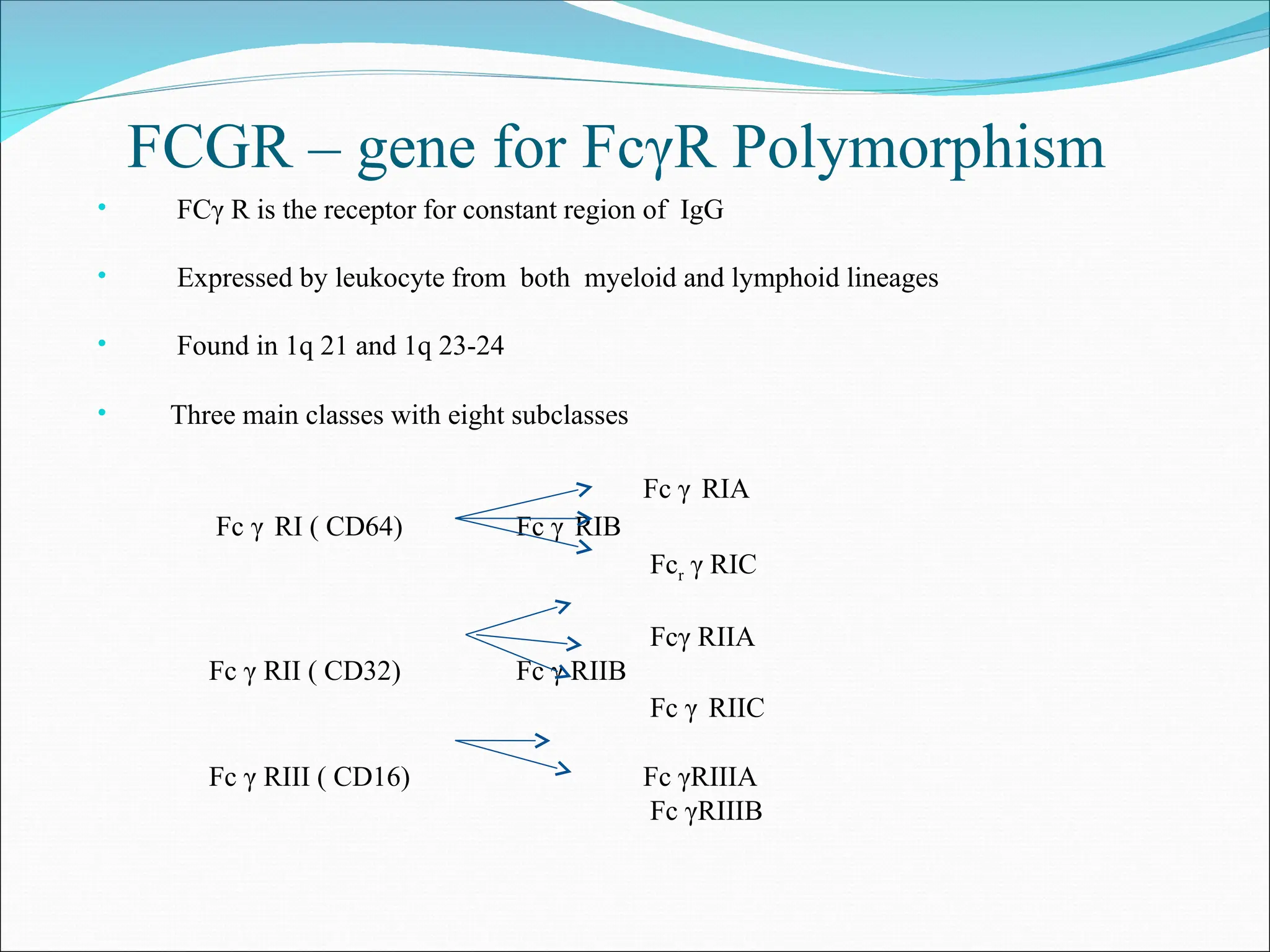
FCGR – gene for FcγR Polymorphism
• FCγ R is the receptor for constant region of IgG
• Expressed by leukocyte from both myeloid and lymphoid lineages
• Found in 1q 21 and 1q 23-24
• Three main classes with eight subclasses
Fc γ RIA
Fc γ RI ( CD64) Fc γ RIB
Fcr γ RIC
Fcγ RIIA
Fc γ RII ( CD32) Fc γ RIIB
Fc γ RIIC
Fc γ RIII ( CD16) Fc γRIIIA
Fc γRIIIB
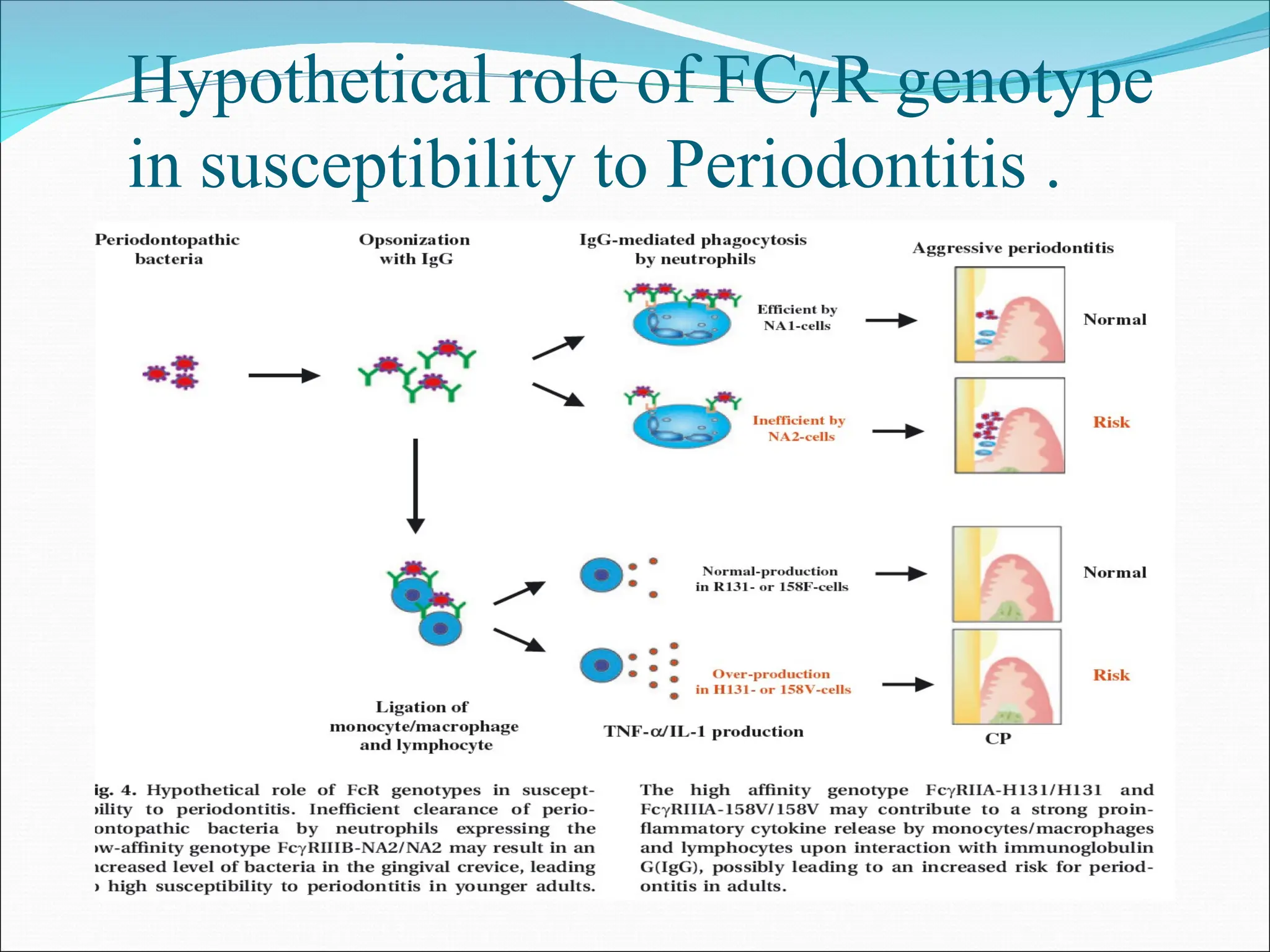
Functional bi allelic polymorphism have been identified for FcγRIIA ,FcγRIIIA & IIIB
• FcγRIIA polymorphism – FCγRIIA – R131 – bears arginine at 131 position
or
FCγRIIA - H131 – histidine at 131 position
This difference affects a receptor affinity for IgG2. H131 is more efficient than
R131
• FcγRIII A polymorphism - FC γ RIIIA – 158F(phenyl alanine)
or
FCγRIIIA – 158V (valine)
158 V have more affinity for IgG1 & IgG3 than 158F type
• FCγIIIB polymorphism – NA1 or NA2 caused by four amino acid substitution
Neutorophills with NA2 bind IgG1 or IgG3 less effectively than NA1
Association studies have reveled that FCγIIIB - NA2 was at more risk for AP
and FCγIIIA - 158V ,FCγIIA-H131 at more risk for CP.
Hypothetical role of FCγR genotype
in susceptibility to Periodontitis .
Cytokine & Chemokine Receptors
• TNF R2(+587) –(T/G) polymorphism is associated with
chronic Periodontitis.
• IL-6 receptor polymorphism is associated with diabetes
and obesity. It may have a role in Periodontitis also.
• IFNGR1(Interfren-γ receptors 1gene
polymorphism(microsatellite) correlated with
Periodontitis
• Not enough studies are there for other cytokine receptors
Vit D Receptor Polymorphism
Why is it Important
• Mediators of bone resorption play a role in the
patho physiology of Periodontitis
• Vit D play a role in Ca & P metabolism
• VDR polymorphism are associated with
osteoporosis, osteoarthritis, as well as some
infectious diseases such as TB.
• Vit D and its receptor play a role in phagocytosis
by monocytes and affect monocyte differentiation.
Vit D Receptor Gene Polymorphism
Localized in chromosomes 12q12 – 14 .
• It exhibit functional polymorphism associated with
osteocalcin levels and bone mineral density.
• Three polymorphism are studied Taq1
BSM1
Apa1
• Rarer allele associated with Chronic and aggressive
Periodontitis but conflicting results are there in
different population.
Gene polymorphism in innate immune receptors.
Why is it important
• Innate immune response is the first line of defense
• Innate immune system recognize PAMP through TLR,
CD - 14 & CARD15
• They connect innate & adaptive responses.
• Gene for CD-14 receptor localized on 5q21-23
• CD14 -260 N allele is associated with severe form of
Periodontitis
• CD14 -159(C-T)polymorphism is also associated
with Periodontitis.
TLR Polymorphism
• TLR 2 polymorphism - couldn’t show any association
• TLR 4 Polymorphism - -299 gly(TLR+896) shows
susceptibility to Periodontitis.
-399 Ile is Protective against AP
• TLR 9 polymorphism - 1486C/T
- 1237 C/T
+ 2848 A/G
• TLR 9 haplotype comprising of -1486T, -1237T and
+2848 A may be associated with chronic
Periodontitis (Holla et al 2010)
nfMLP(N formyl peptide) receptor gene Polymorphism
• nfMLP ia a structured analog of bacterial
products involved in neutrophyl chemotaxis
• gene localized in chromosome19
• Two SNP at 329(T-C) & 378(C-G) were
associated with aggressive periodontitis.
• They are functional polymorphism resulting
in amino acid changes and which have a
role in receptor binding , G protein
activation and chemotaxis
HLA Polymorphism
MHC system is a cluster of genes encoding human
leukocyte antigens which are localized on 6p21.3
A
Class I B Expressed on most nucleated cells
C
MHC
DP
Class II DQ Expressed on antigen presenting
DR cells
Why is it Important
It has a major role in regulating immune response
• more than 40 disease , most of which are autoimmune
disease have been associated with the HLA Polymorphism.
• It a highly polymorphic
• more than 150 HLA antigens have been defined serologically
• more than 220 alleles have been identified on one sub class
such as MHC class II DRI
• Association Studies have shown that patients with HLA- A9
and B15 genotype is at more risk (1.5-3.5time) for aggressive
Periodontitis.
• HLA-A2 antigens appear to be protective
• HLA – DQB1 associated with early onset Periodontitis(accelerated
T – cell response against Pg)
• HLA-DR4 is having association with periodontal disease
diabetes related complication
Enzymes
MMP polymorphism
MMP-1 polymorphism – polymorphism in promoter region
(-1607) is associated with chronic periodontitis.(Conflicting results).
No association with AP.
MMP 2,3,9 are studied but most of the result are –Ve.
Other genes studied are
RAGE(receptor for advanced glycation and products)
ER(estrogen receptor) – associated with CP not with AP.
CCR5(chemokine receptor-5)
MCP1(monotype chemo attractant protein 1)
Lactoferin - an iron binding protein which is bacteriostatic
- Association with AP.
Calprotectin - cytoplasmic protein which is having antifungal,
antibacterial, apoptosis inducing and chemotactic functions.
- No association
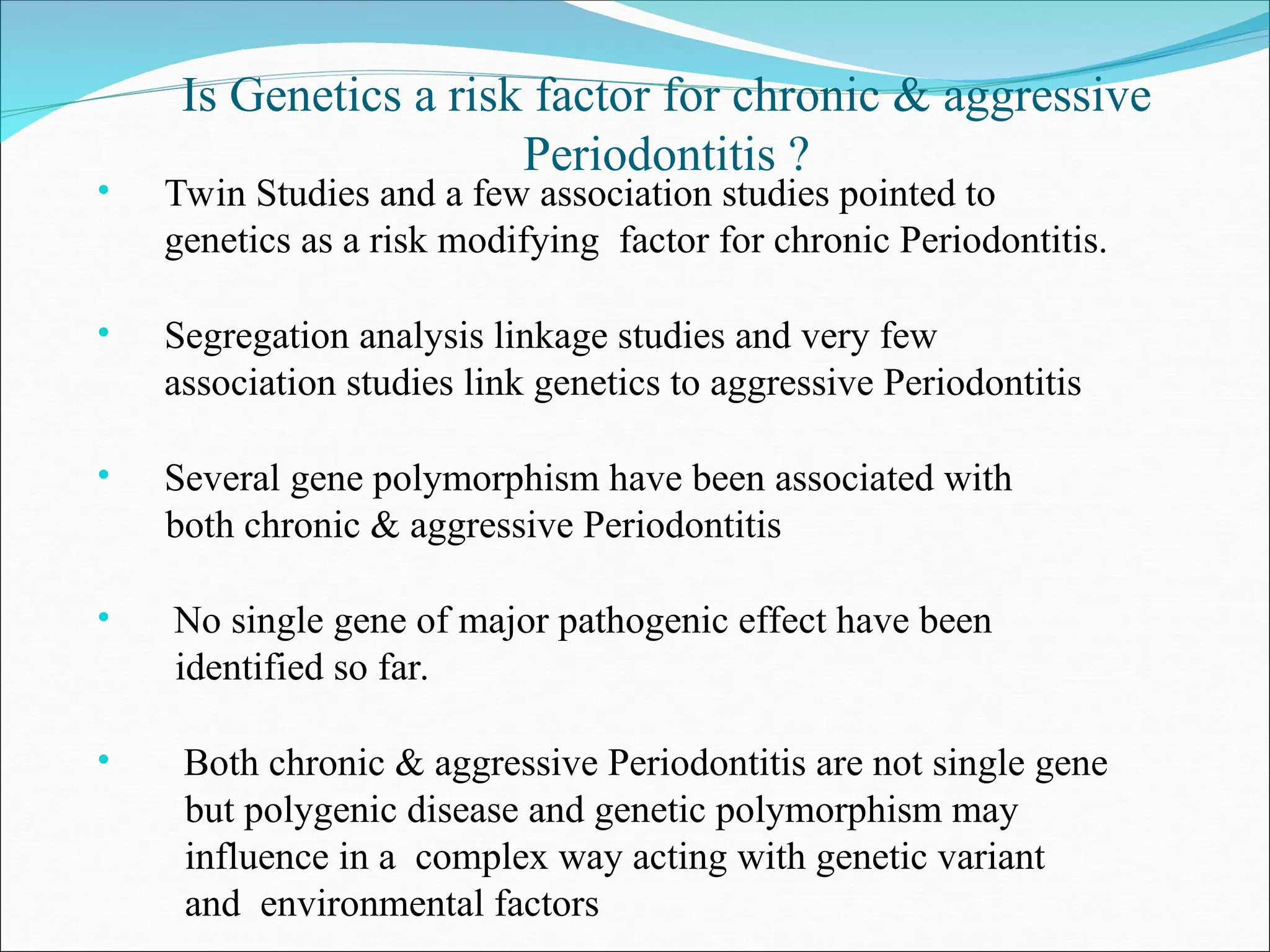
Is Genetics a risk factor for chronic & aggressive
Periodontitis ?
• Twin Studies and a few association studies pointed to
genetics as a risk modifying factor for chronic Periodontitis.
• Segregation analysis linkage studies and very few
association studies link genetics to aggressive Periodontitis
• Several gene polymorphism have been associated with
both chronic & aggressive Periodontitis
• No single gene of major pathogenic effect have been
identified so far.
• Both chronic & aggressive Periodontitis are not single gene
but polygenic disease and genetic polymorphism may
influence in a complex way acting with genetic variant
and environmental factors
 Requirements for providing association
between gene polymorphism & disease
1. The polymorphism must influence the gene product
2. Biases in the study population should be recognized and
controlled
3. Affected gene product should be part of the etiopathalogy of
the disease.
 Issues in genetic association studies ( polymorphism)
1. Ethnic heterogeneity
2. Differences in clinical classification
3. Sample size
4. Choice of controls
5. Complexity of the disease (multi factorial influences)
 Why associated polymorphic gene doesn’t cause
Periodontitis always ?
 As gene transcription and influence of structural
variant on this process is context dependent, the influence
of genetic polymorphism will be different in diverse cell
types at different developmental stages and different
environments
 Gene to gene interaction
 Influence of epigenetic factors
 Protein interaction
 Environmental interaction
Genetic defects associated with Periodontitis as
a manifestation of systemic disease.
This group include various syndromic diseases
• They are transmitted as Mendelian traits
• They are monogenic diseases
• These diseases clearly demonstrate genetic
mutation at a single locus that determine the
susceptibility to periodontitis.
 They are grouped as
1. syndromes with decreased neutrophil number
2. Syndromes with abnormal neutrophil function
3. Syndromes of metabolic, structural or immune protein
defects
Syndromes with decreased neutrophil number
Disease Clinical features Inheritance Gene Gene Function or proposed
disease mediator
Severe
congenital
neutropenia
type 1
Multiple bacterial
infections and
abscesses; death from
sepsis. Acute myeloid
leukemia or
myelodysplastic
syndrome. Oral
ulcerations ,
Periodontitis and oral
candidacies
Autosomal
dominant
Mutations in
the
Neutrophil
elastase
gene ELA2
ELA encodes neutrophil
elastase, a 31-kDa serine
Protease. In vitro,
neutrophil elastase
degrades outer membrane
protein A, a component of
the gram-negative cell
wall
Severe
congenital
neutropenia
type 2
Circulating primitive
myeloid cells; B-cell
and CD4 T-cell
lymphopenia
Autosomal
dominant
Mutations in
the growth
factor –
independent
1 gene GFI1
GFI1 Functions to repress
ELA2.Mutation of GFI 1
results in over expression
of ELA2
GFI1 – role in
hematopoiesis &
neutrophil differentiation
Syndromes with decreased neutrophil number(cntd)
Disease Clinical features Inheritance Gene Gene Function
or proposed
disease mediator
Severe
congenital
neutropenia type
3,Kostmann
syndrome.infanti
le
agranulocytosis
Pneumonia, skin
abscess,tonsillitis,lym
phadenitis,bronchitis,p
haryngitis,otitis,oral
ulcers,gingivits,Period
ontitis,aplenomegaly
Autosomal
recessive
Mutations in
hematopoietic cell-
specific LYN
substrate 1
associated protein
X1;HAX1
Lack of the
bactericidal
peptide(CAP-18) -
precursor of LL-37,
inadequate
neutrophil
development.
Severe
congenital
neutropenia
Multiple bacterial
infections and
abscesses ; death from
sepsis
Autosomal
dominant
Mutation on
granulocyte -
colony stimulating
factor gene(G-CSF)
(rare)
Lack of functional
granulocyte –
colony stimulating
factor receptor
Chronic familial
neutropenia
Recurrent oral
ulcerations,Periodontit
is,Premature tooth
loss,finger clubbing,
hypergammaglobinemi
a,neutropenia.
Infections not as
severe as with forms
of severe congenital
neutropenia
Autosomal
dominant and
autosomal recessive
forms
Unkonown
Syndromes with decreased neutrophil number(cntd)
Disease Clinical features Inheritance Gene Gene Function or
proposed disease
mediator
Cyclic
neutropenia
Peripheral blood
neutrophil counts vary
from near zero to a most
normal in a 21-day cycle.
Recurring fever and
malaise. Bacterial
infections and aphthous
uclers often accompany
decreased neutrophil
counts. Periodontitis of
varying severity may be
present
Autosomal
dominant
ELA2 ELA encodes
neutrophil elastase, a
31-5Da serine
protease. In vitro,
neutrophil elastase
degrades outer
membrane protein A, a
component of the
gram – negative cell
wall
Inherited
bone
marrow
failure
syndromes
Associated neutropenia
severe Periodontitis
sometimes reported, but
the prevence in most
forms is not known
Autosomal
dominant and
autosomal –
recessive
forms
assorted
Syndromes with abnormal Neutrophil function
Disease Other clinical features Inheritance Gene Gene function or
proposed disease
mediator
Chediak-
Higashi
Syndrome
(CHS)
Hypopigmentation of the skin,eyes
and hair. Prolonged bleeding times,
easy bruising, neutropenia,
recurrent infections , abnormal
natural killer cell function ,
periopheral neuropathy, giant
intracellular granules in lysosomes,
periodontitis and oral ulcerations
are associated with severe forms of
Chediak – Higashi syndrome
Autosomal
recessive
Lysosomal
trafficking
regulator
gene LYST
that encodes
the CHSI
protein
The function of the
CHSI protein is
largely
unknown .Defect in
the ability of cells to
to secrete lysosomes .
Deficiency in
cathepsin G
Leukocyte
adhesion
deficiency
type 1
Recurrent bacterial infections,
defective neutrophil mobility,
delayed umbilicial cord separation,
recurrent oral ulcerations,
aggressive periodontits
Autosomal
recessive
Beta-2
integrin
chain;
ITGB2, a cell
membrane
glycoprotein,
Manifest as lack of
integrin β2/αL,
β2/αM, β2/αX,
expression. Lack of
adhesion molecule
CD18 on neutrophils
Leukocyte
adhesion
deficiency
type 2
Mental retardation , short stature,
distinctive facial appearance and
recurrent episodes of bacterial
infections, mainly pneumonia
periodontitis and otitis media
Autosomal
recessive
Mutation of
the SLC35C1
gene that
encodes
glucose
diphosphate-
fucose
transporter.
Impaired neutrophil
mobility, defect in
fucose metabolism .
Syndromes of metabolic, structural or immune protein defects
Disease Other clinical features Inheritance Gene Gene function or proposed
disease mediator
Kindler
syndrome
Skin fragility, patchy
hyperpigmentation,
hyperkeratosis of palms and
soles, diffuse skin wrinkling
Autosomal
recessive
Kindlin
1(KIND1)
Kinderline gene express by
many tissues including skin.
Play a role in integrin
signaling of cell adhesion
process.
Cell-cell contact, focal
adhesions, Skin fragility
Papillon-
Lefevere
syndrome
Palmoplantar hyperkeratosis,
severe early-onset Periodontitis
that affects both primary and
permanent dentitions
Autosomal
recessive
CathepsinC
(50
different
mutations)
Inactivation of cathepsin C
results in failures to cleave
and activate the neutrophil
serine proteases cathepsin
G,neutrophil elastase, and
proteinase 3
Haim-Munk
syndrome
(allelic
condition of
Papillon-
Lefevere
syndrome)
Palmoplantar hyperkeratosis,
severe early onset Periodontitis
that affects both primary and
permanent dentitions, acro-
Osteolysis, atrophic changes of
the nails and a radiographic
deformity of the fingers
Autosomal
recessive
Cathepsin C Inactivation of cathepsin C
Aggressive
Prepubertal
Periodontits
Severe early-onset Periodontitis
that affects both primary and
permanent dentitions
Autosomal
recessive
Cathepsin c Inactivation of cathepsin c
Syndromes of metabolic, structural or immune protein defects(contd)
Disease Other clinical features Inheritance Gene Gene function or
proposed disease
mediator
Ehlers-Danlos
syndrome
type IV
Only few case reports; not as
clearly associated as ehlers-
Danlos syndrome type VIII
Autosomal
dominant
Type III
collagen
gene(COL3AI)
Decreased levels of
collagen III
Ehlers-Danlos
syndrome
type VIII
It is reported that severe
early-onset Periodontitis
discriinates ehlers-Danlos
syndrome-VIII from other
types of ehlers-danlos
syndrome.patients have skin
hyperxtensibility
fragility,scarring,minimal-to-
moderate joint
hypermobility.
Autosomal
dominant
Linkage at
chromosome
12p13
Unknown,studies of
collagen in these
patients have yielded
conflicting results
Hypophospha
tasia
Premature shedding of
primary teeth,presumably
secondary to defective
cementum hypoplastic
enamel, and aggressive
Periodontitis in some
patients
Autosomal
dominant or
recessive
ALPL Deficient
liver/bone/kidney
alkaline phosphatase
activity
Conclusion
 Specific Genetic defects are the causative factor for
syndrome associated Periodontitis (Periodontitis as a
manifestation of systemic disease).
 But no specific genetic risk factor has been identified for
Chronic or Aggressive Periodontitis.
 Genetic factors(around 50genes) influence chronic and
Aggressive Periodontitis in a complex way.
 It is likely that development of Periodontitis in an
individual depends on collective presence of environmental
risk factors and genetic risk factors at a given time point
during the life.
 Genetic information would be valuable in therapeutic
intervention on individualized approach and preventive
strategies of the development of Periodontitis
References
 Biology of Periodontal tissues – P.Mark Bartold, A. Sampath
Narayanan
 Clinical Periodontology 10th
edition: Carranza, Neuman &Takei
 Clinical periodontology & Implant dentistry 5th
edition: Jan
Lindhe
 Periodontology 2000 vol 32,2003, 11-25
 Periodontology 2000 vol 35,2004,151-179
 Periodontology 2000 vol 43,2007,102-132
 Periodontology 2000 vol 43,2007,133-159
 Periodontology 2000 vol 45,2007,14-34
 Periodontology 2000 vol 45,2007,95 – 112
 J clin.Periodontology vol 37 2010 , No2, 120-152
 J Periodontal research vol45 2010 , No5, 695-701
Genetics as risk factor for periodontitis

Genetics as risk factor for periodontitis

  • 1.
    Genetics as arisk factor for Periodontal disease Dr.Sheeja S.Varghese Professor: Saveetha Dental College
  • 2.
    Periodontitis – AMulti Factorial Disease Microbial Factors Environmental Factors Tooth factors Systemic Factors Behavioral Factors Genetic Factors Periodontitis
  • 3.
    Types of Causation 1.SufficientCause In the presence of which, the disease will always occur. Example: genetic anomalies 2.Necessary Cause It must be present for a disease to manifest (but presence does not necessarily result in manifestation of disease). Example: Tuberculosis 3.Risk factor It has an association to a particular disease. Relationship is not necessary causal in nature. a. Risk factor - confirmed by longitudinal & cross sectional study. b. Risk determinant - Non modifiable risk factor. c. Risk indicator - confirmed only by cross sectional study. d. Risk marker - Predict future course
  • 4.
    Is Genetics aCausative factor or risk factor for Chronic Periodontitis Aggressive Periodontitis Periodontitis as a manifestation of Systemic Disease ?
  • 5.
    Why Genetics islinked to Periodontitis ? Environmental & microbial factor cannot always explain 1. Variations in the disease susceptibility Loe et al (1986) – SriLankan tea workers - 8% Rapid progression - 81% moderate progression - 11% no progression Velden etal – (2006)- Westernjavapopulation - 20% severe destruction. 2. Familial aggregation & Heritability
  • 6.
    Basics about humangenes 23 Pairs of Chromosomes 22 pairs autosomal chromosomes 1 pair sex chromosomes Each Chromose contains long duplex of DNA. Building blocks of DNA are nucleotides(adenine(A),guanine(G), cytosine(C) and thymine(T) linked to deoxy ribose and PO4.Double helix of DNA in formed by hydrogen bonding between complimentary pairs(A-T& G-C)
  • 7.
    Gene - Heriditaryunit that occupies a specific position(Locus) within a genome or chromosome that has one or more specific effects upon the phenotype of organism Gene expression - the process involving use of the information in a gene via transcription and translation leading to production of a protein affecting the phenotype of the organism determined by that gene. Genetic code - the consecutive nucleotide triplets(Codon) in DNA or RNA that specify the sequence of amino acids for protein synthesis.
  • 8.
    Gene – Consistsof two Parts 1. Coding region - Reading frame starting at nucleotide Position +1 containing triplets or codon. Consist of Exons - true coding region & Introns - non coding region 2. Promoter region - sequence of nucleotide left (upstream) of the coding region starting with nucleotide position -1(not as triplets)
  • 10.
    A Region onthe genome that varies between individual members of a population present in a significant numbers of individuals(more than1%) Variant forms of a gene are called alleles. Most common or Normal variant - N - allele Rarer allele - R - allele Polymorphism are due to gene mutation Genetic Polymorphism
  • 11.
    Types 1.Minisatellite Variable NumberTandem Repeat(VNTR)Polymorphism. - highly polymorphic - not evenly dispersed (usually in telomeres) 2. Microsatellite Polymorphisms - Short sequence of 1 – 4 bases - Highly polymorphic - more evenly distributed - more numerous than mini satellite. - but not very popular on genetic marker as their frequency is only one in every 3 -10 kb in the genome.
  • 12.
    3. Single NucleotidePolymorphism - Variation in single base pair - mutation rate of SNP is very low from generation to generation - Very numerous (every 0.3 – 1kb) - Easily detectable with PCR 1.42 million SNPs are there in human genome and around 60,000 are in the exones SNPs are as a result of 1.Insertion 2.Deletion 3.Substitution Example: ABO antigens
  • 13.
    ABO antigens CGT GGTGAC CCC TT A-antigen sequence substitution Deletion of G (4 base pairs) (single) CGT CGT CAC CGC TA CGT GGT ACC CCT T B-antigen sequence O-antigen sequence
  • 14.
    Can polymorphism influencethe phenotype ? 1. Can be non functional 2. Can be functional Coding region - may change the amino acid thus can alter the protein. Promoter or enhancer region –Increase or decrease the amount of protein.
  • 15.
    Genetic Study Designs 1.Segregation analysis Pattern of transmission of disease through generation is studied in different families. It is compared with those expected under various models of inheritance to select the best fitting model. Adv: Can assess whether the disease gene is autosomal or sexlinked, recessive or dominant. Limitation: It has low power to resolve heterogeneity (Multiple causes) Cannot distinguish between genetic & environmental influences. Does not provide information about specific genes
  • 17.
    Twin Studies Adv :The relative influence of genetic and environmental factors on complex diseases can be estimated. Two Types: 1. Classic twin study - Reared together monozygotic and dizygotic twins are compared. 2.Comparison of reared together and raised apart monozygotic twins.
  • 18.
    Linkage Analysis  Usedto map disease allele to specific regions on the chromosomes.  Linkage -the tendency for certain genes to be inherited together due to their close presence on the same chromosome. By indentifying genetic marker that segregate with a disease, the location of the disease allele can be inferred.  LOD(Logaritham of odds) score - Compare the likely hood of two genes are indeed linked to the likely hood of observing this data purely by chance. +ve LOD score- presence of linkage -ve LOD score-less likely  Linkage disequilibrium – the occurrence of some genes together more often than would be expected by random distribution
  • 19.
  • 20.
    Association Studies  Frequencyof alleles at a given locus is compared between subjects with disease(cases) and healthy controls sampled from same population .  Limitation – Association does not necessarily imply a biologic link between the disease and the tested allele.
  • 21.
    Evidences for geneticsas risk factor
  • 22.
    Twin Studies  Observations: •Periodontal condition of identical twins were similar (Noak- 1940) • Monozygotic twins were more similar than dizygotic twins for clinical parameter of chronic Periodontitis (50% heritability) • Gingivitis did not have heritability component • Reared apart MZ twins were no less similar than reared together MZ twins in their Periodontal status. • The twin study is probably the most popular method that support the genetic aspects of chronic Periodontitis.
  • 23.
    Segregation analysis Chronic Periodontitisdoes not follow familial transmission. Various authors suggested different modes of inheritance for aggressive Peridontitis. Majority of Studies - autosomal recessive A few studies - autosomal dominant -X-linked dominant
  • 24.
    Linkage Studies • Linkagebetween AP with dentinogenesis imperfecta (Boughman etal 1986) • The putative AP disease gene was localized to chromosome 4q11 – 13 • But Hart in 1993 reported that AP disease gene resides with in this chromosonal region is highly unlikely. • Li et al 2004 linked LAP to a markers on chromosome 1(1q25) in 4 families (LOD score 3.48)
  • 25.
    Association Studies Utilizes candidategeneapproach for polymorphism studies - Tries to identify one allele of a gene that is more frequently seen in subject with the disease than in controls. Candidate genes should have some plausible role in the disease. 3 Types 1. Functional candidate gene - based on potential function of gene 2. Positional candidate gene - based on involvement of a gene to a marked location after linkage analysis 3. Expressional candidate gene - determined through differences in gene expression using micro arrays
  • 26.
    Gene Polymorphism Studiesin Periodontitis are focused on the following candidate genes 1. Cytokines 2. Cell surface receptors & Receptors related to antigen recognition 3. Chemokines 4. Enzymes
  • 27.
    Cytokine gene Polymorphism Why is it important? • Cytokines have pivotal role initiation & progression of periodontal disease. • Cytokine response differ between individuals.  I L- 1 gene polymorphism • The gene 1L - A,1L- B & IL Rn (IL – 1 α IL- β and IL – RA) located in IL – 1 gene cluster on chromosome 2(2q 13 – 21) • Multiple polymorphic sites (VNTR, micro satellite and & numerous SNP) • Kornmen et al(1997) described PAG(Periodontitis Associated Genotype) • PAG is a composite IL-1 genotype formed of two rare allele at separate SNP First -889 in IL-1A Promoter region (C-T) Second +3954 of the IL1 – B gene (C-T) -889 is later superseded by +4845 G –T
  • 28.
    Chronic Periodontitis Positive association(Kornman et al, Galbraith et al ,McDevitt et al) No association (Armitage et al ,Cutler et al ,Lang et al) Aggressive Periodontitis No association PAG associate more with Chronic Periodontitis and does not correlate with aggressive periodontitis. Functional Studies Carriage of allele 2 in (-889) locus resulted in four fold increase of IL - 1α in chronic Periodontitis. IL 1 composite genotype patients had higher level of IL-1 β in GCF What Does Studies Say?
  • 29.
    IL - 2Gene Polymorphism • IL - 2 in a Pro inflammatory cytokine produced by TH cells. • IL - 2 gene is localized in 4q26 • Polymorphism at – 330 and +166 were identified -330 polymorphism (G-T) TT genotype seem to be 2.5 times less likely to develop severe Periodontitis than GG genotype.
  • 30.
    IL – 4Gene Polymorphism • Il – 4 rescue B limphocytes from apoptosis and enhance their survival • IL – 4 gene found in chromosome 5q31.1 • SNP at – 590 position and 70bp VNTR at intron 2 have been identified. • No association have been found with their polymorphism with chronic or aggressive Periodontitis
  • 31.
    IL - 6Gene Polymorphism • Gene located in chromosome 7p21 • IL – 6 gene polymorphism is associated with rheumatoid arthritis and bone mineral density • SNP at – 174(G – C) . • GG genotype correlated with chronic Periodontitis susceptibility(but conflicting results in various reports) • Functional Studies revealed that Periodontitis patients carrying one or two copies of the rare allele in the IL – 6 (-174) Polymorphism had higher serum IL – 6 & CRP concentration.
  • 32.
    IL - 10Gene Polymorphism • Anti inflammatory cytokine • Gene localized in chromosome 1q31 – 32 • Polymorphism identified are SNP at – 108(G-A), -819(C-T) and -592(C-A), also micro satellite polymorphism at 5’ flanking region of the gene. • Conflicting results in different population with respect to association with chronic Periodontitis. • Susceptibility for aggressive Periodontitis (ATA/ATA genotype) • Functional studies revealed that ATA/ATA phenotype resulted in low levels of IL-10  IL-13 gene polymorphism IL-13(-1112(C/T polymorphism) - CC genotype or C allele increases the risk of AP in non smokers(Chinese population)
  • 33.
    TNF Polymorphism • Proinflammatory cytokine - immuno regulatory function, stimulate bone resorption. • TNF gene localized in chromosome 6p21.3(within HLA complex gene) • Eight polymorphism in different regions are described (-1031(T-C), -863(C-A) -857(C-T),-3676(G-A), -308(G-A), -238(G-A) +489(G-A) • Polymorphism are associated with rheumatoid arthritis Sjogren syndrome, SLE, psoriasis and inflammatory bowel diseases. • Studies have shown association with Chronic Periodontitis but not with Aggressive Periodontitis • Functional studies have shown that -308 allele correlated with higher TNF Production.
  • 34.
    TGF β1 Polymorphism •TGF β1 is described as double edge sword having both therapeutic and pathological role. • Gene localized in chromosome 19q13.1 • Four SNPs are studied. • SNP at -509(C-T) was associated with chronic Periodontitis but no association with other three SNPs.
  • 35.
    Cell Surface Receptors Polymorphismstudied are on genes • IL-1/4/6/10 receptors • TNF receptor (TNFR) • ILF(interleukin enhancing binding factor) • ILIRN( interleukin -1 receptor antagonist) • FCGR(FC gamma receptor) • ER(estrogen receptor) • TLR(toll like receptor) • VDR (Vit D receptor) • CD14 • IFNGR – interferon gamma receptor
  • 36.
    FCGR – genefor FcγR Polymorphism • FCγ R is the receptor for constant region of IgG • Expressed by leukocyte from both myeloid and lymphoid lineages • Found in 1q 21 and 1q 23-24 • Three main classes with eight subclasses Fc γ RIA Fc γ RI ( CD64) Fc γ RIB Fcr γ RIC Fcγ RIIA Fc γ RII ( CD32) Fc γ RIIB Fc γ RIIC Fc γ RIII ( CD16) Fc γRIIIA Fc γRIIIB
  • 37.
    Functional bi allelicpolymorphism have been identified for FcγRIIA ,FcγRIIIA & IIIB • FcγRIIA polymorphism – FCγRIIA – R131 – bears arginine at 131 position or FCγRIIA - H131 – histidine at 131 position This difference affects a receptor affinity for IgG2. H131 is more efficient than R131 • FcγRIII A polymorphism - FC γ RIIIA – 158F(phenyl alanine) or FCγRIIIA – 158V (valine) 158 V have more affinity for IgG1 & IgG3 than 158F type • FCγIIIB polymorphism – NA1 or NA2 caused by four amino acid substitution Neutorophills with NA2 bind IgG1 or IgG3 less effectively than NA1 Association studies have reveled that FCγIIIB - NA2 was at more risk for AP and FCγIIIA - 158V ,FCγIIA-H131 at more risk for CP.
  • 38.
    Hypothetical role ofFCγR genotype in susceptibility to Periodontitis .
  • 39.
    Cytokine & ChemokineReceptors • TNF R2(+587) –(T/G) polymorphism is associated with chronic Periodontitis. • IL-6 receptor polymorphism is associated with diabetes and obesity. It may have a role in Periodontitis also. • IFNGR1(Interfren-γ receptors 1gene polymorphism(microsatellite) correlated with Periodontitis • Not enough studies are there for other cytokine receptors
  • 40.
    Vit D ReceptorPolymorphism Why is it Important • Mediators of bone resorption play a role in the patho physiology of Periodontitis • Vit D play a role in Ca & P metabolism • VDR polymorphism are associated with osteoporosis, osteoarthritis, as well as some infectious diseases such as TB. • Vit D and its receptor play a role in phagocytosis by monocytes and affect monocyte differentiation.
  • 41.
    Vit D ReceptorGene Polymorphism Localized in chromosomes 12q12 – 14 . • It exhibit functional polymorphism associated with osteocalcin levels and bone mineral density. • Three polymorphism are studied Taq1 BSM1 Apa1 • Rarer allele associated with Chronic and aggressive Periodontitis but conflicting results are there in different population.
  • 42.
    Gene polymorphism ininnate immune receptors. Why is it important • Innate immune response is the first line of defense • Innate immune system recognize PAMP through TLR, CD - 14 & CARD15 • They connect innate & adaptive responses. • Gene for CD-14 receptor localized on 5q21-23 • CD14 -260 N allele is associated with severe form of Periodontitis • CD14 -159(C-T)polymorphism is also associated with Periodontitis.
  • 43.
    TLR Polymorphism • TLR2 polymorphism - couldn’t show any association • TLR 4 Polymorphism - -299 gly(TLR+896) shows susceptibility to Periodontitis. -399 Ile is Protective against AP • TLR 9 polymorphism - 1486C/T - 1237 C/T + 2848 A/G • TLR 9 haplotype comprising of -1486T, -1237T and +2848 A may be associated with chronic Periodontitis (Holla et al 2010)
  • 44.
    nfMLP(N formyl peptide)receptor gene Polymorphism • nfMLP ia a structured analog of bacterial products involved in neutrophyl chemotaxis • gene localized in chromosome19 • Two SNP at 329(T-C) & 378(C-G) were associated with aggressive periodontitis. • They are functional polymorphism resulting in amino acid changes and which have a role in receptor binding , G protein activation and chemotaxis
  • 45.
    HLA Polymorphism MHC systemis a cluster of genes encoding human leukocyte antigens which are localized on 6p21.3 A Class I B Expressed on most nucleated cells C MHC DP Class II DQ Expressed on antigen presenting DR cells
  • 46.
    Why is itImportant It has a major role in regulating immune response • more than 40 disease , most of which are autoimmune disease have been associated with the HLA Polymorphism. • It a highly polymorphic • more than 150 HLA antigens have been defined serologically • more than 220 alleles have been identified on one sub class such as MHC class II DRI
  • 47.
    • Association Studieshave shown that patients with HLA- A9 and B15 genotype is at more risk (1.5-3.5time) for aggressive Periodontitis. • HLA-A2 antigens appear to be protective • HLA – DQB1 associated with early onset Periodontitis(accelerated T – cell response against Pg) • HLA-DR4 is having association with periodontal disease diabetes related complication
  • 48.
    Enzymes MMP polymorphism MMP-1 polymorphism– polymorphism in promoter region (-1607) is associated with chronic periodontitis.(Conflicting results). No association with AP. MMP 2,3,9 are studied but most of the result are –Ve. Other genes studied are RAGE(receptor for advanced glycation and products) ER(estrogen receptor) – associated with CP not with AP. CCR5(chemokine receptor-5) MCP1(monotype chemo attractant protein 1) Lactoferin - an iron binding protein which is bacteriostatic - Association with AP. Calprotectin - cytoplasmic protein which is having antifungal, antibacterial, apoptosis inducing and chemotactic functions. - No association
  • 49.
    Is Genetics arisk factor for chronic & aggressive Periodontitis ? • Twin Studies and a few association studies pointed to genetics as a risk modifying factor for chronic Periodontitis. • Segregation analysis linkage studies and very few association studies link genetics to aggressive Periodontitis • Several gene polymorphism have been associated with both chronic & aggressive Periodontitis • No single gene of major pathogenic effect have been identified so far. • Both chronic & aggressive Periodontitis are not single gene but polygenic disease and genetic polymorphism may influence in a complex way acting with genetic variant and environmental factors
  • 50.
     Requirements forproviding association between gene polymorphism & disease 1. The polymorphism must influence the gene product 2. Biases in the study population should be recognized and controlled 3. Affected gene product should be part of the etiopathalogy of the disease.  Issues in genetic association studies ( polymorphism) 1. Ethnic heterogeneity 2. Differences in clinical classification 3. Sample size 4. Choice of controls 5. Complexity of the disease (multi factorial influences)
  • 51.
     Why associatedpolymorphic gene doesn’t cause Periodontitis always ?  As gene transcription and influence of structural variant on this process is context dependent, the influence of genetic polymorphism will be different in diverse cell types at different developmental stages and different environments  Gene to gene interaction  Influence of epigenetic factors  Protein interaction  Environmental interaction
  • 52.
    Genetic defects associatedwith Periodontitis as a manifestation of systemic disease. This group include various syndromic diseases • They are transmitted as Mendelian traits • They are monogenic diseases • These diseases clearly demonstrate genetic mutation at a single locus that determine the susceptibility to periodontitis.  They are grouped as 1. syndromes with decreased neutrophil number 2. Syndromes with abnormal neutrophil function 3. Syndromes of metabolic, structural or immune protein defects
  • 53.
    Syndromes with decreasedneutrophil number Disease Clinical features Inheritance Gene Gene Function or proposed disease mediator Severe congenital neutropenia type 1 Multiple bacterial infections and abscesses; death from sepsis. Acute myeloid leukemia or myelodysplastic syndrome. Oral ulcerations , Periodontitis and oral candidacies Autosomal dominant Mutations in the Neutrophil elastase gene ELA2 ELA encodes neutrophil elastase, a 31-kDa serine Protease. In vitro, neutrophil elastase degrades outer membrane protein A, a component of the gram-negative cell wall Severe congenital neutropenia type 2 Circulating primitive myeloid cells; B-cell and CD4 T-cell lymphopenia Autosomal dominant Mutations in the growth factor – independent 1 gene GFI1 GFI1 Functions to repress ELA2.Mutation of GFI 1 results in over expression of ELA2 GFI1 – role in hematopoiesis & neutrophil differentiation
  • 54.
    Syndromes with decreasedneutrophil number(cntd) Disease Clinical features Inheritance Gene Gene Function or proposed disease mediator Severe congenital neutropenia type 3,Kostmann syndrome.infanti le agranulocytosis Pneumonia, skin abscess,tonsillitis,lym phadenitis,bronchitis,p haryngitis,otitis,oral ulcers,gingivits,Period ontitis,aplenomegaly Autosomal recessive Mutations in hematopoietic cell- specific LYN substrate 1 associated protein X1;HAX1 Lack of the bactericidal peptide(CAP-18) - precursor of LL-37, inadequate neutrophil development. Severe congenital neutropenia Multiple bacterial infections and abscesses ; death from sepsis Autosomal dominant Mutation on granulocyte - colony stimulating factor gene(G-CSF) (rare) Lack of functional granulocyte – colony stimulating factor receptor Chronic familial neutropenia Recurrent oral ulcerations,Periodontit is,Premature tooth loss,finger clubbing, hypergammaglobinemi a,neutropenia. Infections not as severe as with forms of severe congenital neutropenia Autosomal dominant and autosomal recessive forms Unkonown
  • 55.
    Syndromes with decreasedneutrophil number(cntd) Disease Clinical features Inheritance Gene Gene Function or proposed disease mediator Cyclic neutropenia Peripheral blood neutrophil counts vary from near zero to a most normal in a 21-day cycle. Recurring fever and malaise. Bacterial infections and aphthous uclers often accompany decreased neutrophil counts. Periodontitis of varying severity may be present Autosomal dominant ELA2 ELA encodes neutrophil elastase, a 31-5Da serine protease. In vitro, neutrophil elastase degrades outer membrane protein A, a component of the gram – negative cell wall Inherited bone marrow failure syndromes Associated neutropenia severe Periodontitis sometimes reported, but the prevence in most forms is not known Autosomal dominant and autosomal – recessive forms assorted
  • 56.
    Syndromes with abnormalNeutrophil function Disease Other clinical features Inheritance Gene Gene function or proposed disease mediator Chediak- Higashi Syndrome (CHS) Hypopigmentation of the skin,eyes and hair. Prolonged bleeding times, easy bruising, neutropenia, recurrent infections , abnormal natural killer cell function , periopheral neuropathy, giant intracellular granules in lysosomes, periodontitis and oral ulcerations are associated with severe forms of Chediak – Higashi syndrome Autosomal recessive Lysosomal trafficking regulator gene LYST that encodes the CHSI protein The function of the CHSI protein is largely unknown .Defect in the ability of cells to to secrete lysosomes . Deficiency in cathepsin G Leukocyte adhesion deficiency type 1 Recurrent bacterial infections, defective neutrophil mobility, delayed umbilicial cord separation, recurrent oral ulcerations, aggressive periodontits Autosomal recessive Beta-2 integrin chain; ITGB2, a cell membrane glycoprotein, Manifest as lack of integrin β2/αL, β2/αM, β2/αX, expression. Lack of adhesion molecule CD18 on neutrophils Leukocyte adhesion deficiency type 2 Mental retardation , short stature, distinctive facial appearance and recurrent episodes of bacterial infections, mainly pneumonia periodontitis and otitis media Autosomal recessive Mutation of the SLC35C1 gene that encodes glucose diphosphate- fucose transporter. Impaired neutrophil mobility, defect in fucose metabolism .
  • 57.
    Syndromes of metabolic,structural or immune protein defects Disease Other clinical features Inheritance Gene Gene function or proposed disease mediator Kindler syndrome Skin fragility, patchy hyperpigmentation, hyperkeratosis of palms and soles, diffuse skin wrinkling Autosomal recessive Kindlin 1(KIND1) Kinderline gene express by many tissues including skin. Play a role in integrin signaling of cell adhesion process. Cell-cell contact, focal adhesions, Skin fragility Papillon- Lefevere syndrome Palmoplantar hyperkeratosis, severe early-onset Periodontitis that affects both primary and permanent dentitions Autosomal recessive CathepsinC (50 different mutations) Inactivation of cathepsin C results in failures to cleave and activate the neutrophil serine proteases cathepsin G,neutrophil elastase, and proteinase 3 Haim-Munk syndrome (allelic condition of Papillon- Lefevere syndrome) Palmoplantar hyperkeratosis, severe early onset Periodontitis that affects both primary and permanent dentitions, acro- Osteolysis, atrophic changes of the nails and a radiographic deformity of the fingers Autosomal recessive Cathepsin C Inactivation of cathepsin C Aggressive Prepubertal Periodontits Severe early-onset Periodontitis that affects both primary and permanent dentitions Autosomal recessive Cathepsin c Inactivation of cathepsin c
  • 58.
    Syndromes of metabolic,structural or immune protein defects(contd) Disease Other clinical features Inheritance Gene Gene function or proposed disease mediator Ehlers-Danlos syndrome type IV Only few case reports; not as clearly associated as ehlers- Danlos syndrome type VIII Autosomal dominant Type III collagen gene(COL3AI) Decreased levels of collagen III Ehlers-Danlos syndrome type VIII It is reported that severe early-onset Periodontitis discriinates ehlers-Danlos syndrome-VIII from other types of ehlers-danlos syndrome.patients have skin hyperxtensibility fragility,scarring,minimal-to- moderate joint hypermobility. Autosomal dominant Linkage at chromosome 12p13 Unknown,studies of collagen in these patients have yielded conflicting results Hypophospha tasia Premature shedding of primary teeth,presumably secondary to defective cementum hypoplastic enamel, and aggressive Periodontitis in some patients Autosomal dominant or recessive ALPL Deficient liver/bone/kidney alkaline phosphatase activity
  • 59.
    Conclusion  Specific Geneticdefects are the causative factor for syndrome associated Periodontitis (Periodontitis as a manifestation of systemic disease).  But no specific genetic risk factor has been identified for Chronic or Aggressive Periodontitis.  Genetic factors(around 50genes) influence chronic and Aggressive Periodontitis in a complex way.  It is likely that development of Periodontitis in an individual depends on collective presence of environmental risk factors and genetic risk factors at a given time point during the life.  Genetic information would be valuable in therapeutic intervention on individualized approach and preventive strategies of the development of Periodontitis
  • 60.
    References  Biology ofPeriodontal tissues – P.Mark Bartold, A. Sampath Narayanan  Clinical Periodontology 10th edition: Carranza, Neuman &Takei  Clinical periodontology & Implant dentistry 5th edition: Jan Lindhe  Periodontology 2000 vol 32,2003, 11-25  Periodontology 2000 vol 35,2004,151-179  Periodontology 2000 vol 43,2007,102-132  Periodontology 2000 vol 43,2007,133-159  Periodontology 2000 vol 45,2007,14-34  Periodontology 2000 vol 45,2007,95 – 112  J clin.Periodontology vol 37 2010 , No2, 120-152  J Periodontal research vol45 2010 , No5, 695-701