Genetic Engineering
• Genetic Engineers can
alter the DNA code of
living organisms.
• Selective Breeding
• Recombinant DNA
• PCR
• Gel Electrophoresis
• Transgenic Organisms
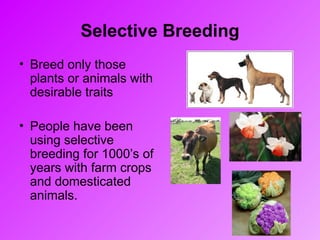
Selective Breeding
• Breed only those
plants or animals with
desirable traits
• People have been
using selective
breeding for 1000’s of
years with farm crops
and domesticated
animals.
Recombinant DNA
• The ability to
combine the DNA of
one organism with
the DNA of another
organism.
• Recombinant DNA
technology was first
used in the 1970’s
with bacteria.
Recombinant Bacteria
1. Remove bacterial DNA (plasmid).
2. Cut the Bacterial DNA with
“restriction enzymes”.
3. Cut the DNA from another
organism with “restriction
enzymes”.
4. Combine the cut pieces of DNA
together with another enzyme and
insert them into bacteria.
5. Reproduce the recombinant
bacteria.
6. The foreign genes will be
expressed in the bacteria.
Benefits of Recombinant
Bacteria
1. Bacteria can make human insulin or
human growth hormone.
1. Bacteria can be engineered to “eat” oil
spills.
The DNA of plants and animals
can also be altered.
PLANTS
1. disease-resistant and
insect-resistant crops
2. Hardier fruit
3. 70-75% of food in
supermarket is
genetically modified.
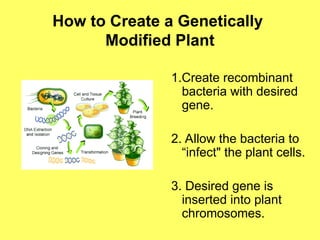
How to Create a Genetically
Modified Plant
1.Create recombinant
bacteria with desired
gene.
2. Allow the bacteria to
“infect" the plant cells.
3. Desired gene is
inserted into plant
chromosomes.
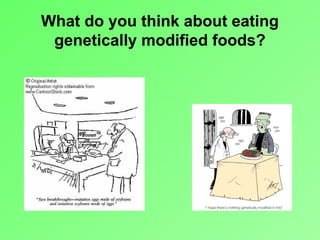
What do you think about eating
genetically modified foods?
Genetically modified organisms are
called transgenic organisms.
TRANSGENIC ANIMALS
1. Mice – used to study human
immune system
2. Chickens – more resistant to
infections
3. Cows – increase milk supply
and leaner meat
4. Goats, sheep and pigs –
produce human proteins in
their milk
Human DNA in
a Goat Cell
This goat contains a human
gene that codes for a blood
clotting agent. The blood
clotting agent can be harvested
in the goat’s milk.
.
Transgenic Goat
Desired DNA
is
added to an
egg cell.
How to Create a
Transgenic Animal
Ha Ha Ha!
Genetic Engineering and
Crime Scenes……
Polymerase Chain Reaction
PCR
• PCR allows scientists to
make many copies of a
piece of DNA.
1. Heat the DNA so it
“unzips”.
2. Add the complementary
nitrogenous bases.
3. Allow DNA to cool so the
complementary strands
can “zip” together.
Gel Electrophoresis
• This technology
allows scientists to
identify someone’s
DNA!
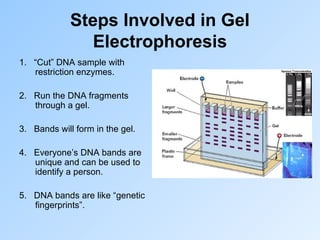
Steps Involved in Gel
Electrophoresis
1. “Cut” DNA sample with
restriction enzymes.
2. Run the DNA fragments
through a gel.
3. Bands will form in the gel.
4. Everyone’s DNA bands are
unique and can be used to
identify a person.
5. DNA bands are like “genetic
fingerprints”.

Genetic-Engineering-1.p......,............

  • 1.
    Genetic Engineering • GeneticEngineers can alter the DNA code of living organisms. • Selective Breeding • Recombinant DNA • PCR • Gel Electrophoresis • Transgenic Organisms
  • 2.
    Selective Breeding • Breedonly those plants or animals with desirable traits • People have been using selective breeding for 1000’s of years with farm crops and domesticated animals.
  • 3.
    Recombinant DNA • Theability to combine the DNA of one organism with the DNA of another organism. • Recombinant DNA technology was first used in the 1970’s with bacteria.
  • 4.
    Recombinant Bacteria 1. Removebacterial DNA (plasmid). 2. Cut the Bacterial DNA with “restriction enzymes”. 3. Cut the DNA from another organism with “restriction enzymes”. 4. Combine the cut pieces of DNA together with another enzyme and insert them into bacteria. 5. Reproduce the recombinant bacteria. 6. The foreign genes will be expressed in the bacteria.
  • 5.
    Benefits of Recombinant Bacteria 1.Bacteria can make human insulin or human growth hormone. 1. Bacteria can be engineered to “eat” oil spills.
  • 6.
    The DNA ofplants and animals can also be altered. PLANTS 1. disease-resistant and insect-resistant crops 2. Hardier fruit 3. 70-75% of food in supermarket is genetically modified.
  • 7.
    How to Createa Genetically Modified Plant 1.Create recombinant bacteria with desired gene. 2. Allow the bacteria to “infect" the plant cells. 3. Desired gene is inserted into plant chromosomes.
  • 8.
    What do youthink about eating genetically modified foods?
  • 9.
    Genetically modified organismsare called transgenic organisms. TRANSGENIC ANIMALS 1. Mice – used to study human immune system 2. Chickens – more resistant to infections 3. Cows – increase milk supply and leaner meat 4. Goats, sheep and pigs – produce human proteins in their milk
  • 10.
    Human DNA in aGoat Cell This goat contains a human gene that codes for a blood clotting agent. The blood clotting agent can be harvested in the goat’s milk. . Transgenic Goat
  • 11.
    Desired DNA is added toan egg cell. How to Create a Transgenic Animal
  • 12.
  • 13.
  • 14.
    Polymerase Chain Reaction PCR •PCR allows scientists to make many copies of a piece of DNA. 1. Heat the DNA so it “unzips”. 2. Add the complementary nitrogenous bases. 3. Allow DNA to cool so the complementary strands can “zip” together.
  • 15.
    Gel Electrophoresis • Thistechnology allows scientists to identify someone’s DNA!
  • 16.
    Steps Involved inGel Electrophoresis 1. “Cut” DNA sample with restriction enzymes. 2. Run the DNA fragments through a gel. 3. Bands will form in the gel. 4. Everyone’s DNA bands are unique and can be used to identify a person. 5. DNA bands are like “genetic fingerprints”.