Artificial
I tellige ce i
Healt care:
Tra for i g t e
Practice of
Medici e
Artificial intelligence (AI) is rapidly transforming the healthcare
landscape, offering innovative solutions to complex medical
challenges. From diagnosing diseases to developing new
treatments, AI is poised to revolutionize the practice of medicine.
I troductio : T e ri e of AI
i ealt care
1 Expo e tial Growt
AI's rapid progress is
fueled by advancements
in computing power, data
availability, and
algorithmic development.
2 Data-Drive I ig t
AI leverages vast amounts
of medical data to
identify patterns and
predict outcomes,
improving diagnostic
accuracy and treatment
effectiveness.
3 Per o alized Care
AI enables personalized medicine by tailoring treatment
plans based on individual patient characteristics and
medical history.
Key AI applicatio i edici e: Diag o tic ,
drug di covery, patie t o itori g
Diag o tic
AI algorithms can analyze medical
images, such as X-rays and CT
scans, to detect abnormalities and
assist in diagnosis.
Drug Di covery
AI is accelerating the process of
drug discovery by analyzing large
datasets to identify promising drug
candidates and predict their
efficacy.
Patie t Mo itori g
AI-powered wearable devices and
remote monitoring systems enable
continuous tracking of patient
health metrics, enabling early
detection of health issues.
Real-world exa ple : Ca e tudie of AI-drive
breakt roug
Cancer Diagnosis AI algorithms have shown promising results in
detecting and classifying cancerous tumors in
mammograms and other medical images.
Drug Development AI has been used to develop new drugs for various
diseases, including Alzheimer's disease and cancer,
accelerating the drug discovery process.
Personalized Treatment AI-powered systems are being used to personalize
treatment plans for patients with chronic diseases,
such as diabetes and heart disease.
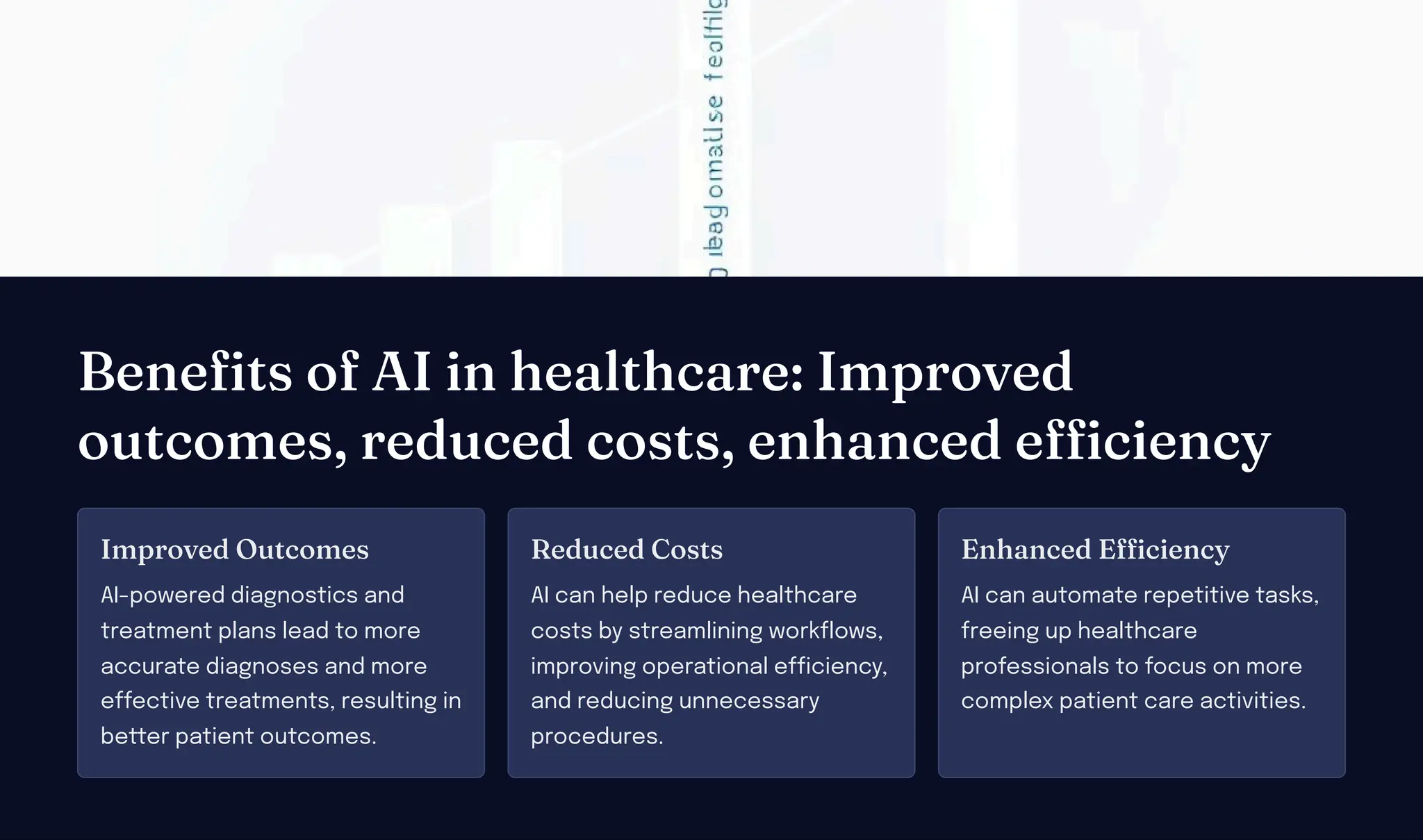
Be efit of AI i ealt care: I proved
outco e , reduced co t , e a ced efficie cy
I proved Outco e
AI-powered diagnostics and
treatment plans lead to more
accurate diagnoses and more
effective treatments, resulting in
better patient outcomes.
Reduced Co t
AI can help reduce healthcare
costs by streamlining workflows,
improving operational efficiency,
and reducing unnecessary
procedures.
E a ced Efficie cy
AI can automate repetitive tasks,
freeing up healthcare
professionals to focus on more
complex patient care activities.
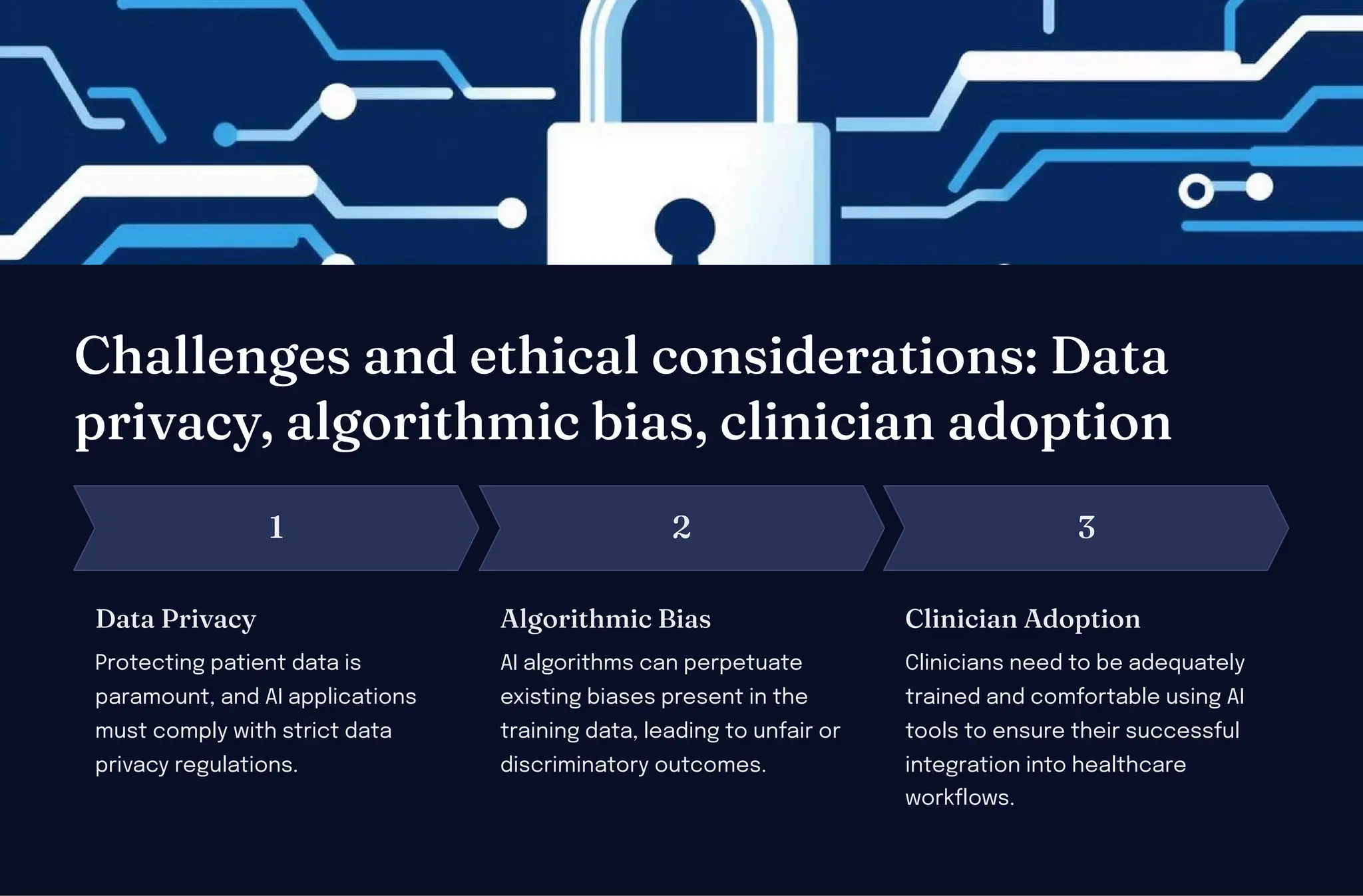
C alle ge a d et ical co ideratio : Data
privacy, algorit ic bia , cli icia adoptio
1
Data Privacy
Protecting patient data is
paramount, and AI applications
must comply with strict data
privacy regulations.
2
Algorit ic Bia
AI algorithms can perpetuate
existing biases present in the
training data, leading to unfair or
discriminatory outcomes.
3
Cli icia Adoptio
Clinicians need to be adequately
trained and comfortable using AI
tools to ensure their successful
integration into healthcare
workflows.
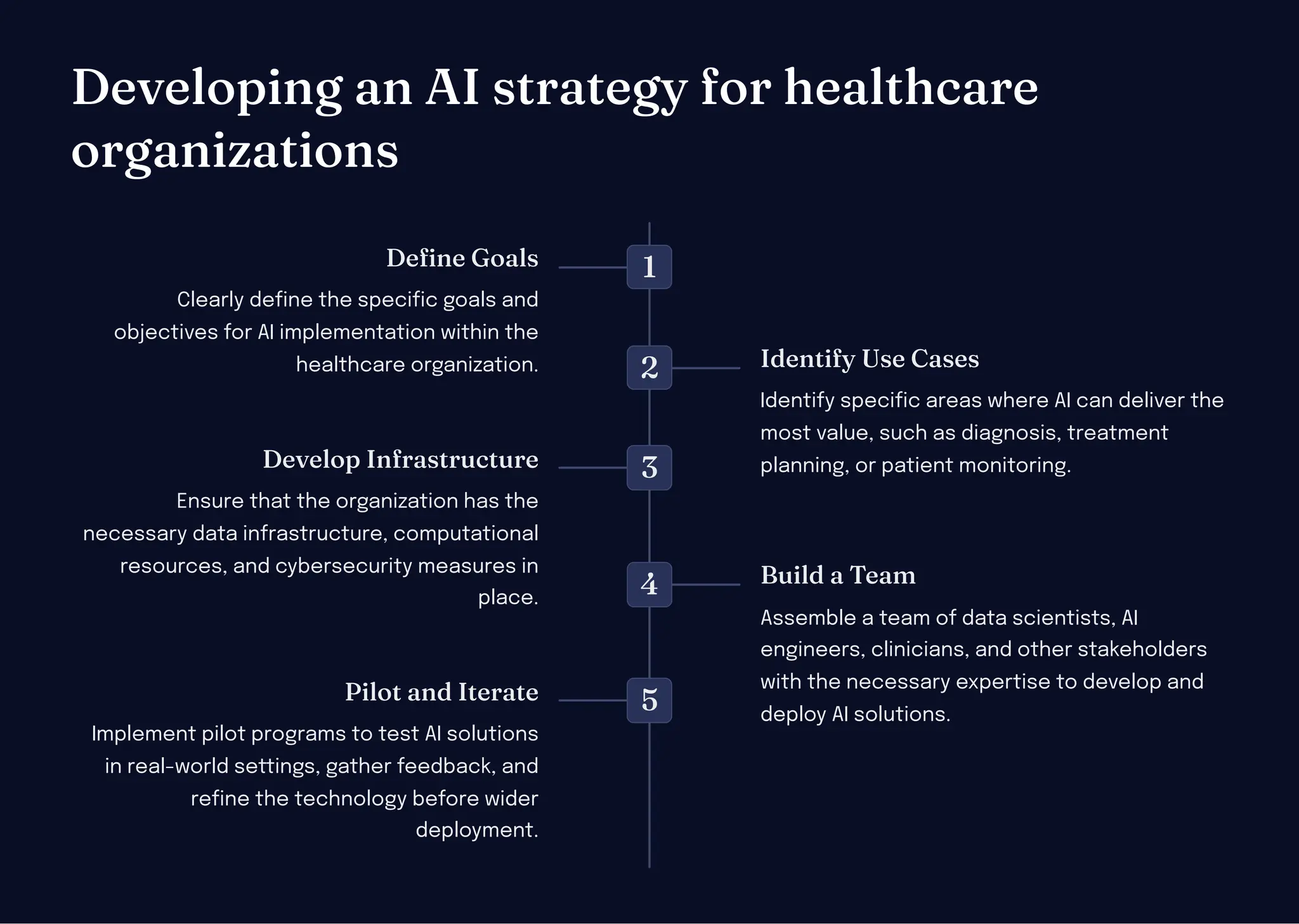
Developi g a AI trategy for ealt care
orga izatio
1
Defi e Goal
Clearly define the specific goals and
objectives for AI implementation within the
healthcare organization. 2 Ide tify U e Ca e
Identify specific areas where AI can deliver the
most value, such as diagnosis, treatment
planning, or patient monitoring.
3
Develop I fra tructure
Ensure that the organization has the
necessary data infrastructure, computational
resources, and cybersecurity measures in
place. 4 Build a Tea
Assemble a team of data scientists, AI
engineers, clinicians, and other stakeholders
with the necessary expertise to develop and
deploy AI solutions.
5
Pilot a d Iterate
Implement pilot programs to test AI solutions
in real-world settings, gather feedback, and
refine the technology before wider
deployment.
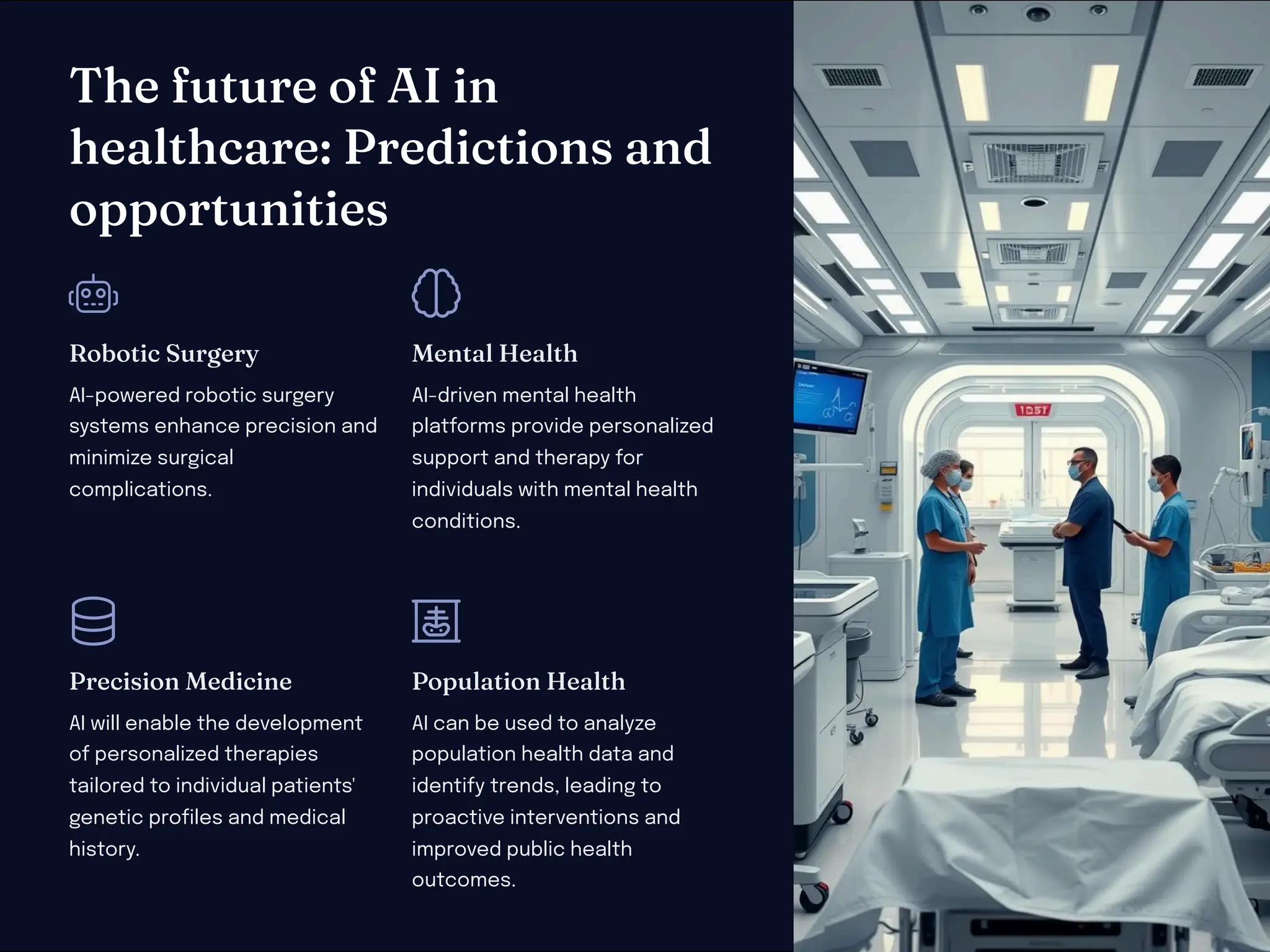
T e future of AI i
ealt care: Predictio a d
opportu itie
Robotic Surgery
AI-powered robotic surgery
systems enhance precision and
minimize surgical
complications.
Me tal Healt
AI-driven mental health
platforms provide personalized
support and therapy for
individuals with mental health
conditions.
Preci io Medici e
AI will enable the development
of personalized therapies
tailored to individual patients'
genetic profiles and medical
history.
Populatio Healt
AI can be used to analyze
population health data and
identify trends, leading to
proactive interventions and
improved public health
outcomes.
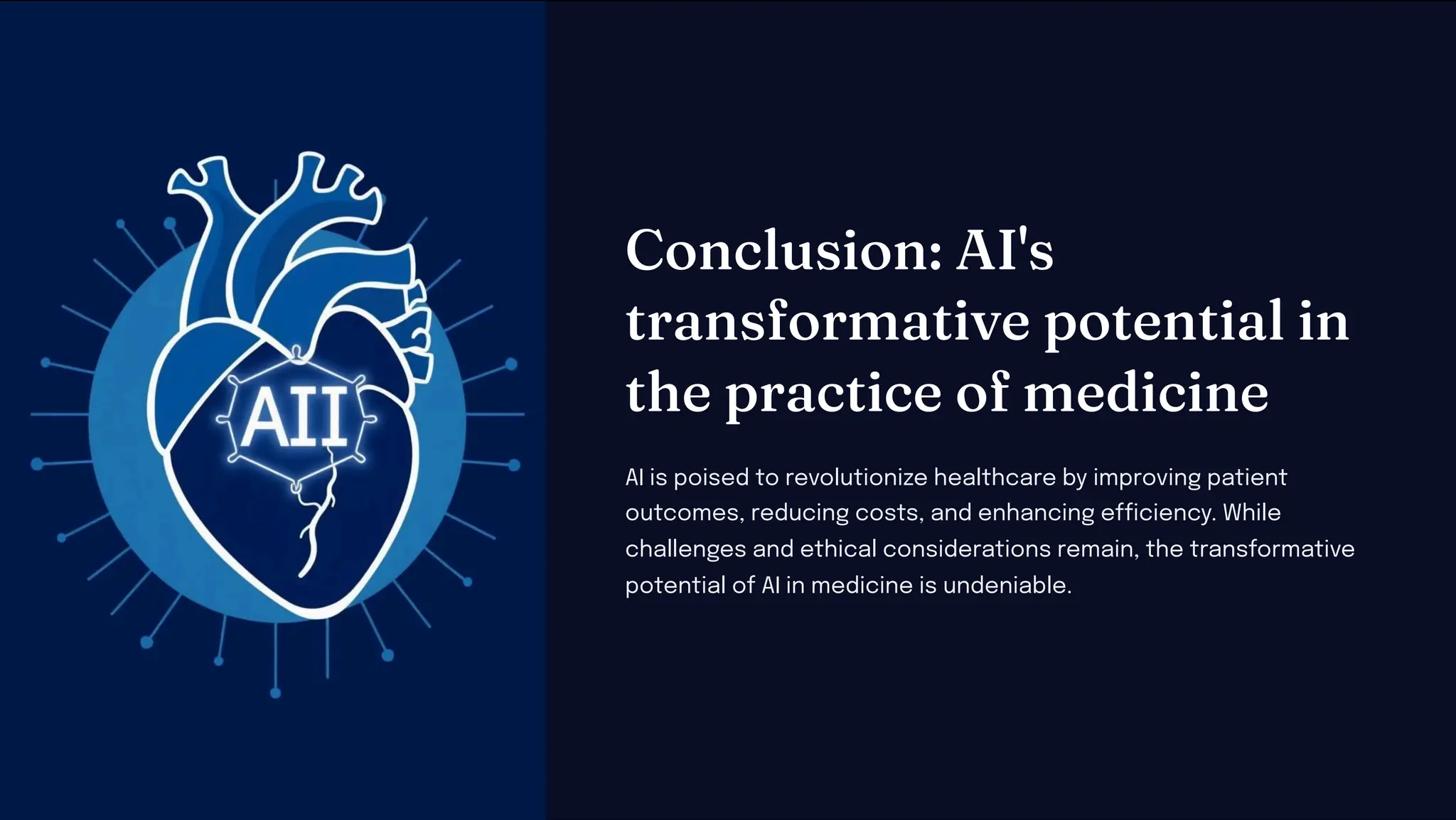
Co clu io : AI'
tra for ative pote tial i
t e practice of edici e
AI is poised to revolutionize healthcare by improving patient
outcomes, reducing costs, and enhancing efficiency. While
challenges and ethical considerations remain, the transformative
potential of AI in medicine is undeniable.

Artificial Intelligence in Healthcare: Transforming the Practice of Medicine

  • 1.
    Artificial I tellige cei Healt care: Tra for i g t e Practice of Medici e Artificial intelligence (AI) is rapidly transforming the healthcare landscape, offering innovative solutions to complex medical challenges. From diagnosing diseases to developing new treatments, AI is poised to revolutionize the practice of medicine.
  • 2.
    I troductio :T e ri e of AI i ealt care 1 Expo e tial Growt AI's rapid progress is fueled by advancements in computing power, data availability, and algorithmic development. 2 Data-Drive I ig t AI leverages vast amounts of medical data to identify patterns and predict outcomes, improving diagnostic accuracy and treatment effectiveness. 3 Per o alized Care AI enables personalized medicine by tailoring treatment plans based on individual patient characteristics and medical history.
  • 3.
    Key AI applicatioi edici e: Diag o tic , drug di covery, patie t o itori g Diag o tic AI algorithms can analyze medical images, such as X-rays and CT scans, to detect abnormalities and assist in diagnosis. Drug Di covery AI is accelerating the process of drug discovery by analyzing large datasets to identify promising drug candidates and predict their efficacy. Patie t Mo itori g AI-powered wearable devices and remote monitoring systems enable continuous tracking of patient health metrics, enabling early detection of health issues.
  • 4.
    Real-world exa ple: Ca e tudie of AI-drive breakt roug Cancer Diagnosis AI algorithms have shown promising results in detecting and classifying cancerous tumors in mammograms and other medical images. Drug Development AI has been used to develop new drugs for various diseases, including Alzheimer's disease and cancer, accelerating the drug discovery process. Personalized Treatment AI-powered systems are being used to personalize treatment plans for patients with chronic diseases, such as diabetes and heart disease.
  • 5.
    Be efit ofAI i ealt care: I proved outco e , reduced co t , e a ced efficie cy I proved Outco e AI-powered diagnostics and treatment plans lead to more accurate diagnoses and more effective treatments, resulting in better patient outcomes. Reduced Co t AI can help reduce healthcare costs by streamlining workflows, improving operational efficiency, and reducing unnecessary procedures. E a ced Efficie cy AI can automate repetitive tasks, freeing up healthcare professionals to focus on more complex patient care activities.
  • 6.
    C alle gea d et ical co ideratio : Data privacy, algorit ic bia , cli icia adoptio 1 Data Privacy Protecting patient data is paramount, and AI applications must comply with strict data privacy regulations. 2 Algorit ic Bia AI algorithms can perpetuate existing biases present in the training data, leading to unfair or discriminatory outcomes. 3 Cli icia Adoptio Clinicians need to be adequately trained and comfortable using AI tools to ensure their successful integration into healthcare workflows.
  • 7.
    Developi g aAI trategy for ealt care orga izatio 1 Defi e Goal Clearly define the specific goals and objectives for AI implementation within the healthcare organization. 2 Ide tify U e Ca e Identify specific areas where AI can deliver the most value, such as diagnosis, treatment planning, or patient monitoring. 3 Develop I fra tructure Ensure that the organization has the necessary data infrastructure, computational resources, and cybersecurity measures in place. 4 Build a Tea Assemble a team of data scientists, AI engineers, clinicians, and other stakeholders with the necessary expertise to develop and deploy AI solutions. 5 Pilot a d Iterate Implement pilot programs to test AI solutions in real-world settings, gather feedback, and refine the technology before wider deployment.
  • 8.
    T e futureof AI i ealt care: Predictio a d opportu itie Robotic Surgery AI-powered robotic surgery systems enhance precision and minimize surgical complications. Me tal Healt AI-driven mental health platforms provide personalized support and therapy for individuals with mental health conditions. Preci io Medici e AI will enable the development of personalized therapies tailored to individual patients' genetic profiles and medical history. Populatio Healt AI can be used to analyze population health data and identify trends, leading to proactive interventions and improved public health outcomes.
  • 9.
    Co clu io: AI' tra for ative pote tial i t e practice of edici e AI is poised to revolutionize healthcare by improving patient outcomes, reducing costs, and enhancing efficiency. While challenges and ethical considerations remain, the transformative potential of AI in medicine is undeniable.