Computer Generations
ITSC 1401, Intro to Computers
Instructor: Glenda H. Easter
Computer Generations 2
Early Electronic Computers and
The Computer Generations
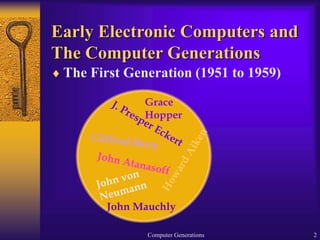
 The First Generation (1951 to 1959)
John Mauchly
Grace
Hopper
Computer Generations 3
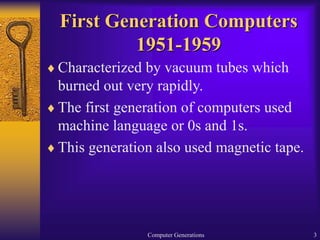
First Generation Computers
1951-1959
Characterized by vacuum tubes which
burned out very rapidly.
The first generation of computers used
machine language or 0s and 1s.
This generation also used magnetic tape.
Computer Generations 4
The Computer Generations
(Continued)
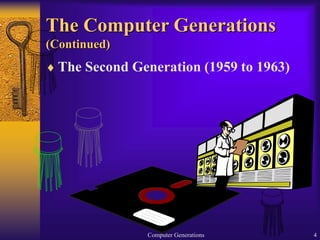
 The Second Generation (1959 to 1963)
Computer Generations 5
Second Generation
1959-1963
The second generation of computers used
transistors for the internal operations.
They used magnetic core for the memory.
These machines used assembly language.
Computer Generations 6
The Computer Generations
(Continued)
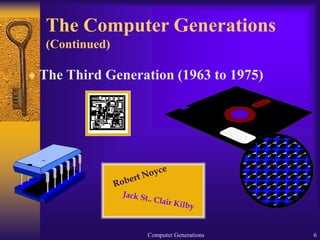
 The Third Generation (1963 to 1975)
Computer Generations 7
Third Generation
1963-1975
These computers used integrated circuits
on silicon chips.
They were characterized with high-level
programming languages which required
logic such as BASIC, Pascal, C, COBOL,
and Fortran
Computer Generations 8
The Computer Generations
(Continued)
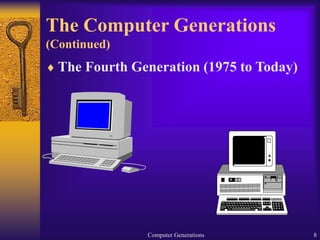
 The Fourth Generation (1975 to Today)
Computer Generations 9
Fourth Generation
1975-Today
 These computers use microprocessor chips.
 Object-Oriented Programming (OOP)
Languages such as Visual Basic, and JAVA
are characteristic of this computer
generation.
Computer Generations 10
Object Oriented Languages
 The new languages are based on a concept
called Object-Oriented Programming (OOP)
which encourages programmers to reuse code
by maintaining libraries of code segments.
 These programs are designed to solve specific
problems and require little special user
training. This includes Query Languages and
application generators
Computer Generations 11
A Fifth Generation?
AI and Natural Languages
Computer Generations 12
5th Generation
Still Being Developed
 Natural Language
 This language is designed to give people a
more human connection with computers.
 Uses multi-media has also defined this
generation.
 There is a great deal of “bundled software”
with this generation.

GENERATION-OF-COMPUTER.ppt

  • 1.
    Computer Generations ITSC 1401,Intro to Computers Instructor: Glenda H. Easter
  • 2.
    Computer Generations 2 EarlyElectronic Computers and The Computer Generations  The First Generation (1951 to 1959) John Mauchly Grace Hopper
  • 3.
    Computer Generations 3 FirstGeneration Computers 1951-1959 Characterized by vacuum tubes which burned out very rapidly. The first generation of computers used machine language or 0s and 1s. This generation also used magnetic tape.
  • 4.
    Computer Generations 4 TheComputer Generations (Continued)  The Second Generation (1959 to 1963)
  • 5.
    Computer Generations 5 SecondGeneration 1959-1963 The second generation of computers used transistors for the internal operations. They used magnetic core for the memory. These machines used assembly language.
  • 6.
    Computer Generations 6 TheComputer Generations (Continued)  The Third Generation (1963 to 1975)
  • 7.
    Computer Generations 7 ThirdGeneration 1963-1975 These computers used integrated circuits on silicon chips. They were characterized with high-level programming languages which required logic such as BASIC, Pascal, C, COBOL, and Fortran
  • 8.
    Computer Generations 8 TheComputer Generations (Continued)  The Fourth Generation (1975 to Today)
  • 9.
    Computer Generations 9 FourthGeneration 1975-Today  These computers use microprocessor chips.  Object-Oriented Programming (OOP) Languages such as Visual Basic, and JAVA are characteristic of this computer generation.
  • 10.
    Computer Generations 10 ObjectOriented Languages  The new languages are based on a concept called Object-Oriented Programming (OOP) which encourages programmers to reuse code by maintaining libraries of code segments.  These programs are designed to solve specific problems and require little special user training. This includes Query Languages and application generators
  • 11.
    Computer Generations 11 AFifth Generation? AI and Natural Languages
  • 12.
    Computer Generations 12 5thGeneration Still Being Developed  Natural Language  This language is designed to give people a more human connection with computers.  Uses multi-media has also defined this generation.  There is a great deal of “bundled software” with this generation.