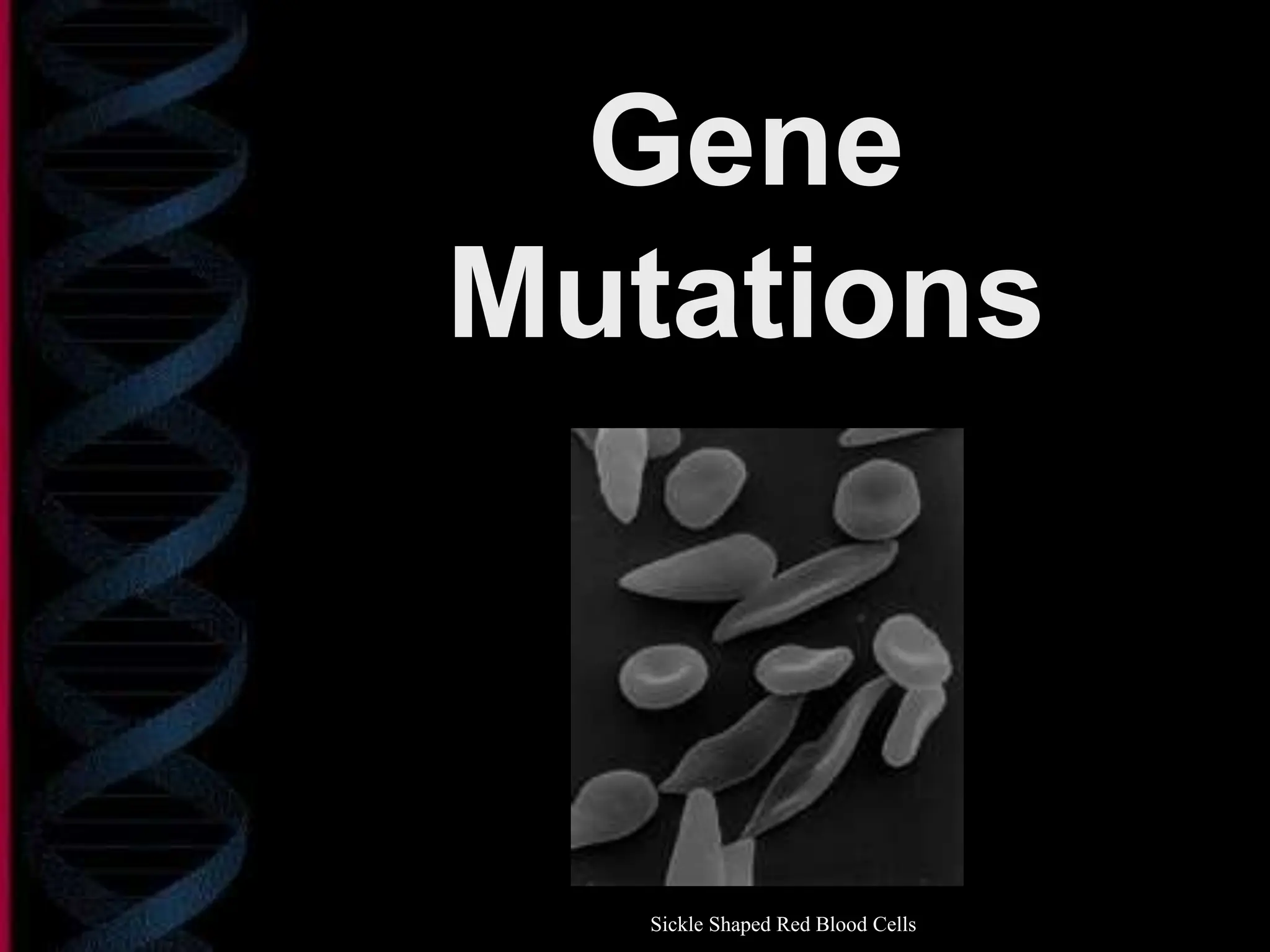
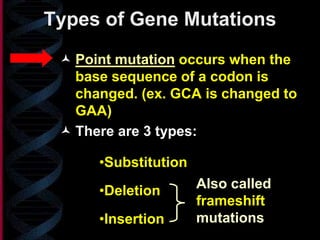
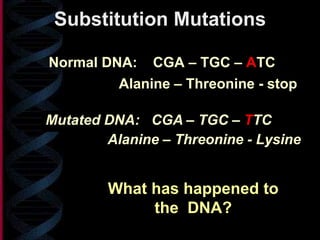
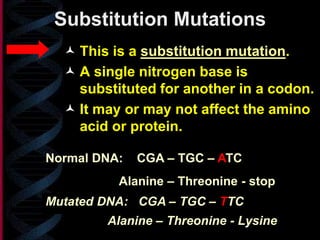
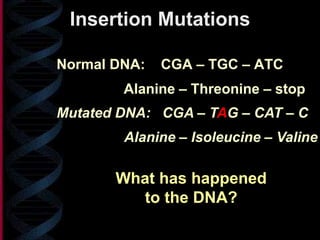
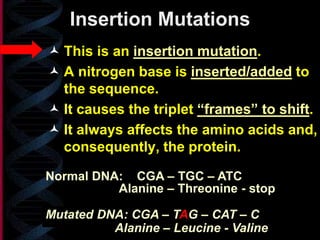
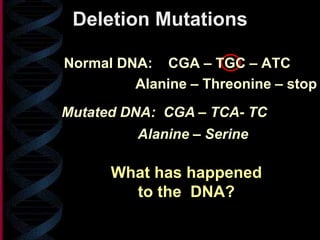
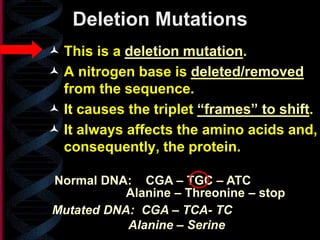
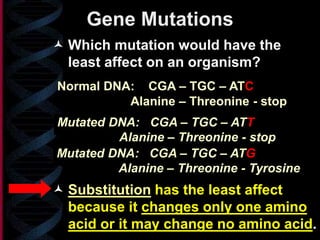
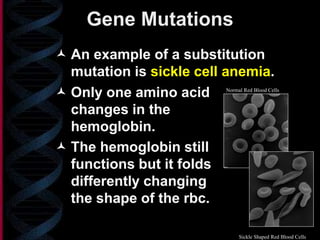
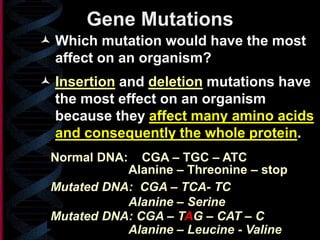
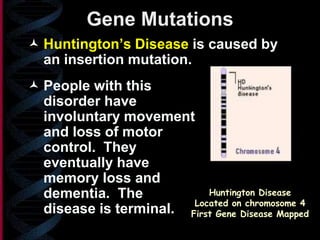
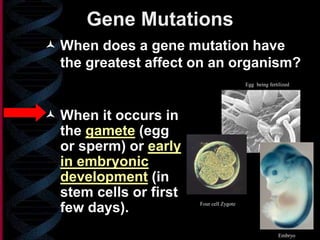
Gene mutations occur when there is a change in the DNA sequence, such as a substitution, insertion, or deletion of nucleotide bases. Substitution mutations have the smallest effect, often not changing the resulting amino acid. Insertion and deletion mutations are more likely to impact the protein as they disrupt the reading frame. An example where a single nucleotide change causes disease is sickle cell anemia. The most impactful mutations occur in gametes or early embryonic development. Mutagens like radiation or chemicals can induce mutations.