GUILLAIN BARRE SYNDROME
GUILLIAN BARRE SYNDROME
 Guillain–Barré syndrome (GBS) is an acute onset, immune-mediated
disorder of the peripheral nervous system
 GBS is now recognized as a heterogeneous syndrome with several
variant forms.
 Most often, GBS presents as an acute, monophasic paralyzing illness
provoked by a preceding infection.
 GBS is fairly rare. Statistics 1 to 3 per 100,000annually.
HOW DOES IT PRESENT?
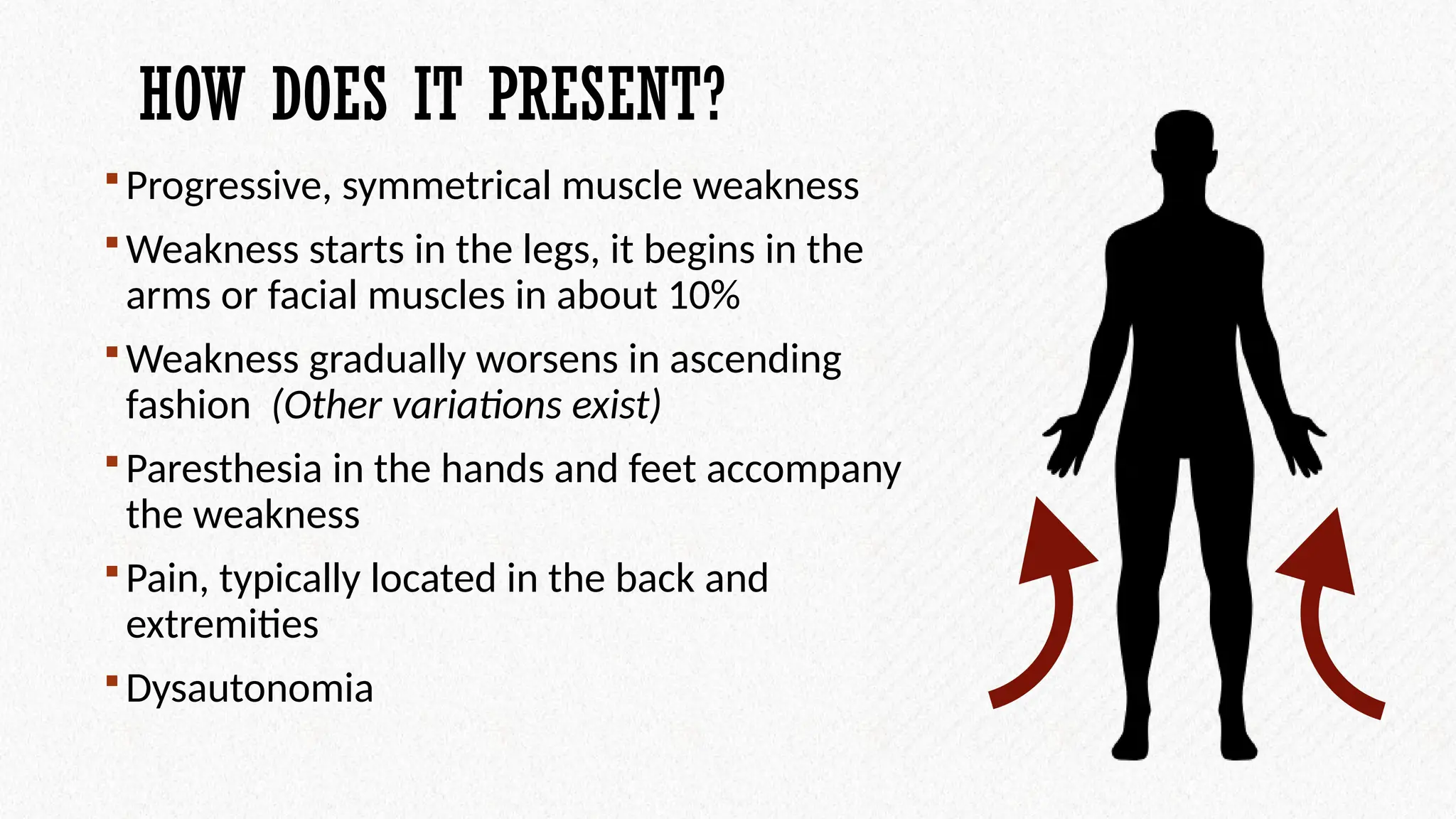
Progressive, symmetrical muscle weakness
Weakness starts in the legs, it begins in the
arms or facial muscles in about 10%
Weakness gradually worsens in ascending
fashion (Other variations exist)
Paresthesia in the hands and feet accompany
the weakness
Pain, typically located in the back and
extremities
Dysautonomia
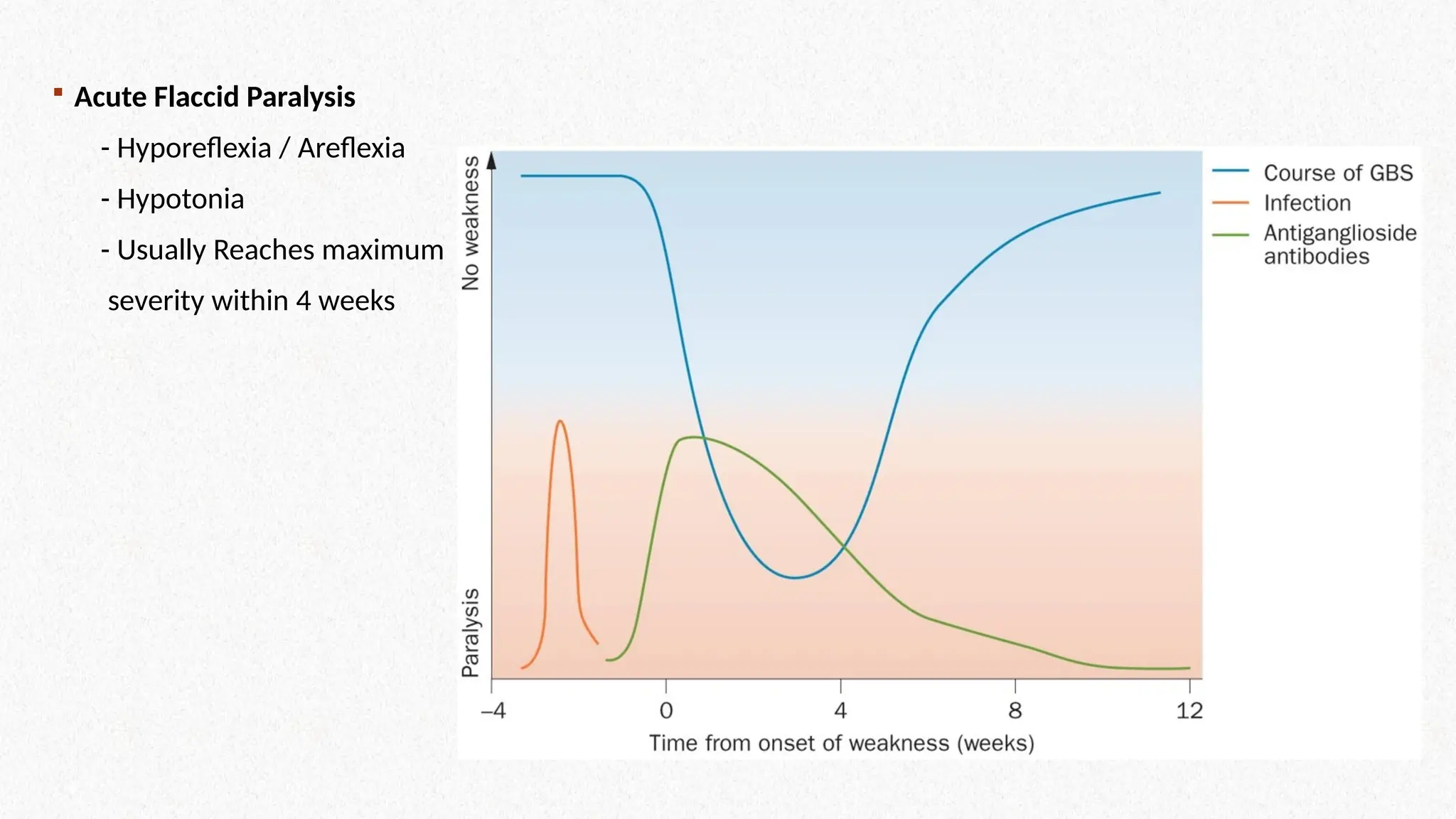
Initial symptoms Progresses over a period of about 2 weeks
Weakness may progress to complete paralysis of all extremity,
facial muscles
Respiratory and Bulbar muscle compromise
By 4 weeks 90% cases have reached the severity of the disease
Self limiting disease, and most patients recover.
Disease progression of more than 8 weeks is consistent with
Chronic Inflammatory Demyelinating Polyradiculoneuropathy
 Acute Flaccid Paralysis
- Hyporeflexia / Areflexia
- Hypotonia
- Usually Reaches maximum
severity within 4 weeks
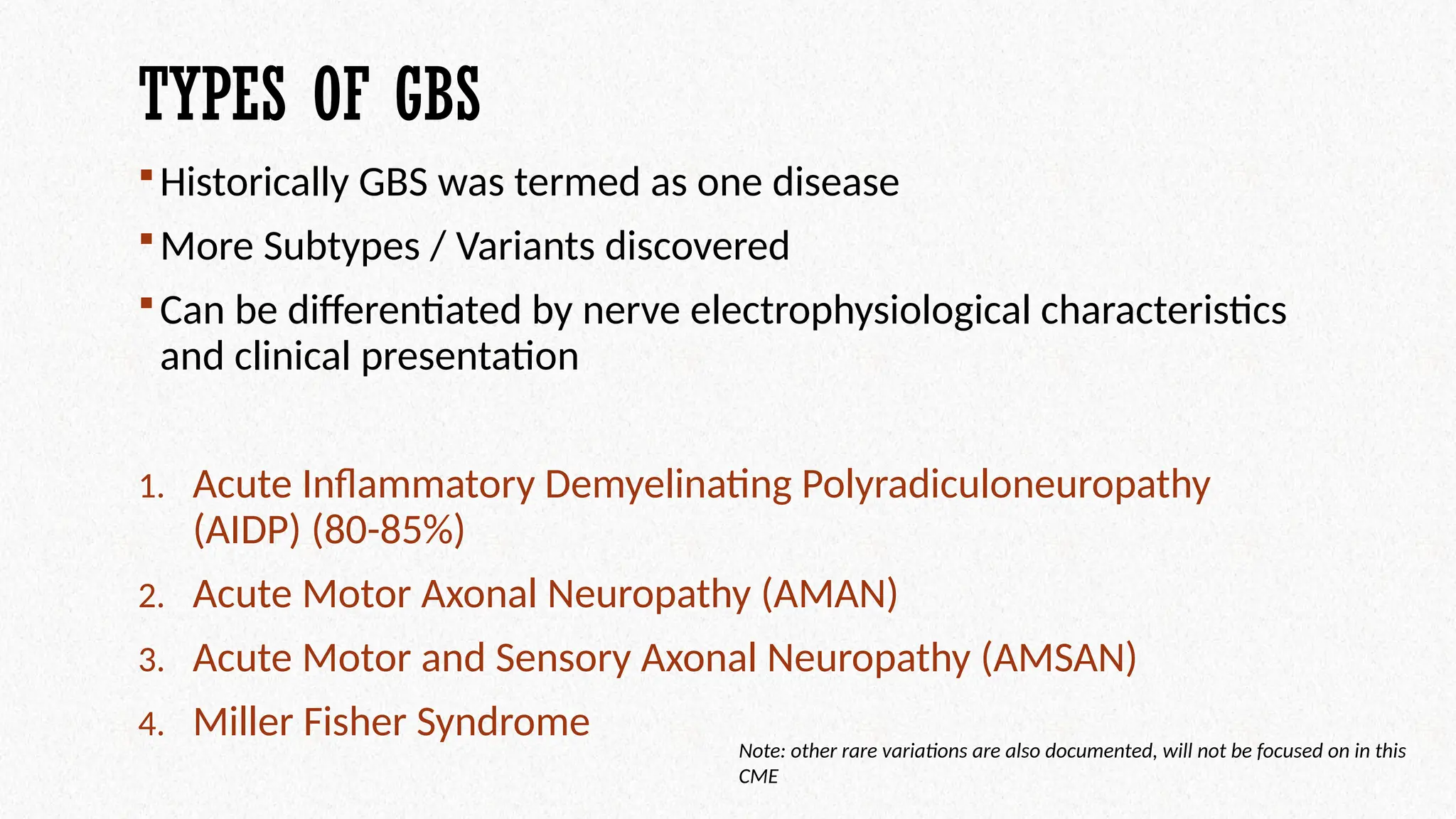
TYPES OF GBS
Historically GBS was termed as one disease
More Subtypes / Variants discovered
Can be differentiated by nerve electrophysiological characteristics
and clinical presentation
1. Acute Inflammatory Demyelinating Polyradiculoneuropathy
(AIDP) (80-85%)
2. Acute Motor Axonal Neuropathy (AMAN)
3. Acute Motor and Sensory Axonal Neuropathy (AMSAN)
4. Miller Fisher Syndrome
Note: other rare variations are also documented, will not be focused on in this
CME
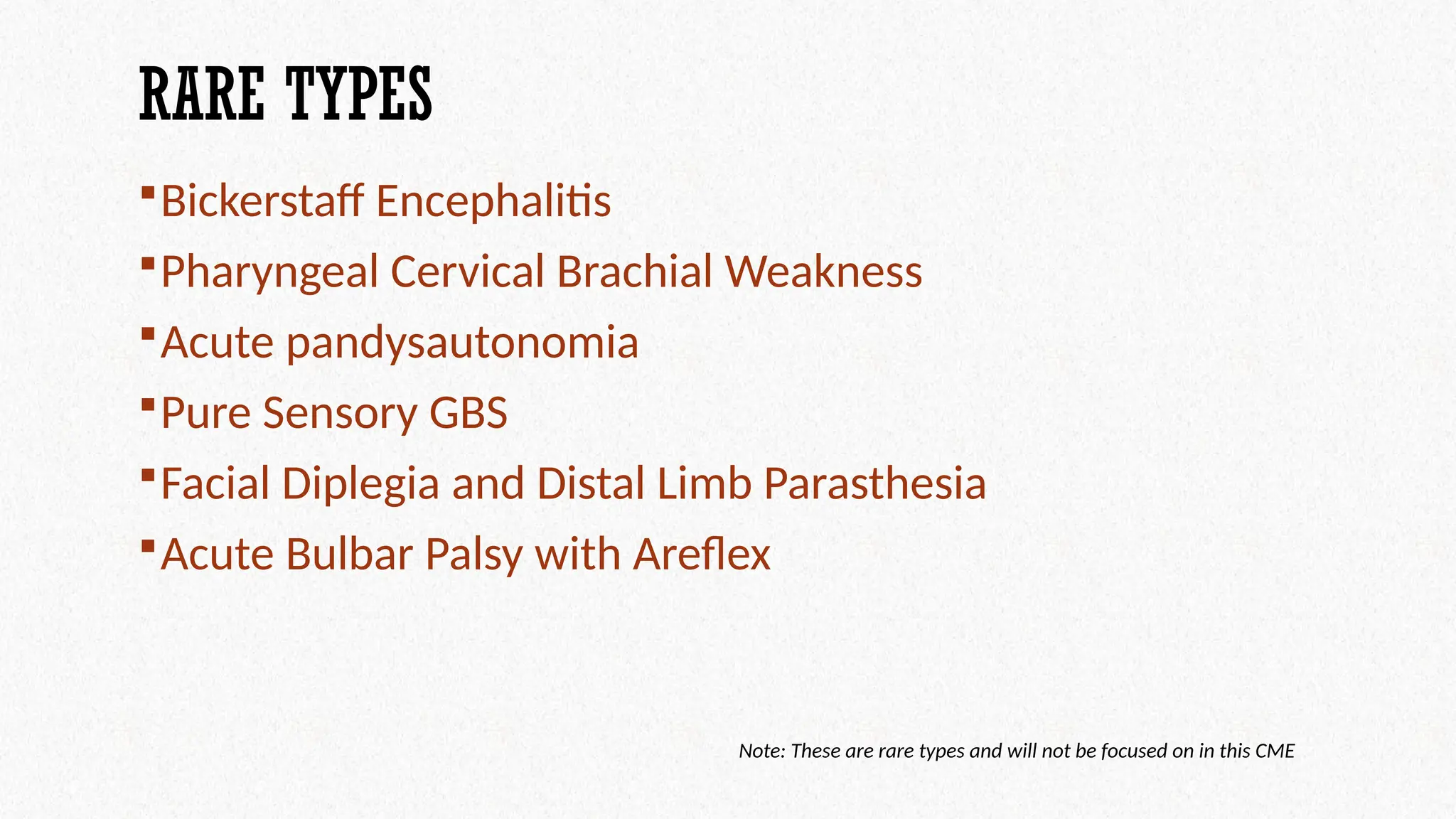
RARE TYPES
Bickerstaff Encephalitis
Pharyngeal Cervical Brachial Weakness
Acute pandysautonomia
Pure Sensory GBS
Facial Diplegia and Distal Limb Parasthesia
Acute Bulbar Palsy with Areflex
Note: These are rare types and will not be focused on in this CME
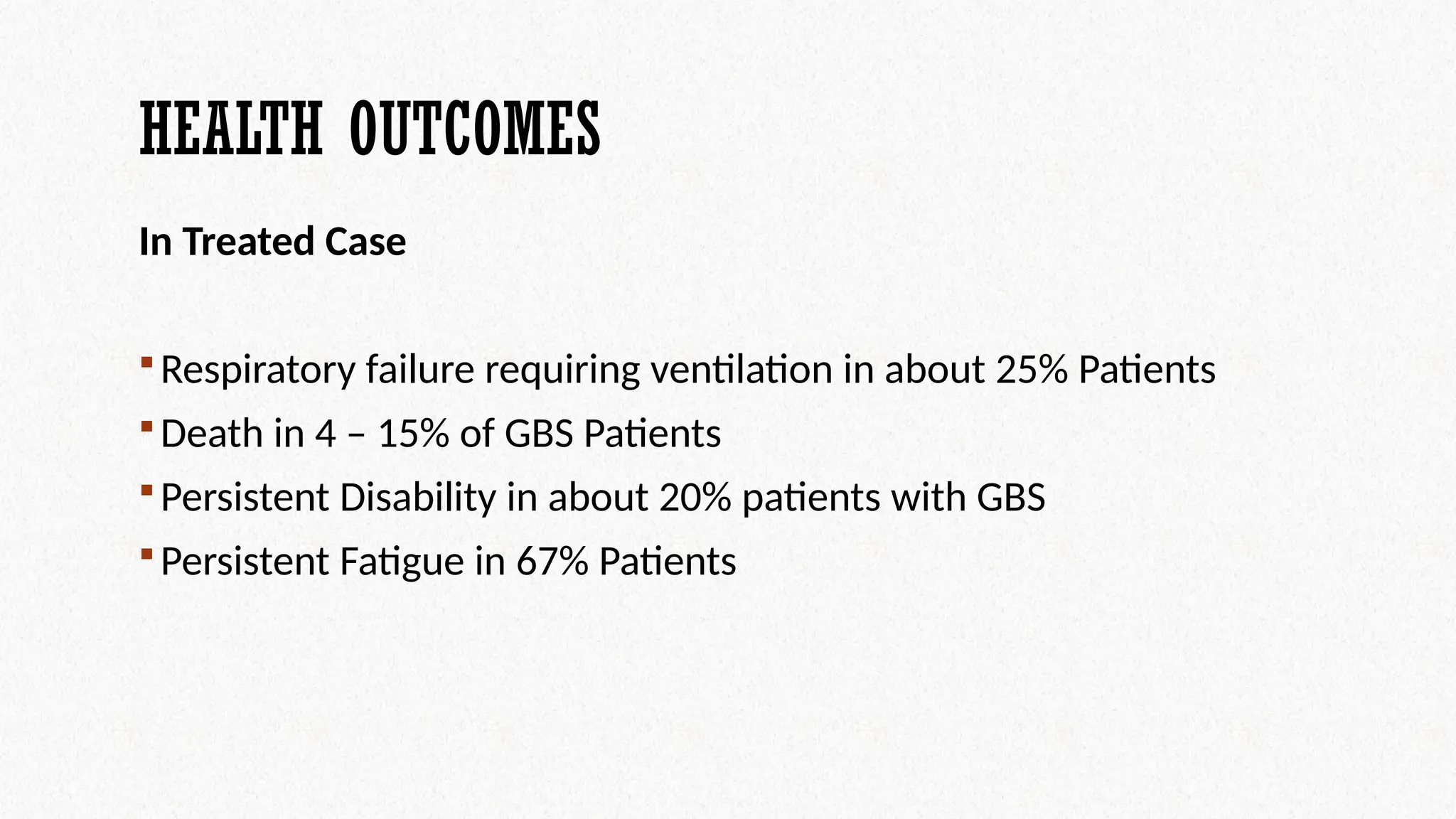
HEALTH OUTCOMES
In Treated Case
Respiratory failure requiring ventilation in about 25% Patients
Death in 4 – 15% of GBS Patients
Persistent Disability in about 20% patients with GBS
Persistent Fatigue in 67% Patients
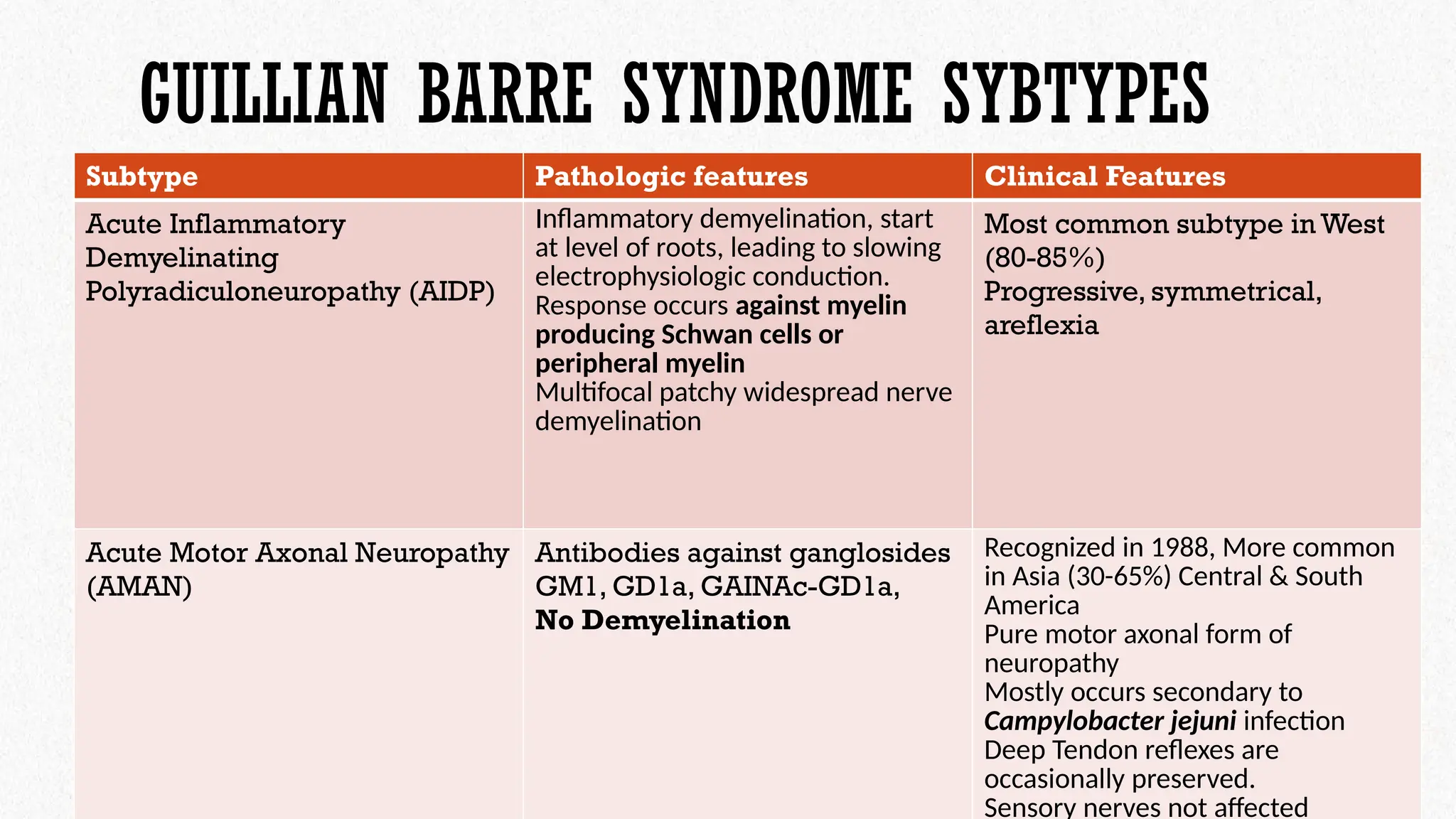
GUILLIAN BARRE SYNDROME SYBTYPES
Subtype Pathologic features Clinical Features
Acute Inflammatory
Demyelinating
Polyradiculoneuropathy (AIDP)
Inflammatory demyelination, start
at level of roots, leading to slowing
electrophysiologic conduction.
Response occurs against myelin
producing Schwan cells or
peripheral myelin
Multifocal patchy widespread nerve
demyelination
Most common subtype in West
(80-85%)
Progressive, symmetrical,
areflexia
Acute Motor Axonal Neuropathy
(AMAN)
Antibodies against ganglosides
GM1, GD1a, GAINAc-GD1a,
No Demyelination
Recognized in 1988, More common
in Asia (30-65%) Central & South
America
Pure motor axonal form of
neuropathy
Mostly occurs secondary to
Campylobacter jejuni infection
Deep Tendon reflexes are
occasionally preserved.
Sensory nerves not affected
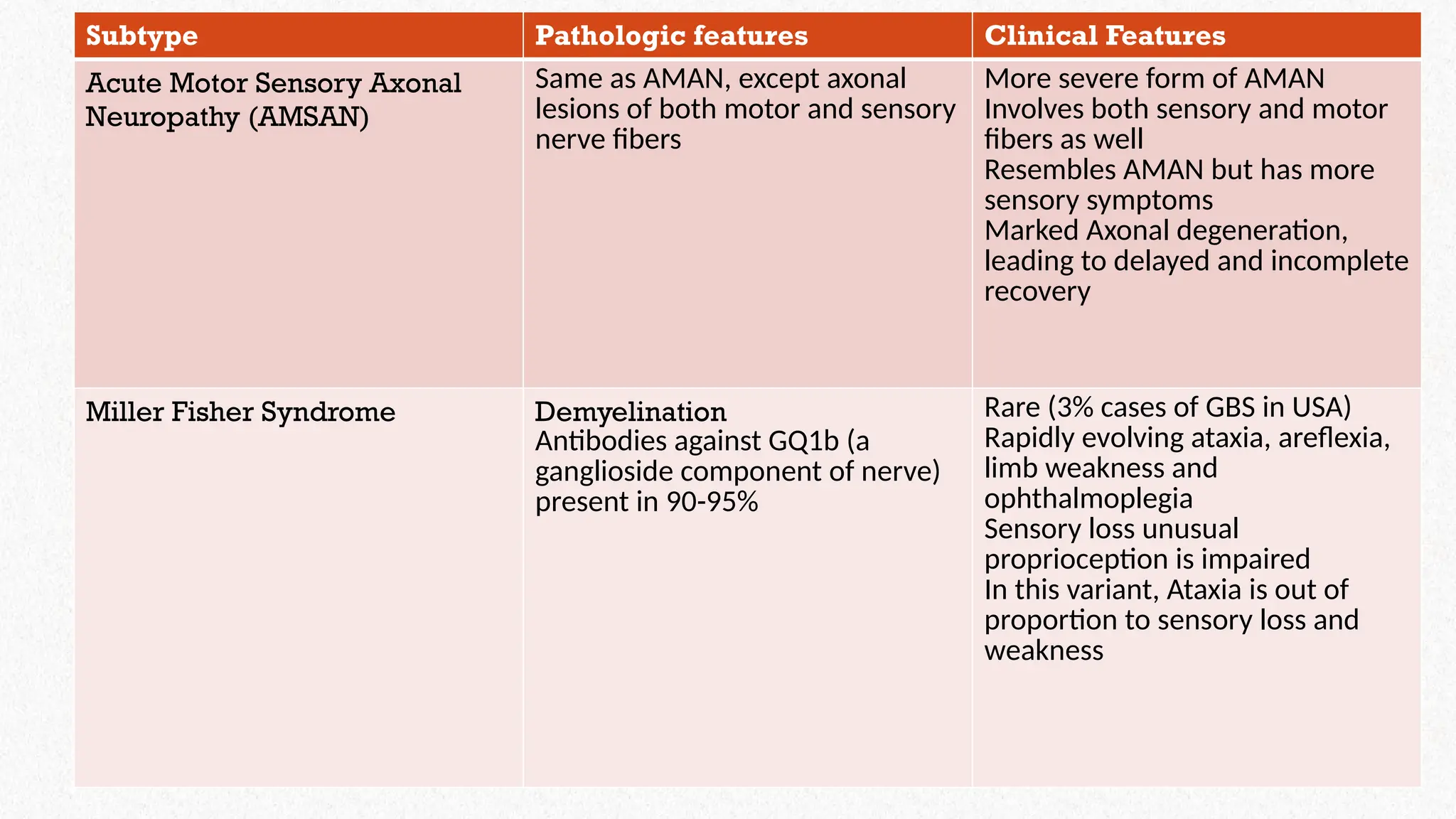
Subtype Pathologic features Clinical Features
Acute Motor Sensory Axonal
Neuropathy (AMSAN)
Same as AMAN, except axonal
lesions of both motor and sensory
nerve fibers
More severe form of AMAN
Involves both sensory and motor
fibers as well
Resembles AMAN but has more
sensory symptoms
Marked Axonal degeneration,
leading to delayed and incomplete
recovery
Miller Fisher Syndrome Demyelination
Antibodies against GQ1b (a
ganglioside component of nerve)
present in 90-95%
Rare (3% cases of GBS in USA)
Rapidly evolving ataxia, areflexia,
limb weakness and
ophthalmoplegia
Sensory loss unusual
proprioception is impaired
In this variant, Ataxia is out of
proportion to sensory loss and
weakness
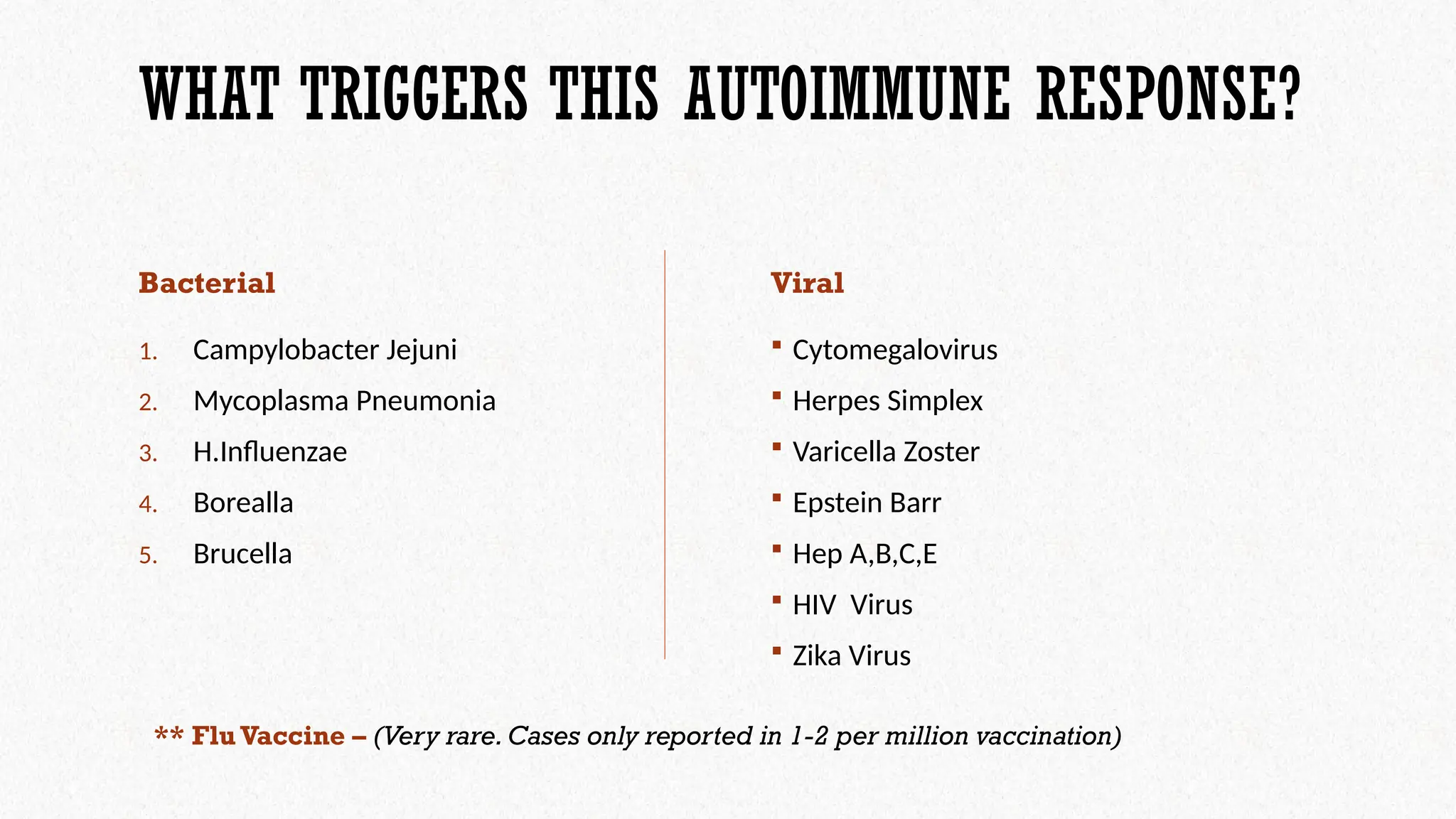
WHAT TRIGGERS THIS AUTOIMMUNE RESPONSE?
Bacterial
1. Campylobacter Jejuni
2. Mycoplasma Pneumonia
3. H.Influenzae
4. Borealla
5. Brucella
Viral
 Cytomegalovirus
 Herpes Simplex
 Varicella Zoster
 Epstein Barr
 Hep A,B,C,E
 HIV Virus
 Zika Virus
** Flu Vaccine – (Very rare. Cases only reported in 1-2 per million vaccination)
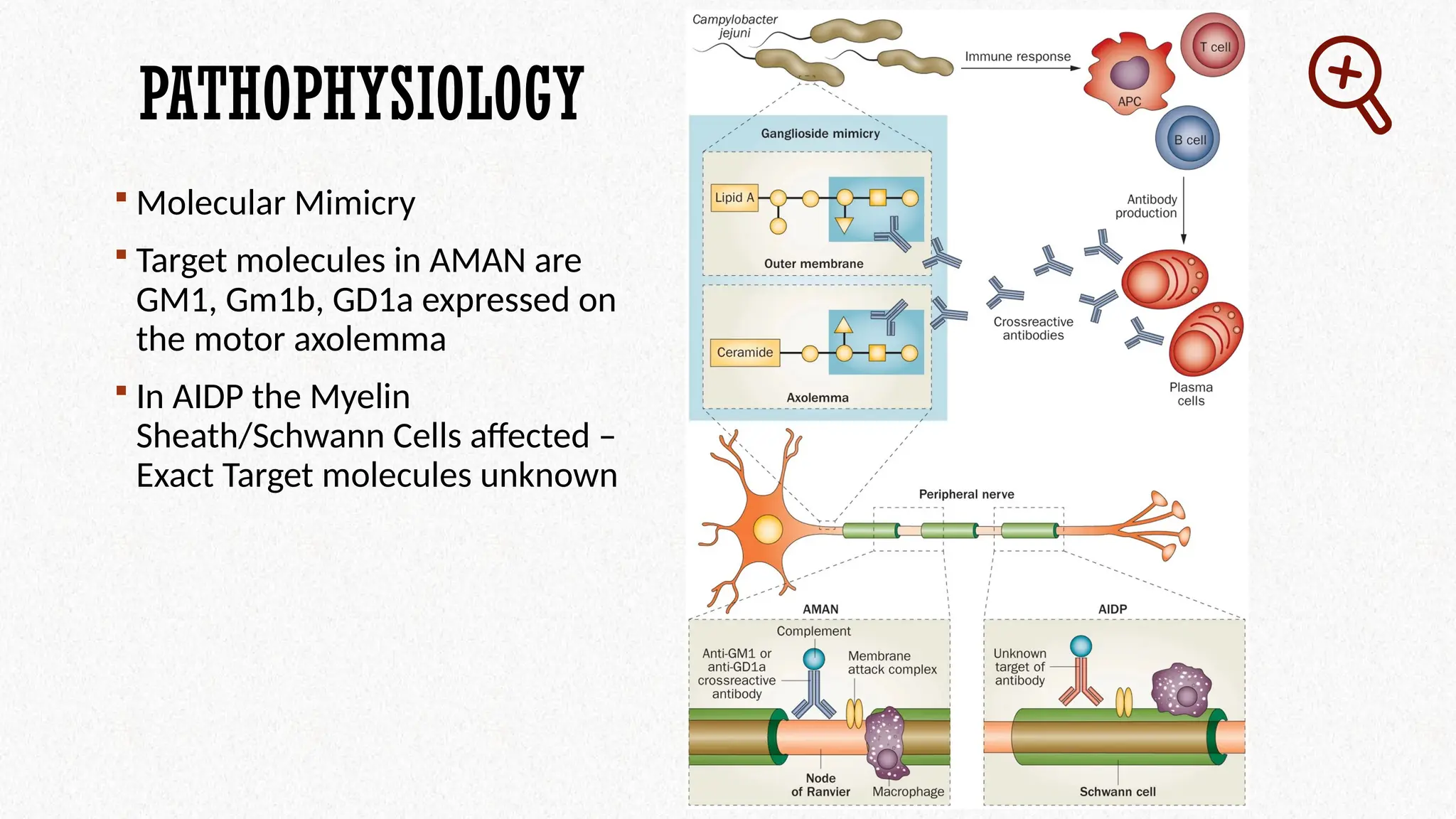
PATHOPHYSIOLOGY
 Molecular Mimicry
 Target molecules in AMAN are
GM1, Gm1b, GD1a expressed on
the motor axolemma
 In AIDP the Myelin
Sheath/Schwann Cells affected –
Exact Target molecules unknown
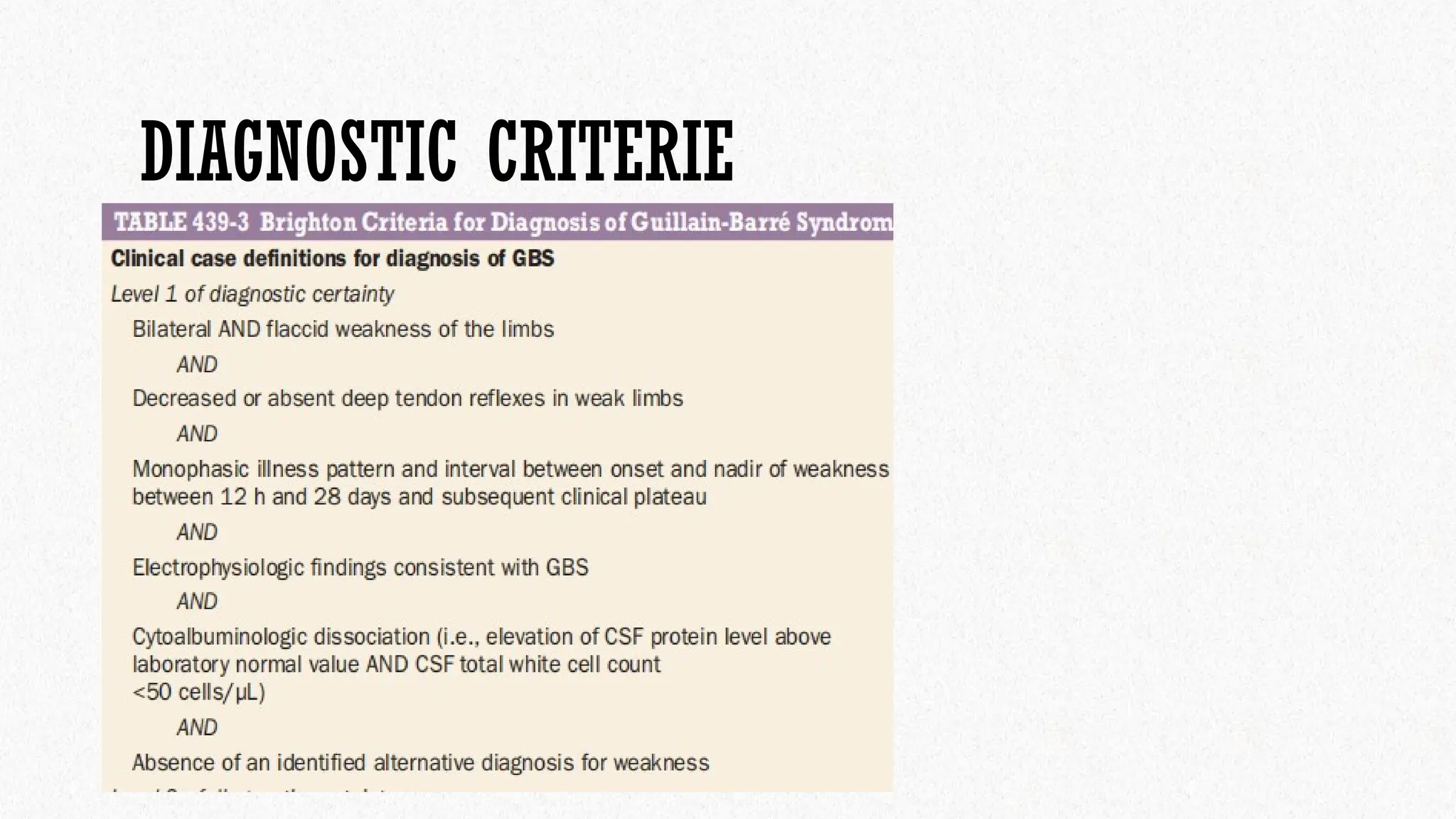
DIAGNOSTIC CRITERIE
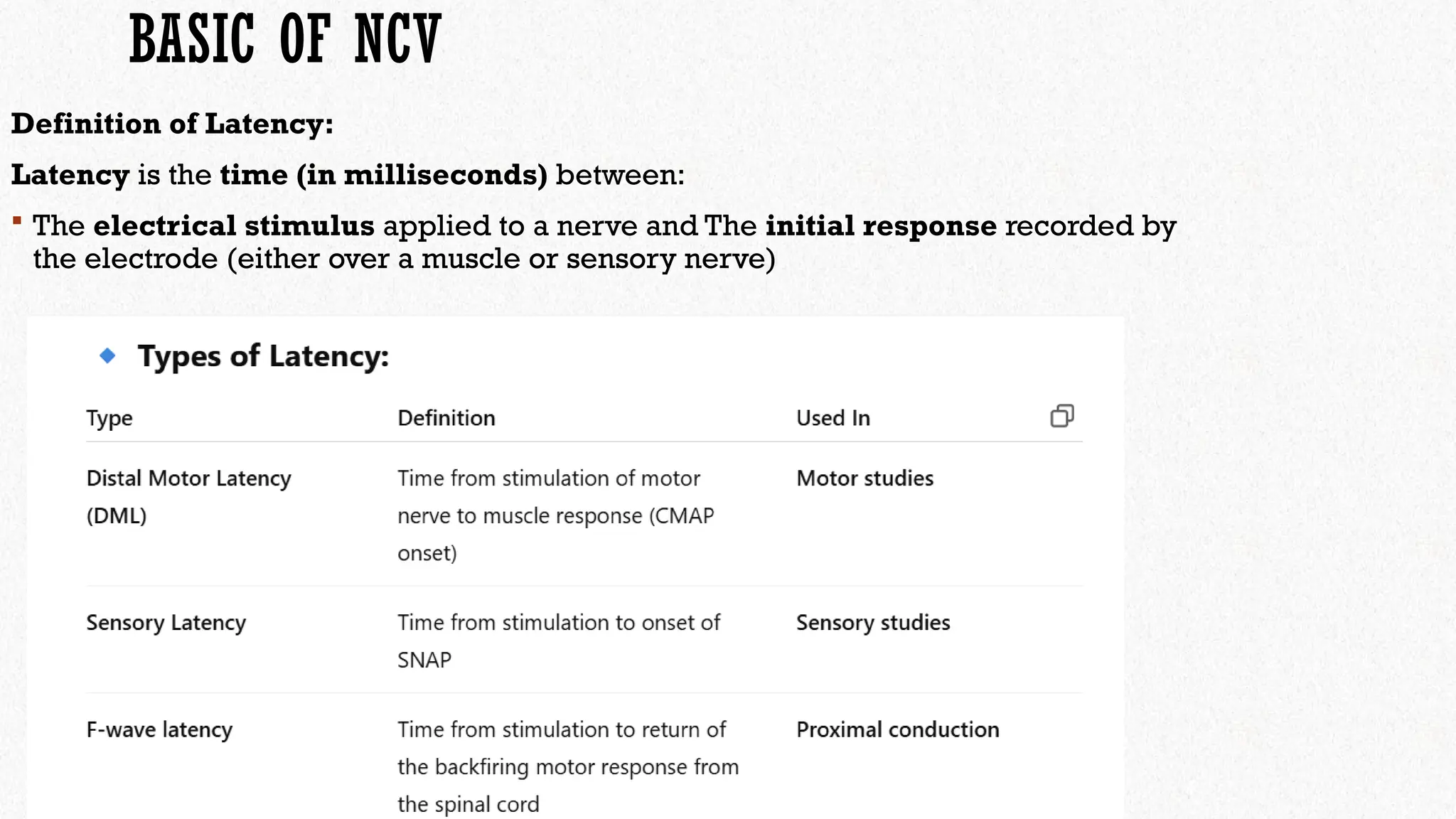
BASIC OF NCV
Definition of Latency:
Latency is the time (in milliseconds) between:
 The electrical stimulus applied to a nerve and The initial response recorded by
the electrode (either over a muscle or sensory nerve)
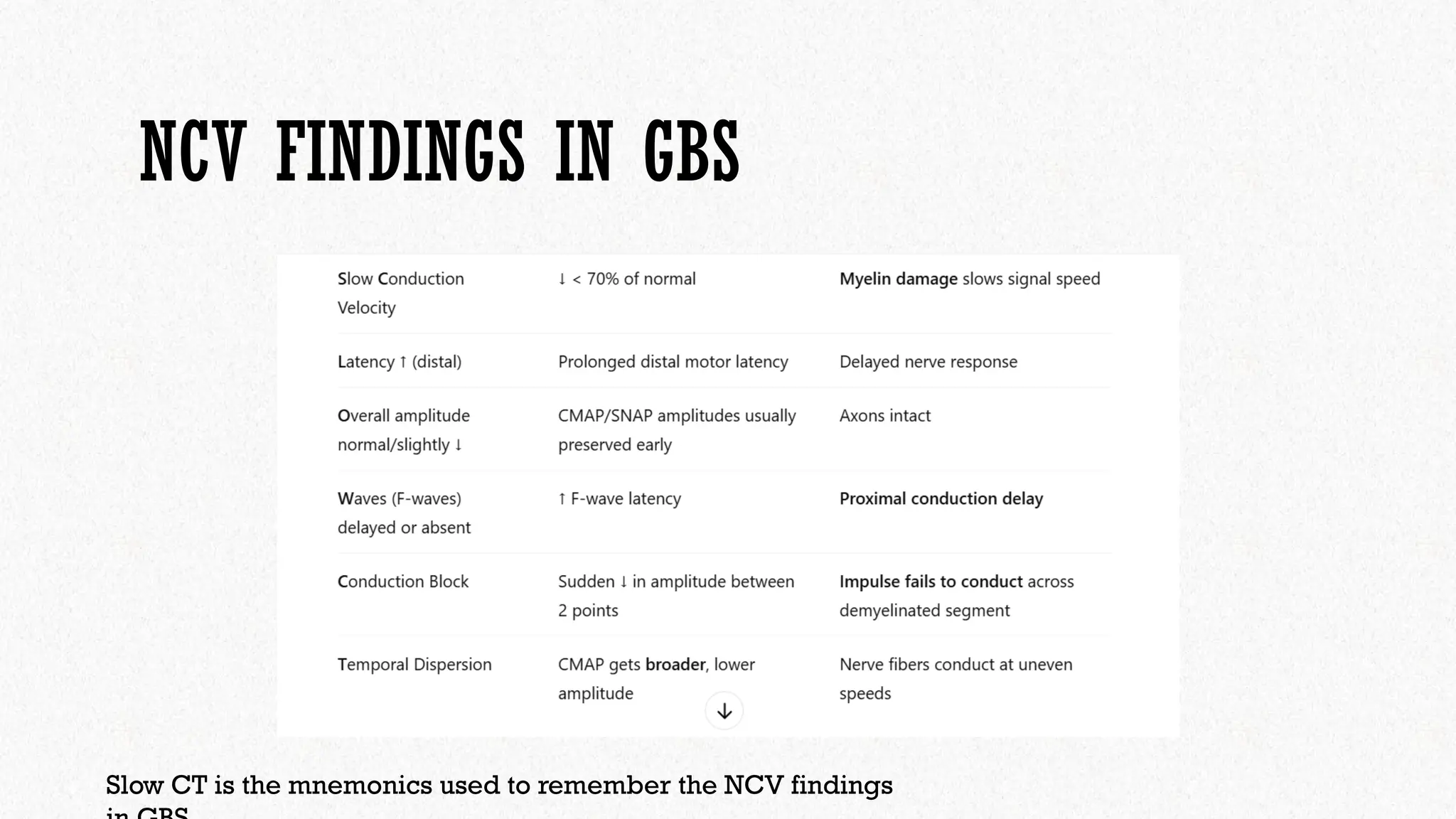
NCV FINDINGS IN GBS
Slow CT is the mnemonics used to remember the NCV findings
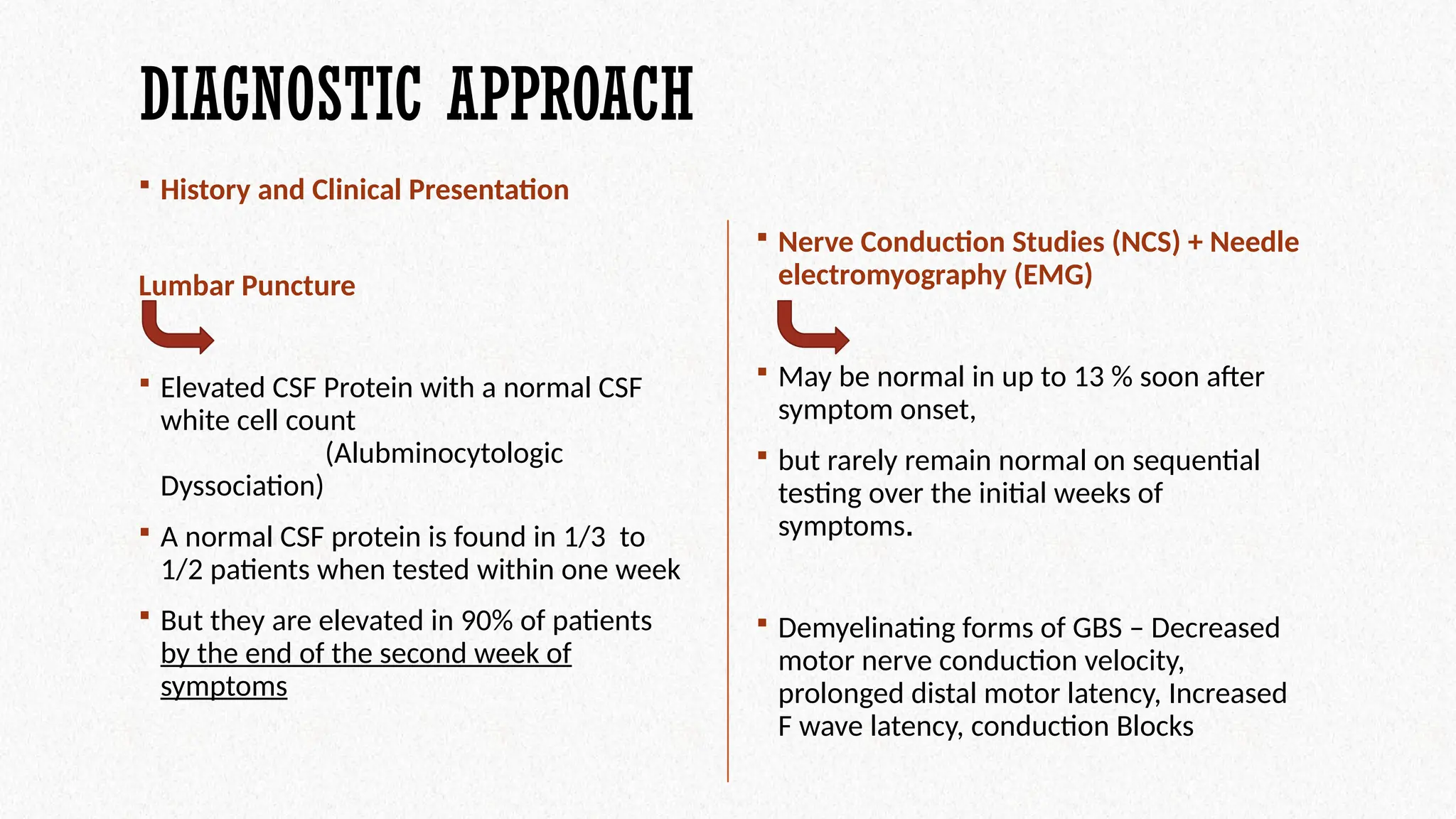
DIAGNOSTIC APPROACH
 History and Clinical Presentation
 Nerve Conduction Studies (NCS) + Needle
electromyography (EMG)
 May be normal in up to 13 % soon after
symptom onset,
 but rarely remain normal on sequential
testing over the initial weeks of
symptoms.
 Demyelinating forms of GBS – Decreased
motor nerve conduction velocity,
prolonged distal motor latency, Increased
F wave latency, conduction Blocks
Lumbar Puncture
 Elevated CSF Protein with a normal CSF
white cell count
(Alubminocytologic
Dyssociation)
 A normal CSF protein is found in 1/3 to
1/2 patients when tested within one week
 But they are elevated in 90% of patients
by the end of the second week of
symptoms
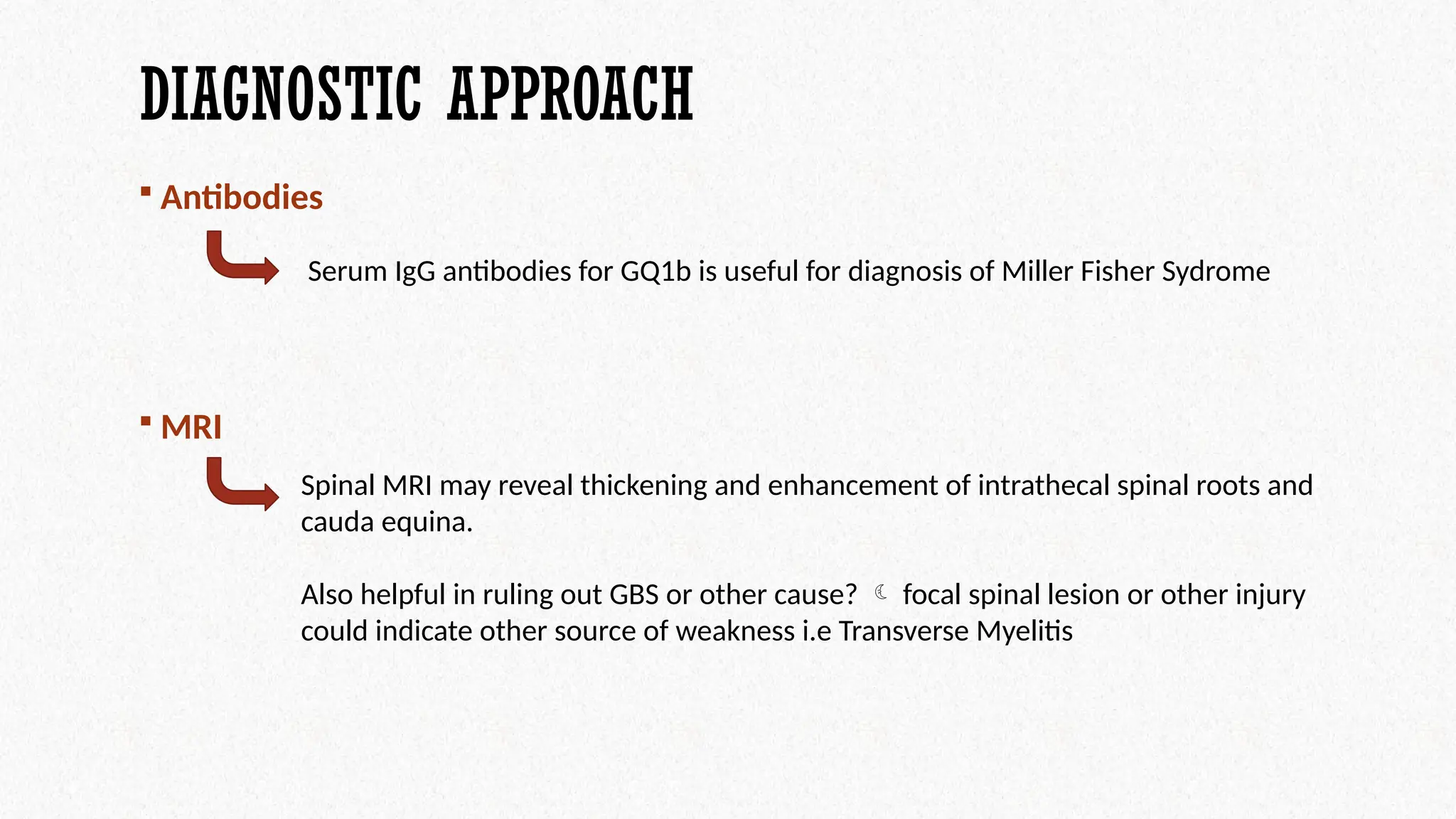
DIAGNOSTIC APPROACH
 Antibodies
 MRI
Serum IgG antibodies for GQ1b is useful for diagnosis of Miller Fisher Sydrome
Spinal MRI may reveal thickening and enhancement of intrathecal spinal roots and
cauda equina.
Also helpful in ruling out GBS or other cause?  focal spinal lesion or other injury
could indicate other source of weakness i.e Transverse Myelitis
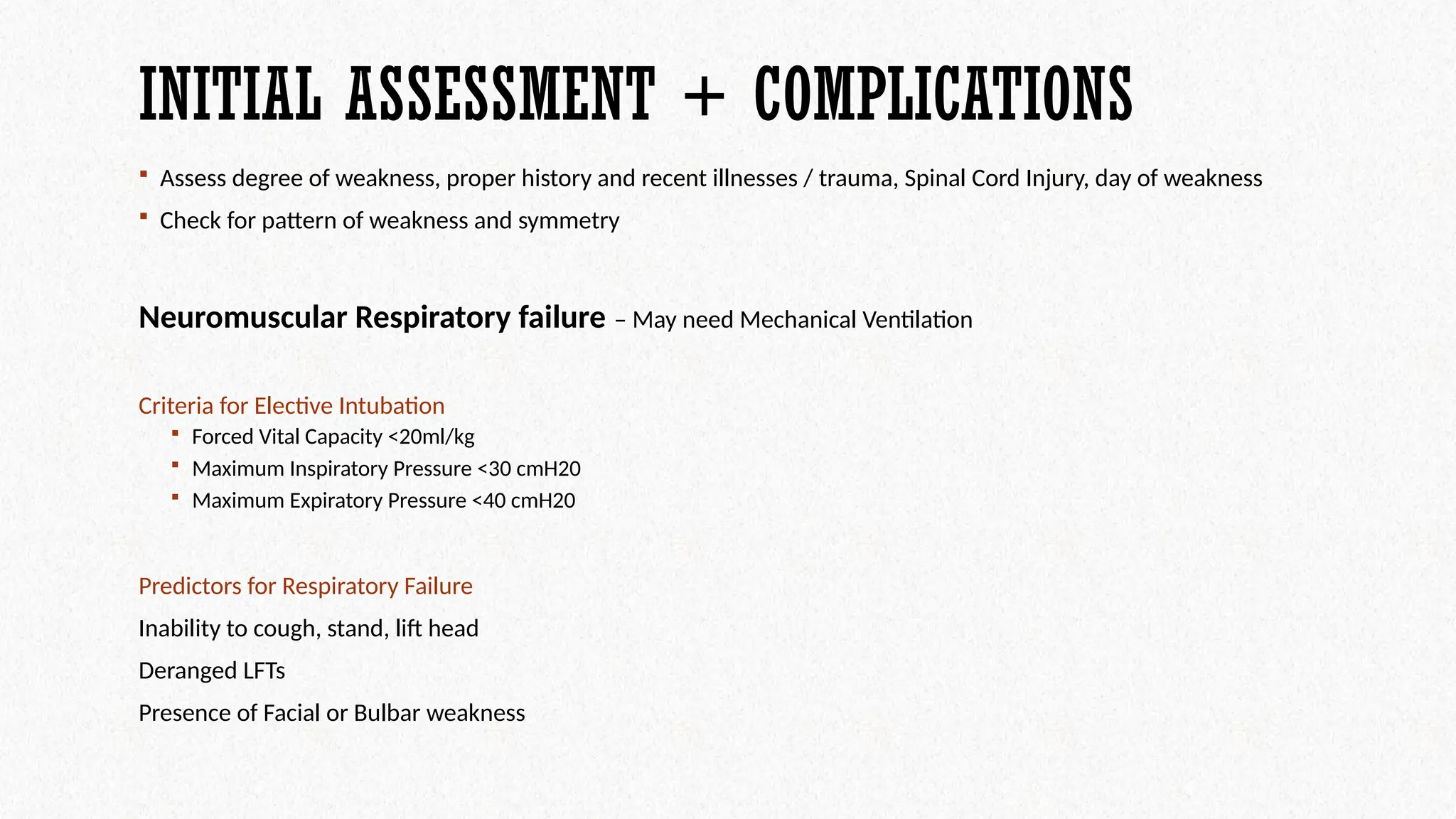
INITIAL ASSESSMENT + COMPLICATIONS
 Assess degree of weakness, proper history and recent illnesses / trauma, Spinal Cord Injury, day of weakness
 Check for pattern of weakness and symmetry
Neuromuscular Respiratory failure – May need Mechanical Ventilation
Criteria for Elective Intubation
 Forced Vital Capacity <20ml/kg
 Maximum Inspiratory Pressure <30 cmH20
 Maximum Expiratory Pressure <40 cmH20
Predictors for Respiratory Failure
Inability to cough, stand, lift head
Deranged LFTs
Presence of Facial or Bulbar weakness
MONITORING OF FVC
 Forced Vital Capacity and Maximum Inspiratory Pressure
 Frequent evaluations of these parameters should be performed at bedside – to
assess need for ventilatory assistance – Can be done daily
 Forced Vital Capacity is very helpful as can determine when to Intubate
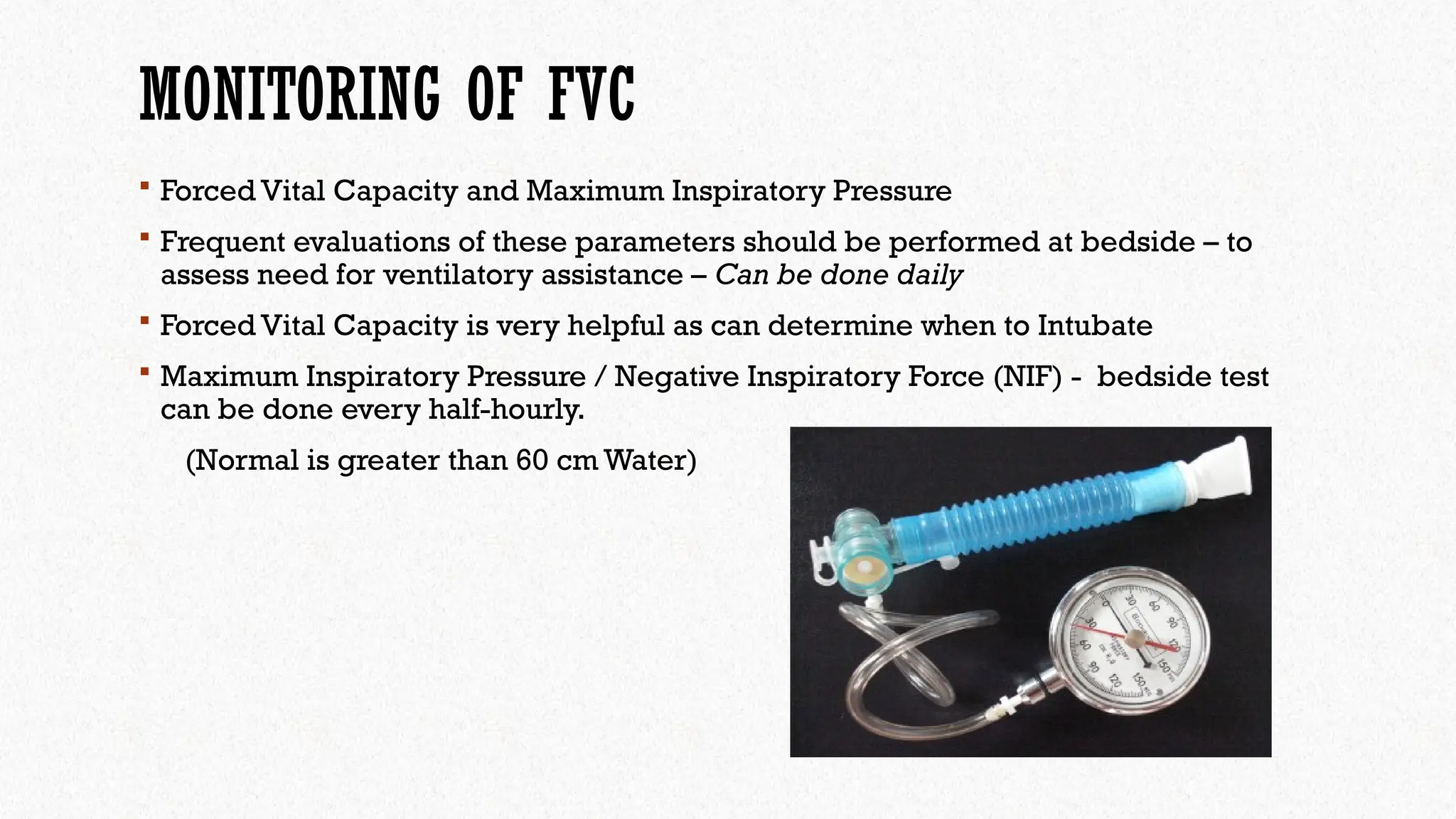
 Maximum Inspiratory Pressure / Negative Inspiratory Force (NIF) - bedside test
can be done every half-hourly.
(Normal is greater than 60 cm Water)
TREATMENT
 Two therapy Options are available
1) IVIG Administration
Exact Mechanism unknown. Theorized to interfere with activation of
complement and production of cytokines and interfering with activation
and effector function of T and B Cells
Given 0.4g/kg per day for consecutive 5 days.
2 g/kg total, given over 5 days
That is 0.4 g/kg/day × 5 days
2) Plasma Exchange / Plasmapheresis
Removes circulating antibodies, complement and biological response
modifiers.
Most effective when started early
WHICH IS BETTER? IVIG VS PE
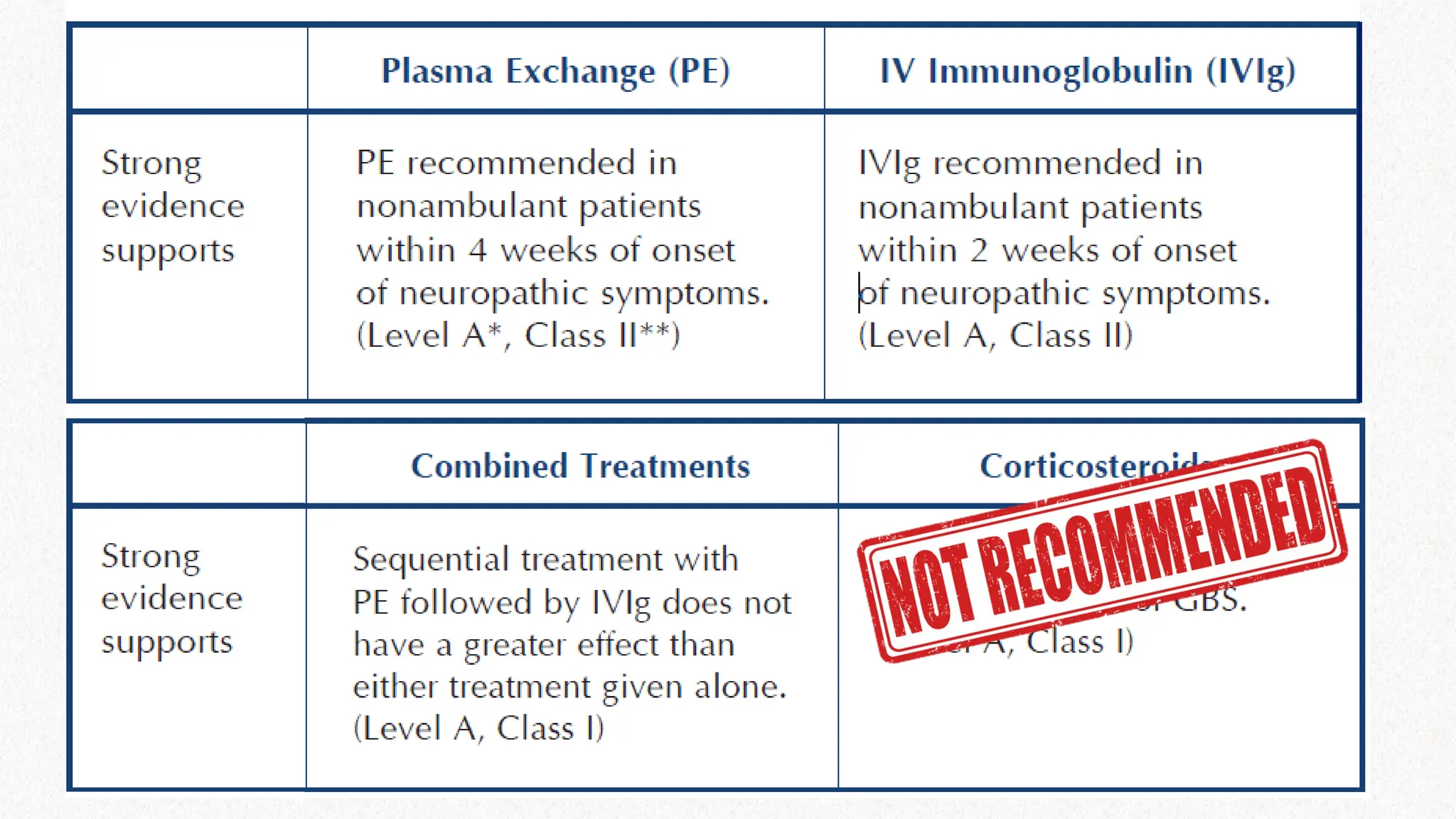
American Academy of Neurology (AAN) Recommendations for Immunotherapy/IVIG
 PLASMAPHERESIS
Author /
Year
Class Results
French
Co-op
Group on
plasma
exchange
in GBS,
1997
Compare PE with
supportive
treatment
II RCT  In the PE group, time to onset
of motor recovery was
significantly shortened
compared to the control group
(p=0.0002).
 The number of patients with
one or more grades of
improvement at one month
Plasma exchange hastens recovery in non-ambulant patients
Plasa exchange also hastens recovery in ambulant patients within 2
weeks (limited to 1 study)
Plasmapheresis is recommended in non-ambulant patients within 4
weeks from onset
Recommended for ambulant patients within 2 weeks from onset
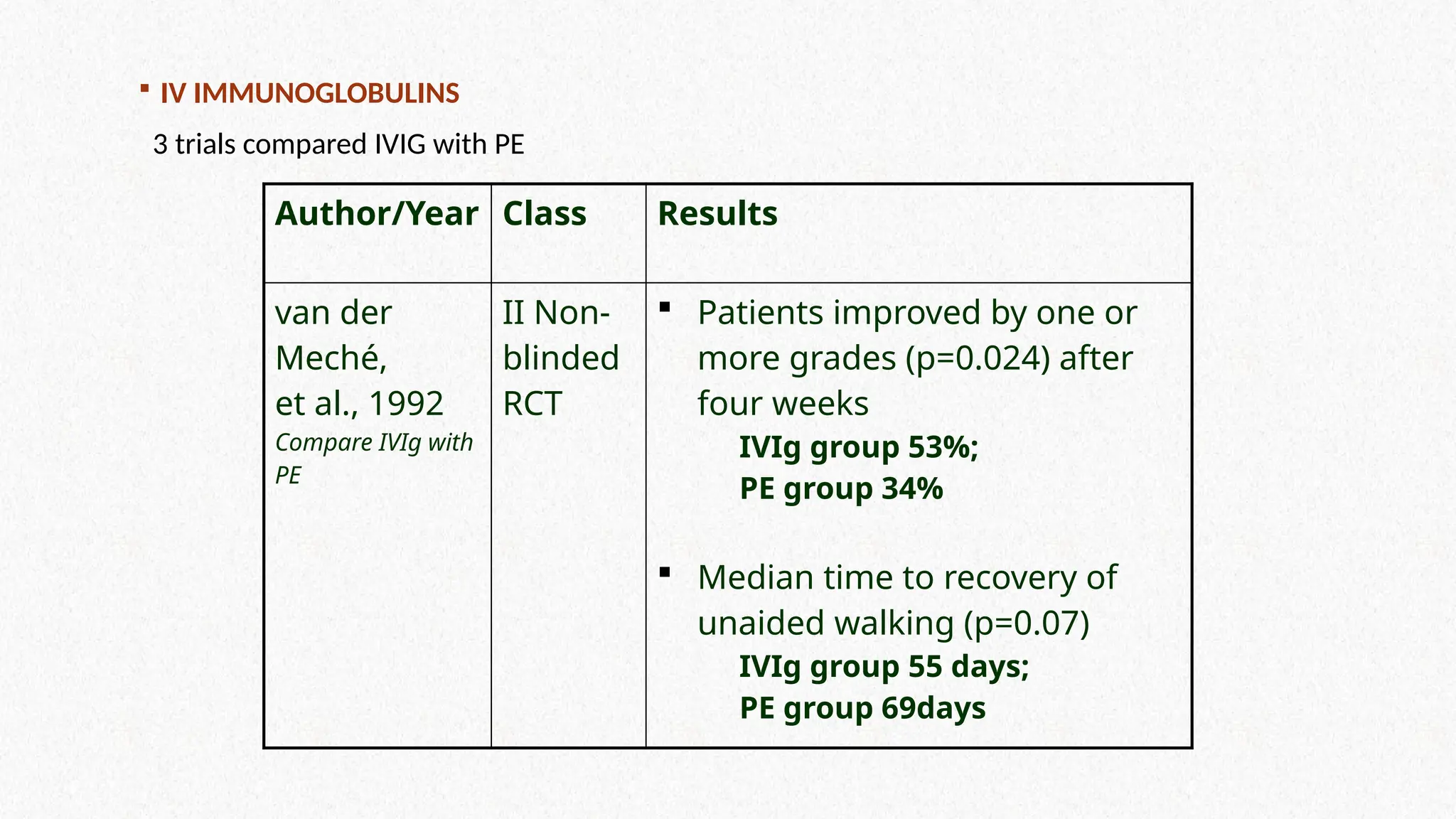
 IV IMMUNOGLOBULINS
3 trials compared IVIG with PE
Author/Year Class Results
van der
Meché,
et al., 1992
Compare IVIg with
PE
II Non-
blinded
RCT
 Patients improved by one or
more grades (p=0.024) after
four weeks
IVIg group 53%;
PE group 34%
 Median time to recovery of
unaided walking (p=0.07)
IVIg group 55 days;
PE group 69days
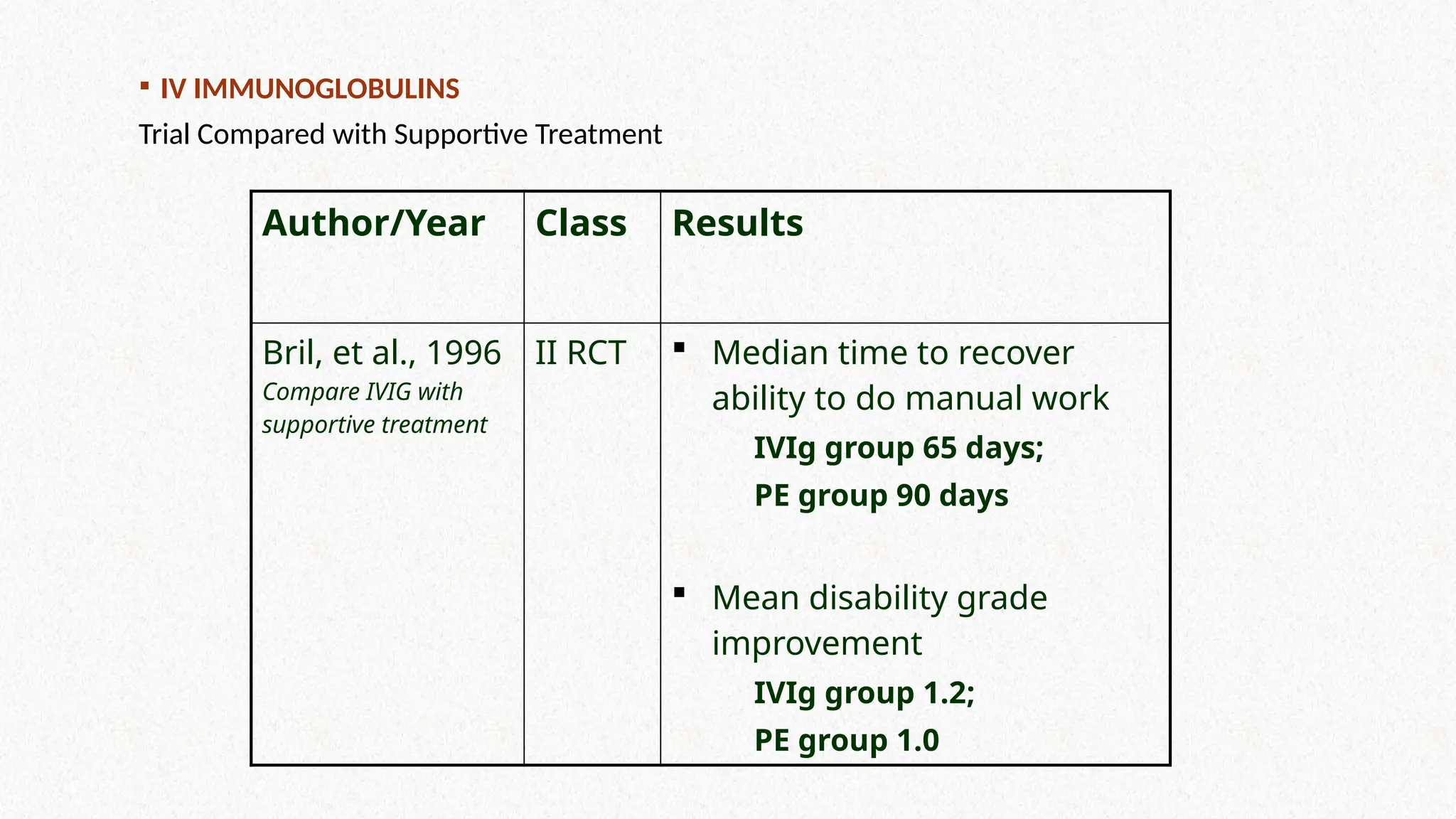
Author/Year Class Results
Bril, et al., 1996
Compare IVIG with
supportive treatment
II RCT  Median time to recover
ability to do manual work
IVIg group 65 days;
PE group 90 days
 Mean disability grade
improvement
IVIg group 1.2;
PE group 1.0
 IV IMMUNOGLOBULINS
Trial Compared with Supportive Treatment
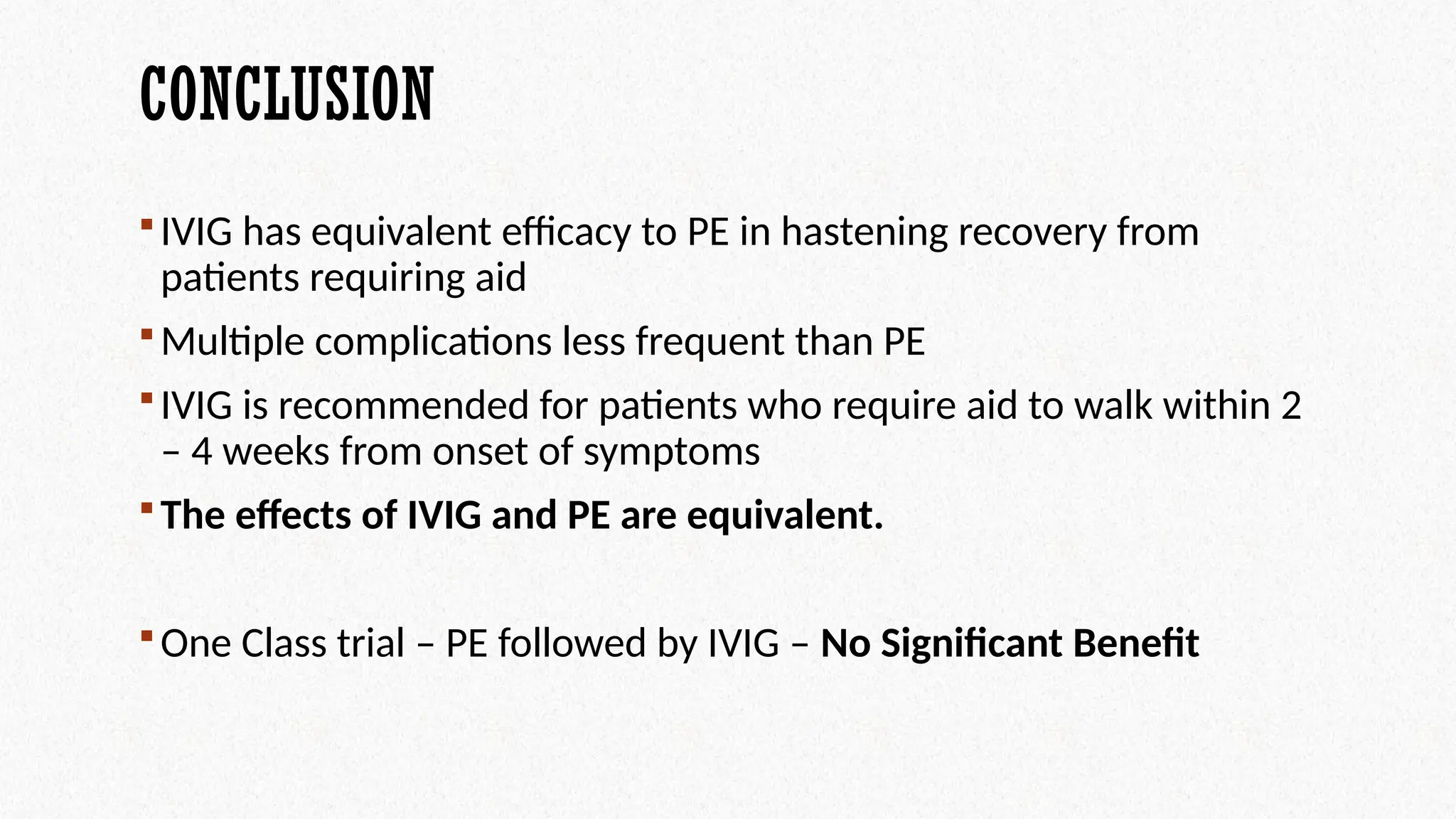
CONCLUSION
IVIG has equivalent efficacy to PE in hastening recovery from
patients requiring aid
Multiple complications less frequent than PE
IVIG is recommended for patients who require aid to walk within 2
– 4 weeks from onset of symptoms
The effects of IVIG and PE are equivalent.
One Class trial – PE followed by IVIG – No Significant Benefit
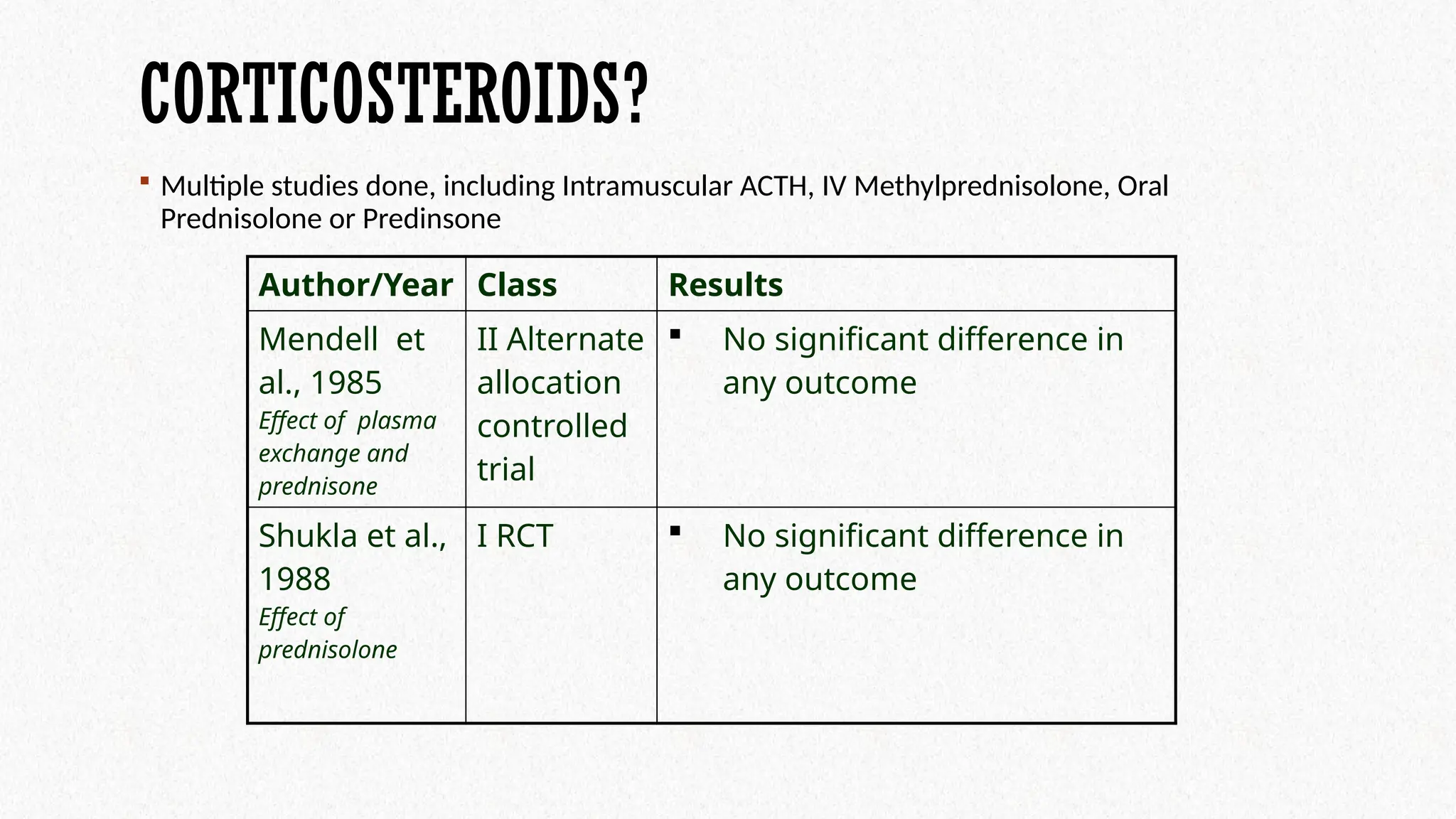
CORTICOSTEROIDS?
 Multiple studies done, including Intramuscular ACTH, IV Methylprednisolone, Oral
Prednisolone or Predinsone
Author/Year Class Results
Mendell et
al., 1985
Effect of plasma
exchange and
prednisone
II Alternate
allocation
controlled
trial
 No significant difference in
any outcome
Shukla et al.,
1988
Effect of
prednisolone
I RCT  No significant difference in
any outcome
Author/Year Class Results
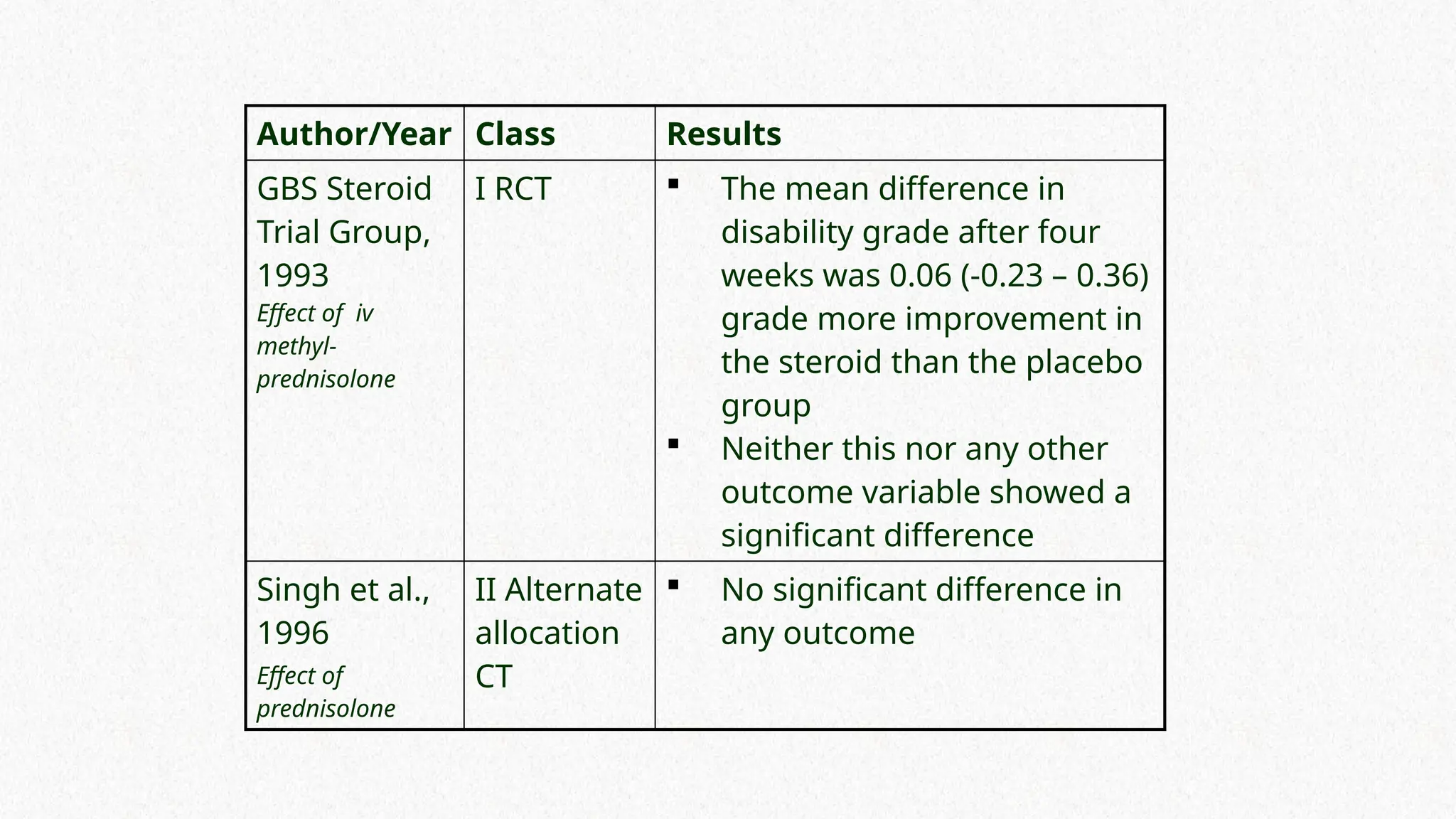
GBS Steroid
Trial Group,
1993
Effect of iv
methyl-
prednisolone
I RCT  The mean difference in
disability grade after four
weeks was 0.06 (-0.23 – 0.36)
grade more improvement in
the steroid than the placebo
group
 Neither this nor any other
outcome variable showed a
significant difference
Singh et al.,
1996
Effect of
prednisolone
II Alternate
allocation
CT
 No significant difference in
any outcome
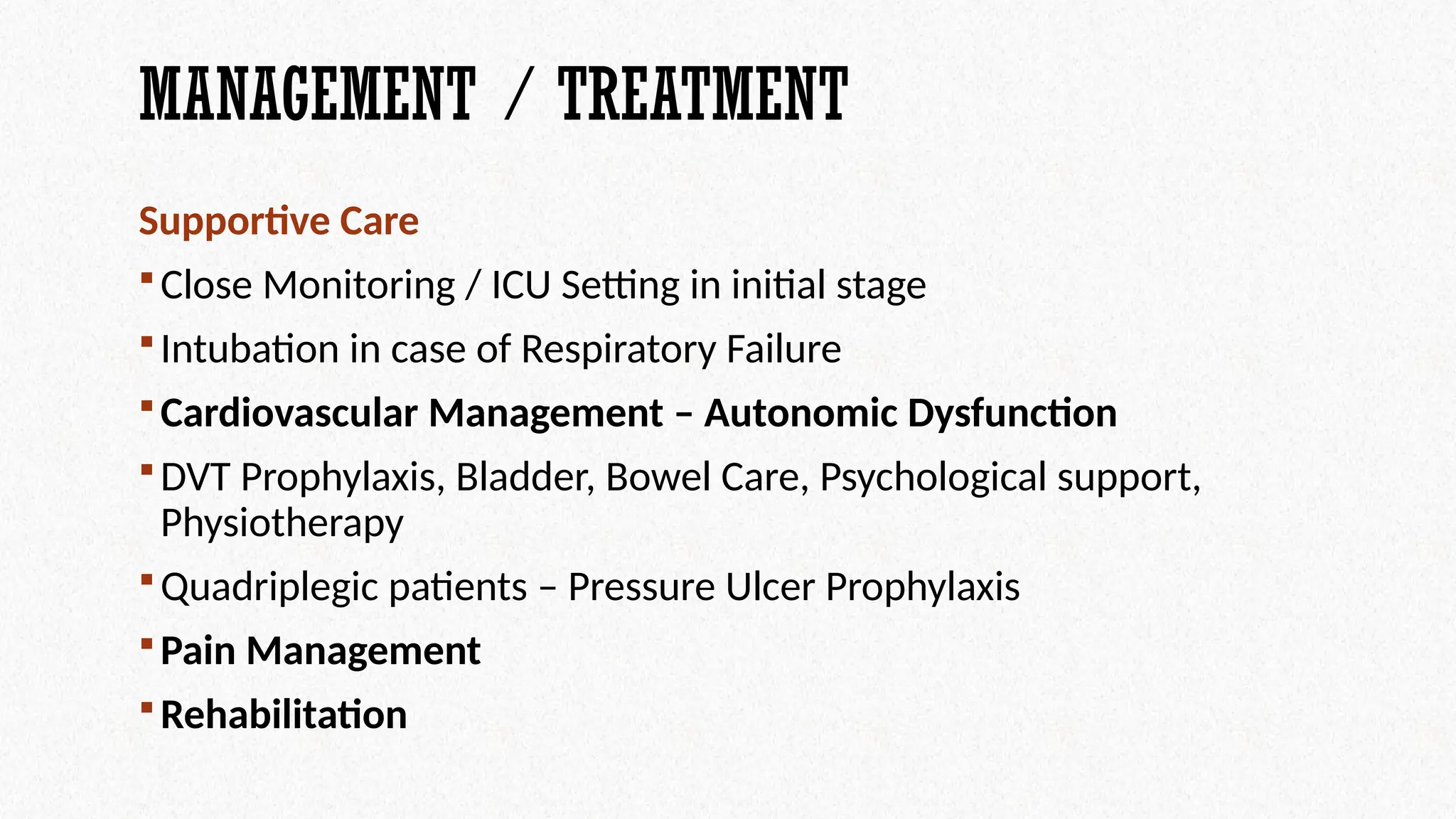
MANAGEMENT / TREATMENT
Supportive Care
Close Monitoring / ICU Setting in initial stage
Intubation in case of Respiratory Failure
Cardiovascular Management – Autonomic Dysfunction
DVT Prophylaxis, Bladder, Bowel Care, Psychological support,
Physiotherapy
Quadriplegic patients – Pressure Ulcer Prophylaxis
Pain Management
Rehabilitation
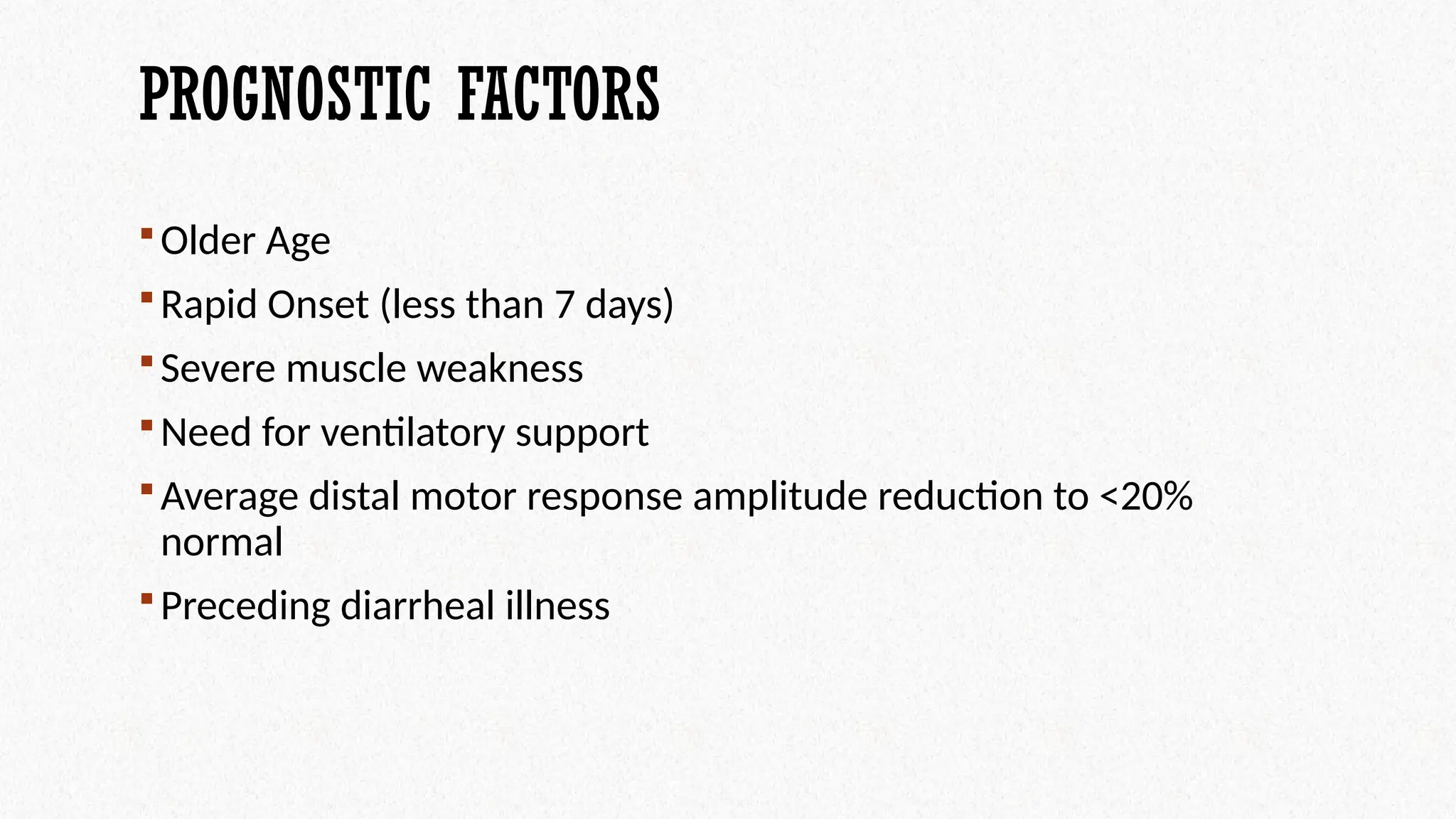
PROGNOSTIC FACTORS
Older Age
Rapid Onset (less than 7 days)
Severe muscle weakness
Need for ventilatory support
Average distal motor response amplitude reduction to <20%
normal
Preceding diarrheal illness
RELAPSES
About 2-5% of patients will develop chronic relapsing weakness of
CIDP
Might be difficult to distinguish between GBS releated fluctuation
and acute onset CIDP
Points in favor of CIDP Rather than GBS:
Deterioration after 8 weeks from onset of weakness
Deterioration >3 times
No loss of independent ambulation
Absence of cranial nerve involvement
REFERENCES
 UptoDate
 Medscape
 American Academy of Neurology (AAN) guideline on GBS
 www.aafp.org/ffp
 https://doi.org/10.1002/brb3.960
THANK YOU

GBS approach and management , and its relation

  • 1.
  • 2.
    GUILLIAN BARRE SYNDROME Guillain–Barré syndrome (GBS) is an acute onset, immune-mediated disorder of the peripheral nervous system  GBS is now recognized as a heterogeneous syndrome with several variant forms.  Most often, GBS presents as an acute, monophasic paralyzing illness provoked by a preceding infection.  GBS is fairly rare. Statistics 1 to 3 per 100,000annually.
  • 3.
    HOW DOES ITPRESENT? Progressive, symmetrical muscle weakness Weakness starts in the legs, it begins in the arms or facial muscles in about 10% Weakness gradually worsens in ascending fashion (Other variations exist) Paresthesia in the hands and feet accompany the weakness Pain, typically located in the back and extremities Dysautonomia
  • 4.
    Initial symptoms Progressesover a period of about 2 weeks Weakness may progress to complete paralysis of all extremity, facial muscles Respiratory and Bulbar muscle compromise By 4 weeks 90% cases have reached the severity of the disease Self limiting disease, and most patients recover. Disease progression of more than 8 weeks is consistent with Chronic Inflammatory Demyelinating Polyradiculoneuropathy
  • 5.
     Acute FlaccidParalysis - Hyporeflexia / Areflexia - Hypotonia - Usually Reaches maximum severity within 4 weeks
  • 6.
    TYPES OF GBS HistoricallyGBS was termed as one disease More Subtypes / Variants discovered Can be differentiated by nerve electrophysiological characteristics and clinical presentation 1. Acute Inflammatory Demyelinating Polyradiculoneuropathy (AIDP) (80-85%) 2. Acute Motor Axonal Neuropathy (AMAN) 3. Acute Motor and Sensory Axonal Neuropathy (AMSAN) 4. Miller Fisher Syndrome Note: other rare variations are also documented, will not be focused on in this CME
  • 7.
    RARE TYPES Bickerstaff Encephalitis PharyngealCervical Brachial Weakness Acute pandysautonomia Pure Sensory GBS Facial Diplegia and Distal Limb Parasthesia Acute Bulbar Palsy with Areflex Note: These are rare types and will not be focused on in this CME
  • 8.
    HEALTH OUTCOMES In TreatedCase Respiratory failure requiring ventilation in about 25% Patients Death in 4 – 15% of GBS Patients Persistent Disability in about 20% patients with GBS Persistent Fatigue in 67% Patients
  • 9.
    GUILLIAN BARRE SYNDROMESYBTYPES Subtype Pathologic features Clinical Features Acute Inflammatory Demyelinating Polyradiculoneuropathy (AIDP) Inflammatory demyelination, start at level of roots, leading to slowing electrophysiologic conduction. Response occurs against myelin producing Schwan cells or peripheral myelin Multifocal patchy widespread nerve demyelination Most common subtype in West (80-85%) Progressive, symmetrical, areflexia Acute Motor Axonal Neuropathy (AMAN) Antibodies against ganglosides GM1, GD1a, GAINAc-GD1a, No Demyelination Recognized in 1988, More common in Asia (30-65%) Central & South America Pure motor axonal form of neuropathy Mostly occurs secondary to Campylobacter jejuni infection Deep Tendon reflexes are occasionally preserved. Sensory nerves not affected
  • 10.
    Subtype Pathologic featuresClinical Features Acute Motor Sensory Axonal Neuropathy (AMSAN) Same as AMAN, except axonal lesions of both motor and sensory nerve fibers More severe form of AMAN Involves both sensory and motor fibers as well Resembles AMAN but has more sensory symptoms Marked Axonal degeneration, leading to delayed and incomplete recovery Miller Fisher Syndrome Demyelination Antibodies against GQ1b (a ganglioside component of nerve) present in 90-95% Rare (3% cases of GBS in USA) Rapidly evolving ataxia, areflexia, limb weakness and ophthalmoplegia Sensory loss unusual proprioception is impaired In this variant, Ataxia is out of proportion to sensory loss and weakness
  • 11.
    WHAT TRIGGERS THISAUTOIMMUNE RESPONSE? Bacterial 1. Campylobacter Jejuni 2. Mycoplasma Pneumonia 3. H.Influenzae 4. Borealla 5. Brucella Viral  Cytomegalovirus  Herpes Simplex  Varicella Zoster  Epstein Barr  Hep A,B,C,E  HIV Virus  Zika Virus ** Flu Vaccine – (Very rare. Cases only reported in 1-2 per million vaccination)
  • 12.
    PATHOPHYSIOLOGY  Molecular Mimicry Target molecules in AMAN are GM1, Gm1b, GD1a expressed on the motor axolemma  In AIDP the Myelin Sheath/Schwann Cells affected – Exact Target molecules unknown
  • 13.
  • 14.
    BASIC OF NCV Definitionof Latency: Latency is the time (in milliseconds) between:  The electrical stimulus applied to a nerve and The initial response recorded by the electrode (either over a muscle or sensory nerve)
  • 15.
    NCV FINDINGS INGBS Slow CT is the mnemonics used to remember the NCV findings
  • 16.
    DIAGNOSTIC APPROACH  Historyand Clinical Presentation  Nerve Conduction Studies (NCS) + Needle electromyography (EMG)  May be normal in up to 13 % soon after symptom onset,  but rarely remain normal on sequential testing over the initial weeks of symptoms.  Demyelinating forms of GBS – Decreased motor nerve conduction velocity, prolonged distal motor latency, Increased F wave latency, conduction Blocks Lumbar Puncture  Elevated CSF Protein with a normal CSF white cell count (Alubminocytologic Dyssociation)  A normal CSF protein is found in 1/3 to 1/2 patients when tested within one week  But they are elevated in 90% of patients by the end of the second week of symptoms
  • 17.
    DIAGNOSTIC APPROACH  Antibodies MRI Serum IgG antibodies for GQ1b is useful for diagnosis of Miller Fisher Sydrome Spinal MRI may reveal thickening and enhancement of intrathecal spinal roots and cauda equina. Also helpful in ruling out GBS or other cause?  focal spinal lesion or other injury could indicate other source of weakness i.e Transverse Myelitis
  • 18.
    INITIAL ASSESSMENT +COMPLICATIONS  Assess degree of weakness, proper history and recent illnesses / trauma, Spinal Cord Injury, day of weakness  Check for pattern of weakness and symmetry Neuromuscular Respiratory failure – May need Mechanical Ventilation Criteria for Elective Intubation  Forced Vital Capacity <20ml/kg  Maximum Inspiratory Pressure <30 cmH20  Maximum Expiratory Pressure <40 cmH20 Predictors for Respiratory Failure Inability to cough, stand, lift head Deranged LFTs Presence of Facial or Bulbar weakness
  • 19.
    MONITORING OF FVC Forced Vital Capacity and Maximum Inspiratory Pressure  Frequent evaluations of these parameters should be performed at bedside – to assess need for ventilatory assistance – Can be done daily  Forced Vital Capacity is very helpful as can determine when to Intubate  Maximum Inspiratory Pressure / Negative Inspiratory Force (NIF) - bedside test can be done every half-hourly. (Normal is greater than 60 cm Water)
  • 20.
    TREATMENT  Two therapyOptions are available 1) IVIG Administration Exact Mechanism unknown. Theorized to interfere with activation of complement and production of cytokines and interfering with activation and effector function of T and B Cells Given 0.4g/kg per day for consecutive 5 days. 2 g/kg total, given over 5 days That is 0.4 g/kg/day × 5 days 2) Plasma Exchange / Plasmapheresis Removes circulating antibodies, complement and biological response modifiers. Most effective when started early
  • 21.
    WHICH IS BETTER?IVIG VS PE American Academy of Neurology (AAN) Recommendations for Immunotherapy/IVIG  PLASMAPHERESIS Author / Year Class Results French Co-op Group on plasma exchange in GBS, 1997 Compare PE with supportive treatment II RCT  In the PE group, time to onset of motor recovery was significantly shortened compared to the control group (p=0.0002).  The number of patients with one or more grades of improvement at one month
  • 22.
    Plasma exchange hastensrecovery in non-ambulant patients Plasa exchange also hastens recovery in ambulant patients within 2 weeks (limited to 1 study) Plasmapheresis is recommended in non-ambulant patients within 4 weeks from onset Recommended for ambulant patients within 2 weeks from onset
  • 23.
     IV IMMUNOGLOBULINS 3trials compared IVIG with PE Author/Year Class Results van der Meché, et al., 1992 Compare IVIg with PE II Non- blinded RCT  Patients improved by one or more grades (p=0.024) after four weeks IVIg group 53%; PE group 34%  Median time to recovery of unaided walking (p=0.07) IVIg group 55 days; PE group 69days
  • 24.
    Author/Year Class Results Bril,et al., 1996 Compare IVIG with supportive treatment II RCT  Median time to recover ability to do manual work IVIg group 65 days; PE group 90 days  Mean disability grade improvement IVIg group 1.2; PE group 1.0  IV IMMUNOGLOBULINS Trial Compared with Supportive Treatment
  • 25.
    CONCLUSION IVIG has equivalentefficacy to PE in hastening recovery from patients requiring aid Multiple complications less frequent than PE IVIG is recommended for patients who require aid to walk within 2 – 4 weeks from onset of symptoms The effects of IVIG and PE are equivalent. One Class trial – PE followed by IVIG – No Significant Benefit
  • 26.
    CORTICOSTEROIDS?  Multiple studiesdone, including Intramuscular ACTH, IV Methylprednisolone, Oral Prednisolone or Predinsone Author/Year Class Results Mendell et al., 1985 Effect of plasma exchange and prednisone II Alternate allocation controlled trial  No significant difference in any outcome Shukla et al., 1988 Effect of prednisolone I RCT  No significant difference in any outcome
  • 27.
    Author/Year Class Results GBSSteroid Trial Group, 1993 Effect of iv methyl- prednisolone I RCT  The mean difference in disability grade after four weeks was 0.06 (-0.23 – 0.36) grade more improvement in the steroid than the placebo group  Neither this nor any other outcome variable showed a significant difference Singh et al., 1996 Effect of prednisolone II Alternate allocation CT  No significant difference in any outcome
  • 29.
    MANAGEMENT / TREATMENT SupportiveCare Close Monitoring / ICU Setting in initial stage Intubation in case of Respiratory Failure Cardiovascular Management – Autonomic Dysfunction DVT Prophylaxis, Bladder, Bowel Care, Psychological support, Physiotherapy Quadriplegic patients – Pressure Ulcer Prophylaxis Pain Management Rehabilitation
  • 30.
    PROGNOSTIC FACTORS Older Age RapidOnset (less than 7 days) Severe muscle weakness Need for ventilatory support Average distal motor response amplitude reduction to <20% normal Preceding diarrheal illness
  • 31.
    RELAPSES About 2-5% ofpatients will develop chronic relapsing weakness of CIDP Might be difficult to distinguish between GBS releated fluctuation and acute onset CIDP Points in favor of CIDP Rather than GBS: Deterioration after 8 weeks from onset of weakness Deterioration >3 times No loss of independent ambulation Absence of cranial nerve involvement
  • 32.
    REFERENCES  UptoDate  Medscape American Academy of Neurology (AAN) guideline on GBS  www.aafp.org/ffp  https://doi.org/10.1002/brb3.960
  • 33.