How Gold Affects
Currencies
Table Of Contents:
Impact Of Gold On Currency
Gold to Back Up Fiat Currencies
Gold as a Hedge Against Inflation
Import and Export
Value of a Local Currency
The Bottom Line
Gold Market News & Events
Impact Of Gold On Currency
 The enduring appeal—and influence—of gold.
 Even though it is no longer used as a primary
form of currency in developed nations, the yellow
metal continues to have a strong impact on the
value of those currencies.
 There is a strong correlation between its value
and the strength of currencies trading on foreign
exchanges.
Relationship Between Gold And
Foreign Exchange Trading
Throughout human history, gold has been used as a
money-form in one way or another.
From gold coins to paper notes backed by the gold
standard, only recently has money moved to a fiat
system that is not backed by a physical commodity.
Since then, inflation and a declining dollar have meant
rising gold prices. By purchasing gold, people can also
shelter themselves from times of global economic
uncertainty.
Gold levels may also influence national economies
engaged in global trade and international finance.
Gold Was Once Used To Back Up
Currencies
 As early as the Byzantine Empire, gold was used to support national
currencies—that is, those considered legal tender in their nation of
origin.
 Gold was also used as the world reserve currency up through most
of the 20th century; the United States used the gold standard until
1971 when President Nixon discontinued it.
 Until the gold standard was abandoned, countries couldn't simply
print their fiat currencies ad nauseam.
 The paper money had to be backed up by an equal amount of gold
in their reserves (then, as now, countries kept supplies of
gold bullion on hand).
 Although the gold standard has long fallen out of in the developed
world, some economists feel we should return to it due to the
volatility of the U.S. dollar and other currencies; they like that it
limited the amount of money nations were allowed to print.
Gold Is Used To Hedge Against
Inflation
Investors typically buy large quantities of gold when
their country is experiencing high levels of inflation.
The demand for gold increases during inflationary
times due to its inherent value and limited supply.
As it cannot be diluted, gold is able to retain value
much better than other forms of currency.
For example, in April 2011, investors feared declining
values of fiat currency and drove the price of gold to a
staggering $1,500 an ounce.
 This indicates there was little confidence in the
currencies on the world market and that expectations
of future economic stability were grim.
The Price Of Gold Affects Countries
That Import And Export It
The value of a nation's currency is strongly tied to the
value of its imports and exports.
 When a country imports more than it exports, the
value of its currency will decline.
On the other hand, the value of its currency will
increase when a country is a net exporter.
Thus, a country that exports gold or has access to gold
reserves will see an increase in the strength of its
currency when gold prices increase, since this increases
the value of the country's total exports.
In other words, an increase in the price of gold can
create a trade surplus or help offset a trade deficit.
The Price Of Gold Affects Countries
That Import And Export It-I
Conversely, countries that are large importers of
gold will inevitably end up having a weaker
currency when the price of gold rises.
When central banks purchase gold, it affects
the supply and demand of the domestic currency
and may result in inflation.
This is largely due to the fact that banks rely on
printing more money to buy gold, and thereby
create an excess supply of the fiat currency.
Gold Prices Are Often Used To Measure
The Value Of A Local Currency
Many people mistakenly use gold as a
definitive proxy for valuing a country's currency.
There is undoubtedly a relationship between gold
prices and the value of a fiat currency, it is not
always an inverse relationship as many people
assume.
while the price of gold can often be used as a
reflection of the value of the U.S. dollar, or any
currency, conditions need to be analyzed to
determine if an inverse relationship is indeed
appropriate.
The Bottom Line
Gold has a profound impact on the value of world
currencies.
Even though the gold standard has been
abandoned, gold as a commodity can act as a
substitute for fiat currencies and be used as an
effective hedge against inflation.
There is no doubt that gold will continue to play
an integral role in the foreign exchange markets.
Therefore, it is an important metal to follow and
analyze for its unique ability to represent the
health of both local and international economies.
Gold Market News & Events
Gold Price Analysis: XAU/USD looks well-
positioned to gain after NFP – Confluence
Detector.
Gold Price Analysis: Technical setup favors
XAU/USD bulls, $1747 remains in sight.
Gold Price Analysis: XAU/USD’s weekly close
above $1729 keeps buyers hopeful – Confluence
Detector.
XAU/USD outlook: Gold extends recovery but
break above $1755 required to sideline bears.
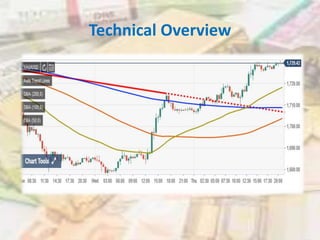
Technical Overview
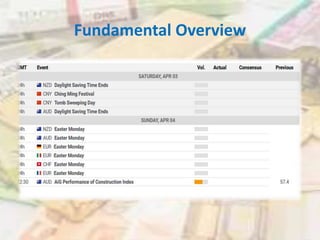
Fundamental Overview
HOW GOLD AFFECTS
CURRENCIES
THAKS FOR LISTENING

GBIH| Gold Trading | Session 2- April-5

  • 1.
  • 2.
    Table Of Contents: ImpactOf Gold On Currency Gold to Back Up Fiat Currencies Gold as a Hedge Against Inflation Import and Export Value of a Local Currency The Bottom Line Gold Market News & Events
  • 3.
    Impact Of GoldOn Currency  The enduring appeal—and influence—of gold.  Even though it is no longer used as a primary form of currency in developed nations, the yellow metal continues to have a strong impact on the value of those currencies.  There is a strong correlation between its value and the strength of currencies trading on foreign exchanges.
  • 4.
    Relationship Between GoldAnd Foreign Exchange Trading Throughout human history, gold has been used as a money-form in one way or another. From gold coins to paper notes backed by the gold standard, only recently has money moved to a fiat system that is not backed by a physical commodity. Since then, inflation and a declining dollar have meant rising gold prices. By purchasing gold, people can also shelter themselves from times of global economic uncertainty. Gold levels may also influence national economies engaged in global trade and international finance.
  • 5.
    Gold Was OnceUsed To Back Up Currencies  As early as the Byzantine Empire, gold was used to support national currencies—that is, those considered legal tender in their nation of origin.  Gold was also used as the world reserve currency up through most of the 20th century; the United States used the gold standard until 1971 when President Nixon discontinued it.  Until the gold standard was abandoned, countries couldn't simply print their fiat currencies ad nauseam.  The paper money had to be backed up by an equal amount of gold in their reserves (then, as now, countries kept supplies of gold bullion on hand).  Although the gold standard has long fallen out of in the developed world, some economists feel we should return to it due to the volatility of the U.S. dollar and other currencies; they like that it limited the amount of money nations were allowed to print.
  • 6.
    Gold Is UsedTo Hedge Against Inflation Investors typically buy large quantities of gold when their country is experiencing high levels of inflation. The demand for gold increases during inflationary times due to its inherent value and limited supply. As it cannot be diluted, gold is able to retain value much better than other forms of currency. For example, in April 2011, investors feared declining values of fiat currency and drove the price of gold to a staggering $1,500 an ounce.  This indicates there was little confidence in the currencies on the world market and that expectations of future economic stability were grim.
  • 7.
    The Price OfGold Affects Countries That Import And Export It The value of a nation's currency is strongly tied to the value of its imports and exports.  When a country imports more than it exports, the value of its currency will decline. On the other hand, the value of its currency will increase when a country is a net exporter. Thus, a country that exports gold or has access to gold reserves will see an increase in the strength of its currency when gold prices increase, since this increases the value of the country's total exports. In other words, an increase in the price of gold can create a trade surplus or help offset a trade deficit.
  • 8.
    The Price OfGold Affects Countries That Import And Export It-I Conversely, countries that are large importers of gold will inevitably end up having a weaker currency when the price of gold rises. When central banks purchase gold, it affects the supply and demand of the domestic currency and may result in inflation. This is largely due to the fact that banks rely on printing more money to buy gold, and thereby create an excess supply of the fiat currency.
  • 9.
    Gold Prices AreOften Used To Measure The Value Of A Local Currency Many people mistakenly use gold as a definitive proxy for valuing a country's currency. There is undoubtedly a relationship between gold prices and the value of a fiat currency, it is not always an inverse relationship as many people assume. while the price of gold can often be used as a reflection of the value of the U.S. dollar, or any currency, conditions need to be analyzed to determine if an inverse relationship is indeed appropriate.
  • 10.
    The Bottom Line Goldhas a profound impact on the value of world currencies. Even though the gold standard has been abandoned, gold as a commodity can act as a substitute for fiat currencies and be used as an effective hedge against inflation. There is no doubt that gold will continue to play an integral role in the foreign exchange markets. Therefore, it is an important metal to follow and analyze for its unique ability to represent the health of both local and international economies.
  • 11.
    Gold Market News& Events Gold Price Analysis: XAU/USD looks well- positioned to gain after NFP – Confluence Detector. Gold Price Analysis: Technical setup favors XAU/USD bulls, $1747 remains in sight. Gold Price Analysis: XAU/USD’s weekly close above $1729 keeps buyers hopeful – Confluence Detector. XAU/USD outlook: Gold extends recovery but break above $1755 required to sideline bears.
  • 12.
  • 13.
  • 14.
  • 15.