GAS WELDING
Gas Welding
• Gas welding is a welding process that melts and
joins metals by heating them with a flame caused
by a reaction of fuel gas and oxygen.
• The most commonly used method is
Oxyacetylene welding, due to its high flame
temperature.
• The flux may be used to deoxidize and cleanse
the weld metal.
• The flux melts, solidifies and forms a slag skin on
the resultant weld metal.
Oxyacetylene Welding
•Also known as “oxyacetylene welding”
•Uses an oxyfuel gas flame
•Can be applied with or without pressure
•Can be applied with or without the use of
filler materials
Chemical reactions and temperature
distribution in a neutral oxyacetylene
The secondary combustion is also called the protection
envelope since CO and H2 here consume the O2 entering from
surrounding air, thereby protecting the weld from oxidation.
Oxyacetylene Welding
• Flame formed by burning a mix of acetylene (C2H2)
and oxygen
• Fusion of metal is achieved by passing the inner
cone of the flame over the metal
• Oxyacetylene can also be used for cutting metals
Oxyacetylene Welding
Uses a high-temperature flame from the
combustion of acetylene and oxygen
Gas Welding
Oxyacetylene welding (a) overall
process, (b) welding area.
GAS WELDING
• Sound weld is obtained by selecting proper size of flame, filler material
and method of moving torch
• The temperature generated during the process is 33000c
• When the metal is fused, oxygen from the atmosphere and the torch
combines with molten metal and forms oxides, results defective weld
• Fluxes are added to the welded metal to remove oxides
• Common fluxes used are made of sodium, potassium. Lithium and borax.
• Flux can be applied as paste, powder,liquid.solid coating or gas.
Types of Flame
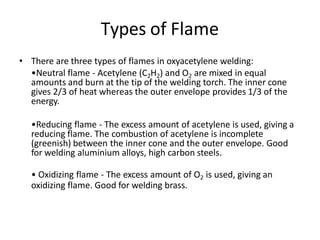
• There are three types of flames in oxyacetylene welding:
•Neutral flame - Acetylene (C2H2) and O2 are mixed in equal
amounts and burn at the tip of the welding torch. The inner cone
gives 2/3 of heat whereas the outer envelope provides 1/3 of the
energy.
•Reducing flame - The excess amount of acetylene is used, giving a
reducing flame. The combustion of acetylene is incomplete
(greenish) between the inner cone and the outer envelope. Good
for welding aluminium alloys, high carbon steels.
• Oxidizing flame - The excess amount of O2 is used, giving an
oxidizing flame. Good for welding brass.
Three types of flame in oxyacetylene
welding
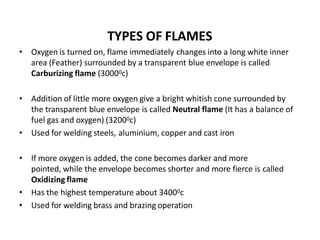
TYPES OF FLAMES
• Oxygen is turned on, flame immediately changes into a long white inner
area (Feather) surrounded by a transparent blue envelope is called
Carburizing flame (30000c)
• Addition of little more oxygen give a bright whitish cone surrounded by
the transparent blue envelope is called Neutral flame (It has a balance of
fuel gas and oxygen) (32000c)
• Used for welding steels, aluminium, copper and cast iron
• If more oxygen is added, the cone becomes darker and more
pointed, while the envelope becomes shorter and more fierce is called
Oxidizing flame
• Has the highest temperature about 34000c
• Used for welding brass and brazing operation
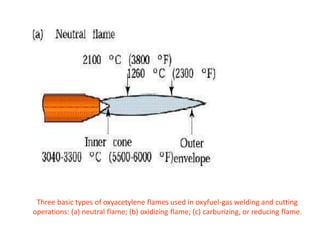
Three basic types of oxyacetylene flames used in oxyfuel-gas welding and cutting
operations: (a) neutral flame; (b) oxidizing flame; (c) carburizing, or reducing flame.
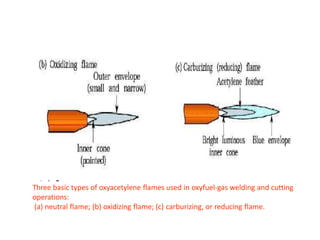
Three basic types of oxyacetylene flames used in oxyfuel-gas welding and cutting
operations:
(a) neutral flame; (b) oxidizing flame; (c) carburizing, or reducing flame.
Types of Gas Welding
• 1. Leftward Welding
• 2. Rightward Welding
Gas welding two types
GAS WELDING EQUIPMENTS
1. Gas Cylinders
Pressure
Oxygen – 125 kg/cm2
Acetylene – 16 kg/cm2
2. Regulators
Working pressure of oxygen 1 kg/cm2
Working pressure of acetylene 0.15 kg/cm2
Working pressure varies depending upon the thickness of the work
pieces welded.
3. Pressure Gauges
4. Hoses
5. Welding torch
6. Check valve
7. Non return valve
Oxy-Acetylene welding
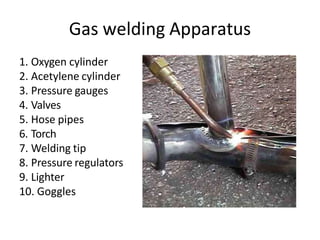
Gas welding Apparatus
1. Oxygen cylinder
2. Acetylene cylinder
3. Pressure gauges
4. Valves
5. Hose pipes
6. Torch
7. Welding tip
8. Pressure regulators
9. Lighter
10. Goggles
Gas welding torch
Gas Welding - Advantages
• Simple equipment
• Portable
• Inexpensive
• Easy for maintenance and repair
Gas Welding - Disadvantages
• Limited power density
• Very low welding speed
• High total heat input per unit length
• Large heat affected zone
• Severe distortion
• Not recommended for welding reactive metals
such as titanium and zirconium.

Gas welding.pptx

  • 1.
  • 2.
    Gas Welding • Gaswelding is a welding process that melts and joins metals by heating them with a flame caused by a reaction of fuel gas and oxygen. • The most commonly used method is Oxyacetylene welding, due to its high flame temperature. • The flux may be used to deoxidize and cleanse the weld metal. • The flux melts, solidifies and forms a slag skin on the resultant weld metal.
  • 3.
    Oxyacetylene Welding •Also knownas “oxyacetylene welding” •Uses an oxyfuel gas flame •Can be applied with or without pressure •Can be applied with or without the use of filler materials
  • 4.
    Chemical reactions andtemperature distribution in a neutral oxyacetylene The secondary combustion is also called the protection envelope since CO and H2 here consume the O2 entering from surrounding air, thereby protecting the weld from oxidation.
  • 5.
    Oxyacetylene Welding • Flameformed by burning a mix of acetylene (C2H2) and oxygen • Fusion of metal is achieved by passing the inner cone of the flame over the metal • Oxyacetylene can also be used for cutting metals
  • 6.
    Oxyacetylene Welding Uses ahigh-temperature flame from the combustion of acetylene and oxygen
  • 7.
    Gas Welding Oxyacetylene welding(a) overall process, (b) welding area.
  • 8.
    GAS WELDING • Soundweld is obtained by selecting proper size of flame, filler material and method of moving torch • The temperature generated during the process is 33000c • When the metal is fused, oxygen from the atmosphere and the torch combines with molten metal and forms oxides, results defective weld • Fluxes are added to the welded metal to remove oxides • Common fluxes used are made of sodium, potassium. Lithium and borax. • Flux can be applied as paste, powder,liquid.solid coating or gas.
  • 9.
    Types of Flame •There are three types of flames in oxyacetylene welding: •Neutral flame - Acetylene (C2H2) and O2 are mixed in equal amounts and burn at the tip of the welding torch. The inner cone gives 2/3 of heat whereas the outer envelope provides 1/3 of the energy. •Reducing flame - The excess amount of acetylene is used, giving a reducing flame. The combustion of acetylene is incomplete (greenish) between the inner cone and the outer envelope. Good for welding aluminium alloys, high carbon steels. • Oxidizing flame - The excess amount of O2 is used, giving an oxidizing flame. Good for welding brass.
  • 10.
    Three types offlame in oxyacetylene welding
  • 12.
    TYPES OF FLAMES •Oxygen is turned on, flame immediately changes into a long white inner area (Feather) surrounded by a transparent blue envelope is called Carburizing flame (30000c) • Addition of little more oxygen give a bright whitish cone surrounded by the transparent blue envelope is called Neutral flame (It has a balance of fuel gas and oxygen) (32000c) • Used for welding steels, aluminium, copper and cast iron • If more oxygen is added, the cone becomes darker and more pointed, while the envelope becomes shorter and more fierce is called Oxidizing flame • Has the highest temperature about 34000c • Used for welding brass and brazing operation
  • 13.
    Three basic typesof oxyacetylene flames used in oxyfuel-gas welding and cutting operations: (a) neutral flame; (b) oxidizing flame; (c) carburizing, or reducing flame.
  • 14.
    Three basic typesof oxyacetylene flames used in oxyfuel-gas welding and cutting operations: (a) neutral flame; (b) oxidizing flame; (c) carburizing, or reducing flame.
  • 15.
    Types of GasWelding • 1. Leftward Welding • 2. Rightward Welding
  • 16.
  • 17.
    GAS WELDING EQUIPMENTS 1.Gas Cylinders Pressure Oxygen – 125 kg/cm2 Acetylene – 16 kg/cm2 2. Regulators Working pressure of oxygen 1 kg/cm2 Working pressure of acetylene 0.15 kg/cm2 Working pressure varies depending upon the thickness of the work pieces welded. 3. Pressure Gauges 4. Hoses 5. Welding torch 6. Check valve 7. Non return valve
  • 19.
  • 20.
    Gas welding Apparatus 1.Oxygen cylinder 2. Acetylene cylinder 3. Pressure gauges 4. Valves 5. Hose pipes 6. Torch 7. Welding tip 8. Pressure regulators 9. Lighter 10. Goggles
  • 21.
  • 23.
    Gas Welding -Advantages • Simple equipment • Portable • Inexpensive • Easy for maintenance and repair
  • 24.
    Gas Welding -Disadvantages • Limited power density • Very low welding speed • High total heat input per unit length • Large heat affected zone • Severe distortion • Not recommended for welding reactive metals such as titanium and zirconium.