* Yellow-eyed Grass – Sisyrinchium californicum

(sis-ee-RINK-ee-um kal-ih-FOR-nik-um)

Family: Iridaceae (Iris Family)
Western coast from British Columbia to N. & central CA; primarily in moist-wet
peripheries of ponds, bogs, marshes, lakeshores, moist grasslands, other moist sites near the coast.

Native to:

clumping perennial
mature height: 1-2 ft.
mature width: 1-2+ ft.
Spreading herbaceous perennial from creeping rhizomes.
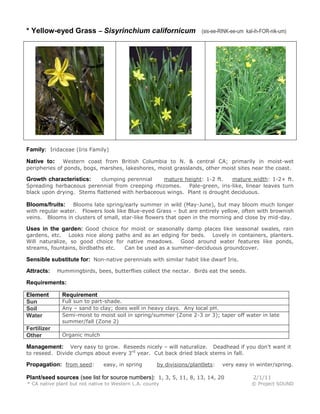
Pale-green, iris-like, linear leaves turn
black upon drying. Stems flattened with herbaceous wings. Plant is drought deciduous.

Growth characteristics:

Blooms late spring/early summer in wild (May-June), but may bloom much longer
with regular water. Flowers look like Blue-eyed Grass – but are entirely yellow, often with brownish
veins. Blooms in clusters of small, star-like flowers that open in the morning and close by mid-day.

Blooms/fruits:

Uses in the garden: Good choice for moist or seasonally damp places like seasonal swales, rain
gardens, etc. Looks nice along paths and as an edging for beds. Lovely in containers, planters.
Will naturalize, so good choice for native meadows. Good around water features like ponds,
streams, fountains, birdbaths etc.
Can be used as a summer-deciduous groundcover.

Sensible substitute for: Non-native perennials with similar habit like dwarf Iris.
Attracts:

Hummingbirds, bees, butterflies collect the nectar. Birds eat the seeds.

Requirements:
Element
Sun
Soil
Water
Fertilizer
Other

Requirement

Full sun to part-shade.
Any – sand to clay; does well in heavy clays. Any local pH.
Semi-moist to moist soil in spring/summer (Zone 2-3 or 3); taper off water in late
summer/fall (Zone 2)
Organic mulch

Very easy to grow. Reseeds nicely – will naturalize. Deadhead if you don’t want it
to reseed. Divide clumps about every 3rd year. Cut back dried black stems in fall.

Management:

Propagation: from seed:

easy, in spring

by divisions/plantlets:

very easy in winter/spring.

Plant/seed sources (see list for source numbers): 1, 3, 5, 11, 8, 13, 14, 20
* CA native plant but not native to Western L.A. county

2/1/11
© Project SOUND

Sisyrinchium californicum

  • 1.
    * Yellow-eyed Grass– Sisyrinchium californicum (sis-ee-RINK-ee-um kal-ih-FOR-nik-um) Family: Iridaceae (Iris Family) Western coast from British Columbia to N. & central CA; primarily in moist-wet peripheries of ponds, bogs, marshes, lakeshores, moist grasslands, other moist sites near the coast. Native to: clumping perennial mature height: 1-2 ft. mature width: 1-2+ ft. Spreading herbaceous perennial from creeping rhizomes. Pale-green, iris-like, linear leaves turn black upon drying. Stems flattened with herbaceous wings. Plant is drought deciduous. Growth characteristics: Blooms late spring/early summer in wild (May-June), but may bloom much longer with regular water. Flowers look like Blue-eyed Grass – but are entirely yellow, often with brownish veins. Blooms in clusters of small, star-like flowers that open in the morning and close by mid-day. Blooms/fruits: Uses in the garden: Good choice for moist or seasonally damp places like seasonal swales, rain gardens, etc. Looks nice along paths and as an edging for beds. Lovely in containers, planters. Will naturalize, so good choice for native meadows. Good around water features like ponds, streams, fountains, birdbaths etc. Can be used as a summer-deciduous groundcover. Sensible substitute for: Non-native perennials with similar habit like dwarf Iris. Attracts: Hummingbirds, bees, butterflies collect the nectar. Birds eat the seeds. Requirements: Element Sun Soil Water Fertilizer Other Requirement Full sun to part-shade. Any – sand to clay; does well in heavy clays. Any local pH. Semi-moist to moist soil in spring/summer (Zone 2-3 or 3); taper off water in late summer/fall (Zone 2) Organic mulch Very easy to grow. Reseeds nicely – will naturalize. Deadhead if you don’t want it to reseed. Divide clumps about every 3rd year. Cut back dried black stems in fall. Management: Propagation: from seed: easy, in spring by divisions/plantlets: very easy in winter/spring. Plant/seed sources (see list for source numbers): 1, 3, 5, 11, 8, 13, 14, 20 * CA native plant but not native to Western L.A. county 2/1/11 © Project SOUND