


Gamification for Marketing

             Applying gaming mechanics to drive
                  engagement & retention


                                January 23, 2013

                             Rita Nguyen
                   @moodyrain www.moodyrain.com
Using gaming mechanics to get people to play and keep them playing
“mechanics” are the tools and hooks we use
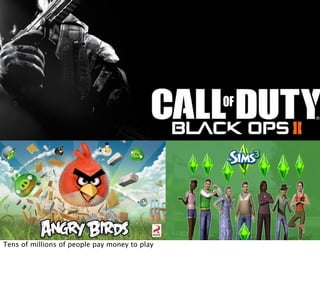
Tens of millions of people pay money to play
Also, games are fun!
It really just comes down to that
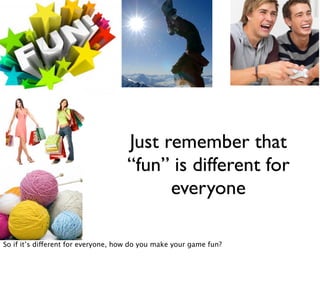
Just remember that
                                    “fun” is different for
                                          everyone

So if it’s different for everyone, how do you make your game fun?
It really is just about psychological motivations
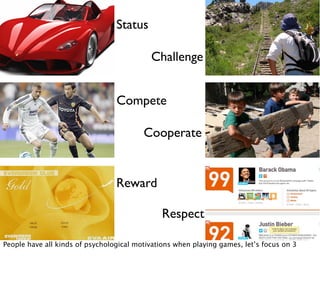
Status

                                           Challenge


                                 Compete

                                         Cooperate


                                 Reward

                                               Respect

People have all kinds of psychological motivations when playing games, let’s focus on 3
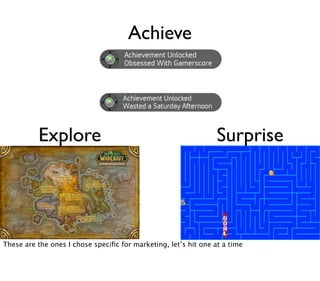
Achieve


          Explore                                                Surprise


These are the ones I chose specific for marketing, let’s hit one at a time
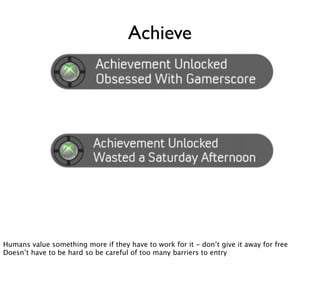
Achieve


Humans value something more if they have to work for it - don’t give it away for free
Doesn’t have to be hard so be careful of too many barriers to entry
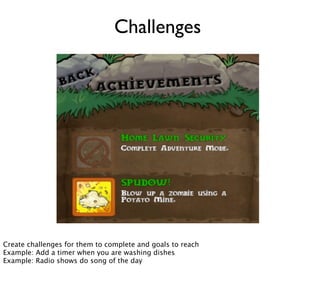
Challenges


Create challenges for them to complete and goals to reach
Example: Add a timer when you are washing dishes
Example: Radio shows do song of the day
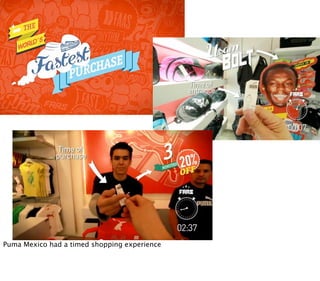
Puma Mexico had a timed shopping experience
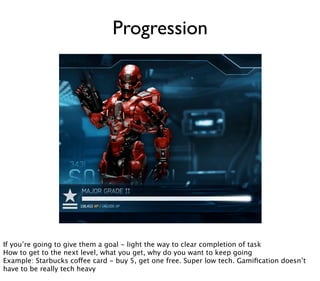
Progression


If you’re going to give them a goal - light the way to clear completion of task
How to get to the next level, what you get, why do you want to keep going
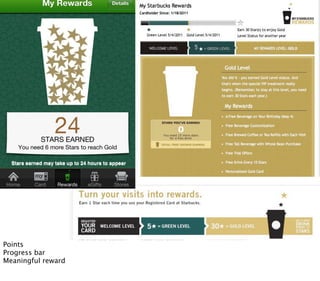
Example: Starbucks coffee card - buy 5, get one free. Super low tech. Gamification doesn’t
have to be really tech heavy
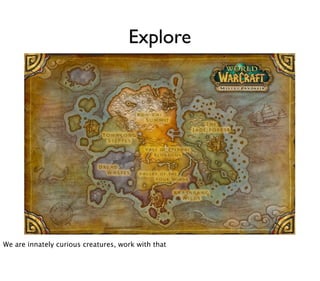
Explore


We are innately curious creatures, work with that
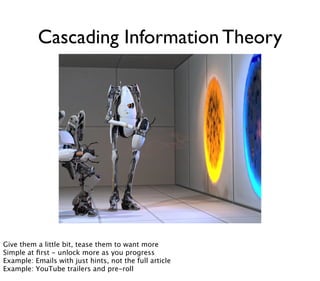
Cascading Information Theory


Give them a little bit, tease them to want more
Simple at first - unlock more as you progress
Example: Emails with just hints, not the full article
Example: YouTube trailers and pre-roll
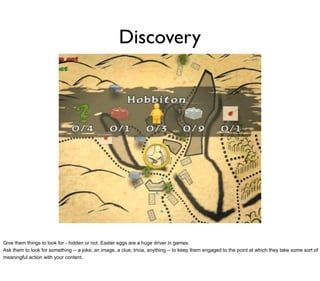
Discovery


Give them things to look for - hidden or not. Easter eggs are a huge driver in games.
Ask them to look for something -- a joke, an image, a clue, trivia, anything -- to keep them engaged to the point at which they take some sort of
meaningful action with your content.
Discovery


Jay-Z launched memoir - Decoded by printing pages in the most unexpected places
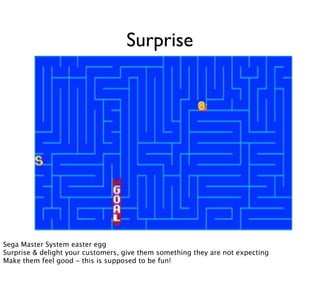
Surprise


Sega Master System easter egg
Surprise & delight your customers, give them something they are not expecting
Make them feel good - this is supposed to be fun!
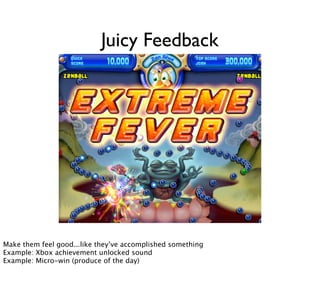
Juicy Feedback


        Now, strong, amped-up feedback on minimum input is one reason for the enjoyability of casual games such as »Peggle«. Seeing lots of
        flashes, bolts, a rainbow, and listening to »Freude schöner Götterfunken« when finishing a »Peggle« level – it just feels good. It‘s what
Make them feel good...like they’ve»juiciness« of a game. Andsomethingjuicy. (Source, Source)
        game designers call »juicy« feedback or the accomplished »Peggle« is very
Example: Xbox achievement unlocked sound
Example: Micro-win (produce of the day)
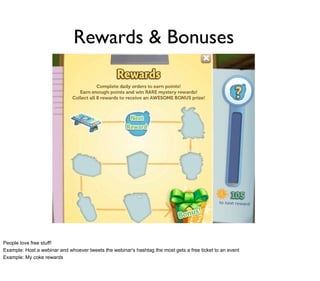
Rewards & Bonuses


People love free stuff!
Example: Host a webinar and whoever tweets the webinar's hashtag the most gets a free ticket to an event
Example: My coke rewards
Points
Progress bar
Meaningful reward
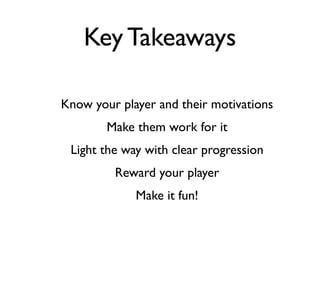
Key Takeaways

Know your player and their motivations
        Make them work for it
 Light the way with clear progression
         Reward your player
             Make it fun!
Questions?


          Rita Nguyen
@moodyrain www.moodyrain.com
Resources

• www.gamification.org/wiki/Gamification_of_Marketing
• www.gamification.co
• gamify.com
• gamification.org

Gamification for marketing

  • 1.
    Gamification for Marketing Applying gaming mechanics to drive engagement & retention January 23, 2013 Rita Nguyen @moodyrain www.moodyrain.com Using gaming mechanics to get people to play and keep them playing “mechanics” are the tools and hooks we use
  • 2.
    Tens of millionsof people pay money to play
  • 3.
    Also, games arefun! It really just comes down to that
  • 4.
    Just remember that “fun” is different for everyone So if it’s different for everyone, how do you make your game fun?
  • 5.
    It really isjust about psychological motivations
  • 6.
    Status Challenge Compete Cooperate Reward Respect People have all kinds of psychological motivations when playing games, let’s focus on 3
  • 7.
    Achieve Explore Surprise These are the ones I chose specific for marketing, let’s hit one at a time
  • 8.
    Achieve Humans value somethingmore if they have to work for it - don’t give it away for free Doesn’t have to be hard so be careful of too many barriers to entry
  • 9.
    Challenges Create challenges forthem to complete and goals to reach Example: Add a timer when you are washing dishes Example: Radio shows do song of the day
  • 10.
    Puma Mexico hada timed shopping experience
  • 11.
    Progression If you’re goingto give them a goal - light the way to clear completion of task How to get to the next level, what you get, why do you want to keep going Example: Starbucks coffee card - buy 5, get one free. Super low tech. Gamification doesn’t have to be really tech heavy
  • 12.
    Explore We are innatelycurious creatures, work with that
  • 13.
    Cascading Information Theory Givethem a little bit, tease them to want more Simple at first - unlock more as you progress Example: Emails with just hints, not the full article Example: YouTube trailers and pre-roll
  • 14.
    Discovery Give them thingsto look for - hidden or not. Easter eggs are a huge driver in games. Ask them to look for something -- a joke, an image, a clue, trivia, anything -- to keep them engaged to the point at which they take some sort of meaningful action with your content.
  • 15.
    Discovery Jay-Z launched memoir- Decoded by printing pages in the most unexpected places
  • 16.
    Surprise Sega Master Systemeaster egg Surprise & delight your customers, give them something they are not expecting Make them feel good - this is supposed to be fun!
  • 17.
    Juicy Feedback Now, strong, amped-up feedback on minimum input is one reason for the enjoyability of casual games such as »Peggle«. Seeing lots of flashes, bolts, a rainbow, and listening to »Freude schöner Götterfunken« when finishing a »Peggle« level – it just feels good. It‘s what Make them feel good...like they’ve»juiciness« of a game. Andsomethingjuicy. (Source, Source) game designers call »juicy« feedback or the accomplished »Peggle« is very Example: Xbox achievement unlocked sound Example: Micro-win (produce of the day)
  • 18.
    Rewards & Bonuses Peoplelove free stuff! Example: Host a webinar and whoever tweets the webinar's hashtag the most gets a free ticket to an event Example: My coke rewards
  • 19.
  • 20.
    Key Takeaways Know yourplayer and their motivations Make them work for it Light the way with clear progression Reward your player Make it fun!
  • 21.
    Questions? Rita Nguyen @moodyrain www.moodyrain.com
  • 22.