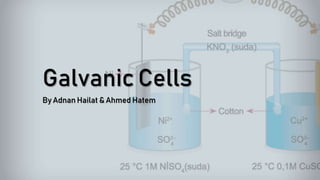
Galvanic Cells
By Adnan Hailat & Ahmed Hatem
What are Galvanic Cells?
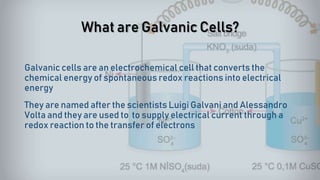
Galvanic cells are an electrochemical cell that converts the
chemical energy of spontaneous redox reactions into electrical
energy
They are named after the scientists Luigi Galvani and Alessandro
Volta and they are used to to supply electrical current through a
redox reaction to the transfer of electrons
Galvanic cells use oxidation and reduction reactions in them and
they are used in medicine in a variety of ways ……. oxidation is
catalyzed by cytochrome P450 enzymes and results in the loss of
electrons from the drug (electrons are negatively charged
subatomic particles). The drug is now said to be oxidized and after
phase 1 reactions, the resulting drug metabolite is still often
chemically active
An example of an oxidation reaction is the hydroxylation of
amphetamine to 4-hydroxyamphetamine and
norephedrine. Another example is hydroxylation of delta-
9-THC to 11-OH-delta-9-THC
Oxidation and reduction reactions, provide cellular energy,
because the flow of electrons between molecules produces
usable energy. Metabolism is the sum of chemical reactions that
occur within each cell to supply energy for important cellular
processes
When we 'burn' glucose for energy, we transfer (by a series of
enzyme-catalyzed reactions) electrons from glucose to molecular
oxygen ( O2), oxidizing the six carbon molecules in glucose to
carbon dioxide and at the same time reducing the oxygen atoms in
O2
to water.
The transfer of electrons from glucose to O2 is a thermodynamicallydownhill, energy-
releasingprocess, just like the transfer of electrons from zinc metal to copper ion. And while
you could have used the energy released by the zinc/copper redox reaction to light a small
light bulb, your cells use the energy released by the glucose/oxygenredox process to carry
out a wide variety of energy-requiringactivities
On a global scale, oxidation of the carbons in glucose to CO2
by non-photosyntheticorganisms (like people) and the subsequent reductive synthesisof
glucose from CO2
by plants is what ecologists refer to as the 'carbon cycle'.
In general the more reduced an organic molecule is, the more energyis released when it is
oxidized to CO2
. Going back to our single-carbonexamples, we see that methane, the most reduced
compound, releases the most energy when oxidized to carbon dioxide, while formic acid
releases the least
After we break down and oxidize sugar and fat molecules
to obtain energy, we use that energy to build large,
complex molecules (like cholesterol, or DNA) out of small,
simple precursors. Many biosynthetic pathways are
reductive: the carbons in the large biomolecule products
are in a reduced state compared to the small precursors.
Look at the structure of cholesterol compared to that of
acetate, the precursor molecule from which all of its
carbon atoms are derived - you can see that cholesterol is
overall a more reduced molecule.
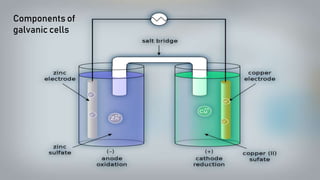
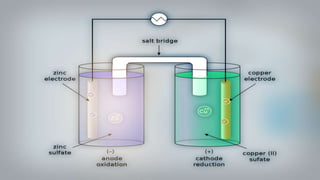
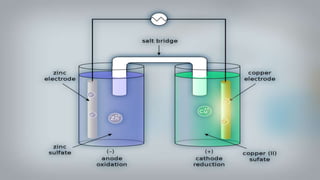
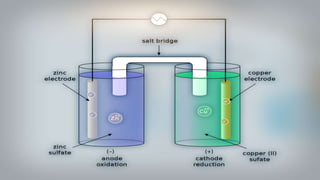
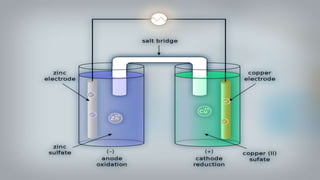
Components of
galvanic cells
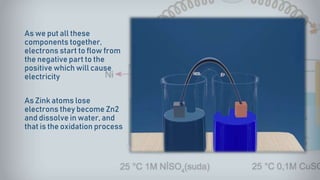
As we put all these
components together,
electrons start to flow from
the negative part to the
positive which will cause
electricity
As Zink atoms lose
electrons they become Zn2
and dissolve in water, and
that is the oxidation process
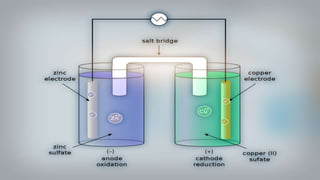
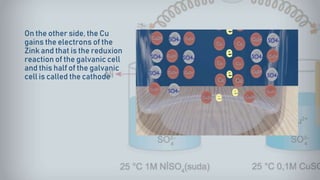
On the other side, the Cu
gains the electrons of the
Zink and that is the reduxion
reaction of the galvanic cell
and this half of the galvanic
cell is called the cathode
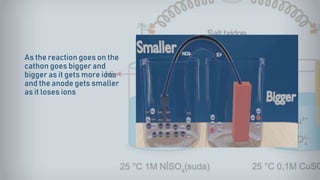
As the reaction goes on the
cathon goes bigger and
bigger as it gets more ions
and the anode gets smaller
as it loses ions
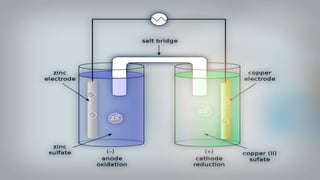
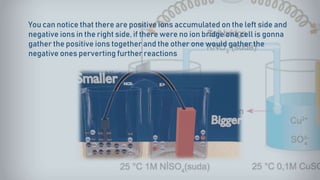
You can notice that there are positive ions accumulated on the left side and
negative ions in the right side, if there were no ion bridge one cell is gonna
gather the positive ions together and the other one would gather the
negative ones perverting further reactions
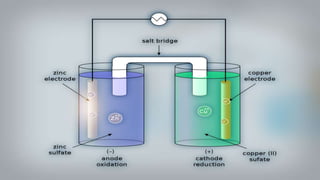
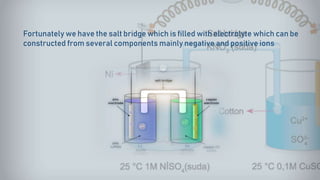
Fortunately we have the salt bridge which is filled with electrolyte which can be
constructed from several components mainly negative and positive ions
The positive ions migrate into the solution where the negative ions are
accumulated and migrate into the solution where the positive ions are located
Uses of Galvanic Cells
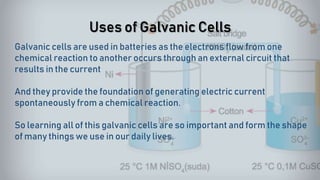
Galvanic cells are used in batteries as the electrons flow from one
chemical reaction to another occurs through an external circuit that
results in the current
And they provide the foundation of generating electric current
spontaneously from a chemical reaction.
So learning all of this galvanic cells are so important and form the shape
of many things we use in our daily lives.
Thanks for listening!

Galvanic Cells Biochemestry.pptx

  • 1.
    Galvanic Cells By AdnanHailat & Ahmed Hatem
  • 2.
    What are GalvanicCells? Galvanic cells are an electrochemical cell that converts the chemical energy of spontaneous redox reactions into electrical energy They are named after the scientists Luigi Galvani and Alessandro Volta and they are used to to supply electrical current through a redox reaction to the transfer of electrons
  • 3.
    Galvanic cells useoxidation and reduction reactions in them and they are used in medicine in a variety of ways ……. oxidation is catalyzed by cytochrome P450 enzymes and results in the loss of electrons from the drug (electrons are negatively charged subatomic particles). The drug is now said to be oxidized and after phase 1 reactions, the resulting drug metabolite is still often chemically active
  • 4.
    An example ofan oxidation reaction is the hydroxylation of amphetamine to 4-hydroxyamphetamine and norephedrine. Another example is hydroxylation of delta- 9-THC to 11-OH-delta-9-THC
  • 5.
    Oxidation and reductionreactions, provide cellular energy, because the flow of electrons between molecules produces usable energy. Metabolism is the sum of chemical reactions that occur within each cell to supply energy for important cellular processes When we 'burn' glucose for energy, we transfer (by a series of enzyme-catalyzed reactions) electrons from glucose to molecular oxygen ( O2), oxidizing the six carbon molecules in glucose to carbon dioxide and at the same time reducing the oxygen atoms in O2 to water.
  • 6.
    The transfer ofelectrons from glucose to O2 is a thermodynamicallydownhill, energy- releasingprocess, just like the transfer of electrons from zinc metal to copper ion. And while you could have used the energy released by the zinc/copper redox reaction to light a small light bulb, your cells use the energy released by the glucose/oxygenredox process to carry out a wide variety of energy-requiringactivities On a global scale, oxidation of the carbons in glucose to CO2 by non-photosyntheticorganisms (like people) and the subsequent reductive synthesisof glucose from CO2 by plants is what ecologists refer to as the 'carbon cycle'. In general the more reduced an organic molecule is, the more energyis released when it is oxidized to CO2 . Going back to our single-carbonexamples, we see that methane, the most reduced compound, releases the most energy when oxidized to carbon dioxide, while formic acid releases the least
  • 7.
    After we breakdown and oxidize sugar and fat molecules to obtain energy, we use that energy to build large, complex molecules (like cholesterol, or DNA) out of small, simple precursors. Many biosynthetic pathways are reductive: the carbons in the large biomolecule products are in a reduced state compared to the small precursors. Look at the structure of cholesterol compared to that of acetate, the precursor molecule from which all of its carbon atoms are derived - you can see that cholesterol is overall a more reduced molecule.
  • 8.
  • 16.
    As we putall these components together, electrons start to flow from the negative part to the positive which will cause electricity As Zink atoms lose electrons they become Zn2 and dissolve in water, and that is the oxidation process
  • 17.
    On the otherside, the Cu gains the electrons of the Zink and that is the reduxion reaction of the galvanic cell and this half of the galvanic cell is called the cathode
  • 18.
    As the reactiongoes on the cathon goes bigger and bigger as it gets more ions and the anode gets smaller as it loses ions
  • 19.
    You can noticethat there are positive ions accumulated on the left side and negative ions in the right side, if there were no ion bridge one cell is gonna gather the positive ions together and the other one would gather the negative ones perverting further reactions
  • 20.
    Fortunately we havethe salt bridge which is filled with electrolyte which can be constructed from several components mainly negative and positive ions
  • 21.
    The positive ionsmigrate into the solution where the negative ions are accumulated and migrate into the solution where the positive ions are located
  • 22.
    Uses of GalvanicCells Galvanic cells are used in batteries as the electrons flow from one chemical reaction to another occurs through an external circuit that results in the current And they provide the foundation of generating electric current spontaneously from a chemical reaction. So learning all of this galvanic cells are so important and form the shape of many things we use in our daily lives.
  • 23.