Office of
Sustainability Initiatives
Faculty Director, Elise Amel
Program Manager, Maria Dahmus
http://www.stthomas.edu/gale/sustainability
/
OSI Mission
Our mission is to create
opportunities for experiential,
community-engaged learning
across undergraduate and graduate
programs through the Sustainable
Communities Partnership and to
facilitate the integration of
sustainability across the
curriculum.
Office of
Sustainability Initiatives
• Sustainable Communities Partnership
• 2 years of Strategic Initiatives funding
• Sustainability Across the Curriculum
• Designating sustainability courses on Murphy
• Potential Home for Future Initiatives
Sustainable Communities
Partnership
SCP partners with a city for a year
to advance their high-priority, self-
identified quality of life and
sustainability projects, linking
existing graduate and
undergraduate courses or program
requirements to these city-
identified projects
SCP Advisory Board
Charlotte Berres
St. Paul Seminary School of Divinity
Patricia Jensen
College of Leadership & Counseling
Avinash Malshe
Opus College of Business
Kundun Nepal
School of Engineering
Ande Nesmith
School of Social Work
Debra Petersen
College of Arts and Sciences
The Aspirational Model
2015
ASHOKA
Innovation Awardee
Historical Precedent
ACTC Consortium
ENVR Capstone
Residential Impervious Cover Assessment
A research, analysis, and recommendation
project helping the St. Paul Department of Safety
and Inspections define “impervious surface” and
determine whether amendments to the City’s
maintenance code for residential lots are
required to eliminate conflicts and redundancies.
Students addressed possible need to set
minimum green space requirements for
residential lots citywide to combat water resource
degradation.
Urban Ecosystems
Community Garden Compost Survey
A research and survey helping Saint Paul’s
Recycling & Composting program assess
whether community gardens could manage
and sustain increased volumes of compost
and potentially become neighborhood
compost drop-off sites. Students paid special
attention to the needs of community
gardeners, the nutrient capacity of the
gardens’ physical space, and the level of
organic waste produced by households.
Psychology & Work
Volunteer Park Patrol Project
Research, analysis, & recommendations
for implementing a new ‘job’.
Students created an HR system for
developing and implementing a program to
recruit, manage, and retain volunteers in
the city’s parks
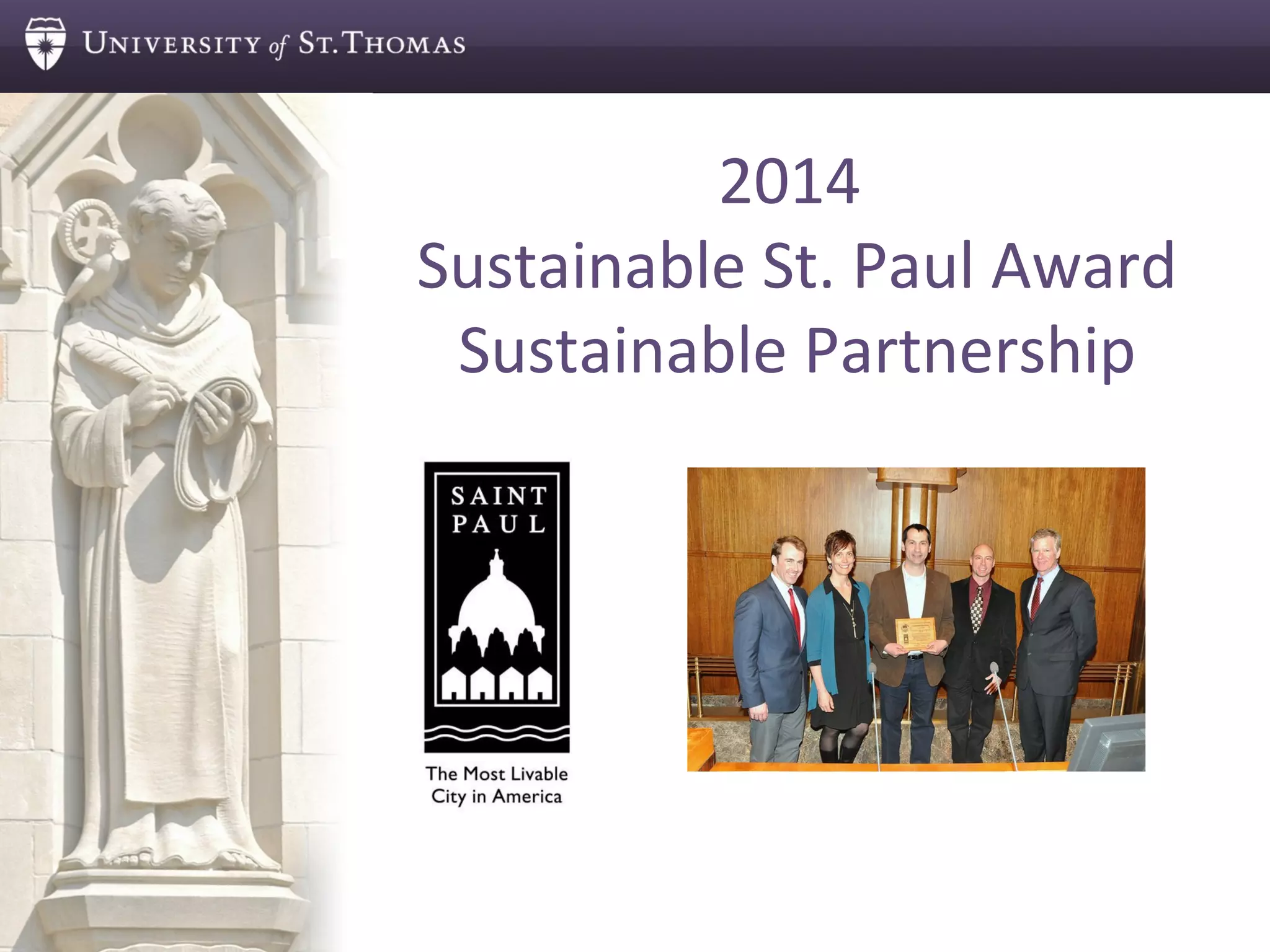
2014
Sustainable St. Paul Award
Sustainable Partnership
Working Model
SCP Program Manager
Maria will provide collaborative support
throughout the semester including:
•Curriculum development consultation;
•Funds for course materials necessary for
project completion;
•Obtaining available data from the city for
projects;
•Logistical support (e.g., students’ visits to
cities, managing deliverables);
•Problem solving or trouble shooting
project needs.
SCP: Benefits
For Students:
• Uses the best practices of Service
Learning
• Collaboration with Community to
address their needs
• Academic Reflection
For Communities:
• Addresses underlying systems
For Faculty:
• Enriches teaching experience
For Program:
• Dedicated Funding for Program Manager
• Engaged City Liaison
For Students
• Managing workload perceptions
For Communities:
• Needs v. Ideas
• Timing of Academic Semesters
For Faculty:
• Timely matching of courses & projects
• Preparing the Deliverables
SCP: Challenges
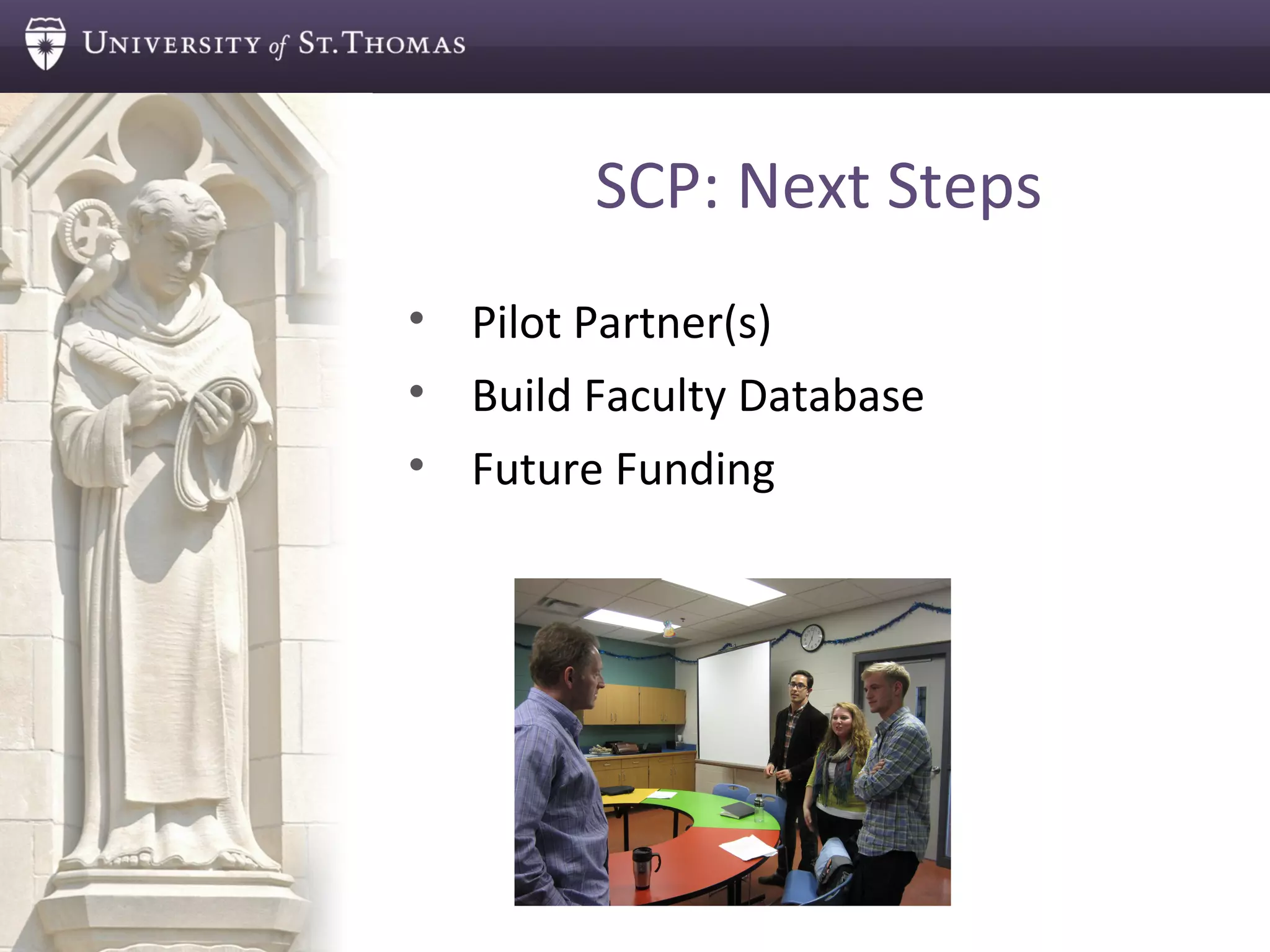
SCP: Next Steps
• Pilot Partner(s)
• Build Faculty Database
• Future Funding
Questions?

GALE Advisory Board on Sustainability

  • 1.
    Office of Sustainability Initiatives FacultyDirector, Elise Amel Program Manager, Maria Dahmus http://www.stthomas.edu/gale/sustainability /
  • 2.
    OSI Mission Our missionis to create opportunities for experiential, community-engaged learning across undergraduate and graduate programs through the Sustainable Communities Partnership and to facilitate the integration of sustainability across the curriculum.
  • 3.
    Office of Sustainability Initiatives •Sustainable Communities Partnership • 2 years of Strategic Initiatives funding • Sustainability Across the Curriculum • Designating sustainability courses on Murphy • Potential Home for Future Initiatives
  • 4.
    Sustainable Communities Partnership SCP partnerswith a city for a year to advance their high-priority, self- identified quality of life and sustainability projects, linking existing graduate and undergraduate courses or program requirements to these city- identified projects
  • 5.
    SCP Advisory Board CharlotteBerres St. Paul Seminary School of Divinity Patricia Jensen College of Leadership & Counseling Avinash Malshe Opus College of Business Kundun Nepal School of Engineering Ande Nesmith School of Social Work Debra Petersen College of Arts and Sciences
  • 6.
  • 7.
  • 8.
  • 9.
    ENVR Capstone Residential ImperviousCover Assessment A research, analysis, and recommendation project helping the St. Paul Department of Safety and Inspections define “impervious surface” and determine whether amendments to the City’s maintenance code for residential lots are required to eliminate conflicts and redundancies. Students addressed possible need to set minimum green space requirements for residential lots citywide to combat water resource degradation.
  • 10.
    Urban Ecosystems Community GardenCompost Survey A research and survey helping Saint Paul’s Recycling & Composting program assess whether community gardens could manage and sustain increased volumes of compost and potentially become neighborhood compost drop-off sites. Students paid special attention to the needs of community gardeners, the nutrient capacity of the gardens’ physical space, and the level of organic waste produced by households.
  • 11.
    Psychology & Work VolunteerPark Patrol Project Research, analysis, & recommendations for implementing a new ‘job’. Students created an HR system for developing and implementing a program to recruit, manage, and retain volunteers in the city’s parks
  • 12.
    2014 Sustainable St. PaulAward Sustainable Partnership
  • 13.
  • 14.
    SCP Program Manager Mariawill provide collaborative support throughout the semester including: •Curriculum development consultation; •Funds for course materials necessary for project completion; •Obtaining available data from the city for projects; •Logistical support (e.g., students’ visits to cities, managing deliverables); •Problem solving or trouble shooting project needs.
  • 15.
    SCP: Benefits For Students: •Uses the best practices of Service Learning • Collaboration with Community to address their needs • Academic Reflection For Communities: • Addresses underlying systems For Faculty: • Enriches teaching experience
  • 16.
    For Program: • DedicatedFunding for Program Manager • Engaged City Liaison For Students • Managing workload perceptions For Communities: • Needs v. Ideas • Timing of Academic Semesters For Faculty: • Timely matching of courses & projects • Preparing the Deliverables SCP: Challenges
  • 17.
    SCP: Next Steps •Pilot Partner(s) • Build Faculty Database • Future Funding
  • 18.

Editor's Notes

  • #3 Continuum of levels of involvement Undergrad and grad Across the university
  • #7 Innovation Award at ASHOKA U: Changemaker campuses at the forefront of social innovation education Great Model for large universities with full complement of disciplines available
  • #9 Citylabs designed to “put the academic resources of the ACTC and the civic resources of the Twin Cities to work for each other, with an eye toward creating a more sustainable and livable future for all. UST has a faculty active in service learning and community engagement. Mission Statement. University of Minnesota's Resilient Communities Project
  • #12 Pressure to do well as St. Paul was both eager and hesitant. a plan for developing and implementing a program to recruit, manage, and retain volunteers in the city’s parks
  • #13 UST majority of Citilabs projects