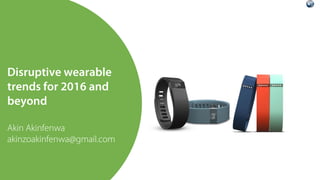
Disruptive wearable
trends for 2016 and
beyond
Akin Akinfenwa
akinzoakinfenwa@gmail.com
Tables of Contents
History of Wearables
What is a Wearable?
Applications Tracking Physical Activities
Disease Management Tools
Benefit of Wearables
How Wearables Work
The Wearables Market
Wearables Competitors
Employer Groups and Medicaid
New Technology Posed to be Disruptive
Future of Wearables
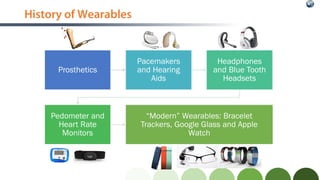
History of Wearables
What is a Wearable?
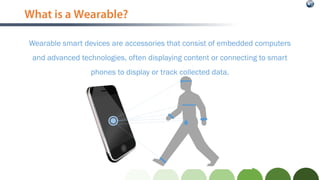
Wearable smart devices are accessories that consist of embedded computers
and advanced technologies, often displaying content or connecting to smart
phones to display or track collected data.
What is a Wearable?
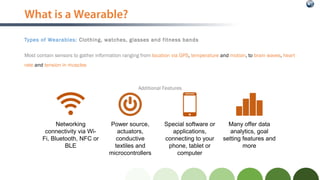
Types of Wearables: Clothing, watches, glasses and fitness bands
Most contain sensors to gather information ranging from location via GPS, temperature and motion, to brain waves, heart
rate and tension in muscles
Additional Features
Networking
connectivity via Wi-
Fi, Bluetooth, NFC or
BLE
Power source,
actuators,
conductive
textiles and
microcontrollers
Special software or
applications,
connecting to your
phone, tablet or
computer
Many offer data
analytics, goal
setting features and
more
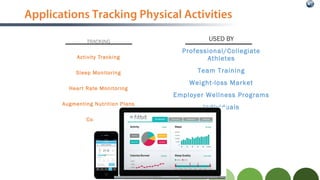
Applications Tracking Physical Activities
TRACKING
Activity Tracking
Sleep Monitoring
Heart Rate Monitoring
Augmenting Nutrition Plans
Coaching
USED BY
Professional/Collegiate
Athletes
Team Training
Weight-loss Market
Employer Wellness Programs
Individuals
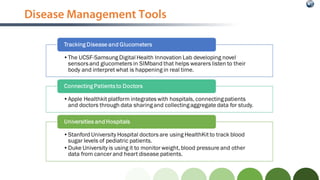
Disease Management Tools
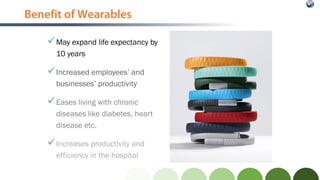
Benefit of Wearables
May expand life expectancy by
10 years
Increased employees’ and
businesses’ productivity
Eases living with chronic
diseases like diabetes, heart
disease etc.
Increases productivity and
efficiency in the hospital
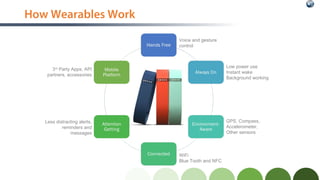
How Wearables Work
Voice and gesture
control
Low power use
Instant wake
Background working
GPS, Compass,
Accelerometer,
Other sensors
WiFi
Blue Tooth and NFC
Less distracting alerts,
reminders and
messages
3rd
Party Apps, API
partners, accessories
The Wearables Market
The increasing use of and dependence on smart mobile phone or devices,
increases the customer pool for App-integrated wearables
10
182
Million
or 75%
182
Million
or 75%
1.75
Billion
1.75
Billion
150
times
per day
150
times
per day
51%51%
Americans own a
smart phone
Worldwide projected
smart phone users
Average person reaches
for phone
Increase in time spent in
health and fitness apps
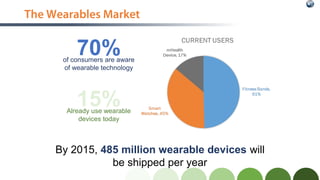
The Wearables Market
of consumers are aware
of wearable technology
70%
Already use wearable
devices today
15%
By 2015, 485 million wearable devices will
be shipped per year
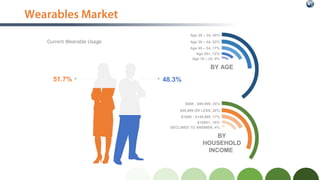
Wearables Market
$50K - $99,999, 35%
$49,999 OR LESS, 28%
$100K - $149,999, 17%
BY
HOUSEHOLD
INCOME
$150K+, 16%
DECLINED TO ANSWER, 4%
Age 25 – 34, 40%
Age 35 – 44, 22%
Age 45 – 54, 17%
BY AGE
Age 55+, 12%
Age 18 – 24, 9%
51.7% 48.3%
Current Wearable Usage
Wearables Market
Consumers’ Limiting Factors
72% wished wearables were less expensive
62% desired other form factors
53% want products that look more like jewelry
Individuals who do not use a device, would be willing to use one…
48% If their provider gave them a no-cost tracker
46% If given a device by an insurer
57% If it saved them money on their health insurance premiums
44% If it helped their physician offer better health advice
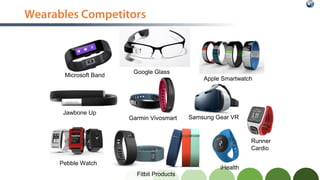
Wearables Competitors
Google Glass
Apple Smartwatch
Microsoft Band
Samsung Gear VRGarmin Vivosmart
Fitbit Products
Runner
Cardio
Jawbone Up
iHealth
Pebble Watch
Employer Groups and Medicaid
Jawbone recently launched “Up for Groups”.
The service enables companies to buy
Jawbone health wearables in bulk and access
software to track the health of their
employees.
Jawbone Up FitBit Wellness
Fitbit has the biggest portion of the
market. They started selling their
health wearables to employers in
2010. Wellness programs include
wearables in bulk, individual and
group tracking for employees.
Most likely wearables to be used for employee wellness programs
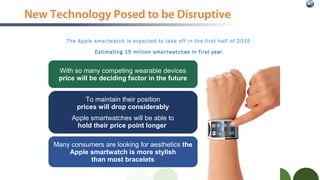
New Technology Posed to be Disruptive
With so many competing wearable devices
price will be deciding factor in the future
To maintain their position
prices will drop considerably
Apple smartwatches will be able to
hold their price point longer
Many consumers are looking for aesthetics the
Apple smartwatch is more stylish
than most bracelets
The Apple smartwatch is expected to take off in the first half of 2015
Estimating 15 million smartwatches in first year
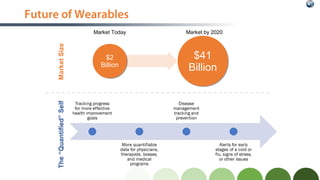
Future of Wearables
The“Quantified”Self $2
Billion
$2
Billion
$41
Billion
$41
Billion
Market by 2020Market Today
MarketSize
Thank You.
Akin Akinfenwa
akinzoakinfenwa@gmail.com

Future of wearbles 2016

  • 1.
    Disruptive wearable trends for2016 and beyond Akin Akinfenwa akinzoakinfenwa@gmail.com
  • 2.
    Tables of Contents Historyof Wearables What is a Wearable? Applications Tracking Physical Activities Disease Management Tools Benefit of Wearables How Wearables Work The Wearables Market Wearables Competitors Employer Groups and Medicaid New Technology Posed to be Disruptive Future of Wearables
  • 3.
  • 4.
    What is aWearable? Wearable smart devices are accessories that consist of embedded computers and advanced technologies, often displaying content or connecting to smart phones to display or track collected data.
  • 5.
    What is aWearable? Types of Wearables: Clothing, watches, glasses and fitness bands Most contain sensors to gather information ranging from location via GPS, temperature and motion, to brain waves, heart rate and tension in muscles Additional Features Networking connectivity via Wi- Fi, Bluetooth, NFC or BLE Power source, actuators, conductive textiles and microcontrollers Special software or applications, connecting to your phone, tablet or computer Many offer data analytics, goal setting features and more
  • 6.
    Applications Tracking PhysicalActivities TRACKING Activity Tracking Sleep Monitoring Heart Rate Monitoring Augmenting Nutrition Plans Coaching USED BY Professional/Collegiate Athletes Team Training Weight-loss Market Employer Wellness Programs Individuals
  • 7.
  • 8.
    Benefit of Wearables Mayexpand life expectancy by 10 years Increased employees’ and businesses’ productivity Eases living with chronic diseases like diabetes, heart disease etc. Increases productivity and efficiency in the hospital
  • 9.
    How Wearables Work Voiceand gesture control Low power use Instant wake Background working GPS, Compass, Accelerometer, Other sensors WiFi Blue Tooth and NFC Less distracting alerts, reminders and messages 3rd Party Apps, API partners, accessories
  • 10.
    The Wearables Market Theincreasing use of and dependence on smart mobile phone or devices, increases the customer pool for App-integrated wearables 10 182 Million or 75% 182 Million or 75% 1.75 Billion 1.75 Billion 150 times per day 150 times per day 51%51% Americans own a smart phone Worldwide projected smart phone users Average person reaches for phone Increase in time spent in health and fitness apps
  • 11.
    The Wearables Market ofconsumers are aware of wearable technology 70% Already use wearable devices today 15% By 2015, 485 million wearable devices will be shipped per year
  • 12.
    Wearables Market $50K -$99,999, 35% $49,999 OR LESS, 28% $100K - $149,999, 17% BY HOUSEHOLD INCOME $150K+, 16% DECLINED TO ANSWER, 4% Age 25 – 34, 40% Age 35 – 44, 22% Age 45 – 54, 17% BY AGE Age 55+, 12% Age 18 – 24, 9% 51.7% 48.3% Current Wearable Usage
  • 13.
    Wearables Market Consumers’ LimitingFactors 72% wished wearables were less expensive 62% desired other form factors 53% want products that look more like jewelry Individuals who do not use a device, would be willing to use one… 48% If their provider gave them a no-cost tracker 46% If given a device by an insurer 57% If it saved them money on their health insurance premiums 44% If it helped their physician offer better health advice
  • 14.
    Wearables Competitors Google Glass AppleSmartwatch Microsoft Band Samsung Gear VRGarmin Vivosmart Fitbit Products Runner Cardio Jawbone Up iHealth Pebble Watch
  • 15.
    Employer Groups andMedicaid Jawbone recently launched “Up for Groups”. The service enables companies to buy Jawbone health wearables in bulk and access software to track the health of their employees. Jawbone Up FitBit Wellness Fitbit has the biggest portion of the market. They started selling their health wearables to employers in 2010. Wellness programs include wearables in bulk, individual and group tracking for employees. Most likely wearables to be used for employee wellness programs
  • 16.
    New Technology Posedto be Disruptive With so many competing wearable devices price will be deciding factor in the future To maintain their position prices will drop considerably Apple smartwatches will be able to hold their price point longer Many consumers are looking for aesthetics the Apple smartwatch is more stylish than most bracelets The Apple smartwatch is expected to take off in the first half of 2015 Estimating 15 million smartwatches in first year
  • 17.
    Future of Wearables The“Quantified”Self$2 Billion $2 Billion $41 Billion $41 Billion Market by 2020Market Today MarketSize
  • 18.

Editor's Notes

  • #6 http://makezine.com/magazine/make-43/under-the-hoodie-a-quick-guide-to-wearables-components/
  • #8 http://nuviun.com/content/apples-healthkit-apps-a-look-at-some-of-the-most-popular-for-doctors-and-patients-
  • #9 http://www.pwc.com/us/en/industry/entertainment-media/publications/consumer-intelligence-series/assets/pwc-hri-wearable-devices.pdf
  • #10 KPCB – Internet Trends Report – May 2013
  • #11 http://techcrunch.com/2014/07/01/an-upper-limit-for-apps-new-data-suggests-consumers-only-use-around-two-dozen-apps-per-month/
  • #12 eMarketer Mary Meeker, 2013 ABI Research – http//fxn.ws/lowurNc comScore Reports December 2014
  • #13 http://www.ihealthbeat.org/articles/2014/10/6/survey-finds-just-25-of-us-adults-use-a-fitness-tracker-or-health-app http://www.nielsen.com/us/en/insights/news/2014/hacking-health-how-consumers-use-smartphones-and-wearable-tech-to-track-their-health.html
  • #14 http://www.ihealthbeat.org/articles/2014/10/6/survey-finds-just-25-of-us-adults-use-a-fitness-tracker-or-health-app Neilson, March 2014
  • #16 http://www.marketsandmarkets.com/Market-Reports/wearable-electronics-market-983.html
  • #17 http://www.marketsandmarkets.com/Market-Reports/wearable-electronics-market-983.html
  • #18 http://www.marketsandmarkets.com/Market-Reports/wearable-electronics-market-983.html