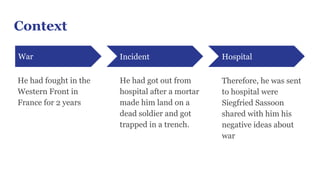
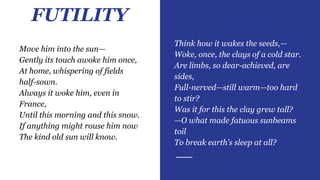
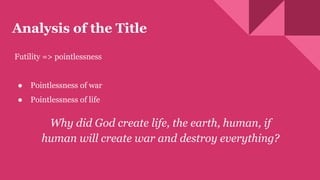
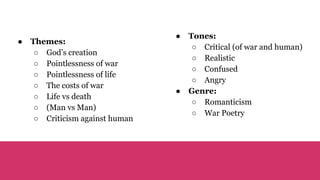
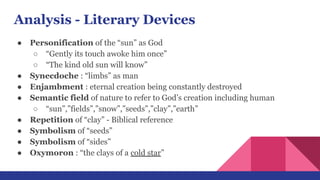
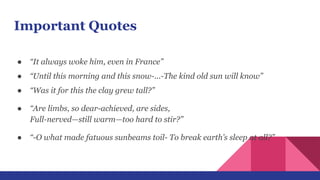
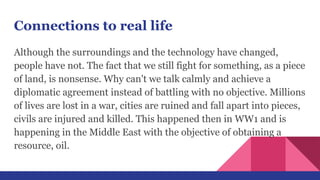
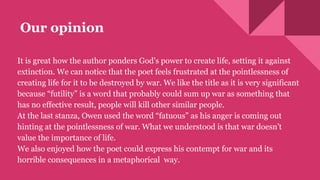
Wilfred Owen's poem "Futility" questions the point of God creating life and the world if human beings will only destroy it through war. The poem describes a dead soldier who was once awakened by the sun's warmth but now lies cold in the snow, having been killed in France during World War I. Through allusions to nature and biblical references, Owen suggests that war goes against God's creation and that human lives, "limbs, so dear-achieved," are cut short needlessly through conflict. The poem criticizes the futility and senselessness of war and the destruction of human life it causes.