Oral Physiology-Functions of Saliva
Dr Muhammad Danial Khalid
BDS, MSc (UK), MFGDP (UK)
Assistant Professor
Department of Oral Biology
Introduction to Functions of Saliva
• Every day, an estimated 0.5 to 1.5 liters of saliva is produced and secreted in the oral
cavity by the paired major (parotid, sublingual, and submandibular) and the numerous
minor salivary glands throughout the mouth.
• Salivary secretions include inorganic components like (electrolytes, such as chloride,
potassium, sodium, and bicarbonate).
• Saliva forms a protective layer on the surfaces of teeth.
• Salivary enzymes aid in digestion such as salivary amylase and lipase.
• Saliva also contains other organic components such as mucous glycoproteins, acidic
proline-rich, tyrosine-rich proteins, and numerous other proteins which have two
functions:
1. Anti-cariogenic function (salivary protein: Statherin)
2. Immunologic functions (various salivary proteins like Histatin, cystatin, lactoferrin etc)
Anti-cariogenic function of saliva
• The anti-cariogenic function means “prevention of caries
development”.
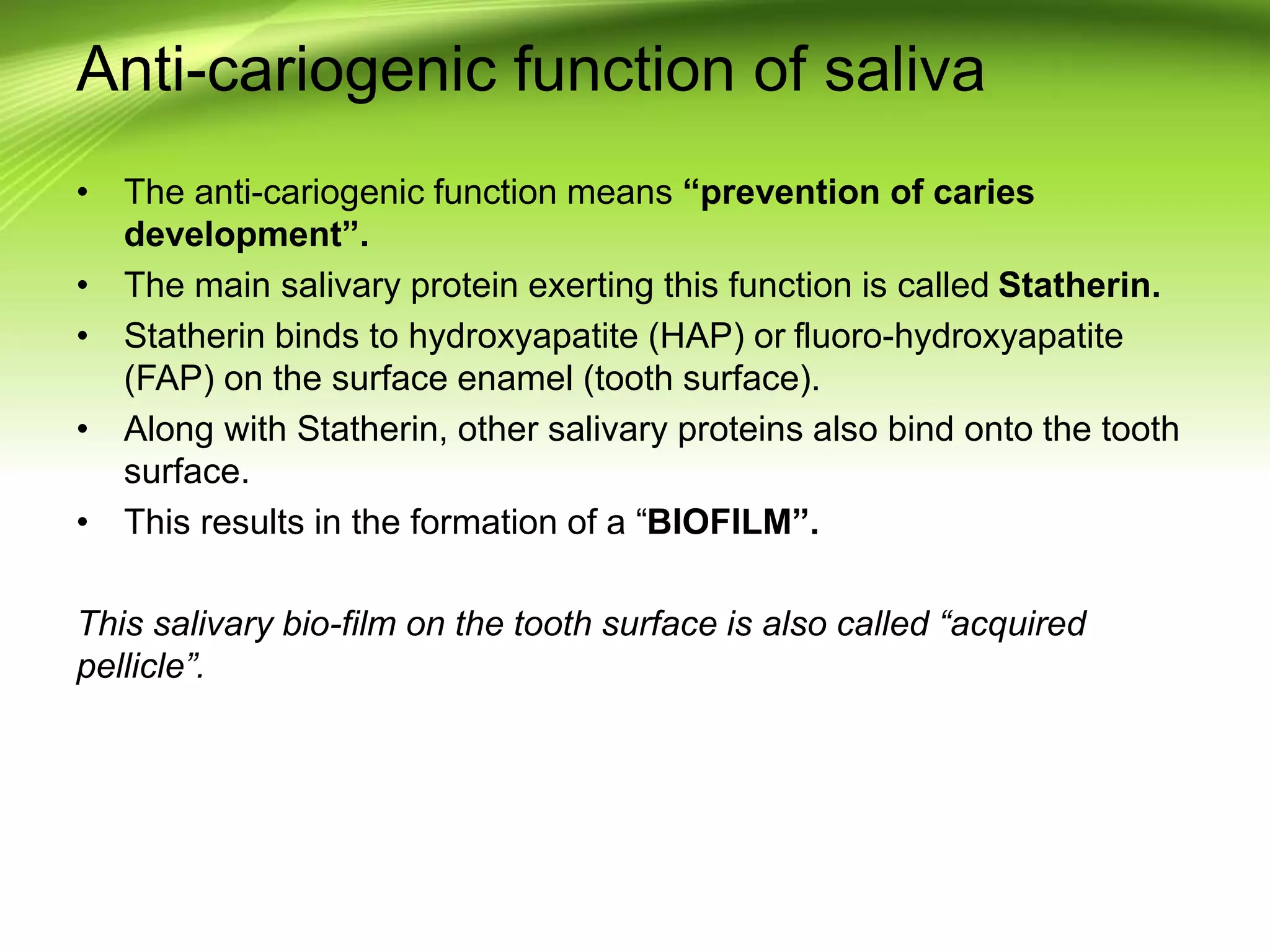
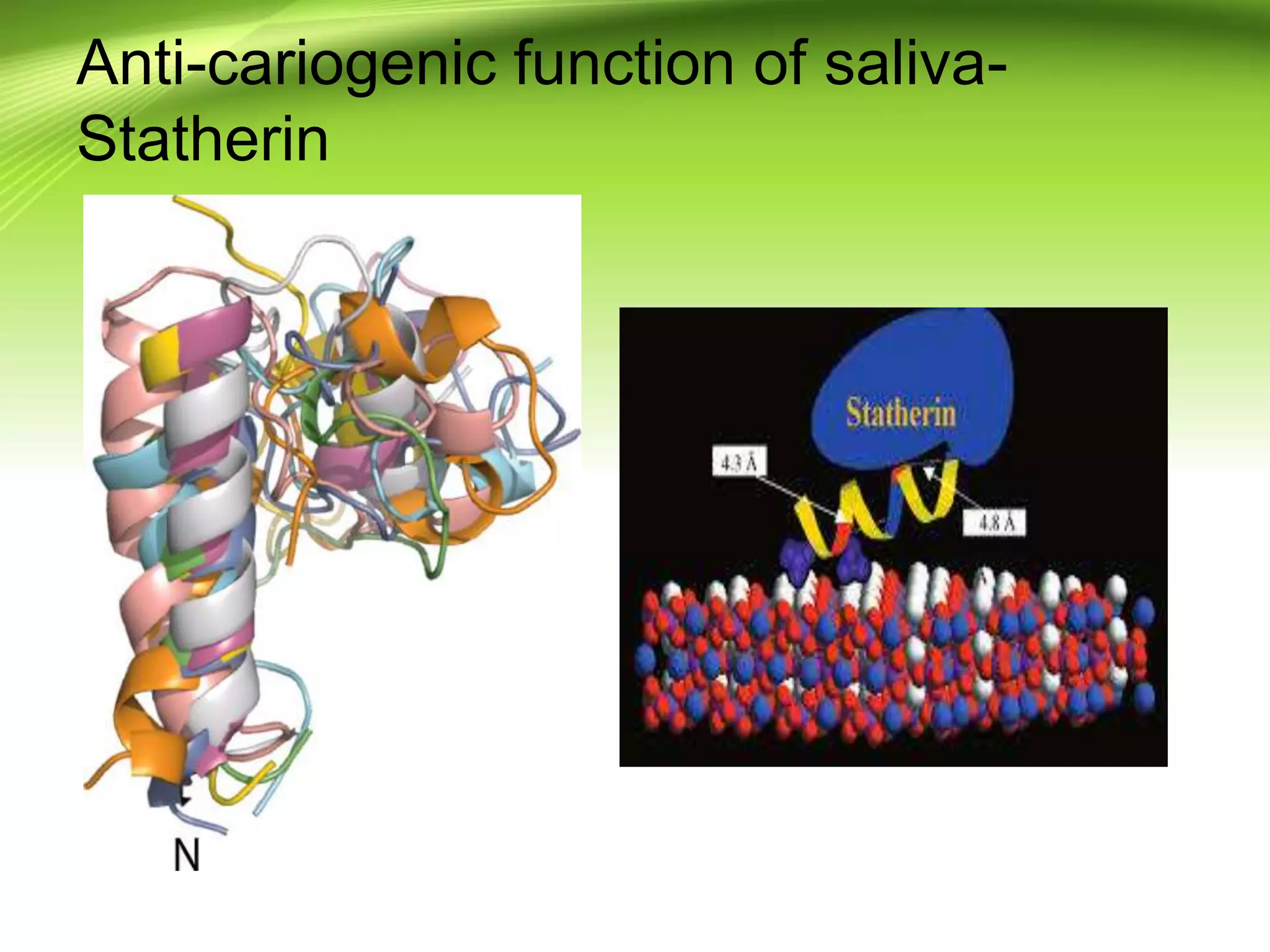
• The main salivary protein exerting this function is called Statherin.
• Statherin binds to hydroxyapatite (HAP) or fluoro-hydroxyapatite
(FAP) on the surface enamel (tooth surface).
• Along with Statherin, other salivary proteins also bind onto the tooth
surface.
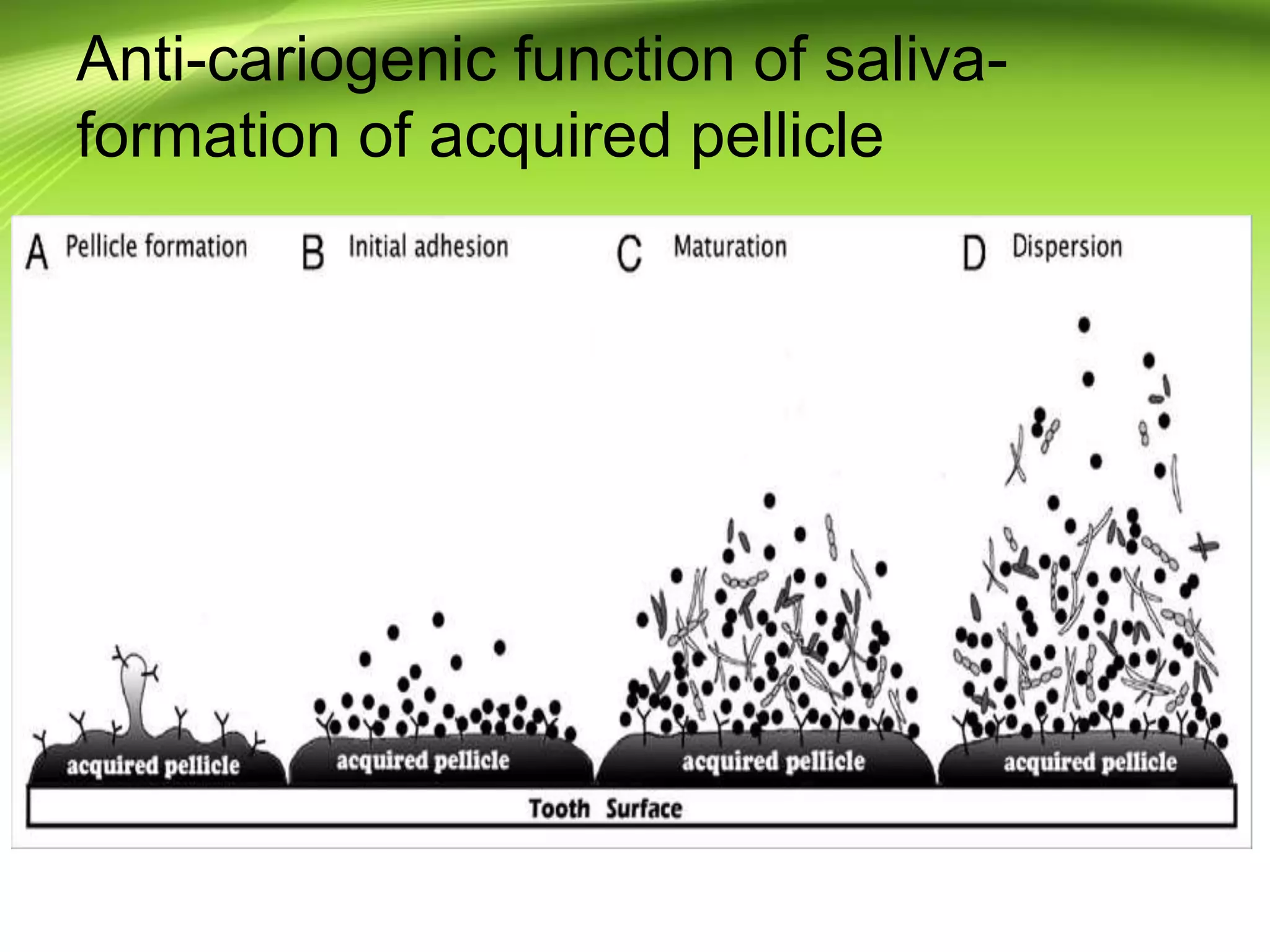
• This results in the formation of a “BIOFILM”.
This salivary bio-film on the tooth surface is also called “acquired
pellicle”.
Anti-cariogenic function of saliva-
Statherin
Anti-cariogenic function of saliva-
formation of acquired pellicle
Introduction to Oral Immunology
• The physical and functional integrity of the oral mucosa is important both for
oral and systemic health.
• Both soft-shedding mucosal surfaces (desquamation) and the hard non-shedding
tooth surfaces are protected by innate and adaptive immune mechanisms.
• The immune mechanisms and molecules of the oral cavity derive either from the
secretory or systemic immune system
• The secretory immune system mainly comprises the secretions of the major and
minor salivary glands
• The systemic immune system mainly acts through the gingival crevicular fluid.
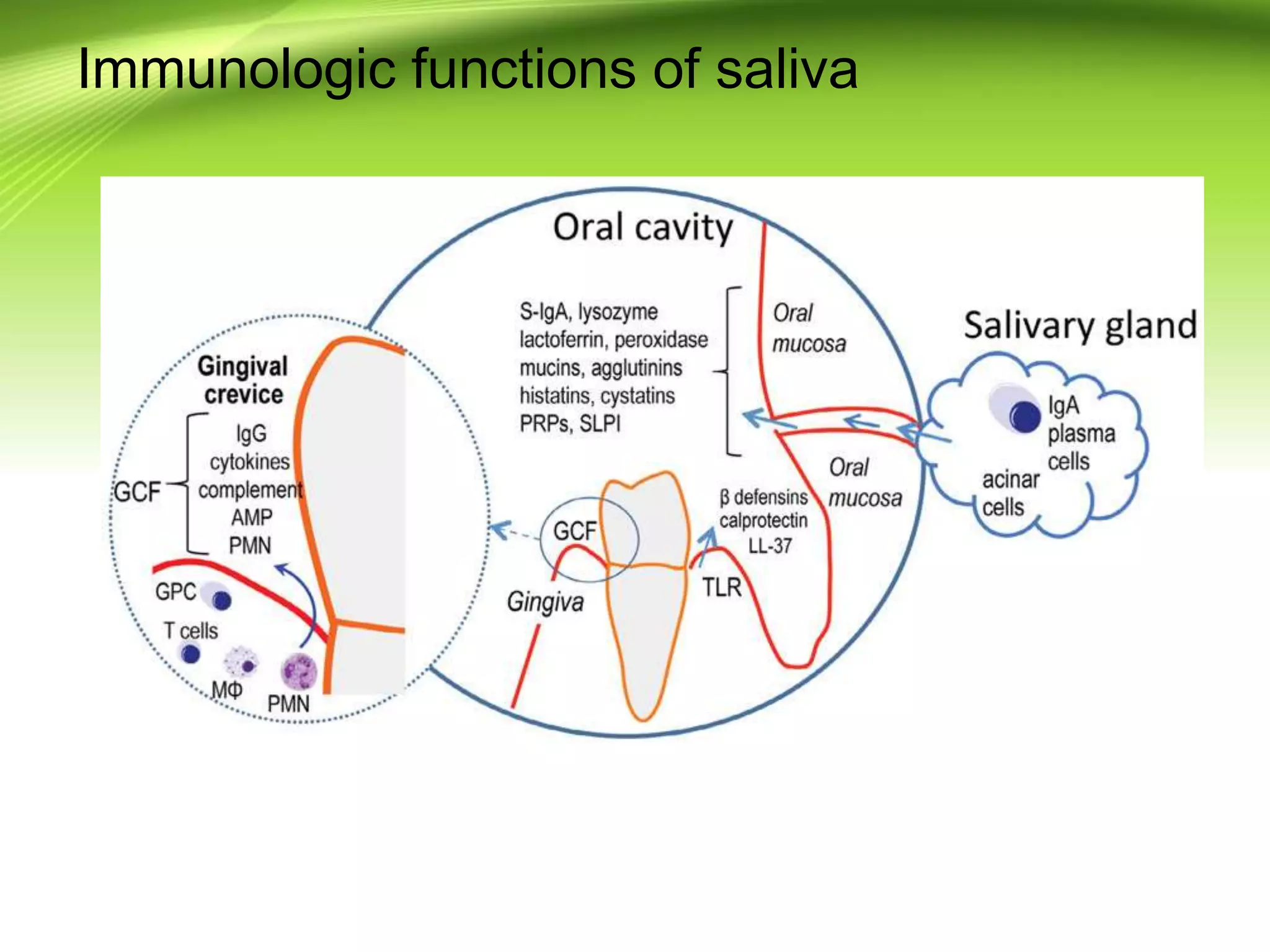
• GCF is a serum exudate that originates in the gingival capillaries and flows into the
gingival crevice carrying locally produced mediators of innate and adaptive immunity.
The immune mechanisms operating in the specific areas of oral cavity are peculiar in
nature and may co-exist.
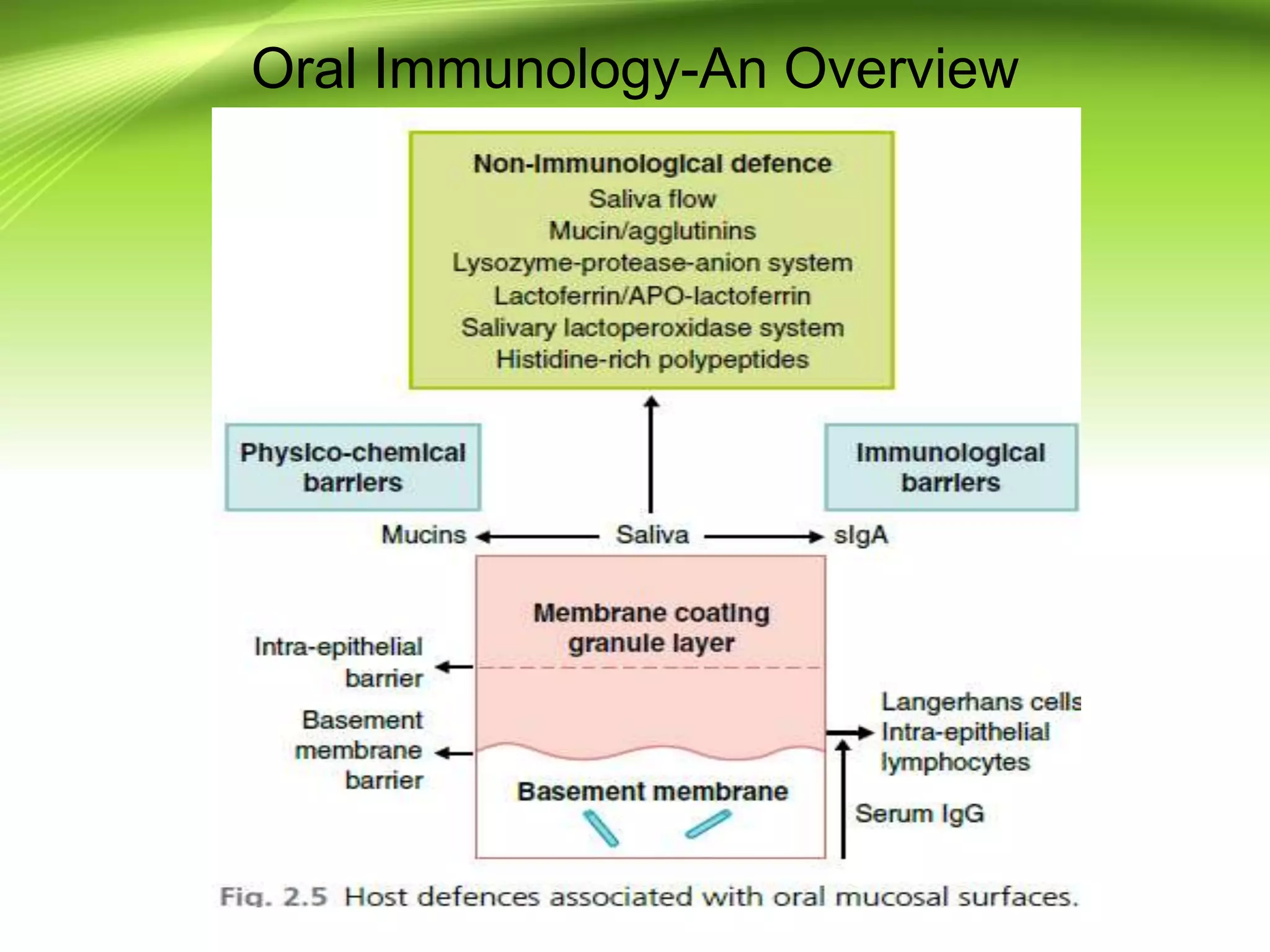
Oral Immunology-An Overview
Immunologic functions of saliva
• Salivary glands secrete mucins and other innate microbial factors that protect against
oral disease.
• Mucins are of two types, A and B, both of which form a protective lining over the
entire oral mucosa.
• The IgA secreted in saliva is also called ‘‘sIgA”.
• Anti-microbial peptides are also present in saliva.
• Examples of such antimicrobial peptides include Beta-defensins and calprotectin.
Lymphocytes present in the oral connective tissue (lamina propria) can also produce anti-
microbial peptides and cytokines after they have been chemotactically recruited.
Immunologic functions of saliva
Immunologic functions of saliva-sIgA
• sIgA stands for “secretory
immunoglobulin A”.
• It is the main immunoglobulin
found in saliva as well as other
secretions such as lacrimal,
mammary etc.
• It is not derived from blood like IgE
(in the gingival crevice).
• Produced by B-lymphocytes and
not by salivary gland cells.
• sIgA exhibits a diurnal rhythm,
with the most concentration seen
at morning time.
• Along with salivary mucins,
salivary sIgA forms a protective
barrier over the oral mucous
membranes.
• The bio-chemical structure of sIgA
is such that it binds to pathogens.
Immunologic functions of saliva
• The array of innate Anti-microbial proteins found in saliva have antibacterial,
antifungal as well as antiviral properties.
• The mechanism of action of salivary proteins is generally two-fold:
1. Promoting microbial adherence by acting as receptors.
2. Promoting microbial clearance through agglutination and swallowing.
• High Molecular Weight glycoproteins are also present in saliva such as mucin types A
and B, salivary agglutinin, surfactant protein-A, PRPs and fibronectin are adhesive
proteins mediating bacterial agglutination (promoting microbial clearance)
• Other proteins have been categorized into cationic Anti-microbial peptides, metal ion
chelators such as lactoferrin and calprotectin, protease inhibitors and enzymes.
• Both mechanisms (microbial adherence and clearance) co-exist.
Salivary proteins of immunologic
significance
CATIONIC ANTIMICROBIAL PEPTIDES
Alpha and beta defensins
Cathelicidin LL-37
Histatins 1 and 3
Adrenomedullin
Statherin
Azurocidin
Cationic antimicrobial peptides
• These are small 15-20 amino acid long peptides
• Contain amino acids like arginine, lysine and histidine
MECHANISM OF ACTION:
• About 50%of these amino acids are hydrophobic
• Hydrophobicity allows them to interact with bacterial membranes
• These peptides are collectively active against:
1. Gram positive and gram negative bacteria
2. Fungi (Histatins mainly)
3. Viruses such as HIV, Herpes and vesicular stomatitis etc.
4. Cancerous cells
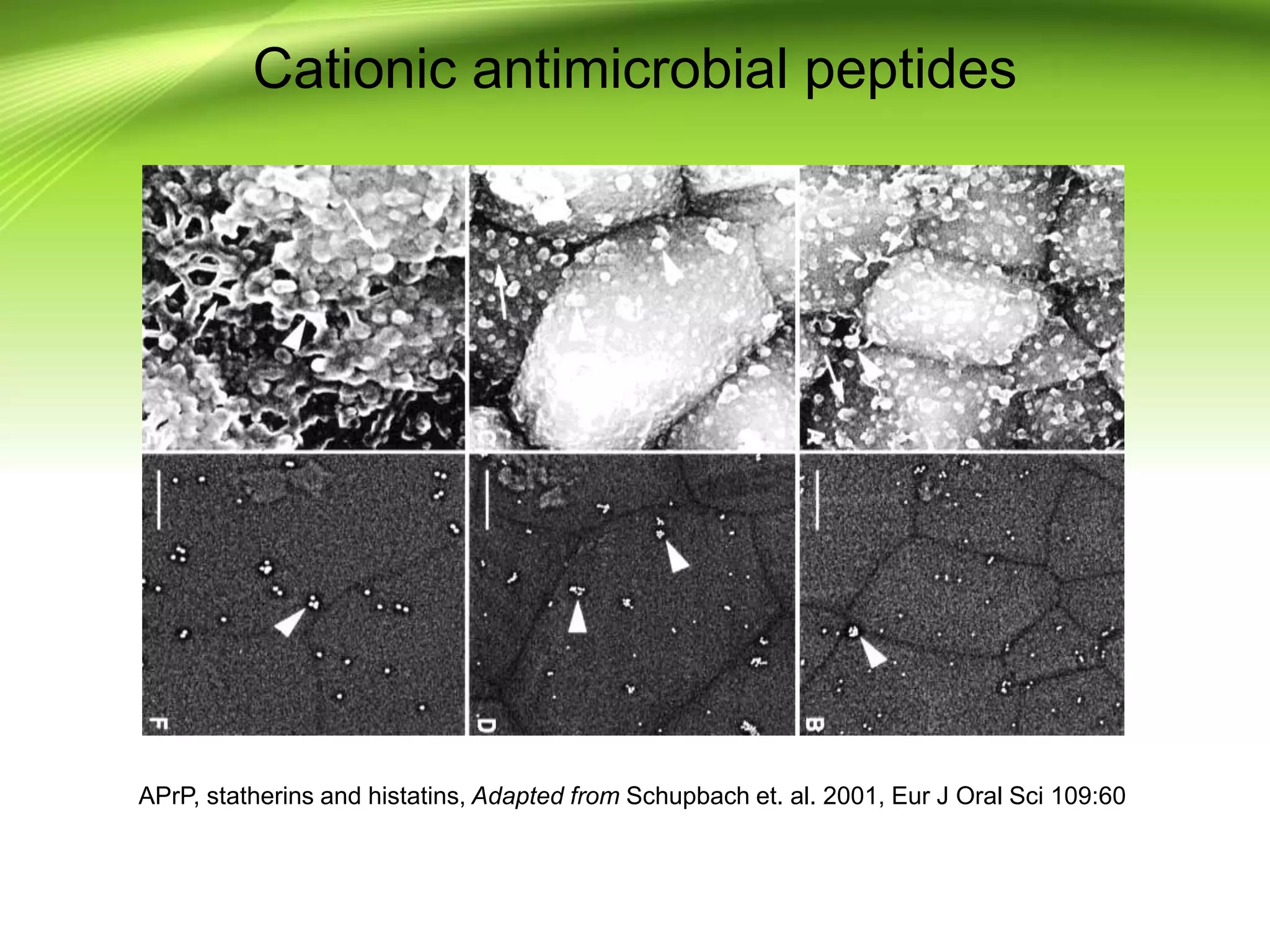
Cationic antimicrobial peptides
APrP, statherins and histatins, Adapted from Schupbach et. al. 2001, Eur J Oral Sci 109:60
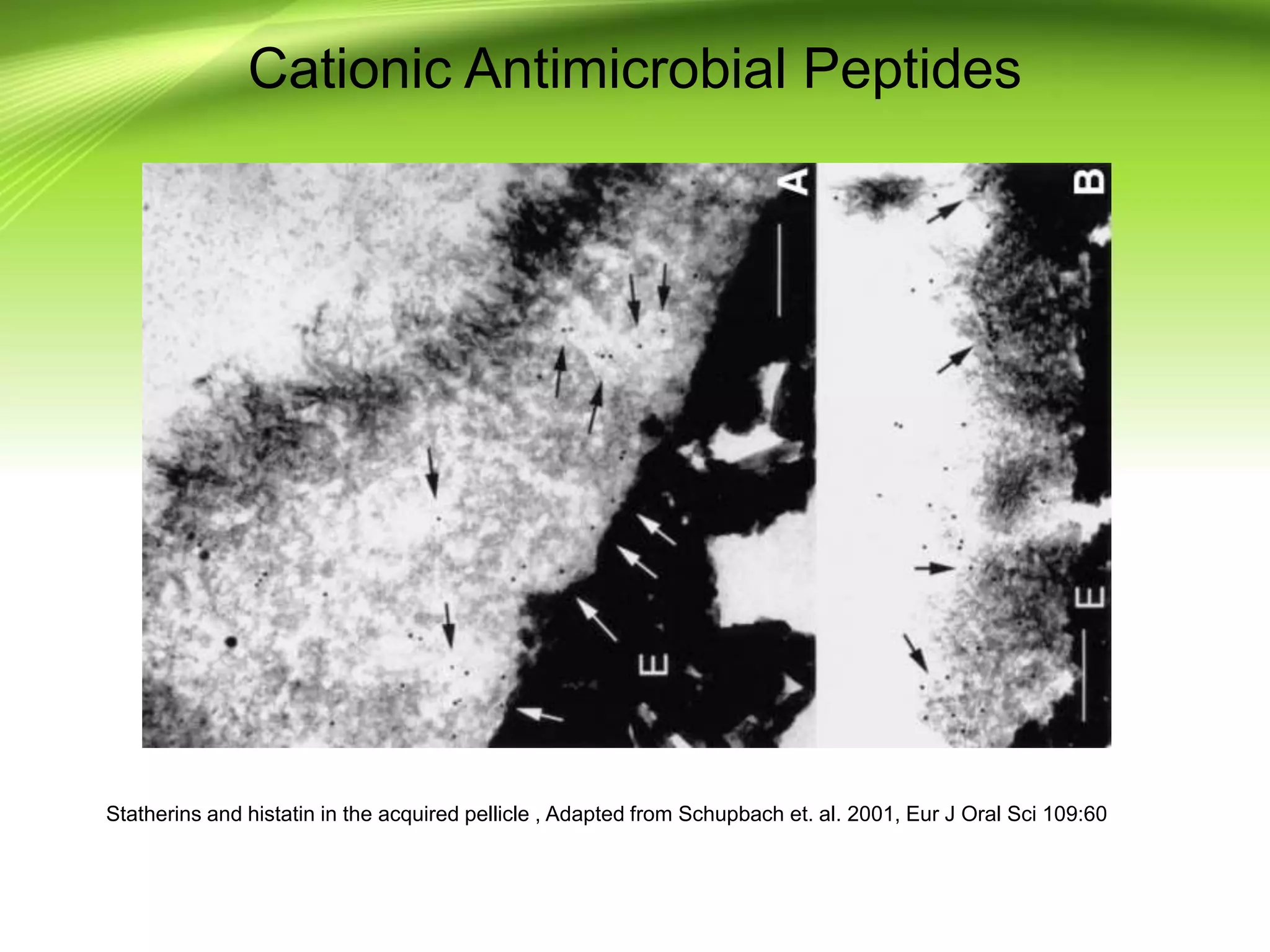
Cationic Antimicrobial Peptides
Statherins and histatin in the acquired pellicle , Adapted from Schupbach et. al. 2001, Eur J Oral Sci 109:60
ADHESIVE PROTEINS CAUSING BACTERIAL AGGLUTINATION
Salivary Agglutinin
Surfactant protein-A
Proline Rich Peptides
Surfactant protein-A
• Major protein component of lung surfactants
• But it is also expressed in human saliva
• Causes agglutination of bacteria and neutralization of influenza virus
• Sialic acid residues in the structure of this protien are responsible for its immunlogic
properties
• It has been found that levels of this protein have been elevated in patients with
chronic sialadenitis
Proline-rich Peptides
• Produced by parotid and submandibular glands
• 70% of total salivary proteins
• Larger PrPs bind to the tooth surface and promote bacterial adherence
• However smaller PrPs antagonise bacterial adherence and cause
agglutination
Metal Ion Chelators
Lactoferrin
Lactoferrin
• 80 KDa glycoprotein
• Produced by mucosal epithelial cells and neutrophils
• found in both saliva and GCF
MECHANISM OF ACTION:
• This protein binds iron (Fe3+) and can deprive micro-organisms of this
essential nutrient.
• It is bactericidal (killing bacteria by depriving them of essential nutrients)
Protease Inhibitors
Cystatins
Cystatins
• Mainly contributed by submandibular and sublingual salivary glands
MECHANISM OF ACTION:
• They inhibit bacterial enzymes.
• The inhibition of bacterial enzymes leads to nutrient deficiency causing inhibition of
bacterial growth
Anti-fungal proteins
Histatins
Histatins
• They are antifungal proteins
• Are attached to the tooth surface as well as oral mucosa
• Prevent the growth of a common oral opportunistic fungus Candida Albicans thereby
preventing oral candidiasis.
Opportunistic pathogens such as Candida Albicans cause infection in the oral cavity in
patients who are immuno-compromised (low or suppressed immunity). Such patients can
be diabetic, suffering from HIV-AIDS or undergoing chemotherapy for cancer.
Salivary Enzymes
LYSOZYME:
• Found in milk, saliva, nasal and bronchial secretions
• Secreted in both saliva and GCF
• It hydrolyses peptidoglycans in the cell wall of gram positive bacteria
• Leads to osmotic breakage of bacterial cell membrane
• Also causes activation of autolysins in the bacterial cell wall
• Agglutination
• It acts synergistically with lactoferrin, peroxidases and sIgA
Salivary Peroxidase System
• Peroxidases are found in all mucosal secretions
• In saliva, they include salivary peroxidases
• In GCF, they include myeloperoxidases expressed in neutrophils
MECHANISM OF ACTION:
• They produce hydrogen peroxide which oxidises thiocyanate ions in saliva
to hypothiocyanite which is bactericidal
• Thiocyanate ion is a normal component of both saliva and GCF but needs
to be activated
• Hypothiocyanite also inhibits acid production by cariogenic bacteria, mainly
by oxidising bacterial enzymes.
Development of novel products/toothpastes
Most commonly found is the regular fluoride toothpaste (1000 ppm F). Various
newer products have been developed as a result of comprehensive
understanding of salivary biochemistry such as:
1. Synthetic statherins (commercial forms such as STN-21).
2. Toothpastes with added lysozyme, lactoferrin and peroxidases have been
developed e.g. Biotene toothpaste
3. Supplements containing specific protein complexes e.g. GC Tooth Mousse
which contains bovine derived phosphoprotein and mineral calcium.

Functions of Saliva.pptx

  • 1.
    Oral Physiology-Functions ofSaliva Dr Muhammad Danial Khalid BDS, MSc (UK), MFGDP (UK) Assistant Professor Department of Oral Biology
  • 2.
    Introduction to Functionsof Saliva • Every day, an estimated 0.5 to 1.5 liters of saliva is produced and secreted in the oral cavity by the paired major (parotid, sublingual, and submandibular) and the numerous minor salivary glands throughout the mouth. • Salivary secretions include inorganic components like (electrolytes, such as chloride, potassium, sodium, and bicarbonate). • Saliva forms a protective layer on the surfaces of teeth. • Salivary enzymes aid in digestion such as salivary amylase and lipase. • Saliva also contains other organic components such as mucous glycoproteins, acidic proline-rich, tyrosine-rich proteins, and numerous other proteins which have two functions: 1. Anti-cariogenic function (salivary protein: Statherin) 2. Immunologic functions (various salivary proteins like Histatin, cystatin, lactoferrin etc)
  • 3.
    Anti-cariogenic function ofsaliva • The anti-cariogenic function means “prevention of caries development”. • The main salivary protein exerting this function is called Statherin. • Statherin binds to hydroxyapatite (HAP) or fluoro-hydroxyapatite (FAP) on the surface enamel (tooth surface). • Along with Statherin, other salivary proteins also bind onto the tooth surface. • This results in the formation of a “BIOFILM”. This salivary bio-film on the tooth surface is also called “acquired pellicle”.
  • 4.
    Anti-cariogenic function ofsaliva- Statherin
  • 5.
    Anti-cariogenic function ofsaliva- formation of acquired pellicle
  • 6.
    Introduction to OralImmunology • The physical and functional integrity of the oral mucosa is important both for oral and systemic health. • Both soft-shedding mucosal surfaces (desquamation) and the hard non-shedding tooth surfaces are protected by innate and adaptive immune mechanisms. • The immune mechanisms and molecules of the oral cavity derive either from the secretory or systemic immune system • The secretory immune system mainly comprises the secretions of the major and minor salivary glands • The systemic immune system mainly acts through the gingival crevicular fluid. • GCF is a serum exudate that originates in the gingival capillaries and flows into the gingival crevice carrying locally produced mediators of innate and adaptive immunity. The immune mechanisms operating in the specific areas of oral cavity are peculiar in nature and may co-exist.
  • 7.
  • 8.
    Immunologic functions ofsaliva • Salivary glands secrete mucins and other innate microbial factors that protect against oral disease. • Mucins are of two types, A and B, both of which form a protective lining over the entire oral mucosa. • The IgA secreted in saliva is also called ‘‘sIgA”. • Anti-microbial peptides are also present in saliva. • Examples of such antimicrobial peptides include Beta-defensins and calprotectin. Lymphocytes present in the oral connective tissue (lamina propria) can also produce anti- microbial peptides and cytokines after they have been chemotactically recruited.
  • 9.
  • 10.
    Immunologic functions ofsaliva-sIgA • sIgA stands for “secretory immunoglobulin A”. • It is the main immunoglobulin found in saliva as well as other secretions such as lacrimal, mammary etc. • It is not derived from blood like IgE (in the gingival crevice). • Produced by B-lymphocytes and not by salivary gland cells. • sIgA exhibits a diurnal rhythm, with the most concentration seen at morning time. • Along with salivary mucins, salivary sIgA forms a protective barrier over the oral mucous membranes. • The bio-chemical structure of sIgA is such that it binds to pathogens.
  • 11.
    Immunologic functions ofsaliva • The array of innate Anti-microbial proteins found in saliva have antibacterial, antifungal as well as antiviral properties. • The mechanism of action of salivary proteins is generally two-fold: 1. Promoting microbial adherence by acting as receptors. 2. Promoting microbial clearance through agglutination and swallowing. • High Molecular Weight glycoproteins are also present in saliva such as mucin types A and B, salivary agglutinin, surfactant protein-A, PRPs and fibronectin are adhesive proteins mediating bacterial agglutination (promoting microbial clearance) • Other proteins have been categorized into cationic Anti-microbial peptides, metal ion chelators such as lactoferrin and calprotectin, protease inhibitors and enzymes. • Both mechanisms (microbial adherence and clearance) co-exist.
  • 12.
    Salivary proteins ofimmunologic significance CATIONIC ANTIMICROBIAL PEPTIDES Alpha and beta defensins Cathelicidin LL-37 Histatins 1 and 3 Adrenomedullin Statherin Azurocidin
  • 13.
    Cationic antimicrobial peptides •These are small 15-20 amino acid long peptides • Contain amino acids like arginine, lysine and histidine MECHANISM OF ACTION: • About 50%of these amino acids are hydrophobic • Hydrophobicity allows them to interact with bacterial membranes • These peptides are collectively active against: 1. Gram positive and gram negative bacteria 2. Fungi (Histatins mainly) 3. Viruses such as HIV, Herpes and vesicular stomatitis etc. 4. Cancerous cells
  • 14.
    Cationic antimicrobial peptides APrP,statherins and histatins, Adapted from Schupbach et. al. 2001, Eur J Oral Sci 109:60
  • 15.
    Cationic Antimicrobial Peptides Statherinsand histatin in the acquired pellicle , Adapted from Schupbach et. al. 2001, Eur J Oral Sci 109:60
  • 16.
    ADHESIVE PROTEINS CAUSINGBACTERIAL AGGLUTINATION Salivary Agglutinin Surfactant protein-A Proline Rich Peptides
  • 17.
    Surfactant protein-A • Majorprotein component of lung surfactants • But it is also expressed in human saliva • Causes agglutination of bacteria and neutralization of influenza virus • Sialic acid residues in the structure of this protien are responsible for its immunlogic properties • It has been found that levels of this protein have been elevated in patients with chronic sialadenitis
  • 18.
    Proline-rich Peptides • Producedby parotid and submandibular glands • 70% of total salivary proteins • Larger PrPs bind to the tooth surface and promote bacterial adherence • However smaller PrPs antagonise bacterial adherence and cause agglutination
  • 19.
  • 20.
    Lactoferrin • 80 KDaglycoprotein • Produced by mucosal epithelial cells and neutrophils • found in both saliva and GCF MECHANISM OF ACTION: • This protein binds iron (Fe3+) and can deprive micro-organisms of this essential nutrient. • It is bactericidal (killing bacteria by depriving them of essential nutrients)
  • 21.
  • 22.
    Cystatins • Mainly contributedby submandibular and sublingual salivary glands MECHANISM OF ACTION: • They inhibit bacterial enzymes. • The inhibition of bacterial enzymes leads to nutrient deficiency causing inhibition of bacterial growth
  • 23.
  • 24.
    Histatins • They areantifungal proteins • Are attached to the tooth surface as well as oral mucosa • Prevent the growth of a common oral opportunistic fungus Candida Albicans thereby preventing oral candidiasis. Opportunistic pathogens such as Candida Albicans cause infection in the oral cavity in patients who are immuno-compromised (low or suppressed immunity). Such patients can be diabetic, suffering from HIV-AIDS or undergoing chemotherapy for cancer.
  • 25.
    Salivary Enzymes LYSOZYME: • Foundin milk, saliva, nasal and bronchial secretions • Secreted in both saliva and GCF • It hydrolyses peptidoglycans in the cell wall of gram positive bacteria • Leads to osmotic breakage of bacterial cell membrane • Also causes activation of autolysins in the bacterial cell wall • Agglutination • It acts synergistically with lactoferrin, peroxidases and sIgA
  • 26.
    Salivary Peroxidase System •Peroxidases are found in all mucosal secretions • In saliva, they include salivary peroxidases • In GCF, they include myeloperoxidases expressed in neutrophils MECHANISM OF ACTION: • They produce hydrogen peroxide which oxidises thiocyanate ions in saliva to hypothiocyanite which is bactericidal • Thiocyanate ion is a normal component of both saliva and GCF but needs to be activated • Hypothiocyanite also inhibits acid production by cariogenic bacteria, mainly by oxidising bacterial enzymes.
  • 27.
    Development of novelproducts/toothpastes Most commonly found is the regular fluoride toothpaste (1000 ppm F). Various newer products have been developed as a result of comprehensive understanding of salivary biochemistry such as: 1. Synthetic statherins (commercial forms such as STN-21). 2. Toothpastes with added lysozyme, lactoferrin and peroxidases have been developed e.g. Biotene toothpaste 3. Supplements containing specific protein complexes e.g. GC Tooth Mousse which contains bovine derived phosphoprotein and mineral calcium.