3.04 Functions and
disorders of the ear
3.04 Understand the functions and
disorders of the sensory system
1
3.04 Understand the functions and
disorders of the sensory system
3.04 Understand the functions and
disorders of the sensory system
2
Essential Questions
•What are the functions of the sensory system?
•What are some disorders of the sensory system?
•How are sensory system disorders treated?
•How do you relate the body’s communication to
the sensory system?
Understanding the
functions of the ear:
Hearing
3.04 Understand the functions and
disorders of the sensory system
3
Understanding the
functions of the ear
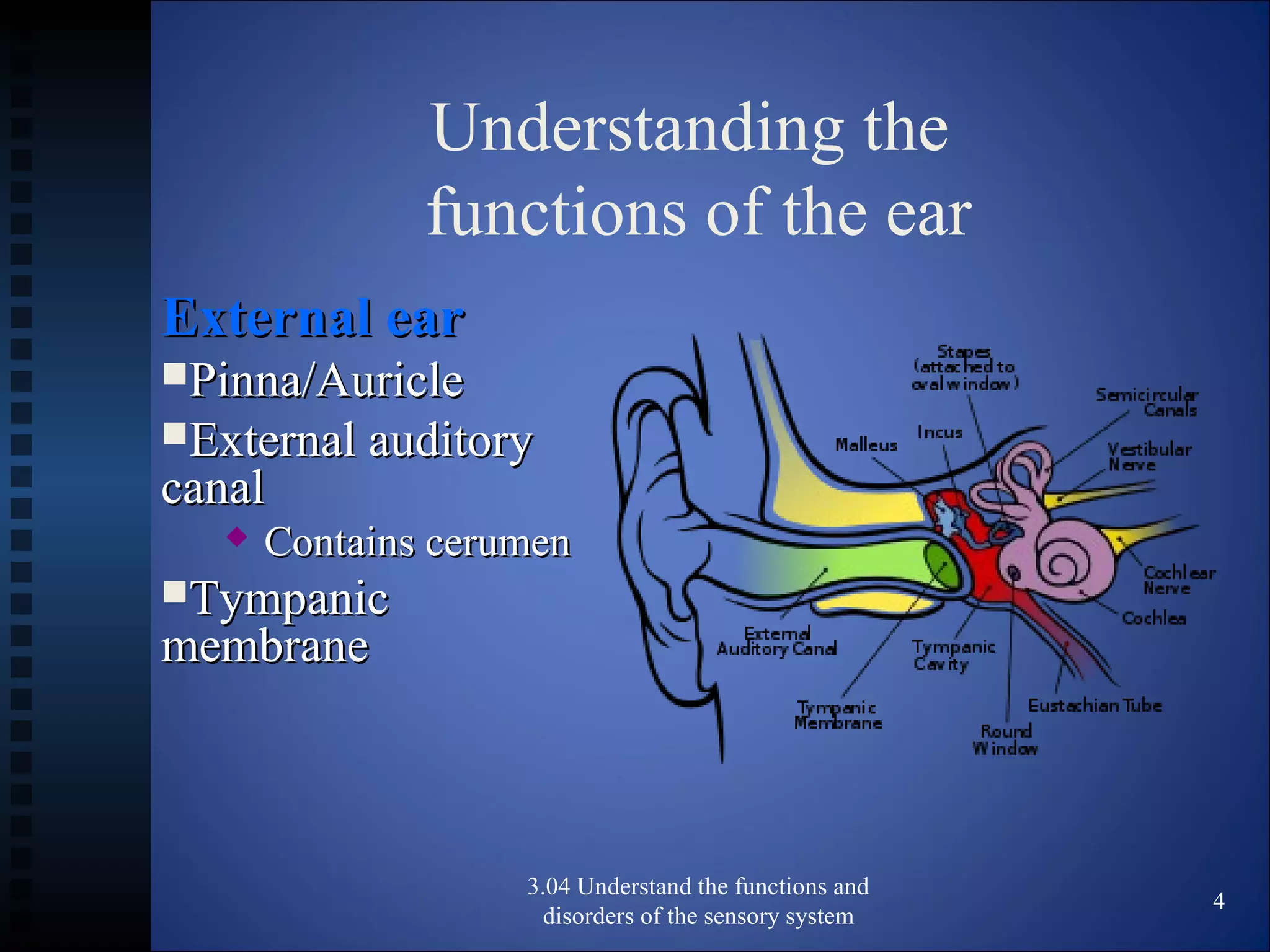
External earExternal ear
Pinna/AuriclePinna/Auricle
External auditoryExternal auditory
canalcanal
 Contains cerumenContains cerumen
TympanicTympanic
membranemembrane
3.04 Understand the functions and
disorders of the sensory system
4
Understanding the
functions of the ear
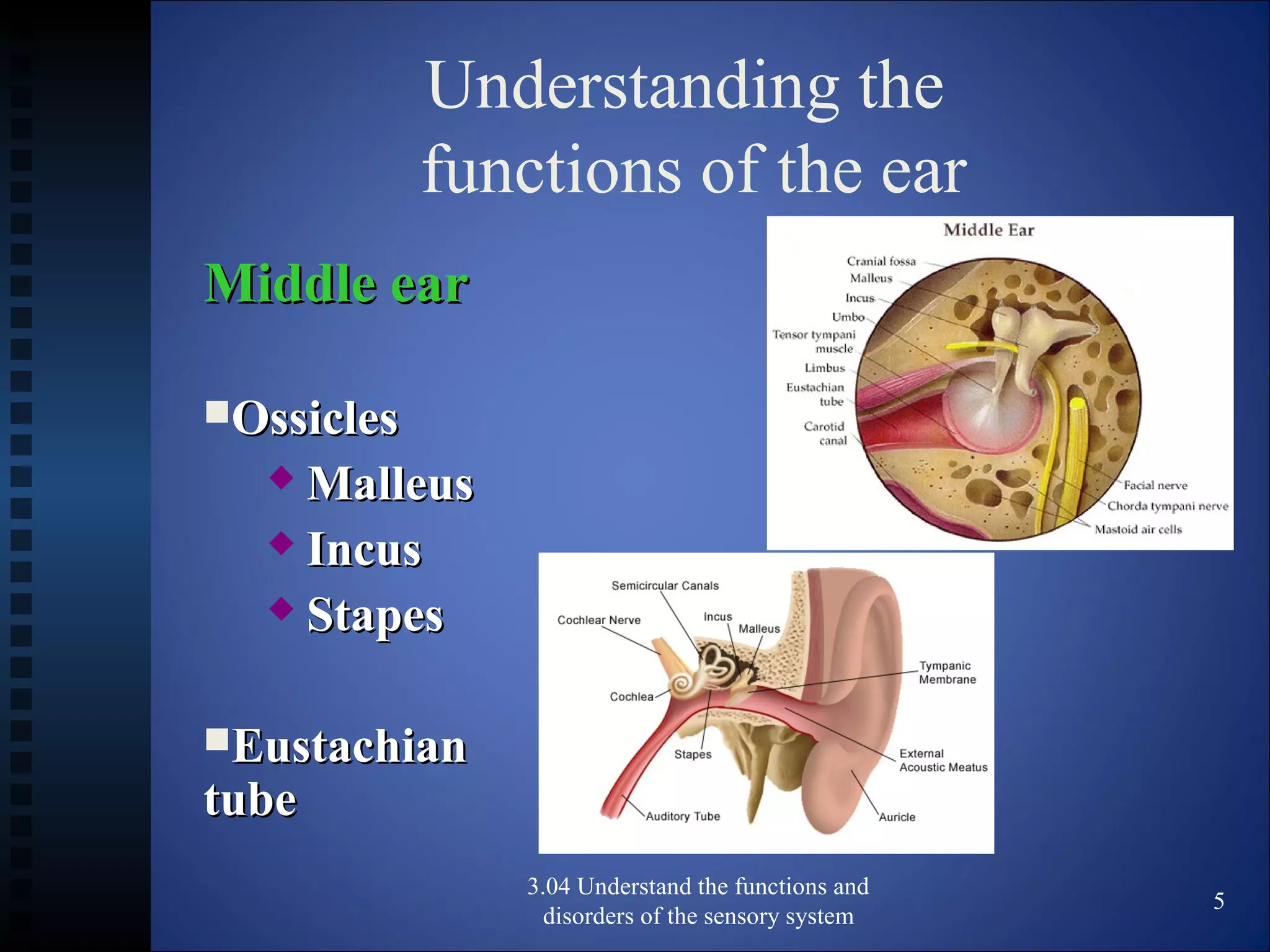
Middle earMiddle ear
OssiclesOssicles
 MalleusMalleus
 IncusIncus
 StapesStapes
EustachianEustachian
tubetube
3.04 Understand the functions and
disorders of the sensory system
5
Understanding the
functions of the ear
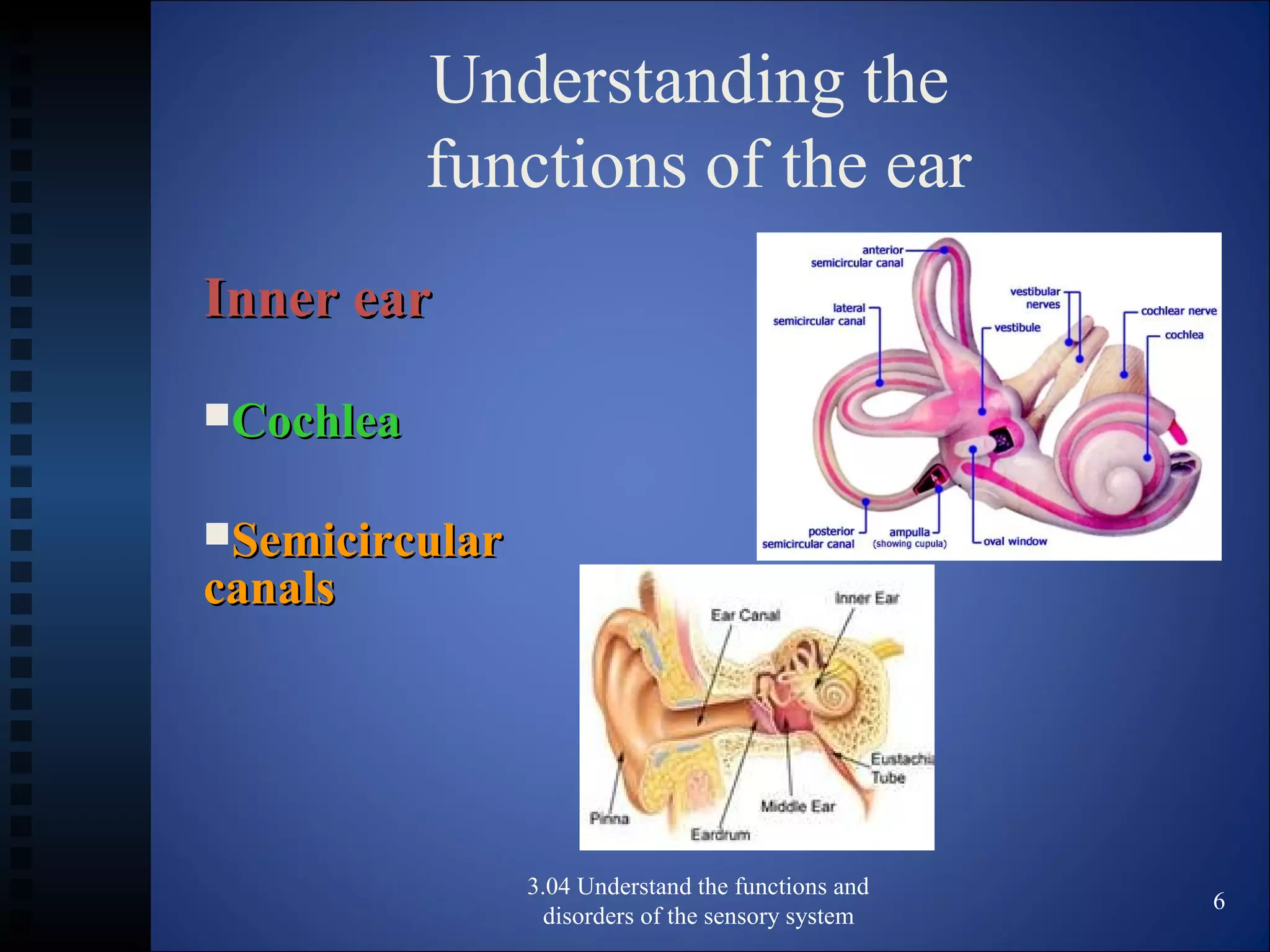
Inner earInner ear
CochleaCochlea
SemicircularSemicircular
canalscanals
3.04 Understand the functions and
disorders of the sensory system
6
Understanding the
functions of the ear
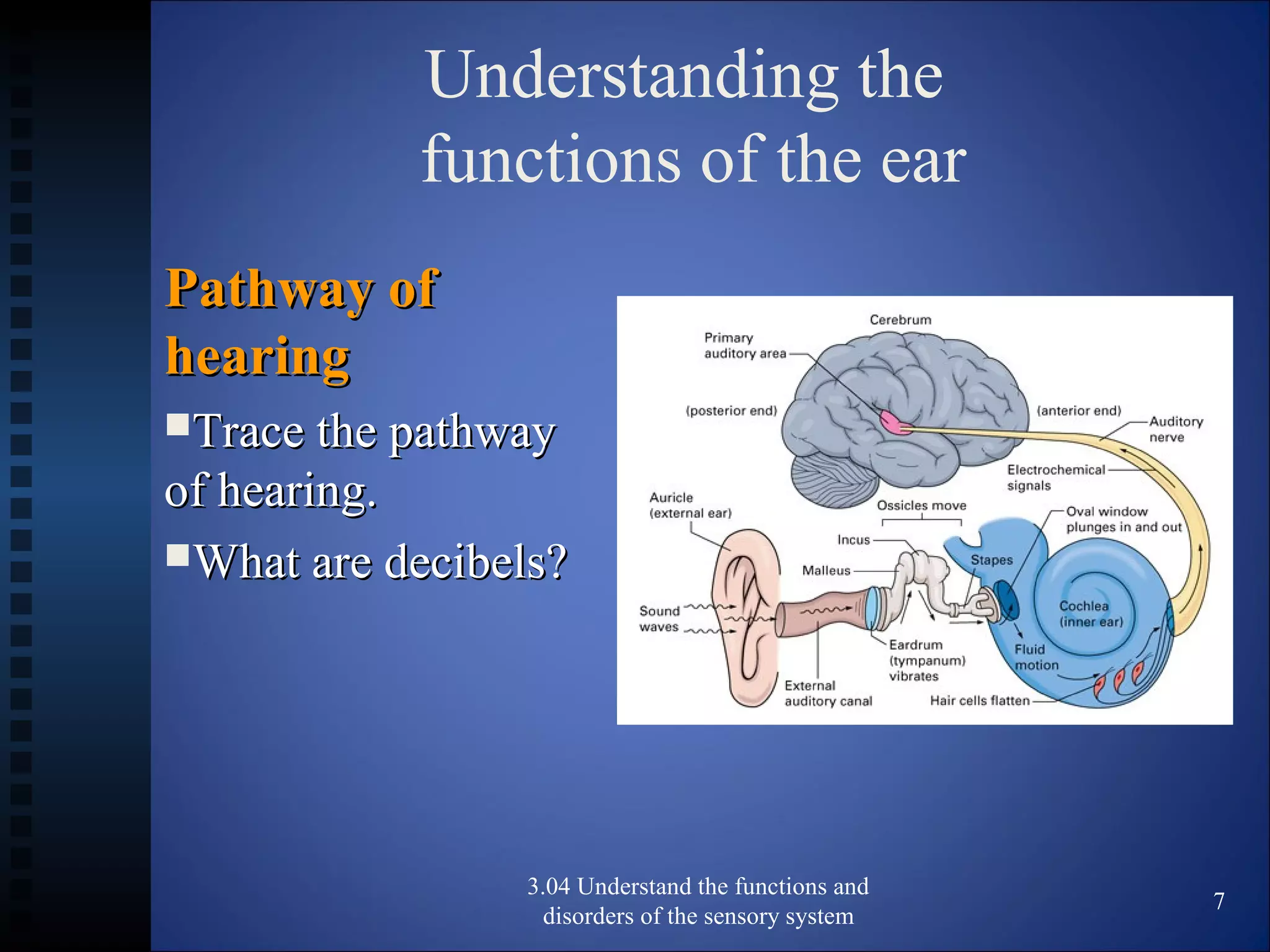
Pathway ofPathway of
hearinghearing
Trace the pathwayTrace the pathway
of hearing.of hearing.
What are decibels?What are decibels?
3.04 Understand the functions and
disorders of the sensory system
7
Understanding
the
functions of
the ear
3.04 Understand the functions and
disorders of the sensory system
8
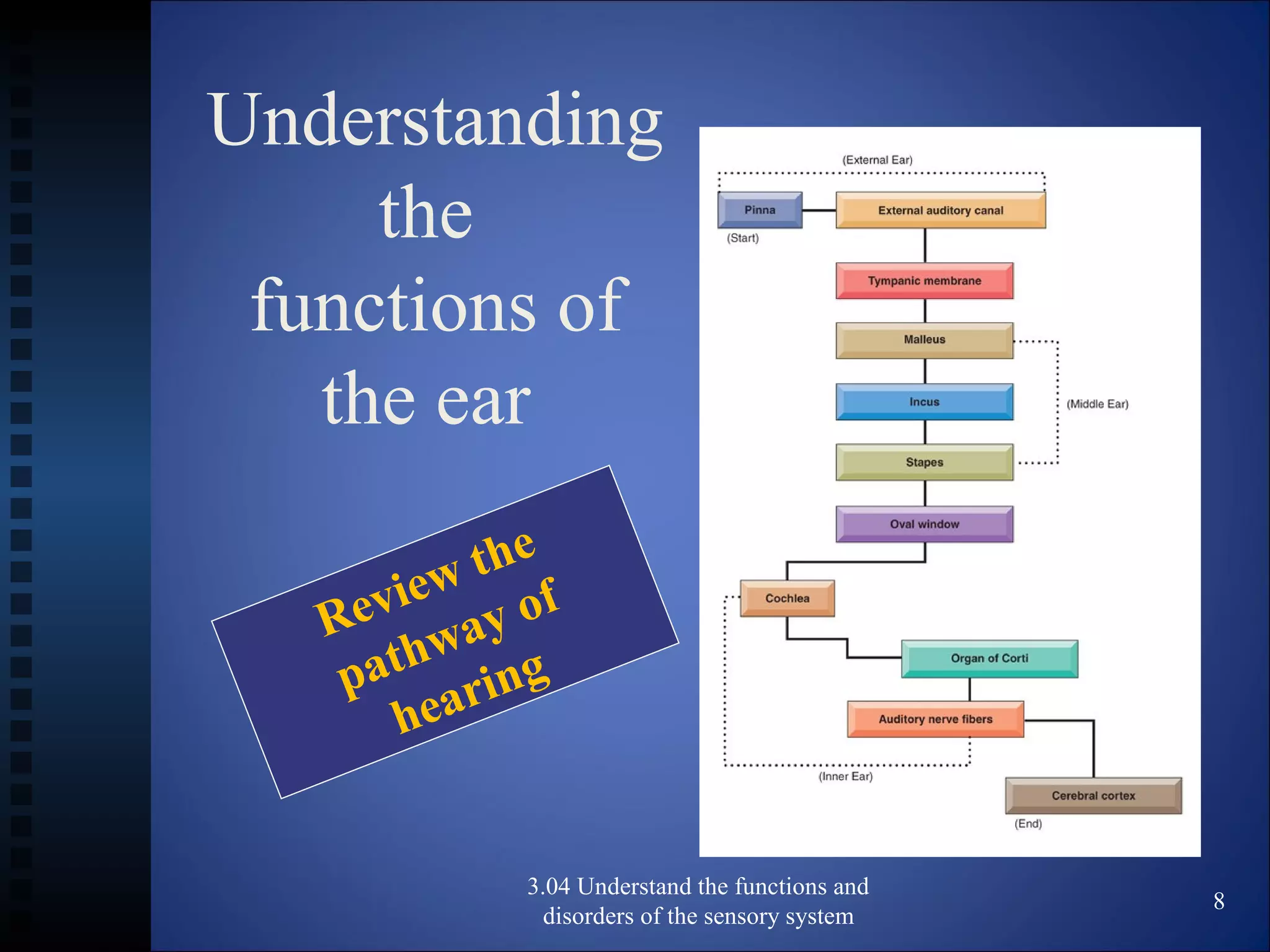
Review the
pathway of
hearing
Healthy Hearing
3.04 Understand the functions and
disorders of the sensory system
9
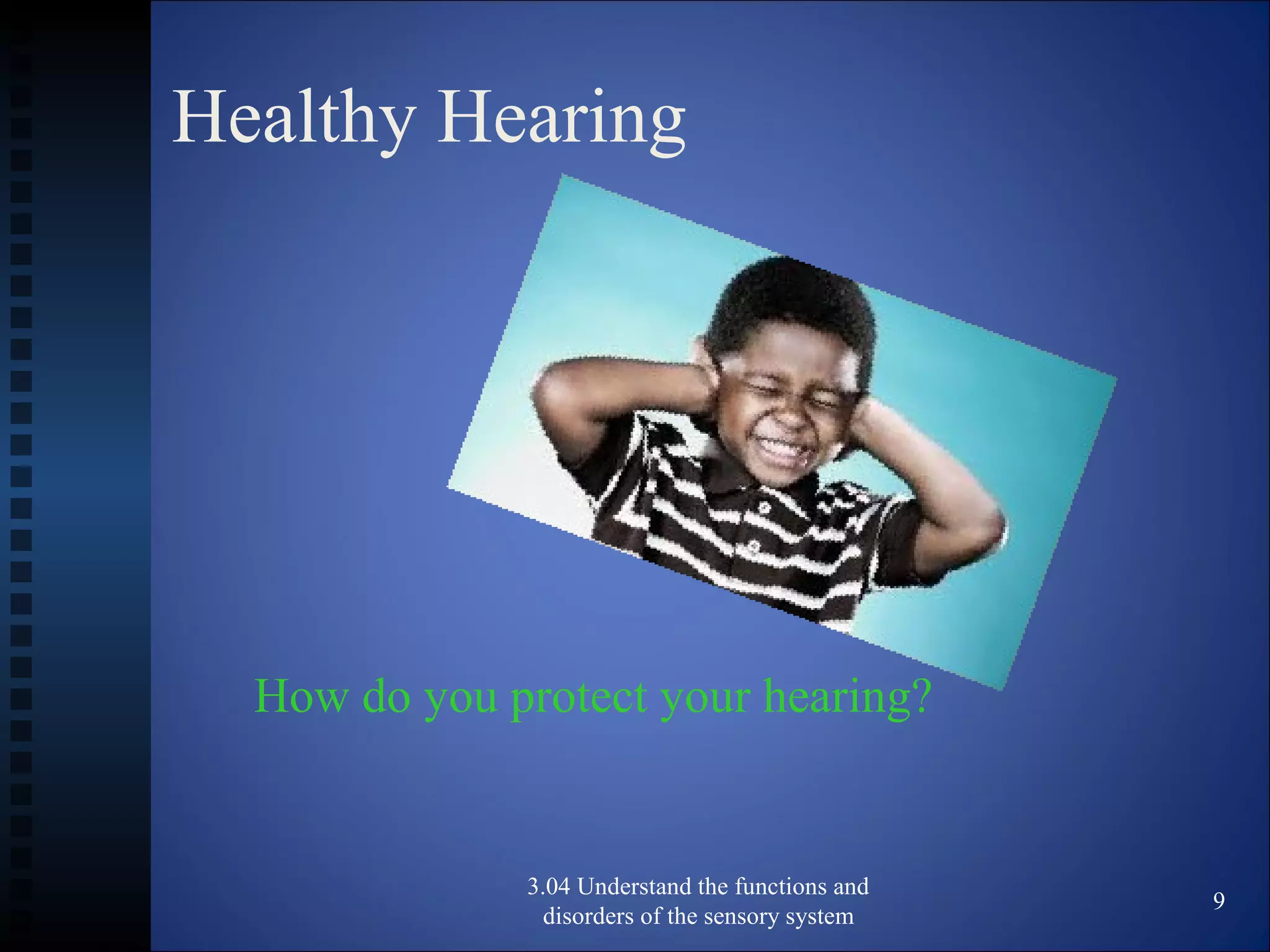
How do you protect your hearing?
Understanding the
functions of the ear
Sound ActivitySound Activity
3.04 Understand the functions and
disorders of the sensory system
10
Disorders of the ear
3.04 Understand the functions and
disorders of the sensory system
11
Disorders of the ear
3.04 Understand the functions and
disorders of the sensory system
12
Disorders of the ear
External otitis
3.04 Understand the functions and
disorders of the sensory system
13
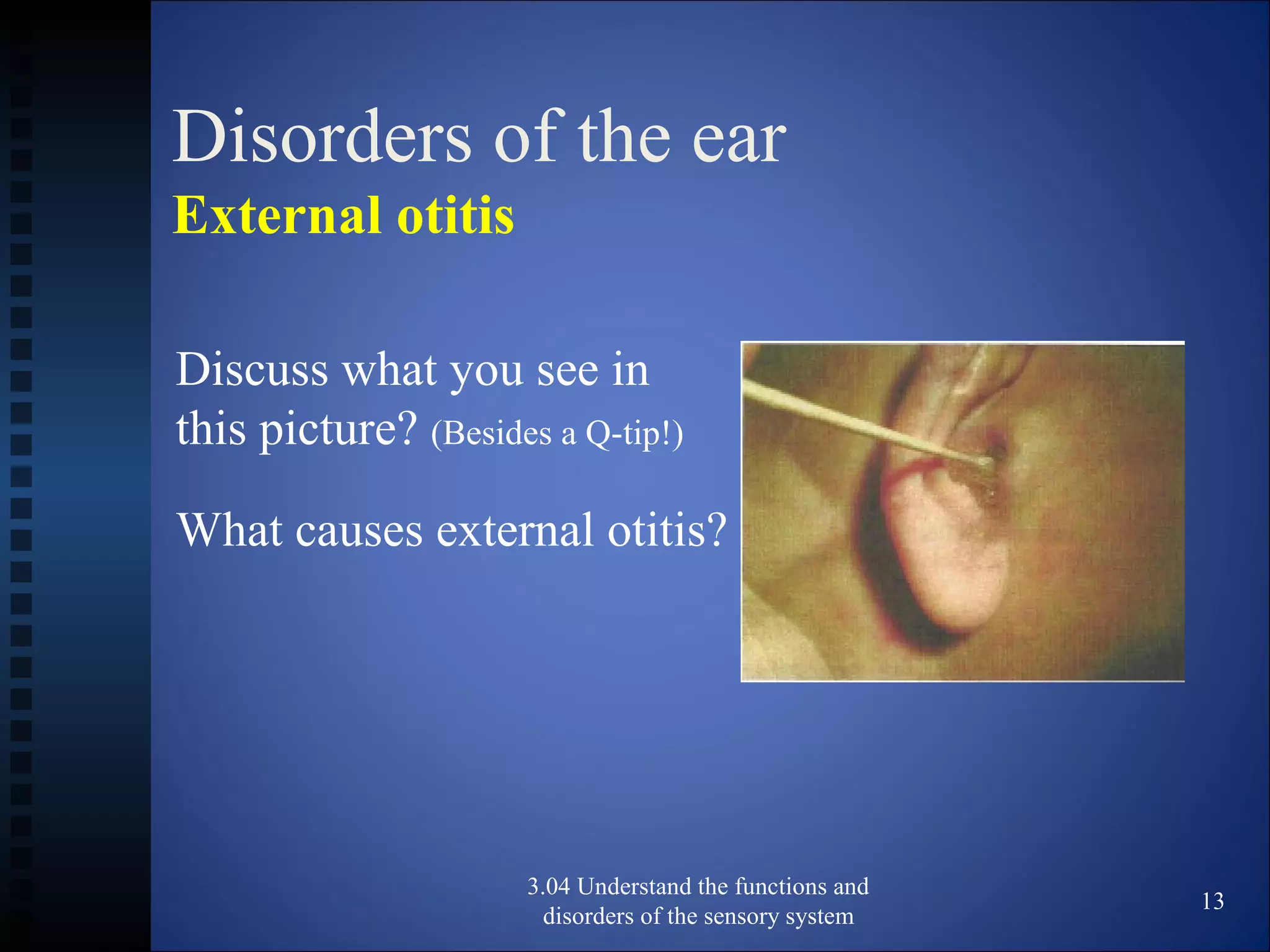
Discuss what you see in
this picture? (Besides a Q-tip!)
What causes external otitis?
Disorders of the ear
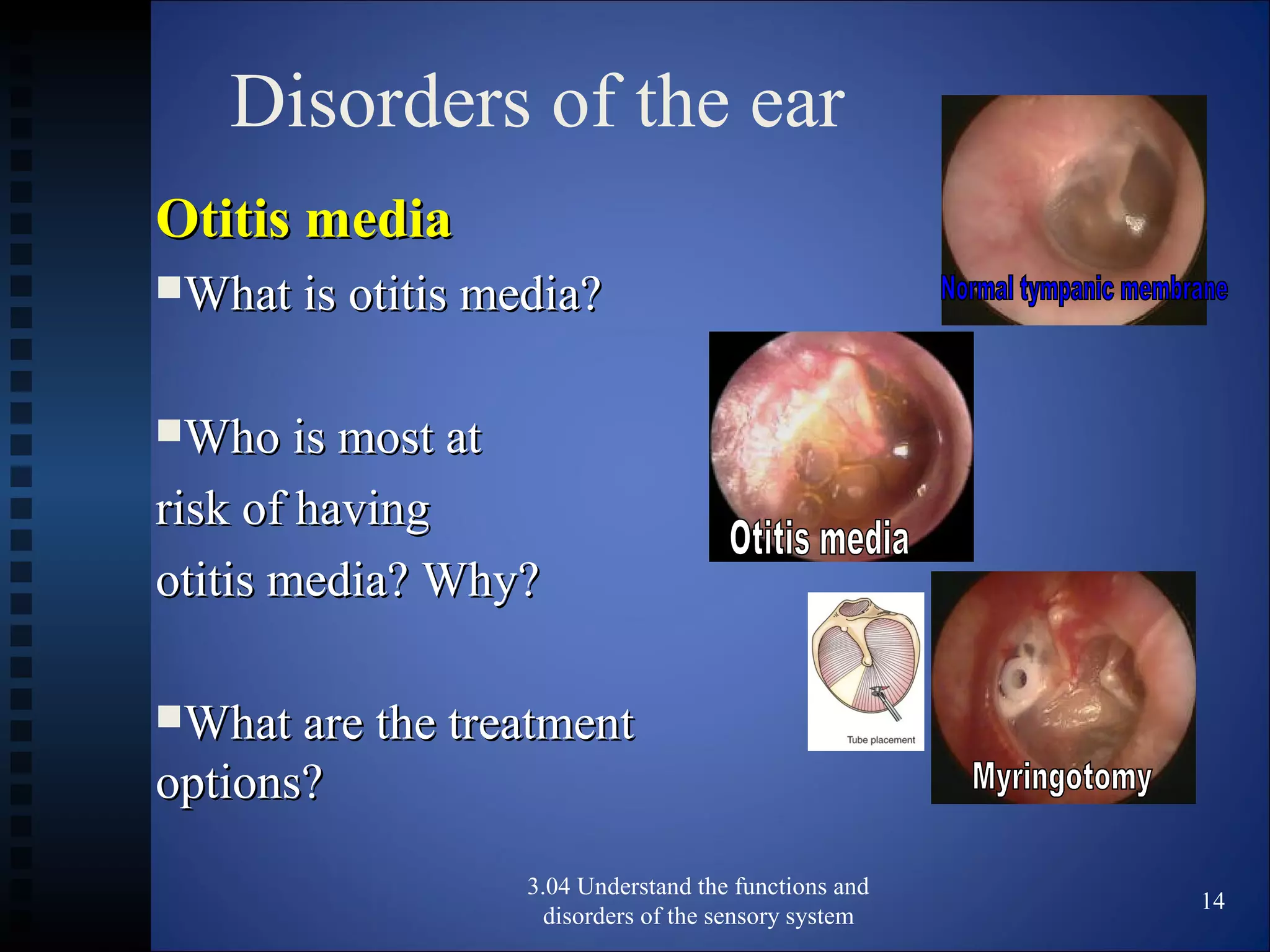
Otitis mediaOtitis media
What is otitis media?What is otitis media?
Who is most atWho is most at
risk of havingrisk of having
otitis media? Why?otitis media? Why?
What are the treatmentWhat are the treatment
options?options?
3.04 Understand the functions and
disorders of the sensory system
14
Disorders of the ear
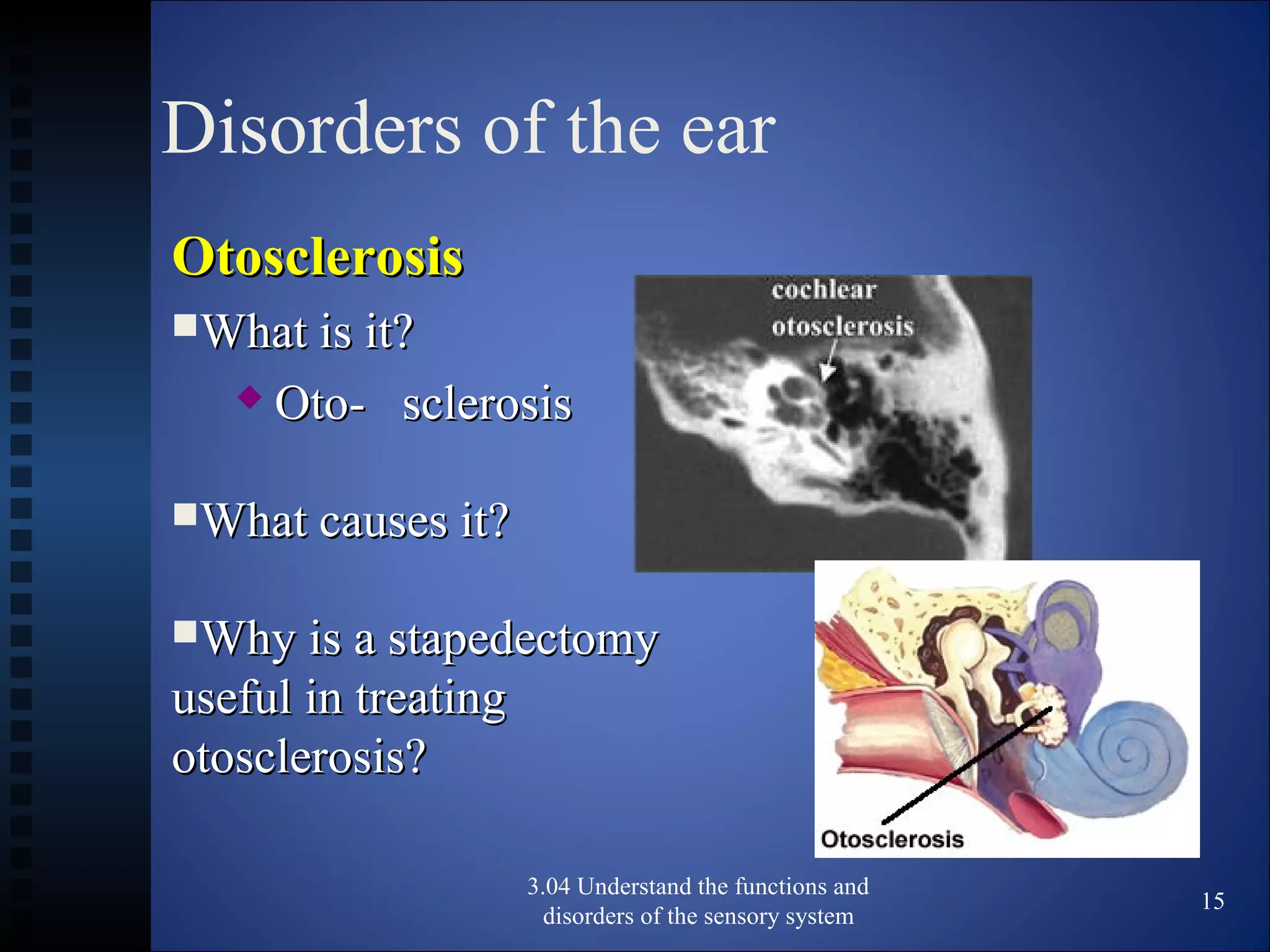
OtosclerosisOtosclerosis
What is it?What is it?
 Oto- sclerosisOto- sclerosis
What causes it?What causes it?
Why is a stapedectomyWhy is a stapedectomy
useful in treatinguseful in treating
otosclerosis?otosclerosis?
3.04 Understand the functions and
disorders of the sensory system
15
Disorders of the ear
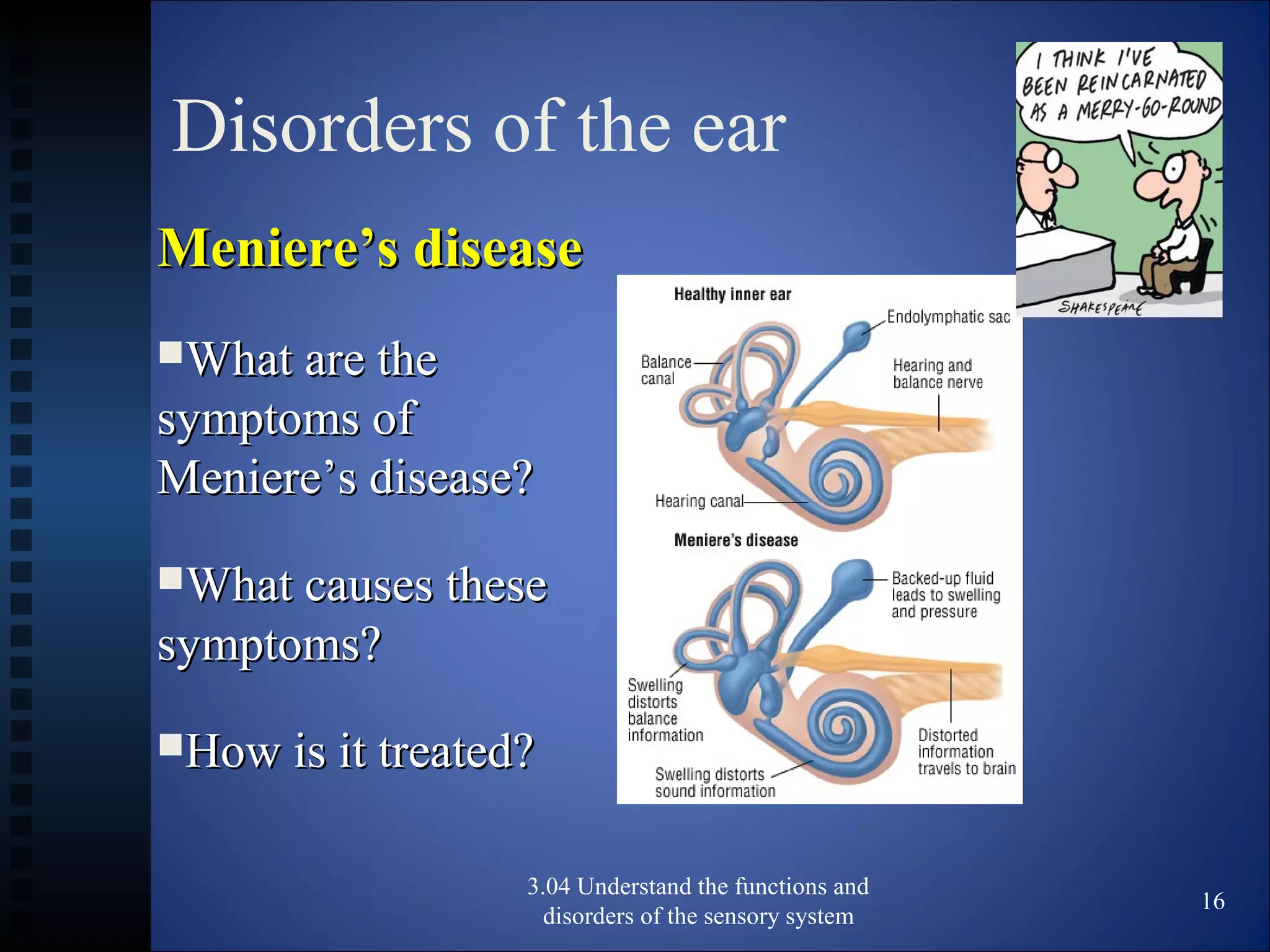
Meniere’s diseaseMeniere’s disease
What are theWhat are the
symptoms ofsymptoms of
Meniere’s disease?Meniere’s disease?
What causes theseWhat causes these
symptoms?symptoms?
How is it treated?How is it treated?
3.04 Understand the functions and
disorders of the sensory system
16
Disorders of the ear
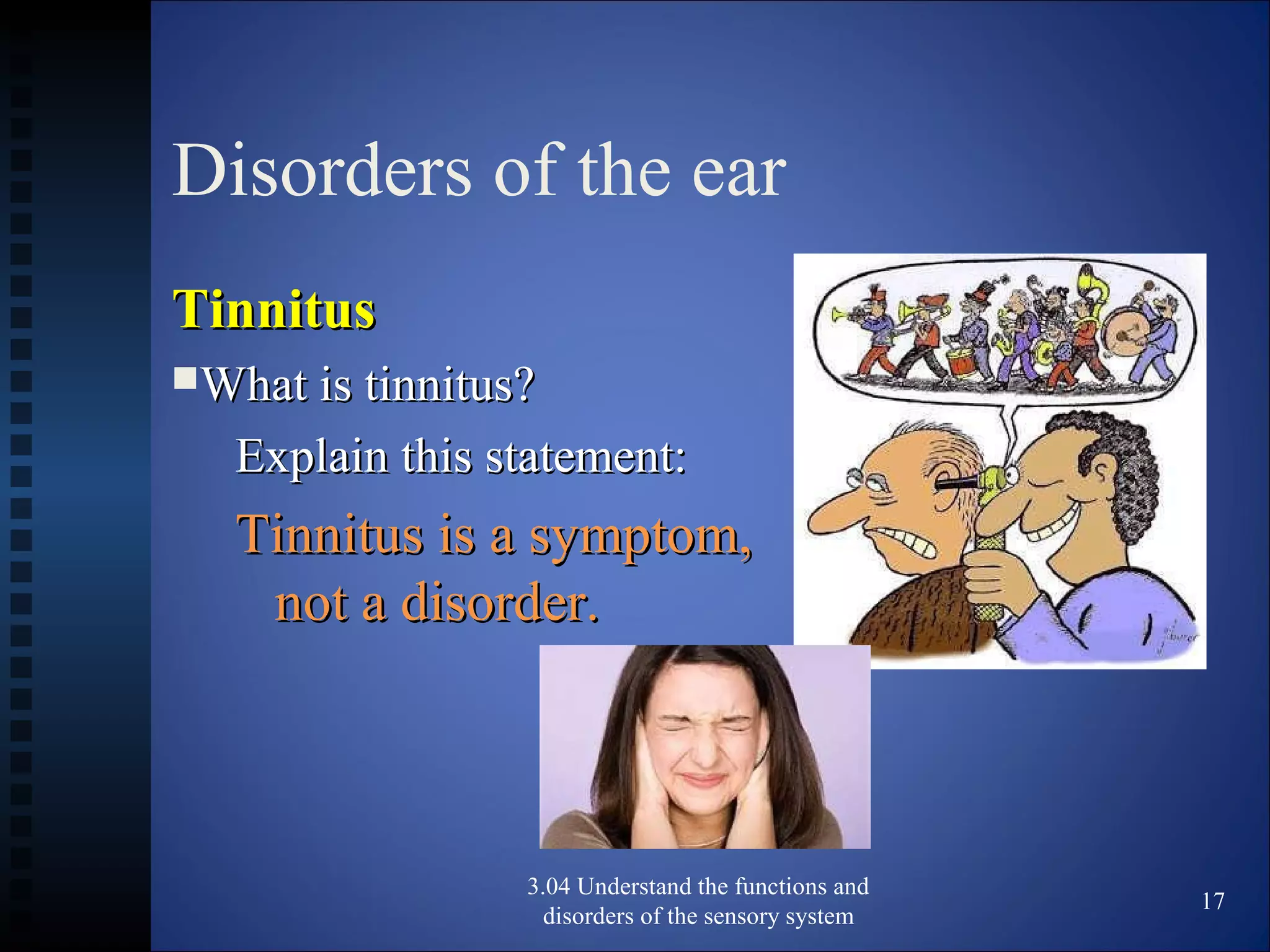
TinnitusTinnitus
What is tinnitus?What is tinnitus?
Explain this statement:Explain this statement:
Tinnitus is a symptom,Tinnitus is a symptom,
not a disorder.not a disorder.
3.04 Understand the functions and
disorders of the sensory system
17
Disorders of the ear
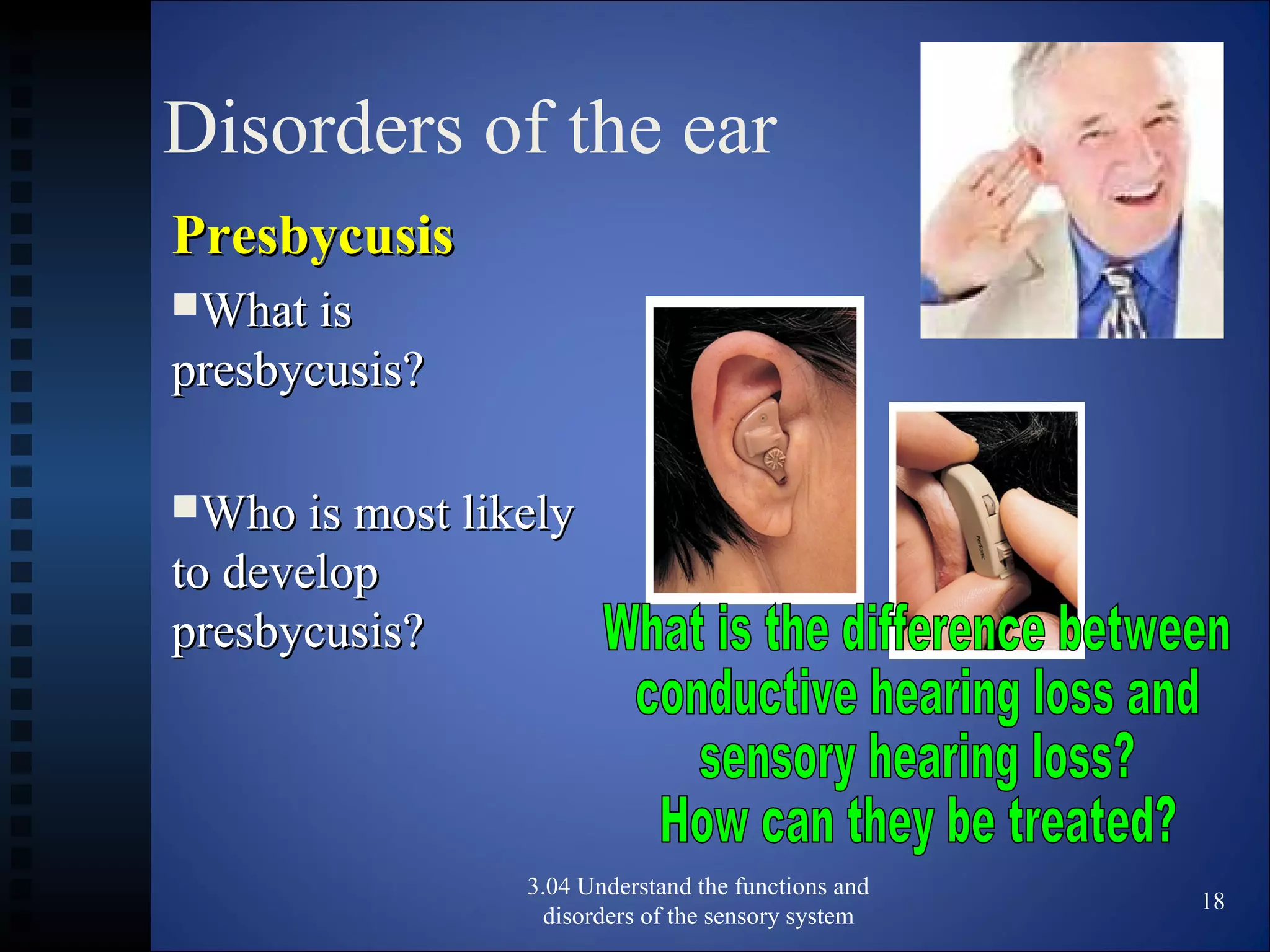
PresbycusisPresbycusis
What isWhat is
presbycusis?presbycusis?
Who is most likelyWho is most likely
to developto develop
presbycusis?presbycusis?
3.04 Understand the functions and
disorders of the sensory system
18
Testing for hearing loss
3.04 Understand the functions and
disorders of the sensory system
19
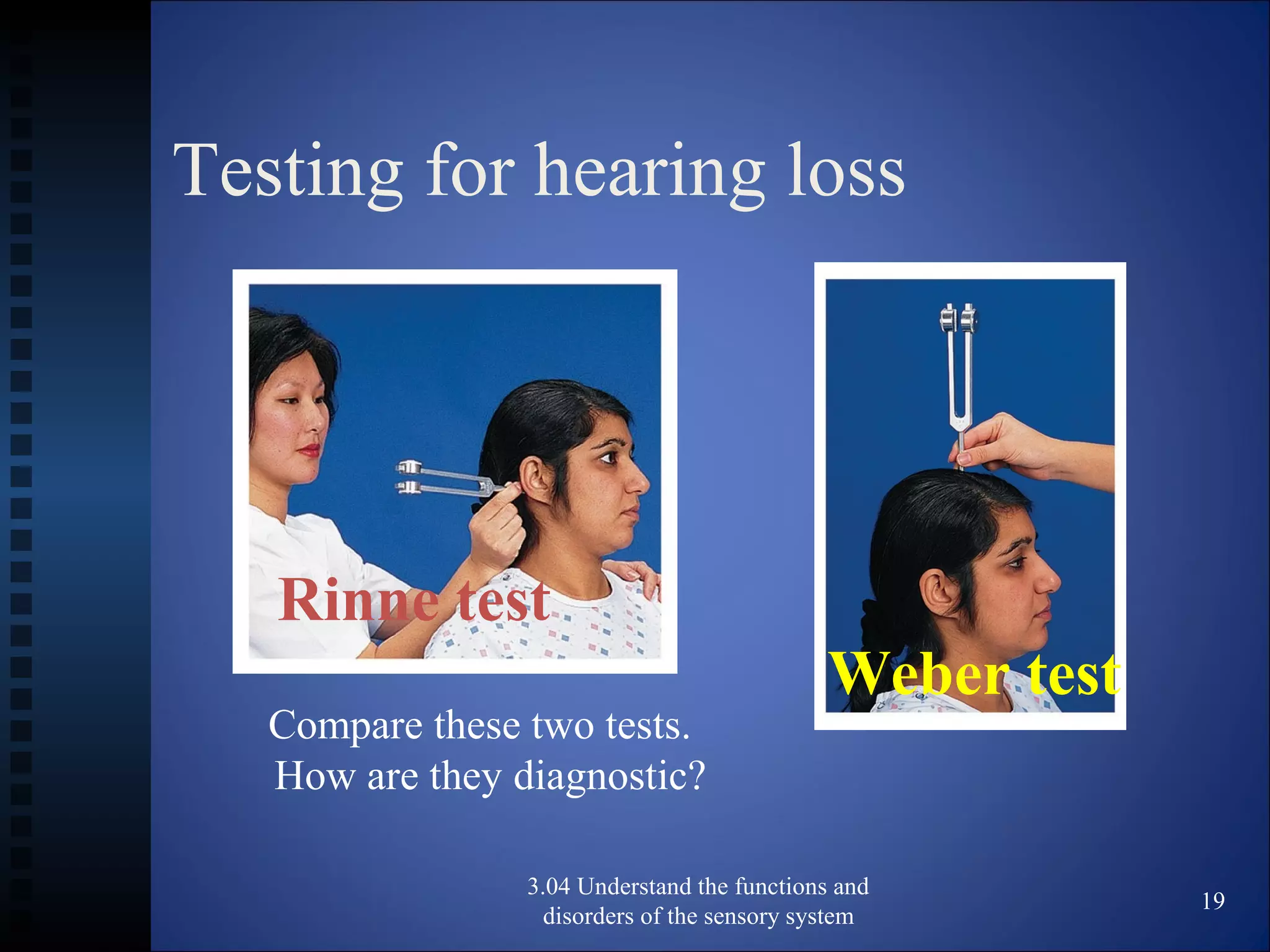
Weber test
Rinne test
Compare these two tests.
How are they diagnostic?
3.04 Understand the functions and
disorders of the sensory system
3.04 Understand the functions and
disorders of the sensory system
20
Essential Questions
•What are the functions of the sensory system?
•What are some disorders of the sensory system?
•How are sensory system disorders treated?
•How do you relate the body’s communication to
the sensory system?
3.04 Functions and
disorders of the ear
The EndThe End
3.04 Understand the functions and
disorders of the sensory system
21

Functions and disorders of the ear

  • 1.
    3.04 Functions and disordersof the ear 3.04 Understand the functions and disorders of the sensory system 1
  • 2.
    3.04 Understand thefunctions and disorders of the sensory system 3.04 Understand the functions and disorders of the sensory system 2 Essential Questions •What are the functions of the sensory system? •What are some disorders of the sensory system? •How are sensory system disorders treated? •How do you relate the body’s communication to the sensory system?
  • 3.
    Understanding the functions ofthe ear: Hearing 3.04 Understand the functions and disorders of the sensory system 3
  • 4.
    Understanding the functions ofthe ear External earExternal ear Pinna/AuriclePinna/Auricle External auditoryExternal auditory canalcanal  Contains cerumenContains cerumen TympanicTympanic membranemembrane 3.04 Understand the functions and disorders of the sensory system 4
  • 5.
    Understanding the functions ofthe ear Middle earMiddle ear OssiclesOssicles  MalleusMalleus  IncusIncus  StapesStapes EustachianEustachian tubetube 3.04 Understand the functions and disorders of the sensory system 5
  • 6.
    Understanding the functions ofthe ear Inner earInner ear CochleaCochlea SemicircularSemicircular canalscanals 3.04 Understand the functions and disorders of the sensory system 6
  • 7.
    Understanding the functions ofthe ear Pathway ofPathway of hearinghearing Trace the pathwayTrace the pathway of hearing.of hearing. What are decibels?What are decibels? 3.04 Understand the functions and disorders of the sensory system 7
  • 8.
    Understanding the functions of the ear 3.04Understand the functions and disorders of the sensory system 8 Review the pathway of hearing
  • 9.
    Healthy Hearing 3.04 Understandthe functions and disorders of the sensory system 9 How do you protect your hearing?
  • 10.
    Understanding the functions ofthe ear Sound ActivitySound Activity 3.04 Understand the functions and disorders of the sensory system 10
  • 11.
    Disorders of theear 3.04 Understand the functions and disorders of the sensory system 11
  • 12.
    Disorders of theear 3.04 Understand the functions and disorders of the sensory system 12
  • 13.
    Disorders of theear External otitis 3.04 Understand the functions and disorders of the sensory system 13 Discuss what you see in this picture? (Besides a Q-tip!) What causes external otitis?
  • 14.
    Disorders of theear Otitis mediaOtitis media What is otitis media?What is otitis media? Who is most atWho is most at risk of havingrisk of having otitis media? Why?otitis media? Why? What are the treatmentWhat are the treatment options?options? 3.04 Understand the functions and disorders of the sensory system 14
  • 15.
    Disorders of theear OtosclerosisOtosclerosis What is it?What is it?  Oto- sclerosisOto- sclerosis What causes it?What causes it? Why is a stapedectomyWhy is a stapedectomy useful in treatinguseful in treating otosclerosis?otosclerosis? 3.04 Understand the functions and disorders of the sensory system 15
  • 16.
    Disorders of theear Meniere’s diseaseMeniere’s disease What are theWhat are the symptoms ofsymptoms of Meniere’s disease?Meniere’s disease? What causes theseWhat causes these symptoms?symptoms? How is it treated?How is it treated? 3.04 Understand the functions and disorders of the sensory system 16
  • 17.
    Disorders of theear TinnitusTinnitus What is tinnitus?What is tinnitus? Explain this statement:Explain this statement: Tinnitus is a symptom,Tinnitus is a symptom, not a disorder.not a disorder. 3.04 Understand the functions and disorders of the sensory system 17
  • 18.
    Disorders of theear PresbycusisPresbycusis What isWhat is presbycusis?presbycusis? Who is most likelyWho is most likely to developto develop presbycusis?presbycusis? 3.04 Understand the functions and disorders of the sensory system 18
  • 19.
    Testing for hearingloss 3.04 Understand the functions and disorders of the sensory system 19 Weber test Rinne test Compare these two tests. How are they diagnostic?
  • 20.
    3.04 Understand thefunctions and disorders of the sensory system 3.04 Understand the functions and disorders of the sensory system 20 Essential Questions •What are the functions of the sensory system? •What are some disorders of the sensory system? •How are sensory system disorders treated? •How do you relate the body’s communication to the sensory system?
  • 21.
    3.04 Functions and disordersof the ear The EndThe End 3.04 Understand the functions and disorders of the sensory system 21

Editor's Notes

  • #5 Pinna collects sound waves and directs the sound waves into the auditory canal. Auditory canal is an area which contains cerumen (wax) to protect the ear. It also is a pathway for sound waves to travel through to get to the middle ear. Tympanic membrane is a membrane which seperates the outer and middle ear. (SHOW MODEL)
  • #6 Ossicles transmit sound waves from the ear drum into the inner ear malleus incus stapes Eustachian tubes function as a way to equalize the air pressure in the middle ear with the outside atmosphere.
  • #7 Cochlea- converts vibrations into neuron impulses that are sent to the brain Semicircular canals-detect movement of the body in space
  • #8 Sound waves-pinna-auditory canal-tympanic membrane-ear ossicles- stimulate the receptors in the cochlea- cochlear nerve-temporal lobe of the brain for interpretation. Pathway of equilibrium Head movement- stimulates equilibrium receptors in semicircular canals and vestibule chamber- vestibular nerve-cerebellum of the brain for interpretation Decibels is the measurement of sound (how loud)
  • #10 Faintest noise u can hear is db and the noise from a jet engine or a shotgun blast is 165db. Exposure to over 90 decibels (busy city traffic noise) for 8 hours may be dangerous to your hearing. At 100 db, the noise level of a chain saw, it would take 2 hours to cause the same damage to your hearing. Protect your hearing by turning down the volume on the radio, find a quiet place and wear earplugs or noise cancelling headphones.
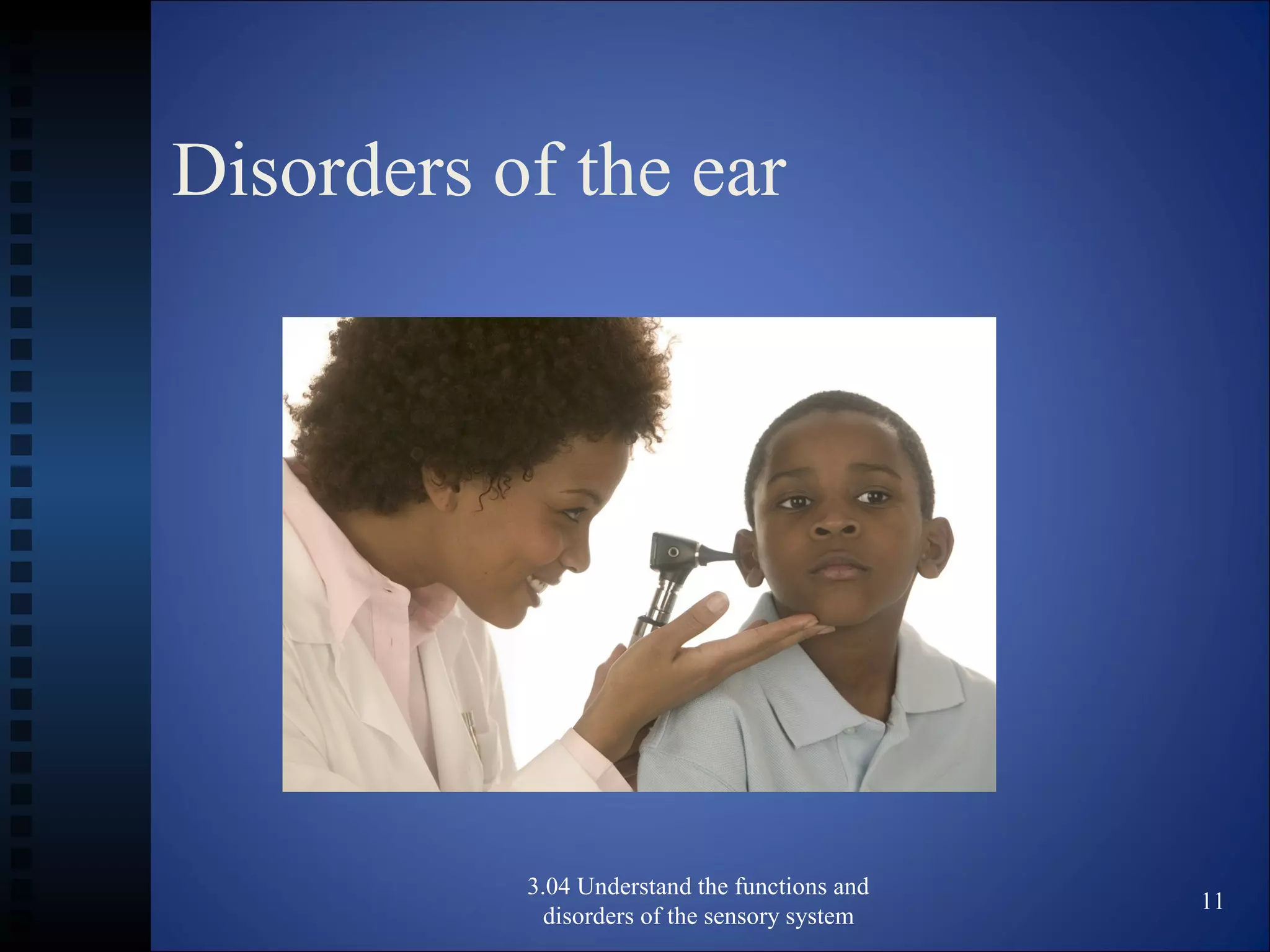
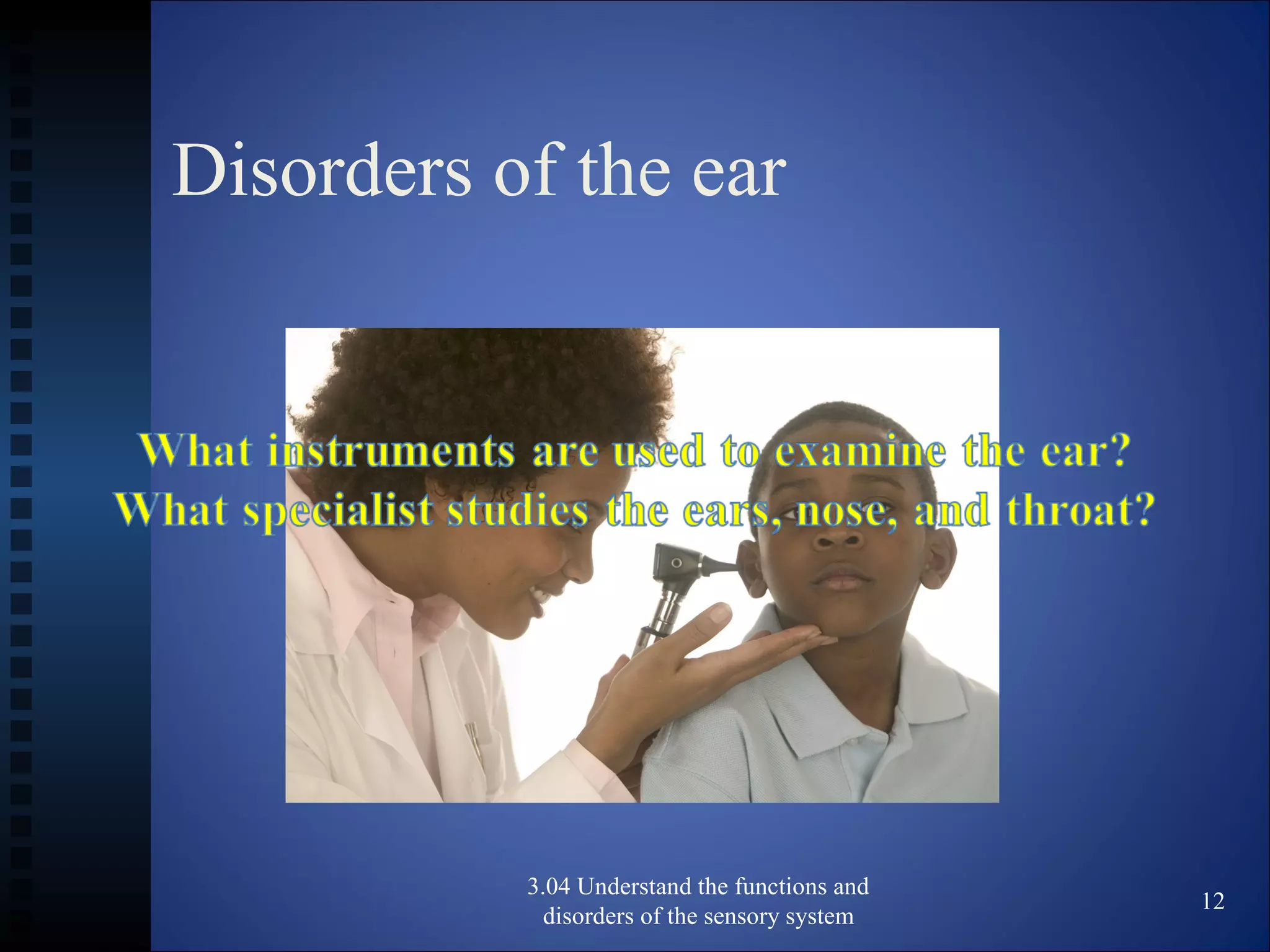
  • #13 Otoscope ENT
  • #14 External ear swollen Trauma to the ear
  • #15 Infection in the middle ear S&S is usually earache or ear pain Often seen in children due to the very short distance between your eustachian tubes and the pharynx. Tx- antibiotics for infection Myringotomy (tubes in the ears) to drain fluids or pus
  • #16 Inherited disorder in which the bone stapes in the middle ear first becomes spongy and then hardens. This causes the stapes to become fixed or immovable. Common cause of deafness in young adults It totally replaces the stapes so the person can once again have a functioning stapes and to restore hearing.
  • #17 A condition that affects the semicircular canals in the inner ear. Cause is unknown. Symptoms include vertigo (dizziness), nausea, vomiting, and tinnitus Tx with bedrest, medications, reduce stress , avoid salt caffeine and nicotine. Eat a well balanced diet and drink plenty of water.
  • #18 Tinnitus – page 201 in text
  • #19 A condition that causes deafness due to the aging process. The elderly. Tx is hearing aid Conductive hearing loss- occurs when sounds to the inner ear are blocked by ear wax or a build up of fluid in the middle ear or abnormal bone growth Sensory hearing loss occurs when there is damage to the inner ear or auditory nerves. Results in partial or complete deafness. Cochlear implants may help to restore hearing
  • #20 Rinne- conductive hearing Weber- sensorineural hearing