INDUSTRIAL TRAINING REPORT
ASSOCIATED PAN MALAYSIA CEMENT SDN BHD
13 ½ MILES, JALAN KUALA KANGSAR
31200 CHEMOR,
PERAK DARUL RIDZUAN
KESAVARMA A/L SELURAJU
MA 12085
FACULTY OF MECHANICAL ENGINEERING
UNIVERSITI MALAYSIA PAHANG
29 JUNE 2015 – 04 SEPTEMBER 2015
i
ACKNOWLEDGEMENT
First and foremost, I would like to express my appreciation to Associated Pan
Malaysia Cement Sdn Bhd for the opportunity of internship throughout this ten-week
program.
My supervisor, Mr.Halim bin Haji Daud, being the Operations Manager under
Maintenance Department, has been helpful in guiding me through the circumstances
encountered in the tasks assigned. His constructive comments and advices were encouraging.
Through sharing of his vast knowledge and experiences I have learned much about the
complete cement production as well as some industrial practices.
Next, my heartfelt gratitude to the Maintenance Manager, Mr.Harisa bin Ujud who
had always taught me about being independent and multitasking, and for his patience to guide
me through the tasks assigned. His sharing of thoughts has broadened my perspectives about
the art of thinking. Through his determination and perseverance I have learned that a good
attitude with great passion is the key to becoming a successful engineer.
Last but not least, big thanks to the process engineer, Ms.Kokilawani and Human
Resources Manager, Mr.Leong Chun Hor for their generous advices throughout my learning
process in cement production process, and to all other staffs, technical and non-technical,
who have lent me a hand in times of need. I am truly fortunate for being offered the
opportunity to work with a team of people with positive mindset and great passion.
ii
ABSTRACT
Industrial Training is a mandatory course for all students of Bachelor of Mechanical
Engineering in Universiti Malaysia Pahang (UMP). Though being a requirement for
graduation, this ten-week period in Associated Pan Malaysia Cement Sdn Bhd has been a
challenging yet fulfilling moment of my engineering studies.
Industrial engineering and mechanical system design are specialized field where the
principles evolved from mechanical engineering are applied to minimize or prevent
mechanical failures. The design cement plant structures and cement production system fall
within the regime of mechanical engineering. Throughout this training program, I have been
trained by professional engineers in the technical, as well as non-technical aspects of
industrial practices, which are fundamentals in an engineer’s career. Mechanical repair works
and industrial engineering were the core element of my training program that involves
construction design inspections, preparation of technical proposal, lean management
improvement in production line, and site visit.
By the end of the program, students’ performances were evaluated by a visiting
lecturer from the university via PowerPoint presentations. This industrial training report thus
summarizes lesson learned by students from the program.
iii
TABLE OF CONTENTS
Page
ACKNOWLEDGEMENTS i
ABSTRACT ii
TABLE OF CONTENTS iii
LIST OF TABLES v
LIST OF FIGURES vii
CHAPTER 1 COMPANY PROFILE
1.1 Company Background 1
1.2 Company Organization 3
1.3 Training Schedule 4
CHAPTER 2 COMPANY ACTIVITIES
2.1 Introduction 5
2.2 Activities of Each Function
2.2.1 Maintenance Management 7
2.2.2 Inspection 8
2.2.3 Planning 8
2.2.4 Scheduling 9
2.2.5 Execution 9
2.2.6 Improvement 9
2.3 Lafarge Maintenance Operation Mode 11
iv
CHAPTER 3 STUDENT SELF ACTIVITY
3.1 Introduction 12
3.2 Production Process Identification
3.2.1 Mechanical Repair 12
3.2.2 Electrostatic Precipitator (EP) 13
3.2.3 Cement Laboratory Testing 13
3.2.4 Welding and Cutting 14
3.2.5 Inspection and Maintenance of Electrostatic Precipitator 15
3.3 Check-in and Check-out Project (CICO30) 16
3.4 Rotopacker 1,2,3 Maintenance
3.4.1 Rotopacker 2 Maintenance 26
3.4.2 Rotopacker 3 Spout Number 1 Sadle Cylinder Replacement 28
3.4.3 Rotopacker 2/3 Loader Safety Guard Welding 28
3.4.4 Rotopacker 1 Maintenance 29
3.5 Cement Mill Maintenance
3.5.1 Silo Measurement 29
3.5.2 Inspection during mill running 30
3.5.3 Inspection during mill stoppage 31
3.5.4 Cement Mill Operation Analysis 32
3.5.5 Condition-based and Time-based Repair 34
3.5.6 Cement Mill Pump Maintenance 34
3.6 Raw Mill Maintenance
3.6.1 Raw Mill Operating Procedures 37
3.6.2 Raw Mix Transformation 38
3.6.3 Replacement of Roller Tire 38
3.6.4 Raw Mill Table Liner Assembly 40
3.6.5 Raw Mill Hydraulic Cylinder Maintenance 42
3.7 Quarry Maintenance
3.7.1 Gyratory Crusher Maintenance 43
3.7.2 Gyratory Crusher Lubrication Unit Maintenance 44
3.7.3 Gyratory Crusher Hydraulic System Maintenance 46
3.7.4 Limestone Stacker Inspection 47
v
3.7.5 Limestone Stacker Reduction Gear Maintenance 49
3.8 Clay Reclaimer Maintenance
3.8.1 Iron Ore Hopper Analysis 50
3.8.2 Clay Transportation to Stacker 53
3.8.3 Apron Feeder Maintenance 53
3.9 Project Design
3.9.1 Project Design Works 54
3.9.2 Belt Bucket Elevator Maintenance 55
3.9.3 Cement Mill Air Separator Maintenance 55
3.9.4 Cooling Tower Maintenance 56
3.9.5 Return Filter Maintenance 56
CHAPTER 4 CONCLUSION 57
CHAPTER 5 RECOMMENDATION 58
REFERENCES 59
vi
LIST OF TABLES
Table No. Title Page
3.1 Mechanical strength chart of cement 14
3.2 Problem description in CICO30 17
3.3 Time taken for each workstation in CICO30 24
3.4 Factors affecting the delay in check0in and check-out of bulk
tankers
25
3.5 Cement mill pump troubleshooting chart 35
3.6 Troubleshooting method of gyratory crusher 43
3.7 Troubleshooting method of hydraulic system in gyratory crusher 45
3.8 Iron ore hopper specification 46
3.9 Bucket elevator specification 52
3.10 Belt bucket maintenance 53
3.11 55
vii
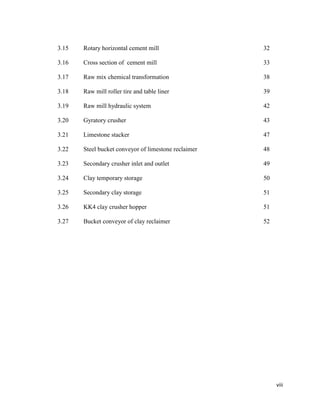
LIST OF FIGURES
Figure No. Title Page
1.1 Organization chart of Associated Pan Malaysia Cement SDN
BHD Kanthan Plant
3
1.2 Gantt chart 4
2.1 Cement production process illustration 6
2.2 Kiln process flow 6
2.3 Maintenance operation mode 11
3.1 Arc welding and oxy-acetylene cutting 15
3.2 Original layout of bulk tankers loading 17
3.3 Improved layout of bulk tankers loading 18
3.4 Original layout of bulk tankers loading with distance 18
3.5 Improved layout of bulk tankers loading with distance 19
3.6 Comparison of current and proposed distance of bulk loading
under silo 8,11, and 12
20
3.7 Comparison of tonnage, loading time, and tons/min of silo 11 21
3.8 Stock measurement of cement silo 11 22
3.9 Fishbone diagram 23
3.10 The precedence diagram (current) 24
3.11 The precedence diagram (proposed) 25
3.12 Pareto chart 26
3.13 Rotopacker machine, conveying system and welded air slide
system
27
3.14 Cement mill runtime planning 30
viii
3.15 Rotary horizontal cement mill 32
3.16 Cross section of cement mill 33
3.17 Raw mix chemical transformation 38
3.18 Raw mill roller tire and table liner 39
3.19 Raw mill hydraulic system 42
3.20 Gyratory crusher 43
3.21 Limestone stacker 47
3.22 Steel bucket conveyor of limestone reclaimer 48
3.23 Secondary crusher inlet and outlet 49
3.24 Clay temporary storage 50
3.25 Secondary clay storage 51
3.26 KK4 clay crusher hopper 51
3.27 Bucket conveyor of clay reclaimer 52
1
CHAPTER 1
COMPANY PROFILE
1.1 COMPANY BACKGROUND
Lafarge Malaysia Berhad is a leader of the Malaysian construction industry,
contributing towards Building Better Cities. Its solutions provide cities and townships with
more housing, making them more compact, more durable, more beautiful and better
connected. Headquartered in the Klang Valley, Lafarge Malaysia has facilities that include
three integrated cement plants in Langkawi, Kanthan and Rawang, a grinding station in Pasir
Gudang, more than 30 ready-mixed concrete batching plants and 6 aggregates quarries
throughout Peninsular Malaysia. These facilities are supported by a wide network of depots,
terminals and distribution facilities connected by road, rail and sea.
Lafarge Malaysia Berhad is today the parent of a group of companies in Malaysia and
Singapore whose core businesses are in the manufacturing and sale of cement, ready-mixed
concrete and other related building materials.
Lafarge Malaysia Berhad is listed on Bursa Malaysia. Fifty-one percent of Lafarge
Malaysia's shares are held by Lafarge S.A. via Associated International Cement Limited.
2
VISION
Lafarge: building better cities.
MISSION
Sustain Mastered and Robust operations with Health and Safety in mind, consistent in
delivering quality service and fulfilling customers’ and stakeholders’ satisfaction, well-
known for our premium quality and its availability, Go Beyond implementation with efficient
workforce at lowest manufacturing cost, and ‘Extra Mile’ effort to improve area
housekeeping level on individual basis.
3
1.2 COMPANY ORGANIZATION STRUCTURE
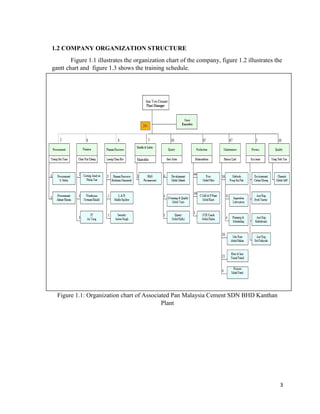
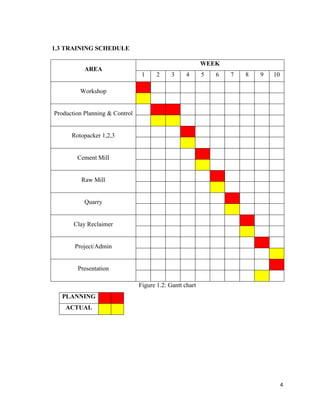
Figure 1.1 illustrates the organization chart of the company, figure 1.2 illustrates the
gantt chart and figure 1.3 shows the training schedule.
Figure 1.1: Organization chart of Associated Pan Malaysia Cement SDN BHD Kanthan
Plant
4
1.3 TRAINING SCHEDULE
AREA
WEEK
1 2 3 4 5 6 7 8 9 10
Workshop
Production Planning & Control
Rotopacker 1,2,3
Cement Mill
Raw Mill
Quarry
Clay Reclaimer
Project/Admin
Presentation
Figure 1.2: Gantt chart
PLANNING
ACTUAL
5
CHAPTER 2
COMPANY ACTIVITY
2.1 INTRODUCTION
Cement is a finely powdered mineral. In the presence of water, it will form a paste
which will harden with time, without air. It will even harden under water. This special
characteristic of cement is because addressed as hydraulic property and it is known as
hydraulic binder. Clinker is the main ingredient in the cement production. Gypsum added to
it to control the setting time. Clinker and gypsum grinded together to form Portland cement.
Sometimes, secondary ingredients added to form cement with additives. Some countries add
these secondary ingredients to make cements which have different qualities. The quality of
most cement is characterized by the requirement for special properties needed to meet the
end use of the concrete. Starting with the same clinker, different cement types can be
produced by different grinding. Decreasing the particle size gives a finer cement of higher
strength. Clinker appears in the form of granular nodules. During clinker formation, new
synthetic minerals appears namely calcium silicates and calcium aluminates which have
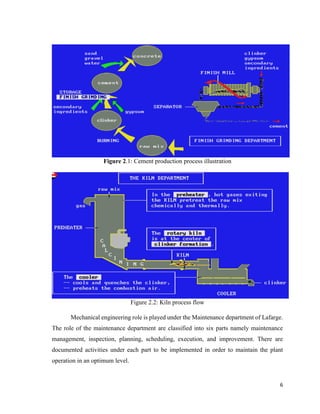
hydraulics properties. Clinkering takes place in the kiln department. In the preheater, hot
gases exiting the kiln pretreat the raw mix chemically and thermally. The rotary kiln is at the
center of clinker formation. The cooler then cools and quenches the clinker, and preheats the
combustion air. Figure 2.2 illustrates the process at kiln department.
6
Figure 2.1: Cement production process illustration
Figure 2.2: Kiln process flow
Mechanical engineering role is played under the Maintenance department of Lafarge.
The role of the maintenance department are classified into six parts namely maintenance
management, inspection, planning, scheduling, execution, and improvement. There are
documented activities under each part to be implemented in order to maintain the plant
operation in an optimum level.
7
2.2 ACTIVITIES OF EACH FUNCTION
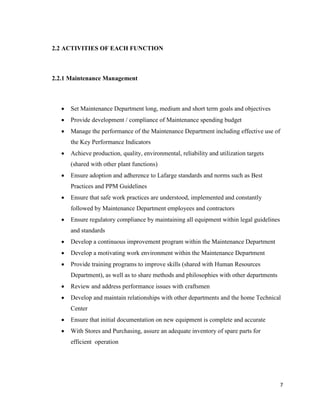
2.2.1 Maintenance Management
 Set Maintenance Department long, medium and short term goals and objectives
 Provide development / compliance of Maintenance spending budget
 Manage the performance of the Maintenance Department including effective use of
the Key Performance Indicators
 Achieve production, quality, environmental, reliability and utilization targets
(shared with other plant functions)
 Ensure adoption and adherence to Lafarge standards and norms such as Best
Practices and PPM Guidelines
 Ensure that safe work practices are understood, implemented and constantly
followed by Maintenance Department employees and contractors
 Ensure regulatory compliance by maintaining all equipment within legal guidelines
and standards
 Develop a continuous improvement program within the Maintenance Department
 Develop a motivating work environment within the Maintenance Department
 Provide training programs to improve skills (shared with Human Resources
Department), as well as to share methods and philosophies with other departments
 Review and address performance issues with craftsmen
 Develop and maintain relationships with other departments and the home Technical
Center
 Ensure that initial documentation on new equipment is complete and accurate
 With Stores and Purchasing, assure an adequate inventory of spare parts for
efficient operation
8
2.2.2 Inspection
 Maintain in-depth knowledge of the condition of all equipment on a continuous
basis.
 Conduct field inspections on all plant mechanical, electrical and instrumentation
equipment as scheduled. Initiate work orders based on inspection results.
 Know and monitor condition predictors, including lubrication, for all critical
equipment.
 Check unclear work orders and recommend time estimates, with the planning
function, to facilitate effective planning.
 Maintain the master PM schedule
 Validate / update equipment histories and files.
2.2.3 Planning
 Determine the appropriate methods, resources, manpower and skills necessary for
completion of assigned work in an efficient, effective and safe manner
 Provide clear step-by-step instructions as required to complete assigned tasks
 Assure all required materials in terms of quantity and quality are available for
scheduled work
 Priority assigned to all planned work
 Plan Maintenance work with regard to the forecasted budget limits
 Determine cost of work orders
 Prepare time estimates for jobs to facilitate and improve manpower utilization
 Write Standard Operating Procedures (SOPs) for critical repairs
 Periodically update plans based on actual experience
9
2.2.4 Scheduling
 Interact effectively with other plant functions
 Establish schedule by coordinating availability of equipment and other resources
 Ensure schedule adherence according to the priority system
 Manage work order backlog
 Coordinate planned Maintenance work that impacts other departments with those
departments
2.2.5 Execution
 Assign and review work to perform with the craftsman
 Ensure continuity on all jobs as required
 Complete maintenance related work according to highest standards; safely,
efficiently, and effectively
 Ensure, upon completion of repairs, that equipment is in good operating condition,
ready to meet plant's operational requirements, fully inspected, tested, clean, and
safe
 Provide adequate feedback on repair jobs including consumption of materials, tools,
manhours and skills. as well as all pertinent information for the job history file
 Eliminate "rework"
2.2.6 IMPROVEMENT
 Improve Reliability to contribute to Overall Equipment Effectiveness (OEE)
10
 Eliminate repetitive problems through analysis and interaction with the reliability
committee.
 Determine solutions to incidents and daily work requests through troubleshooting,
analysis and review.
 Develop, implement, and enforce training and SOPs to improve the performance
and longevity of equipment.
 Ensure maintenance input to equipment upgrades and projects
 Provide technical support to the plant maintenance activities
 Update drawings and files after modifications
11
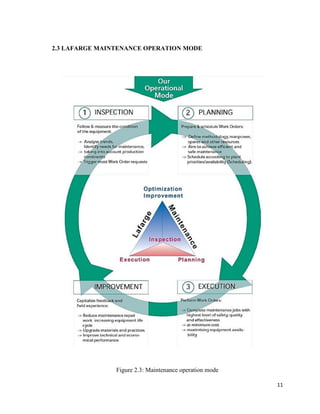
2.3 LAFARGE MAINTENANCE OPERATION MODE
Figure 2.3: Maintenance operation mode
12
CHAPTER 3
STUDENT SELF ACTIVITY
3.1 INTRODUCTION
In the first week, briefing about the workplace mandatory safety rules and policies
carried out to ensure zero accidents inside the plant. After that, overall company area
recognition process carried out according to the production sequence of cement from quarry
to dispatch.
3.2 PRODUCTION PROCESS IDENTIFICATION
3.2.1 Mechanical Repair
Mechanical repair initially requires 3 main things namely manpower, raw material
and suitable equipment in order to perform maintenance if any mechanical repair reported.
There are two levels of inspection. First level inspection is using 3 senses of hearing, seeing,
and smelling. This is to identify for problems when the machines are in operation. Second
13
inspection is done when the machines are completely stopped. This is where measurements
of the components were taken.
3.2.2 Electrostatic Precipitator
High torque motors used with spur gear to transport dust articles that are trapped in
electrostatic precipitator through conveyor belt. Cam shaft is used with low speed high torque
motor for the hammer that vibrates the precipitator blocks by striking it. Spring mechanism
is used to absorb the excessive vibrations that can possibly damage the electric and electronic
components inside the coal reclaimer. Proximity sensor (capacitive) used as limit switch of
movable arms. Speed sensor is installed onto the raw mill conveyor belt to detect the speed
changes of the belt due to possible causes like belt disconnection, material overload or motor
failure.
3.2.3 Cement Laboratory Testing
Cement samples taken from various places namely silo 8, 9, 10, 11, and 12 and
subjected to chemical composition testing and mechanical testing. The cement from mill 5 is
mixed with fine sand for 240 seconds in an electric-powered mixer and subsequently
compressed for 120 seconds to form cuboids by Jolting Machine. Then, the mixture is dried
for 2 days, 7 days, and 28 days respectively, where the first day of drying is inside the
dehumidifier at 20o
C and soaked in the water bath with the same temperature for the
remaining drying time. After that, samples from 2, 7 and 28 days are subjected for mechanical
testing. Similarly, the cement powder obtained from the cement mill is tested for silicon
dioxide, calcium carbonate, aluminium oxide and iron oxide determined to check for the
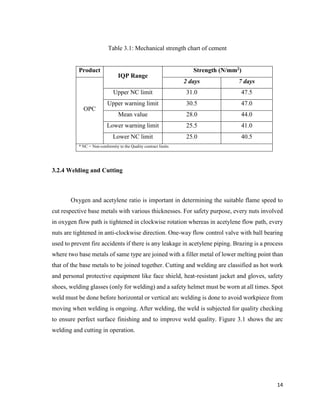
quality clinker production. The table below shows the strength chart of the OPC cement.
14
Table 3.1: Mechanical strength chart of cement
Product
IQP Range
Strength (N/mm2)
OPC
2 days 7 days
Upper NC limit 31.0 47.5
Upper warning limit 30.5 47.0
Mean value 28.0 44.0
Lower warning limit 25.5 41.0
Lower NC limit 25.0 40.5
* NC = Non-conformity to the Quality contract limits
3.2.4 Welding and Cutting
Oxygen and acetylene ratio is important in determining the suitable flame speed to
cut respective base metals with various thicknesses. For safety purpose, every nuts involved
in oxygen flow path is tightened in clockwise rotation whereas in acetylene flow path, every
nuts are tightened in anti-clockwise direction. One-way flow control valve with ball bearing
used to prevent fire accidents if there is any leakage in acetylene piping. Brazing is a process
where two base metals of same type are joined with a filler metal of lower melting point than
that of the base metals to be joined together. Cutting and welding are classified as hot work
and personal protective equipment like face shield, heat-resistant jacket and gloves, safety
shoes, welding glasses (only for welding) and a safety helmet must be worn at all times. Spot
weld must be done before horizontal or vertical arc welding is done to avoid workpiece from
moving when welding is ongoing. After welding, the weld is subjected for quality checking
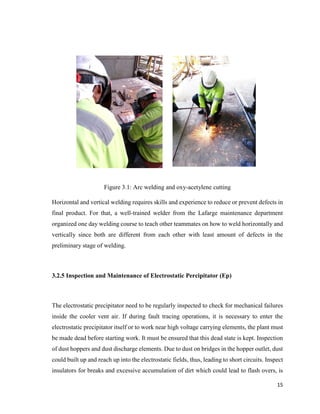
to ensure perfect surface finishing and to improve weld quality. Figure 3.1 shows the arc
welding and cutting in operation.
15
Figure 3.1: Arc welding and oxy-acetylene cutting
Horizontal and vertical welding requires skills and experience to reduce or prevent defects in
final product. For that, a well-trained welder from the Lafarge maintenance department
organized one day welding course to teach other teammates on how to weld horizontally and
vertically since both are different from each other with least amount of defects in the
preliminary stage of welding.
3.2.5 Inspection and Maintenance of Electrostatic Percipitator (Ep)
The electrostatic precipitator need to be regularly inspected to check for mechanical failures
inside the cooler vent air. If during fault tracing operations, it is necessary to enter the
electrostatic precipitator itself or to work near high voltage carrying elements, the plant must
be made dead before starting work. It must be ensured that this dead state is kept. Inspection
of dust hoppers and dust discharge elements. Due to dust on bridges in the hopper outlet, dust
could built up and reach up into the electrostatic fields, thus, leading to short circuits. Inspect
insulators for breaks and excessive accumulation of dirt which could lead to flash overs, is
16
found, the insulators must be cleaned with the help of dry cloth. Broken support insulators
must be replaced immediately. Openings for this purpose have been provided at certain points
in the roof beam bottom plate which are closed by bolted plate covers and gaskets.
3.3 CHECK-IN AND CHECK-OUT 30 PROJECT (CICO30)
Industrial engineering is a branch of engineering that deals with the optimization of complex
processes or systems. It is concerned with the development, improvement, implementation
and evaluation of integrated systems of people, money, knowledge, information, equipment,
energy, materials, analysis and synthesis, as well as the mathematical, physical and social
sciences together with the principles and methods of engineering design to specify, predict,
and evaluate the results to be obtained from such systems or processes. Its underlying
concepts overlap considerably with certain business-oriented disciplines such as operations
management. Depending on the fields or specific skills involved, industrial engineering may
also be known as, or overlap with, operations management, management science, operations
research, systems engineering, manufacturing engineering, ergonomics or human factors
engineering, safety engineering, or others, depending on the viewpoint or motives of the user.
The place of case study is Associated Pan Malaysia Cement Sdn Bhd. There are few delays
due to some problems which can be resolved to obtain optimum bulk tankers loading.
Currently, the total time taken for bulk loading is about 65 minutes. The aim of this project
is to reduce the total loading time taken for bulk loading to 30 minutes. This project therefore
named as CICO30 (Check In to Check Out in 30 minutes). Data from bulk tankers of different
transporters namely Jasa Selamat, Chip Seng Heng and Bintang Transport collected and
analyzed for identification of idle time and improvement of process layout is to be carried
out. Table 3.2 shows the problems found, current practices that causes the problem and a
little description of the problem.
17
Table 3.2: Problem description in CICO30
PROBLEMS
CURRENT
PRACTICES
DESCRIPTION
Layout Current distance
Non-systematic arrangement
covers big unnecessary
walking distance
Unbalanced cycle time
Time taken for each process at
each station
The time taken to finish each
process is not in an orderly
manner causing other works to
delay just because particular
process that took longer time
than others
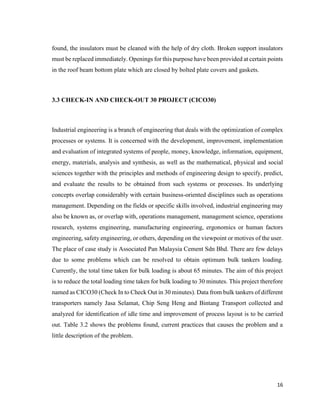
PROBLEM 1: LAYOUT
Process layouts are found primarily in job shops, or firms that produce customized, low-
volume products that may require different processing requirements and sequences of
operations. The current layout shows that there are unwanted distances exist in between the
stations and there are movements that overlap each other.
Figure 3.2: Original layout
18
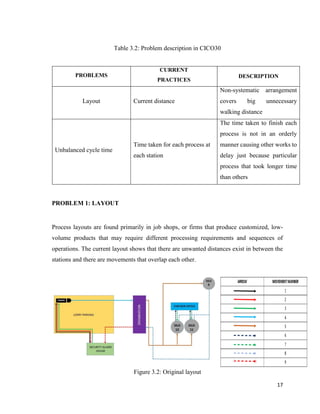
Figure 3.2 shows that the layout is with improper workstations of each process is not in a
good position and requires unwanted repeated movement.
Figure 3.3: Improved layout
Figure 3.3 illustrates the completely reduced movement distance inside the company. The
arrangement of work station for each process is in a good position. Improving the workstation
arrangement reduces total time taken to complete one loading process due to reduced distance
covered.
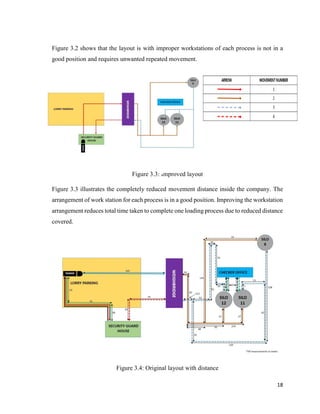
Figure 3.4: Original layout with distance
19
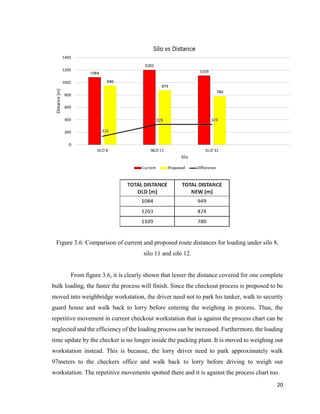
Figure 3.4 shows the total distance covered by the original layout for one complete process
cycle is 1084m, 1203m, and 1109m for silo 8, silo 11, and silo 12 respectively. There are
repetitive movements in between workstations that are against the process flow.
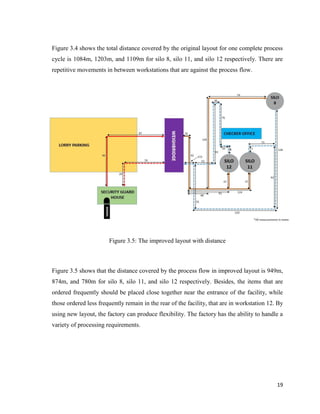
Figure 3.5: The improved layout with distance
Figure 3.5 shows that the distance covered by the process flow in improved layout is 949m,
874m, and 780m for silo 8, silo 11, and silo 12 respectively. Besides, the items that are
ordered frequently should be placed close together near the entrance of the facility, while
those ordered less frequently remain in the rear of the facility, that are in workstation 12. By
using new layout, the factory can produce flexibility. The factory has the ability to handle a
variety of processing requirements.
20
Figure 3.6: Comparison of current and proposed route distances for loading under silo 8,
silo 11 and silo 12.
From figure 3.6, it is clearly shown that lesser the distance covered for one complete
bulk loading, the faster the process will finish. Since the checkout process is proposed to be
moved into weighbridge workstation, the driver need not to park his tanker, walk to security
guard house and walk back to lorry before entering the weighing in process. Thus, the
repetitive movement in current checkout workstation that is against the process chart can be
neglected and the efficiency of the loading process can be increased. Furthermore, the loading
time update by the checker is no longer inside the packing plant. It is moved to weighing out
workstation instead. This is because, the lorry driver need to park approximately walk
97meters to the checkers office and walk back to lorry before driving to weigh out
workstation. The repetitive movements spotted there and it is against the process chart too.
21
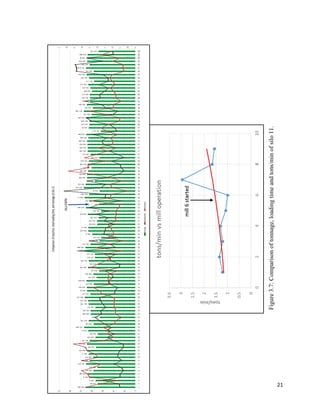
Figure3.7:Comparisonoftonnage,loadingtimeandtons/minofsilo11.
22
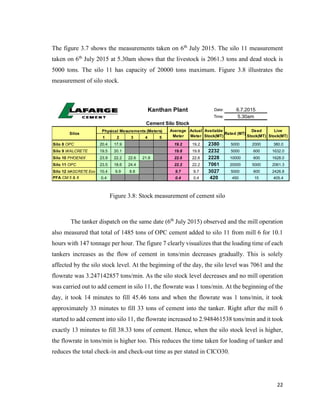
The figure 3.7 shows the measurements taken on 6th
July 2015. The silo 11 measurement
taken on 6th
July 2015 at 5.30am shows that the livestock is 2061.3 tons and dead stock is
5000 tons. The silo 11 has capacity of 20000 tons maximum. Figure 3.8 illustrates the
measurement of silo stock.
Figure 3.8: Stock measurement of cement silo
The tanker dispatch on the same date (6th
July 2015) observed and the mill operation
also measured that total of 1485 tons of OPC cement added to silo 11 from mill 6 for 10.1
hours with 147 tonnage per hour. The figure 7 clearly visualizes that the loading time of each
tankers increases as the flow of cement in tons/min decreases gradually. This is solely
affected by the silo stock level. At the beginning of the day, the silo level was 7061 and the
flowrate was 3.247142857 tons/min. As the silo stock level decreases and no mill operation
was carried out to add cement in silo 11, the flowrate was 1 tons/min. At the beginning of the
day, it took 14 minutes to fill 45.46 tons and when the flowrate was 1 tons/min, it took
approximately 33 minutes to fill 33 tons of cement into the tanker. Right after the mill 6
started to add cement into silo 11, the flowrate increased to 2.948461538 tons/min and it took
exactly 13 minutes to fill 38.33 tons of cement. Hence, when the silo stock level is higher,
the flowrate in tons/min is higher too. This reduces the time taken for loading of tanker and
reduces the total check-in and check-out time as per stated in CICO30.
19.5
20.4
10.4
23.5 18.6
0.4PFA CM 5 & 6
6.7.2015
5.30am
Dead
Stock(MT)
600
600
5000
600
2000
150.4 450
Kanthan Plant
Cement Silo Stock
Physical Mesurements (Meters) Average
Meter1 2 3 4 5
Date:
Time:
Actual
Meter
Available
Stock(MT)
19.8
22.6 2228
19.2
9.7 9.7
22.6
22.2
19.8
19.2
0.4
22.2
3027
21.8Silo 10 PHOENIX
Silo 11 OPC
23.9 22.2
Silos
Silo 9 WALCRETE
Silo 8 OPC
Silo 12 MASCRETE Eco
17.9
24.4
22.6
20.1
9.9 8.8
5000
Rated (MT)
420
2380
5000
10000
20000
5000
7061
2232
Live
Stock(MT)
405.4
380.0
1632.0
1628.0
2061.3
2426.8
23
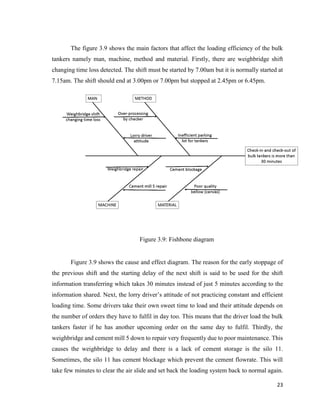
The figure 3.9 shows the main factors that affect the loading efficiency of the bulk
tankers namely man, machine, method and material. Firstly, there are weighbridge shift
changing time loss detected. The shift must be started by 7.00am but it is normally started at
7.15am. The shift should end at 3.00pm or 7.00pm but stopped at 2.45pm or 6.45pm.
Figure 3.9: Fishbone diagram
Figure 3.9 shows the cause and effect diagram. The reason for the early stoppage of
the previous shift and the starting delay of the next shift is said to be used for the shift
information transferring which takes 30 minutes instead of just 5 minutes according to the
information shared. Next, the lorry driver’s attitude of not practicing constant and efficient
loading time. Some drivers take their own sweet time to load and their attitude depends on
the number of orders they have to fulfil in day too. This means that the driver load the bulk
tankers faster if he has another upcoming order on the same day to fulfil. Thirdly, the
weighbridge and cement mill 5 down to repair very frequently due to poor maintenance. This
causes the weighbridge to delay and there is a lack of cement storage is the silo 11.
Sometimes, the silo 11 has cement blockage which prevent the cement flowrate. This will
take few minutes to clear the air slide and set back the loading system back to normal again.
24
The bellow used in the loading silo is made of poor quality canvas which is prone to burst
and leakage. This causes the cement to leak as dust particles through the burst holes of the
bellow can cover the tanker body. Since the drivers need to take care of the cleanliness of the
tankers, they take some time to clean up the tankers after every loading under the silo. This
delays the loading time very obviously. Lastly, the method of processing the loading process
in the Regional Weighbridge Dispatch System (RWDS) is said to be over-processed by the
checker which delays the bulk loading very much. The input by the checker can be moved to
the next workstation to reduce the time taken to complete one bulk loading cycle. The parking
lot prepared outside the weighbridge is not efficient at all since the drivers need to walk for
a very long distance to check in their vehicle at the security office.
Table 3.3: Time taken at each workstation
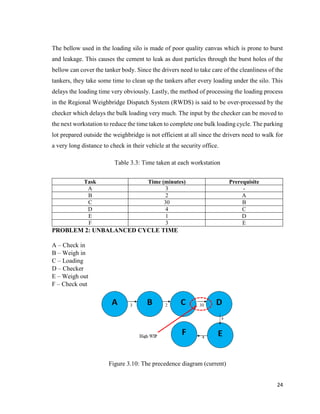
PROBLEM 2: UNBALANCED CYCLE TIME
A – Check in
B – Weigh in
C – Loading
D – Checker
E – Weigh out
F – Check out
Figure 3.10: The precedence diagram (current)
Task Time (minutes) Prerequisite
A 3 -
B 2 A
C 30 B
D 4 C
E 1 D
F 3 E
25
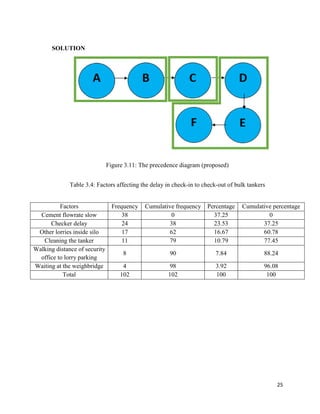
SOLUTION
Figure 3.11: The precedence diagram (proposed)
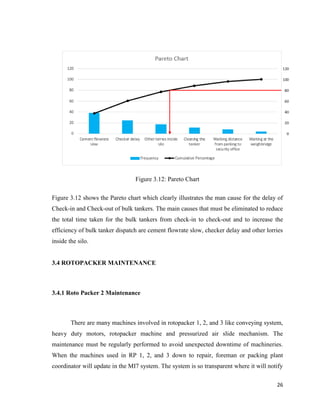
Table 3.4: Factors affecting the delay in check-in to check-out of bulk tankers
Factors Frequency Cumulative frequency Percentage Cumulative percentage
Cement flowrate slow 38 0 37.25 0
Checker delay 24 38 23.53 37.25
Other lorries inside silo 17 62 16.67 60.78
Cleaning the tanker 11 79 10.79 77.45
Walking distance of security
office to lorry parking
8 90 7.84 88.24
Waiting at the weighbridge 4 98 3.92 96.08
Total 102 102 100 100
26
Figure 3.12: Pareto Chart
Figure 3.12 shows the Pareto chart which clearly illustrates the man cause for the delay of
Check-in and Check-out of bulk tankers. The main causes that must be eliminated to reduce
the total time taken for the bulk tankers from check-in to check-out and to increase the
efficiency of bulk tanker dispatch are cement flowrate slow, checker delay and other lorries
inside the silo.
3.4 ROTOPACKER MAINTENANCE
3.4.1 Roto Packer 2 Maintenance
There are many machines involved in rotopacker 1, 2, and 3 like conveying system,
heavy duty motors, rotopacker machine and pressurized air slide mechanism. The
maintenance must be regularly performed to avoid unexpected downtime of machineries.
When the machines used in RP 1, 2, and 3 down to repair, foreman or packing plant
coordinator will update in the MI7 system. The system is so transparent where it will notify
27
planner, methods manager and respective technicians or mechanics about the problem
statement and initiation of the maintenance procedure. The planner will check for availability
of spare parts required, manpower and earliest suitable timing to schedule the repair. This is
because the mechanics required for the repair are also committed with other department
maintenance works, and some spare parts need to be ordered from overseas since it is not
available in Malaysia. Once repair is scheduled, the maintenance team in charge for packing
plant will repair and replace damaged parts, lubrication team will lubricate the necessary
parts and finally test run is carried out to check for normal activity of the system being
resumed.
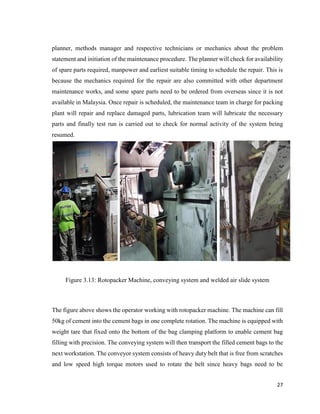
Figure 3.13: Rotopacker Machine, conveying system and welded air slide system
The figure above shows the operator working with rotopacker machine. The machine can fill
50kg of cement into the cement bags in one complete rotation. The machine is equipped with
weight tare that fixed onto the bottom of the bag clamping platform to enable cement bag
filling with precision. The conveying system will then transport the filled cement bags to the
next workstation. The conveyor system consists of heavy duty belt that is free from scratches
and low speed high torque motors used to rotate the belt since heavy bags need to be
28
transported. The belt is always in tension to make easy transportation and possibly too
dangerous. It requires many safety procedures to conduct any maintenance of the conveying
system. The air slide uses pressure difference at the inlet and the outlet to transport cement
with the air as the transport medium.
3.4.2 Rotopacker 3 Spout Number 1 Sadle Cylinder Replacement
Rotopacker 3 number 1 cylinder is found malfunctioning. The pre-checking process
is initiated by the packing plant instrumentation team after reported by the foreman in MI7
system. The cylinder has to be replaced and so spare cylinder is available at the moment. The
planner prepared the spare part by ordering from outsource, manpower (contract workers),
and assigned mechanical team to repair. The total rotopacker 3 is switched off and the main
switch is locked and guarded by the workers involved in the repair according LOTOTO
(Lock-Out, Tag-Out, Try-Out) for safety purpose. Suitable equipment and tools used to
replace the sadle cylinder. Once the repair is done, the LOTOTO system is removed and
rotopacker 3 is tested for correction. The system appeared to be normal and the maintenance
is done. Finally, rotopacker 3 repair is included in the maintenance daily report for higher
officials’ acknowledgement.
3.4.3 Rotopacker 2/3 Loader Safety Guard Welding
Rotopacker 2/3 loader safety guard is reported to be leaking and it should be welded
immediately to avoid cement wastage. Welder team from the maintenance team prepare
equipment to weld the safety guard. The area was barricaded for safety purpose. Welders
briefed by the job owner for identifications of potential hazards, safety measures available
and mandatory, and correct repairing procedures according to the Daily Shift Job Plan (JHP).
The welders use arc welding with horizontal and vertical positions. The job owner tested the
29
weld quality and the welding is stopped once the weld quality is seemed to be satisfactory.
The system is resumed and no leakage found. Daily report prepared for records and future
reference.
3.4.4 Rotopacker 1 Maintenance
Silo 10 air slide blower is having severe trip and high vibration reported. The
rotopacker 1 bag discharge conveyor belt, and truck loader belt are subjected to repair. The
air slide is not functioning due to cement blockage. The blower is turned off and control room
operator (CRO) informed to maintain the electrical power of blower down until the whole
passage appears to be normal. After that, manhole is closed and air slide blower is turned on
back. For the conveyor belt and truck loader belt repair, planner provided new conveyor belt
for bag discharge and new loader belt for truck loading. The maintenance team cut off the
main system using LOTOTO and replaced the conveyor belt and loader belt.
3.5 CEMENT MILL MAINTENANCE
3.5.1 Silo Measurement
The cement stock inside the silo is measured using a measuring tape from the top
surface to the cement surface. The end of the tape is attached with a metal piece to be used
as a counter weight. The tape is then inserted into the silo from the top holes and readings
taken once the counterweight metal reaches the cement surface and the cement level is
recorded in meter units. Three readings is taken and average reading is plotted in meters. This
reading then used to estimate the silo cement level using a chart prepared. Next, total cement
30
mill operation is planned based on the available cement and the forecasted dispatch in taken
into consideration to avoid unwanted plant operation and optimum production planning is
carried out. The figure 3.8 shows the silo stock level for a particular day. The cement mill
runtime will be forecasted to meet the daily dispatch planning.
Figure 3.14: Cement mill runtime planning
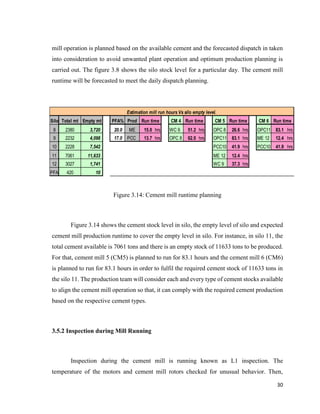
Figure 3.14 shows the cement stock level in silo, the empty level of silo and expected
cement mill production runtime to cover the empty level in silo. For instance, in silo 11, the
total cement available is 7061 tons and there is an empty stock of 11633 tons to be produced.
For that, cement mill 5 (CM5) is planned to run for 83.1 hours and the cement mill 6 (CM6)
is planned to run for 83.1 hours in order to fulfil the required cement stock of 11633 tons in
the silo 11. The production team will consider each and every type of cement stocks available
to align the cement mill operation so that, it can comply with the required cement production
based on the respective cement types.
3.5.2 Inspection during Mill Running
Inspection during the cement mill is running known as L1 inspection. The
temperature of the motors and cement mill rotors checked for unusual behavior. Then,
Silo
8 hrs hrs hrs hrs
9 hrs hrs hrs hrs
10 hrs hrs
11 hrs
12 hrs
PFA
62.0
26.6
83.1
83.1
12.4
OPC 8
Run time
7,542
11,633
1,741
PFA%
20.0
17.04,098
CM 5 Run time
7061
3027
420
Empty mt
3,720
Total mt
2380
2232
2228
10
ME 12 12.4
PCC10
CM 6
OPC11
ME 12
WC 9 51.2
41.941.9
OPC11
PCC10
OPC 8
Run time
WC 9 37.3
Estimation mill run hours Vs silo empty level.
Prod
ME 15.0
13.7PCC
CM 4 Run time
31
vibration test is carried out at the moving shafts using vibro-pen to detect looseness in bolt
tightening, and wear testing of ball bearings inside the motor-shaft coupling. The cement mill
is held by two huge couples where one side is attached with motor of 250hp and the other
side is free. The vibration test often used to spot dynamic unbalance and couple unbalance.
Couple unbalance results in 180o
out-of-phase motion on same shaft. Amplitude varies with
square of increasing speed below first rotor critical speed. It may cause high axial and radial
vibration. In dynamic unbalance, radial phase difference between outboard and inboard
bearings have range of 0o
to 180o
. if unbalance predominates, roughly a 90o
phase difference
usually results between the horizontal and vertical readings on each bearing +/- 40o
.
3.5.3 Inspection during Mill Stoppage
The cement mill is stopped and the manhole left open for nearly 3 to 4 hours to enable
the cooling of high inlet temperature (more than 200o
C). The air from the surrounding nature
act as the cooling agent and this is known as the natural convection. Sometimes, use of cooler
fan to blow air into the cement mill to enable high cooling rate if the stoppage time is not
sufficient enough due to shortage of the cement stock which does not comply with the
required cement grinding planning under production department. This process is known as
forced convection which brings the heat in one direction according to the air flow path.
Unlikely, in natural convection, the heat is lost in all direction but not as fast as in forced
convection. Later, the feeler gauge is used to determine the bearing clearance. If the clearance
is more than the allowable range, the bearing locking will be tightened. Some of the bearings,
pulleys, and shafts are dismantled and checked for physical characteristics like wear,
lubrication, size (thickness of the component walls), and quality. If there is any welding
required, welders from the workshop will perform the repair with the supervision of the
maintenance executive right after the hot work permit issued.
32
3.5.4 Cement Mill Operation Analysis
Figure 3.15: Rotary Horizontal Cement Mill
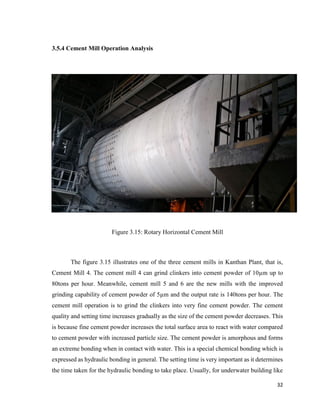
The figure 3.15 illustrates one of the three cement mills in Kanthan Plant, that is,
Cement Mill 4. The cement mill 4 can grind clinkers into cement powder of 10µm up to
80tons per hour. Meanwhile, cement mill 5 and 6 are the new mills with the improved
grinding capability of cement powder of 5µm and the output rate is 140tons per hour. The
cement mill operation is to grind the clinkers into very fine cement powder. The cement
quality and setting time increases gradually as the size of the cement powder decreases. This
is because fine cement powder increases the total surface area to react with water compared
to cement powder with increased particle size. The cement powder is amorphous and forms
an extreme bonding when in contact with water. This is a special chemical bonding which is
expressed as hydraulic bonding in general. The setting time is very important as it determines
the time taken for the hydraulic bonding to take place. Usually, for underwater building like
33
dam needs cement with fastest setting time. The C3A (tricalcium aluminate) in the clinker
determines the characteristic of setting time. This underwater building cement usually
consists of higher C3A content compared with concrete cement used for piling and masonry
cement. The cement mill usually subjected to weekly maintenance. This is to repair bearings
and shafts due to fatigue loading. The cement mill rotates at 30-35 revolutions per minute.
The inlet temperature is about 125o
C and the outlet temperature is about 109o
C. The
temperature is maintained by using a heat exchanger and water as the fluid. The whole system
is under extreme pressure. The power rating of the motor used to drive the cement mill is
5221kW.
Figure 3.16: Cross section of a cement mill
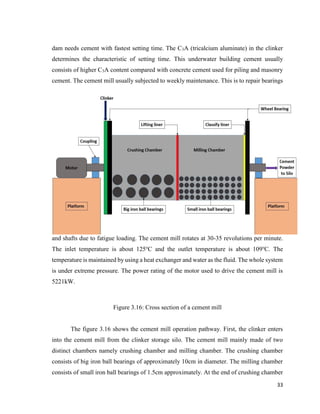
The figure 3.16 shows the cement mill operation pathway. First, the clinker enters
into the cement mill from the clinker storage silo. The cement mill mainly made of two
distinct chambers namely crushing chamber and milling chamber. The crushing chamber
consists of big iron ball bearings of approximately 10cm in diameter. The milling chamber
consists of small iron ball bearings of 1.5cm approximately. At the end of crushing chamber
34
and milling chamber is equipped with lifting liner and classify liner respectively. The lifting
liner filters clinker with certain size and the classify liner with very precise particle size as
the leaving mixture must be between 5 to 10µm according to the mill used. Small iron ball
bearings in the milling chamber completely grind the mixture into fine powder and the
powder is being discharged by the pressure difference in the air slide continuously into the
cement silo. Classify liner is often subjected to cleaning which is called diaphragm cleaning
since the small iron ball bearings collide with each other during rotation and dents. These
dented bearings often get stuck into the clearance space of the filter and reduce the cement
powder output flowrate. When this confirmed, the cement mill is stopped and the ball
bearings cleared from the liner and removed outside. Total ball bearings inside the cement
mill is half the total capacity of the mill itself. This is to enhance the ability to grind the
clinker into cement powder as small as possible.
3.5.5 Condition-Based and Time-Based Repair
There are two types of repair in cement mill namely condition-based and time-based.
Condition-based repair is only performed when components damaged and its condition is no
longer permissible to use. Inspection required to identify condition problems. For example,
replacement of roller if broken, replacement of conveyor belt if torn, and replacement of
bearing if damaged. Time-based repair usually performed within a known period of time.
The repair is based on the manufacturer’s quality standard of the components. For example,
replacement of the oil filter in 90 days, and replacement of the gearbox in two years.
Basically, condition-based repair will incur less cost than the time-based repair.
3.5.6 Cement Mill Pump Troubleshoot
Table 3.5 shows the troubleshooting method of cement mill pump.
35
Table 3.5: Cement mill pump troubleshooting chart.
MALFUNCTION POSSIBLE CAUSE REMEDY
Loss of flow or
low capacity
System components
malfunction
Inspect all system components and
correct any malfunction. Ensure
that suction and discharge lines are
open and all valves are in proper
position
Pump not primed or vented
Check reservoir oil level and fill as
required. Vent air from pump.
Low pump speed
Ensure that motor is receiving full
power.
Incorrect pump rotation
Ensure that motor leads are
properly installed.
Obstruction in piping
Inspect piping and
suction/discharge line valves and
remove any obstruction.
Wear of rotors and/or housings
Replace worn rotor and/or
housings.
System bypass
Check all system bypass valves
including relief valve for leakage
and repair as required.
Dirty suction strainer Clean suction strainer.
Excessive or
unusual noise or
vibration
Misalignment
Check pump and driver alignment,
and correct as required.
Restricted suction line
Check suction line and remove any
obstruction
Air in system
Ensure that pump is vented and
suction lines are full of fluid.
36
Check reservoir level and fill as
required.
Check all lines, flanges, joints and
connections for leakage and repair
as required.
Relief valve chatter or leakage
Check discharge relief valve
pressure setting.
Repair relief valve as required.
Internal rubbing of pump parts
Verify pump and driver alignment.
Inspect pump wearing parts and
replace as required.
Mechanical problem
Check for loose or misplaced
coupling, broken shafts, or worn
bearing as repair or replace as
required.
Rapid wear of
pump
Fluid contains abrasive foreign
matter
Clean or replace suction strainer.
Collect samples of fluid and test
for foreign matter.
Fluid contains water Remove any water from reservoir.
Insufficient fluid
Check for low capacity and/or loss
of suction.
Excessive power
usage
Fluid more viscous than
specified
Heat fluid to proper viscosity
and/or design temperature.
Pump suction and/or discharge
lines closed or blocked
Ensure that suction and discharge
lines are open.
Check lines and remove any
obstruction.
Excessive pump speed
Reduce pump speed to design
limitation.
37
3.6 RAW MILL MAINTENANCE
3.6.1 Raw Mill Operating Procedures
There are two raw mills in operation namely Raw Mill A and Raw Mill B. the purpose
of the raw mill is to prepare raw mix of perfect cement quality through correct ratio. Raw
mix of correct ratio consists of limestone +/-80%, clay of +/-16%, and iron ore of +/-4%. The
ratio need to be maintained to obtain clinkers of good quality. The raw mill feed will mix the
material and transfers the raw mix to raw mill. Inside the raw mill there are four rollers which
is kept static and a moving lower disc called table liner. The material (raw mix) will be
perfectly grinded by the moving disc and static roller. Hot gas that passes through the raw
mill in opposite direction of material flow will bring the fine raw mix dust into the filter
which is later enters the top cyclone of preheater for clinker production. Rejected raw mix
will be transferred by the lower conveying system below raw mix back into the raw mill feed.
Hydraulic system is used in the lower conveying system is used in raw mill operation
and completely under surveillance by the control room for any system malfunction. The raw
mix will be subjected to kiln for burning until clinkering completely finish. There are three
factors affecting the burning that depends on the operation of raw mill. They are raw mix
chemical composition, raw mix particle sizing, and raw mix geological origins. Firstly, raw
mix chemical composition affected by the natural variation of the primary material quality in
the quarry, the reliability of material feeders, and planned changes in the type of clinker to
be produced. Finer grinding costs a lot but with larger particles, there are fewer favorable
spots for heat exchange.
38
3.6.2 Raw Mix Transformation
The constituents of the raw mix are calcium oxide, silicon dioxide, iron oxide,
aluminium oxide and a little of magnesium oxide and sodium oxide. These chemicals
compounds combine with each other under favorable conditions to form 4 major final
products that comes with a single compound called clinker. The clinker can be classified into
four major compounds called C4AF, C3A, C2S, and C3S. C stands for calcium oxide, A for
aluminium oxide, S for silicon dioxide, and F for iron oxide. Some of the unreacted free-lime
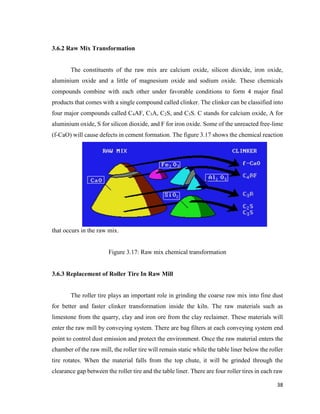
(f-CaO) will cause defects in cement formation. The figure 3.17 shows the chemical reaction
that occurs in the raw mix.
Figure 3.17: Raw mix chemical transformation
3.6.3 Replacement of Roller Tire In Raw Mill
The roller tire plays an important role in grinding the coarse raw mix into fine dust
for better and faster clinker transformation inside the kiln. The raw materials such as
limestone from the quarry, clay and iron ore from the clay reclaimer. These materials will
enter the raw mill by conveying system. There are bag filters at each conveying system end
point to control dust emission and protect the environment. Once the raw material enters the
chamber of the raw mill, the roller tire will remain static while the table liner below the roller
tire rotates. When the material falls from the top chute, it will be grinded through the
clearance gap between the roller tire and the table liner. There are four roller tires in each raw
39
mill. While the grinding is ongoing, a hot gas will move from bottom to the top of the raw
mill opposing the raw material movement. This gas actually plays an essential role in the raw
mill. This hot gas actually acts as the transportation medium for the finely milled raw dust
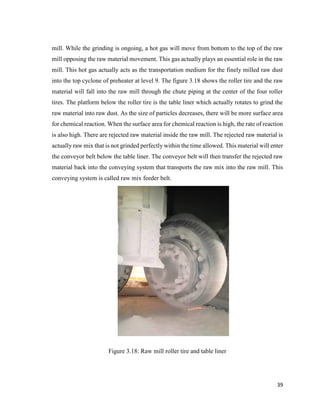
into the top cyclone of preheater at level 9. The figure 3.18 shows the roller tire and the raw
material will fall into the raw mill through the chute piping at the center of the four roller
tires. The platform below the roller tire is the table liner which actually rotates to grind the
raw material into raw dust. As the size of particles decreases, there will be more surface area
for chemical reaction. When the surface area for chemical reaction is high, the rate of reaction
is also high. There are rejected raw material inside the raw mill. The rejected raw material is
actually raw mix that is not grinded perfectly within the time allowed. This material will enter
the conveyor belt below the table liner. The conveyor belt will then transfer the rejected raw
material back into the conveying system that transports the raw mix into the raw mill. This
conveying system is called raw mix feeder belt.
Figure 3.18: Raw mill roller tire and table liner
40
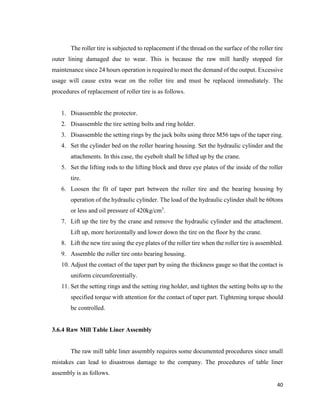
The roller tire is subjected to replacement if the thread on the surface of the roller tire
outer lining damaged due to wear. This is because the raw mill hardly stopped for
maintenance since 24 hours operation is required to meet the demand of the output. Excessive
usage will cause extra wear on the roller tire and must be replaced immediately. The
procedures of replacement of roller tire is as follows.
1. Disassemble the protector.
2. Disassemble the tire setting bolts and ring holder.
3. Disassemble the setting rings by the jack bolts using three M56 taps of the taper ring.
4. Set the cylinder bed on the roller bearing housing. Set the hydraulic cylinder and the
attachments. In this case, the eyebolt shall be lifted up by the crane.
5. Set the lifting rods to the lifting block and three eye plates of the inside of the roller
tire.
6. Loosen the fit of taper part between the roller tire and the bearing housing by
operation of the hydraulic cylinder. The load of the hydraulic cylinder shall be 60tons
or less and oil pressure of 420kg/cm3
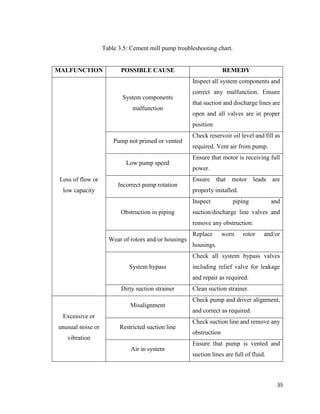
.
7. Lift up the tire by the crane and remove the hydraulic cylinder and the attachment.
Lift up, more horizontally and lower down the tire on the floor by the crane.
8. Lift the new tire using the eye plates of the roller tire when the roller tire is assembled.
9. Assemble the roller tire onto bearing housing.
10. Adjust the contact of the taper part by using the thickness gauge so that the contact is
uniform circumferentially.
11. Set the setting rings and the setting ring holder, and tighten the setting bolts up to the
specified torque with attention for the contact of taper part. Tightening torque should
be controlled.
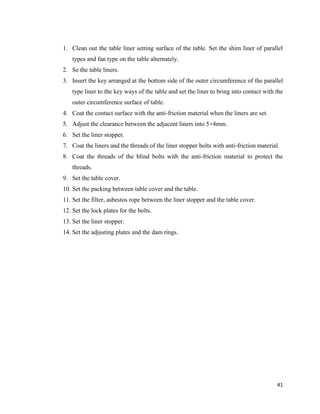
3.6.4 Raw Mill Table Liner Assembly
The raw mill table liner assembly requires some documented procedures since small
mistakes can lead to disastrous damage to the company. The procedures of table liner
assembly is as follows.
41
1. Clean out the table liner setting surface of the table. Set the shim liner of parallel
types and fan type on the table alternately.
2. Se the table liners.
3. Insert the key arranged at the bottom side of the outer circumference of the parallel
type liner to the key ways of the table and set the liner to bring into contact with the
outer circumference surface of table.
4. Coat the contact surface with the anti-friction material when the liners are set.
5. Adjust the clearance between the adjacent liners into 5+4mm.
6. Set the liner stopper.
7. Coat the liners and the threads of the liner stopper bolts with anti-friction material.
8. Coat the threads of the blind bolts with the anti-friction material to protect the
threads.
9. Set the table cover.
10. Set the packing between table cover and the table.
11. Set the filter, asbestos rope between the liner stopper and the table cover.
12. Set the lock plates for the bolts.
13. Set the liner stopper.
14. Set the adjusting plates and the dam rings.
42
3.6.5 Maintenance of Hydraulic Cylinder in Raw Mill
Figure 3.19: Raw mill roller hydraulic system
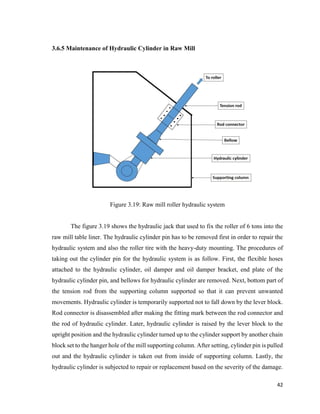
The figure 3.19 shows the hydraulic jack that used to fix the roller of 6 tons into the
raw mill table liner. The hydraulic cylinder pin has to be removed first in order to repair the
hydraulic system and also the roller tire with the heavy-duty mounting. The procedures of
taking out the cylinder pin for the hydraulic system is as follow. First, the flexible hoses
attached to the hydraulic cylinder, oil damper and oil damper bracket, end plate of the
hydraulic cylinder pin, and bellows for hydraulic cylinder are removed. Next, bottom part of
the tension rod from the supporting column supported so that it can prevent unwanted
movements. Hydraulic cylinder is temporarily supported not to fall down by the lever block.
Rod connector is disassembled after making the fitting mark between the rod connector and
the rod of hydraulic cylinder. Later, hydraulic cylinder is raised by the lever block to the
upright position and the hydraulic cylinder turned up to the cylinder support by another chain
block set to the hanger hole of the mill supporting column. After setting, cylinder pin is pulled
out and the hydraulic cylinder is taken out from inside of supporting column. Lastly, the
hydraulic cylinder is subjected to repair or replacement based on the severity of the damage.
43
3.7 QUARRY MAINTENANCE
3.7.1 Gyratory Crusher Maintenance
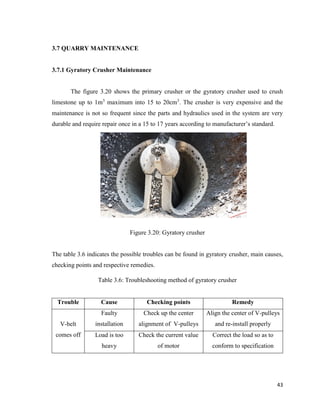
The figure 3.20 shows the primary crusher or the gyratory crusher used to crush
limestone up to 1m3
maximum into 15 to 20cm3
. The crusher is very expensive and the
maintenance is not so frequent since the parts and hydraulics used in the system are very
durable and require repair once in a 15 to 17 years according to manufacturer’s standard.
Figure 3.20: Gyratory crusher
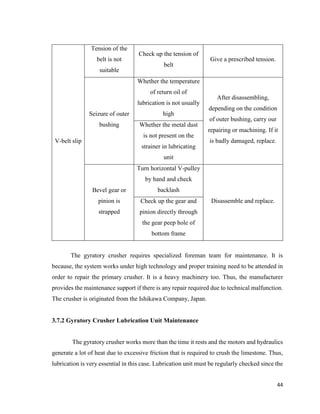
The table 3.6 indicates the possible troubles can be found in gyratory crusher, main causes,
checking points and respective remedies.
Table 3.6: Troubleshooting method of gyratory crusher
Trouble Cause Checking points Remedy
V-belt
comes off
Faulty
installation
Check up the center
alignment of V-pulleys
Align the center of V-pulleys
and re-install properly
Load is too
heavy
Check the current value
of motor
Correct the load so as to
conform to specification
44
V-belt slip
Tension of the
belt is not
suitable
Check up the tension of
belt
Give a prescribed tension.
Seizure of outer
bushing
Whether the temperature
of return oil of
lubrication is not usually
high
After disassembling,
depending on the condition
of outer bushing, carry our
repairing or machining. If it
is badly damaged, replace.
Whether the metal dust
is not present on the
strainer in lubricating
unit
Bevel gear or
pinion is
strapped
Turn horizontal V-pulley
by hand and check
backlash
Disassemble and replace.Check up the gear and
pinion directly through
the gear peep hole of
bottom frame
The gyratory crusher requires specialized foreman team for maintenance. It is
because, the system works under high technology and proper training need to be attended in
order to repair the primary crusher. It is a heavy machinery too. Thus, the manufacturer
provides the maintenance support if there is any repair required due to technical malfunction.
The crusher is originated from the Ishikawa Company, Japan.
3.7.2 Gyratory Crusher Lubrication Unit Maintenance
The gyratory crusher works more than the time it rests and the motors and hydraulics
generate a lot of heat due to excessive friction that is required to crush the limestone. Thus,
lubrication is very essential in this case. Lubrication unit must be regularly checked since the
45
filter found in the circulation of lubrication oil can visualize any defects found in the bearings
involved by accumulating the broken pieces in it. The lubrication unit not only prevents
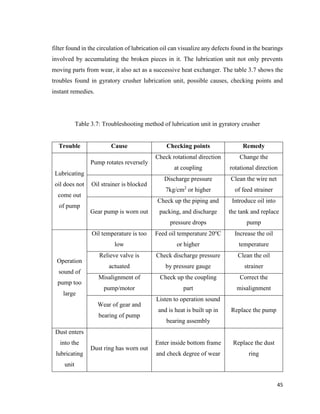
moving parts from wear, it also act as a successive heat exchanger. The table 3.7 shows the
troubles found in gyratory crusher lubrication unit, possible causes, checking points and
instant remedies.
Table 3.7: Troubleshooting method of lubrication unit in gyratory crusher
Trouble Cause Checking points Remedy
Lubricating
oil does not
come out
of pump
Pump rotates reversely
Check rotational direction
at coupling
Change the
rotational direction
Oil strainer is blocked
Discharge pressure
7kg/cm2
or higher
Clean the wire net
of feed strainer
Gear pump is worn out
Check up the piping and
packing, and discharge
pressure drops
Introduce oil into
the tank and replace
pump
Operation
sound of
pump too
large
Oil temperature is too
low
Feed oil temperature 20o
C
or higher
Increase the oil
temperature
Relieve valve is
actuated
Check discharge pressure
by pressure gauge
Clean the oil
strainer
Misalignment of
pump/motor
Check up the coupling
part
Correct the
misalignment
Wear of gear and
bearing of pump
Listen to operation sound
and is heat is built up in
bearing assembly
Replace the pump
Dust enters
into the
lubricating
unit
Dust ring has worn out
Enter inside bottom frame
and check degree of wear
Replace the dust
ring
46
3.7.3 Gyratory Crusher Hydraulic System Maintenance
The gyratory crusher operates wholly on hydraulic system since the parts of the
system are very heavy and it requires mechanical support system without stall. Hence,
hydraulic system is the suitable operating system since the mantle in the center of the gyratory
crusher can weigh up to 15 tons rotating in both clockwise and anticlockwise direction to
crush the limestone with a precise sizing that depends on the clearance setting between the
mantle and the side walls controlled by the control room operator (CRO) based on the
secondary crusher performance. The table 3.8 shows the troubles found in gyratory crusher
hydraulic system, possible causes, checking points and instant remedies.
Table 3.8: Troubleshooting method of hydraulic system in gyratory crusher
Trouble Cause Checking points Remedy
The oil level of the
pressure oil tank
rises during
operation
Failure of check
valve
Check level rise
with the oil level
gauge
Replace check valve
The mantle does not
lowered
The stop valve is
closed
Check the stop
valve
Open the stop valve
Seizure at the bush
of hydraulic
cylinder
The lowering speed
of the mantle is too
low
Replace the bush
The balance
cylinder does not
function
Abrasion or damage
to the L-packing in
the balance cylinder
or oil in the air
Check the charged
pressure. It should
be 5-6kg/m2
when
the balance cylinder
is at the uppermost
position
Replace the L-
packing
47
3.7.4 Limestone Stacker Inspection
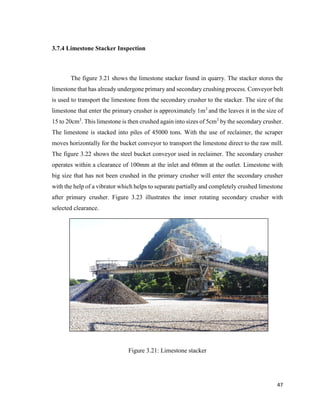
The figure 3.21 shows the limestone stacker found in quarry. The stacker stores the
limestone that has already undergone primary and secondary crushing process. Conveyor belt
is used to transport the limestone from the secondary crusher to the stacker. The size of the
limestone that enter the primary crusher is approximately 1m3
and the leaves it in the size of
15 to 20cm3
. This limestone is then crushed again into sizes of 5cm3
by the secondary crusher.
The limestone is stacked into piles of 45000 tons. With the use of reclaimer, the scraper
moves horizontally for the bucket conveyor to transport the limestone direct to the raw mill.
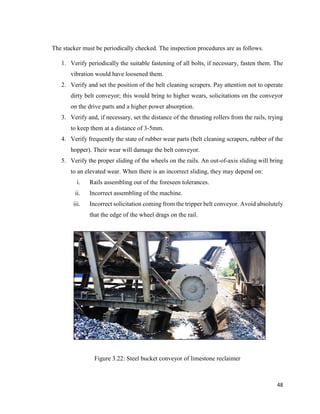
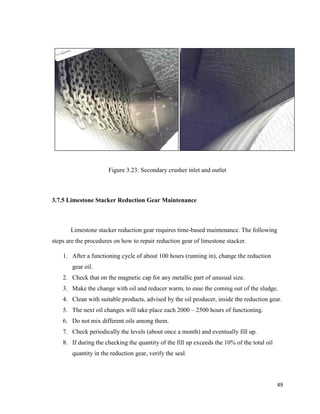
The figure 3.22 shows the steel bucket conveyor used in reclaimer. The secondary crusher
operates within a clearance of 100mm at the inlet and 60mm at the outlet. Limestone with
big size that has not been crushed in the primary crusher will enter the secondary crusher
with the help of a vibrator which helps to separate partially and completely crushed limestone
after primary crusher. Figure 3.23 illustrates the inner rotating secondary crusher with
selected clearance.
Figure 3.21: Limestone stacker
48
The stacker must be periodically checked. The inspection procedures are as follows.
1. Verify periodically the suitable fastening of all bolts, if necessary, fasten them. The
vibration would have loosened them.
2. Verify and set the position of the belt cleaning scrapers. Pay attention not to operate
dirty belt conveyor; this would bring to higher wears, solicitations on the conveyor
on the drive parts and a higher power absorption.
3. Verify and, if necessary, set the distance of the thrusting rollers from the rails, trying
to keep them at a distance of 3-5mm.
4. Verify frequently the state of rubber wear parts (belt cleaning scrapers, rubber of the
hopper). Their wear will damage the belt conveyor.
5. Verify the proper sliding of the wheels on the rails. An out-of-axis sliding will bring
to an elevated wear. When there is an incorrect sliding, they may depend on:
i. Rails assembling out of the foreseen tolerances.
ii. Incorrect assembling of the machine.
iii. Incorrect solicitation coming from the tripper belt conveyor. Avoid absolutely
that the edge of the wheel drags on the rail.
Figure 3.22: Steel bucket conveyor of limestone reclaimer
49
Figure 3.23: Secondary crusher inlet and outlet
3.7.5 Limestone Stacker Reduction Gear Maintenance
Limestone stacker reduction gear requires time-based maintenance. The following
steps are the procedures on how to repair reduction gear of limestone stacker.
1. After a functioning cycle of about 100 hours (running in), change the reduction
gear oil.
2. Check that on the magnetic cap for any metallic part of unusual size.
3. Make the change with oil and reducer warm, to ease the coming out of the sludge.
4. Clean with suitable products, advised by the oil producer, inside the reduction gear.
5. The next oil changes will take place each 2000 – 2500 hours of functioning.
6. Do not mix different oils among them.
7. Check periodically the levels (about once a month) and eventually fill up.
8. If during the checking the quantity of the fill up exceeds the 10% of the total oil
quantity in the reduction gear, verify the seal.
50
3.8 CLAY RECLAIMER MAINTENANCE
3.8.1 Iron Ore Hopper Analysis
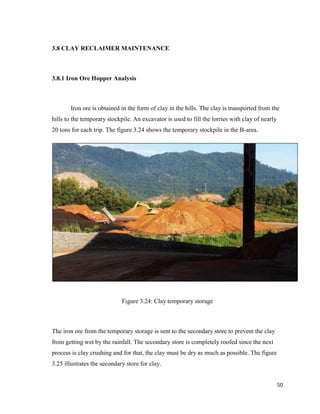
Iron ore is obtained in the form of clay in the hills. The clay is transported from the
hills to the temporary stockpile. An excavator is used to fill the lorries with clay of nearly
20 tons for each trip. The figure 3.24 shows the temporary stockpile in the B-area.
Figure 3.24: Clay temporary storage
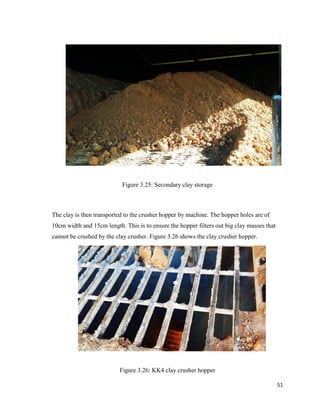
The iron ore from the temporary storage is sent to the secondary store to prevent the clay
from getting wet by the rainfall. The secondary store is completely roofed since the next
process is clay crushing and for that, the clay must be dry as much as possible. The figure
3.25 illustrates the secondary store for clay.
51
Figure 3.25: Secondary clay storage
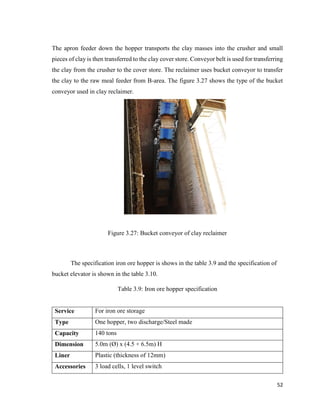
The clay is then transported to the crusher hopper by machine. The hopper holes are of
10cm width and 15cm length. This is to ensure the hopper filters out big clay masses that
cannot be crushed by the clay crusher. Figure 3.26 shows the clay crusher hopper.
Figure 3.26: KK4 clay crusher hopper
52
The apron feeder down the hopper transports the clay masses into the crusher and small
pieces of clay is then transferred to the clay cover store. Conveyor belt is used for transferring
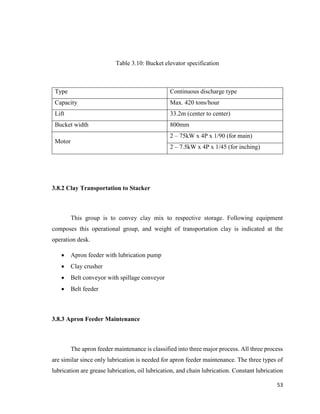
the clay from the crusher to the cover store. The reclaimer uses bucket conveyor to transfer
the clay to the raw meal feeder from B-area. The figure 3.27 shows the type of the bucket
conveyor used in clay reclaimer.
Figure 3.27: Bucket conveyor of clay reclaimer
The specification iron ore hopper is shows in the table 3.9 and the specification of
bucket elevator is shown in the table 3.10.
Table 3.9: Iron ore hopper specification
Service For iron ore storage
Type One hopper, two discharge/Steel made
Capacity 140 tons
Dimension 5.0m (Ø) x (4.5 + 6.5m) H
Liner Plastic (thickness of 12mm)
Accessories 3 load cells, 1 level switch
53
Table 3.10: Bucket elevator specification
3.8.2 Clay Transportation to Stacker
This group is to convey clay mix to respective storage. Following equipment
composes this operational group, and weight of transportation clay is indicated at the
operation desk.
 Apron feeder with lubrication pump
 Clay crusher
 Belt conveyor with spillage conveyor
 Belt feeder
3.8.3 Apron Feeder Maintenance
The apron feeder maintenance is classified into three major process. All three process
are similar since only lubrication is needed for apron feeder maintenance. The three types of
lubrication are grease lubrication, oil lubrication, and chain lubrication. Constant lubrication
Type Continuous discharge type
Capacity Max. 420 tons/hour
Lift 33.2m (center to center)
Bucket width 800mm
Motor
2 – 75kW x 4P x 1/90 (for main)
2 – 7.5kW x 4P x 1/45 (for inching)
54
at the specific parts of the apron feeder with respective lubricating material will improve the
life of it.
In grease lubrication, the metal apron feeder is equipped with a centralized plant with
manual pump for the lubrication of bearings of towing and idle axles. Each bearing of the
machine is equipped with a joint for connecting for the centralized plant. The plant consists
of a manual control pump with tank, a set of steel pipes, a set of flexible pipes and a set of
joints, and distribution blocks. It is necessary to check periodically the plant and make a
lubrication cyclus, according to the modalities and frequency detailed on layout and table.
Fill thr tank with grease when necessary.
In oil lubrication, reduction gears are lubricated in oil bath. The first oil change has
to be made after 50 – 100 hours running and then every 2500 hours. In the chain lubrication,
the chain is lubricated by means of a centralized drop system, with an electropump complete
with tank. The lubrication cyclus has to be temporized with a running time of pump of 6
minutes each 4 hours of machine running. Fill the tank with oil when necessary.
3.9 PROJECT DESIGN
3.9.1 Project Design Works
Each components that require immediate replacement but the spare part is no longer
produced by the manufacturer is sent from the plant to the project office. Lafarge employees
ib the project department uses AutoCAD 3D modelling software to generate third angle and
first angle drawing so that the third party foundries can fabricate the specific part. The
drawing is generated by AutoCAD Simulation Mechanical software and tested for stress and
strain, and safety factor analysis using the simulation to spot for weak design contours.
55
3.9.2 Belt Bucket Elevator Maintenance
The table 3.11 shows the methods of troubleshooting belt bucket elevator.
Table 3.11: Belt bucket maintenance
Malfunction Causes Remedy
Main drive motor will not
start up
Wrong direction of the
motor
Change poles of the motor
Cage with grippers of the
back stop improperly
installed
Install cage of the back stop
turned 180 degree
Overrunning clutch is
jammed
Install a new running clutch
Auxiliary drive motor will
not start up
Overload at output Reduce load
Motor brake not released
Correct electrical
connection of motor brake
Motor of drive is defective Repair or replace motor
3.9.3 Cement Mill Air Separator Maintenance
Drain the shipping oil from the shaft housing by removing the plug at the bottom of
the housing. Install the shaft assembly by lowering it through the hole in the drive support
frame making a certain that the oil inlet and outlet are orientated correctly with the respect to
the oil outlet hole in the exit duct. Install the mounting bolts and securely tighten. Ensure that
the shaft is plumbed by placing a machinist level on the machined portion of the shaft at 4
positions 90 degree from each other. Adjust if necessary by utilizing the jacking bolt on the
drive columns and shims.
56
3.9.4 Cooling Tower Maintenance
 Nozzles
The design of the orifice of the nozzle makes it clog free so normally there is no
problem. However, if it is observed from the water leaving the field is not even, please
check the nozzle above it. There are 2 ways to approach the nozzles:
 Loose the casing panel near this nozzle and access water distribution area.
 In the center of each cell, the drift eliminator is movable. Move one piece of
the drift eliminator and access the water distribution area.
 Belt reducer
The lifetime of the belt is about 6 to 12 months. Periodical attention is essential.
Replace the belts when it is worn or it is too loose.
 Drift eliminator
Same as fill, the drift eliminator is also made of PVC material. Unless it is replaced
with CPVC material, do not use on the job where the hot water temperature exceeds
50o
C.
3.9.5 Return Filter Maintenance
The micro separator can be used without any cleaning until a deposit of contaminants
gather at a height of approximately 20/30 mm on the surface. When cleaning, wipe off the
Micro Separator with a waste or sponge and it will be easily cleaned out.
57
CHAPTER 4
CONCLUSION
Mechanical engineers play an important role in ensuring cement structural integrity to
construction structures that make up most of our buildings, skyscrapers, underground storage
and transportation and facilities. Many of the structures would not stay safely without quality
cement as they will damage over time by nature and finally collapse and fail. Besides that,
material degradation is of economical concern in the industries. Environmental friendly and
strong quality cement is produced to generate quality cement for building structures.
Associated Pan Malaysia Cement Sdn Bhd (Lafarge) is an ideal place to learn. Be it in
technical or nontechnical aspect, the company has given me the opportunity to apply, and at
the same time, to develop new skills through comprehensive involvement in their operations,
especially in Cement Production system design. Through hard times I have realized the
importance of soft skills. Engineers are required to communicate effectively and contribute
as a team in projects.
58
CHAPTER 5
RECOMMENDATIONS FOR FUTURE WORKS
For improved learning experience, interns shall take the initiatives and act proactively in
looking for opportunities to participate in the organization’s routine works. In Associated
Pan Malaysia Cement Sdn Bhd, interns are treated as real engineers and are required to work
in groups. As professional problem solvers, engineers require not only technical skills, but
also good soft skills. Active involvement in discussions is a good practice as it trains the
prospective engineers to communicate, contribute ideas, and delegate and manage tasks more
effectively.
59
REFERENCES
http://www.lafarge-na.com/wps/portal/na/en/2_2_1-Manufacturing_process
http://www.cement.org/for-concrete-books-learning/cement-manufacturing
http://www.cembureau.eu/about-cement/cement-manufacturing-process
http://www.wbcsdcement.org/index.php/en/about-cement/cement-production

Full Report

  • 1.
    INDUSTRIAL TRAINING REPORT ASSOCIATEDPAN MALAYSIA CEMENT SDN BHD 13 ½ MILES, JALAN KUALA KANGSAR 31200 CHEMOR, PERAK DARUL RIDZUAN KESAVARMA A/L SELURAJU MA 12085 FACULTY OF MECHANICAL ENGINEERING UNIVERSITI MALAYSIA PAHANG 29 JUNE 2015 – 04 SEPTEMBER 2015
  • 2.
    i ACKNOWLEDGEMENT First and foremost,I would like to express my appreciation to Associated Pan Malaysia Cement Sdn Bhd for the opportunity of internship throughout this ten-week program. My supervisor, Mr.Halim bin Haji Daud, being the Operations Manager under Maintenance Department, has been helpful in guiding me through the circumstances encountered in the tasks assigned. His constructive comments and advices were encouraging. Through sharing of his vast knowledge and experiences I have learned much about the complete cement production as well as some industrial practices. Next, my heartfelt gratitude to the Maintenance Manager, Mr.Harisa bin Ujud who had always taught me about being independent and multitasking, and for his patience to guide me through the tasks assigned. His sharing of thoughts has broadened my perspectives about the art of thinking. Through his determination and perseverance I have learned that a good attitude with great passion is the key to becoming a successful engineer. Last but not least, big thanks to the process engineer, Ms.Kokilawani and Human Resources Manager, Mr.Leong Chun Hor for their generous advices throughout my learning process in cement production process, and to all other staffs, technical and non-technical, who have lent me a hand in times of need. I am truly fortunate for being offered the opportunity to work with a team of people with positive mindset and great passion.
  • 3.
    ii ABSTRACT Industrial Training isa mandatory course for all students of Bachelor of Mechanical Engineering in Universiti Malaysia Pahang (UMP). Though being a requirement for graduation, this ten-week period in Associated Pan Malaysia Cement Sdn Bhd has been a challenging yet fulfilling moment of my engineering studies. Industrial engineering and mechanical system design are specialized field where the principles evolved from mechanical engineering are applied to minimize or prevent mechanical failures. The design cement plant structures and cement production system fall within the regime of mechanical engineering. Throughout this training program, I have been trained by professional engineers in the technical, as well as non-technical aspects of industrial practices, which are fundamentals in an engineer’s career. Mechanical repair works and industrial engineering were the core element of my training program that involves construction design inspections, preparation of technical proposal, lean management improvement in production line, and site visit. By the end of the program, students’ performances were evaluated by a visiting lecturer from the university via PowerPoint presentations. This industrial training report thus summarizes lesson learned by students from the program.
  • 4.
    iii TABLE OF CONTENTS Page ACKNOWLEDGEMENTSi ABSTRACT ii TABLE OF CONTENTS iii LIST OF TABLES v LIST OF FIGURES vii CHAPTER 1 COMPANY PROFILE 1.1 Company Background 1 1.2 Company Organization 3 1.3 Training Schedule 4 CHAPTER 2 COMPANY ACTIVITIES 2.1 Introduction 5 2.2 Activities of Each Function 2.2.1 Maintenance Management 7 2.2.2 Inspection 8 2.2.3 Planning 8 2.2.4 Scheduling 9 2.2.5 Execution 9 2.2.6 Improvement 9 2.3 Lafarge Maintenance Operation Mode 11
  • 5.
    iv CHAPTER 3 STUDENTSELF ACTIVITY 3.1 Introduction 12 3.2 Production Process Identification 3.2.1 Mechanical Repair 12 3.2.2 Electrostatic Precipitator (EP) 13 3.2.3 Cement Laboratory Testing 13 3.2.4 Welding and Cutting 14 3.2.5 Inspection and Maintenance of Electrostatic Precipitator 15 3.3 Check-in and Check-out Project (CICO30) 16 3.4 Rotopacker 1,2,3 Maintenance 3.4.1 Rotopacker 2 Maintenance 26 3.4.2 Rotopacker 3 Spout Number 1 Sadle Cylinder Replacement 28 3.4.3 Rotopacker 2/3 Loader Safety Guard Welding 28 3.4.4 Rotopacker 1 Maintenance 29 3.5 Cement Mill Maintenance 3.5.1 Silo Measurement 29 3.5.2 Inspection during mill running 30 3.5.3 Inspection during mill stoppage 31 3.5.4 Cement Mill Operation Analysis 32 3.5.5 Condition-based and Time-based Repair 34 3.5.6 Cement Mill Pump Maintenance 34 3.6 Raw Mill Maintenance 3.6.1 Raw Mill Operating Procedures 37 3.6.2 Raw Mix Transformation 38 3.6.3 Replacement of Roller Tire 38 3.6.4 Raw Mill Table Liner Assembly 40 3.6.5 Raw Mill Hydraulic Cylinder Maintenance 42 3.7 Quarry Maintenance 3.7.1 Gyratory Crusher Maintenance 43 3.7.2 Gyratory Crusher Lubrication Unit Maintenance 44 3.7.3 Gyratory Crusher Hydraulic System Maintenance 46 3.7.4 Limestone Stacker Inspection 47
  • 6.
    v 3.7.5 Limestone StackerReduction Gear Maintenance 49 3.8 Clay Reclaimer Maintenance 3.8.1 Iron Ore Hopper Analysis 50 3.8.2 Clay Transportation to Stacker 53 3.8.3 Apron Feeder Maintenance 53 3.9 Project Design 3.9.1 Project Design Works 54 3.9.2 Belt Bucket Elevator Maintenance 55 3.9.3 Cement Mill Air Separator Maintenance 55 3.9.4 Cooling Tower Maintenance 56 3.9.5 Return Filter Maintenance 56 CHAPTER 4 CONCLUSION 57 CHAPTER 5 RECOMMENDATION 58 REFERENCES 59
  • 7.
    vi LIST OF TABLES TableNo. Title Page 3.1 Mechanical strength chart of cement 14 3.2 Problem description in CICO30 17 3.3 Time taken for each workstation in CICO30 24 3.4 Factors affecting the delay in check0in and check-out of bulk tankers 25 3.5 Cement mill pump troubleshooting chart 35 3.6 Troubleshooting method of gyratory crusher 43 3.7 Troubleshooting method of hydraulic system in gyratory crusher 45 3.8 Iron ore hopper specification 46 3.9 Bucket elevator specification 52 3.10 Belt bucket maintenance 53 3.11 55
  • 8.
    vii LIST OF FIGURES FigureNo. Title Page 1.1 Organization chart of Associated Pan Malaysia Cement SDN BHD Kanthan Plant 3 1.2 Gantt chart 4 2.1 Cement production process illustration 6 2.2 Kiln process flow 6 2.3 Maintenance operation mode 11 3.1 Arc welding and oxy-acetylene cutting 15 3.2 Original layout of bulk tankers loading 17 3.3 Improved layout of bulk tankers loading 18 3.4 Original layout of bulk tankers loading with distance 18 3.5 Improved layout of bulk tankers loading with distance 19 3.6 Comparison of current and proposed distance of bulk loading under silo 8,11, and 12 20 3.7 Comparison of tonnage, loading time, and tons/min of silo 11 21 3.8 Stock measurement of cement silo 11 22 3.9 Fishbone diagram 23 3.10 The precedence diagram (current) 24 3.11 The precedence diagram (proposed) 25 3.12 Pareto chart 26 3.13 Rotopacker machine, conveying system and welded air slide system 27 3.14 Cement mill runtime planning 30
  • 9.
    viii 3.15 Rotary horizontalcement mill 32 3.16 Cross section of cement mill 33 3.17 Raw mix chemical transformation 38 3.18 Raw mill roller tire and table liner 39 3.19 Raw mill hydraulic system 42 3.20 Gyratory crusher 43 3.21 Limestone stacker 47 3.22 Steel bucket conveyor of limestone reclaimer 48 3.23 Secondary crusher inlet and outlet 49 3.24 Clay temporary storage 50 3.25 Secondary clay storage 51 3.26 KK4 clay crusher hopper 51 3.27 Bucket conveyor of clay reclaimer 52
  • 10.
    1 CHAPTER 1 COMPANY PROFILE 1.1COMPANY BACKGROUND Lafarge Malaysia Berhad is a leader of the Malaysian construction industry, contributing towards Building Better Cities. Its solutions provide cities and townships with more housing, making them more compact, more durable, more beautiful and better connected. Headquartered in the Klang Valley, Lafarge Malaysia has facilities that include three integrated cement plants in Langkawi, Kanthan and Rawang, a grinding station in Pasir Gudang, more than 30 ready-mixed concrete batching plants and 6 aggregates quarries throughout Peninsular Malaysia. These facilities are supported by a wide network of depots, terminals and distribution facilities connected by road, rail and sea. Lafarge Malaysia Berhad is today the parent of a group of companies in Malaysia and Singapore whose core businesses are in the manufacturing and sale of cement, ready-mixed concrete and other related building materials. Lafarge Malaysia Berhad is listed on Bursa Malaysia. Fifty-one percent of Lafarge Malaysia's shares are held by Lafarge S.A. via Associated International Cement Limited.
  • 11.
    2 VISION Lafarge: building bettercities. MISSION Sustain Mastered and Robust operations with Health and Safety in mind, consistent in delivering quality service and fulfilling customers’ and stakeholders’ satisfaction, well- known for our premium quality and its availability, Go Beyond implementation with efficient workforce at lowest manufacturing cost, and ‘Extra Mile’ effort to improve area housekeeping level on individual basis.
  • 12.
    3 1.2 COMPANY ORGANIZATIONSTRUCTURE Figure 1.1 illustrates the organization chart of the company, figure 1.2 illustrates the gantt chart and figure 1.3 shows the training schedule. Figure 1.1: Organization chart of Associated Pan Malaysia Cement SDN BHD Kanthan Plant
  • 13.
    4 1.3 TRAINING SCHEDULE AREA WEEK 12 3 4 5 6 7 8 9 10 Workshop Production Planning & Control Rotopacker 1,2,3 Cement Mill Raw Mill Quarry Clay Reclaimer Project/Admin Presentation Figure 1.2: Gantt chart PLANNING ACTUAL
  • 14.
    5 CHAPTER 2 COMPANY ACTIVITY 2.1INTRODUCTION Cement is a finely powdered mineral. In the presence of water, it will form a paste which will harden with time, without air. It will even harden under water. This special characteristic of cement is because addressed as hydraulic property and it is known as hydraulic binder. Clinker is the main ingredient in the cement production. Gypsum added to it to control the setting time. Clinker and gypsum grinded together to form Portland cement. Sometimes, secondary ingredients added to form cement with additives. Some countries add these secondary ingredients to make cements which have different qualities. The quality of most cement is characterized by the requirement for special properties needed to meet the end use of the concrete. Starting with the same clinker, different cement types can be produced by different grinding. Decreasing the particle size gives a finer cement of higher strength. Clinker appears in the form of granular nodules. During clinker formation, new synthetic minerals appears namely calcium silicates and calcium aluminates which have hydraulics properties. Clinkering takes place in the kiln department. In the preheater, hot gases exiting the kiln pretreat the raw mix chemically and thermally. The rotary kiln is at the center of clinker formation. The cooler then cools and quenches the clinker, and preheats the combustion air. Figure 2.2 illustrates the process at kiln department.
  • 15.
    6 Figure 2.1: Cementproduction process illustration Figure 2.2: Kiln process flow Mechanical engineering role is played under the Maintenance department of Lafarge. The role of the maintenance department are classified into six parts namely maintenance management, inspection, planning, scheduling, execution, and improvement. There are documented activities under each part to be implemented in order to maintain the plant operation in an optimum level.
  • 16.
    7 2.2 ACTIVITIES OFEACH FUNCTION 2.2.1 Maintenance Management  Set Maintenance Department long, medium and short term goals and objectives  Provide development / compliance of Maintenance spending budget  Manage the performance of the Maintenance Department including effective use of the Key Performance Indicators  Achieve production, quality, environmental, reliability and utilization targets (shared with other plant functions)  Ensure adoption and adherence to Lafarge standards and norms such as Best Practices and PPM Guidelines  Ensure that safe work practices are understood, implemented and constantly followed by Maintenance Department employees and contractors  Ensure regulatory compliance by maintaining all equipment within legal guidelines and standards  Develop a continuous improvement program within the Maintenance Department  Develop a motivating work environment within the Maintenance Department  Provide training programs to improve skills (shared with Human Resources Department), as well as to share methods and philosophies with other departments  Review and address performance issues with craftsmen  Develop and maintain relationships with other departments and the home Technical Center  Ensure that initial documentation on new equipment is complete and accurate  With Stores and Purchasing, assure an adequate inventory of spare parts for efficient operation
  • 17.
    8 2.2.2 Inspection  Maintainin-depth knowledge of the condition of all equipment on a continuous basis.  Conduct field inspections on all plant mechanical, electrical and instrumentation equipment as scheduled. Initiate work orders based on inspection results.  Know and monitor condition predictors, including lubrication, for all critical equipment.  Check unclear work orders and recommend time estimates, with the planning function, to facilitate effective planning.  Maintain the master PM schedule  Validate / update equipment histories and files. 2.2.3 Planning  Determine the appropriate methods, resources, manpower and skills necessary for completion of assigned work in an efficient, effective and safe manner  Provide clear step-by-step instructions as required to complete assigned tasks  Assure all required materials in terms of quantity and quality are available for scheduled work  Priority assigned to all planned work  Plan Maintenance work with regard to the forecasted budget limits  Determine cost of work orders  Prepare time estimates for jobs to facilitate and improve manpower utilization  Write Standard Operating Procedures (SOPs) for critical repairs  Periodically update plans based on actual experience
  • 18.
    9 2.2.4 Scheduling  Interacteffectively with other plant functions  Establish schedule by coordinating availability of equipment and other resources  Ensure schedule adherence according to the priority system  Manage work order backlog  Coordinate planned Maintenance work that impacts other departments with those departments 2.2.5 Execution  Assign and review work to perform with the craftsman  Ensure continuity on all jobs as required  Complete maintenance related work according to highest standards; safely, efficiently, and effectively  Ensure, upon completion of repairs, that equipment is in good operating condition, ready to meet plant's operational requirements, fully inspected, tested, clean, and safe  Provide adequate feedback on repair jobs including consumption of materials, tools, manhours and skills. as well as all pertinent information for the job history file  Eliminate "rework" 2.2.6 IMPROVEMENT  Improve Reliability to contribute to Overall Equipment Effectiveness (OEE)
  • 19.
    10  Eliminate repetitiveproblems through analysis and interaction with the reliability committee.  Determine solutions to incidents and daily work requests through troubleshooting, analysis and review.  Develop, implement, and enforce training and SOPs to improve the performance and longevity of equipment.  Ensure maintenance input to equipment upgrades and projects  Provide technical support to the plant maintenance activities  Update drawings and files after modifications
  • 20.
    11 2.3 LAFARGE MAINTENANCEOPERATION MODE Figure 2.3: Maintenance operation mode
  • 21.
    12 CHAPTER 3 STUDENT SELFACTIVITY 3.1 INTRODUCTION In the first week, briefing about the workplace mandatory safety rules and policies carried out to ensure zero accidents inside the plant. After that, overall company area recognition process carried out according to the production sequence of cement from quarry to dispatch. 3.2 PRODUCTION PROCESS IDENTIFICATION 3.2.1 Mechanical Repair Mechanical repair initially requires 3 main things namely manpower, raw material and suitable equipment in order to perform maintenance if any mechanical repair reported. There are two levels of inspection. First level inspection is using 3 senses of hearing, seeing, and smelling. This is to identify for problems when the machines are in operation. Second
  • 22.
    13 inspection is donewhen the machines are completely stopped. This is where measurements of the components were taken. 3.2.2 Electrostatic Precipitator High torque motors used with spur gear to transport dust articles that are trapped in electrostatic precipitator through conveyor belt. Cam shaft is used with low speed high torque motor for the hammer that vibrates the precipitator blocks by striking it. Spring mechanism is used to absorb the excessive vibrations that can possibly damage the electric and electronic components inside the coal reclaimer. Proximity sensor (capacitive) used as limit switch of movable arms. Speed sensor is installed onto the raw mill conveyor belt to detect the speed changes of the belt due to possible causes like belt disconnection, material overload or motor failure. 3.2.3 Cement Laboratory Testing Cement samples taken from various places namely silo 8, 9, 10, 11, and 12 and subjected to chemical composition testing and mechanical testing. The cement from mill 5 is mixed with fine sand for 240 seconds in an electric-powered mixer and subsequently compressed for 120 seconds to form cuboids by Jolting Machine. Then, the mixture is dried for 2 days, 7 days, and 28 days respectively, where the first day of drying is inside the dehumidifier at 20o C and soaked in the water bath with the same temperature for the remaining drying time. After that, samples from 2, 7 and 28 days are subjected for mechanical testing. Similarly, the cement powder obtained from the cement mill is tested for silicon dioxide, calcium carbonate, aluminium oxide and iron oxide determined to check for the quality clinker production. The table below shows the strength chart of the OPC cement.
  • 23.
    14 Table 3.1: Mechanicalstrength chart of cement Product IQP Range Strength (N/mm2) OPC 2 days 7 days Upper NC limit 31.0 47.5 Upper warning limit 30.5 47.0 Mean value 28.0 44.0 Lower warning limit 25.5 41.0 Lower NC limit 25.0 40.5 * NC = Non-conformity to the Quality contract limits 3.2.4 Welding and Cutting Oxygen and acetylene ratio is important in determining the suitable flame speed to cut respective base metals with various thicknesses. For safety purpose, every nuts involved in oxygen flow path is tightened in clockwise rotation whereas in acetylene flow path, every nuts are tightened in anti-clockwise direction. One-way flow control valve with ball bearing used to prevent fire accidents if there is any leakage in acetylene piping. Brazing is a process where two base metals of same type are joined with a filler metal of lower melting point than that of the base metals to be joined together. Cutting and welding are classified as hot work and personal protective equipment like face shield, heat-resistant jacket and gloves, safety shoes, welding glasses (only for welding) and a safety helmet must be worn at all times. Spot weld must be done before horizontal or vertical arc welding is done to avoid workpiece from moving when welding is ongoing. After welding, the weld is subjected for quality checking to ensure perfect surface finishing and to improve weld quality. Figure 3.1 shows the arc welding and cutting in operation.
  • 24.
    15 Figure 3.1: Arcwelding and oxy-acetylene cutting Horizontal and vertical welding requires skills and experience to reduce or prevent defects in final product. For that, a well-trained welder from the Lafarge maintenance department organized one day welding course to teach other teammates on how to weld horizontally and vertically since both are different from each other with least amount of defects in the preliminary stage of welding. 3.2.5 Inspection and Maintenance of Electrostatic Percipitator (Ep) The electrostatic precipitator need to be regularly inspected to check for mechanical failures inside the cooler vent air. If during fault tracing operations, it is necessary to enter the electrostatic precipitator itself or to work near high voltage carrying elements, the plant must be made dead before starting work. It must be ensured that this dead state is kept. Inspection of dust hoppers and dust discharge elements. Due to dust on bridges in the hopper outlet, dust could built up and reach up into the electrostatic fields, thus, leading to short circuits. Inspect insulators for breaks and excessive accumulation of dirt which could lead to flash overs, is
  • 25.
    16 found, the insulatorsmust be cleaned with the help of dry cloth. Broken support insulators must be replaced immediately. Openings for this purpose have been provided at certain points in the roof beam bottom plate which are closed by bolted plate covers and gaskets. 3.3 CHECK-IN AND CHECK-OUT 30 PROJECT (CICO30) Industrial engineering is a branch of engineering that deals with the optimization of complex processes or systems. It is concerned with the development, improvement, implementation and evaluation of integrated systems of people, money, knowledge, information, equipment, energy, materials, analysis and synthesis, as well as the mathematical, physical and social sciences together with the principles and methods of engineering design to specify, predict, and evaluate the results to be obtained from such systems or processes. Its underlying concepts overlap considerably with certain business-oriented disciplines such as operations management. Depending on the fields or specific skills involved, industrial engineering may also be known as, or overlap with, operations management, management science, operations research, systems engineering, manufacturing engineering, ergonomics or human factors engineering, safety engineering, or others, depending on the viewpoint or motives of the user. The place of case study is Associated Pan Malaysia Cement Sdn Bhd. There are few delays due to some problems which can be resolved to obtain optimum bulk tankers loading. Currently, the total time taken for bulk loading is about 65 minutes. The aim of this project is to reduce the total loading time taken for bulk loading to 30 minutes. This project therefore named as CICO30 (Check In to Check Out in 30 minutes). Data from bulk tankers of different transporters namely Jasa Selamat, Chip Seng Heng and Bintang Transport collected and analyzed for identification of idle time and improvement of process layout is to be carried out. Table 3.2 shows the problems found, current practices that causes the problem and a little description of the problem.
  • 26.
    17 Table 3.2: Problemdescription in CICO30 PROBLEMS CURRENT PRACTICES DESCRIPTION Layout Current distance Non-systematic arrangement covers big unnecessary walking distance Unbalanced cycle time Time taken for each process at each station The time taken to finish each process is not in an orderly manner causing other works to delay just because particular process that took longer time than others PROBLEM 1: LAYOUT Process layouts are found primarily in job shops, or firms that produce customized, low- volume products that may require different processing requirements and sequences of operations. The current layout shows that there are unwanted distances exist in between the stations and there are movements that overlap each other. Figure 3.2: Original layout
  • 27.
    18 Figure 3.2 showsthat the layout is with improper workstations of each process is not in a good position and requires unwanted repeated movement. Figure 3.3: Improved layout Figure 3.3 illustrates the completely reduced movement distance inside the company. The arrangement of work station for each process is in a good position. Improving the workstation arrangement reduces total time taken to complete one loading process due to reduced distance covered. Figure 3.4: Original layout with distance
  • 28.
    19 Figure 3.4 showsthe total distance covered by the original layout for one complete process cycle is 1084m, 1203m, and 1109m for silo 8, silo 11, and silo 12 respectively. There are repetitive movements in between workstations that are against the process flow. Figure 3.5: The improved layout with distance Figure 3.5 shows that the distance covered by the process flow in improved layout is 949m, 874m, and 780m for silo 8, silo 11, and silo 12 respectively. Besides, the items that are ordered frequently should be placed close together near the entrance of the facility, while those ordered less frequently remain in the rear of the facility, that are in workstation 12. By using new layout, the factory can produce flexibility. The factory has the ability to handle a variety of processing requirements.
  • 29.
    20 Figure 3.6: Comparisonof current and proposed route distances for loading under silo 8, silo 11 and silo 12. From figure 3.6, it is clearly shown that lesser the distance covered for one complete bulk loading, the faster the process will finish. Since the checkout process is proposed to be moved into weighbridge workstation, the driver need not to park his tanker, walk to security guard house and walk back to lorry before entering the weighing in process. Thus, the repetitive movement in current checkout workstation that is against the process chart can be neglected and the efficiency of the loading process can be increased. Furthermore, the loading time update by the checker is no longer inside the packing plant. It is moved to weighing out workstation instead. This is because, the lorry driver need to park approximately walk 97meters to the checkers office and walk back to lorry before driving to weigh out workstation. The repetitive movements spotted there and it is against the process chart too.
  • 30.
  • 31.
    22 The figure 3.7shows the measurements taken on 6th July 2015. The silo 11 measurement taken on 6th July 2015 at 5.30am shows that the livestock is 2061.3 tons and dead stock is 5000 tons. The silo 11 has capacity of 20000 tons maximum. Figure 3.8 illustrates the measurement of silo stock. Figure 3.8: Stock measurement of cement silo The tanker dispatch on the same date (6th July 2015) observed and the mill operation also measured that total of 1485 tons of OPC cement added to silo 11 from mill 6 for 10.1 hours with 147 tonnage per hour. The figure 7 clearly visualizes that the loading time of each tankers increases as the flow of cement in tons/min decreases gradually. This is solely affected by the silo stock level. At the beginning of the day, the silo level was 7061 and the flowrate was 3.247142857 tons/min. As the silo stock level decreases and no mill operation was carried out to add cement in silo 11, the flowrate was 1 tons/min. At the beginning of the day, it took 14 minutes to fill 45.46 tons and when the flowrate was 1 tons/min, it took approximately 33 minutes to fill 33 tons of cement into the tanker. Right after the mill 6 started to add cement into silo 11, the flowrate increased to 2.948461538 tons/min and it took exactly 13 minutes to fill 38.33 tons of cement. Hence, when the silo stock level is higher, the flowrate in tons/min is higher too. This reduces the time taken for loading of tanker and reduces the total check-in and check-out time as per stated in CICO30. 19.5 20.4 10.4 23.5 18.6 0.4PFA CM 5 & 6 6.7.2015 5.30am Dead Stock(MT) 600 600 5000 600 2000 150.4 450 Kanthan Plant Cement Silo Stock Physical Mesurements (Meters) Average Meter1 2 3 4 5 Date: Time: Actual Meter Available Stock(MT) 19.8 22.6 2228 19.2 9.7 9.7 22.6 22.2 19.8 19.2 0.4 22.2 3027 21.8Silo 10 PHOENIX Silo 11 OPC 23.9 22.2 Silos Silo 9 WALCRETE Silo 8 OPC Silo 12 MASCRETE Eco 17.9 24.4 22.6 20.1 9.9 8.8 5000 Rated (MT) 420 2380 5000 10000 20000 5000 7061 2232 Live Stock(MT) 405.4 380.0 1632.0 1628.0 2061.3 2426.8
  • 32.
    23 The figure 3.9shows the main factors that affect the loading efficiency of the bulk tankers namely man, machine, method and material. Firstly, there are weighbridge shift changing time loss detected. The shift must be started by 7.00am but it is normally started at 7.15am. The shift should end at 3.00pm or 7.00pm but stopped at 2.45pm or 6.45pm. Figure 3.9: Fishbone diagram Figure 3.9 shows the cause and effect diagram. The reason for the early stoppage of the previous shift and the starting delay of the next shift is said to be used for the shift information transferring which takes 30 minutes instead of just 5 minutes according to the information shared. Next, the lorry driver’s attitude of not practicing constant and efficient loading time. Some drivers take their own sweet time to load and their attitude depends on the number of orders they have to fulfil in day too. This means that the driver load the bulk tankers faster if he has another upcoming order on the same day to fulfil. Thirdly, the weighbridge and cement mill 5 down to repair very frequently due to poor maintenance. This causes the weighbridge to delay and there is a lack of cement storage is the silo 11. Sometimes, the silo 11 has cement blockage which prevent the cement flowrate. This will take few minutes to clear the air slide and set back the loading system back to normal again.
  • 33.
    24 The bellow usedin the loading silo is made of poor quality canvas which is prone to burst and leakage. This causes the cement to leak as dust particles through the burst holes of the bellow can cover the tanker body. Since the drivers need to take care of the cleanliness of the tankers, they take some time to clean up the tankers after every loading under the silo. This delays the loading time very obviously. Lastly, the method of processing the loading process in the Regional Weighbridge Dispatch System (RWDS) is said to be over-processed by the checker which delays the bulk loading very much. The input by the checker can be moved to the next workstation to reduce the time taken to complete one bulk loading cycle. The parking lot prepared outside the weighbridge is not efficient at all since the drivers need to walk for a very long distance to check in their vehicle at the security office. Table 3.3: Time taken at each workstation PROBLEM 2: UNBALANCED CYCLE TIME A – Check in B – Weigh in C – Loading D – Checker E – Weigh out F – Check out Figure 3.10: The precedence diagram (current) Task Time (minutes) Prerequisite A 3 - B 2 A C 30 B D 4 C E 1 D F 3 E
  • 34.
    25 SOLUTION Figure 3.11: Theprecedence diagram (proposed) Table 3.4: Factors affecting the delay in check-in to check-out of bulk tankers Factors Frequency Cumulative frequency Percentage Cumulative percentage Cement flowrate slow 38 0 37.25 0 Checker delay 24 38 23.53 37.25 Other lorries inside silo 17 62 16.67 60.78 Cleaning the tanker 11 79 10.79 77.45 Walking distance of security office to lorry parking 8 90 7.84 88.24 Waiting at the weighbridge 4 98 3.92 96.08 Total 102 102 100 100
  • 35.
    26 Figure 3.12: ParetoChart Figure 3.12 shows the Pareto chart which clearly illustrates the man cause for the delay of Check-in and Check-out of bulk tankers. The main causes that must be eliminated to reduce the total time taken for the bulk tankers from check-in to check-out and to increase the efficiency of bulk tanker dispatch are cement flowrate slow, checker delay and other lorries inside the silo. 3.4 ROTOPACKER MAINTENANCE 3.4.1 Roto Packer 2 Maintenance There are many machines involved in rotopacker 1, 2, and 3 like conveying system, heavy duty motors, rotopacker machine and pressurized air slide mechanism. The maintenance must be regularly performed to avoid unexpected downtime of machineries. When the machines used in RP 1, 2, and 3 down to repair, foreman or packing plant coordinator will update in the MI7 system. The system is so transparent where it will notify
  • 36.
    27 planner, methods managerand respective technicians or mechanics about the problem statement and initiation of the maintenance procedure. The planner will check for availability of spare parts required, manpower and earliest suitable timing to schedule the repair. This is because the mechanics required for the repair are also committed with other department maintenance works, and some spare parts need to be ordered from overseas since it is not available in Malaysia. Once repair is scheduled, the maintenance team in charge for packing plant will repair and replace damaged parts, lubrication team will lubricate the necessary parts and finally test run is carried out to check for normal activity of the system being resumed. Figure 3.13: Rotopacker Machine, conveying system and welded air slide system The figure above shows the operator working with rotopacker machine. The machine can fill 50kg of cement into the cement bags in one complete rotation. The machine is equipped with weight tare that fixed onto the bottom of the bag clamping platform to enable cement bag filling with precision. The conveying system will then transport the filled cement bags to the next workstation. The conveyor system consists of heavy duty belt that is free from scratches and low speed high torque motors used to rotate the belt since heavy bags need to be
  • 37.
    28 transported. The beltis always in tension to make easy transportation and possibly too dangerous. It requires many safety procedures to conduct any maintenance of the conveying system. The air slide uses pressure difference at the inlet and the outlet to transport cement with the air as the transport medium. 3.4.2 Rotopacker 3 Spout Number 1 Sadle Cylinder Replacement Rotopacker 3 number 1 cylinder is found malfunctioning. The pre-checking process is initiated by the packing plant instrumentation team after reported by the foreman in MI7 system. The cylinder has to be replaced and so spare cylinder is available at the moment. The planner prepared the spare part by ordering from outsource, manpower (contract workers), and assigned mechanical team to repair. The total rotopacker 3 is switched off and the main switch is locked and guarded by the workers involved in the repair according LOTOTO (Lock-Out, Tag-Out, Try-Out) for safety purpose. Suitable equipment and tools used to replace the sadle cylinder. Once the repair is done, the LOTOTO system is removed and rotopacker 3 is tested for correction. The system appeared to be normal and the maintenance is done. Finally, rotopacker 3 repair is included in the maintenance daily report for higher officials’ acknowledgement. 3.4.3 Rotopacker 2/3 Loader Safety Guard Welding Rotopacker 2/3 loader safety guard is reported to be leaking and it should be welded immediately to avoid cement wastage. Welder team from the maintenance team prepare equipment to weld the safety guard. The area was barricaded for safety purpose. Welders briefed by the job owner for identifications of potential hazards, safety measures available and mandatory, and correct repairing procedures according to the Daily Shift Job Plan (JHP). The welders use arc welding with horizontal and vertical positions. The job owner tested the
  • 38.
    29 weld quality andthe welding is stopped once the weld quality is seemed to be satisfactory. The system is resumed and no leakage found. Daily report prepared for records and future reference. 3.4.4 Rotopacker 1 Maintenance Silo 10 air slide blower is having severe trip and high vibration reported. The rotopacker 1 bag discharge conveyor belt, and truck loader belt are subjected to repair. The air slide is not functioning due to cement blockage. The blower is turned off and control room operator (CRO) informed to maintain the electrical power of blower down until the whole passage appears to be normal. After that, manhole is closed and air slide blower is turned on back. For the conveyor belt and truck loader belt repair, planner provided new conveyor belt for bag discharge and new loader belt for truck loading. The maintenance team cut off the main system using LOTOTO and replaced the conveyor belt and loader belt. 3.5 CEMENT MILL MAINTENANCE 3.5.1 Silo Measurement The cement stock inside the silo is measured using a measuring tape from the top surface to the cement surface. The end of the tape is attached with a metal piece to be used as a counter weight. The tape is then inserted into the silo from the top holes and readings taken once the counterweight metal reaches the cement surface and the cement level is recorded in meter units. Three readings is taken and average reading is plotted in meters. This reading then used to estimate the silo cement level using a chart prepared. Next, total cement
  • 39.
    30 mill operation isplanned based on the available cement and the forecasted dispatch in taken into consideration to avoid unwanted plant operation and optimum production planning is carried out. The figure 3.8 shows the silo stock level for a particular day. The cement mill runtime will be forecasted to meet the daily dispatch planning. Figure 3.14: Cement mill runtime planning Figure 3.14 shows the cement stock level in silo, the empty level of silo and expected cement mill production runtime to cover the empty level in silo. For instance, in silo 11, the total cement available is 7061 tons and there is an empty stock of 11633 tons to be produced. For that, cement mill 5 (CM5) is planned to run for 83.1 hours and the cement mill 6 (CM6) is planned to run for 83.1 hours in order to fulfil the required cement stock of 11633 tons in the silo 11. The production team will consider each and every type of cement stocks available to align the cement mill operation so that, it can comply with the required cement production based on the respective cement types. 3.5.2 Inspection during Mill Running Inspection during the cement mill is running known as L1 inspection. The temperature of the motors and cement mill rotors checked for unusual behavior. Then, Silo 8 hrs hrs hrs hrs 9 hrs hrs hrs hrs 10 hrs hrs 11 hrs 12 hrs PFA 62.0 26.6 83.1 83.1 12.4 OPC 8 Run time 7,542 11,633 1,741 PFA% 20.0 17.04,098 CM 5 Run time 7061 3027 420 Empty mt 3,720 Total mt 2380 2232 2228 10 ME 12 12.4 PCC10 CM 6 OPC11 ME 12 WC 9 51.2 41.941.9 OPC11 PCC10 OPC 8 Run time WC 9 37.3 Estimation mill run hours Vs silo empty level. Prod ME 15.0 13.7PCC CM 4 Run time
  • 40.
    31 vibration test iscarried out at the moving shafts using vibro-pen to detect looseness in bolt tightening, and wear testing of ball bearings inside the motor-shaft coupling. The cement mill is held by two huge couples where one side is attached with motor of 250hp and the other side is free. The vibration test often used to spot dynamic unbalance and couple unbalance. Couple unbalance results in 180o out-of-phase motion on same shaft. Amplitude varies with square of increasing speed below first rotor critical speed. It may cause high axial and radial vibration. In dynamic unbalance, radial phase difference between outboard and inboard bearings have range of 0o to 180o . if unbalance predominates, roughly a 90o phase difference usually results between the horizontal and vertical readings on each bearing +/- 40o . 3.5.3 Inspection during Mill Stoppage The cement mill is stopped and the manhole left open for nearly 3 to 4 hours to enable the cooling of high inlet temperature (more than 200o C). The air from the surrounding nature act as the cooling agent and this is known as the natural convection. Sometimes, use of cooler fan to blow air into the cement mill to enable high cooling rate if the stoppage time is not sufficient enough due to shortage of the cement stock which does not comply with the required cement grinding planning under production department. This process is known as forced convection which brings the heat in one direction according to the air flow path. Unlikely, in natural convection, the heat is lost in all direction but not as fast as in forced convection. Later, the feeler gauge is used to determine the bearing clearance. If the clearance is more than the allowable range, the bearing locking will be tightened. Some of the bearings, pulleys, and shafts are dismantled and checked for physical characteristics like wear, lubrication, size (thickness of the component walls), and quality. If there is any welding required, welders from the workshop will perform the repair with the supervision of the maintenance executive right after the hot work permit issued.
  • 41.
    32 3.5.4 Cement MillOperation Analysis Figure 3.15: Rotary Horizontal Cement Mill The figure 3.15 illustrates one of the three cement mills in Kanthan Plant, that is, Cement Mill 4. The cement mill 4 can grind clinkers into cement powder of 10µm up to 80tons per hour. Meanwhile, cement mill 5 and 6 are the new mills with the improved grinding capability of cement powder of 5µm and the output rate is 140tons per hour. The cement mill operation is to grind the clinkers into very fine cement powder. The cement quality and setting time increases gradually as the size of the cement powder decreases. This is because fine cement powder increases the total surface area to react with water compared to cement powder with increased particle size. The cement powder is amorphous and forms an extreme bonding when in contact with water. This is a special chemical bonding which is expressed as hydraulic bonding in general. The setting time is very important as it determines the time taken for the hydraulic bonding to take place. Usually, for underwater building like
  • 42.
    33 dam needs cementwith fastest setting time. The C3A (tricalcium aluminate) in the clinker determines the characteristic of setting time. This underwater building cement usually consists of higher C3A content compared with concrete cement used for piling and masonry cement. The cement mill usually subjected to weekly maintenance. This is to repair bearings and shafts due to fatigue loading. The cement mill rotates at 30-35 revolutions per minute. The inlet temperature is about 125o C and the outlet temperature is about 109o C. The temperature is maintained by using a heat exchanger and water as the fluid. The whole system is under extreme pressure. The power rating of the motor used to drive the cement mill is 5221kW. Figure 3.16: Cross section of a cement mill The figure 3.16 shows the cement mill operation pathway. First, the clinker enters into the cement mill from the clinker storage silo. The cement mill mainly made of two distinct chambers namely crushing chamber and milling chamber. The crushing chamber consists of big iron ball bearings of approximately 10cm in diameter. The milling chamber consists of small iron ball bearings of 1.5cm approximately. At the end of crushing chamber
  • 43.
    34 and milling chamberis equipped with lifting liner and classify liner respectively. The lifting liner filters clinker with certain size and the classify liner with very precise particle size as the leaving mixture must be between 5 to 10µm according to the mill used. Small iron ball bearings in the milling chamber completely grind the mixture into fine powder and the powder is being discharged by the pressure difference in the air slide continuously into the cement silo. Classify liner is often subjected to cleaning which is called diaphragm cleaning since the small iron ball bearings collide with each other during rotation and dents. These dented bearings often get stuck into the clearance space of the filter and reduce the cement powder output flowrate. When this confirmed, the cement mill is stopped and the ball bearings cleared from the liner and removed outside. Total ball bearings inside the cement mill is half the total capacity of the mill itself. This is to enhance the ability to grind the clinker into cement powder as small as possible. 3.5.5 Condition-Based and Time-Based Repair There are two types of repair in cement mill namely condition-based and time-based. Condition-based repair is only performed when components damaged and its condition is no longer permissible to use. Inspection required to identify condition problems. For example, replacement of roller if broken, replacement of conveyor belt if torn, and replacement of bearing if damaged. Time-based repair usually performed within a known period of time. The repair is based on the manufacturer’s quality standard of the components. For example, replacement of the oil filter in 90 days, and replacement of the gearbox in two years. Basically, condition-based repair will incur less cost than the time-based repair. 3.5.6 Cement Mill Pump Troubleshoot Table 3.5 shows the troubleshooting method of cement mill pump.
  • 44.
    35 Table 3.5: Cementmill pump troubleshooting chart. MALFUNCTION POSSIBLE CAUSE REMEDY Loss of flow or low capacity System components malfunction Inspect all system components and correct any malfunction. Ensure that suction and discharge lines are open and all valves are in proper position Pump not primed or vented Check reservoir oil level and fill as required. Vent air from pump. Low pump speed Ensure that motor is receiving full power. Incorrect pump rotation Ensure that motor leads are properly installed. Obstruction in piping Inspect piping and suction/discharge line valves and remove any obstruction. Wear of rotors and/or housings Replace worn rotor and/or housings. System bypass Check all system bypass valves including relief valve for leakage and repair as required. Dirty suction strainer Clean suction strainer. Excessive or unusual noise or vibration Misalignment Check pump and driver alignment, and correct as required. Restricted suction line Check suction line and remove any obstruction Air in system Ensure that pump is vented and suction lines are full of fluid.
  • 45.
    36 Check reservoir leveland fill as required. Check all lines, flanges, joints and connections for leakage and repair as required. Relief valve chatter or leakage Check discharge relief valve pressure setting. Repair relief valve as required. Internal rubbing of pump parts Verify pump and driver alignment. Inspect pump wearing parts and replace as required. Mechanical problem Check for loose or misplaced coupling, broken shafts, or worn bearing as repair or replace as required. Rapid wear of pump Fluid contains abrasive foreign matter Clean or replace suction strainer. Collect samples of fluid and test for foreign matter. Fluid contains water Remove any water from reservoir. Insufficient fluid Check for low capacity and/or loss of suction. Excessive power usage Fluid more viscous than specified Heat fluid to proper viscosity and/or design temperature. Pump suction and/or discharge lines closed or blocked Ensure that suction and discharge lines are open. Check lines and remove any obstruction. Excessive pump speed Reduce pump speed to design limitation.
  • 46.
    37 3.6 RAW MILLMAINTENANCE 3.6.1 Raw Mill Operating Procedures There are two raw mills in operation namely Raw Mill A and Raw Mill B. the purpose of the raw mill is to prepare raw mix of perfect cement quality through correct ratio. Raw mix of correct ratio consists of limestone +/-80%, clay of +/-16%, and iron ore of +/-4%. The ratio need to be maintained to obtain clinkers of good quality. The raw mill feed will mix the material and transfers the raw mix to raw mill. Inside the raw mill there are four rollers which is kept static and a moving lower disc called table liner. The material (raw mix) will be perfectly grinded by the moving disc and static roller. Hot gas that passes through the raw mill in opposite direction of material flow will bring the fine raw mix dust into the filter which is later enters the top cyclone of preheater for clinker production. Rejected raw mix will be transferred by the lower conveying system below raw mix back into the raw mill feed. Hydraulic system is used in the lower conveying system is used in raw mill operation and completely under surveillance by the control room for any system malfunction. The raw mix will be subjected to kiln for burning until clinkering completely finish. There are three factors affecting the burning that depends on the operation of raw mill. They are raw mix chemical composition, raw mix particle sizing, and raw mix geological origins. Firstly, raw mix chemical composition affected by the natural variation of the primary material quality in the quarry, the reliability of material feeders, and planned changes in the type of clinker to be produced. Finer grinding costs a lot but with larger particles, there are fewer favorable spots for heat exchange.
  • 47.
    38 3.6.2 Raw MixTransformation The constituents of the raw mix are calcium oxide, silicon dioxide, iron oxide, aluminium oxide and a little of magnesium oxide and sodium oxide. These chemicals compounds combine with each other under favorable conditions to form 4 major final products that comes with a single compound called clinker. The clinker can be classified into four major compounds called C4AF, C3A, C2S, and C3S. C stands for calcium oxide, A for aluminium oxide, S for silicon dioxide, and F for iron oxide. Some of the unreacted free-lime (f-CaO) will cause defects in cement formation. The figure 3.17 shows the chemical reaction that occurs in the raw mix. Figure 3.17: Raw mix chemical transformation 3.6.3 Replacement of Roller Tire In Raw Mill The roller tire plays an important role in grinding the coarse raw mix into fine dust for better and faster clinker transformation inside the kiln. The raw materials such as limestone from the quarry, clay and iron ore from the clay reclaimer. These materials will enter the raw mill by conveying system. There are bag filters at each conveying system end point to control dust emission and protect the environment. Once the raw material enters the chamber of the raw mill, the roller tire will remain static while the table liner below the roller tire rotates. When the material falls from the top chute, it will be grinded through the clearance gap between the roller tire and the table liner. There are four roller tires in each raw
  • 48.
    39 mill. While thegrinding is ongoing, a hot gas will move from bottom to the top of the raw mill opposing the raw material movement. This gas actually plays an essential role in the raw mill. This hot gas actually acts as the transportation medium for the finely milled raw dust into the top cyclone of preheater at level 9. The figure 3.18 shows the roller tire and the raw material will fall into the raw mill through the chute piping at the center of the four roller tires. The platform below the roller tire is the table liner which actually rotates to grind the raw material into raw dust. As the size of particles decreases, there will be more surface area for chemical reaction. When the surface area for chemical reaction is high, the rate of reaction is also high. There are rejected raw material inside the raw mill. The rejected raw material is actually raw mix that is not grinded perfectly within the time allowed. This material will enter the conveyor belt below the table liner. The conveyor belt will then transfer the rejected raw material back into the conveying system that transports the raw mix into the raw mill. This conveying system is called raw mix feeder belt. Figure 3.18: Raw mill roller tire and table liner
  • 49.
    40 The roller tireis subjected to replacement if the thread on the surface of the roller tire outer lining damaged due to wear. This is because the raw mill hardly stopped for maintenance since 24 hours operation is required to meet the demand of the output. Excessive usage will cause extra wear on the roller tire and must be replaced immediately. The procedures of replacement of roller tire is as follows. 1. Disassemble the protector. 2. Disassemble the tire setting bolts and ring holder. 3. Disassemble the setting rings by the jack bolts using three M56 taps of the taper ring. 4. Set the cylinder bed on the roller bearing housing. Set the hydraulic cylinder and the attachments. In this case, the eyebolt shall be lifted up by the crane. 5. Set the lifting rods to the lifting block and three eye plates of the inside of the roller tire. 6. Loosen the fit of taper part between the roller tire and the bearing housing by operation of the hydraulic cylinder. The load of the hydraulic cylinder shall be 60tons or less and oil pressure of 420kg/cm3 . 7. Lift up the tire by the crane and remove the hydraulic cylinder and the attachment. Lift up, more horizontally and lower down the tire on the floor by the crane. 8. Lift the new tire using the eye plates of the roller tire when the roller tire is assembled. 9. Assemble the roller tire onto bearing housing. 10. Adjust the contact of the taper part by using the thickness gauge so that the contact is uniform circumferentially. 11. Set the setting rings and the setting ring holder, and tighten the setting bolts up to the specified torque with attention for the contact of taper part. Tightening torque should be controlled. 3.6.4 Raw Mill Table Liner Assembly The raw mill table liner assembly requires some documented procedures since small mistakes can lead to disastrous damage to the company. The procedures of table liner assembly is as follows.
  • 50.
    41 1. Clean outthe table liner setting surface of the table. Set the shim liner of parallel types and fan type on the table alternately. 2. Se the table liners. 3. Insert the key arranged at the bottom side of the outer circumference of the parallel type liner to the key ways of the table and set the liner to bring into contact with the outer circumference surface of table. 4. Coat the contact surface with the anti-friction material when the liners are set. 5. Adjust the clearance between the adjacent liners into 5+4mm. 6. Set the liner stopper. 7. Coat the liners and the threads of the liner stopper bolts with anti-friction material. 8. Coat the threads of the blind bolts with the anti-friction material to protect the threads. 9. Set the table cover. 10. Set the packing between table cover and the table. 11. Set the filter, asbestos rope between the liner stopper and the table cover. 12. Set the lock plates for the bolts. 13. Set the liner stopper. 14. Set the adjusting plates and the dam rings.
  • 51.
    42 3.6.5 Maintenance ofHydraulic Cylinder in Raw Mill Figure 3.19: Raw mill roller hydraulic system The figure 3.19 shows the hydraulic jack that used to fix the roller of 6 tons into the raw mill table liner. The hydraulic cylinder pin has to be removed first in order to repair the hydraulic system and also the roller tire with the heavy-duty mounting. The procedures of taking out the cylinder pin for the hydraulic system is as follow. First, the flexible hoses attached to the hydraulic cylinder, oil damper and oil damper bracket, end plate of the hydraulic cylinder pin, and bellows for hydraulic cylinder are removed. Next, bottom part of the tension rod from the supporting column supported so that it can prevent unwanted movements. Hydraulic cylinder is temporarily supported not to fall down by the lever block. Rod connector is disassembled after making the fitting mark between the rod connector and the rod of hydraulic cylinder. Later, hydraulic cylinder is raised by the lever block to the upright position and the hydraulic cylinder turned up to the cylinder support by another chain block set to the hanger hole of the mill supporting column. After setting, cylinder pin is pulled out and the hydraulic cylinder is taken out from inside of supporting column. Lastly, the hydraulic cylinder is subjected to repair or replacement based on the severity of the damage.
  • 52.
    43 3.7 QUARRY MAINTENANCE 3.7.1Gyratory Crusher Maintenance The figure 3.20 shows the primary crusher or the gyratory crusher used to crush limestone up to 1m3 maximum into 15 to 20cm3 . The crusher is very expensive and the maintenance is not so frequent since the parts and hydraulics used in the system are very durable and require repair once in a 15 to 17 years according to manufacturer’s standard. Figure 3.20: Gyratory crusher The table 3.6 indicates the possible troubles can be found in gyratory crusher, main causes, checking points and respective remedies. Table 3.6: Troubleshooting method of gyratory crusher Trouble Cause Checking points Remedy V-belt comes off Faulty installation Check up the center alignment of V-pulleys Align the center of V-pulleys and re-install properly Load is too heavy Check the current value of motor Correct the load so as to conform to specification
  • 53.
    44 V-belt slip Tension ofthe belt is not suitable Check up the tension of belt Give a prescribed tension. Seizure of outer bushing Whether the temperature of return oil of lubrication is not usually high After disassembling, depending on the condition of outer bushing, carry our repairing or machining. If it is badly damaged, replace. Whether the metal dust is not present on the strainer in lubricating unit Bevel gear or pinion is strapped Turn horizontal V-pulley by hand and check backlash Disassemble and replace.Check up the gear and pinion directly through the gear peep hole of bottom frame The gyratory crusher requires specialized foreman team for maintenance. It is because, the system works under high technology and proper training need to be attended in order to repair the primary crusher. It is a heavy machinery too. Thus, the manufacturer provides the maintenance support if there is any repair required due to technical malfunction. The crusher is originated from the Ishikawa Company, Japan. 3.7.2 Gyratory Crusher Lubrication Unit Maintenance The gyratory crusher works more than the time it rests and the motors and hydraulics generate a lot of heat due to excessive friction that is required to crush the limestone. Thus, lubrication is very essential in this case. Lubrication unit must be regularly checked since the
  • 54.
    45 filter found inthe circulation of lubrication oil can visualize any defects found in the bearings involved by accumulating the broken pieces in it. The lubrication unit not only prevents moving parts from wear, it also act as a successive heat exchanger. The table 3.7 shows the troubles found in gyratory crusher lubrication unit, possible causes, checking points and instant remedies. Table 3.7: Troubleshooting method of lubrication unit in gyratory crusher Trouble Cause Checking points Remedy Lubricating oil does not come out of pump Pump rotates reversely Check rotational direction at coupling Change the rotational direction Oil strainer is blocked Discharge pressure 7kg/cm2 or higher Clean the wire net of feed strainer Gear pump is worn out Check up the piping and packing, and discharge pressure drops Introduce oil into the tank and replace pump Operation sound of pump too large Oil temperature is too low Feed oil temperature 20o C or higher Increase the oil temperature Relieve valve is actuated Check discharge pressure by pressure gauge Clean the oil strainer Misalignment of pump/motor Check up the coupling part Correct the misalignment Wear of gear and bearing of pump Listen to operation sound and is heat is built up in bearing assembly Replace the pump Dust enters into the lubricating unit Dust ring has worn out Enter inside bottom frame and check degree of wear Replace the dust ring
  • 55.
    46 3.7.3 Gyratory CrusherHydraulic System Maintenance The gyratory crusher operates wholly on hydraulic system since the parts of the system are very heavy and it requires mechanical support system without stall. Hence, hydraulic system is the suitable operating system since the mantle in the center of the gyratory crusher can weigh up to 15 tons rotating in both clockwise and anticlockwise direction to crush the limestone with a precise sizing that depends on the clearance setting between the mantle and the side walls controlled by the control room operator (CRO) based on the secondary crusher performance. The table 3.8 shows the troubles found in gyratory crusher hydraulic system, possible causes, checking points and instant remedies. Table 3.8: Troubleshooting method of hydraulic system in gyratory crusher Trouble Cause Checking points Remedy The oil level of the pressure oil tank rises during operation Failure of check valve Check level rise with the oil level gauge Replace check valve The mantle does not lowered The stop valve is closed Check the stop valve Open the stop valve Seizure at the bush of hydraulic cylinder The lowering speed of the mantle is too low Replace the bush The balance cylinder does not function Abrasion or damage to the L-packing in the balance cylinder or oil in the air Check the charged pressure. It should be 5-6kg/m2 when the balance cylinder is at the uppermost position Replace the L- packing
  • 56.
    47 3.7.4 Limestone StackerInspection The figure 3.21 shows the limestone stacker found in quarry. The stacker stores the limestone that has already undergone primary and secondary crushing process. Conveyor belt is used to transport the limestone from the secondary crusher to the stacker. The size of the limestone that enter the primary crusher is approximately 1m3 and the leaves it in the size of 15 to 20cm3 . This limestone is then crushed again into sizes of 5cm3 by the secondary crusher. The limestone is stacked into piles of 45000 tons. With the use of reclaimer, the scraper moves horizontally for the bucket conveyor to transport the limestone direct to the raw mill. The figure 3.22 shows the steel bucket conveyor used in reclaimer. The secondary crusher operates within a clearance of 100mm at the inlet and 60mm at the outlet. Limestone with big size that has not been crushed in the primary crusher will enter the secondary crusher with the help of a vibrator which helps to separate partially and completely crushed limestone after primary crusher. Figure 3.23 illustrates the inner rotating secondary crusher with selected clearance. Figure 3.21: Limestone stacker
  • 57.
    48 The stacker mustbe periodically checked. The inspection procedures are as follows. 1. Verify periodically the suitable fastening of all bolts, if necessary, fasten them. The vibration would have loosened them. 2. Verify and set the position of the belt cleaning scrapers. Pay attention not to operate dirty belt conveyor; this would bring to higher wears, solicitations on the conveyor on the drive parts and a higher power absorption. 3. Verify and, if necessary, set the distance of the thrusting rollers from the rails, trying to keep them at a distance of 3-5mm. 4. Verify frequently the state of rubber wear parts (belt cleaning scrapers, rubber of the hopper). Their wear will damage the belt conveyor. 5. Verify the proper sliding of the wheels on the rails. An out-of-axis sliding will bring to an elevated wear. When there is an incorrect sliding, they may depend on: i. Rails assembling out of the foreseen tolerances. ii. Incorrect assembling of the machine. iii. Incorrect solicitation coming from the tripper belt conveyor. Avoid absolutely that the edge of the wheel drags on the rail. Figure 3.22: Steel bucket conveyor of limestone reclaimer
  • 58.
    49 Figure 3.23: Secondarycrusher inlet and outlet 3.7.5 Limestone Stacker Reduction Gear Maintenance Limestone stacker reduction gear requires time-based maintenance. The following steps are the procedures on how to repair reduction gear of limestone stacker. 1. After a functioning cycle of about 100 hours (running in), change the reduction gear oil. 2. Check that on the magnetic cap for any metallic part of unusual size. 3. Make the change with oil and reducer warm, to ease the coming out of the sludge. 4. Clean with suitable products, advised by the oil producer, inside the reduction gear. 5. The next oil changes will take place each 2000 – 2500 hours of functioning. 6. Do not mix different oils among them. 7. Check periodically the levels (about once a month) and eventually fill up. 8. If during the checking the quantity of the fill up exceeds the 10% of the total oil quantity in the reduction gear, verify the seal.
  • 59.
    50 3.8 CLAY RECLAIMERMAINTENANCE 3.8.1 Iron Ore Hopper Analysis Iron ore is obtained in the form of clay in the hills. The clay is transported from the hills to the temporary stockpile. An excavator is used to fill the lorries with clay of nearly 20 tons for each trip. The figure 3.24 shows the temporary stockpile in the B-area. Figure 3.24: Clay temporary storage The iron ore from the temporary storage is sent to the secondary store to prevent the clay from getting wet by the rainfall. The secondary store is completely roofed since the next process is clay crushing and for that, the clay must be dry as much as possible. The figure 3.25 illustrates the secondary store for clay.
  • 60.
    51 Figure 3.25: Secondaryclay storage The clay is then transported to the crusher hopper by machine. The hopper holes are of 10cm width and 15cm length. This is to ensure the hopper filters out big clay masses that cannot be crushed by the clay crusher. Figure 3.26 shows the clay crusher hopper. Figure 3.26: KK4 clay crusher hopper
  • 61.
    52 The apron feederdown the hopper transports the clay masses into the crusher and small pieces of clay is then transferred to the clay cover store. Conveyor belt is used for transferring the clay from the crusher to the cover store. The reclaimer uses bucket conveyor to transfer the clay to the raw meal feeder from B-area. The figure 3.27 shows the type of the bucket conveyor used in clay reclaimer. Figure 3.27: Bucket conveyor of clay reclaimer The specification iron ore hopper is shows in the table 3.9 and the specification of bucket elevator is shown in the table 3.10. Table 3.9: Iron ore hopper specification Service For iron ore storage Type One hopper, two discharge/Steel made Capacity 140 tons Dimension 5.0m (Ø) x (4.5 + 6.5m) H Liner Plastic (thickness of 12mm) Accessories 3 load cells, 1 level switch
  • 62.
    53 Table 3.10: Bucketelevator specification 3.8.2 Clay Transportation to Stacker This group is to convey clay mix to respective storage. Following equipment composes this operational group, and weight of transportation clay is indicated at the operation desk.  Apron feeder with lubrication pump  Clay crusher  Belt conveyor with spillage conveyor  Belt feeder 3.8.3 Apron Feeder Maintenance The apron feeder maintenance is classified into three major process. All three process are similar since only lubrication is needed for apron feeder maintenance. The three types of lubrication are grease lubrication, oil lubrication, and chain lubrication. Constant lubrication Type Continuous discharge type Capacity Max. 420 tons/hour Lift 33.2m (center to center) Bucket width 800mm Motor 2 – 75kW x 4P x 1/90 (for main) 2 – 7.5kW x 4P x 1/45 (for inching)
  • 63.
    54 at the specificparts of the apron feeder with respective lubricating material will improve the life of it. In grease lubrication, the metal apron feeder is equipped with a centralized plant with manual pump for the lubrication of bearings of towing and idle axles. Each bearing of the machine is equipped with a joint for connecting for the centralized plant. The plant consists of a manual control pump with tank, a set of steel pipes, a set of flexible pipes and a set of joints, and distribution blocks. It is necessary to check periodically the plant and make a lubrication cyclus, according to the modalities and frequency detailed on layout and table. Fill thr tank with grease when necessary. In oil lubrication, reduction gears are lubricated in oil bath. The first oil change has to be made after 50 – 100 hours running and then every 2500 hours. In the chain lubrication, the chain is lubricated by means of a centralized drop system, with an electropump complete with tank. The lubrication cyclus has to be temporized with a running time of pump of 6 minutes each 4 hours of machine running. Fill the tank with oil when necessary. 3.9 PROJECT DESIGN 3.9.1 Project Design Works Each components that require immediate replacement but the spare part is no longer produced by the manufacturer is sent from the plant to the project office. Lafarge employees ib the project department uses AutoCAD 3D modelling software to generate third angle and first angle drawing so that the third party foundries can fabricate the specific part. The drawing is generated by AutoCAD Simulation Mechanical software and tested for stress and strain, and safety factor analysis using the simulation to spot for weak design contours.
  • 64.
    55 3.9.2 Belt BucketElevator Maintenance The table 3.11 shows the methods of troubleshooting belt bucket elevator. Table 3.11: Belt bucket maintenance Malfunction Causes Remedy Main drive motor will not start up Wrong direction of the motor Change poles of the motor Cage with grippers of the back stop improperly installed Install cage of the back stop turned 180 degree Overrunning clutch is jammed Install a new running clutch Auxiliary drive motor will not start up Overload at output Reduce load Motor brake not released Correct electrical connection of motor brake Motor of drive is defective Repair or replace motor 3.9.3 Cement Mill Air Separator Maintenance Drain the shipping oil from the shaft housing by removing the plug at the bottom of the housing. Install the shaft assembly by lowering it through the hole in the drive support frame making a certain that the oil inlet and outlet are orientated correctly with the respect to the oil outlet hole in the exit duct. Install the mounting bolts and securely tighten. Ensure that the shaft is plumbed by placing a machinist level on the machined portion of the shaft at 4 positions 90 degree from each other. Adjust if necessary by utilizing the jacking bolt on the drive columns and shims.
  • 65.
    56 3.9.4 Cooling TowerMaintenance  Nozzles The design of the orifice of the nozzle makes it clog free so normally there is no problem. However, if it is observed from the water leaving the field is not even, please check the nozzle above it. There are 2 ways to approach the nozzles:  Loose the casing panel near this nozzle and access water distribution area.  In the center of each cell, the drift eliminator is movable. Move one piece of the drift eliminator and access the water distribution area.  Belt reducer The lifetime of the belt is about 6 to 12 months. Periodical attention is essential. Replace the belts when it is worn or it is too loose.  Drift eliminator Same as fill, the drift eliminator is also made of PVC material. Unless it is replaced with CPVC material, do not use on the job where the hot water temperature exceeds 50o C. 3.9.5 Return Filter Maintenance The micro separator can be used without any cleaning until a deposit of contaminants gather at a height of approximately 20/30 mm on the surface. When cleaning, wipe off the Micro Separator with a waste or sponge and it will be easily cleaned out.
  • 66.
    57 CHAPTER 4 CONCLUSION Mechanical engineersplay an important role in ensuring cement structural integrity to construction structures that make up most of our buildings, skyscrapers, underground storage and transportation and facilities. Many of the structures would not stay safely without quality cement as they will damage over time by nature and finally collapse and fail. Besides that, material degradation is of economical concern in the industries. Environmental friendly and strong quality cement is produced to generate quality cement for building structures. Associated Pan Malaysia Cement Sdn Bhd (Lafarge) is an ideal place to learn. Be it in technical or nontechnical aspect, the company has given me the opportunity to apply, and at the same time, to develop new skills through comprehensive involvement in their operations, especially in Cement Production system design. Through hard times I have realized the importance of soft skills. Engineers are required to communicate effectively and contribute as a team in projects.
  • 67.
    58 CHAPTER 5 RECOMMENDATIONS FORFUTURE WORKS For improved learning experience, interns shall take the initiatives and act proactively in looking for opportunities to participate in the organization’s routine works. In Associated Pan Malaysia Cement Sdn Bhd, interns are treated as real engineers and are required to work in groups. As professional problem solvers, engineers require not only technical skills, but also good soft skills. Active involvement in discussions is a good practice as it trains the prospective engineers to communicate, contribute ideas, and delegate and manage tasks more effectively.
  • 68.