International NGO Journal Vol. 3 (2), pp. 027-032, February, 2008
Available online at http:// www.academicjournals.org/INGOJ
ISSN 1993–8225 © 2008 Academic Journals
Proposal
Project proposal on fruit and vegetable production
Ashebir Borena
Wolaitta Development Association Wolaitta Soddo 2005, Wolaita, Woreda – Damot Woyde, Ethiopia. E-mail:
wda@ethionet.et.
Accepted 8 February, 2008
The long-term objective of this project is to contribute to food security of rural households in Offa
woreda. Specific objectives include diversifying crop production in the woreda, to raise the income of
farmers and to improve the diet of community. Major activities of this project are conducting training for
farmers, provision of seed, provision of gardening tools, monitoring and evaluation. The duration of this
project is from January 2006 to December 2009. Direct beneficiaries of this project are 2400 individuals
from Offa woreda. Total financial input is 1,945,132 Et. Birr. Expected outputs are 2400 individuals
produced fruits and vegetables and their income increased.
Profile of WODA
Wolaitta Development Association (WODA) is one of the
indigenous organizations in Ethiopia. The association has
legal license and agreement documents. The association
was established in organized form in 2001. Improving the
standard of living of Wolaitta people is the major goal it
stood for. Since its establishment, Wolaitta Development
Association (WODA) has carried out several activities in
agriculture, education, health, capacity building and other
sectors. The following are major past achievements.
Agriculture: The activities executed / done are:
Assessment of 13,725 ha of land for resettlement. 878
settlers are provided with oxen. 1 veterinary post was
constructed. 60 youngsters in fishery cooperatives in
Lake Abaya were given start up capital. 32,125 seedlings
were planted in Mt. Damota. 260 cattle were distributed
for disabled persons. 5000 vegetable seedlings distribu-
ted for farmers.
Education
4 primary schools were constructed in Doge Laroso, Ba-
kulo Sagno, Ome Bolola and shola Kodo. 1 modern public
library was constructed in Sodo Town. 8 primary schools
and 2 secondary school expansions were carried out in
Boditi, Humbo Tabala. Kindo Halale, Edo Duguna, Kuto
Sorpela ,Obe Jage, Gurumo Asse, Soddo, Yukara and
Suke bakala. 2 primary schools in Harto Burkito and
Areka were maintained. 3 teachers residences were con-
structed in Harto Burkit, Anka Wocha and Abela Gafata
areas. 2 schools were provided with furniture.
535 orphans and poor children are supported in
schooling. 151 students were awarded for their good
results in national and college exams. 84 students are
being taught in colleges who were sponsored by WODA.
8 secondary schools were provided with reference books.
22 street children were trained in different technical and
vocational skills and given seed money.
Health
5 health posts were constructed in Mundena, Afama
Mino, Fango Boloso, Zarada and Bilate Eta. 1 health post
was maintained in Abaya Chokare. 40 home-based care
givers were trained to prevent and control HIV/AIDS. 12
anti-AIDS clubs were established. 68 radio programs
were transmitted on HIV/AIDS prevention and HTP edu-
cation. 20 community based education programs on HIV /
AIDS launched at market places and schools. 90 peoples
living with HIV/AIDS were supported. 80 HIV/AIDS orp-
hans and vulnerable children were supported. 2 commu-
nity sensitization workshops on HIV/AIDS prevention and
control were launched. 153 peer educators were trained
to handle the activities of HIV/AIDS prevention and control
in 153 kebeles 38 Youth trained in youth clubs manage-
ment. 47 commercial sex workers were trained in peer
education. 50 community conversation facilitators on HIV
/ AIDS were trained. Community conversation launched in
13 kebeles. 5 target health personnel were trained in
health service. Medical equipment and furniture were pro-
vided for five health posts.
Int.NGO.J. 028
Capacity building
1 environmentally friendly center near Lake Abaya is be-
ing established to conserve natural resources. 1 youth
empowerment project is launched that has youth recreat-
ion center, provides revolving. Fund on petty trading,
sport materials and so on. 1 woodwork and metal work
workshop is maintained. 15 poor households are pro-
vided with housing. 294 grass root level associations were
form-ed. 15 branch offices of WODA were organized.
More than 200,000 WODA members were organized.
One bazaar was launched. 7 community mobilization
workshops were conducted.
Water
1 bore hole drilled in Bilate Eta
1 water supply project completed in Mundena
BACKGROUND AND JUSTIFICATION
Agricultural production and productivity for Wolaitta in
general and Offa in particular is low. Low productivity can
be attributed to natural and man-made reasons. Natural
factors include erratic and inconsistent rain in nature that
leads to drought and famine. Man-made factors are poor
soil fertility, traditional farming systems, lack of improved
agricultural inputs, overcultivation of the land and the like.
Land shortage is a common and serious problem in
Wolaitta. This has led to over cultivation of the land that in
turn causes soil erosion and poor soil fertility. All of these
problems have resulted in low productivity and food
insecurity of the area.
Farmers in Offa usually produce more or less similar
crops. When these crops unfortunately fail to give enough
yield food shortage occurs. Diversification of agricultural
production is important because there can be many
sources of both income and product. Fruit and vegetable
production is one way in which agriculture can be
diversified and it is one component of crop production that
can contribute to food security of the area. Fruit
production is experienced is many parts of Wolaitta
nowadays. How-ever, the system of production is
backward and as a result, no enough yield is obtained
from it. Besides, there are no enough sources of fruit and
vegetable seeds for farmers. The available fruits are
those, which do not induce more income for the farmers.
In rural areas farmers plant many trees near to their
farmlands that no longer give fruits. However, if the fruit
trees substitute these trees more income can be obtained
as currently there is high need for fruit and vegetable in
the market is high. On the other hand, fruits and
vegetable have high nutritional value. If these are planted
and grown by the farmer, households could be able to get
balanced diet that contributes to good health of the
society. Therefore, production of these has double impor-
ance, namely; for income generation and nutritional value.
WODA is currently planning to undertake a project that
focuses on production of fruits and vegetable that
generates more income for farmers. However, there is
financial shortage. Therefore, WODA needs fund for
accomplish-ment of the project.
Objectives
Long-term
To guarantee food security of households
Short term
To diversify crop production in the woredas. To raise the
income of farmers. To improve the diet of community.
Activities
Major activities of this project are conducting training for
farmers, provision of seed, provision of gardening tools,
monitoring, and evaluation.
1. Selection of beneficiaries.
2. Conducting Training: The first activity of this project is
to train beneficiaries on how to cultivate fruit and
vegetation in modern way.
3. Provision of seed and tools: When the farmers are
trained, they will be provided with seeds of fruits and
vegetable and gardening tools.
4. Monitoring and evaluation
PROJECT METHODOLOGY
This project has its own methodology. Some of these are
the following.
Involvement of the community
The community is the nearest partner to the project than
anyone else. Therefore, the community will involve in
selection of the beneficiaries, monitoring the progress of
beneficiaries and evaluating the impact of the project.
Collaboration of government offices
As government offices are one of the stakeholders in the
project they shall participate to a large extent in overall
project cycle for successful completion of the project.
These offices are rural development, finance and econo-
mic development.
Sticking to government policies
This project is in line with the food security strategy,
Borena 029
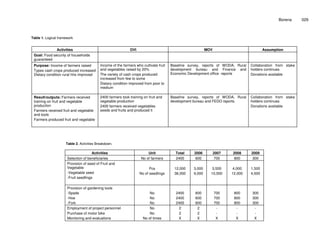
Table 1. Logical framework
Table 2. Activities Breakdown.
Activities Unit Total 2006 2007 2008 2009
Selection of beneficiaries No of farmers 2400 600 700 800 300
Provision of seed of Fruit and
Vegetable
-Vegetable seed
-Fruit seedlings
Pcs
No of seedlings
12,000
36,000
3,000
9,000
3,500
10,500
4,000
12,000
1,500
4,500
Provision of gardening tools
-Spade
-Hoe
-Fork
No
No
No
2400
2400
2400
600
600
600
700
700
700
800
800
800
300
300
300
Employment of project personnel No 2 2 - - -
Purchase of motor bike No 2 2 - - -
Monitoring and evaluations No of times X X X X X
Activities OVI MOV Assumption
Goal: Food security of households
guaranteed
Purpose: Income of farmers raised
Types cash crops produced increased
Dietary condition rural hhs improved
Income of the farmers who cultivate fruit
and vegetables raised by 20%
The variety of cash crops produced
increased from few to some
Dietary condition improved from poor to
medium
Baseline survey, reports of WODA, Rural
development bureau and Finance and
Economic Development office reports
Collaboration from stake
holders continues
Donations available
Result/outputs: Farmers received
training on fruit and vegetable
production
Farmers received fruit and vegetable
and tools
Farmers produced fruit and vegetable
2400 farmers took training on fruit and
vegetable production
2400 farmers received vegetables
seeds and fruits and produced it
Baseline survey, reports of WODA, Rural
development bureau and FEDO reports
Collaboration from stake
holders continues
Donations available
Int.NGO.J. 030
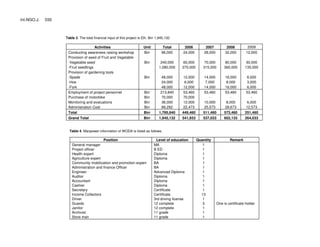
Table 3. The total financial input of this project is Eth. Birr 1,945,132.
Activities Unit Total 2006 2007 2008 2009
Conducting awareness raising workshop Birr 96,000 24,000 28,000 32,000 12,000
Provision of seed of Fruit and Vegetable
-Vegetable seed
-Fruit seedlings
Birr 240,000
1,080,000
60,000
270,000
70,000
315,000
80,000
360,000
30,000
135,000
Provision of gardening tools
-Spade
-Hoe
-Fork
Birr 48,000
24,000
48,000
12,000
6,000
12,000
14,000
7,000
14,000
16,000
8,000
16,000
6,000
3,000
6,000
Employment of project personnel Birr 213,840 53,460 53,460 53,460 53,460
Purchase of motorbike Birr 70,000 70,000 - - -
Monitoring and evaluations Birr 36,000 12,000 10,000 8,000 6,000
Administration Cost Birr 89,292 22,473 25,573 28,673 12,573
Total Birr 1,785,840 449,460 511,460 573,460 251,460
Grand Total Birr 1,945,132 541,933 537,033 602,133 264,033
Table 4. Manpower information of WODA is listed as follows.
Position Level of education Quantity Remark
General manager MA 1
Project officer B ED 1
Health expert Diploma 1
Agriculture expert Diploma 1
Community mobilization and promotion expert BA 1
Administration and finance Officer BA 1
Engineer Advanced Diploma 1
Auditor Diploma 1
Accountant Diploma 1
Cashier Diploma 1
Secretary Certificate 1
Income Collectors Certificate 13
Driver 3rd driving license 1
Guards 12 complete 3 One is certificate holder
Janitor 12 complete 1
Archivist 11 grade 1
Store man 11 grade 1
Borena 031
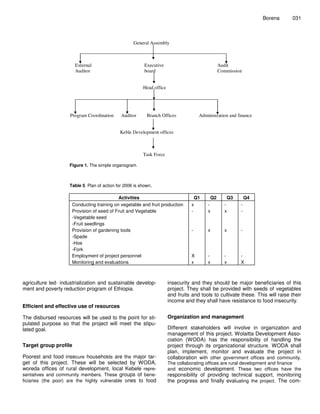
General Assembly
External Executive Audit
Auditor board Commission
Head office
Program Coordination Auditor Branch Offices Administration and finance
Keble Development offices
Task Force
Figure 1. The simple organogram.
Table 5. Plan of action for 2006 is shown.
Activities Q1 Q2 Q3 Q4
Conducting training on vegetable and fruit production x - - -
Provision of seed of Fruit and Vegetable
-Vegetable seed
-Fruit seedlings
- x x -
Provision of gardening tools
-Spade
-Hoe
-Fork
- x x -
Employment of project personnel X - - -
Monitoring and evaluations x x x X
agriculture led- industrialization and sustainable develop-
ment and poverty reduction program of Ethiopia.
Efficient and effective use of resources
The disbursed resources will be used to the point for sti-
pulated purpose so that the project will meet the stipu-
lated goal.
Target group profile
Poorest and food insecure households are the major tar-
get of this project. These will be selected by WODA,
woreda offices of rural development, local Kebele repre-
sentatives and community members. These groups of bene-
ficiaries (the poor) are the highly vulnerable ones to food
insecurity and they should be major beneficiaries of this
project. They shall be provided with seeds of vegetables
and fruits and tools to cultivate these. This will raise their
income and they shall have resistance to food insecurity.
Organization and management
Different stakeholders will involve in organization and
management of this project. Wolaitta Development Asso-
ciation (WODA) has the responsibility of handling the
project through its organizational structure. WODA shall
plan, implement, monitor and evaluate the project in
collaboration with other government offices and community.
The collaborating offices are rural development and finance
and economic development. These two offices have the
responsibility of providing technical support, monitoring
the progress and finally evaluating the project. The com-
Int.NGO.J. 032
munity shall involve from planning to evaluation of the
project. Donating agencies have responsibility of moni-
toring the progress and receiving the report. WODA shall
also rep-ort the progress on monthly, quarterly and annual
basis to concerned offices.
Sustainability and phase out strategy: The sustaina-
bility of this project can be guaranteed because of several
reasons. First this Project involves the participation of
different stakeholders especially the community and
government offices. These will handle and monitor the
project even after the phasing out of the project. Second,
the project beneficiaries will have their own income from
sale of fruits and vegetables. Phasing out shall take place
through individuals. When the beneficiaries of the project.
Assumption and risks
This project has some risks. These include serious
drought and disease outbreak.

Fruit and vegetable production proposal

  • 1.
    International NGO JournalVol. 3 (2), pp. 027-032, February, 2008 Available online at http:// www.academicjournals.org/INGOJ ISSN 1993–8225 © 2008 Academic Journals Proposal Project proposal on fruit and vegetable production Ashebir Borena Wolaitta Development Association Wolaitta Soddo 2005, Wolaita, Woreda – Damot Woyde, Ethiopia. E-mail: wda@ethionet.et. Accepted 8 February, 2008 The long-term objective of this project is to contribute to food security of rural households in Offa woreda. Specific objectives include diversifying crop production in the woreda, to raise the income of farmers and to improve the diet of community. Major activities of this project are conducting training for farmers, provision of seed, provision of gardening tools, monitoring and evaluation. The duration of this project is from January 2006 to December 2009. Direct beneficiaries of this project are 2400 individuals from Offa woreda. Total financial input is 1,945,132 Et. Birr. Expected outputs are 2400 individuals produced fruits and vegetables and their income increased. Profile of WODA Wolaitta Development Association (WODA) is one of the indigenous organizations in Ethiopia. The association has legal license and agreement documents. The association was established in organized form in 2001. Improving the standard of living of Wolaitta people is the major goal it stood for. Since its establishment, Wolaitta Development Association (WODA) has carried out several activities in agriculture, education, health, capacity building and other sectors. The following are major past achievements. Agriculture: The activities executed / done are: Assessment of 13,725 ha of land for resettlement. 878 settlers are provided with oxen. 1 veterinary post was constructed. 60 youngsters in fishery cooperatives in Lake Abaya were given start up capital. 32,125 seedlings were planted in Mt. Damota. 260 cattle were distributed for disabled persons. 5000 vegetable seedlings distribu- ted for farmers. Education 4 primary schools were constructed in Doge Laroso, Ba- kulo Sagno, Ome Bolola and shola Kodo. 1 modern public library was constructed in Sodo Town. 8 primary schools and 2 secondary school expansions were carried out in Boditi, Humbo Tabala. Kindo Halale, Edo Duguna, Kuto Sorpela ,Obe Jage, Gurumo Asse, Soddo, Yukara and Suke bakala. 2 primary schools in Harto Burkito and Areka were maintained. 3 teachers residences were con- structed in Harto Burkit, Anka Wocha and Abela Gafata areas. 2 schools were provided with furniture. 535 orphans and poor children are supported in schooling. 151 students were awarded for their good results in national and college exams. 84 students are being taught in colleges who were sponsored by WODA. 8 secondary schools were provided with reference books. 22 street children were trained in different technical and vocational skills and given seed money. Health 5 health posts were constructed in Mundena, Afama Mino, Fango Boloso, Zarada and Bilate Eta. 1 health post was maintained in Abaya Chokare. 40 home-based care givers were trained to prevent and control HIV/AIDS. 12 anti-AIDS clubs were established. 68 radio programs were transmitted on HIV/AIDS prevention and HTP edu- cation. 20 community based education programs on HIV / AIDS launched at market places and schools. 90 peoples living with HIV/AIDS were supported. 80 HIV/AIDS orp- hans and vulnerable children were supported. 2 commu- nity sensitization workshops on HIV/AIDS prevention and control were launched. 153 peer educators were trained to handle the activities of HIV/AIDS prevention and control in 153 kebeles 38 Youth trained in youth clubs manage- ment. 47 commercial sex workers were trained in peer education. 50 community conversation facilitators on HIV / AIDS were trained. Community conversation launched in 13 kebeles. 5 target health personnel were trained in health service. Medical equipment and furniture were pro- vided for five health posts.
  • 2.
    Int.NGO.J. 028 Capacity building 1environmentally friendly center near Lake Abaya is be- ing established to conserve natural resources. 1 youth empowerment project is launched that has youth recreat- ion center, provides revolving. Fund on petty trading, sport materials and so on. 1 woodwork and metal work workshop is maintained. 15 poor households are pro- vided with housing. 294 grass root level associations were form-ed. 15 branch offices of WODA were organized. More than 200,000 WODA members were organized. One bazaar was launched. 7 community mobilization workshops were conducted. Water 1 bore hole drilled in Bilate Eta 1 water supply project completed in Mundena BACKGROUND AND JUSTIFICATION Agricultural production and productivity for Wolaitta in general and Offa in particular is low. Low productivity can be attributed to natural and man-made reasons. Natural factors include erratic and inconsistent rain in nature that leads to drought and famine. Man-made factors are poor soil fertility, traditional farming systems, lack of improved agricultural inputs, overcultivation of the land and the like. Land shortage is a common and serious problem in Wolaitta. This has led to over cultivation of the land that in turn causes soil erosion and poor soil fertility. All of these problems have resulted in low productivity and food insecurity of the area. Farmers in Offa usually produce more or less similar crops. When these crops unfortunately fail to give enough yield food shortage occurs. Diversification of agricultural production is important because there can be many sources of both income and product. Fruit and vegetable production is one way in which agriculture can be diversified and it is one component of crop production that can contribute to food security of the area. Fruit production is experienced is many parts of Wolaitta nowadays. How-ever, the system of production is backward and as a result, no enough yield is obtained from it. Besides, there are no enough sources of fruit and vegetable seeds for farmers. The available fruits are those, which do not induce more income for the farmers. In rural areas farmers plant many trees near to their farmlands that no longer give fruits. However, if the fruit trees substitute these trees more income can be obtained as currently there is high need for fruit and vegetable in the market is high. On the other hand, fruits and vegetable have high nutritional value. If these are planted and grown by the farmer, households could be able to get balanced diet that contributes to good health of the society. Therefore, production of these has double impor- ance, namely; for income generation and nutritional value. WODA is currently planning to undertake a project that focuses on production of fruits and vegetable that generates more income for farmers. However, there is financial shortage. Therefore, WODA needs fund for accomplish-ment of the project. Objectives Long-term To guarantee food security of households Short term To diversify crop production in the woredas. To raise the income of farmers. To improve the diet of community. Activities Major activities of this project are conducting training for farmers, provision of seed, provision of gardening tools, monitoring, and evaluation. 1. Selection of beneficiaries. 2. Conducting Training: The first activity of this project is to train beneficiaries on how to cultivate fruit and vegetation in modern way. 3. Provision of seed and tools: When the farmers are trained, they will be provided with seeds of fruits and vegetable and gardening tools. 4. Monitoring and evaluation PROJECT METHODOLOGY This project has its own methodology. Some of these are the following. Involvement of the community The community is the nearest partner to the project than anyone else. Therefore, the community will involve in selection of the beneficiaries, monitoring the progress of beneficiaries and evaluating the impact of the project. Collaboration of government offices As government offices are one of the stakeholders in the project they shall participate to a large extent in overall project cycle for successful completion of the project. These offices are rural development, finance and econo- mic development. Sticking to government policies This project is in line with the food security strategy,
  • 3.
    Borena 029 Table 1.Logical framework Table 2. Activities Breakdown. Activities Unit Total 2006 2007 2008 2009 Selection of beneficiaries No of farmers 2400 600 700 800 300 Provision of seed of Fruit and Vegetable -Vegetable seed -Fruit seedlings Pcs No of seedlings 12,000 36,000 3,000 9,000 3,500 10,500 4,000 12,000 1,500 4,500 Provision of gardening tools -Spade -Hoe -Fork No No No 2400 2400 2400 600 600 600 700 700 700 800 800 800 300 300 300 Employment of project personnel No 2 2 - - - Purchase of motor bike No 2 2 - - - Monitoring and evaluations No of times X X X X X Activities OVI MOV Assumption Goal: Food security of households guaranteed Purpose: Income of farmers raised Types cash crops produced increased Dietary condition rural hhs improved Income of the farmers who cultivate fruit and vegetables raised by 20% The variety of cash crops produced increased from few to some Dietary condition improved from poor to medium Baseline survey, reports of WODA, Rural development bureau and Finance and Economic Development office reports Collaboration from stake holders continues Donations available Result/outputs: Farmers received training on fruit and vegetable production Farmers received fruit and vegetable and tools Farmers produced fruit and vegetable 2400 farmers took training on fruit and vegetable production 2400 farmers received vegetables seeds and fruits and produced it Baseline survey, reports of WODA, Rural development bureau and FEDO reports Collaboration from stake holders continues Donations available
  • 4.
    Int.NGO.J. 030 Table 3.The total financial input of this project is Eth. Birr 1,945,132. Activities Unit Total 2006 2007 2008 2009 Conducting awareness raising workshop Birr 96,000 24,000 28,000 32,000 12,000 Provision of seed of Fruit and Vegetable -Vegetable seed -Fruit seedlings Birr 240,000 1,080,000 60,000 270,000 70,000 315,000 80,000 360,000 30,000 135,000 Provision of gardening tools -Spade -Hoe -Fork Birr 48,000 24,000 48,000 12,000 6,000 12,000 14,000 7,000 14,000 16,000 8,000 16,000 6,000 3,000 6,000 Employment of project personnel Birr 213,840 53,460 53,460 53,460 53,460 Purchase of motorbike Birr 70,000 70,000 - - - Monitoring and evaluations Birr 36,000 12,000 10,000 8,000 6,000 Administration Cost Birr 89,292 22,473 25,573 28,673 12,573 Total Birr 1,785,840 449,460 511,460 573,460 251,460 Grand Total Birr 1,945,132 541,933 537,033 602,133 264,033 Table 4. Manpower information of WODA is listed as follows. Position Level of education Quantity Remark General manager MA 1 Project officer B ED 1 Health expert Diploma 1 Agriculture expert Diploma 1 Community mobilization and promotion expert BA 1 Administration and finance Officer BA 1 Engineer Advanced Diploma 1 Auditor Diploma 1 Accountant Diploma 1 Cashier Diploma 1 Secretary Certificate 1 Income Collectors Certificate 13 Driver 3rd driving license 1 Guards 12 complete 3 One is certificate holder Janitor 12 complete 1 Archivist 11 grade 1 Store man 11 grade 1
  • 5.
    Borena 031 General Assembly ExternalExecutive Audit Auditor board Commission Head office Program Coordination Auditor Branch Offices Administration and finance Keble Development offices Task Force Figure 1. The simple organogram. Table 5. Plan of action for 2006 is shown. Activities Q1 Q2 Q3 Q4 Conducting training on vegetable and fruit production x - - - Provision of seed of Fruit and Vegetable -Vegetable seed -Fruit seedlings - x x - Provision of gardening tools -Spade -Hoe -Fork - x x - Employment of project personnel X - - - Monitoring and evaluations x x x X agriculture led- industrialization and sustainable develop- ment and poverty reduction program of Ethiopia. Efficient and effective use of resources The disbursed resources will be used to the point for sti- pulated purpose so that the project will meet the stipu- lated goal. Target group profile Poorest and food insecure households are the major tar- get of this project. These will be selected by WODA, woreda offices of rural development, local Kebele repre- sentatives and community members. These groups of bene- ficiaries (the poor) are the highly vulnerable ones to food insecurity and they should be major beneficiaries of this project. They shall be provided with seeds of vegetables and fruits and tools to cultivate these. This will raise their income and they shall have resistance to food insecurity. Organization and management Different stakeholders will involve in organization and management of this project. Wolaitta Development Asso- ciation (WODA) has the responsibility of handling the project through its organizational structure. WODA shall plan, implement, monitor and evaluate the project in collaboration with other government offices and community. The collaborating offices are rural development and finance and economic development. These two offices have the responsibility of providing technical support, monitoring the progress and finally evaluating the project. The com-
  • 6.
    Int.NGO.J. 032 munity shallinvolve from planning to evaluation of the project. Donating agencies have responsibility of moni- toring the progress and receiving the report. WODA shall also rep-ort the progress on monthly, quarterly and annual basis to concerned offices. Sustainability and phase out strategy: The sustaina- bility of this project can be guaranteed because of several reasons. First this Project involves the participation of different stakeholders especially the community and government offices. These will handle and monitor the project even after the phasing out of the project. Second, the project beneficiaries will have their own income from sale of fruits and vegetables. Phasing out shall take place through individuals. When the beneficiaries of the project. Assumption and risks This project has some risks. These include serious drought and disease outbreak.