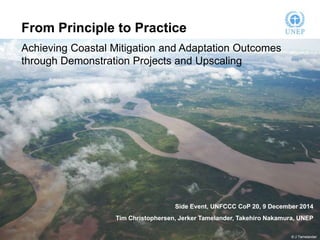
From Principle to Practice 
Achieving Coastal Mitigation and Adaptation Outcomes 
through Demonstration Projects and Upscaling 
Side Event, UNFCCC CoP 20, 9 December 2014 
Tim Christophersen, Jerker Tamelander, Takehiro Nakamura, UNEP 
© J Tamelander
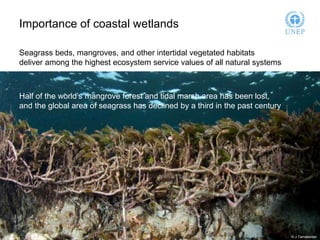
Importance of coastal wetlands 
Seagrass beds, mangroves, and other intertidal vegetated habitats 
deliver among the highest ecosystem service values of all natural systems 
Half of the world’s mangrove forest and tidal marsh area has been lost, 
and the global area of seagrass has declined by a third in the past century 
© J Tamelander
Opportunities 
2011: ‘wetland drainage and rewetting’ eligible 
activity under KP => step towards integration 
of wetlands in future global mitigation 
architecture 
2013: Wetlands Supplement to the 2006 IPCC 
Guidelines for National Greenhouse Gas 
Inventories => Parties can account for all sinks 
and emissions from any wetlands 
Paris CoP may agree to include blue carbon 
as a whole, or certain blue carbon, in a 
comprehensive accounting and crediting 
framework under UNFCCC 
© J Tamelander
Opportunities 
Great potential for management and restoration 
of coastal wetlands under REDD+ and NAMAs 
Many REDD and NAMA readiness activities 
pave the way, e.g. institutions, land inventories, 
tenure allocations, policy mainstreaming 
CDM methodology for mangrove afforestation 
and reforestation - but excludes conservation 
and generates only temporary carbon credits 
Voluntary carbon markets provide ample 
opportunity, e.g. >15 relevant VCS AFOLU 
methodologies, > 80 individual projects 
© J Tamelander
Distils best practice principles for 
coastal wetland carbon projects 
Drawing on wetlands restoration, 
terrestrial carbon projects, carbon policy 
and community engagement 
Targeted at practitioners familiar with 
carbon project and policy development 
or wetlands restoration 
Gives guidance on additional 
requirements for successful coastal 
wetland or ‘blue carbon’ interventions 
Ensures intervention are feasible, 
scalable, and provide intended benefits
Blue Carbon in UNEP’s work 
Mandate 
Keep the world environment under review; Catalyze and promote international cooperation and action; 
Facilitate development of standards and norms; Capacity support 
Medium Term Strategy 2014-2017 
Climate Change; Disasters and Conflicts; Ecosystem Management; Chemicals and Wastes; 
Resource Efficiency; Environmental Governance; Environment under Review 
Programme of Work 2014-2015 
Climate Change 
a) Ecosystem-based adaptation approaches implemented and integrated into key strategies 
c) Transformative REDD+ strategies and finance approaches developed and implemented 
Ecosystem Management: 
b) Use of ecosystem approach to sustain coastal and marine ecosystem services increased 
c) Services and benefits from ecosystems integrated in development planning and accounting
UNEP Blue Carbon Initiative 
Develop methodologies and tools for valuation of carbon and other ecosystem services 
=> application in planning and management 
Policy analysis and dialogue 
=> adoption of methodologies, tools and policy frameworks 
=> create incentives for sustainable use of blue carbon ecosystem services 
Fill knowledge gaps 
=> Targeted research on ecosystem services provided by coastal wetlands 
Communication 
=> Provide information to a wide audience, create enabling environment
Delivery and uptake 
global community to develop tools and approaches and share lessons learned 
regional adoption, dissemination and capacity building through 
Regional Seas Conventions and Action Plans 
national pilot testing and demonstration implementation
UNEP/GEF Blue Forests Project 
“Blue Forests” - coastal carbon and related ecosystem services 
coastal ecosystem management harnessing the values associated with carbon 
sequestration and storage and other ecosystem services 
USD 4.5M over 4 years, with over USD 23M cofinance 
© J Tamelander
UNEP/GEF Blue Forests Project 
Component 1. Development of guidance and methodologies for project support 
Component 2. Small-scale interventions: 
– Improving understanding of carbon and ecosystem services 
– Improving capacity for ecosystem management of blue forests 
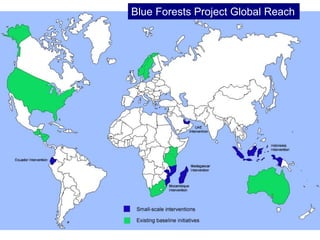
– Target countries: Madagascar, Ecuador, Mozambique, Indonesia, UAE 
– Replication and scaling-up: e.g. Kenya; Central America 
Component 3. Improved understanding through targeted research 
Component 4. Adoption of methodologies and approaches for greater policy 
and GEF IW uptake 
Component 5. Monitoring, networking and information sharing
Blue Forests Project Global Reach
• UNEP 
• GRID-Arendal 
• UNEP-WCMC 
• Duke University 
• IUCN 
• Blue Ventures 
• Conservation International 
• WWF 
• AGEDI 
• Indonesia Ministry of Marine Affairs And Fisheries 
• UNEP-ROLAC 
• Kenya Marine and Fisheries Research Institute 
• US Forest Service 
• South African Institute of International Affairs 
• The Ocean Foundation 
• NOAA 
• Stockholm University 
• Charles Darwin University 
Blue 
Forests 
Project 
Partners
www.bluecarbonportal.org

From Principle to Practice: Achieving Coastal Mitigation and Adaptation Outcomes through Demonstration Projects and Upscaling

  • 1.
    From Principle toPractice Achieving Coastal Mitigation and Adaptation Outcomes through Demonstration Projects and Upscaling Side Event, UNFCCC CoP 20, 9 December 2014 Tim Christophersen, Jerker Tamelander, Takehiro Nakamura, UNEP © J Tamelander
  • 2.
    Importance of coastalwetlands Seagrass beds, mangroves, and other intertidal vegetated habitats deliver among the highest ecosystem service values of all natural systems Half of the world’s mangrove forest and tidal marsh area has been lost, and the global area of seagrass has declined by a third in the past century © J Tamelander
  • 3.
    Opportunities 2011: ‘wetlanddrainage and rewetting’ eligible activity under KP => step towards integration of wetlands in future global mitigation architecture 2013: Wetlands Supplement to the 2006 IPCC Guidelines for National Greenhouse Gas Inventories => Parties can account for all sinks and emissions from any wetlands Paris CoP may agree to include blue carbon as a whole, or certain blue carbon, in a comprehensive accounting and crediting framework under UNFCCC © J Tamelander
  • 4.
    Opportunities Great potentialfor management and restoration of coastal wetlands under REDD+ and NAMAs Many REDD and NAMA readiness activities pave the way, e.g. institutions, land inventories, tenure allocations, policy mainstreaming CDM methodology for mangrove afforestation and reforestation - but excludes conservation and generates only temporary carbon credits Voluntary carbon markets provide ample opportunity, e.g. >15 relevant VCS AFOLU methodologies, > 80 individual projects © J Tamelander
  • 5.
    Distils best practiceprinciples for coastal wetland carbon projects Drawing on wetlands restoration, terrestrial carbon projects, carbon policy and community engagement Targeted at practitioners familiar with carbon project and policy development or wetlands restoration Gives guidance on additional requirements for successful coastal wetland or ‘blue carbon’ interventions Ensures intervention are feasible, scalable, and provide intended benefits
  • 6.
    Blue Carbon inUNEP’s work Mandate Keep the world environment under review; Catalyze and promote international cooperation and action; Facilitate development of standards and norms; Capacity support Medium Term Strategy 2014-2017 Climate Change; Disasters and Conflicts; Ecosystem Management; Chemicals and Wastes; Resource Efficiency; Environmental Governance; Environment under Review Programme of Work 2014-2015 Climate Change a) Ecosystem-based adaptation approaches implemented and integrated into key strategies c) Transformative REDD+ strategies and finance approaches developed and implemented Ecosystem Management: b) Use of ecosystem approach to sustain coastal and marine ecosystem services increased c) Services and benefits from ecosystems integrated in development planning and accounting
  • 7.
    UNEP Blue CarbonInitiative Develop methodologies and tools for valuation of carbon and other ecosystem services => application in planning and management Policy analysis and dialogue => adoption of methodologies, tools and policy frameworks => create incentives for sustainable use of blue carbon ecosystem services Fill knowledge gaps => Targeted research on ecosystem services provided by coastal wetlands Communication => Provide information to a wide audience, create enabling environment
  • 8.
    Delivery and uptake global community to develop tools and approaches and share lessons learned regional adoption, dissemination and capacity building through Regional Seas Conventions and Action Plans national pilot testing and demonstration implementation
  • 9.
    UNEP/GEF Blue ForestsProject “Blue Forests” - coastal carbon and related ecosystem services coastal ecosystem management harnessing the values associated with carbon sequestration and storage and other ecosystem services USD 4.5M over 4 years, with over USD 23M cofinance © J Tamelander
  • 10.
    UNEP/GEF Blue ForestsProject Component 1. Development of guidance and methodologies for project support Component 2. Small-scale interventions: – Improving understanding of carbon and ecosystem services – Improving capacity for ecosystem management of blue forests – Target countries: Madagascar, Ecuador, Mozambique, Indonesia, UAE – Replication and scaling-up: e.g. Kenya; Central America Component 3. Improved understanding through targeted research Component 4. Adoption of methodologies and approaches for greater policy and GEF IW uptake Component 5. Monitoring, networking and information sharing
  • 11.
  • 12.
    • UNEP •GRID-Arendal • UNEP-WCMC • Duke University • IUCN • Blue Ventures • Conservation International • WWF • AGEDI • Indonesia Ministry of Marine Affairs And Fisheries • UNEP-ROLAC • Kenya Marine and Fisheries Research Institute • US Forest Service • South African Institute of International Affairs • The Ocean Foundation • NOAA • Stockholm University • Charles Darwin University Blue Forests Project Partners
  • 13.