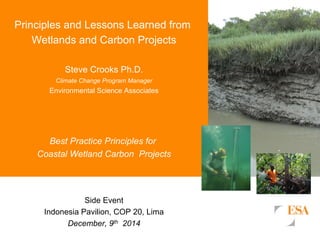
Principles and Lessons Learned from 
Wetlands and Carbon Projects 
Steve Crooks Ph.D. 
Climate Change Program Manager 
Environmental Science Associates 
Best Practice Principles for 
Coastal Wetland Carbon Projects 
Side Event 
Indonesia Pavilion, COP 20, Lima 
December, 9th 2014 
Jim Fourqurean
Contents 
• Why measure C stocks? 
• Field Campaign Planning 
• Sampling Soils 
• Sampling Vegetation 
• Estimating Emissions 
• Remote Sensing and 
Mapping 
• Data Management 
BlueCarbonInitiative.org
Ecosystem services of Coastal Blue Carbon 
ecosystems: mangroves, seagrass and 
marshes 
• Biological diversity 
• Water quality 
• Flood and storm protection 
• Forest and non-timber forest products 
• Aesthetic and ecotourism values 
• Fish and Shellfish 
• Carbon Sinks
Distribution of carbon in coastal ecosystems 
5 
0 
500 
1000 
1500 
2000 
2500 
Seagrasses 
Tidal 
Salt 
Marsh 
Estuarine 
Mangroves 
Oceanic 
Mangroves 
All 
Tropical 
Forests 
Mean 
soil 
organic 
carbon 
Mean 
living 
biomass 
Soil-­‐Carbon 
Values 
for 
First 
Meter 
of 
Depth 
Only 
(Total 
Depth 
= 
Several 
Meters) 
tCO2e per Hectare, Global Averages 
Data summarized in Crooks et al., 2011; Murray et al., 2011, Donato et al., 2011, Fourqurean et al 2013
5000 
4500 
4000 
3500 
3000 
2500 
2000 
1500 
1000 
500 
0 
Tall Medium Dwarf Shrimp pond Mean Mangrove 
Carbon stock (CO2e Mg/ha) 
CARBON STOCKS OF NEOTROPICAL MANGROVES ARE 
AMONG THE LARGEST OF ALL TROPICAL FORESTS 
Ecosystem C stocks in CO2e, Republica Dominicana 2012 
Kauffman et al. 2013) 
Abovegrd 
belowgd plant 
Downed Wood 
0-15 
15-30 
30-50 
50-100 
>100
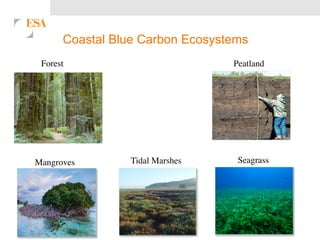
Coastal Blue Carbon Ecosystems 
8 
Mangroves 
Tidal Marshes 
Seagrass 
Forest 
Peatland
Best Practice Principles for Delivering 
Coastal Wetland Carbon Projects 
• Overarching principles 
• Connects experience: 
– Wetland landscape restoration 
– Carbon projects 
– Carbon policy 
– Community engagement 
• Demonstration Projects 
– Scaling up 
– Linking adaptation and mitigation 
– Avoid pitfalls 
• Intended audience: 
– Technical (summary messages for policy)
Project team 
• Steve Crooks PhD – Restoration Practice / Science 
• Igino Emmer PhD – Carbon Projects, Protocols 
• Moritz von Unger PhD – Carbon Projects, Legal 
• Ben Brown – Community Restoration 
• Daniel Murdiyarso PhD –Forestry / Peatland Science 
• Michelle Orr PE – Large-scale Restoration Planning
Reviewers 
• Verified Carbon Standard 
• Ministry for Marine Affairs and Fisheries, Indonesia 
• Duke University 
• Scientific and Technical Review Panel of Ramsar 
• Ramsar Secretariat 
• UNEP 
• Conservation International 
• UNEP-WCMC 
• Forest Carbon Markets and Communities Program
Report Content 
1. Introduction 
2. State of Knowledge on Coastal Blue Carbon 
3. Lessons Learned from Prior Projects 
Wetlands Conservation and Restoration 
Carbon Project Development 
Community Engagement 
4. Planning a Blue Carbon Project
Field Missions
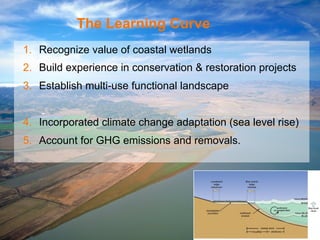
The Learning Curve 
1. Recognize value of coastal wetlands 
2. Build experience in conservation & restoration projects 
3. Establish multi-use functional landscape 
4. Incorporated climate change adaptation (sea level rise) 
5. Account for GHG emissions and removals.
Key Lessons 
• Wetland conservation offers greatest benefits 
• Highest GHG benefit, protect services, avoid engineering costs 
• Restoration of wetlands often technically feasible 
• Poor project planning cause of failure 
• Need for technology transfer and capacity building 
• Planning should incorporate sea level rise adaptation 
• tools exist 
• Link adaptation and mitigation 
• Community and national capacity required for success 
• No rigid template for blue carbon interventions
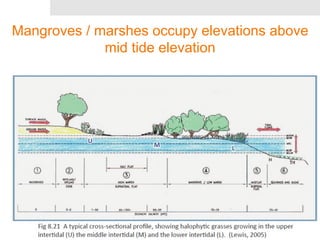
Mangroves / marshes occupy elevations above 
mid tide elevation
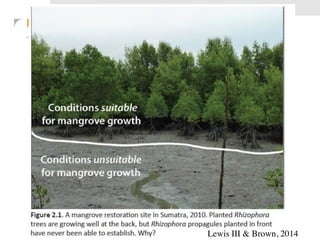
Lewis III & Brown, 2014
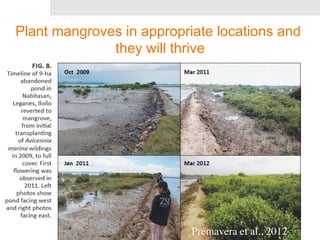
Plant mangroves in appropriate locations and 
they will thrive 
Premavera et al., 2012
Common mistake in coastal planning… 
Subsided 
drained former 
mangroves. 
Attempt to afforest mudflats. 
Not account for impacts of sea level rise. 
Increases long term vulnerability. 
Former 
mangrove edge. 
Now hard edge 
Temptation to plant 
mangroves on mudflat
Restore, but plan for the future
Lessons from Conservation and 
Restoration Planning 
1. Have a clear and coherent planning approach 
2. Plan conservation and restoration in the wider landscape context 
3. Prioritize sites (not all are suitable) 
4. Restore physical processes and ecosystem dynamics 
5. Recognize the value of project design and engineering 
6. Understand the restoration trajectory and ecological thresholds 
7. Conserve and restore ecosystems sooner rather than later 
8. Restoration of historic conditions is not always possible 
9. Avoid transplantation of non-indigenous species 
10. Be patient
Lessons learnt from carbon projects 
1. Assume ownership of the project 
2. Choose and demarcate the site(s) carefully 
3. Choose the project standard and project delivery cycle 
4. Access the market early 
5. Link the project to other finance options 
6. Check the costs and prepare for economies of scale
Lessons from community engagement 
1. Invest in pre-project community capacity building 
• E.g. Field schools 
2. Build capacity within government 
• National support 
• Subnational support 
3. Meet in the middle 
• Train exensionists, 
• stakeholder communication 
4. Establish livelihoods programs
Steps in Blue Carbon Project Planning 
1. Define project concept and perform preliminary feasibility 
assessment. 
2. Define target market and select a carbon standard 
3. Establish effective community engagement 
4. Design project activities 
5. Assess permanence risk and develop mitigation strategy 
6. Secure project development finance and structure agreements 
7. Provide for legal due diligence and assess carbon rights 
8. Provide for social and environmental impacts assessment 
9. Maintain ongoing liaison with regulators.
` 
25 
Stephen Crooks 
Climate Change Program Manager 
Environmental Science Associate 
+1 415 272 3916 
SCrooks@esassoc.com

Principles and Lessons Learned from Wetlands and Carbon Projects

  • 1.
    Principles and LessonsLearned from Wetlands and Carbon Projects Steve Crooks Ph.D. Climate Change Program Manager Environmental Science Associates Best Practice Principles for Coastal Wetland Carbon Projects Side Event Indonesia Pavilion, COP 20, Lima December, 9th 2014 Jim Fourqurean
  • 3.
    Contents • Whymeasure C stocks? • Field Campaign Planning • Sampling Soils • Sampling Vegetation • Estimating Emissions • Remote Sensing and Mapping • Data Management BlueCarbonInitiative.org
  • 4.
    Ecosystem services ofCoastal Blue Carbon ecosystems: mangroves, seagrass and marshes • Biological diversity • Water quality • Flood and storm protection • Forest and non-timber forest products • Aesthetic and ecotourism values • Fish and Shellfish • Carbon Sinks
  • 5.
    Distribution of carbonin coastal ecosystems 5 0 500 1000 1500 2000 2500 Seagrasses Tidal Salt Marsh Estuarine Mangroves Oceanic Mangroves All Tropical Forests Mean soil organic carbon Mean living biomass Soil-­‐Carbon Values for First Meter of Depth Only (Total Depth = Several Meters) tCO2e per Hectare, Global Averages Data summarized in Crooks et al., 2011; Murray et al., 2011, Donato et al., 2011, Fourqurean et al 2013
  • 6.
    5000 4500 4000 3500 3000 2500 2000 1500 1000 500 0 Tall Medium Dwarf Shrimp pond Mean Mangrove Carbon stock (CO2e Mg/ha) CARBON STOCKS OF NEOTROPICAL MANGROVES ARE AMONG THE LARGEST OF ALL TROPICAL FORESTS Ecosystem C stocks in CO2e, Republica Dominicana 2012 Kauffman et al. 2013) Abovegrd belowgd plant Downed Wood 0-15 15-30 30-50 50-100 >100
  • 8.
    Coastal Blue CarbonEcosystems 8 Mangroves Tidal Marshes Seagrass Forest Peatland
  • 9.
    Best Practice Principlesfor Delivering Coastal Wetland Carbon Projects • Overarching principles • Connects experience: – Wetland landscape restoration – Carbon projects – Carbon policy – Community engagement • Demonstration Projects – Scaling up – Linking adaptation and mitigation – Avoid pitfalls • Intended audience: – Technical (summary messages for policy)
  • 10.
    Project team •Steve Crooks PhD – Restoration Practice / Science • Igino Emmer PhD – Carbon Projects, Protocols • Moritz von Unger PhD – Carbon Projects, Legal • Ben Brown – Community Restoration • Daniel Murdiyarso PhD –Forestry / Peatland Science • Michelle Orr PE – Large-scale Restoration Planning
  • 11.
    Reviewers • VerifiedCarbon Standard • Ministry for Marine Affairs and Fisheries, Indonesia • Duke University • Scientific and Technical Review Panel of Ramsar • Ramsar Secretariat • UNEP • Conservation International • UNEP-WCMC • Forest Carbon Markets and Communities Program
  • 12.
    Report Content 1.Introduction 2. State of Knowledge on Coastal Blue Carbon 3. Lessons Learned from Prior Projects Wetlands Conservation and Restoration Carbon Project Development Community Engagement 4. Planning a Blue Carbon Project
  • 13.
  • 14.
    The Learning Curve 1. Recognize value of coastal wetlands 2. Build experience in conservation & restoration projects 3. Establish multi-use functional landscape 4. Incorporated climate change adaptation (sea level rise) 5. Account for GHG emissions and removals.
  • 15.
    Key Lessons •Wetland conservation offers greatest benefits • Highest GHG benefit, protect services, avoid engineering costs • Restoration of wetlands often technically feasible • Poor project planning cause of failure • Need for technology transfer and capacity building • Planning should incorporate sea level rise adaptation • tools exist • Link adaptation and mitigation • Community and national capacity required for success • No rigid template for blue carbon interventions
  • 16.
    Mangroves / marshesoccupy elevations above mid tide elevation
  • 17.
    Lewis III &Brown, 2014
  • 18.
    Plant mangroves inappropriate locations and they will thrive Premavera et al., 2012
  • 19.
    Common mistake incoastal planning… Subsided drained former mangroves. Attempt to afforest mudflats. Not account for impacts of sea level rise. Increases long term vulnerability. Former mangrove edge. Now hard edge Temptation to plant mangroves on mudflat
  • 20.
    Restore, but planfor the future
  • 21.
    Lessons from Conservationand Restoration Planning 1. Have a clear and coherent planning approach 2. Plan conservation and restoration in the wider landscape context 3. Prioritize sites (not all are suitable) 4. Restore physical processes and ecosystem dynamics 5. Recognize the value of project design and engineering 6. Understand the restoration trajectory and ecological thresholds 7. Conserve and restore ecosystems sooner rather than later 8. Restoration of historic conditions is not always possible 9. Avoid transplantation of non-indigenous species 10. Be patient
  • 22.
    Lessons learnt fromcarbon projects 1. Assume ownership of the project 2. Choose and demarcate the site(s) carefully 3. Choose the project standard and project delivery cycle 4. Access the market early 5. Link the project to other finance options 6. Check the costs and prepare for economies of scale
  • 23.
    Lessons from communityengagement 1. Invest in pre-project community capacity building • E.g. Field schools 2. Build capacity within government • National support • Subnational support 3. Meet in the middle • Train exensionists, • stakeholder communication 4. Establish livelihoods programs
  • 24.
    Steps in BlueCarbon Project Planning 1. Define project concept and perform preliminary feasibility assessment. 2. Define target market and select a carbon standard 3. Establish effective community engagement 4. Design project activities 5. Assess permanence risk and develop mitigation strategy 6. Secure project development finance and structure agreements 7. Provide for legal due diligence and assess carbon rights 8. Provide for social and environmental impacts assessment 9. Maintain ongoing liaison with regulators.
  • 25.
    ` 25 StephenCrooks Climate Change Program Manager Environmental Science Associate +1 415 272 3916 SCrooks@esassoc.com