From optimiser to
orchestrator: how to remain
relevant as an SEO practitioner
Ben Wood
About me
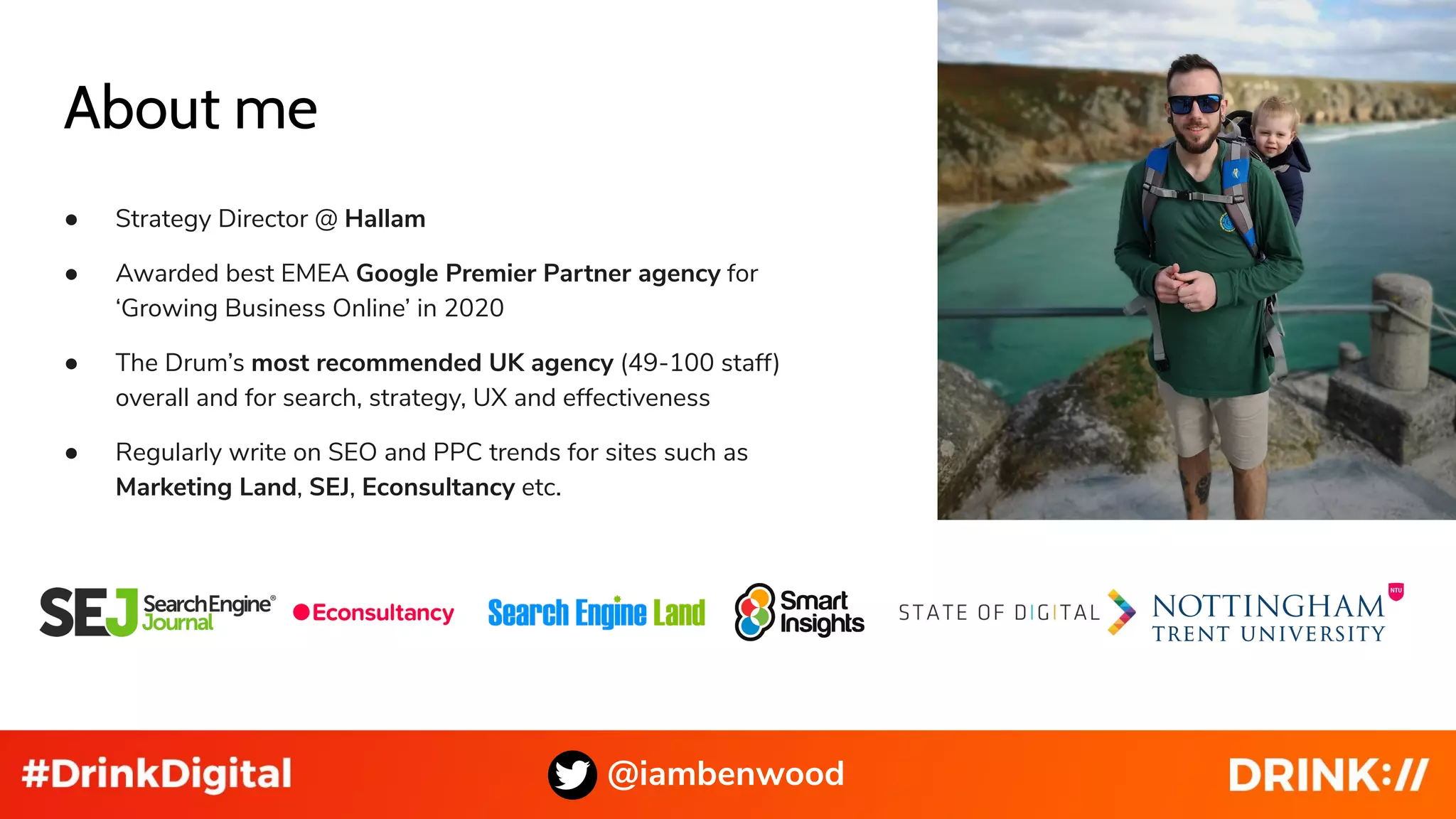
● Strategy Director @ Hallam
● Awarded best EMEA Google Premier Partner agency for
‘Growing Business Online’ in 2020
● The Drum’s most recommended UK agency (49-100 staff)
overall and for search, strategy, UX and effectiveness
● Regularly write on SEO and PPC trends for sites such as
Marketing Land, SEJ, Econsultancy etc.
@iambenwood
What you’ll learn in this session
● Overview of recent changes impacting SEO landscape
● Rethinking the three pillars of SEO
● How to become the greatest SEO ever...
● How to rethink your approach to remain relevant
@iambenwood
Google is getting smarter.
What happened?
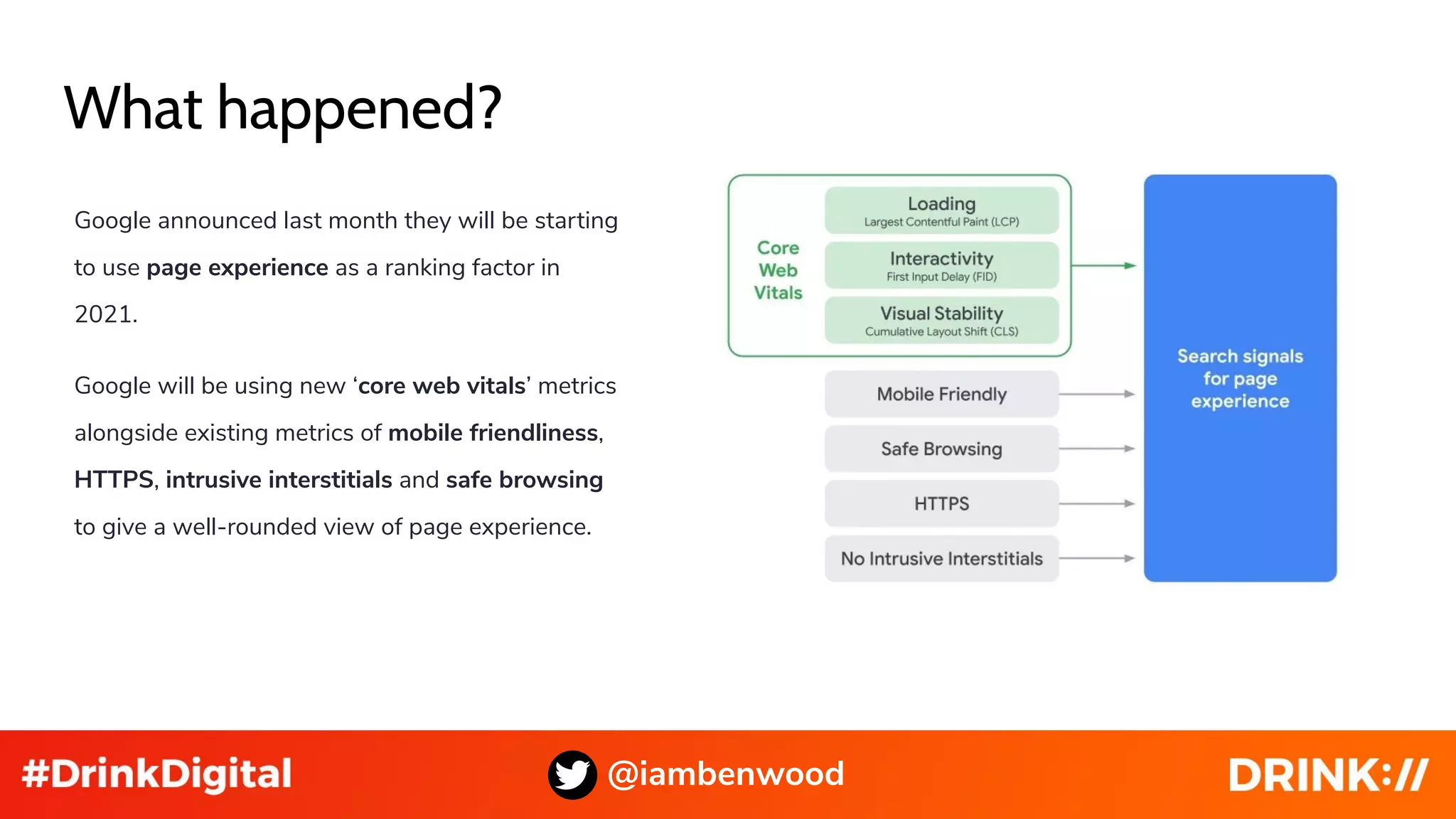
Google announced last month they will be starting
to use page experience as a ranking factor in
2021.
Google will be using new ‘core web vitals’ metrics
alongside existing metrics of mobile friendliness,
HTTPS, intrusive interstitials and safe browsing
to give a well-rounded view of page experience.
@iambenwood
What are core web vitals?
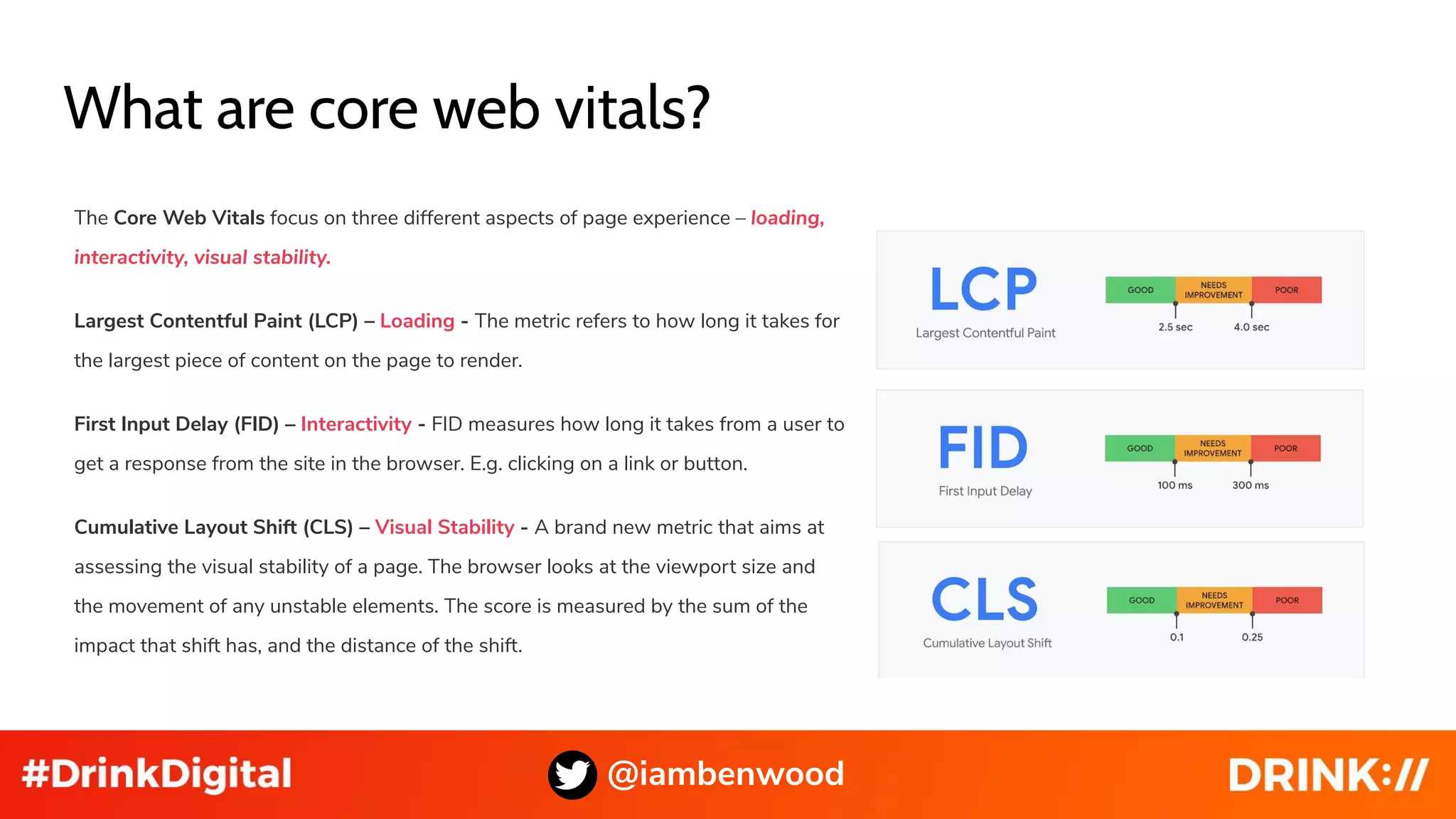
The Core Web Vitals focus on three different aspects of page experience – loading,
interactivity, visual stability.
Largest Contentful Paint (LCP) – Loading - The metric refers to how long it takes for
the largest piece of content on the page to render.
First Input Delay (FID) – Interactivity - FID measures how long it takes from a user to
get a response from the site in the browser. E.g. clicking on a link or button.
Cumulative Layout Shift (CLS) – Visual Stability - A brand new metric that aims at
assessing the visual stability of a page. The browser looks at the viewport size and
the movement of any unstable elements. The score is measured by the sum of the
impact that shift has, and the distance of the shift.
@iambenwood
How to measure core web vitals
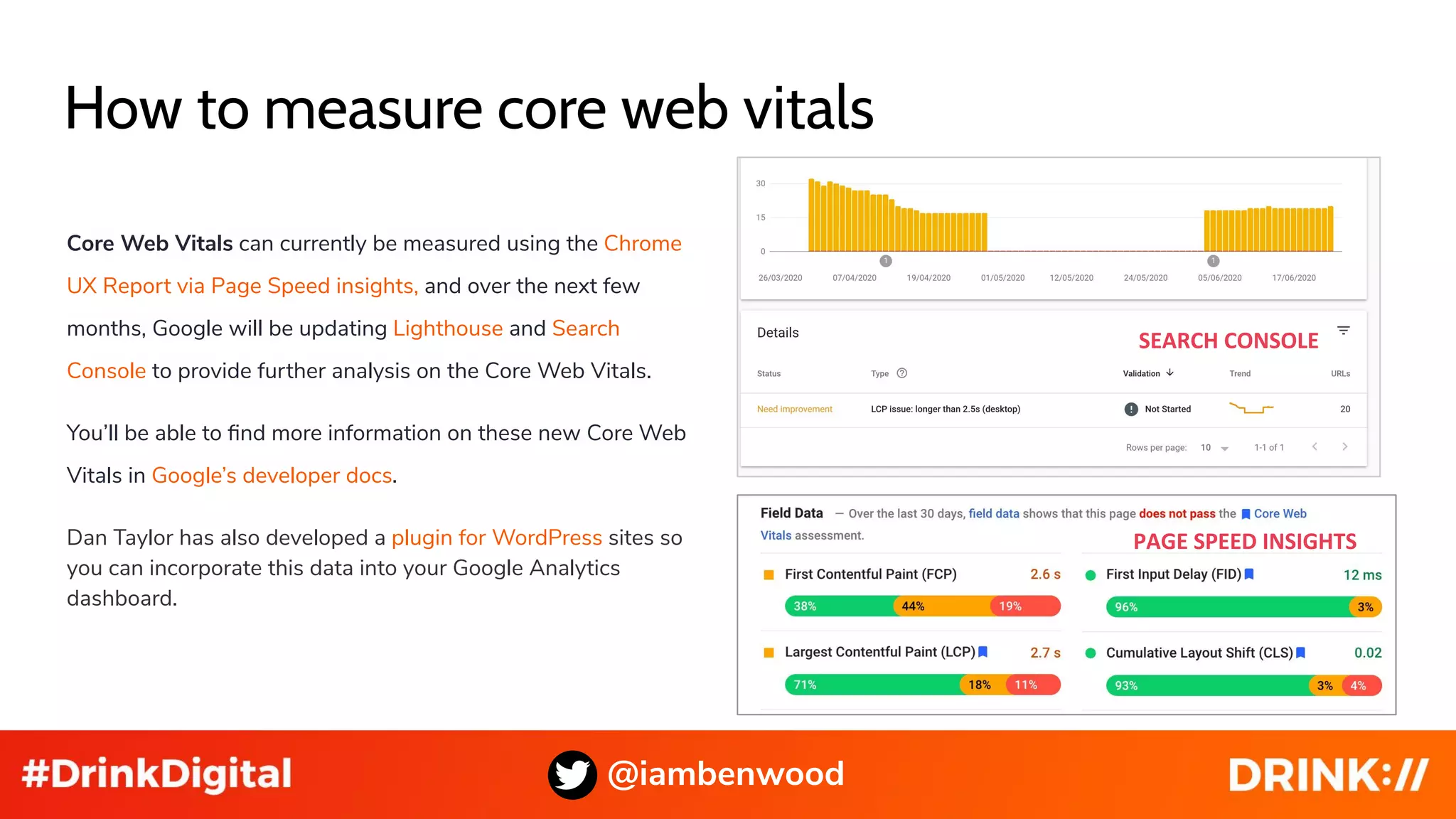
Core Web Vitals can currently be measured using the Chrome
UX Report via Page Speed insights, and over the next few
months, Google will be updating Lighthouse and Search
Console to provide further analysis on the Core Web Vitals.
You’ll be able to find more information on these new Core Web
Vitals in Google’s developer docs.
Dan Taylor has also developed a plugin for WordPress sites so
you can incorporate this data into your Google Analytics
dashboard.
@iambenwood
SEARCH CONSOLE
PAGE SPEED INSIGHTS
This update shouldn’t be
a surprise.
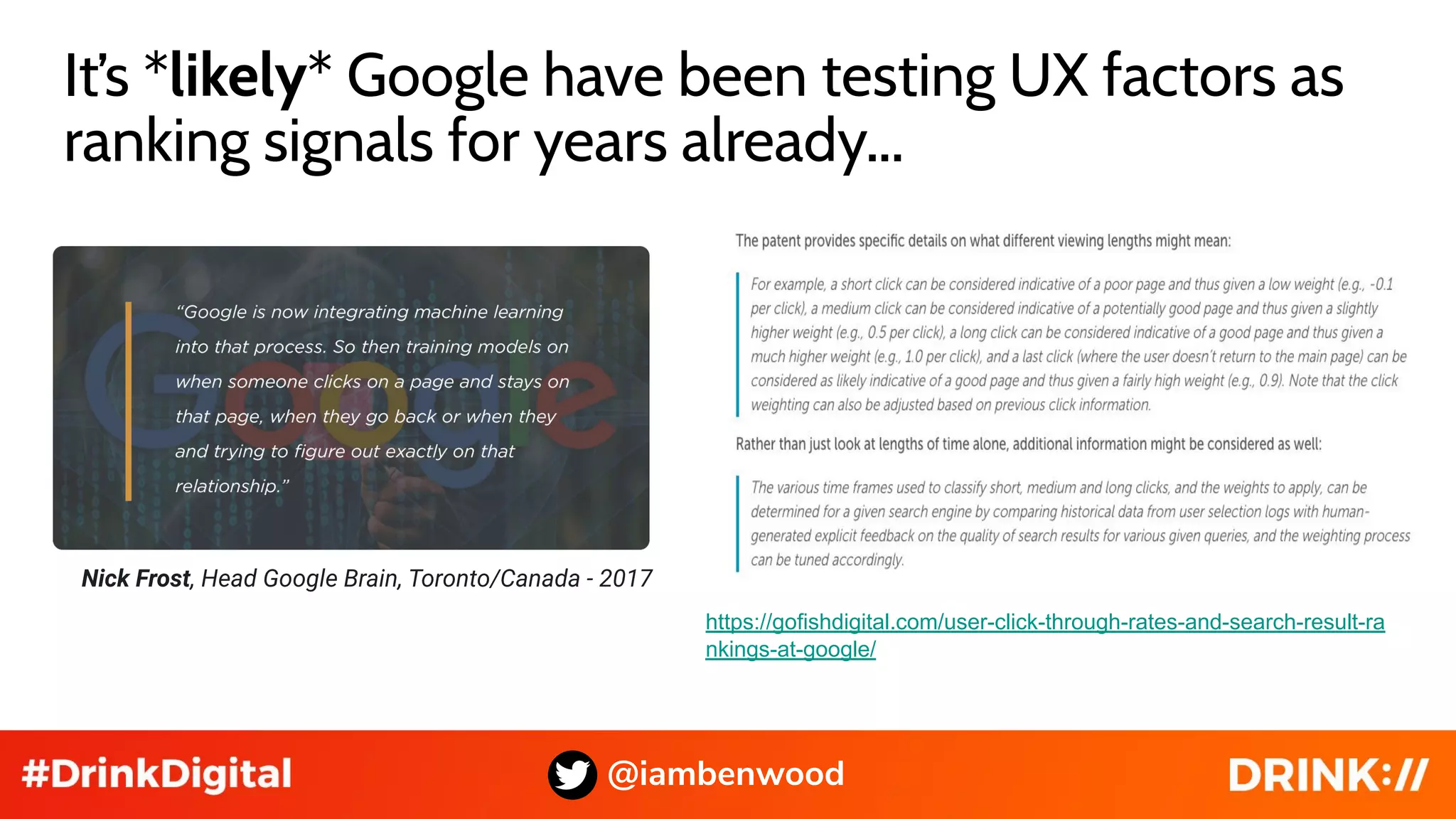
It’s *likely* Google have been testing UX factors as
ranking signals for years already...
@iambenwood
Nick Frost, Head Google Brain, Toronto/Canada - 2017
https://gofishdigital.com/user-click-through-rates-and-search-result-ra
nkings-at-google/
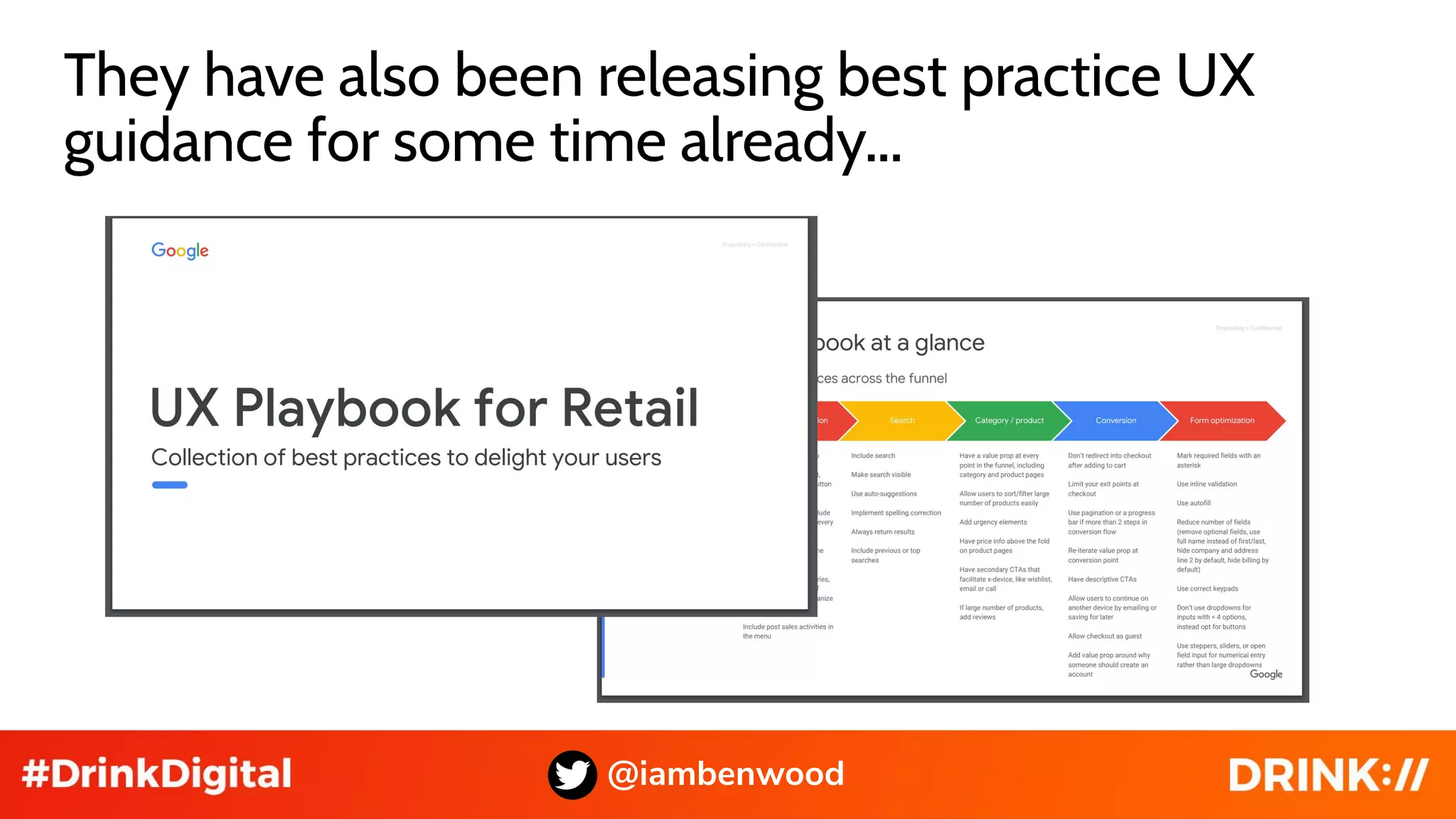
They have also been releasing best practice UX
guidance for some time already...
@iambenwood
@iambenwood
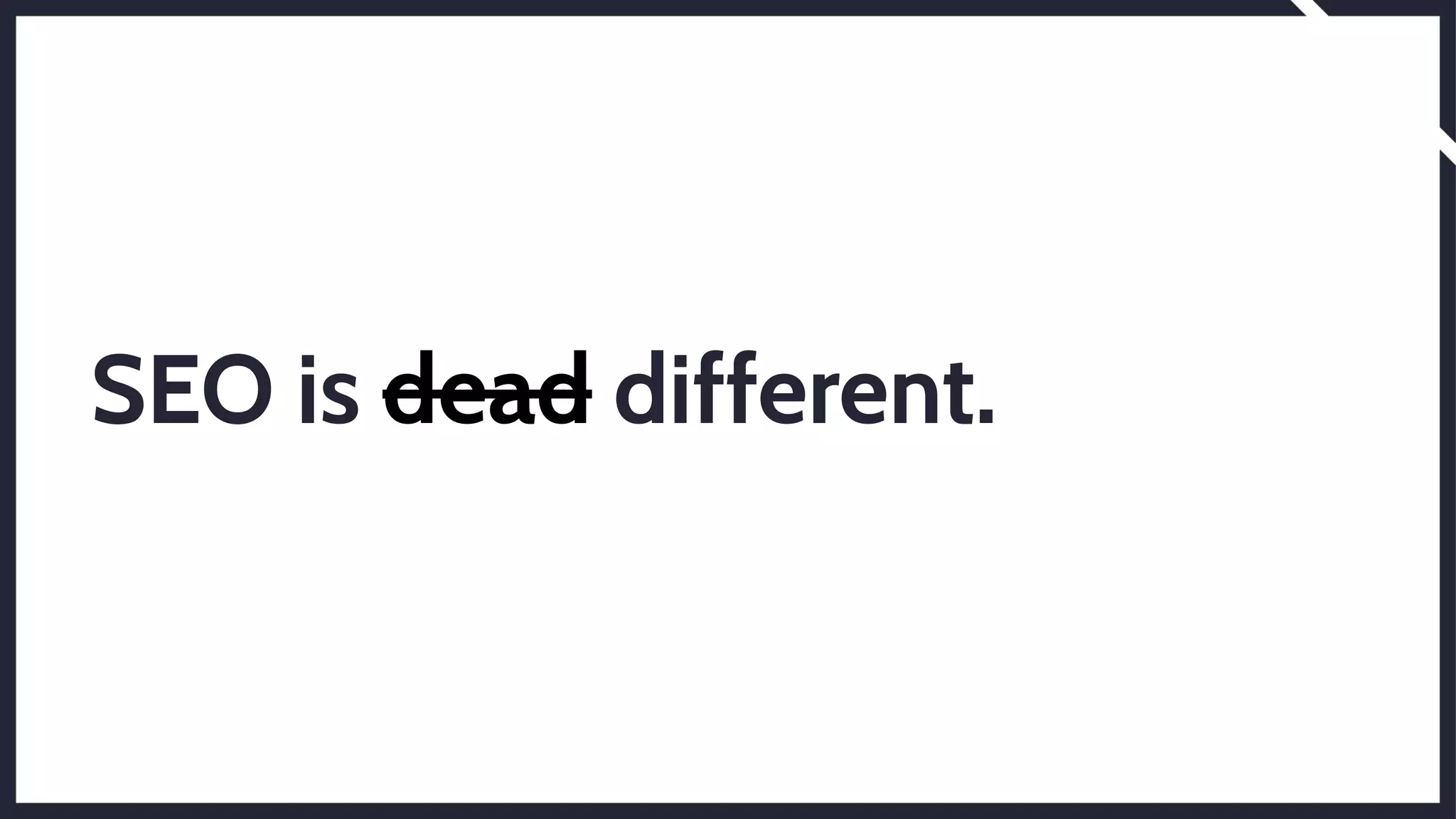
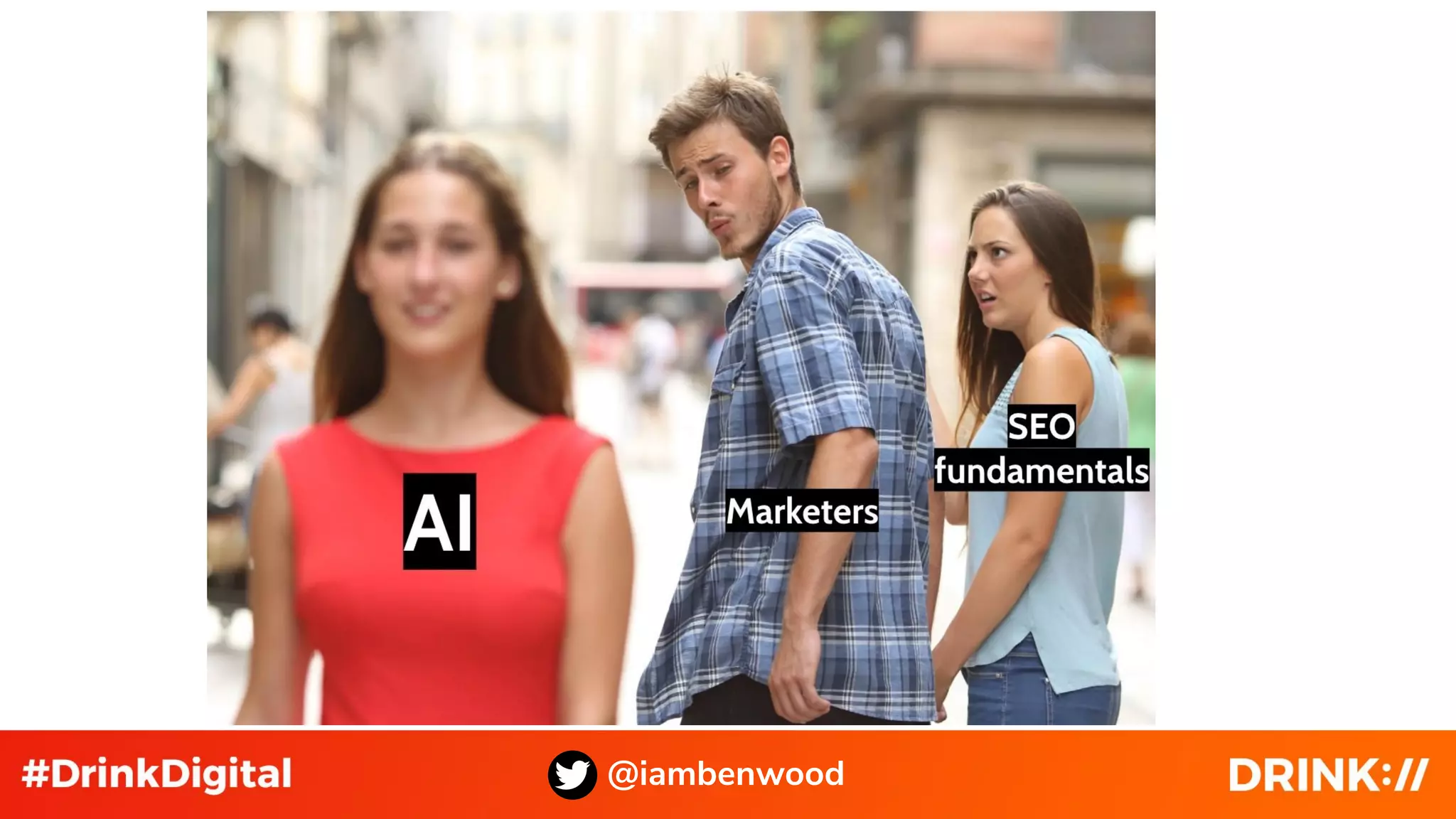
SEO is dead different.
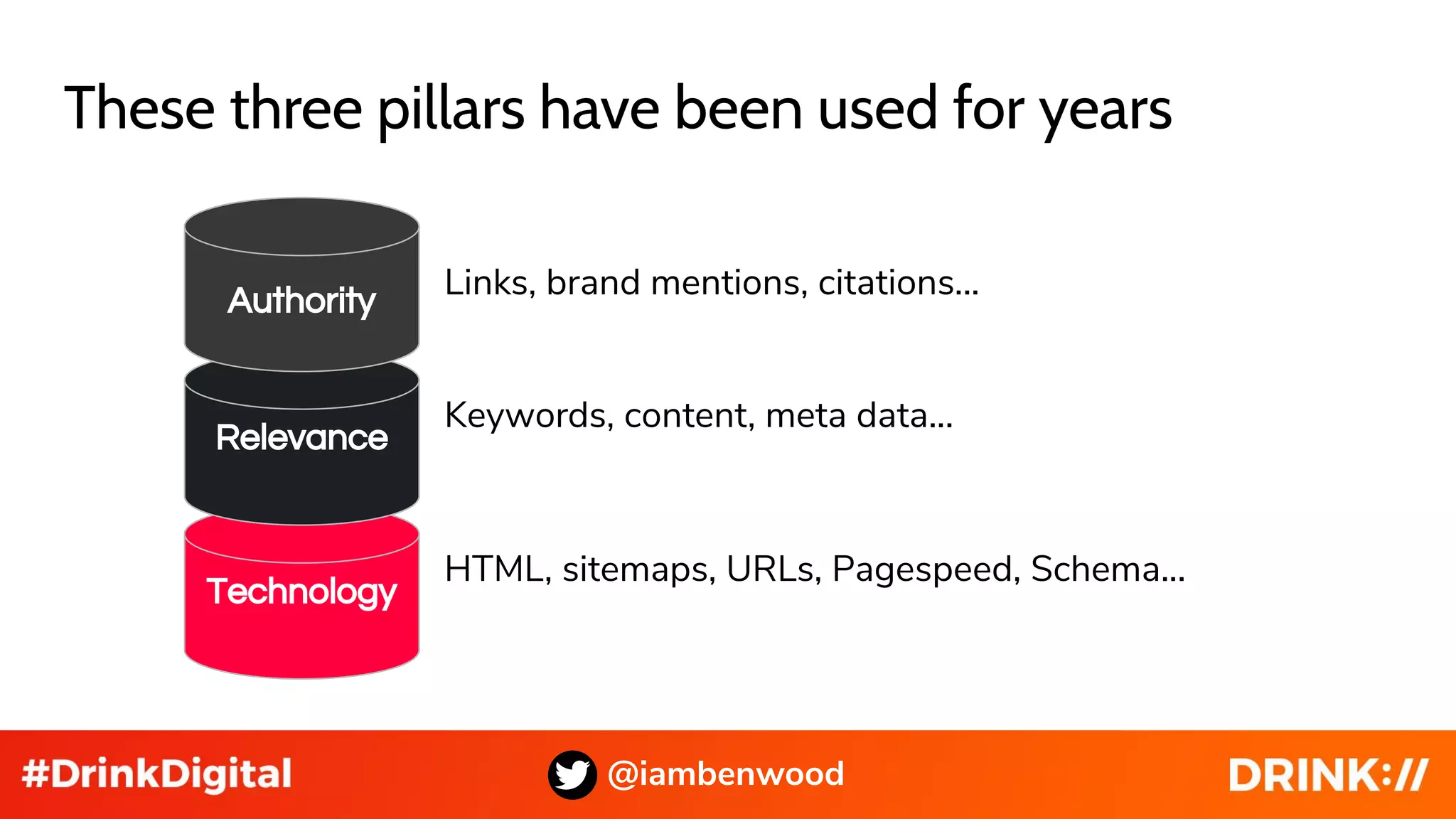
These three pillars have been used for years
@iambenwood
Technology
Relevance
Authority Links, brand mentions, citations...
Keywords, content, meta data...
HTML, sitemaps, URLs, Pagespeed, Schema...
These fundamentals of
SEO are still as important
as ever.
@iambenwood
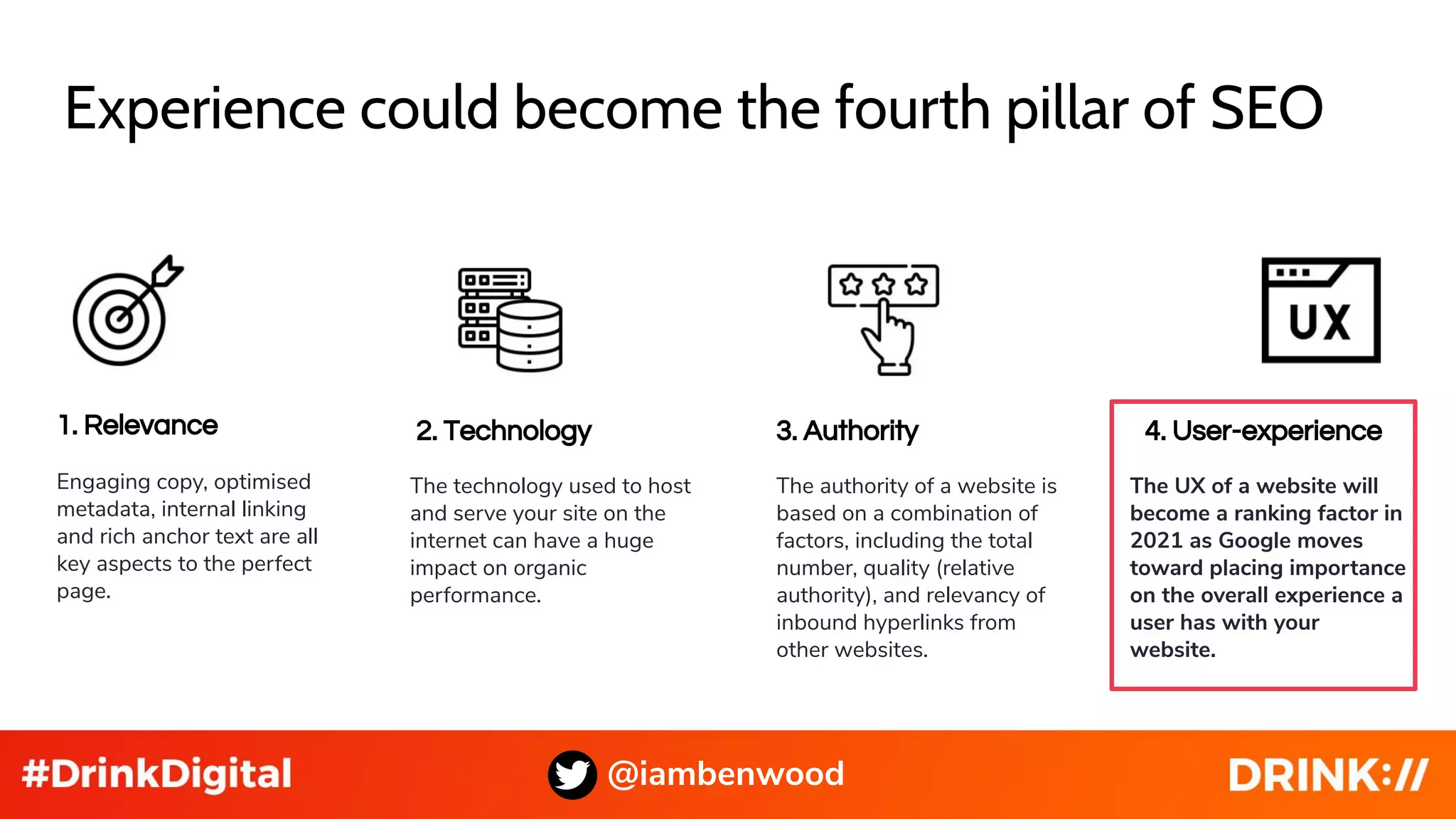
Experience could become the fourth pillar of SEO
@iambenwood
1. Relevance
Engaging copy, optimised
metadata, internal linking
and rich anchor text are all
key aspects to the perfect
page.
2. Technology 3. Authority 4. User-experience
The technology used to host
and serve your site on the
internet can have a huge
impact on organic
performance.
The authority of a website is
based on a combination of
factors, including the total
number, quality (relative
authority), and relevancy of
inbound hyperlinks from
other websites.
The UX of a website will
become a ranking factor in
2021 as Google moves
toward placing importance
on the overall experience a
user has with your
website.
OK, so how do I become
the greatest SEO ever?
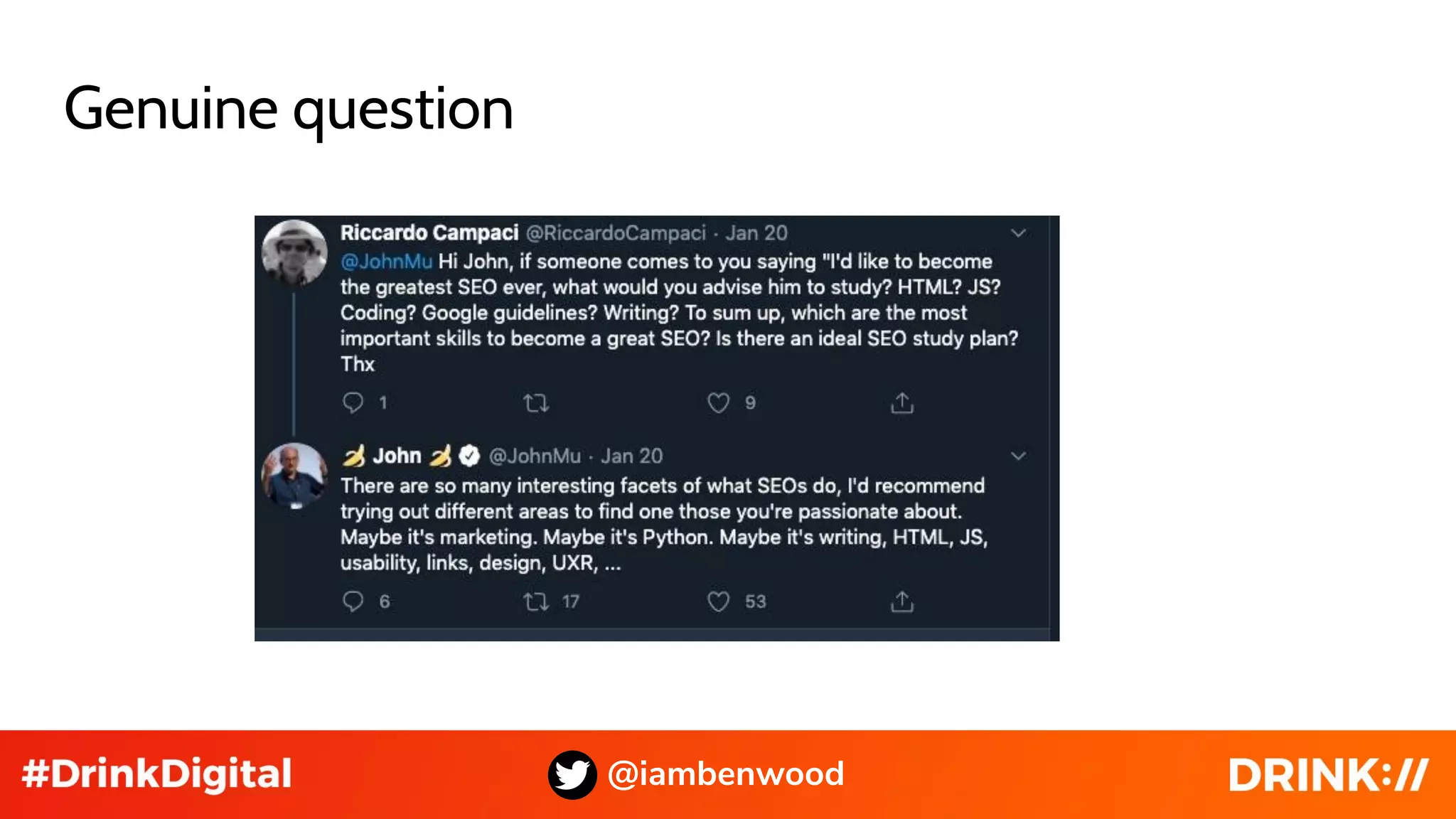
Genuine question
@iambenwood
It’s impossible to be an
expert in every one of
these areas.
To stay relevant, choose
the path that you’re most
interested in.
@iambenwood
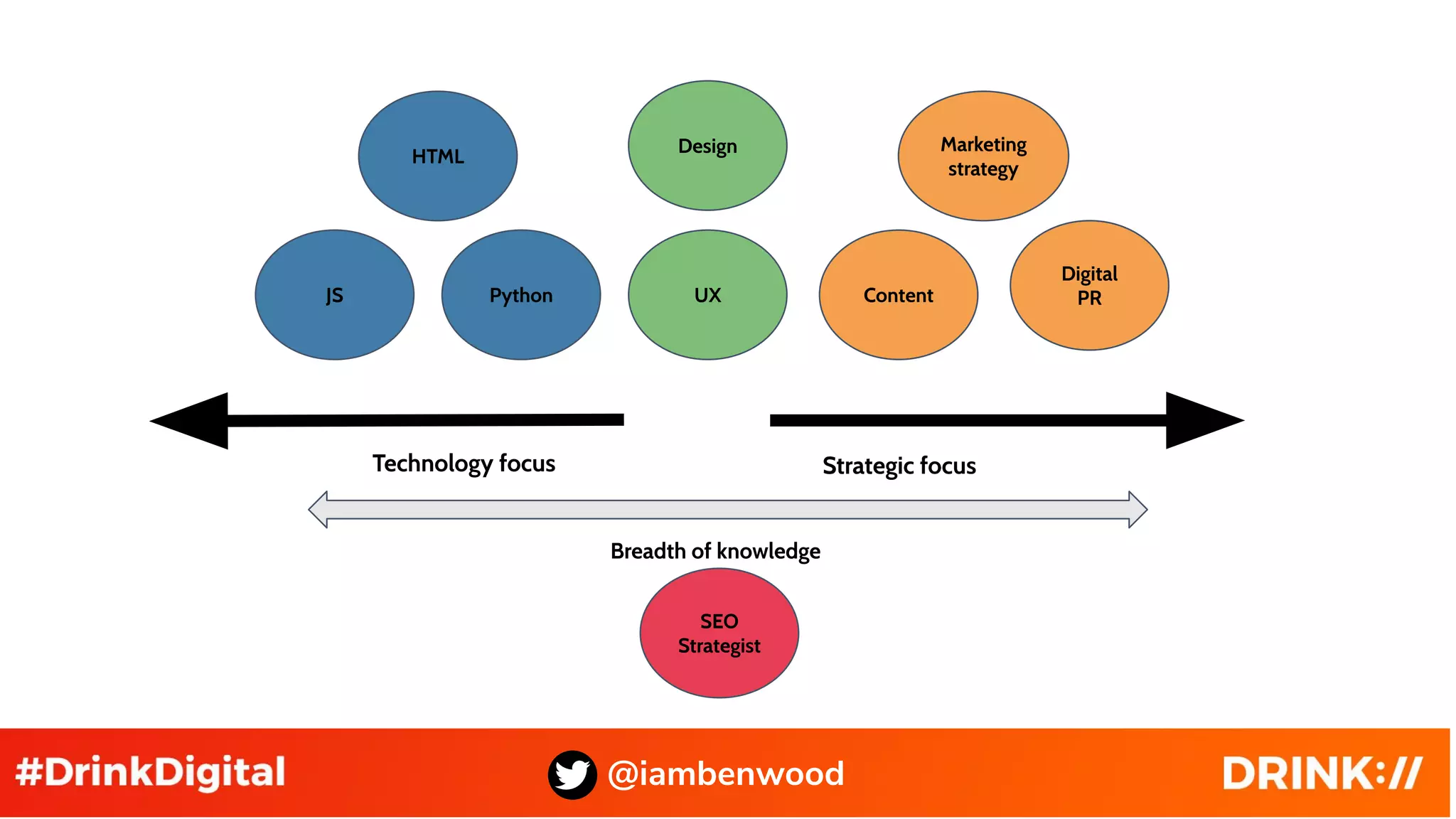
Media
Director
Tech SEO
consultant
Technology focus Strategic focus
JS
HTML
Digital
PRContentUX
Marketing
strategy
Python
Design
Breadth of knowledge
SEO
Strategist
To be an effective
strategist, integrate your
approach to search.
An integrated approach to search
@iambenwood
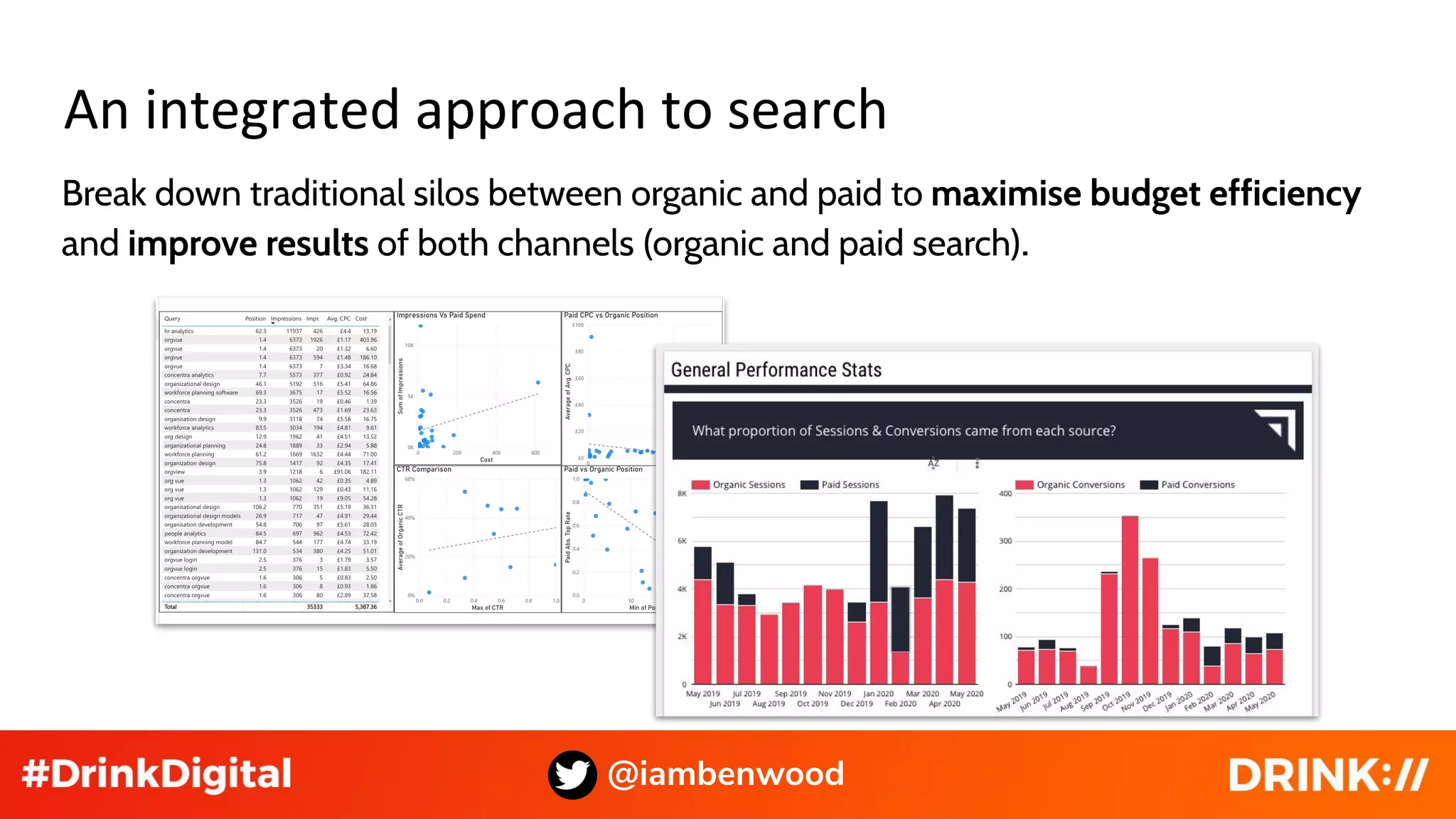
Break down traditional silos between organic and paid to maximise budget efficiency
and improve results of both channels (organic and paid search).
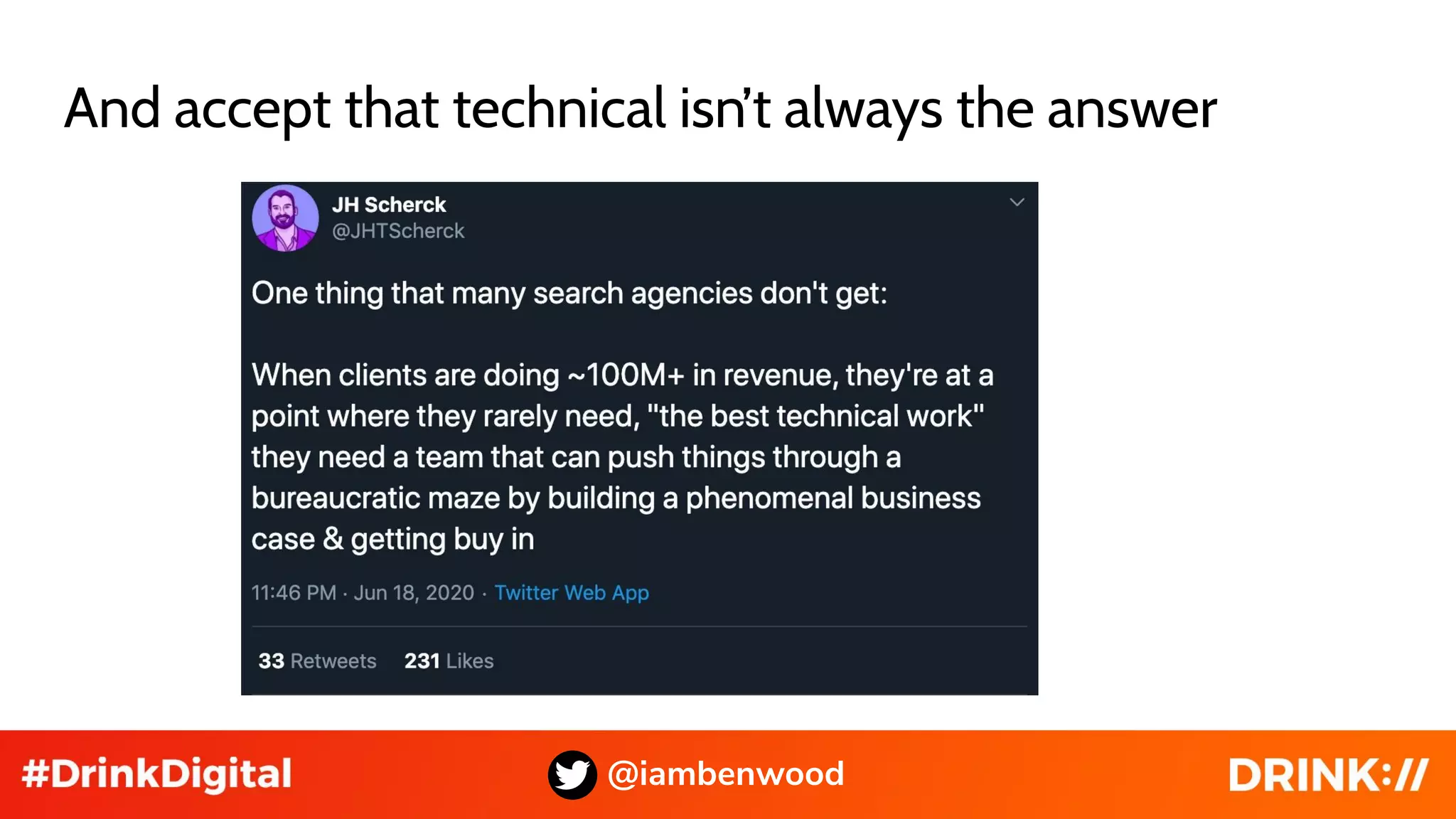
And accept that technical isn’t always the answer
@iambenwood
@iambenwood
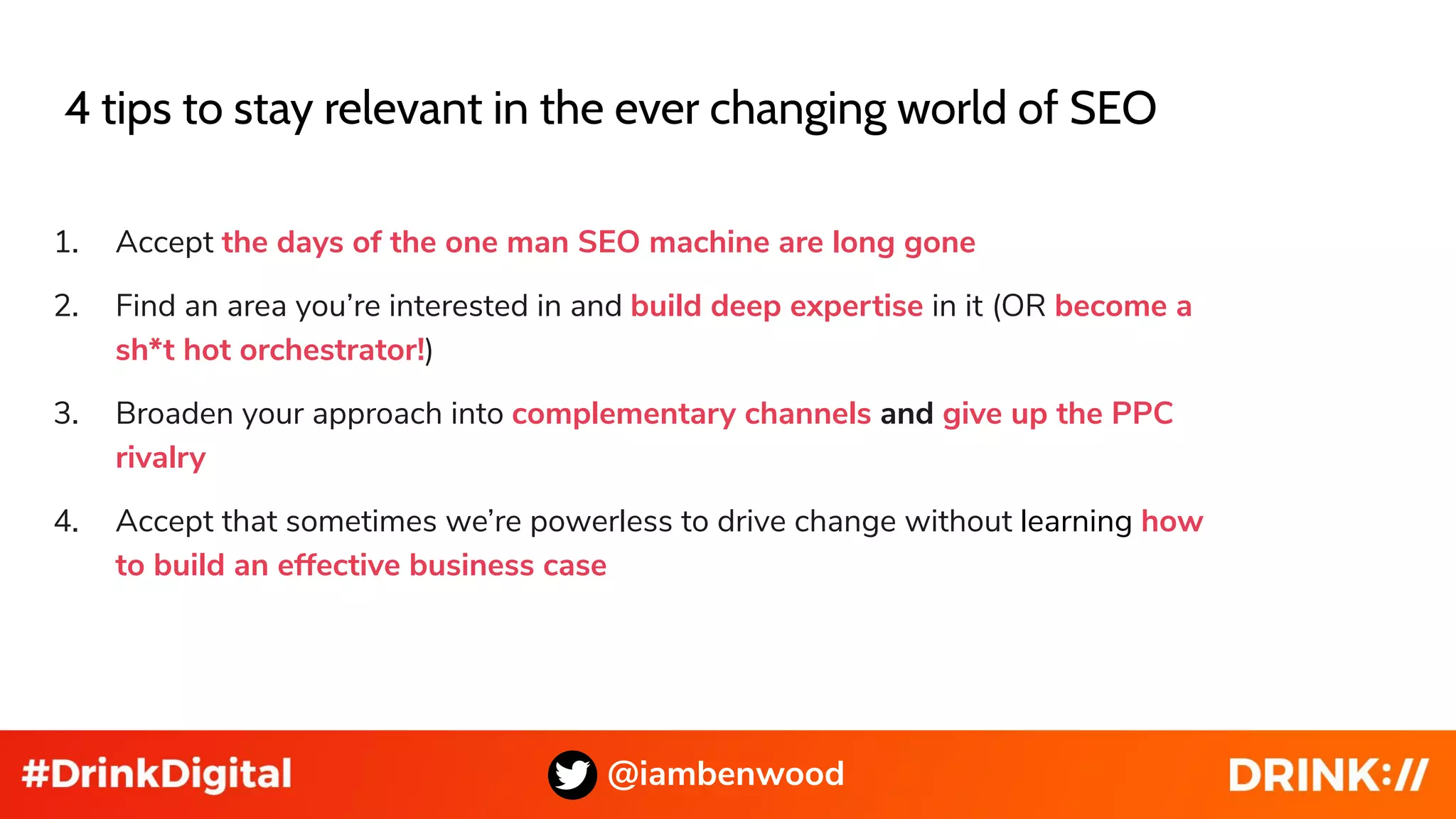
4 tips to stay relevant in the ever changing world of SEO
1. Accept the days of the one man SEO machine are long gone
2. Find an area you’re interested in and build deep expertise in it (OR become a
sh*t hot orchestrator!)
3. Broaden your approach into complementary channels and give up the PPC
rivalry
4. Accept that sometimes we’re powerless to drive change without learning how
to build an effective business case
Thank you!
Let’s stay in touch!
@iambenwood
Linkedin: https://www.linkedin.com/in/woodben/
Twitter: @iambenwood
ben.wood@hallam.co.uk
www.hallaminternet.com
@HallamAgency
0115 948 0123

From Optimiser to Consultant: How to Remain Relevant as an SEO Practitioner

  • 1.
    From optimiser to orchestrator:how to remain relevant as an SEO practitioner Ben Wood
  • 2.
    About me ● StrategyDirector @ Hallam ● Awarded best EMEA Google Premier Partner agency for ‘Growing Business Online’ in 2020 ● The Drum’s most recommended UK agency (49-100 staff) overall and for search, strategy, UX and effectiveness ● Regularly write on SEO and PPC trends for sites such as Marketing Land, SEJ, Econsultancy etc. @iambenwood
  • 3.
    What you’ll learnin this session ● Overview of recent changes impacting SEO landscape ● Rethinking the three pillars of SEO ● How to become the greatest SEO ever... ● How to rethink your approach to remain relevant @iambenwood
  • 4.
  • 5.
    What happened? Google announcedlast month they will be starting to use page experience as a ranking factor in 2021. Google will be using new ‘core web vitals’ metrics alongside existing metrics of mobile friendliness, HTTPS, intrusive interstitials and safe browsing to give a well-rounded view of page experience. @iambenwood
  • 6.
    What are coreweb vitals? The Core Web Vitals focus on three different aspects of page experience – loading, interactivity, visual stability. Largest Contentful Paint (LCP) – Loading - The metric refers to how long it takes for the largest piece of content on the page to render. First Input Delay (FID) – Interactivity - FID measures how long it takes from a user to get a response from the site in the browser. E.g. clicking on a link or button. Cumulative Layout Shift (CLS) – Visual Stability - A brand new metric that aims at assessing the visual stability of a page. The browser looks at the viewport size and the movement of any unstable elements. The score is measured by the sum of the impact that shift has, and the distance of the shift. @iambenwood
  • 7.
    How to measurecore web vitals Core Web Vitals can currently be measured using the Chrome UX Report via Page Speed insights, and over the next few months, Google will be updating Lighthouse and Search Console to provide further analysis on the Core Web Vitals. You’ll be able to find more information on these new Core Web Vitals in Google’s developer docs. Dan Taylor has also developed a plugin for WordPress sites so you can incorporate this data into your Google Analytics dashboard. @iambenwood SEARCH CONSOLE PAGE SPEED INSIGHTS
  • 8.
  • 9.
    It’s *likely* Googlehave been testing UX factors as ranking signals for years already... @iambenwood Nick Frost, Head Google Brain, Toronto/Canada - 2017 https://gofishdigital.com/user-click-through-rates-and-search-result-ra nkings-at-google/
  • 10.
    They have alsobeen releasing best practice UX guidance for some time already... @iambenwood
  • 11.
  • 12.
    SEO is deaddifferent.
  • 13.
    These three pillarshave been used for years @iambenwood Technology Relevance Authority Links, brand mentions, citations... Keywords, content, meta data... HTML, sitemaps, URLs, Pagespeed, Schema...
  • 14.
    These fundamentals of SEOare still as important as ever.
  • 15.
  • 16.
    Experience could becomethe fourth pillar of SEO @iambenwood 1. Relevance Engaging copy, optimised metadata, internal linking and rich anchor text are all key aspects to the perfect page. 2. Technology 3. Authority 4. User-experience The technology used to host and serve your site on the internet can have a huge impact on organic performance. The authority of a website is based on a combination of factors, including the total number, quality (relative authority), and relevancy of inbound hyperlinks from other websites. The UX of a website will become a ranking factor in 2021 as Google moves toward placing importance on the overall experience a user has with your website.
  • 17.
    OK, so howdo I become the greatest SEO ever?
  • 18.
  • 19.
    It’s impossible tobe an expert in every one of these areas.
  • 20.
    To stay relevant,choose the path that you’re most interested in.
  • 21.
    @iambenwood Media Director Tech SEO consultant Technology focusStrategic focus JS HTML Digital PRContentUX Marketing strategy Python Design Breadth of knowledge SEO Strategist
  • 22.
    To be aneffective strategist, integrate your approach to search.
  • 23.
    An integrated approachto search @iambenwood Break down traditional silos between organic and paid to maximise budget efficiency and improve results of both channels (organic and paid search).
  • 24.
    And accept thattechnical isn’t always the answer @iambenwood
  • 25.
    @iambenwood 4 tips tostay relevant in the ever changing world of SEO 1. Accept the days of the one man SEO machine are long gone 2. Find an area you’re interested in and build deep expertise in it (OR become a sh*t hot orchestrator!) 3. Broaden your approach into complementary channels and give up the PPC rivalry 4. Accept that sometimes we’re powerless to drive change without learning how to build an effective business case
  • 26.
  • 27.
    Let’s stay intouch! @iambenwood Linkedin: https://www.linkedin.com/in/woodben/ Twitter: @iambenwood ben.wood@hallam.co.uk www.hallaminternet.com @HallamAgency 0115 948 0123