COMMAS
In A Friendly Letter
WHERE DO COMMAS BELONG?
 In the heading
 In the greeting
 In the body
 In the closing
SAMPLE FRIENDLY LETTER
HEADING
 The heading includes the name and address of the person writing
  the letter as well as the date the letter is written.
 Use commas as you would with dates and addresses
 The comma goes after the city and before the state
 The comma goes after the day and before the year
GREETING
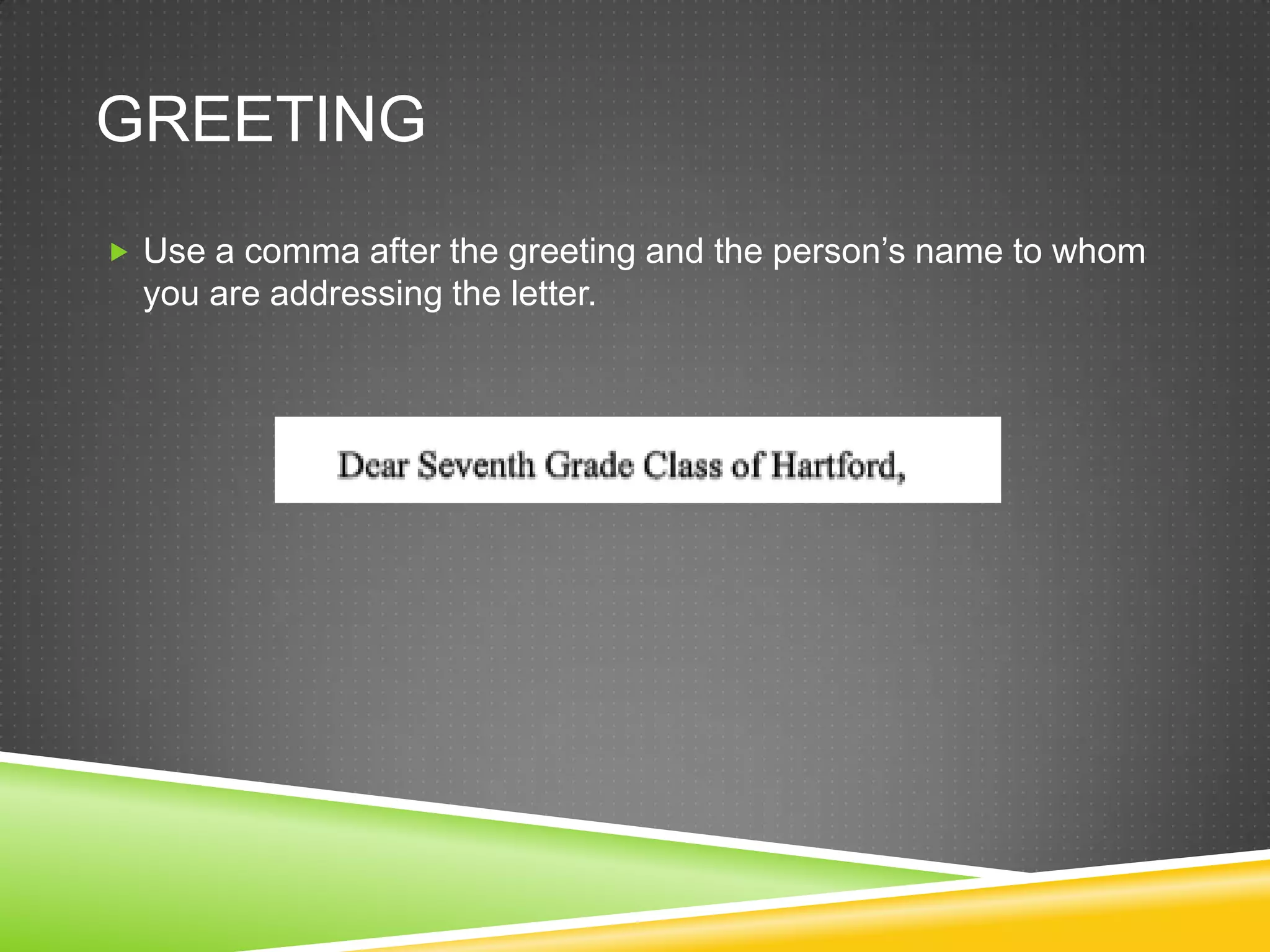
 Use a comma after the greeting and the person’s name to whom
  you are addressing the letter.
IN THE BODY
 Remember to use commas as you normally would in a series and
  to connect compound sentences.
IN THE CLOSING
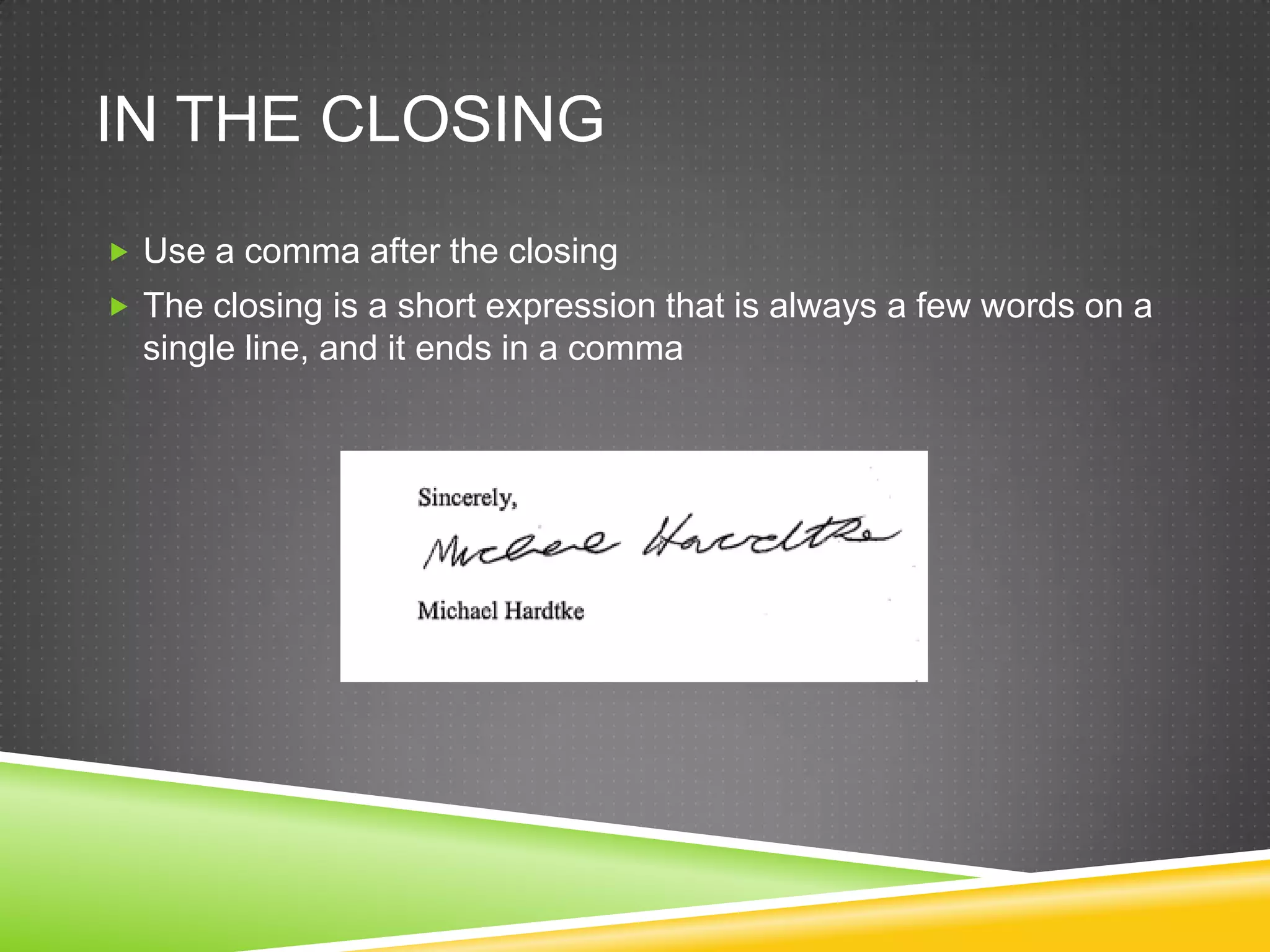
 Use a comma after the closing
 The closing is a short expression that is always a few words on a
  single line, and it ends in a comma
NOW YOUR TURN!
 You will write a friendly letter to a relative.
 If you want a greater challenge, imagine that you are either a
  factory worker or a slave in the Civil War.
 Write a letter to your relative who is on the other side of the war.
 If you are a factory worker, write to your Confederate relative.
 If you are a slave, write to your Union relative.


 Include commas in all the right places. That means to use
  commas in the heading, greeting, body, and the closing.

Friendly letter

  • 1.
  • 2.
    WHERE DO COMMASBELONG?  In the heading  In the greeting  In the body  In the closing
  • 3.
  • 4.
    HEADING  The headingincludes the name and address of the person writing the letter as well as the date the letter is written.  Use commas as you would with dates and addresses  The comma goes after the city and before the state  The comma goes after the day and before the year
  • 5.
    GREETING  Use acomma after the greeting and the person’s name to whom you are addressing the letter.
  • 6.
    IN THE BODY Remember to use commas as you normally would in a series and to connect compound sentences.
  • 7.
    IN THE CLOSING Use a comma after the closing  The closing is a short expression that is always a few words on a single line, and it ends in a comma
  • 8.
    NOW YOUR TURN! You will write a friendly letter to a relative.  If you want a greater challenge, imagine that you are either a factory worker or a slave in the Civil War.  Write a letter to your relative who is on the other side of the war.  If you are a factory worker, write to your Confederate relative.  If you are a slave, write to your Union relative.  Include commas in all the right places. That means to use commas in the heading, greeting, body, and the closing.