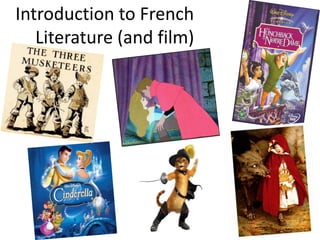
Introduction to French Literature (and film)
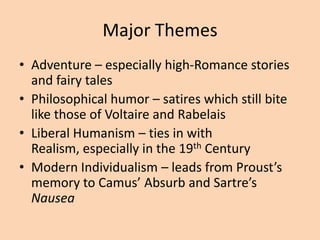
Major ThemesAdventure – especially high-Romance stories and fairy talesPhilosophical humor – satires which still bite like those of Voltaire and RabelaisLiberal Humanism – ties in with Realism, especially in the 19th CenturyModern Individualism – leads from Proust’s memory to Camus’ Absurb and Sartre’s Nausea
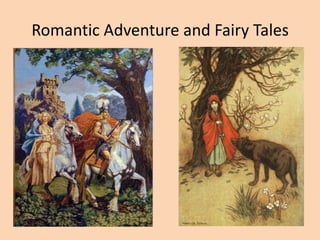
Romantic Adventure and Fairy Tales
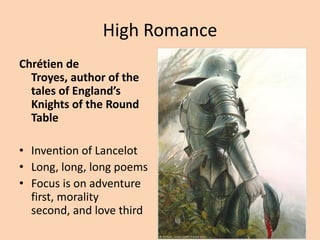
High RomanceChrétien de Troyes, author of the tales of England’s Knights of the Round TableInvention of LancelotLong, long, long poemsFocus is on adventure first, morality second, and love third
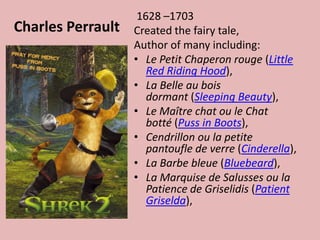
Charles Perrault 1628 –1703Created the fairy tale, Author of many including:Le Petit Chaperon rouge (Little Red Riding Hood), La Belle au bois dormant (Sleeping Beauty), Le Maître chat ou le Chat botté (Puss in Boots), Cendrillonou la petite pantoufle de verre (Cinderella), La Barbebleue (Bluebeard), La Marquise de Salussesou la Patience de Griselidis (Patient Griselda), 
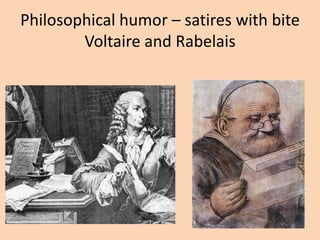
Philosophical humor – satires with bite Voltaire and Rabelais
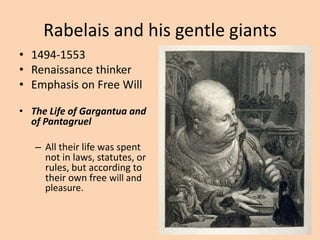
Rabelais and his gentle giants1494-1553Renaissance thinkerEmphasis on Free WillThe Life of Gargantua and of Pantagruel All their life was spent not in laws, statutes, or rules, but according to their own free will and pleasure.
Gargantuaand Pantagruel as Moral PhilosophersOnly one law: Do What Thou Wiltbecause men that are free, well-born, well-bred, and conversant in honest companies, have naturally an instinct and spur that prompteth them unto virtuous actions, and withdraws them from vice, which is called honour. Those same men, when by base subjection and constraint they are brought under and kept down, turn aside from that noble disposition by which they formerly were inclined to virtue, to shake off and break that bond of servitude wherein they are so tyrannously enslaved
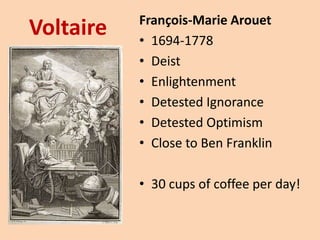
VoltaireFrançois-Marie Arouet1694-1778DeistEnlightenmentDetested IgnoranceDetested OptimismClose to Ben Franklin30 cups of coffee per day!
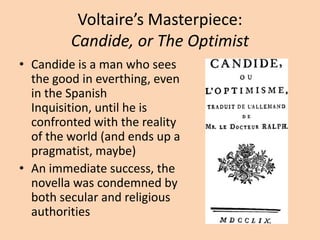
Voltaire’s Masterpiece: Candide, or The OptimistCandide is a man who sees the good in everthing, even in the Spanish Inquisition, until he is confronted with the reality of the world (and ends up a pragmatist, maybe)An immediate success, the novella was condemned by both secular and religious authorities
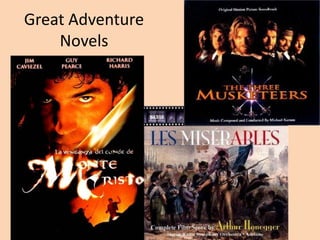
Great Adventure Novels
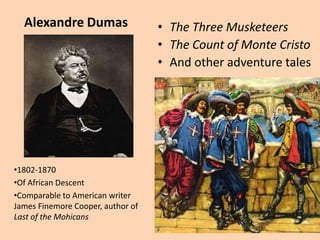
Alexandre DumasThe Three MusketeersThe Count of Monte CristoAnd other adventure tales1802-1870
Of African Descent
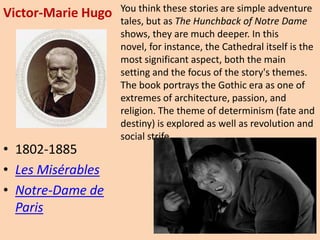
Comparable to American writer James Finemore Cooper, author of Last of the MohicansVictor-Marie HugoYou think these stories are simple adventure tales, but as The Hunchback of Notre Dame shows, they are much deeper. In this novel, for instance, the Cathedral itself is the most significant aspect, both the main setting and the focus of the story's themes. The book portrays the Gothic era as one of extremes of architecture, passion, and religion. The theme of determinism (fate and destiny) is explored as well as revolution and social strife. 1802-1885Les Misérables Notre-Dame de Paris 
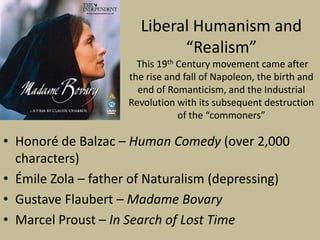
Liberal Humanism and “Realism” This 19th Century movement came after the rise and fall of Napoleon, the birth and end of Romanticism, and the Industrial Revolution with its subsequent destruction of the “commoners” Honoré de Balzac – Human Comedy (over 2,000 characters)ÉmileZola – father of Naturalism (depressing)Gustave Flaubert – Madame BovaryMarcel Proust – In Search of Lost Time
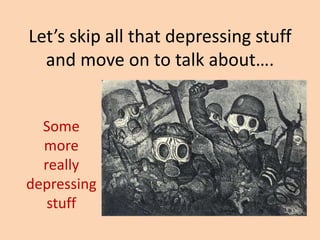
Let’s skip all that depressing stuff and move on to talk about….Some more really depressing stuff
Aftermath of the Great20th Century WarsModern Individualism – leads from Proust’s memory to Camus’ Absurb and Sartre’s Nausea
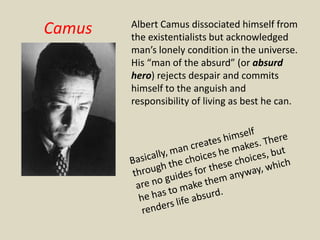
CamusAlbert Camus dissociated himself from the existentialists but acknowledged man’s lonely condition in the universe. His “man of the absurd” (or absurd hero) rejects despair and commits himself to the anguish and responsibility of living as best he can. Basically, man creates himself through the choices he makes. There are no guides for these choices, but he has to make them anyway, which renders life absurd.
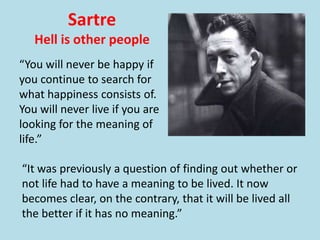
SartreHell is other people“You will never be happy if you continue to search for what happiness consists of. You will never live if you are looking for the meaning of life.”“It was previously a question of finding out whether or not life had to have a meaning to be lived. It now becomes clear, on the contrary, that it will be lived all the better if it has no meaning.”
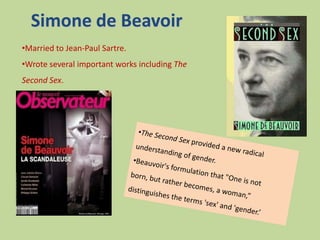
Simone de BeavoirMarried to Jean-Paul Sartre.

French Literature Presentation

  • 1.
    Introduction to FrenchLiterature (and film)
  • 2.
    Major ThemesAdventure –especially high-Romance stories and fairy talesPhilosophical humor – satires which still bite like those of Voltaire and RabelaisLiberal Humanism – ties in with Realism, especially in the 19th CenturyModern Individualism – leads from Proust’s memory to Camus’ Absurb and Sartre’s Nausea
  • 3.
  • 4.
    High RomanceChrétien deTroyes, author of the tales of England’s Knights of the Round TableInvention of LancelotLong, long, long poemsFocus is on adventure first, morality second, and love third
  • 5.
    Charles Perrault 1628 –1703Createdthe fairy tale, Author of many including:Le Petit Chaperon rouge (Little Red Riding Hood), La Belle au bois dormant (Sleeping Beauty), Le Maître chat ou le Chat botté (Puss in Boots), Cendrillonou la petite pantoufle de verre (Cinderella), La Barbebleue (Bluebeard), La Marquise de Salussesou la Patience de Griselidis (Patient Griselda), 
  • 6.
    Philosophical humor –satires with bite Voltaire and Rabelais
  • 7.
    Rabelais and hisgentle giants1494-1553Renaissance thinkerEmphasis on Free WillThe Life of Gargantua and of Pantagruel All their life was spent not in laws, statutes, or rules, but according to their own free will and pleasure.
  • 8.
    Gargantuaand Pantagruel as MoralPhilosophersOnly one law: Do What Thou Wiltbecause men that are free, well-born, well-bred, and conversant in honest companies, have naturally an instinct and spur that prompteth them unto virtuous actions, and withdraws them from vice, which is called honour. Those same men, when by base subjection and constraint they are brought under and kept down, turn aside from that noble disposition by which they formerly were inclined to virtue, to shake off and break that bond of servitude wherein they are so tyrannously enslaved
  • 9.
  • 10.
    Voltaire’s Masterpiece: Candide,or The OptimistCandide is a man who sees the good in everthing, even in the Spanish Inquisition, until he is confronted with the reality of the world (and ends up a pragmatist, maybe)An immediate success, the novella was condemned by both secular and religious authorities
  • 11.
  • 12.
    Alexandre DumasThe ThreeMusketeersThe Count of Monte CristoAnd other adventure tales1802-1870
  • 13.
  • 14.
    Comparable to Americanwriter James Finemore Cooper, author of Last of the MohicansVictor-Marie HugoYou think these stories are simple adventure tales, but as The Hunchback of Notre Dame shows, they are much deeper. In this novel, for instance, the Cathedral itself is the most significant aspect, both the main setting and the focus of the story's themes. The book portrays the Gothic era as one of extremes of architecture, passion, and religion. The theme of determinism (fate and destiny) is explored as well as revolution and social strife. 1802-1885Les Misérables Notre-Dame de Paris 
  • 15.
    Liberal Humanism and“Realism” This 19th Century movement came after the rise and fall of Napoleon, the birth and end of Romanticism, and the Industrial Revolution with its subsequent destruction of the “commoners” Honoré de Balzac – Human Comedy (over 2,000 characters)ÉmileZola – father of Naturalism (depressing)Gustave Flaubert – Madame BovaryMarcel Proust – In Search of Lost Time
  • 16.
    Let’s skip allthat depressing stuff and move on to talk about….Some more really depressing stuff
  • 17.
    Aftermath of theGreat20th Century WarsModern Individualism – leads from Proust’s memory to Camus’ Absurb and Sartre’s Nausea
  • 18.
    CamusAlbert Camus dissociatedhimself from the existentialists but acknowledged man’s lonely condition in the universe. His “man of the absurd” (or absurd hero) rejects despair and commits himself to the anguish and responsibility of living as best he can. Basically, man creates himself through the choices he makes. There are no guides for these choices, but he has to make them anyway, which renders life absurd.
  • 19.
    SartreHell is otherpeople“You will never be happy if you continue to search for what happiness consists of. You will never live if you are looking for the meaning of life.”“It was previously a question of finding out whether or not life had to have a meaning to be lived. It now becomes clear, on the contrary, that it will be lived all the better if it has no meaning.”
  • 20.
    Simone de BeavoirMarriedto Jean-Paul Sartre.