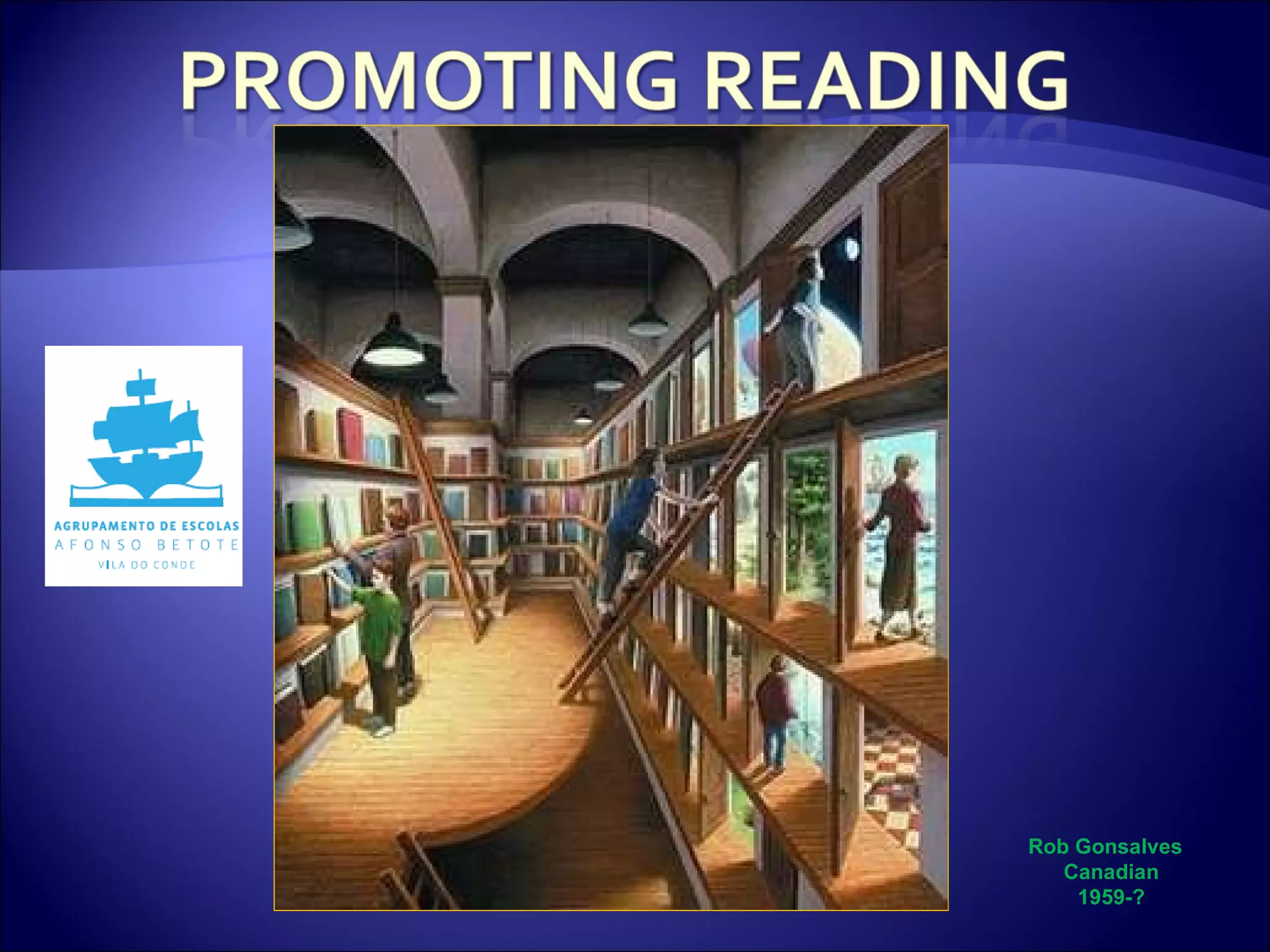
Rob Gonsalves  Canadian 1959-?
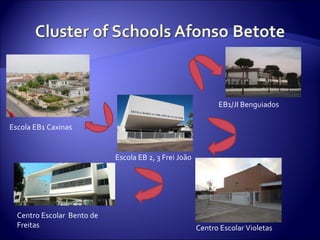
Escola EB 2, 3 Frei João Escola EB1 Caxinas Centro Escolar  Bento de Freitas Centro Escolar Violetas EB1/JI Benguiados
 
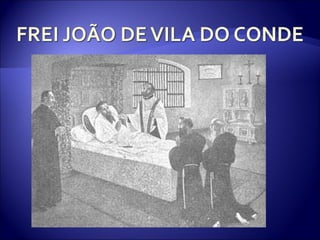
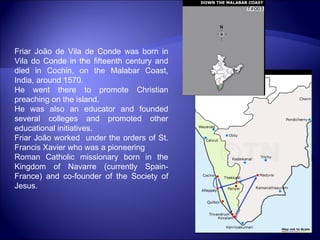
Friar João de Vila de Conde was born in Vila do Conde in the fifteenth century and died in Cochin, on the Malabar Coast, India, around 1570.  He went there to promote Christian preaching on the island. He was also an educator and founded several colleges and promoted other educational initiatives. Friar João worked  under the orders of St. Francis Xavier who was a pioneering  Roman Catholic missionary born in the Kingdom of Navarre (currently Spain-France) and co-founder of the Society of Jesus.
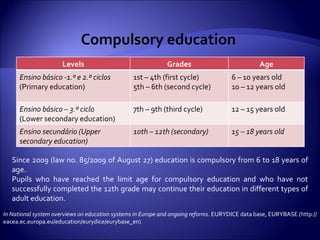
Compulsory education Since 2009 (law no. 85/2009 of August 27) education is compulsory from 6 to 18 years of age. Pupils who have reached the limit age for compulsory education and who have not successfully completed the 12th grade may continue their education in different types of adult education. In National system overviews on education systems in Europe and ongoing reforms .  EURYDICE data base, EURYBASE (http://eacea.ec.europa.eu/education/eurydice/eurybase_en) Levels Grades Age Ensino básico -1.º e 2.º ciclos (Primary education) 1st – 4th (first cycle) 5th – 6th (second cycle)  6 – 10 years old 10 – 12 years old Ensino básico – 3.º ciclo (Lower secondary education) 7th – 9th (third cycle)  12 – 15 years old Ensino secundário (Upper secondary education) 10th – 12th (secondary)  15 – 18 years old
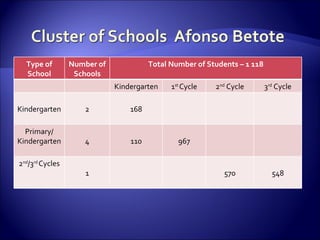
Type of School Number of Schools Total Number of Students – 1 118 Kindergarten 1 st  Cycle 2 nd  Cycle 3 rd  Cycle Kindergarten 2 168 Primary/ Kindergarten 4 110 967 2 nd /3 rd  Cycles 1 570 548
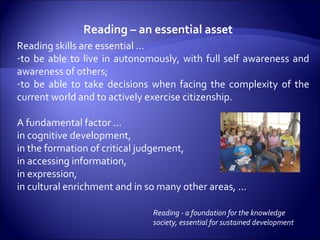
Reading – an essential asset   Reading - a foundation for the knowledge society, essential for sustained development Reading skills are essential ... to be able to live in autonomously, with full self awareness and awareness of others;  to be able to take decisions when facing the complexity of the current world and to actively exercise citizenship. A fundamental factor ... in cognitive development,  in the formation of critical judgement,  in accessing information,  in expression,  in cultural enrichment and in so many other areas, ...
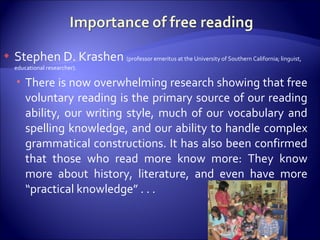
Stephen D. Krashen  (professor emeritus at the University of Southern California; linguist, educational researcher). There is now overwhelming research showing that free voluntary reading is the primary source of our reading ability, our writing style, much of our vocabulary and spelling knowledge, and our ability to handle complex grammatical constructions. It has also been confirmed that those who read more know more: They know more about history, literature, and even have more “practical knowledge” . . .
The  main objective  of the National Reading Plan is  to raise the level of literacy  of the Portuguese people.
To ensure the communication of the programs and interaction with schools and all the entities involved, a site has been  created, which is constantly updated, with reading guidelines for each age and methodological tools aimed at educators, teachers, parents, librarians, mediators, entertainers and any volunteers. Plano Nacional de Leitura
Some Principles for the Promotion of Reading In order to induce autonomous reading habits, many guided reading activities are required.  Full acquisition of reading skills does not only require learning the decoding of text. In order to reach higher comprehension levels, constant practise is essential in the classroom and library, and at home, over various years.  Practicing reading should not only be done during free time or at home, because if it is, in many cases it simply will not happen.   The promotion of reading implies gradual development, and higher levels are only reached when the stages inherent to this process are respected .
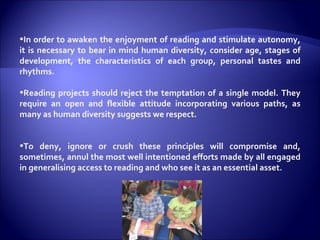
In order to awaken the enjoyment of reading and stimulate autonomy, it is necessary to bear in mind human diversity, consider age, stages of development, the characteristics of each group, personal tastes and rhythms.  Reading projects should reject the temptation of a single model. They require an open and flexible attitude incorporating various paths, as many as human diversity suggests we respect. To deny, ignore or crush these principles will compromise and, sometimes, annul the most well intentioned efforts made by all engaged in generalising access to reading and who see it as an essential asset.
 
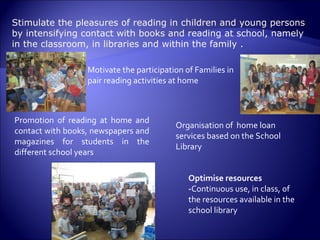
Stimulate the pleasures of reading in children and young persons by intensifying contact with books and reading at school, namely in the classroom, in libraries and within the family .  Optimise resources - Continuous use, in class, of the resources available in the school library  Motivate the participation of Families in pair reading activities at home  Organisation of  home loan services based on the School Library  Promotion of reading at home and contact with books, newspapers and magazines for students in the different school years
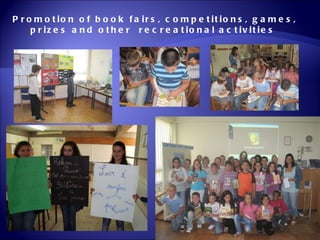
Promotion of book fairs, competitions, games, prizes and other  recreational activities
 
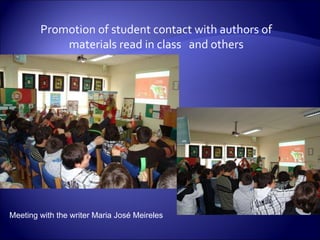
Promotion of student contact with authors of materials read in class   and others Meeting with the writer Maria José Meireles
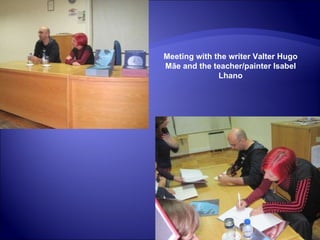
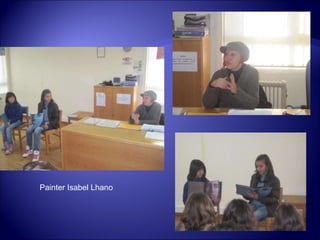
Meeting with the writer Valter Hugo Mãe and the teacher/painter Isabel Lhano
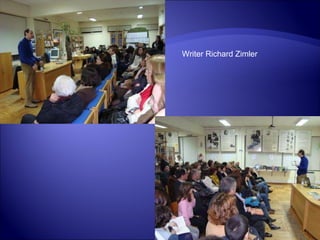
Writer Richard Zimler
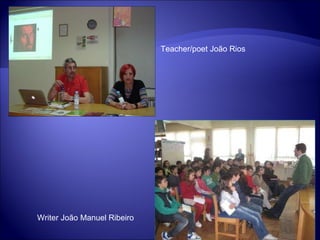
Teacher/poet João Rios  Writer João Manuel Ribeiro
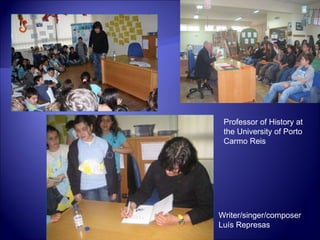
Writer/singer/composer Luís Represas Professor of History at the University of Porto Carmo Reis
 
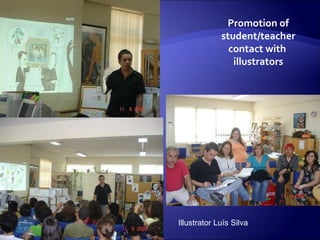
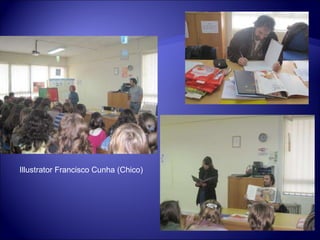
Promotion of student/teacher contact with  illustrators Illustrator Luís Silva
 
Illustrator Francisco Cunha (Chico)
Painter Isabel Lhano
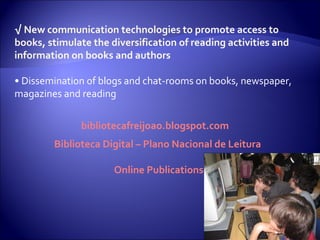
√  New communication technologies to promote access to books, stimulate the diversification of reading activities and information on books and authors •  Dissemination of blogs and chat-rooms on books, newspaper, magazines and reading bibliotecafreijoao.blogspot.com Biblioteca Digital – Plano Nacional de Leitura  Online Publications
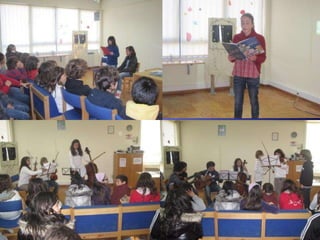
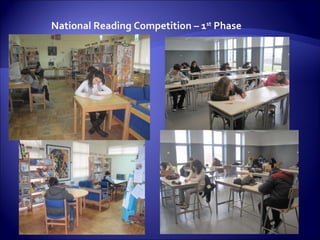
National Reading Competition – 1 st  Phase
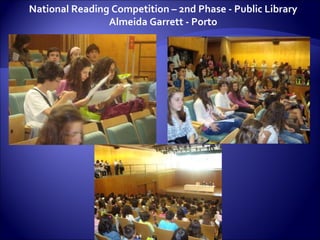
National Reading Competition – 2nd Phase - Public Library Almeida Garrett - Porto
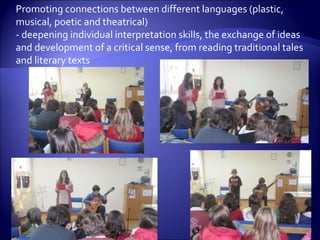
Promoting connections between different languages (plastic, musical, poetic and theatrical) - deepening individual interpretation skills, the exchange of ideas and development of a critical sense, from reading traditional tales and literary texts
 
 
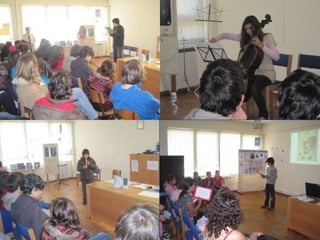
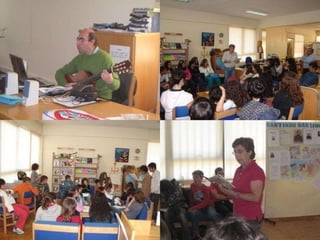
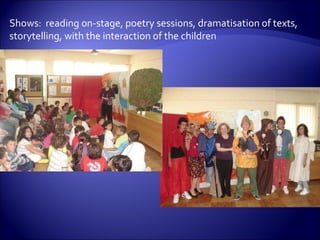
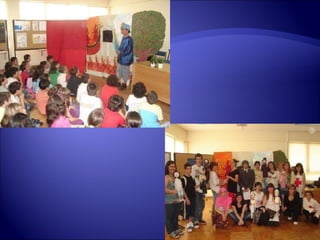
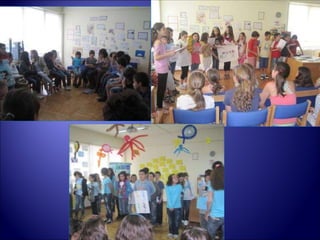
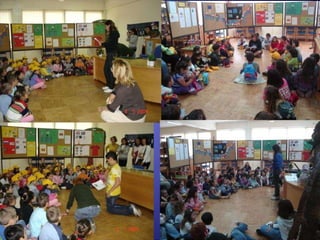
Shows:  reading on-stage, poetry sessions, dramatisation of texts, storytelling, with the interaction of the children


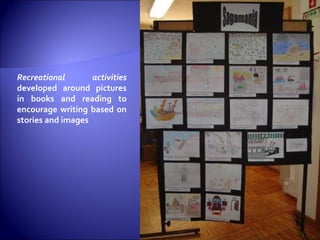
Recreational activities  developed around pictures in books and reading to encourage writing based on stories and images
 
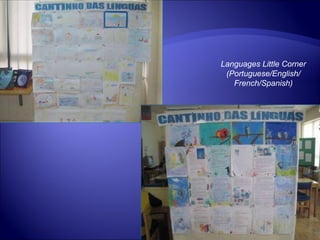
Languages Little Corner (Portuguese/English/ French/Spanish)
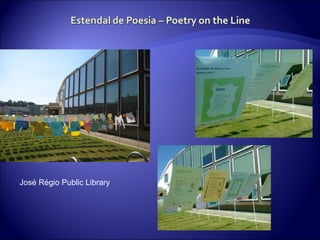
José Régio Public Library
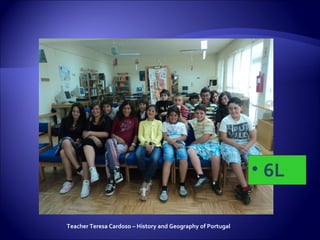
6L Teacher Teresa Cardoso – History and Geography of Portugal
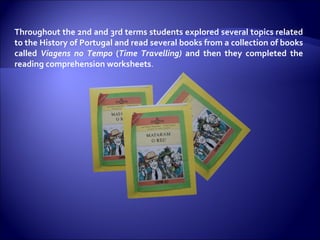
Throughout the 2nd and 3rd terms students explored several topics related to the History of Portugal and read several books from a collection of books called  Viagens no Tempo  ( Time Travelling)  and then they completed the reading comprehension worksheets .
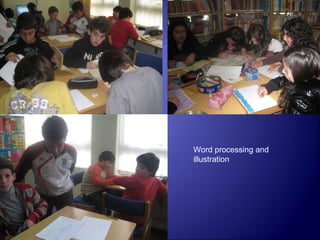
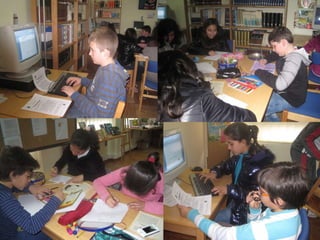
Word processing and illustration
 
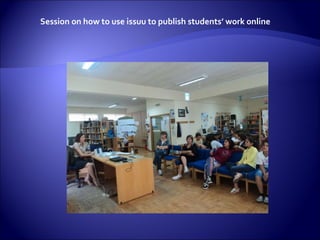
Session   on how to use issuu to publish students’ work online
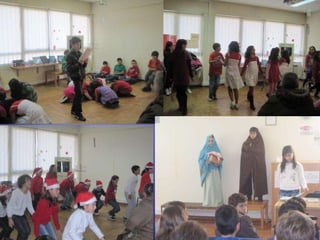
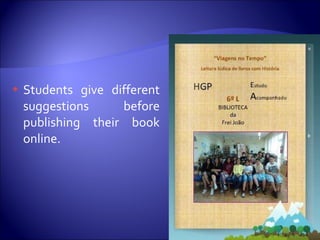
Students give different suggestions before publishing their book online.
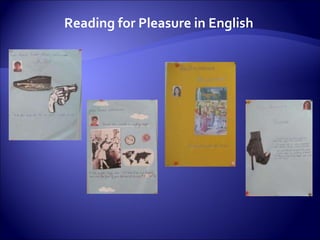
Reading for Pleasure in English
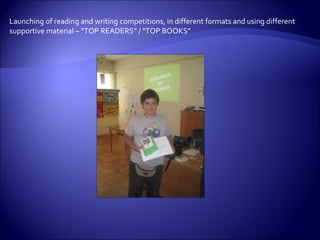
Launching of reading and writing competitions, in different formats and using different supportive material – “TOP READERS” / “TOP BOOKS”
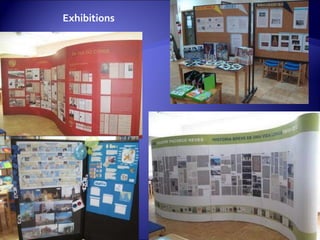
Exhibitions
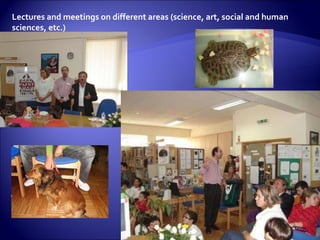
Lectures and meetings on different areas (science, art, social and human sciences, etc.)
 
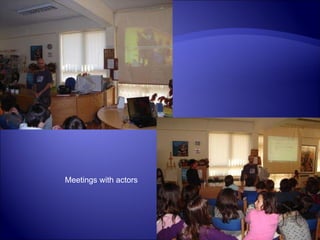
Meetings with actors
 
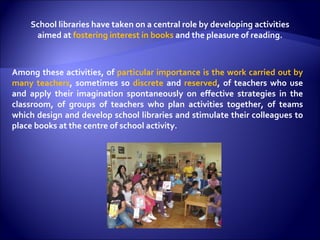
School libraries have taken on a central role by developing activities aimed at  fostering interest in books  and the pleasure of reading. Among these activities, of  particular importance is the work carried out by many teachers , sometimes so  discrete  and  reserved , of teachers who use and apply their imagination spontaneously on effective strategies in the classroom, of groups of teachers who plan activities together, of teams which design and develop school libraries and stimulate their colleagues to place books at the centre of school activity.
More effectiveness! By working together, librarians and teachers can more effectively enhance student skills, and offer youngsters a world of reading and information experiences far richer than any institution could individually provide.
 
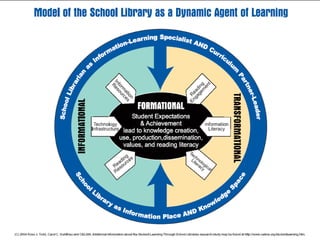
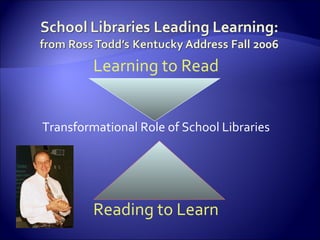
Learning to Read Transformational Role of School Libraries Reading to Learn
What is a Strong School Library?  As school libraries close, children of poverty lose access and the achievement gap grows larger. The easy solution, and one backed up by international studies confirms that  access to books allows children to read more .  Reading more creates better readers . The school library provides access to books, plus access to the professional who can lead our children into their digital future safely and thinking critically about their world - both virtual and real.
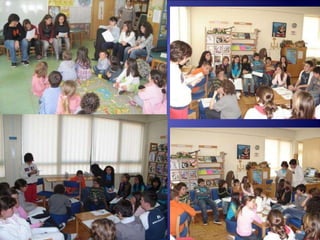
“ The illiterate of the 21st century will not be those who cannot read and write, but those who cannot learn, unlearn, and relearn.”  Alvin Toffler
► Take time to dream ►   Where are you now and where do you want to be? ►   Just do it ►   Train yourself ►   Get outside the library ►   Ask students for help ►   Stop Watering the Rocks – work with the living ►   Reflect ►   Share your vision
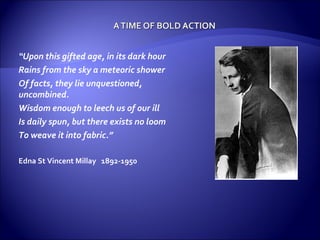
“ Upon this gifted age, in its dark hour Rains from the sky a meteoric shower Of facts, they lie unquestioned, uncombined. Wisdom enough to leech us of our ill Is daily spun, but there exists no loom To weave it into fabric. ” Edna St Vincent Millay  1892-1950
 

Frei joão promoting reading 11th october

  • 1.
    Rob Gonsalves Canadian 1959-?
  • 2.
    Escola EB 2,3 Frei João Escola EB1 Caxinas Centro Escolar Bento de Freitas Centro Escolar Violetas EB1/JI Benguiados
  • 3.
  • 4.
    Friar João deVila de Conde was born in Vila do Conde in the fifteenth century and died in Cochin, on the Malabar Coast, India, around 1570. He went there to promote Christian preaching on the island. He was also an educator and founded several colleges and promoted other educational initiatives. Friar João worked under the orders of St. Francis Xavier who was a pioneering Roman Catholic missionary born in the Kingdom of Navarre (currently Spain-France) and co-founder of the Society of Jesus.
  • 5.
    Compulsory education Since2009 (law no. 85/2009 of August 27) education is compulsory from 6 to 18 years of age. Pupils who have reached the limit age for compulsory education and who have not successfully completed the 12th grade may continue their education in different types of adult education. In National system overviews on education systems in Europe and ongoing reforms . EURYDICE data base, EURYBASE (http://eacea.ec.europa.eu/education/eurydice/eurybase_en) Levels Grades Age Ensino básico -1.º e 2.º ciclos (Primary education) 1st – 4th (first cycle) 5th – 6th (second cycle) 6 – 10 years old 10 – 12 years old Ensino básico – 3.º ciclo (Lower secondary education) 7th – 9th (third cycle) 12 – 15 years old Ensino secundário (Upper secondary education) 10th – 12th (secondary) 15 – 18 years old
  • 6.
    Type of SchoolNumber of Schools Total Number of Students – 1 118 Kindergarten 1 st Cycle 2 nd Cycle 3 rd Cycle Kindergarten 2 168 Primary/ Kindergarten 4 110 967 2 nd /3 rd Cycles 1 570 548
  • 7.
    Reading – anessential asset Reading - a foundation for the knowledge society, essential for sustained development Reading skills are essential ... to be able to live in autonomously, with full self awareness and awareness of others; to be able to take decisions when facing the complexity of the current world and to actively exercise citizenship. A fundamental factor ... in cognitive development, in the formation of critical judgement, in accessing information, in expression, in cultural enrichment and in so many other areas, ...
  • 8.
    Stephen D. Krashen (professor emeritus at the University of Southern California; linguist, educational researcher). There is now overwhelming research showing that free voluntary reading is the primary source of our reading ability, our writing style, much of our vocabulary and spelling knowledge, and our ability to handle complex grammatical constructions. It has also been confirmed that those who read more know more: They know more about history, literature, and even have more “practical knowledge” . . .
  • 9.
    The mainobjective of the National Reading Plan is to raise the level of literacy of the Portuguese people.
  • 10.
    To ensure thecommunication of the programs and interaction with schools and all the entities involved, a site has been created, which is constantly updated, with reading guidelines for each age and methodological tools aimed at educators, teachers, parents, librarians, mediators, entertainers and any volunteers. Plano Nacional de Leitura
  • 11.
    Some Principles forthe Promotion of Reading In order to induce autonomous reading habits, many guided reading activities are required. Full acquisition of reading skills does not only require learning the decoding of text. In order to reach higher comprehension levels, constant practise is essential in the classroom and library, and at home, over various years. Practicing reading should not only be done during free time or at home, because if it is, in many cases it simply will not happen.  The promotion of reading implies gradual development, and higher levels are only reached when the stages inherent to this process are respected .
  • 12.
    In order toawaken the enjoyment of reading and stimulate autonomy, it is necessary to bear in mind human diversity, consider age, stages of development, the characteristics of each group, personal tastes and rhythms. Reading projects should reject the temptation of a single model. They require an open and flexible attitude incorporating various paths, as many as human diversity suggests we respect. To deny, ignore or crush these principles will compromise and, sometimes, annul the most well intentioned efforts made by all engaged in generalising access to reading and who see it as an essential asset.
  • 13.
  • 14.
    Stimulate the pleasuresof reading in children and young persons by intensifying contact with books and reading at school, namely in the classroom, in libraries and within the family . Optimise resources - Continuous use, in class, of the resources available in the school library Motivate the participation of Families in pair reading activities at home Organisation of home loan services based on the School Library  Promotion of reading at home and contact with books, newspapers and magazines for students in the different school years
  • 15.
    Promotion of bookfairs, competitions, games, prizes and other recreational activities
  • 16.
  • 17.
    Promotion of studentcontact with authors of materials read in class   and others Meeting with the writer Maria José Meireles
  • 18.
    Meeting with thewriter Valter Hugo Mãe and the teacher/painter Isabel Lhano
  • 19.
  • 20.
    Teacher/poet João Rios Writer João Manuel Ribeiro
  • 21.
    Writer/singer/composer Luís RepresasProfessor of History at the University of Porto Carmo Reis
  • 22.
  • 23.
    Promotion of student/teachercontact with illustrators Illustrator Luís Silva
  • 24.
  • 25.
  • 26.
  • 27.
    √ Newcommunication technologies to promote access to books, stimulate the diversification of reading activities and information on books and authors • Dissemination of blogs and chat-rooms on books, newspaper, magazines and reading bibliotecafreijoao.blogspot.com Biblioteca Digital – Plano Nacional de Leitura Online Publications
  • 28.
  • 29.
    National Reading Competition– 2nd Phase - Public Library Almeida Garrett - Porto
  • 30.
    Promoting connections betweendifferent languages (plastic, musical, poetic and theatrical) - deepening individual interpretation skills, the exchange of ideas and development of a critical sense, from reading traditional tales and literary texts
  • 31.
  • 32.
  • 33.
    Shows: readingon-stage, poetry sessions, dramatisation of texts, storytelling, with the interaction of the children
  • 34.
  • 35.
  • 36.
  • 37.
  • 38.
  • 39.
  • 40.
    Recreational activities developed around pictures in books and reading to encourage writing based on stories and images
  • 41.
  • 42.
    Languages Little Corner(Portuguese/English/ French/Spanish)
  • 43.
  • 44.
    6L Teacher TeresaCardoso – History and Geography of Portugal
  • 45.
    Throughout the 2ndand 3rd terms students explored several topics related to the History of Portugal and read several books from a collection of books called Viagens no Tempo ( Time Travelling) and then they completed the reading comprehension worksheets .
  • 46.
    Word processing andillustration
  • 47.
  • 48.
    Session on how to use issuu to publish students’ work online
  • 49.
    Students give differentsuggestions before publishing their book online.
  • 50.
  • 51.
    Launching of readingand writing competitions, in different formats and using different supportive material – “TOP READERS” / “TOP BOOKS”
  • 52.
  • 53.
    Lectures and meetingson different areas (science, art, social and human sciences, etc.)
  • 54.
  • 55.
  • 56.
  • 57.
    School libraries havetaken on a central role by developing activities aimed at fostering interest in books and the pleasure of reading. Among these activities, of particular importance is the work carried out by many teachers , sometimes so discrete and reserved , of teachers who use and apply their imagination spontaneously on effective strategies in the classroom, of groups of teachers who plan activities together, of teams which design and develop school libraries and stimulate their colleagues to place books at the centre of school activity.
  • 58.
    More effectiveness! Byworking together, librarians and teachers can more effectively enhance student skills, and offer youngsters a world of reading and information experiences far richer than any institution could individually provide.
  • 59.
  • 60.
    Learning to ReadTransformational Role of School Libraries Reading to Learn
  • 61.
    What is aStrong School Library? As school libraries close, children of poverty lose access and the achievement gap grows larger. The easy solution, and one backed up by international studies confirms that access to books allows children to read more . Reading more creates better readers . The school library provides access to books, plus access to the professional who can lead our children into their digital future safely and thinking critically about their world - both virtual and real.
  • 62.
    “ The illiterateof the 21st century will not be those who cannot read and write, but those who cannot learn, unlearn, and relearn.” Alvin Toffler
  • 63.
    ► Take timeto dream ► Where are you now and where do you want to be? ► Just do it ► Train yourself ► Get outside the library ► Ask students for help ► Stop Watering the Rocks – work with the living ► Reflect ► Share your vision
  • 64.
    “ Upon thisgifted age, in its dark hour Rains from the sky a meteoric shower Of facts, they lie unquestioned, uncombined. Wisdom enough to leech us of our ill Is daily spun, but there exists no loom To weave it into fabric. ” Edna St Vincent Millay 1892-1950
  • 65.