



ıllıllı ƒя€€ ȼ ɲ$€ɲţ ıllıllı
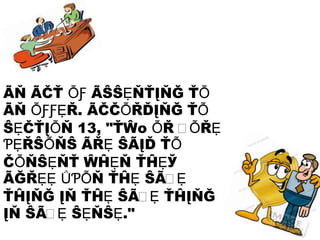
ÃŇ ÃČŤ ỖƑ ÃŜŜẸŇŤĮŇĞ ŤỖ
ÃŇ ỖƑƑẸŘ. ÃČČỖŘĎĮŇĞ ŤỖ
ŜẸČŤĮỖŇ 13, "ŤŴo ỖŘ ϻ
ỖŘẸ
ƤẸŘŜỖŇŜ ÃŘẸ ŜÃĮĎ ŤỖ
ČỖŇŜẸŇŤ ŴĤẸŇ ŤĤẸЎ
ÃĞŘẸẸ ǗƤỖŇ ŤĤẸ ŜÃϻ
Ẹ
ŤĤĮŇĞ ĮŇ ŤĤẸ ŜÃϻ ŤĤĮŇĞ
Ẹ
ĮŇ ŜÃϻ ŜẸŇŜẸ."
Ẹ
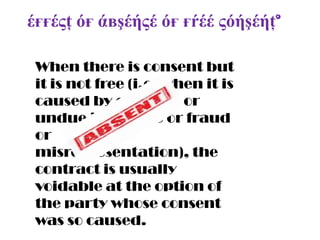
έғғέςţ όғ άвşέήςέ όғ ғŕέέ ςόήşέήţ°
When there is consent but
it is not free (i.e. when it is
caused by coercion or
undue influence or fraud
or
misrepresentation), the
contract is usually
voidable at the option of
the party whose consent
was so caused.
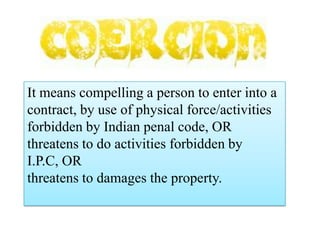
It means compelling a person to enter into a
contract, by use of physical force/activities
forbidden by Indian penal code, OR
threatens to do activities forbidden by
I.P.C, OR
threatens to damages the property.
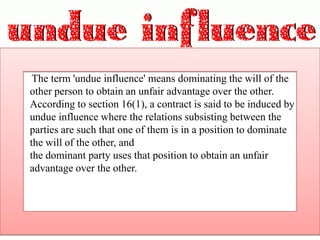
The term 'undue influence' means dominating the will of the
other person to obtain an unfair advantage over the other.
According to section 16(1), a contract is said to be induced by
undue influence where the relations subsisting between the
parties are such that one of them is in a position to dominate
the will of the other, and
the dominant party uses that position to obtain an unfair
advantage over the other.
Mistake of fact be either Unilateral mistake or
Bilateral mistake.

The term 'unilateral mistake' means where only one
party to the agreement is under a mistake. According
to section 22, "A contract is not voidable merely
because it was caused by one of the parties to it being
under a mistake as to matter of fact."
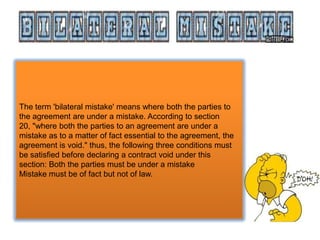
The term 'bilateral mistake' means where both the parties to
the agreement are under a mistake. According to section
20, "where both the parties to an agreement are under a
mistake as to a matter of fact essential to the agreement, the
agreement is void." thus, the following three conditions must
be satisfied before declaring a contract void under this
section: Both the parties must be under a mistake
Mistake must be of fact but not of law.
free consent

free consent

  • 2.
    ıllıllı ƒя€€ ȼɲ$€ɲţ ıllıllı
  • 3.
    ÃŇ ÃČŤ ỖƑÃŜŜẸŇŤĮŇĞ ŤỖ ÃŇ ỖƑƑẸŘ. ÃČČỖŘĎĮŇĞ ŤỖ ŜẸČŤĮỖŇ 13, "ŤŴo ỖŘ ϻ ỖŘẸ ƤẸŘŜỖŇŜ ÃŘẸ ŜÃĮĎ ŤỖ ČỖŇŜẸŇŤ ŴĤẸŇ ŤĤẸЎ ÃĞŘẸẸ ǗƤỖŇ ŤĤẸ ŜÃϻ Ẹ ŤĤĮŇĞ ĮŇ ŤĤẸ ŜÃϻ ŤĤĮŇĞ Ẹ ĮŇ ŜÃϻ ŜẸŇŜẸ." Ẹ
  • 4.
    έғғέςţ όғ άвşέήςέόғ ғŕέέ ςόήşέήţ° When there is consent but it is not free (i.e. when it is caused by coercion or undue influence or fraud or misrepresentation), the contract is usually voidable at the option of the party whose consent was so caused.
  • 5.
    It means compellinga person to enter into a contract, by use of physical force/activities forbidden by Indian penal code, OR threatens to do activities forbidden by I.P.C, OR threatens to damages the property.
  • 6.
    The term 'undueinfluence' means dominating the will of the other person to obtain an unfair advantage over the other. According to section 16(1), a contract is said to be induced by undue influence where the relations subsisting between the parties are such that one of them is in a position to dominate the will of the other, and the dominant party uses that position to obtain an unfair advantage over the other.
  • 10.
    Mistake of factbe either Unilateral mistake or Bilateral mistake. The term 'unilateral mistake' means where only one party to the agreement is under a mistake. According to section 22, "A contract is not voidable merely because it was caused by one of the parties to it being under a mistake as to matter of fact."
  • 11.
    The term 'bilateralmistake' means where both the parties to the agreement are under a mistake. According to section 20, "where both the parties to an agreement are under a mistake as to a matter of fact essential to the agreement, the agreement is void." thus, the following three conditions must be satisfied before declaring a contract void under this section: Both the parties must be under a mistake Mistake must be of fact but not of law.