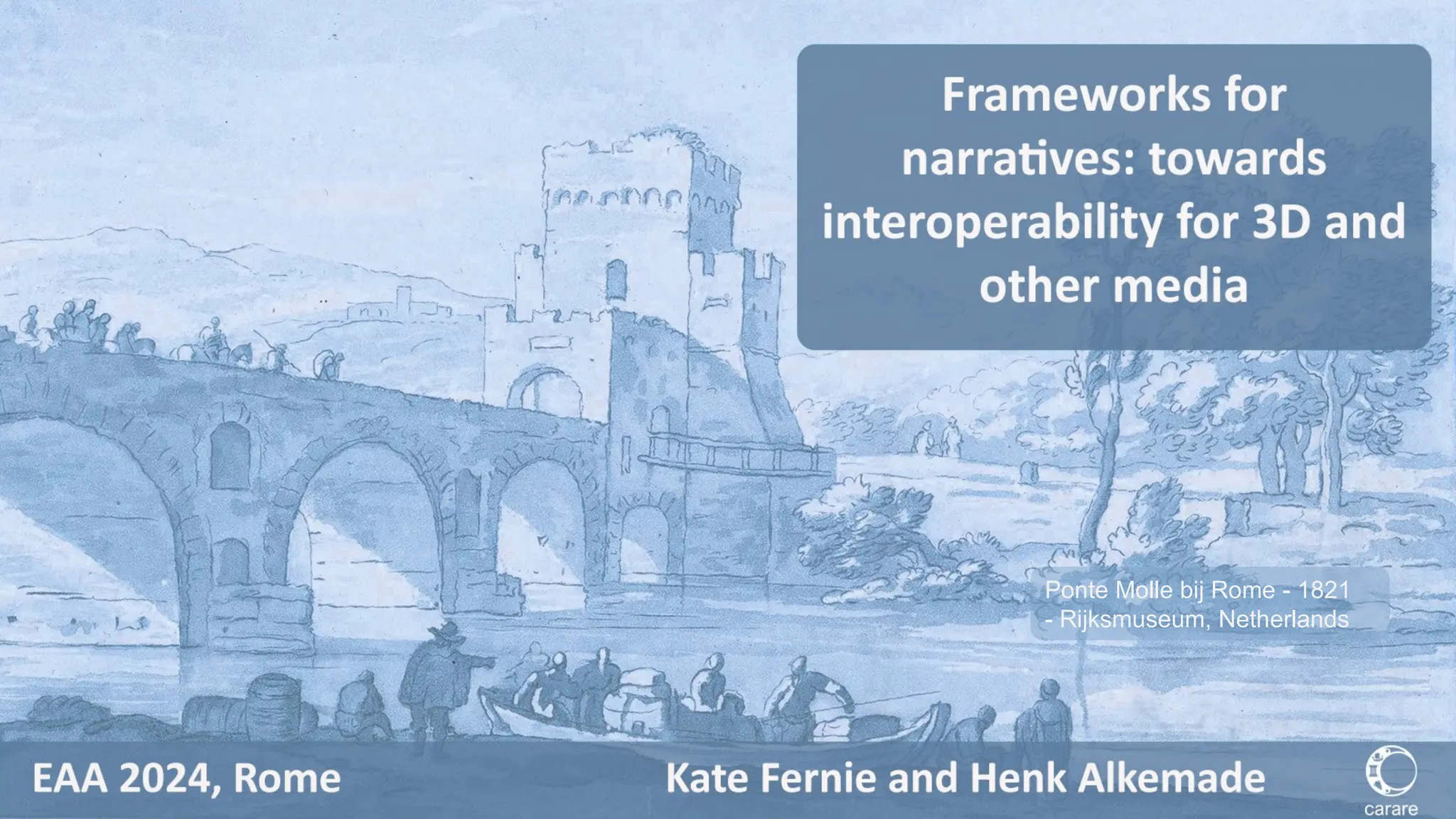
Ponte Molle bij Rome - 1821
- Rijksmuseum, Netherlands
About us!
CARARE has been working with heritage organisations
and archaeologists across Europe since 2010 offering
support and practical assistance in sharing datasets with
Europeana
• We are a non-profit membership association aiming to
advance professional practice and foster appreciation of the
digital archaeological and architectural heritage
• Our members include heritage bodies, universities, research
organisations, specialist digital archives, NGOs, charities,
private companies and individual specialist and experts.
• We participate in several EC funded projects.
https://www.carare.eu
Contact: info@carare.eu
Twitter:
@projectCARARE
Training hub:
https://www.carare.eu/
en/training/
Webinars on Vimeo:
https://vimeo.com/user
124611809
Introduction
Digital technology offers a vibrant platform for
sharing stories, which integrate a range of
media to create rich, immersive experiences.
In this paper we look at the frameworks and
standards that allow for FAIR re-use of data in
narratives.
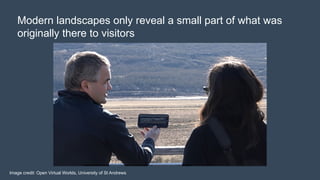
Modern landscapes only reveal a small part of what was
originally there to visitors
Image credit: Open Virtual Worlds, University of St Andrews
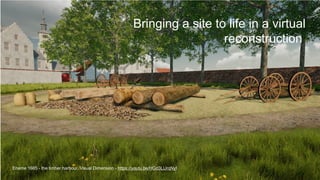
Bringing a site to life in a virtual
reconstruction
Ename 1665 - the timber harbour, Visual Dimension - https://youtu.be/HGd3LUrqNyI
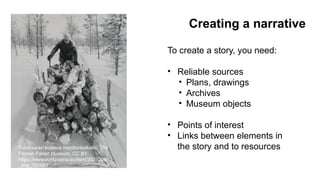
Puutavaran kuljetus moottorikelkalla, The
Finnish Forest Museum, CC BY.
https://www.europeana.eu/item/2021008/
_knp_152987
Creating a narrative
To create a story, you need:
• Reliable sources
• Plans, drawings
• Archives
• Museum objects
• Points of interest
• Links between elements in
the story and to resources
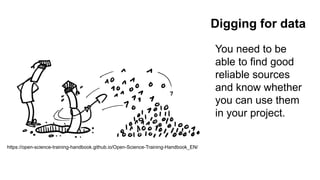
Digging for data
https://open-science-training-handbook.github.io/Open-Science-Training-Handbook_EN/
You need to be
able to find good
reliable sources
and know whether
you can use them
in your project.
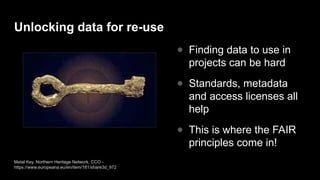
Unlocking data for re-use
● Finding data to use in
projects can be hard
● Standards, metadata
and access licenses all
help
● This is where the FAIR
principles come in!
Metal Key, Northern Heritage Network, CCO -
https://www.europeana.eu/en/item/181/share3d_972
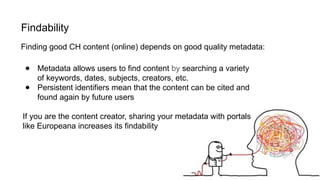
Findability
● Metadata allows users to find content by searching a variety
of keywords, dates, subjects, creators, etc.
● Persistent identifiers mean that the content can be cited and
found again by future users
If you are the content creator, sharing your metadata with portals
like Europeana increases its findability
Finding good CH content (online) depends on good quality metadata:
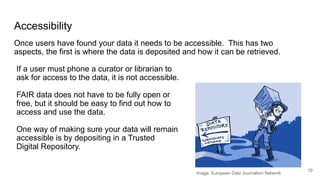
Accessibility
Once users have found your data it needs to be accessible. This has two
aspects, the first is where the data is deposited and how it can be retrieved.
10
Image: European Data Journalism Network
If a user must phone a curator or librarian to
ask for access to the data, it is not accessible.
FAIR data does not have to be fully open or
free, but it should be easy to find out how to
access and use the data.
One way of making sure your data will remain
accessible is by depositing in a Trusted
Digital Repository.
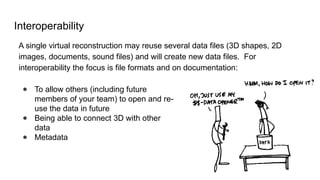
Interoperability
A single virtual reconstruction may reuse several data files (3D shapes, 2D
images, documents, sound files) and will create new data files. For
interoperability the focus is file formats and on documentation:
● To allow others (including future
members of your team) to open and re-
use the data in future
● Being able to connect 3D with other
data
● Metadata
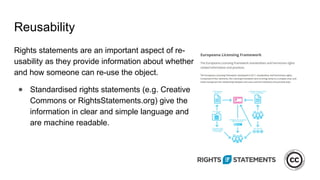
Reusability
Rights statements are an important aspect of re-
usability as they provide information about whether
and how someone can re-use the object.
● Standardised rights statements (e.g. Creative
Commons or RightsStatements.org) give the
information in clear and simple language and
are machine readable.
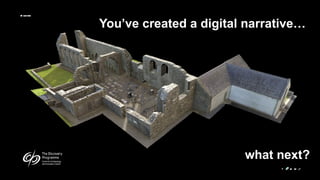
You’ve created a digital narrative…
what next?
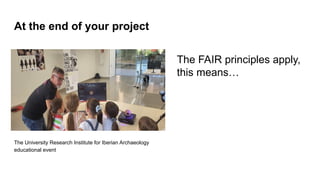
At the end of your project
The University Research Institute for Iberian Archaeology
educational event
The FAIR principles apply,
this means…
FAIR data in action
• Depositing your dataset and its documentation with a digital archive
at the end of the project
• Publishing the virtual reconstruction on a hosting platform
• Ideally one which can render your 3D model in a viewer
• Providing good quality metadata
• Licensing the data for reuse
• Sharing the metadata with discovery portals
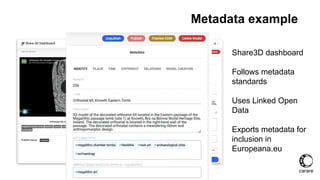
Metadata example
Share3D dashboard
Follows metadata
standards
Uses Linked Open
Data
Exports metadata for
inclusion in
Europeana.eu
Frameworks for narratives
We began by noting how important digital technology has become
as a platform for sharing stories and rich, immersive experiences.
Our story today has mainly been about how following the FAIR
principles allows creatives and researchers to find and re-use
authentic cultural heritage content in their narratives.
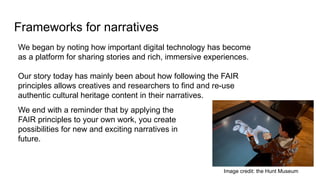
We end with a reminder that by applying the
FAIR principles to your own work, you create
possibilities for new and exciting narratives in
future.
Image credit: the Hunt Museum
Thank you!
Kate Fernie
kate@carare.eu
Henk Alkemade
henkalkemade66@gmail.com
Website: https://www.carare.eu
Contact:info@carare.eu
Twitter:@projectCARARE
Training Hub:
https://www.carare.eu/en/training/
Webinars on Vimeo:
https://vimeo.com/user124611809

Frameworks for narratives: towards interoperability for 3D and other media

  • 1.
    Ponte Molle bijRome - 1821 - Rijksmuseum, Netherlands
  • 2.
    About us! CARARE hasbeen working with heritage organisations and archaeologists across Europe since 2010 offering support and practical assistance in sharing datasets with Europeana • We are a non-profit membership association aiming to advance professional practice and foster appreciation of the digital archaeological and architectural heritage • Our members include heritage bodies, universities, research organisations, specialist digital archives, NGOs, charities, private companies and individual specialist and experts. • We participate in several EC funded projects. https://www.carare.eu Contact: info@carare.eu Twitter: @projectCARARE Training hub: https://www.carare.eu/ en/training/ Webinars on Vimeo: https://vimeo.com/user 124611809
  • 3.
    Introduction Digital technology offersa vibrant platform for sharing stories, which integrate a range of media to create rich, immersive experiences. In this paper we look at the frameworks and standards that allow for FAIR re-use of data in narratives.
  • 4.
    Modern landscapes onlyreveal a small part of what was originally there to visitors Image credit: Open Virtual Worlds, University of St Andrews
  • 5.
    Bringing a siteto life in a virtual reconstruction Ename 1665 - the timber harbour, Visual Dimension - https://youtu.be/HGd3LUrqNyI
  • 6.
    Puutavaran kuljetus moottorikelkalla,The Finnish Forest Museum, CC BY. https://www.europeana.eu/item/2021008/ _knp_152987 Creating a narrative To create a story, you need: • Reliable sources • Plans, drawings • Archives • Museum objects • Points of interest • Links between elements in the story and to resources
  • 7.
    Digging for data https://open-science-training-handbook.github.io/Open-Science-Training-Handbook_EN/ Youneed to be able to find good reliable sources and know whether you can use them in your project.
  • 8.
    Unlocking data forre-use ● Finding data to use in projects can be hard ● Standards, metadata and access licenses all help ● This is where the FAIR principles come in! Metal Key, Northern Heritage Network, CCO - https://www.europeana.eu/en/item/181/share3d_972
  • 9.
    Findability ● Metadata allowsusers to find content by searching a variety of keywords, dates, subjects, creators, etc. ● Persistent identifiers mean that the content can be cited and found again by future users If you are the content creator, sharing your metadata with portals like Europeana increases its findability Finding good CH content (online) depends on good quality metadata:
  • 10.
    Accessibility Once users havefound your data it needs to be accessible. This has two aspects, the first is where the data is deposited and how it can be retrieved. 10 Image: European Data Journalism Network If a user must phone a curator or librarian to ask for access to the data, it is not accessible. FAIR data does not have to be fully open or free, but it should be easy to find out how to access and use the data. One way of making sure your data will remain accessible is by depositing in a Trusted Digital Repository.
  • 11.
    Interoperability A single virtualreconstruction may reuse several data files (3D shapes, 2D images, documents, sound files) and will create new data files. For interoperability the focus is file formats and on documentation: ● To allow others (including future members of your team) to open and re- use the data in future ● Being able to connect 3D with other data ● Metadata
  • 12.
    Reusability Rights statements arean important aspect of re- usability as they provide information about whether and how someone can re-use the object. ● Standardised rights statements (e.g. Creative Commons or RightsStatements.org) give the information in clear and simple language and are machine readable.
  • 13.
    You’ve created adigital narrative… what next?
  • 14.
    At the endof your project The University Research Institute for Iberian Archaeology educational event The FAIR principles apply, this means…
  • 15.
    FAIR data inaction • Depositing your dataset and its documentation with a digital archive at the end of the project • Publishing the virtual reconstruction on a hosting platform • Ideally one which can render your 3D model in a viewer • Providing good quality metadata • Licensing the data for reuse • Sharing the metadata with discovery portals
  • 16.
    Metadata example Share3D dashboard Followsmetadata standards Uses Linked Open Data Exports metadata for inclusion in Europeana.eu
  • 17.
    Frameworks for narratives Webegan by noting how important digital technology has become as a platform for sharing stories and rich, immersive experiences. Our story today has mainly been about how following the FAIR principles allows creatives and researchers to find and re-use authentic cultural heritage content in their narratives. We end with a reminder that by applying the FAIR principles to your own work, you create possibilities for new and exciting narratives in future. Image credit: the Hunt Museum
  • 18.
    Thank you! Kate Fernie kate@carare.eu HenkAlkemade henkalkemade66@gmail.com Website: https://www.carare.eu Contact:info@carare.eu Twitter:@projectCARARE Training Hub: https://www.carare.eu/en/training/ Webinars on Vimeo: https://vimeo.com/user124611809

Editor's Notes

  • #2 CARARE is an accredited aggregator for Europeana and has had a huge impact in contributing a rich diversity of content about the archaeological and architectural heritage including 3D content to the data space. We offer advice and support to organisations and projects who wish to deliver high-quality digital content to the data space, and a member of the expert working group on 3D content in the data space. This work includes looking at the metadata needed for digital media to be Findable; best practices in terms of copyright and access licences to enable Reuse; and the standards for file formats and viewers for 3D media to be Accessible. This focus on Interoperability between 3D and other media types enables their re-use in digital story-telling and narratives.
  • #4 As archaeologists we’re familiar with the difference between what we can see of a site in a landscape and what is known about the site from archives, excavations and objects in museum collections.
  • #5 Virtual reconstructions in 3D offer a way of bringing a site to life and to set it in its wider historical context For example, this model depicts 17th century timber production at Ename in Belgium – reconstructing both the site and illustrating how objects from museum collections were used – whether in transporting trees to the yard, removing bark, cutting the beams and so on. The reconstruction sets the scene for a narrative.
  • #9 Starting with findability we need good quality metadata to find your content and understand the heritage it's representing and how it was digitised.
  • #10 Storage may be in: Institutional repositories Trusted Digital Repositories for example https://dans.knaw.nl/en/data-services/data-vault/ International digital repositories - for example https://zenodo.org/ Once your content is found users need to be able to access it without asking someone for permission and remember FAIR data does not mean it has to be totally open and free but it should be easy to find out how to access and use it. In order to remain accessible in the future it is advised to keep your data in a trusted repository like DANS in the Netherlands.
  • #12 The reusability of your content is for a large part determined by the copyright status of the digital object. And to make this clear it's advisable to make use of standardised Right statements for instance those from Creative Commons or RightsStatements.org that provide that information in an understandable way and are also machine readable. If you want to share your content with Europeana, they will also need standardised Right statements of your content. as well as that you agree that your metadata will be Open and Free (CC0).
  • #16 We’ve spoken a lot about metadata and its importance in the FAIR principles. This is an example of a metadata capture tool -g CARARE's Share3D dashboard. Designed for 3D models, the tool implements a standard set of metadata and includes tools that allow users to make use of Linked Open Data when completing the forms. The resulting metadata is exported in Europeana's EDM format for ingestion to Europeana.eu.