TOWARDS CROSS-DOMAIN
INTEROPERATION IN THE INTERNET OF
FAIR DATA AND SERVICES
EEWC 2018 - LUXEMBOURG
Luiz Bonino
luiz.bonino@go-fair.org
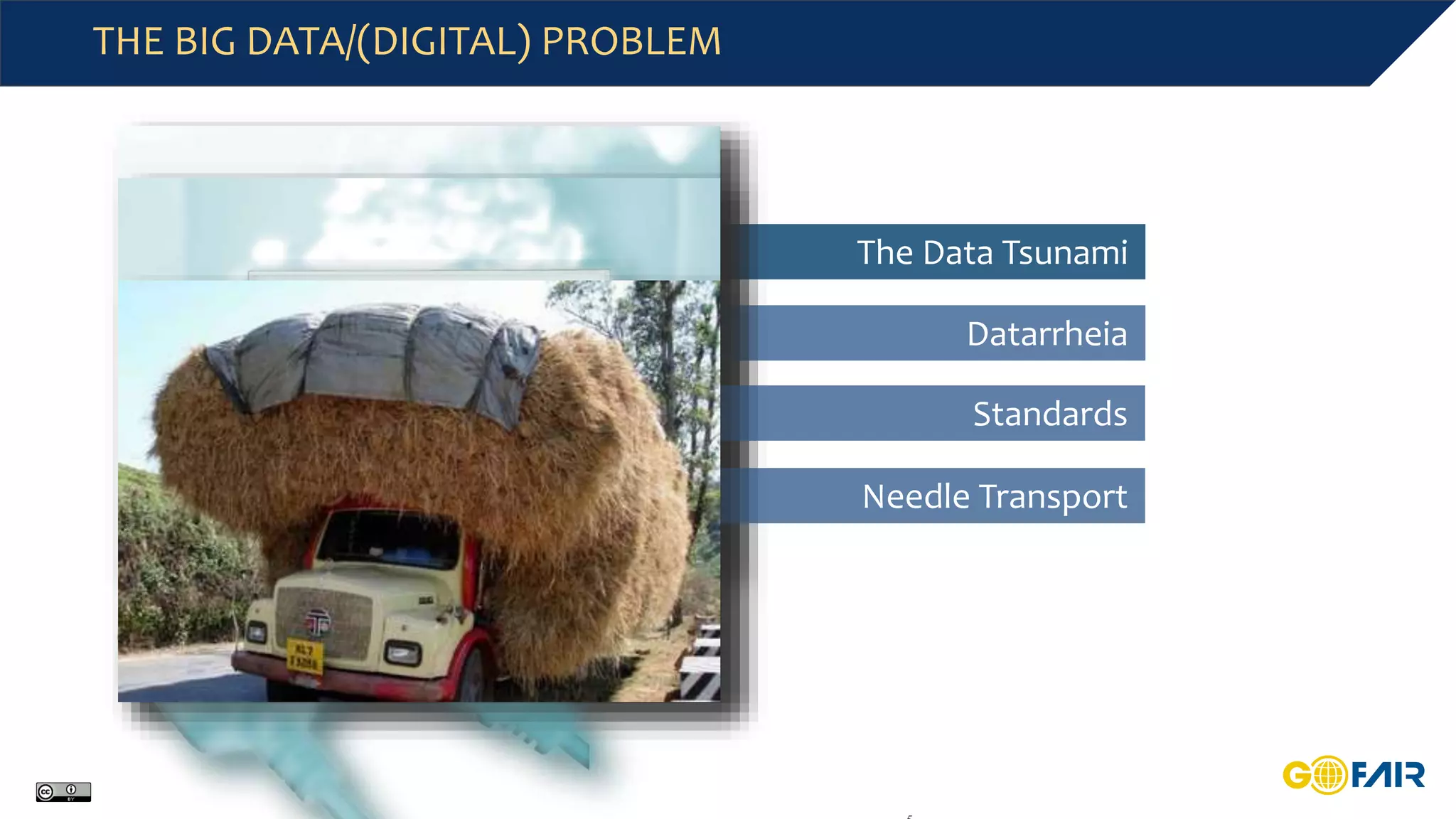
THE BIG DATA/(DIGITAL) PROBLEM
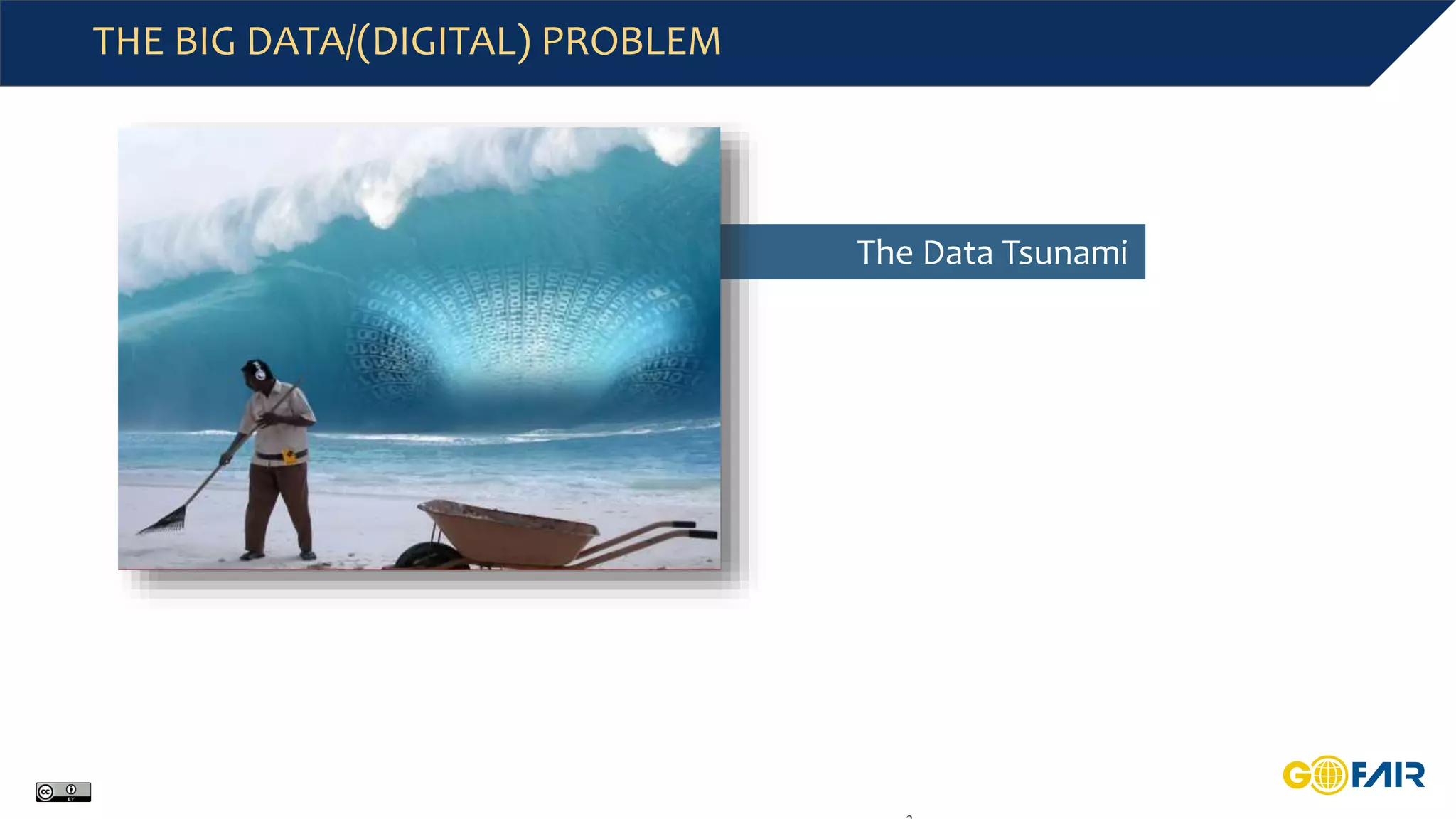
The Data Tsunami
THE BIG DATA/(DIGITAL) PROBLEM
The Data Tsunami
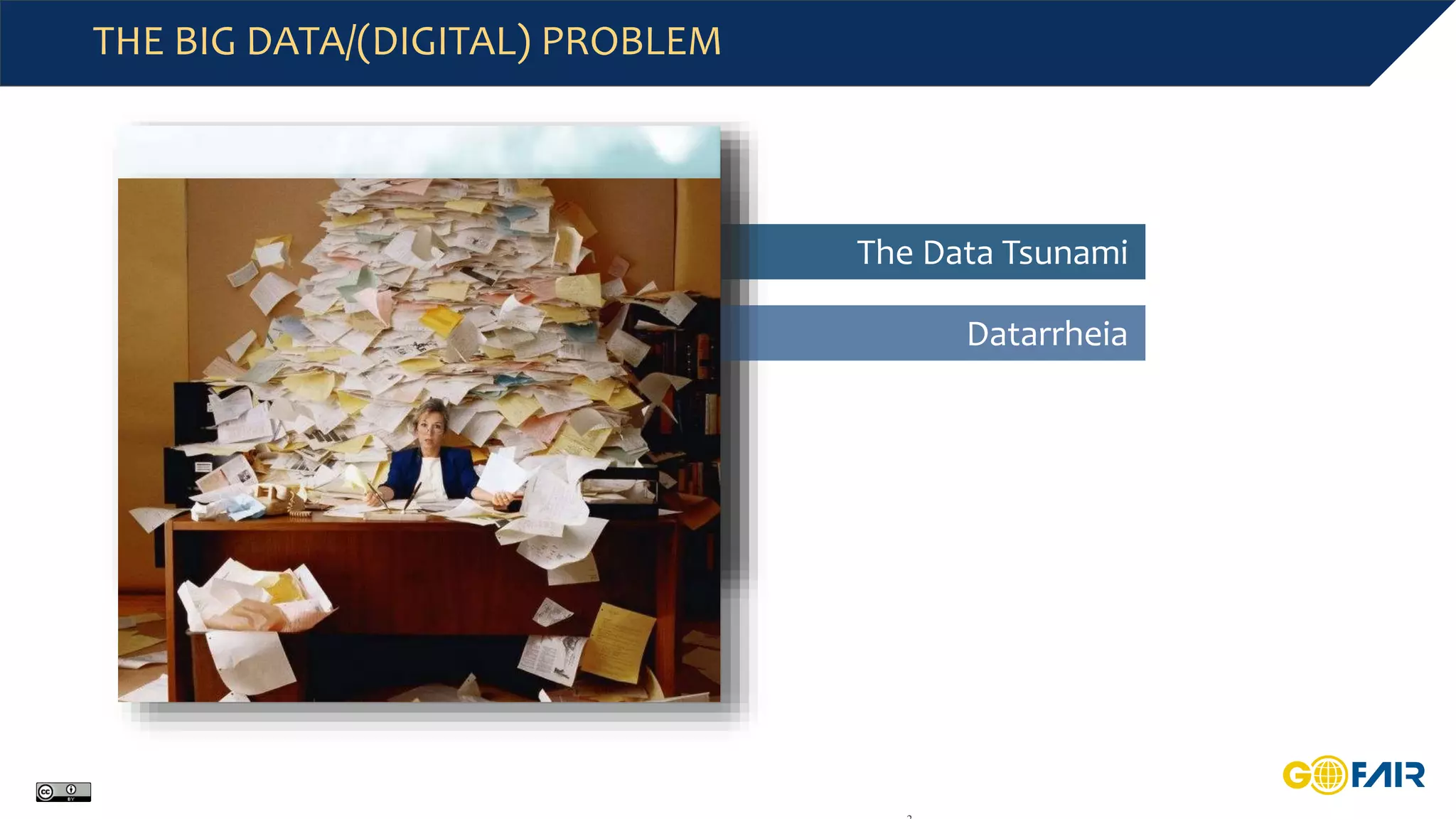
Datarrheia
THE BIG DATA/(DIGITAL) PROBLEM
The Data Tsunami
Datarrheia
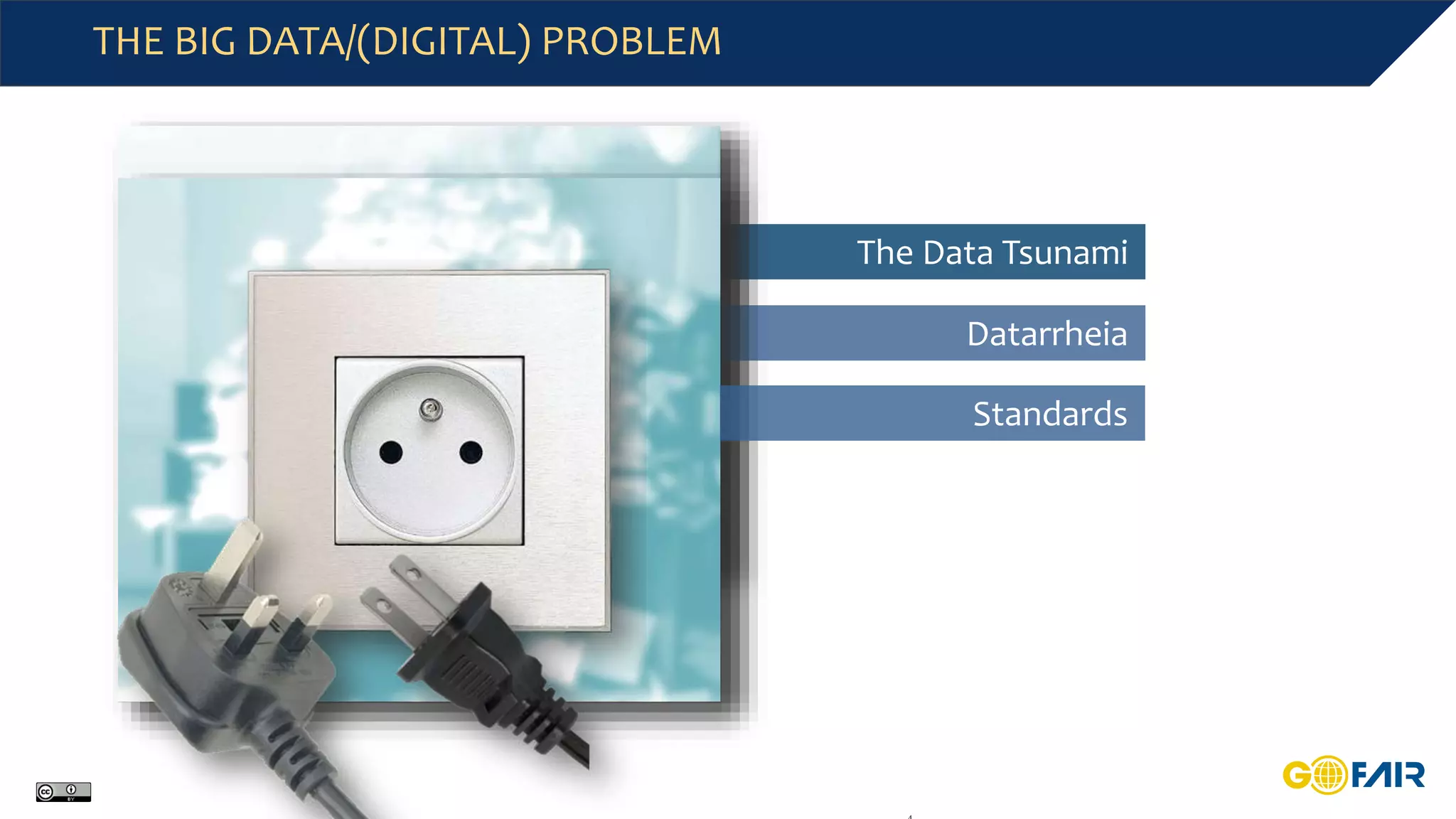
Standards
THE BIG DATA/(DIGITAL) PROBLEM
The Data Tsunami
Datarrheia
Standards
Needle Transport
THE BIG DATA/(DIGITAL) PROBLEM
The Data Tsunami
Datarrheia
Standards
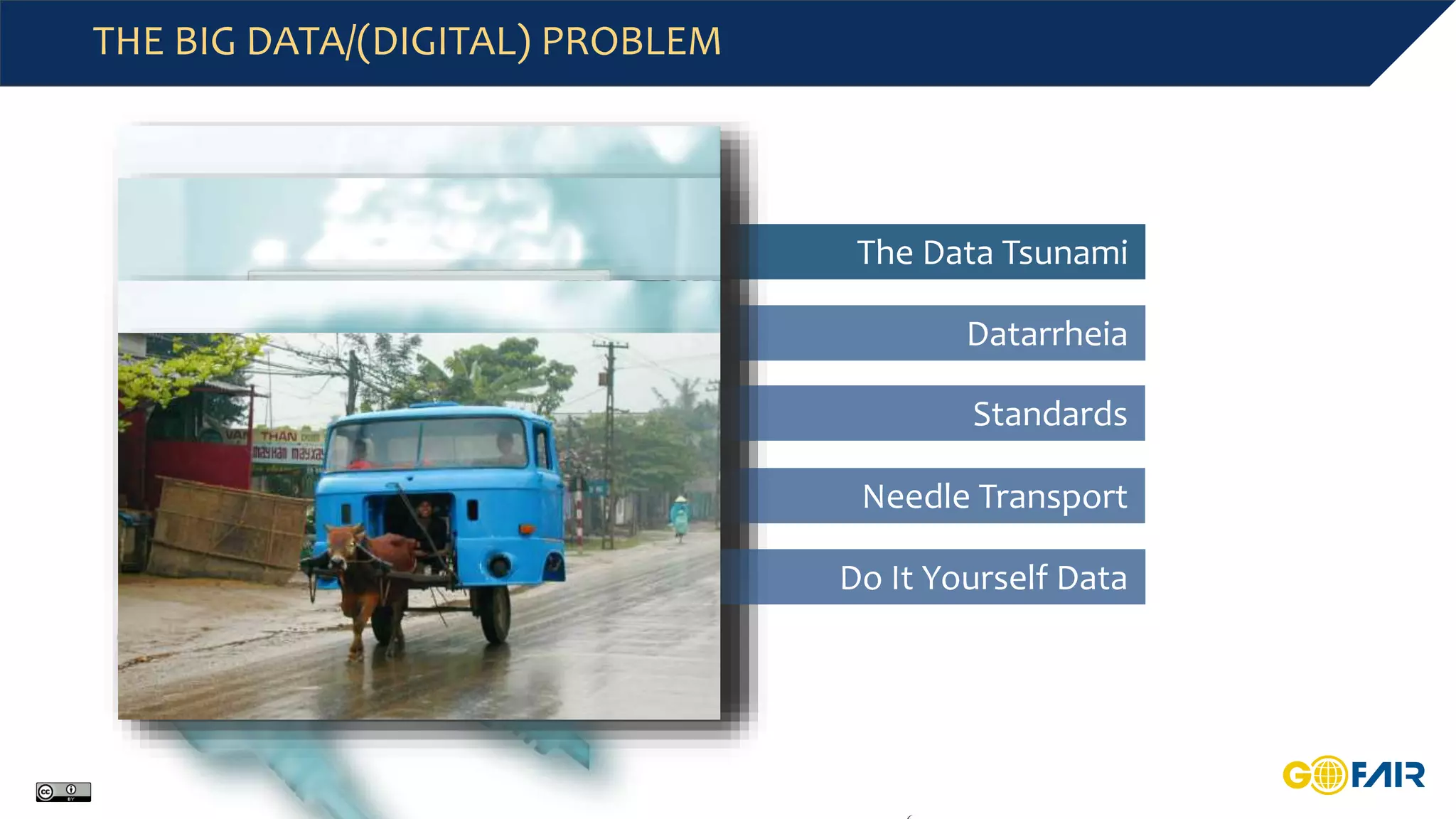
Needle Transport
Do It Yourself Data
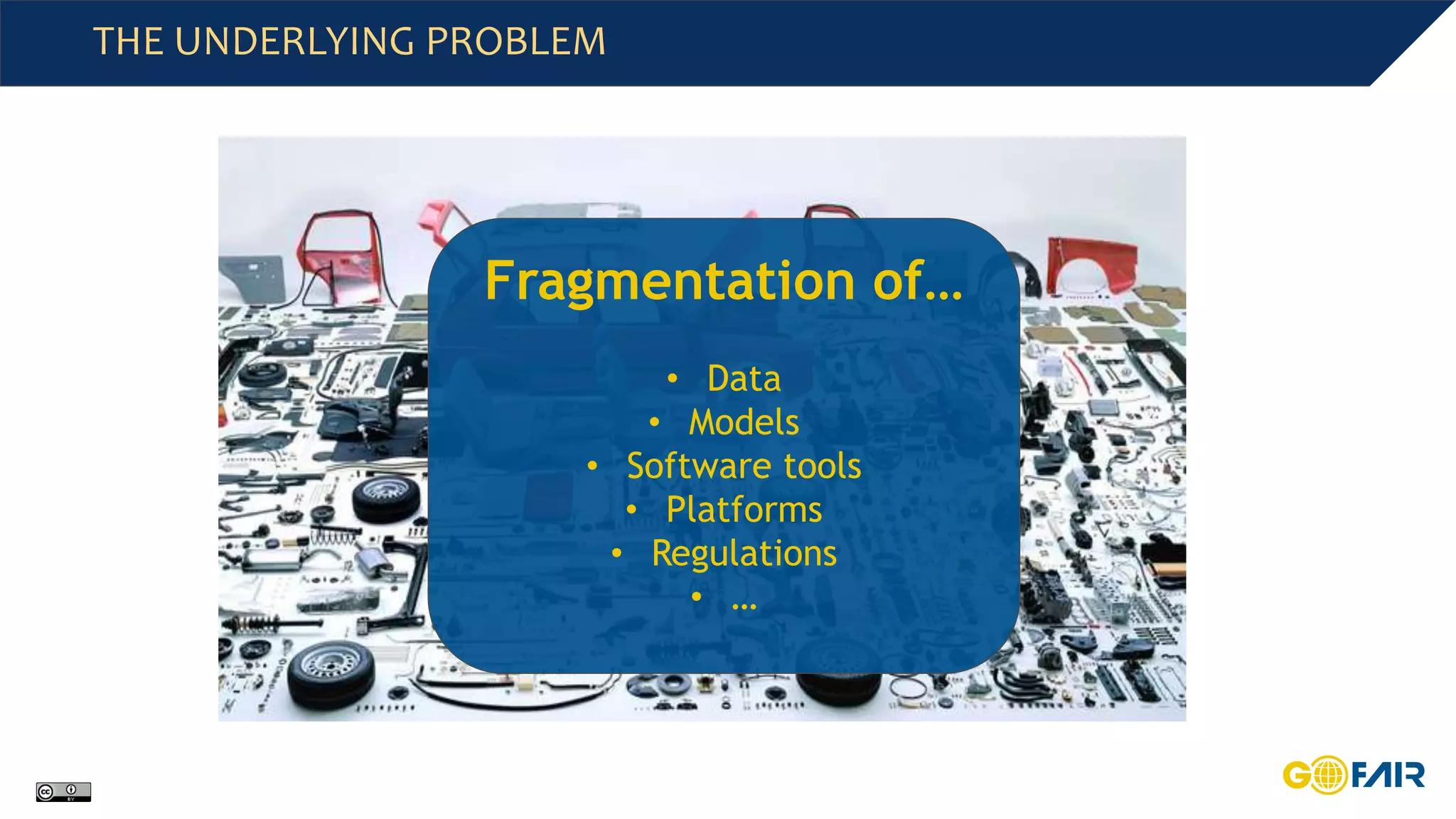
THE UNDERLYING PROBLEM
Fragmentation of…
• Data
• Models
• Software tools
• Platforms
• Regulations
• …
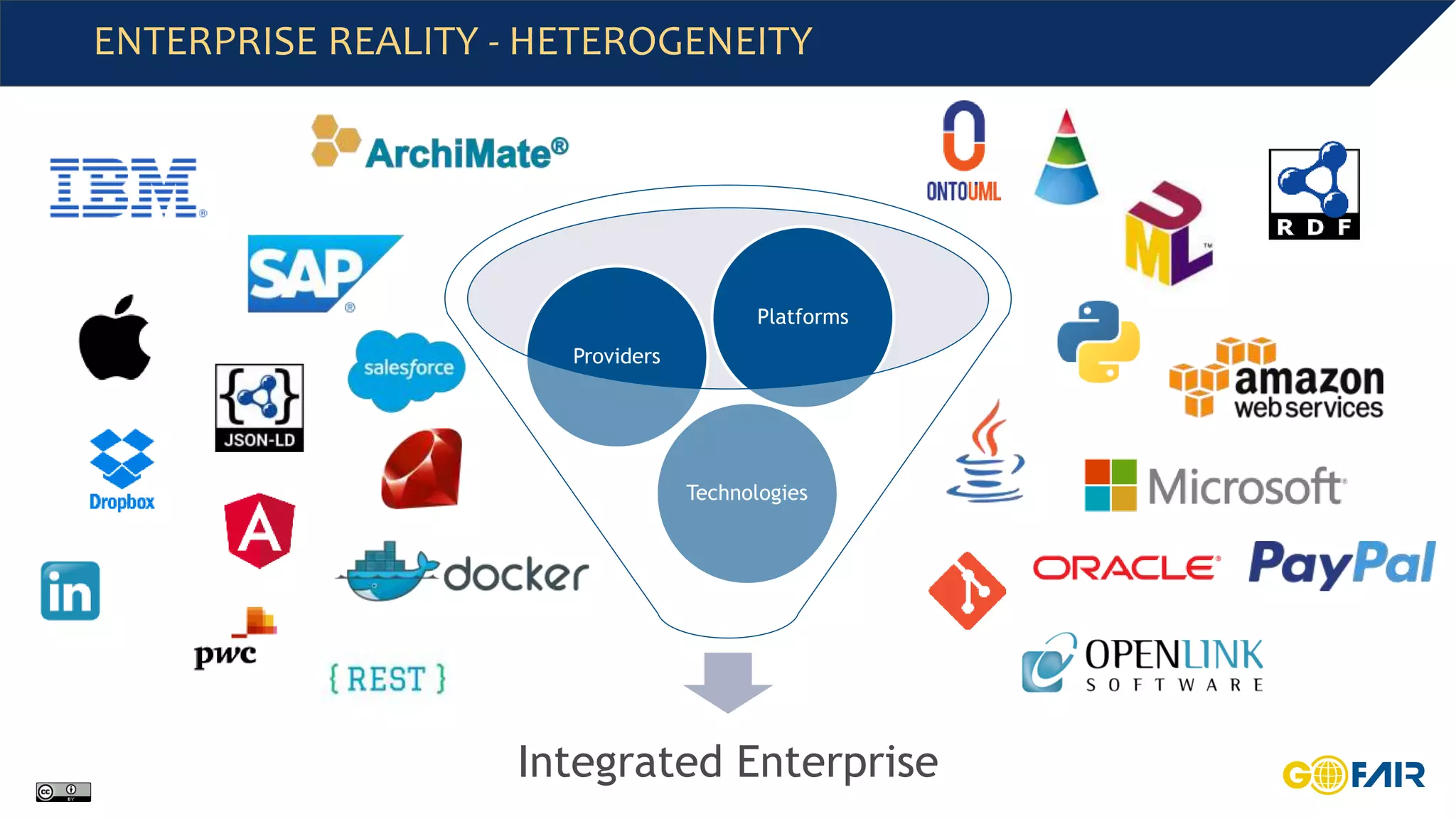
ENTERPRISE REALITY - HETEROGENEITY
Integrated Enterprise
Technologies
Providers
Platforms
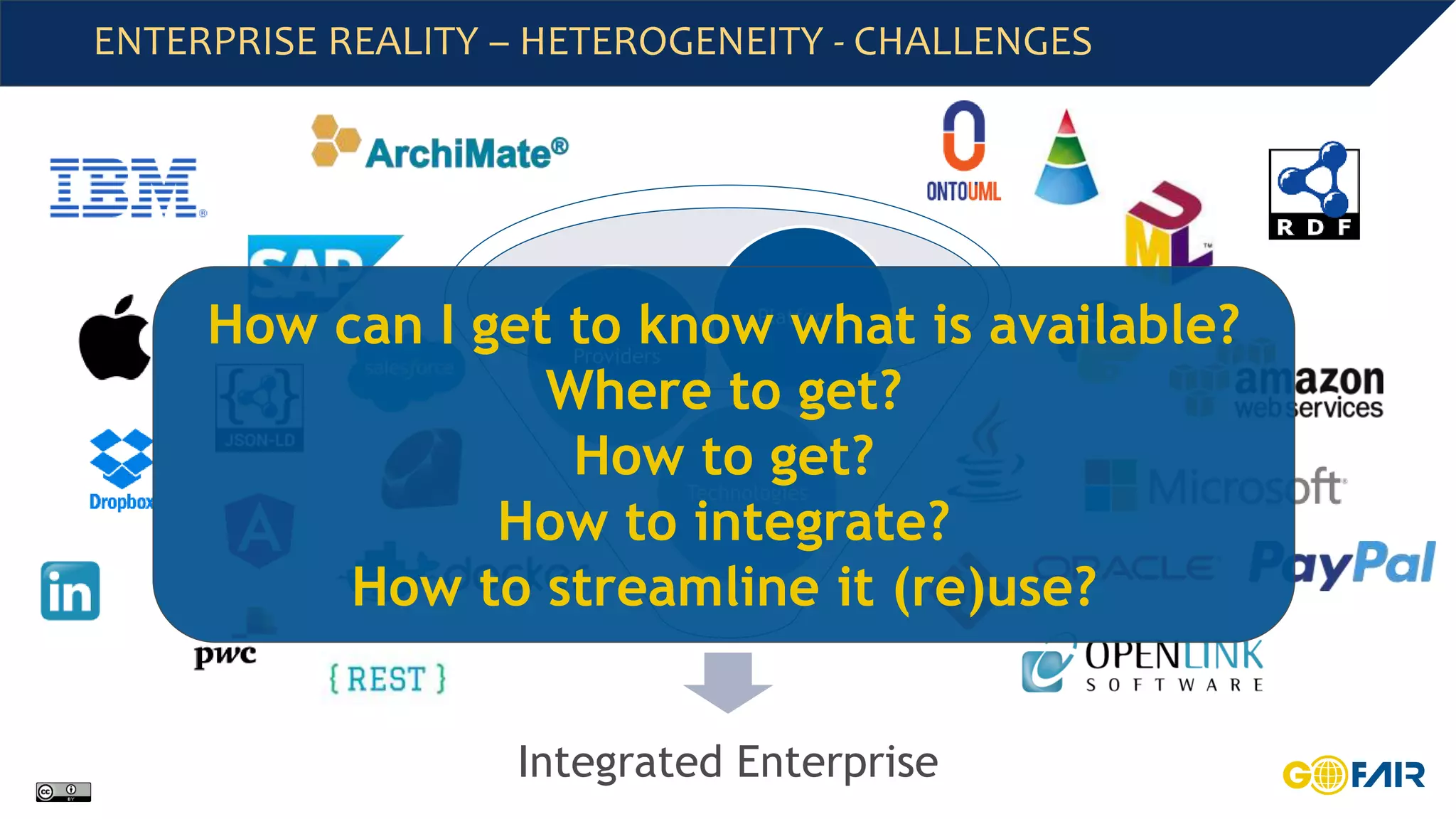
ENTERPRISE REALITY – HETEROGENEITY - CHALLENGES
Integrated Enterprise
Technologies
Providers
Platforms
How can I get to know what is available?
Where to get?
How to get?
How to integrate?
How to streamline it (re)use?
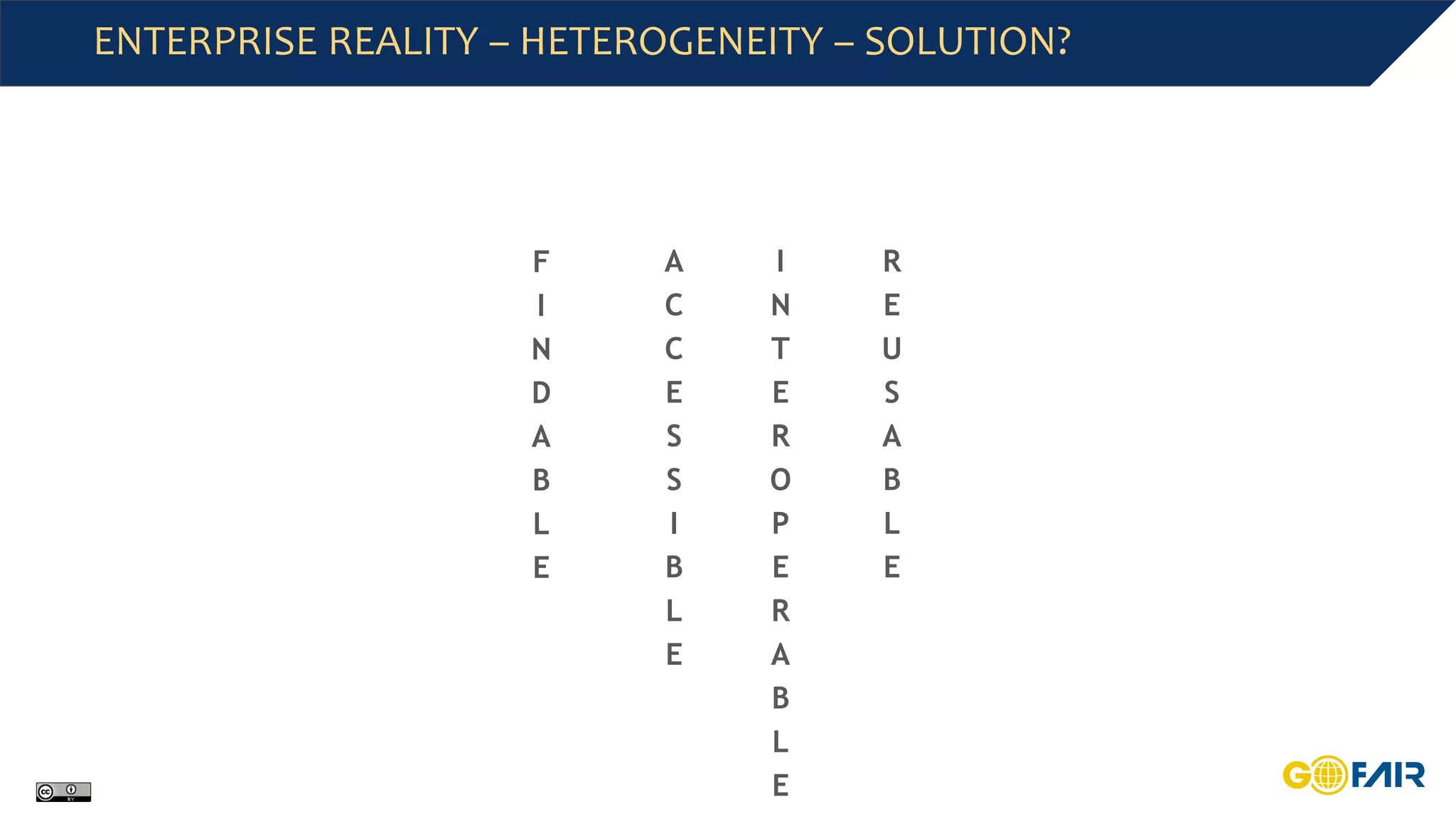
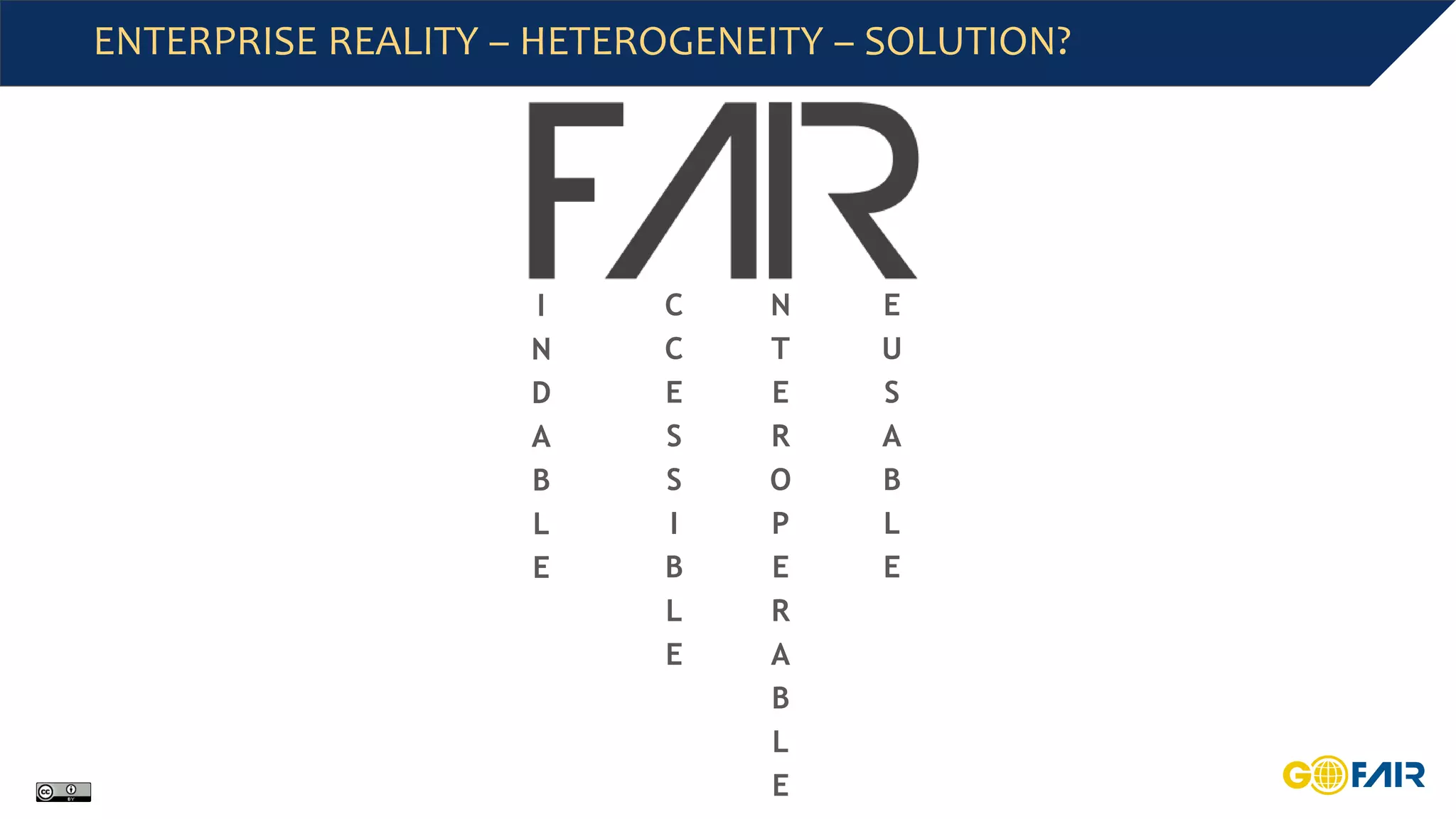
ENTERPRISE REALITY – HETEROGENEITY – SOLUTION?
F
I
N
D
A
B
L
E
ENTERPRISE REALITY – HETEROGENEITY – SOLUTION?
F
I
N
D
A
B
L
E
A
C
C
E
S
S
I
B
L
E
ENTERPRISE REALITY – HETEROGENEITY – SOLUTION?
F
I
N
D
A
B
L
E
A
C
C
E
S
S
I
B
L
E
I
N
T
E
R
O
P
E
R
A
B
L
E
ENTERPRISE REALITY – HETEROGENEITY – SOLUTION?
F
I
N
D
A
B
L
E
A
C
C
E
S
S
I
B
L
E
I
N
T
E
R
O
P
E
R
A
B
L
E
R
E
U
S
A
B
L
E
ENTERPRISE REALITY – HETEROGENEITY – SOLUTION?
F
I
N
D
A
B
L
E
A
C
C
E
S
S
I
B
L
E
I
N
T
E
R
O
P
E
R
A
B
L
E
R
E
U
S
A
B
L
E
WHAT IS FAIR?
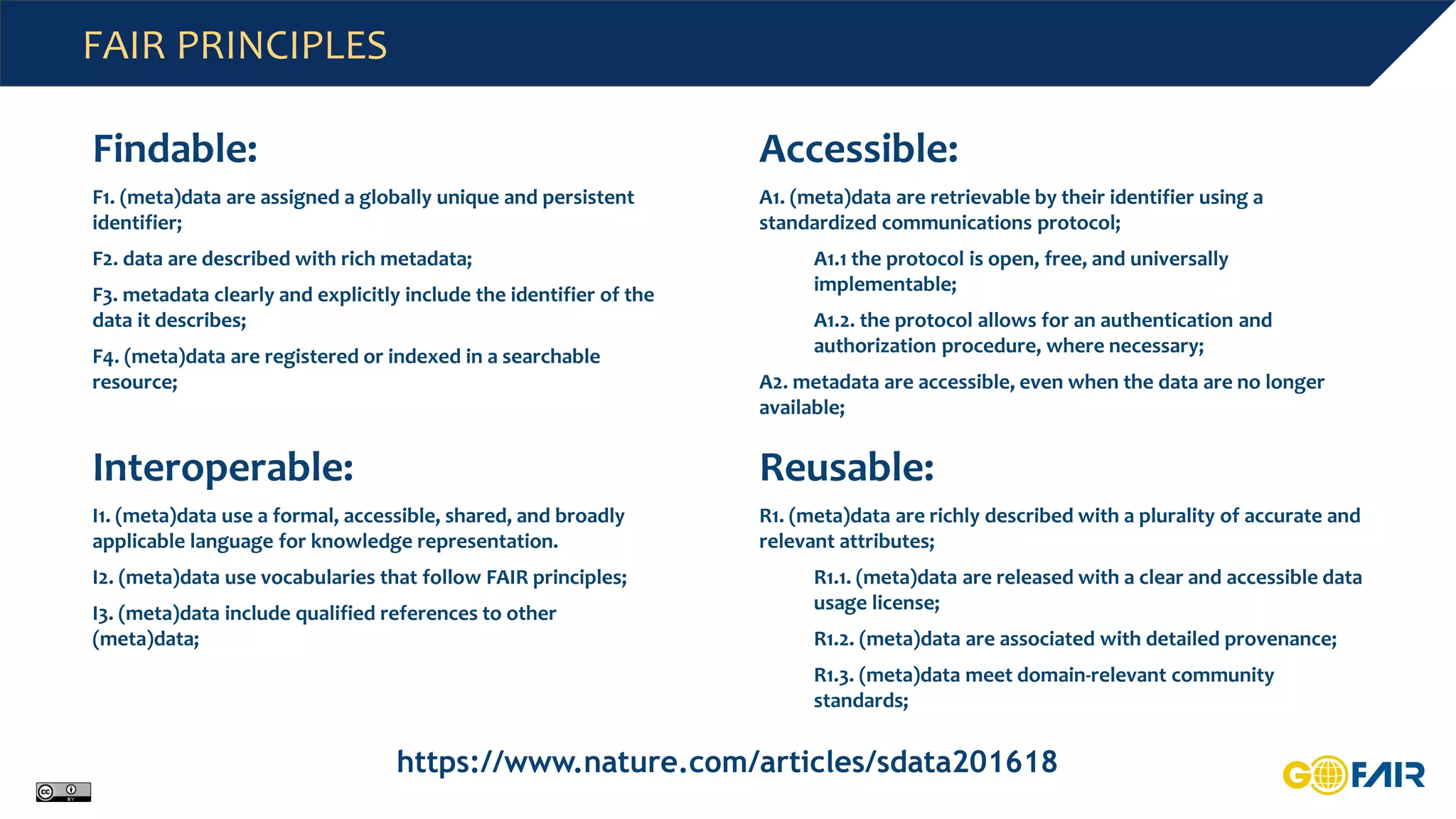
FAIR PRINCIPLES
Findable:
F1. (meta)data are assigned a globally unique and persistent
identifier;
F2. data are described with rich metadata;
F3. metadata clearly and explicitly include the identifier of the
data it describes;
F4. (meta)data are registered or indexed in a searchable
resource;
Accessible:
A1. (meta)data are retrievable by their identifier using a
standardized communications protocol;
A1.1 the protocol is open, free, and universally
implementable;
A1.2. the protocol allows for an authentication and
authorization procedure, where necessary;
A2. metadata are accessible, even when the data are no longer
available;
Interoperable:
I1. (meta)data use a formal, accessible, shared, and broadly
applicable language for knowledge representation.
I2. (meta)data use vocabularies that follow FAIR principles;
I3. (meta)data include qualified references to other
(meta)data;
Reusable:
R1. (meta)data are richly described with a plurality of accurate and
relevant attributes;
R1.1. (meta)data are released with a clear and accessible data
usage license;
R1.2. (meta)data are associated with detailed provenance;
R1.3. (meta)data meet domain-relevant community
standards;
https://www.nature.com/articles/sdata201618
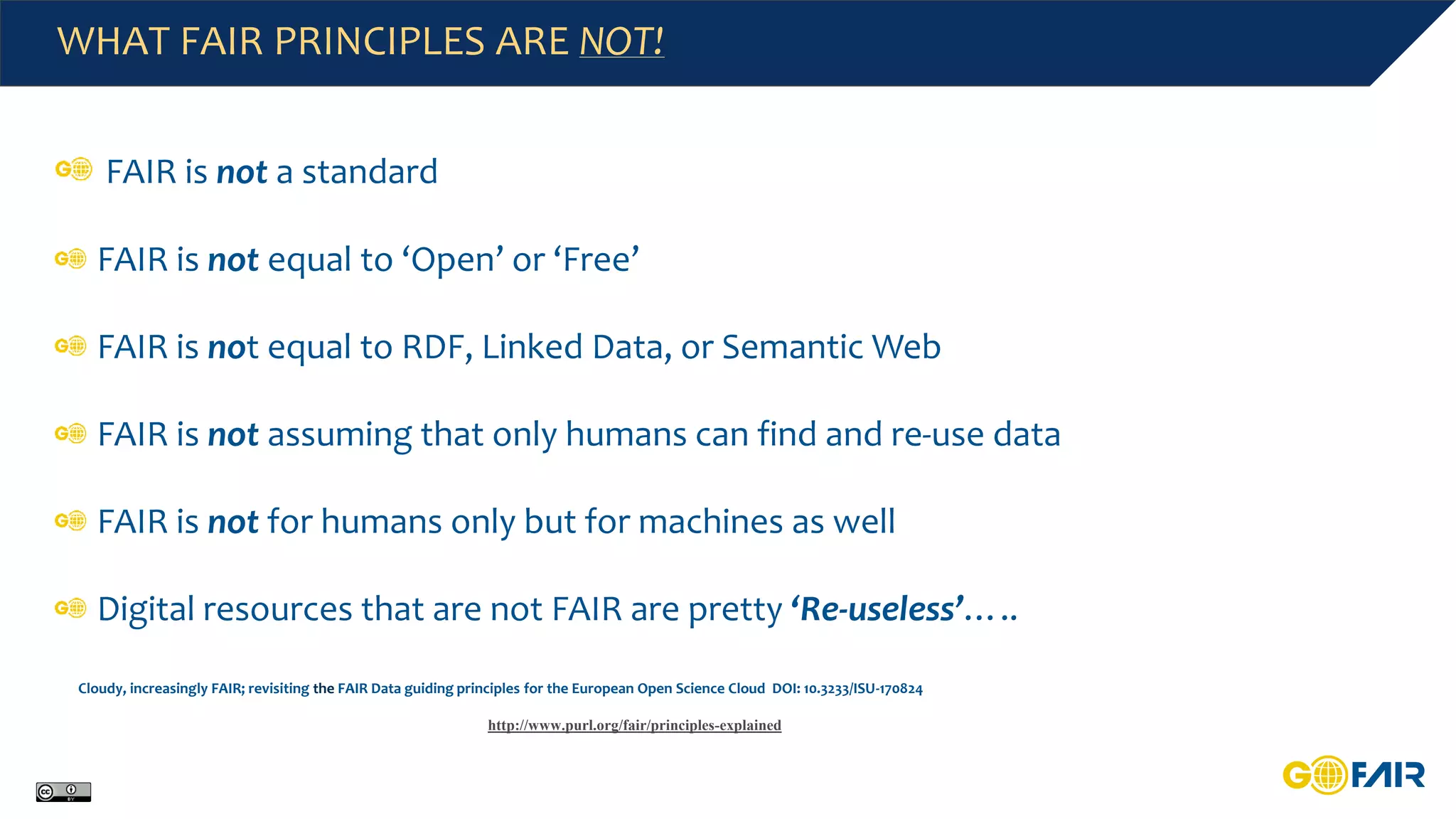
WHAT FAIR PRINCIPLES ARE NOT!
FAIR is not a standard
FAIR is not equal to ‘Open’ or ‘Free’
FAIR is not equal to RDF, Linked Data, or Semantic Web
FAIR is not assuming that only humans can find and re-use data
FAIR is not for humans only but for machines as well
Digital resources that are not FAIR are pretty ‘Re-useless’…..
Cloudy, increasingly FAIR; revisiting the FAIR Data guiding principles for the European Open Science Cloud DOI: 10.3233/ISU-170824
http://www.purl.org/fair/principles-explained
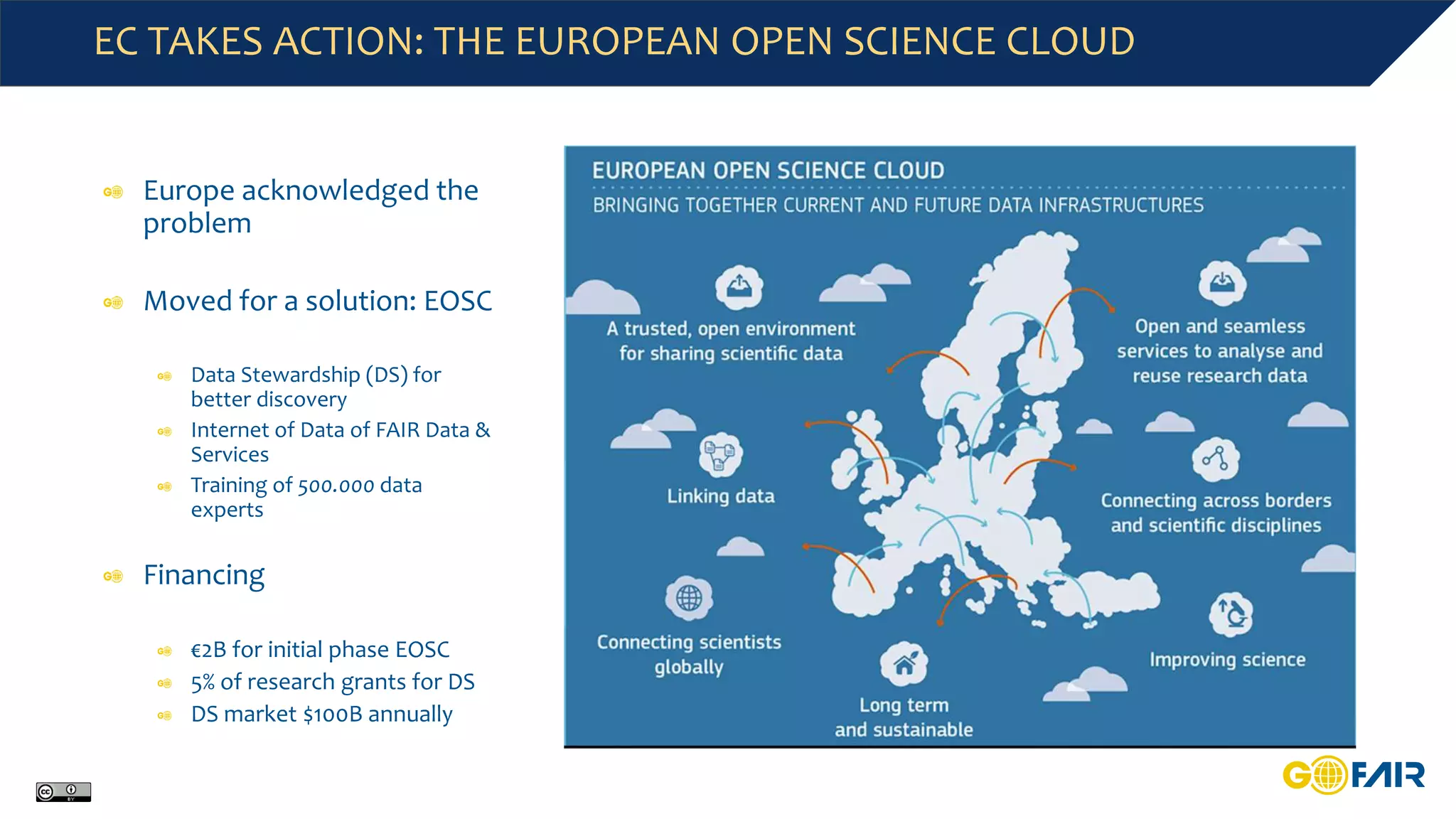
EC TAKES ACTION: THE EUROPEAN OPEN SCIENCE CLOUD
Europe acknowledged the
problem
Moved for a solution: EOSC
Data Stewardship (DS) for
better discovery
Internet of Data of FAIR Data &
Services
Training of 500.000 data
experts
Financing
€2B for initial phase EOSC
5% of research grants for DS
DS market $100B annually
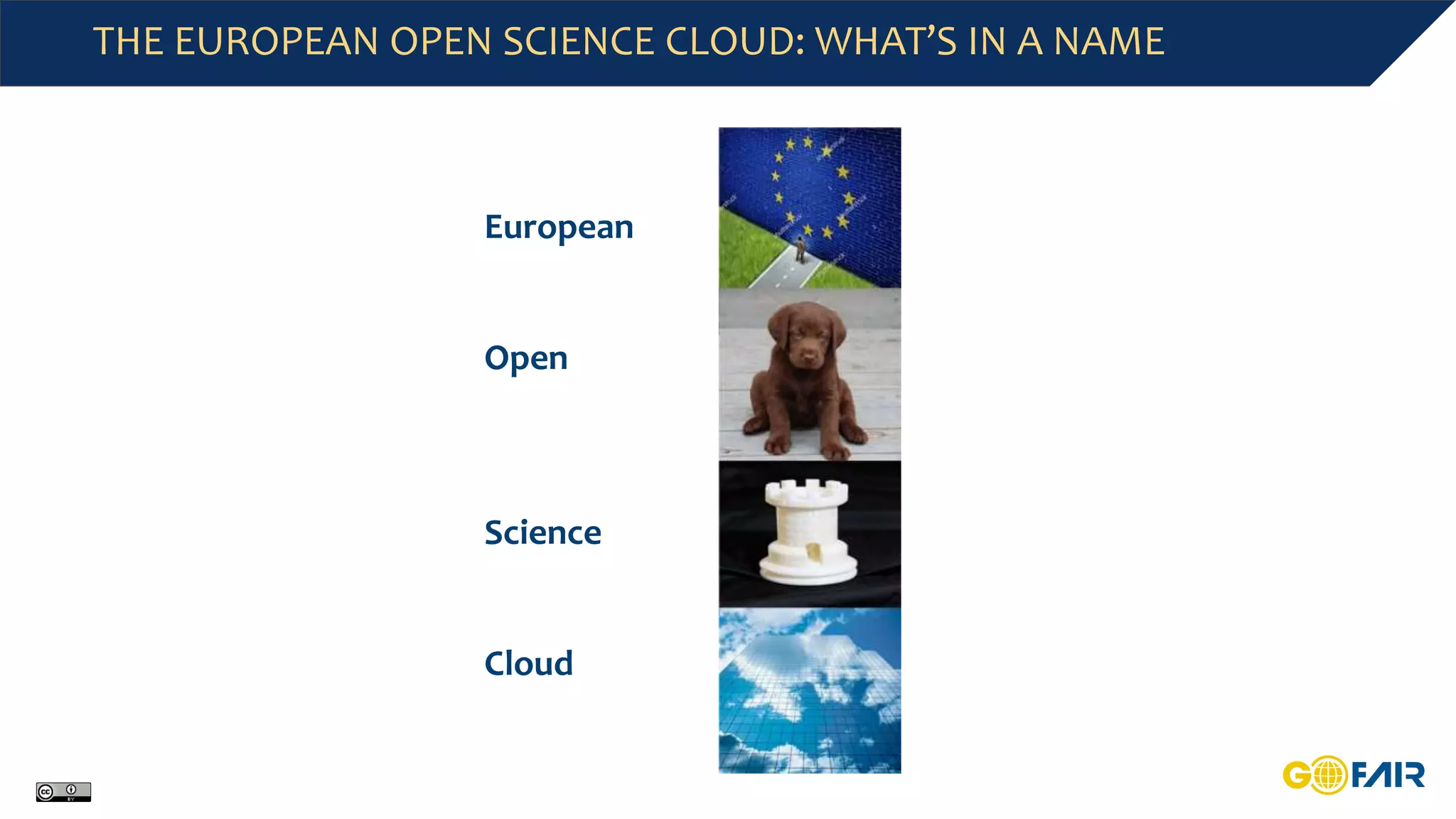
THE EUROPEAN OPEN SCIENCE CLOUD: WHAT’S IN A NAME
European
Open
Science
Cloud
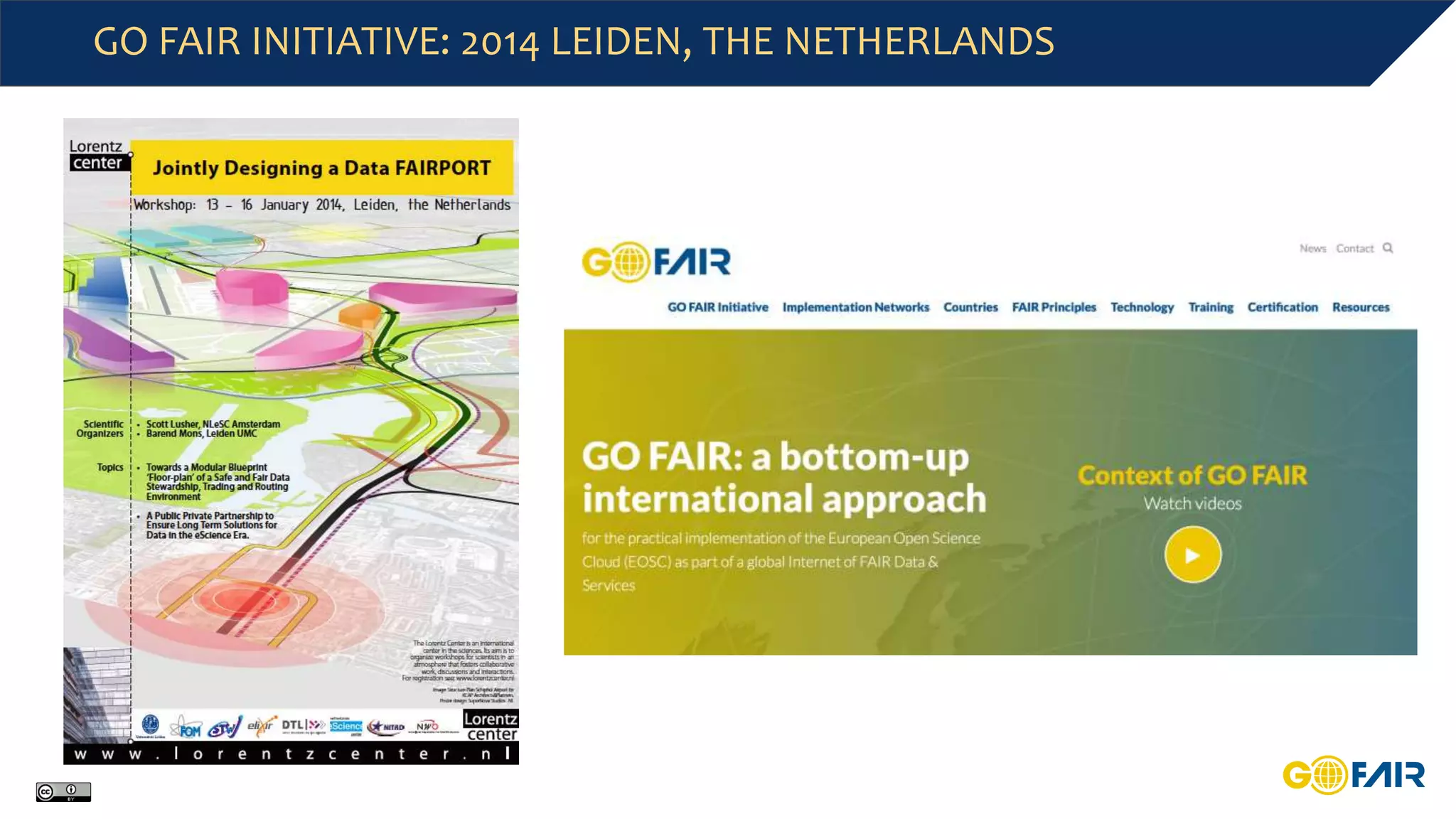
GO FAIR INITIATIVE: 2014 LEIDEN, THE NETHERLANDS
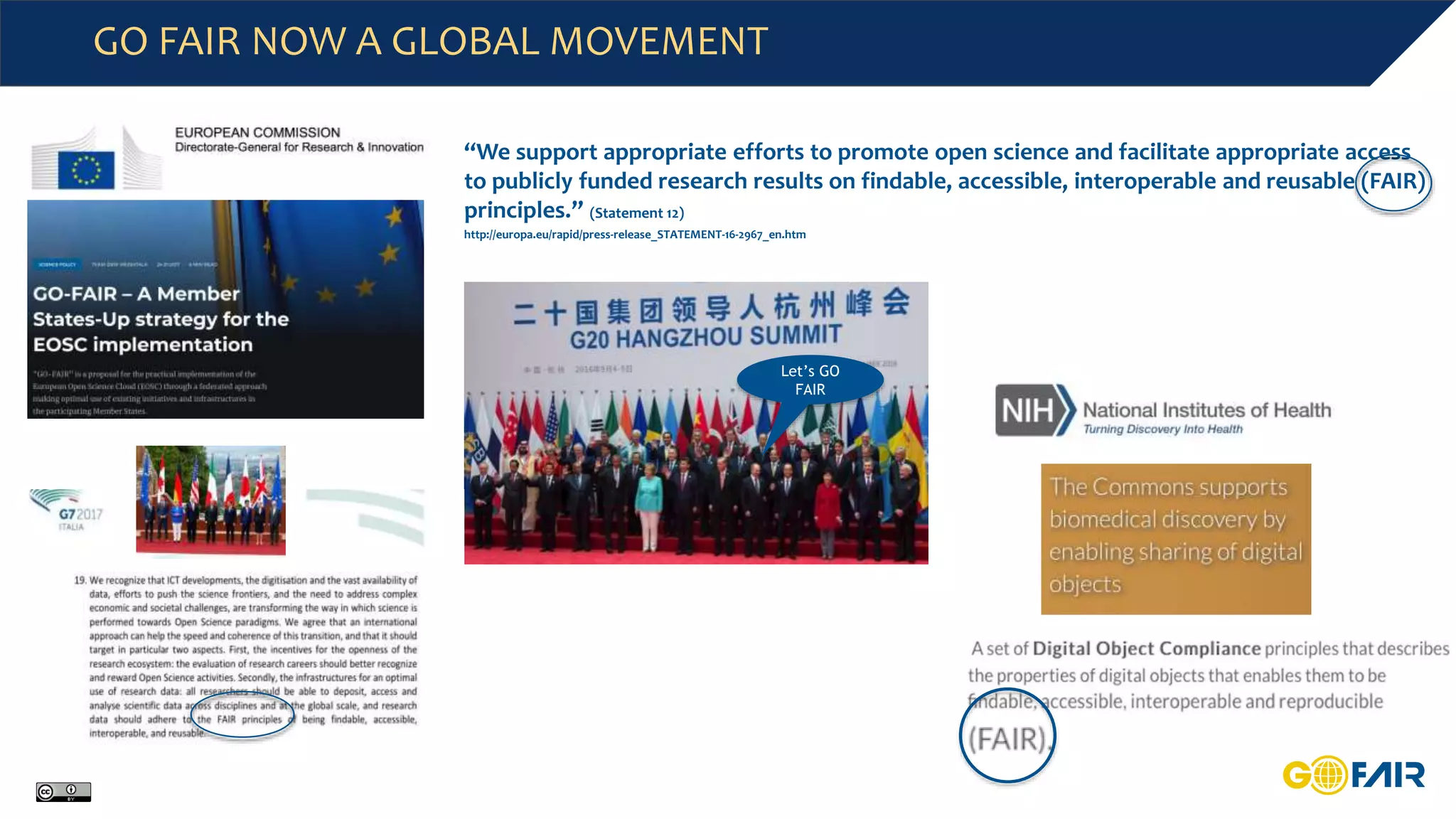
GO FAIR NOW A GLOBAL MOVEMENT
Let’s GO
FAIR
“We support appropriate efforts to promote open science and facilitate appropriate access
to publicly funded research results on findable, accessible, interoperable and reusable (FAIR)
principles.” (Statement 12)
http://europa.eu/rapid/press-release_STATEMENT-16-2967_en.htm
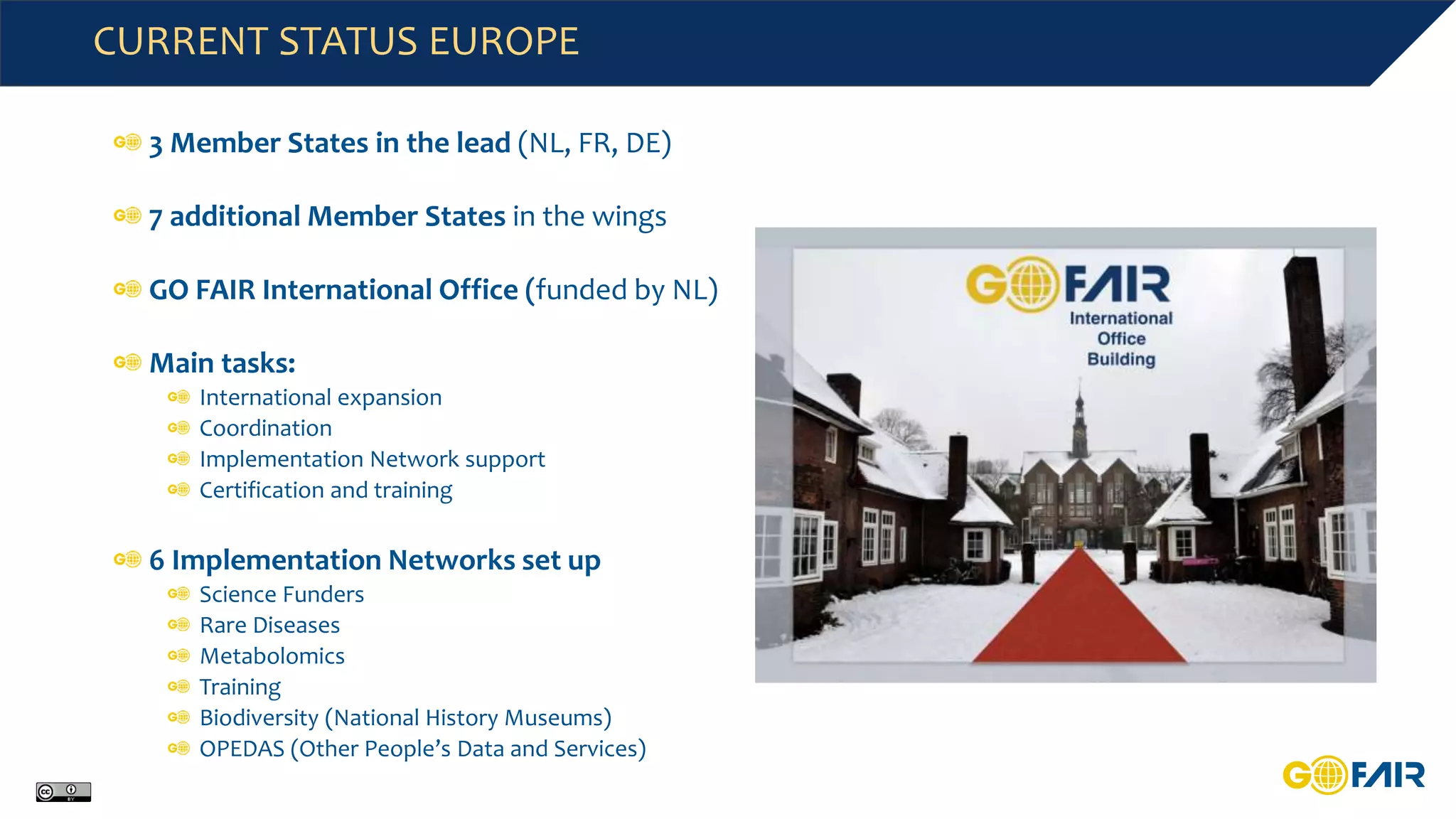
CURRENT STATUS EUROPE
3 Member States in the lead (NL, FR, DE)
7 additional Member States in the wings
GO FAIR International Office (funded by NL)
Main tasks:
International expansion
Coordination
Implementation Network support
Certification and training
6 Implementation Networks set up
Science Funders
Rare Diseases
Metabolomics
Training
Biodiversity (National History Museums)
OPEDAS (Other People’s Data and Services)
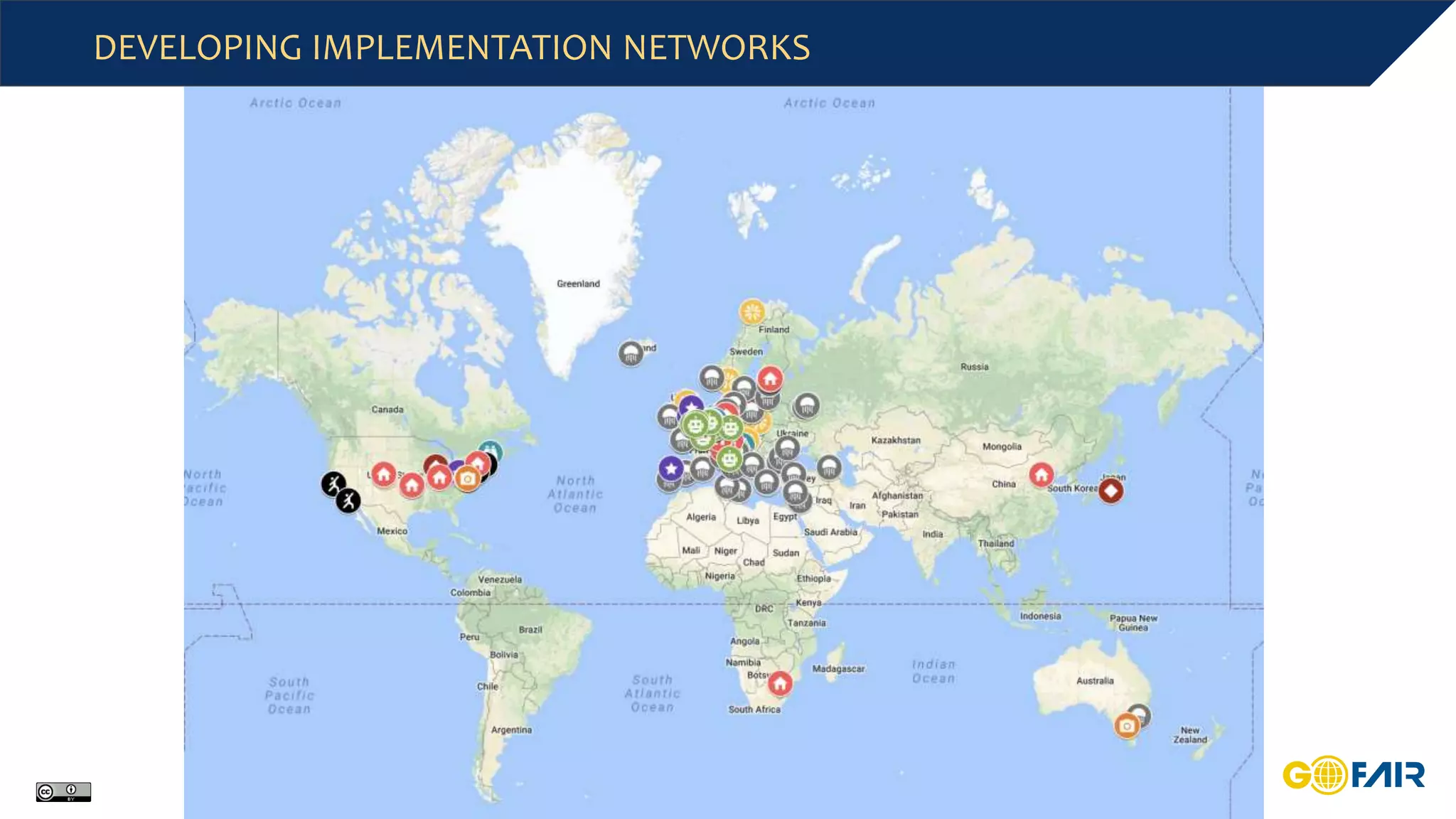
DEVELOPING IMPLEMENTATION NETWORKS
THE COST OF NOT GOING FAIR
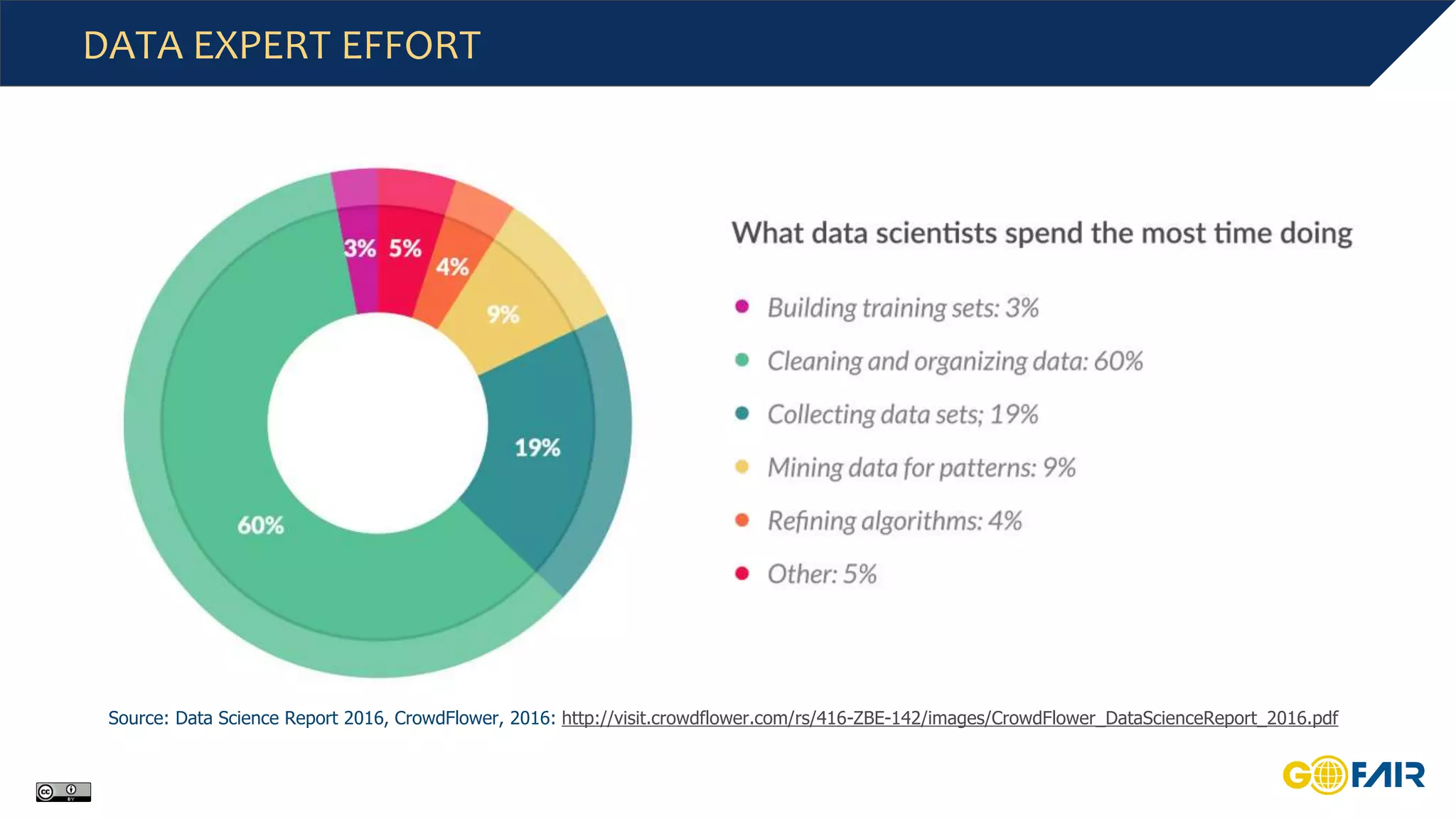
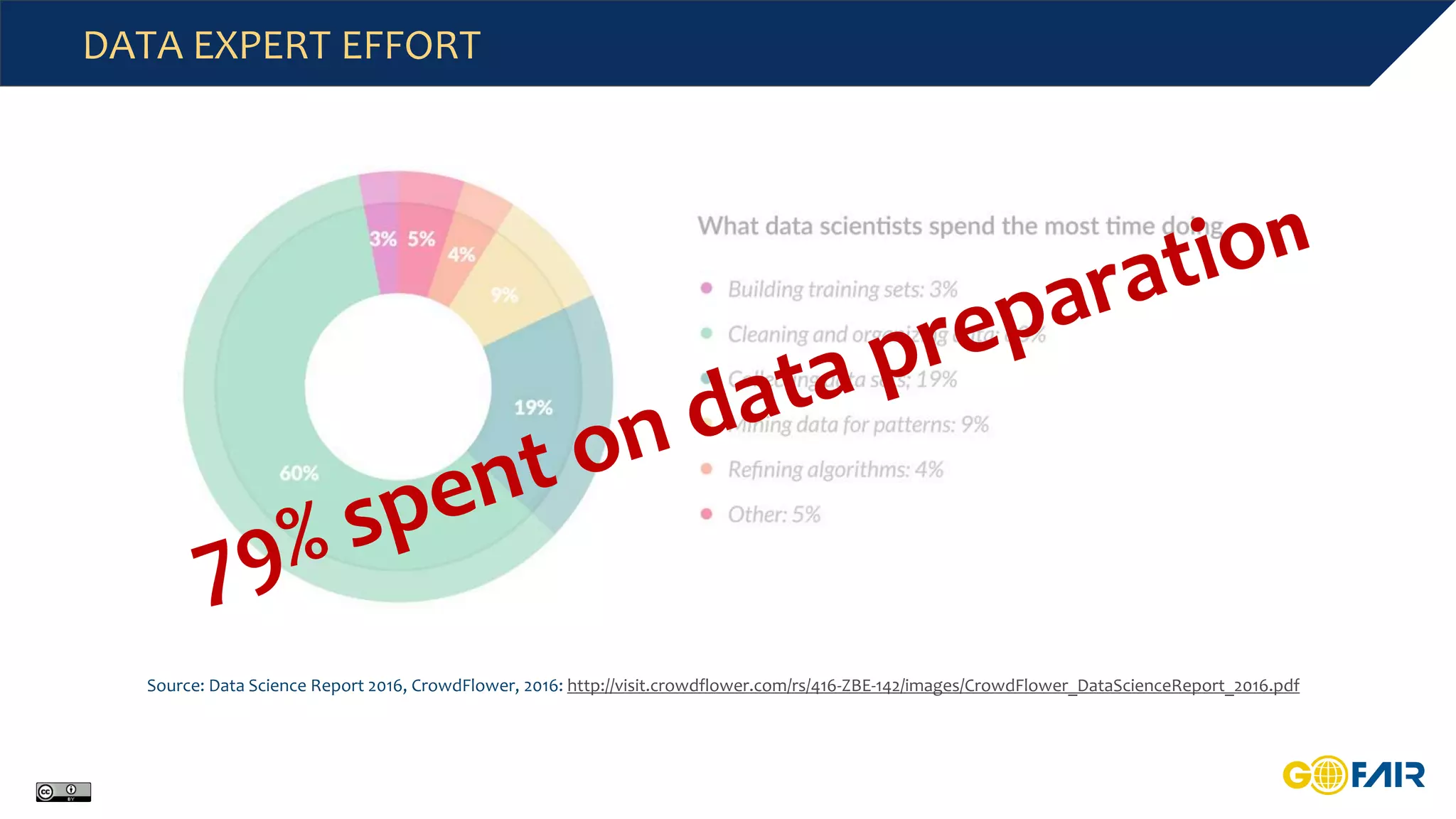
DATA EXPERT EFFORT
Source: Data Science Report 2016, CrowdFlower, 2016: http://visit.crowdflower.com/rs/416-ZBE-142/images/CrowdFlower_DataScienceReport_2016.pdf
DATA EXPERT EFFORT
Source: Data Science Report 2016, CrowdFlower, 2016: http://visit.crowdflower.com/rs/416-ZBE-142/images/CrowdFlower_DataScienceReport_2016.pdf
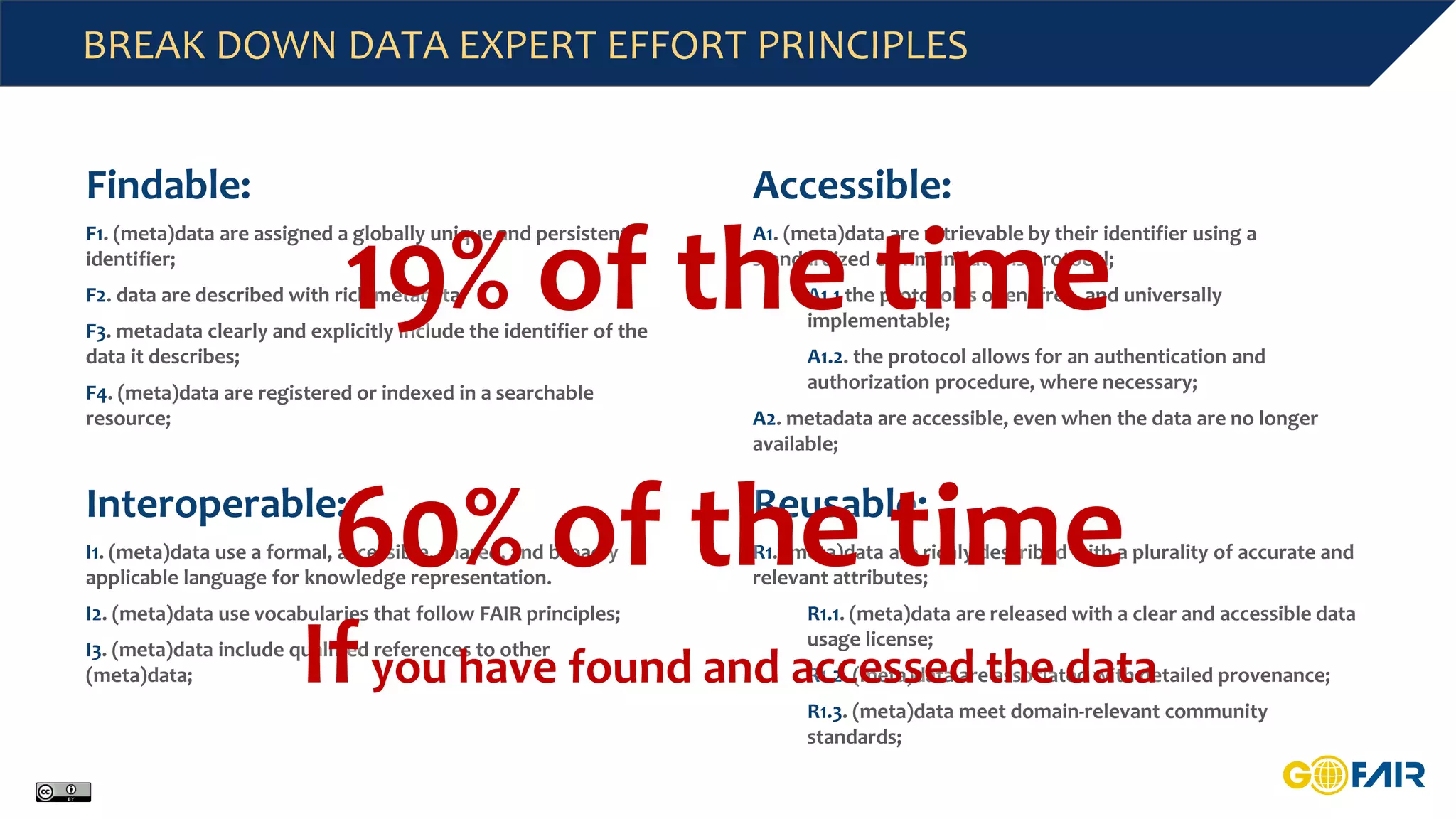
BREAK DOWN DATA EXPERT EFFORT PRINCIPLES
Findable:
F1. (meta)data are assigned a globally unique and persistent
identifier;
F2. data are described with rich metadata;
F3. metadata clearly and explicitly include the identifier of the
data it describes;
F4. (meta)data are registered or indexed in a searchable
resource;
Accessible:
A1. (meta)data are retrievable by their identifier using a
standardized communications protocol;
A1.1 the protocol is open, free, and universally
implementable;
A1.2. the protocol allows for an authentication and
authorization procedure, where necessary;
A2. metadata are accessible, even when the data are no longer
available;
Interoperable:
I1. (meta)data use a formal, accessible, shared, and broadly
applicable language for knowledge representation.
I2. (meta)data use vocabularies that follow FAIR principles;
I3. (meta)data include qualified references to other
(meta)data;
Reusable:
R1. (meta)data are richly described with a plurality of accurate and
relevant attributes;
R1.1. (meta)data are released with a clear and accessible data
usage license;
R1.2. (meta)data are associated with detailed provenance;
R1.3. (meta)data meet domain-relevant community
standards;
19% of the time
60% of the time
Ifyou have found and accessed the data
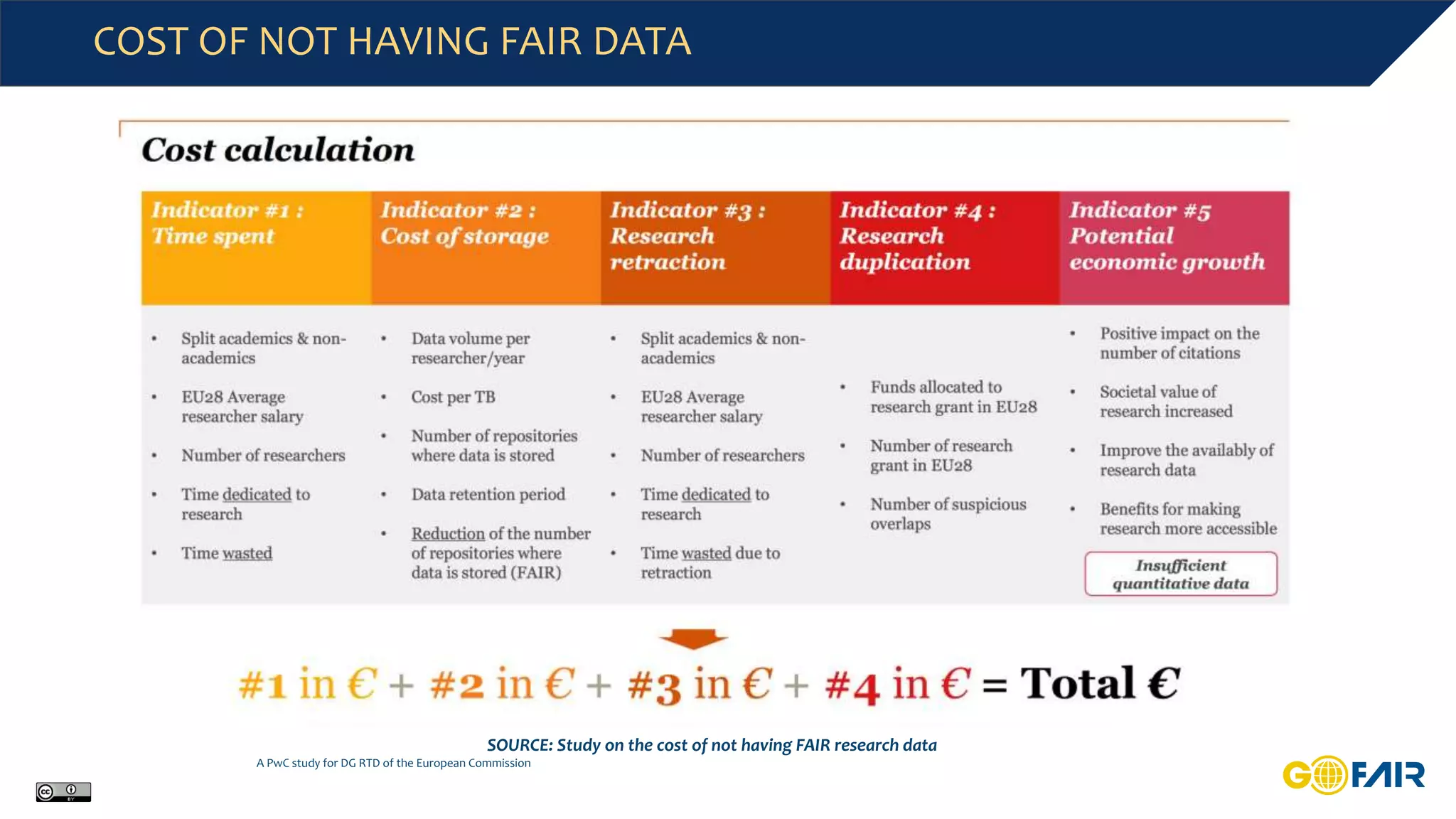
SOURCE: Study on the cost of not having FAIR research data
A PwC study for DG RTD of the European Commission
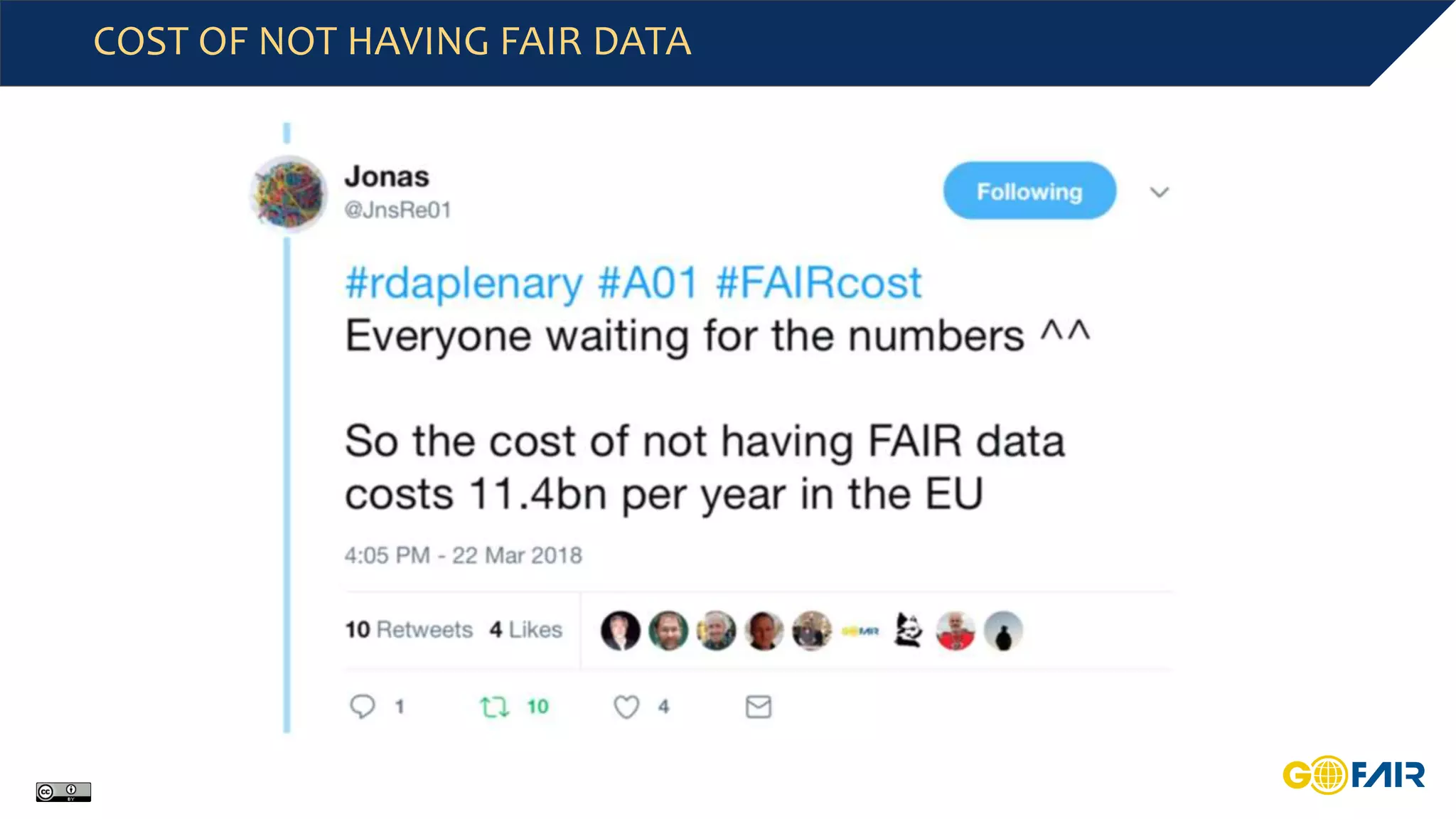
COST OF NOT HAVING FAIR DATA
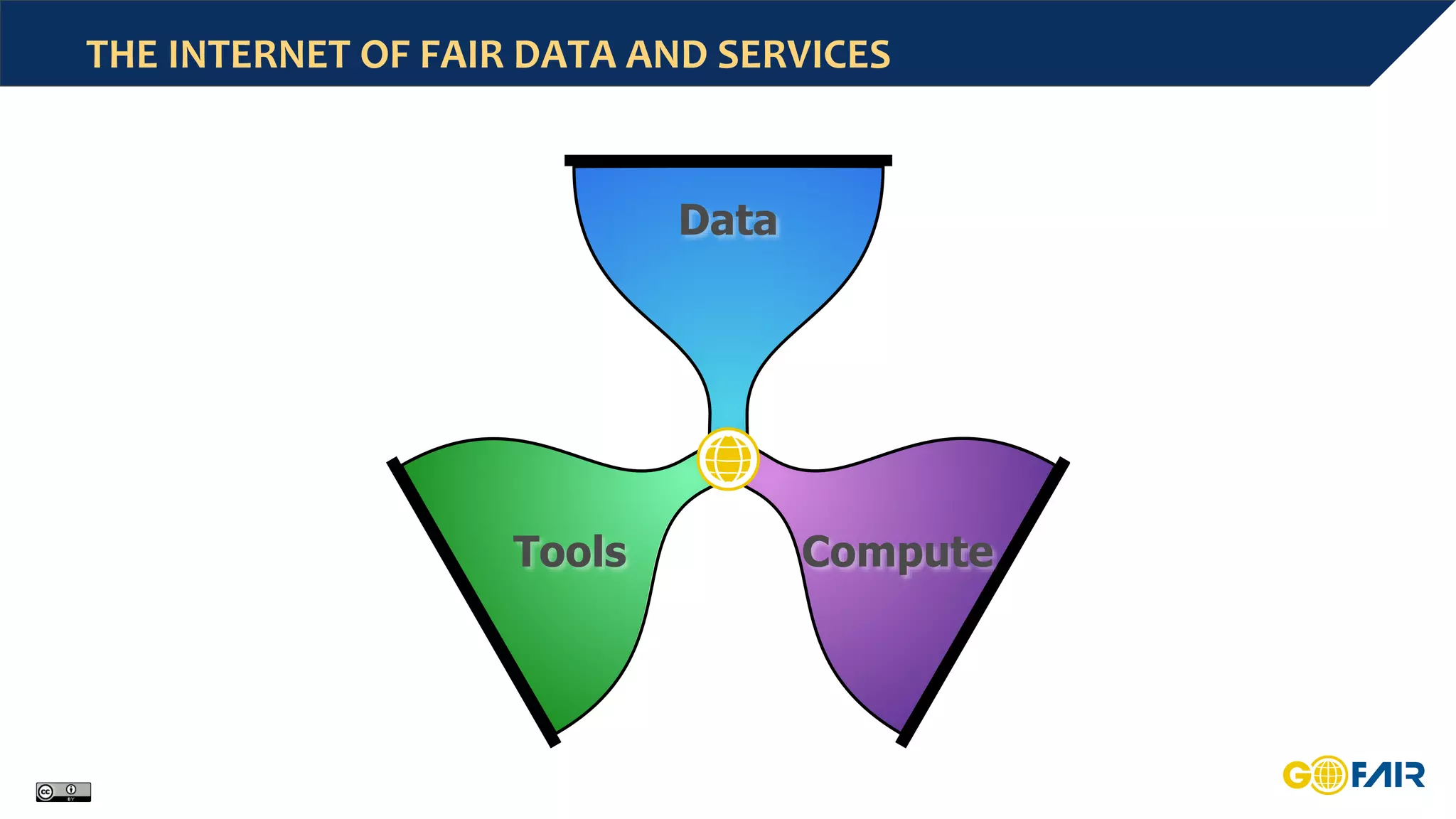
THE INTERNET OF FAIR DATA AND SERVICES
THE INTERNET
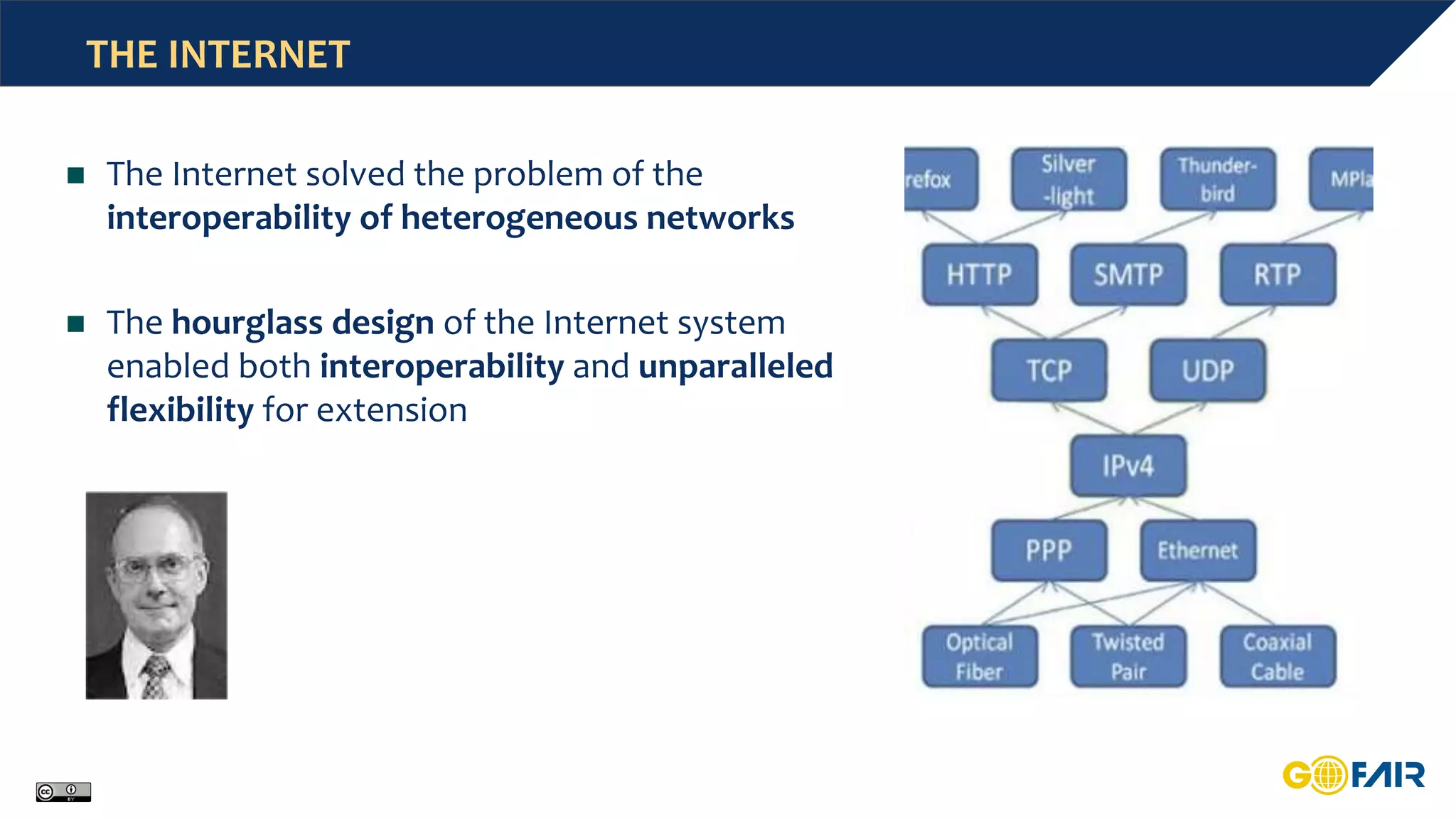
 The Internet solved the problem of the
interoperability of heterogeneous networks
 The hourglass design of the Internet system
enabled both interoperability and unparalleled
flexibility for extension
THE INTERNET OF FAIR DATA AND SERVICES
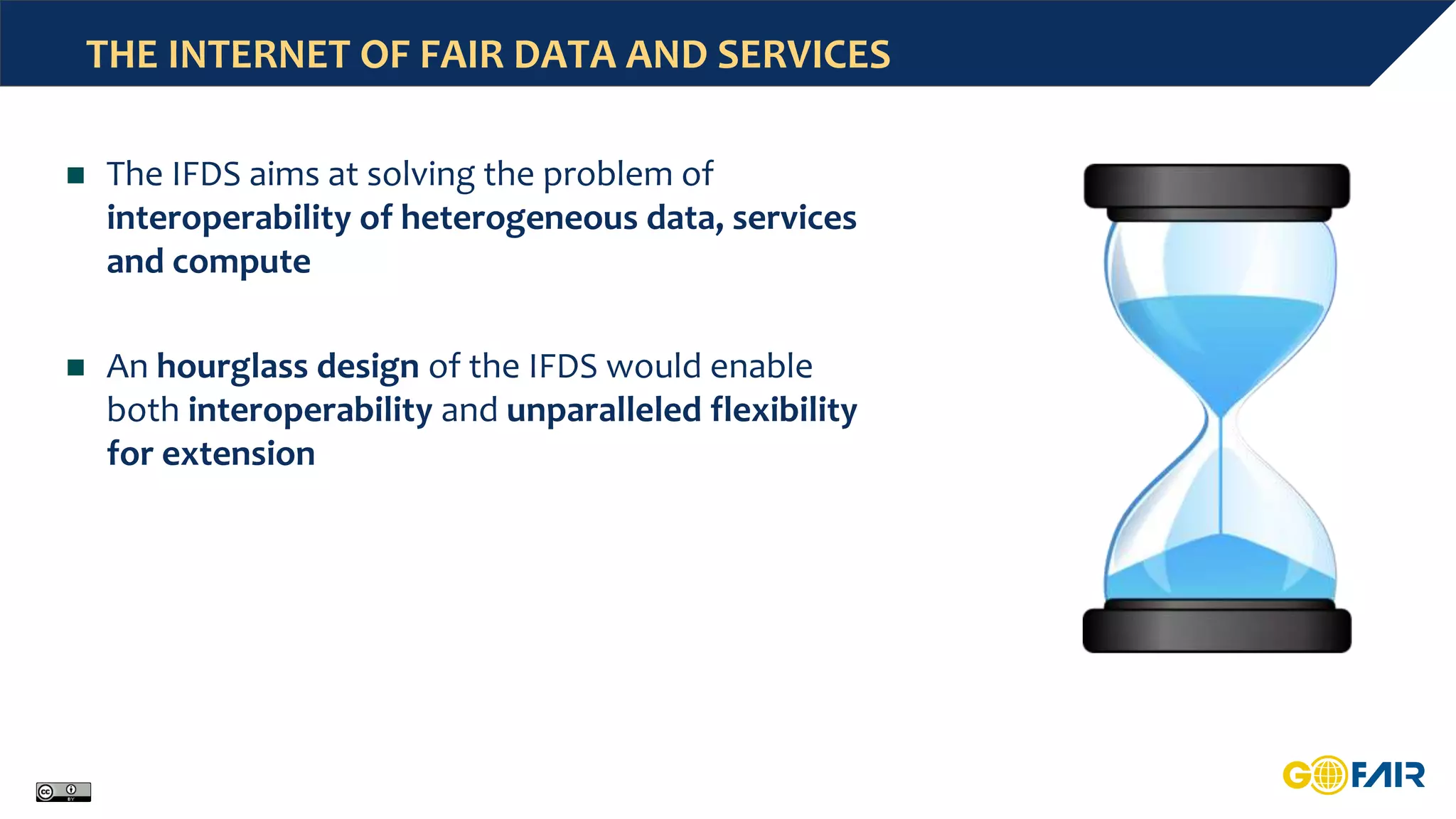
 The IFDS aims at solving the problem of
interoperability of heterogeneous data, services
and compute
 An hourglass design of the IFDS would enable
both interoperability and unparalleled flexibility
for extension
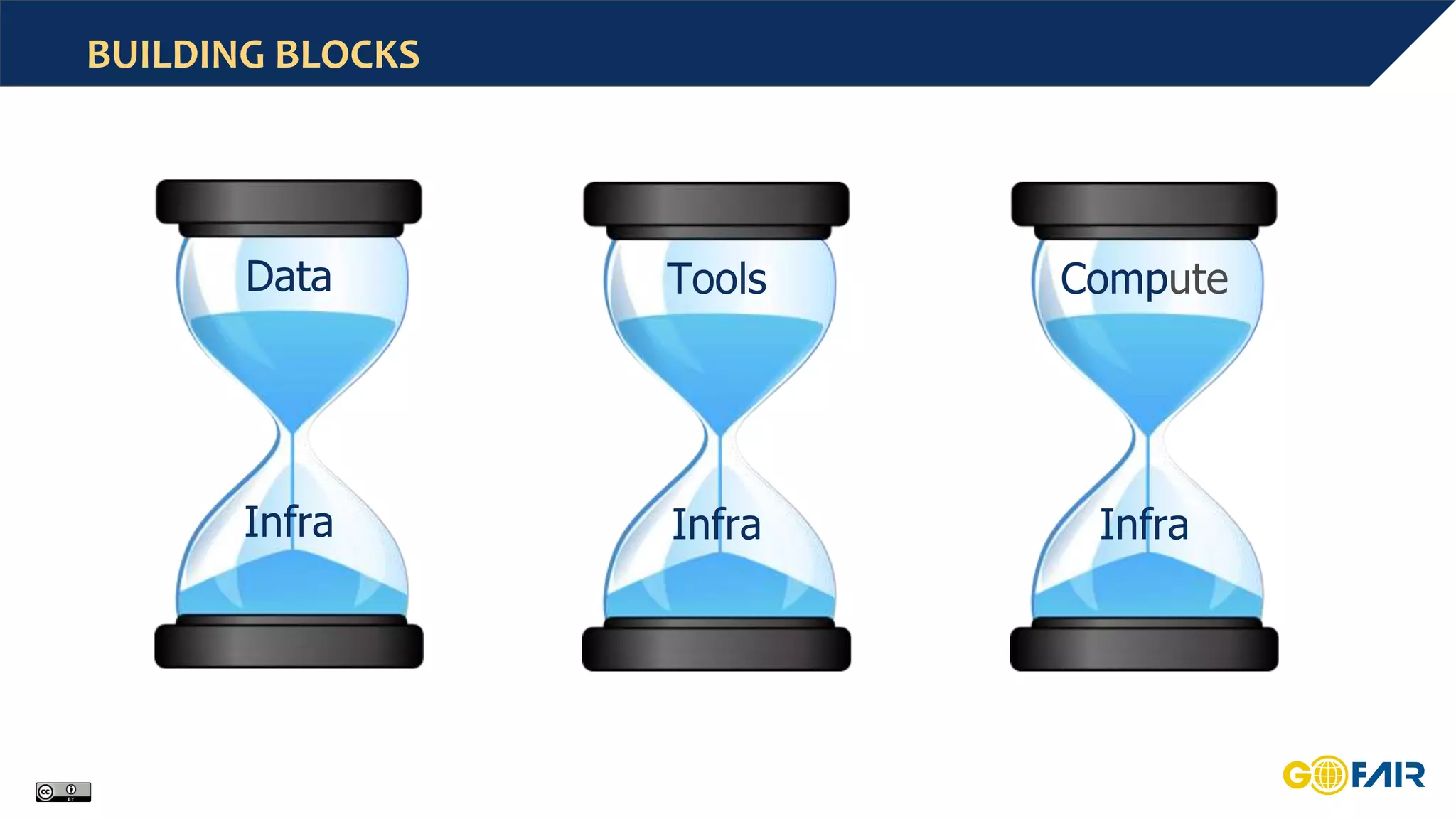
BUILDING BLOCKS
Data
Infra
Tools
Infra
Compute
Infra
THE INTERNET OF FAIR DATA AND SERVICES
Data
Tools Compute
IFDS
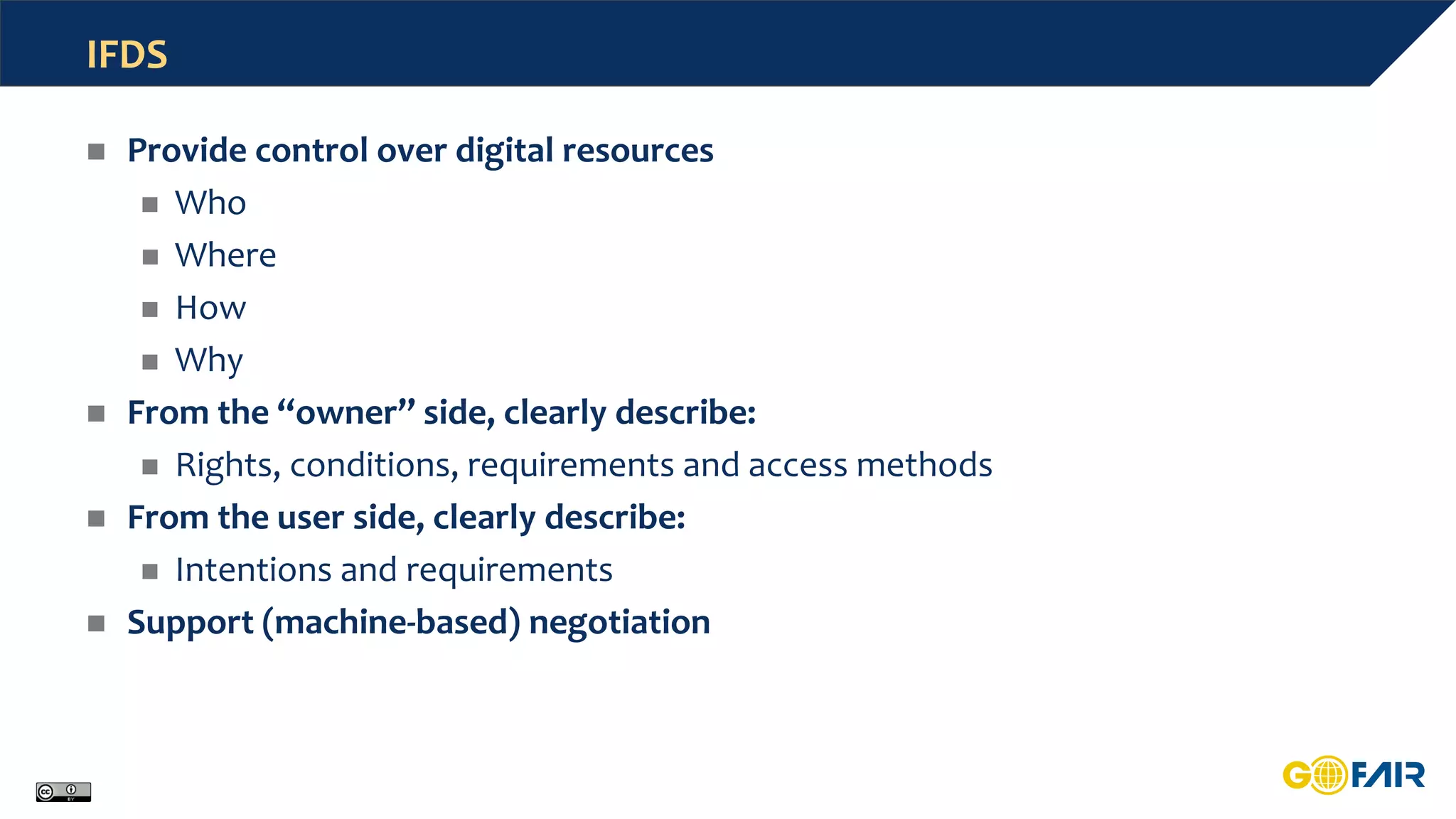
 Provide control over digital resources
 Who
 Where
 How
 Why
 From the “owner” side, clearly describe:
 Rights, conditions, requirements and access methods
 From the user side, clearly describe:
 Intentions and requirements
 Support (machine-based) negotiation
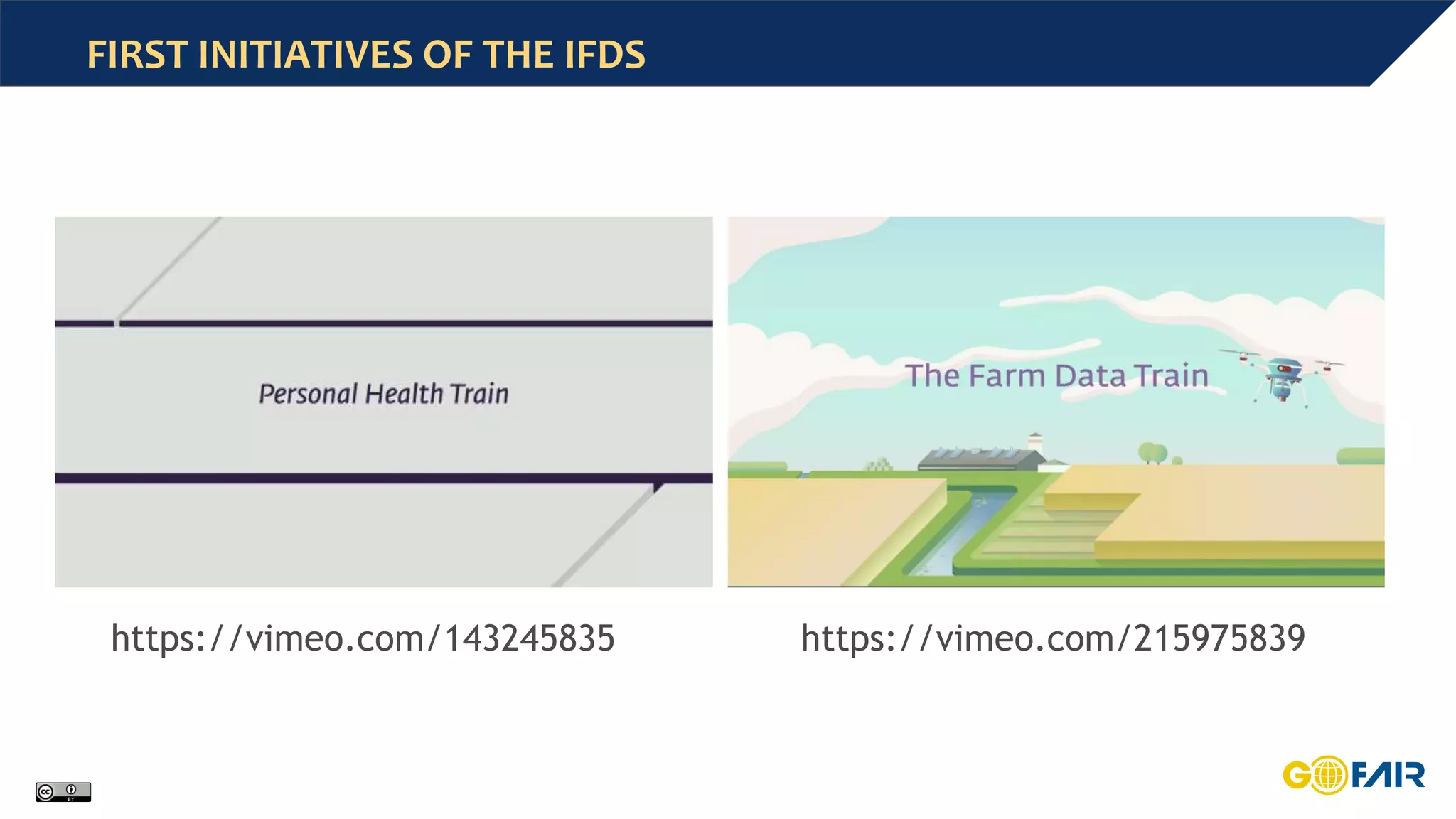
FIRST INITIATIVES OF THE IFDS
https://vimeo.com/215975839https://vimeo.com/143245835
WHAT COMMUNITIES LIKE ENTERPRISE ENGINEERING CAN DO TO BE
(MORE) FAIR AND WHAT IS IN THERE FOR THEM?
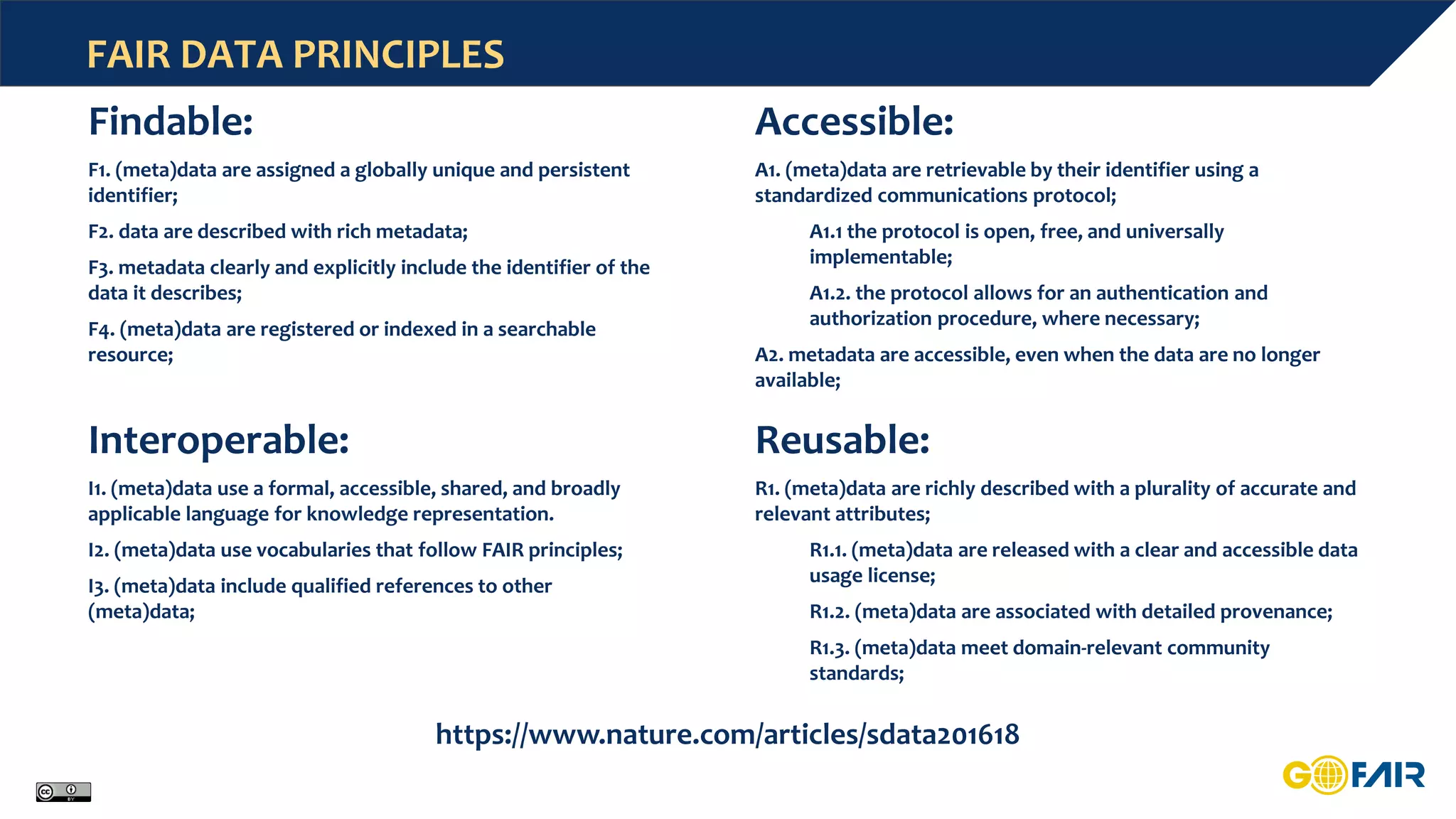
FAIR DATA PRINCIPLES
Findable:
F1. (meta)data are assigned a globally unique and persistent
identifier;
F2. data are described with rich metadata;
F3. metadata clearly and explicitly include the identifier of the
data it describes;
F4. (meta)data are registered or indexed in a searchable
resource;
Accessible:
A1. (meta)data are retrievable by their identifier using a
standardized communications protocol;
A1.1 the protocol is open, free, and universally
implementable;
A1.2. the protocol allows for an authentication and
authorization procedure, where necessary;
A2. metadata are accessible, even when the data are no longer
available;
Interoperable:
I1. (meta)data use a formal, accessible, shared, and broadly
applicable language for knowledge representation.
I2. (meta)data use vocabularies that follow FAIR principles;
I3. (meta)data include qualified references to other
(meta)data;
Reusable:
R1. (meta)data are richly described with a plurality of accurate and
relevant attributes;
R1.1. (meta)data are released with a clear and accessible data
usage license;
R1.2. (meta)data are associated with detailed provenance;
R1.3. (meta)data meet domain-relevant community
standards;
https://www.nature.com/articles/sdata201618
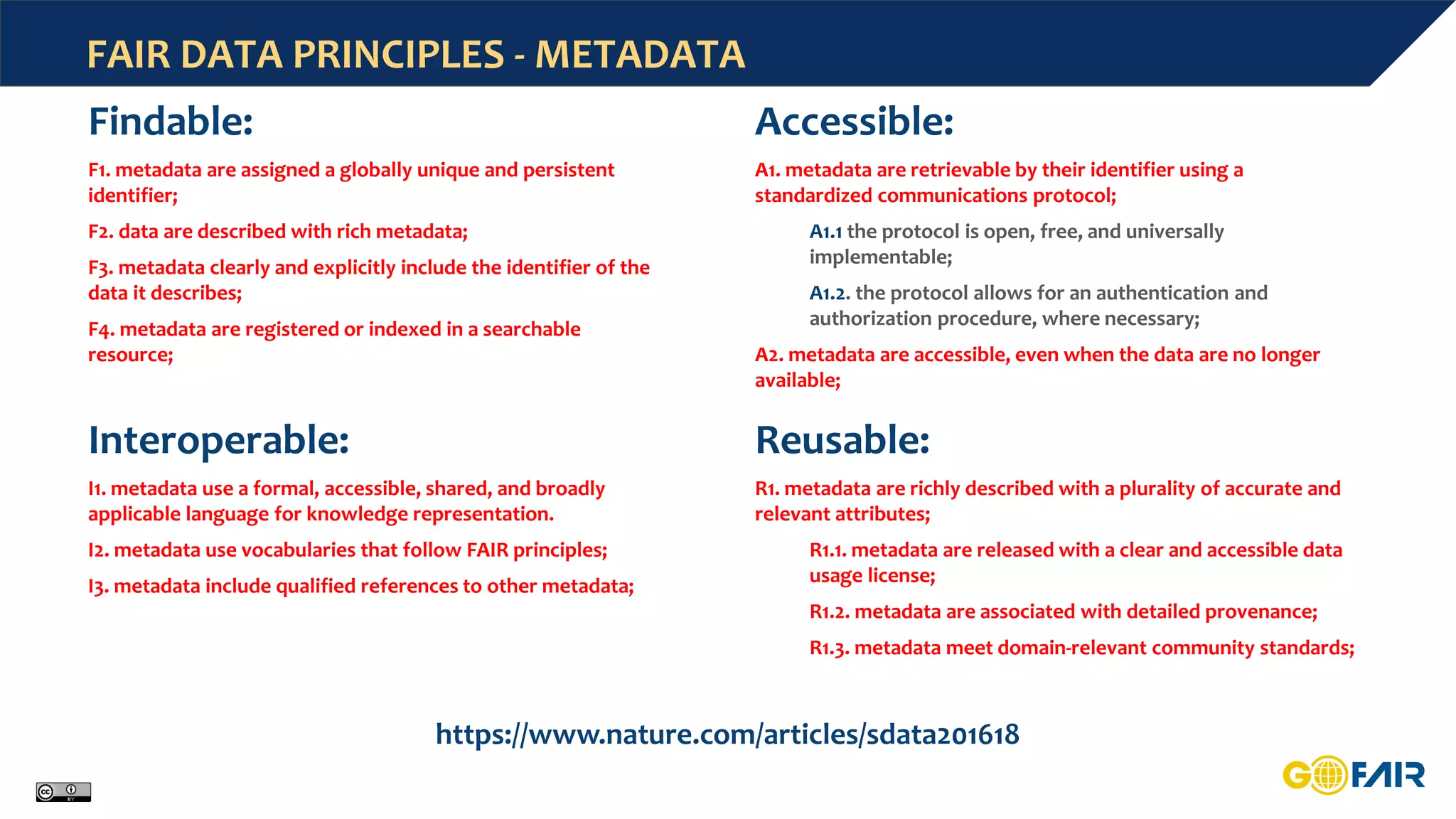
FAIR DATA PRINCIPLES - METADATA
Findable:
F1. metadata are assigned a globally unique and persistent
identifier;
F2. data are described with rich metadata;
F3. metadata clearly and explicitly include the identifier of the
data it describes;
F4. metadata are registered or indexed in a searchable
resource;
Accessible:
A1. metadata are retrievable by their identifier using a
standardized communications protocol;
A1.1 the protocol is open, free, and universally
implementable;
A1.2. the protocol allows for an authentication and
authorization procedure, where necessary;
A2. metadata are accessible, even when the data are no longer
available;
Interoperable:
I1. metadata use a formal, accessible, shared, and broadly
applicable language for knowledge representation.
I2. metadata use vocabularies that follow FAIR principles;
I3. metadata include qualified references to other metadata;
Reusable:
R1. metadata are richly described with a plurality of accurate and
relevant attributes;
R1.1. metadata are released with a clear and accessible data
usage license;
R1.2. metadata are associated with detailed provenance;
R1.3. metadata meet domain-relevant community standards;
https://www.nature.com/articles/sdata201618
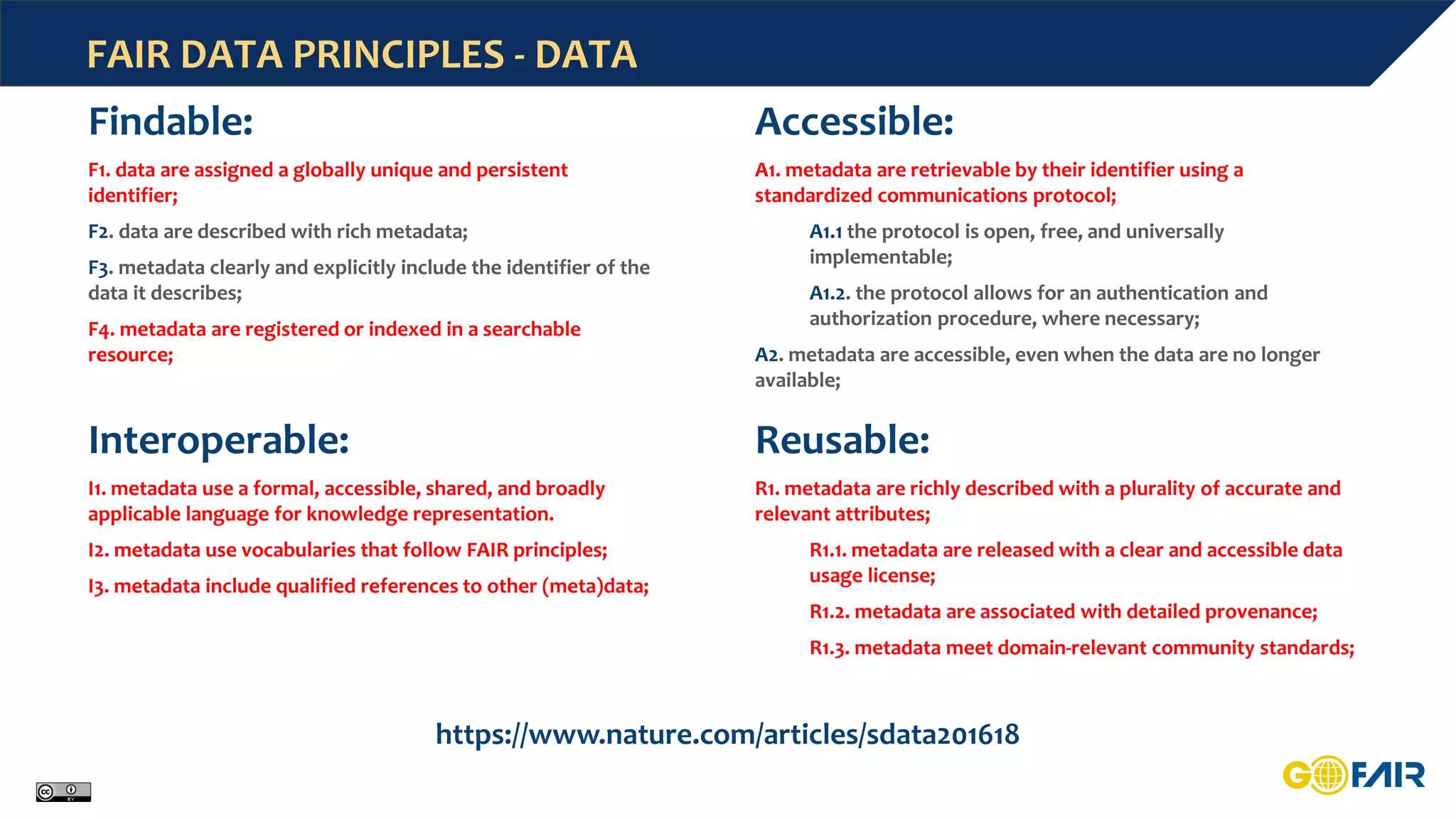
FAIR DATA PRINCIPLES - DATA
Findable:
F1. data are assigned a globally unique and persistent
identifier;
F2. data are described with rich metadata;
F3. metadata clearly and explicitly include the identifier of the
data it describes;
F4. metadata are registered or indexed in a searchable
resource;
Accessible:
A1. metadata are retrievable by their identifier using a
standardized communications protocol;
A1.1 the protocol is open, free, and universally
implementable;
A1.2. the protocol allows for an authentication and
authorization procedure, where necessary;
A2. metadata are accessible, even when the data are no longer
available;
Interoperable:
I1. metadata use a formal, accessible, shared, and broadly
applicable language for knowledge representation.
I2. metadata use vocabularies that follow FAIR principles;
I3. metadata include qualified references to other (meta)data;
Reusable:
R1. metadata are richly described with a plurality of accurate and
relevant attributes;
R1.1. metadata are released with a clear and accessible data
usage license;
R1.2. metadata are associated with detailed provenance;
R1.3. metadata meet domain-relevant community standards;
https://www.nature.com/articles/sdata201618
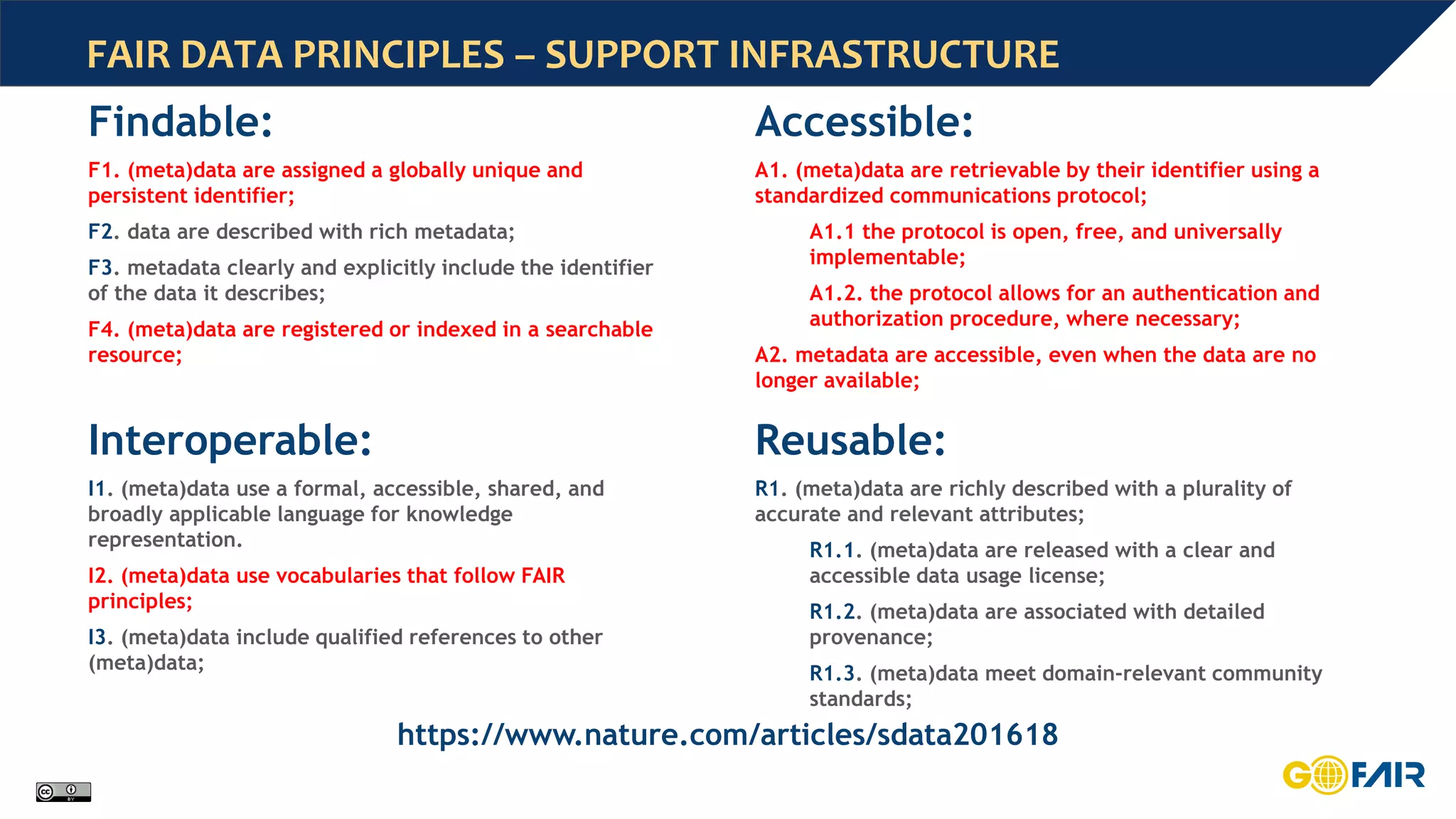
FAIR DATA PRINCIPLES – SUPPORT INFRASTRUCTURE
Findable:
F1. (meta)data are assigned a globally unique and
persistent identifier;
F2. data are described with rich metadata;
F3. metadata clearly and explicitly include the identifier
of the data it describes;
F4. (meta)data are registered or indexed in a searchable
resource;
Accessible:
A1. (meta)data are retrievable by their identifier using a
standardized communications protocol;
A1.1 the protocol is open, free, and universally
implementable;
A1.2. the protocol allows for an authentication and
authorization procedure, where necessary;
A2. metadata are accessible, even when the data are no
longer available;
Interoperable:
I1. (meta)data use a formal, accessible, shared, and
broadly applicable language for knowledge
representation.
I2. (meta)data use vocabularies that follow FAIR
principles;
I3. (meta)data include qualified references to other
(meta)data;
Reusable:
R1. (meta)data are richly described with a plurality of
accurate and relevant attributes;
R1.1. (meta)data are released with a clear and
accessible data usage license;
R1.2. (meta)data are associated with detailed
provenance;
R1.3. (meta)data meet domain-relevant community
standards;
https://www.nature.com/articles/sdata201618
BENEFITS OF GOING FAIR
 Improve in intra- and inter-domain interoperability;
 Improve efficiency in dealing with digital resources;
 Join a global initiative;
 Availability of more FAIR digital resources;
 Decrease “time-to-market” integrated solutions;
 …
WHAT CAN COMMUNITIES DO?
 Metadata elements for commonly used digital resources. E.g. metadata
elements for EE models;
 Preferred reference conceptual models (vocabularies, schemas, ontologies,
etc., …);
 Define semantic models for commonly used resources (datasets, services, etc.)
 Offer community-specific services like vocabularies services, model
repositories, …;
 Mechanisms to connects models representing different enterprise
perspectives (and using differencing modeling languages)
Q&A – CONTACT INFO
Luiz Bonino
International Technology Coordinator – GO FAIR
Associate Professor BioSemantics – LUMC
E-mail: luiz.bonino@go-fair.org
Skype: luizolavobonino
Web: www.go-fair.org
LET’S GO FAIR?

Towards cross-domain interoperation in the internet of FAIR data and services

  • 1.
    TOWARDS CROSS-DOMAIN INTEROPERATION INTHE INTERNET OF FAIR DATA AND SERVICES EEWC 2018 - LUXEMBOURG Luiz Bonino luiz.bonino@go-fair.org
  • 2.
    THE BIG DATA/(DIGITAL)PROBLEM The Data Tsunami
  • 3.
    THE BIG DATA/(DIGITAL)PROBLEM The Data Tsunami Datarrheia
  • 4.
    THE BIG DATA/(DIGITAL)PROBLEM The Data Tsunami Datarrheia Standards
  • 5.
    THE BIG DATA/(DIGITAL)PROBLEM The Data Tsunami Datarrheia Standards Needle Transport
  • 6.
    THE BIG DATA/(DIGITAL)PROBLEM The Data Tsunami Datarrheia Standards Needle Transport Do It Yourself Data
  • 7.
    THE UNDERLYING PROBLEM Fragmentationof… • Data • Models • Software tools • Platforms • Regulations • …
  • 8.
    ENTERPRISE REALITY -HETEROGENEITY Integrated Enterprise Technologies Providers Platforms
  • 9.
    ENTERPRISE REALITY –HETEROGENEITY - CHALLENGES Integrated Enterprise Technologies Providers Platforms How can I get to know what is available? Where to get? How to get? How to integrate? How to streamline it (re)use?
  • 10.
    ENTERPRISE REALITY –HETEROGENEITY – SOLUTION? F I N D A B L E
  • 11.
    ENTERPRISE REALITY –HETEROGENEITY – SOLUTION? F I N D A B L E A C C E S S I B L E
  • 12.
    ENTERPRISE REALITY –HETEROGENEITY – SOLUTION? F I N D A B L E A C C E S S I B L E I N T E R O P E R A B L E
  • 13.
    ENTERPRISE REALITY –HETEROGENEITY – SOLUTION? F I N D A B L E A C C E S S I B L E I N T E R O P E R A B L E R E U S A B L E
  • 14.
    ENTERPRISE REALITY –HETEROGENEITY – SOLUTION? F I N D A B L E A C C E S S I B L E I N T E R O P E R A B L E R E U S A B L E
  • 15.
  • 16.
    FAIR PRINCIPLES Findable: F1. (meta)dataare assigned a globally unique and persistent identifier; F2. data are described with rich metadata; F3. metadata clearly and explicitly include the identifier of the data it describes; F4. (meta)data are registered or indexed in a searchable resource; Accessible: A1. (meta)data are retrievable by their identifier using a standardized communications protocol; A1.1 the protocol is open, free, and universally implementable; A1.2. the protocol allows for an authentication and authorization procedure, where necessary; A2. metadata are accessible, even when the data are no longer available; Interoperable: I1. (meta)data use a formal, accessible, shared, and broadly applicable language for knowledge representation. I2. (meta)data use vocabularies that follow FAIR principles; I3. (meta)data include qualified references to other (meta)data; Reusable: R1. (meta)data are richly described with a plurality of accurate and relevant attributes; R1.1. (meta)data are released with a clear and accessible data usage license; R1.2. (meta)data are associated with detailed provenance; R1.3. (meta)data meet domain-relevant community standards; https://www.nature.com/articles/sdata201618
  • 17.
    WHAT FAIR PRINCIPLESARE NOT! FAIR is not a standard FAIR is not equal to ‘Open’ or ‘Free’ FAIR is not equal to RDF, Linked Data, or Semantic Web FAIR is not assuming that only humans can find and re-use data FAIR is not for humans only but for machines as well Digital resources that are not FAIR are pretty ‘Re-useless’….. Cloudy, increasingly FAIR; revisiting the FAIR Data guiding principles for the European Open Science Cloud DOI: 10.3233/ISU-170824 http://www.purl.org/fair/principles-explained
  • 18.
    EC TAKES ACTION:THE EUROPEAN OPEN SCIENCE CLOUD Europe acknowledged the problem Moved for a solution: EOSC Data Stewardship (DS) for better discovery Internet of Data of FAIR Data & Services Training of 500.000 data experts Financing €2B for initial phase EOSC 5% of research grants for DS DS market $100B annually
  • 19.
    THE EUROPEAN OPENSCIENCE CLOUD: WHAT’S IN A NAME European Open Science Cloud
  • 20.
    GO FAIR INITIATIVE:2014 LEIDEN, THE NETHERLANDS
  • 21.
    GO FAIR NOWA GLOBAL MOVEMENT Let’s GO FAIR “We support appropriate efforts to promote open science and facilitate appropriate access to publicly funded research results on findable, accessible, interoperable and reusable (FAIR) principles.” (Statement 12) http://europa.eu/rapid/press-release_STATEMENT-16-2967_en.htm
  • 22.
    CURRENT STATUS EUROPE 3Member States in the lead (NL, FR, DE) 7 additional Member States in the wings GO FAIR International Office (funded by NL) Main tasks: International expansion Coordination Implementation Network support Certification and training 6 Implementation Networks set up Science Funders Rare Diseases Metabolomics Training Biodiversity (National History Museums) OPEDAS (Other People’s Data and Services)
  • 23.
  • 24.
    THE COST OFNOT GOING FAIR
  • 25.
    DATA EXPERT EFFORT Source:Data Science Report 2016, CrowdFlower, 2016: http://visit.crowdflower.com/rs/416-ZBE-142/images/CrowdFlower_DataScienceReport_2016.pdf
  • 26.
    DATA EXPERT EFFORT Source:Data Science Report 2016, CrowdFlower, 2016: http://visit.crowdflower.com/rs/416-ZBE-142/images/CrowdFlower_DataScienceReport_2016.pdf
  • 27.
    BREAK DOWN DATAEXPERT EFFORT PRINCIPLES Findable: F1. (meta)data are assigned a globally unique and persistent identifier; F2. data are described with rich metadata; F3. metadata clearly and explicitly include the identifier of the data it describes; F4. (meta)data are registered or indexed in a searchable resource; Accessible: A1. (meta)data are retrievable by their identifier using a standardized communications protocol; A1.1 the protocol is open, free, and universally implementable; A1.2. the protocol allows for an authentication and authorization procedure, where necessary; A2. metadata are accessible, even when the data are no longer available; Interoperable: I1. (meta)data use a formal, accessible, shared, and broadly applicable language for knowledge representation. I2. (meta)data use vocabularies that follow FAIR principles; I3. (meta)data include qualified references to other (meta)data; Reusable: R1. (meta)data are richly described with a plurality of accurate and relevant attributes; R1.1. (meta)data are released with a clear and accessible data usage license; R1.2. (meta)data are associated with detailed provenance; R1.3. (meta)data meet domain-relevant community standards; 19% of the time 60% of the time Ifyou have found and accessed the data
  • 28.
    SOURCE: Study onthe cost of not having FAIR research data A PwC study for DG RTD of the European Commission COST OF NOT HAVING FAIR DATA
  • 29.
    COST OF NOTHAVING FAIR DATA
  • 30.
    THE INTERNET OFFAIR DATA AND SERVICES
  • 31.
    THE INTERNET  TheInternet solved the problem of the interoperability of heterogeneous networks  The hourglass design of the Internet system enabled both interoperability and unparalleled flexibility for extension
  • 32.
    THE INTERNET OFFAIR DATA AND SERVICES  The IFDS aims at solving the problem of interoperability of heterogeneous data, services and compute  An hourglass design of the IFDS would enable both interoperability and unparalleled flexibility for extension
  • 33.
  • 34.
    THE INTERNET OFFAIR DATA AND SERVICES Data Tools Compute
  • 35.
    IFDS  Provide controlover digital resources  Who  Where  How  Why  From the “owner” side, clearly describe:  Rights, conditions, requirements and access methods  From the user side, clearly describe:  Intentions and requirements  Support (machine-based) negotiation
  • 36.
    FIRST INITIATIVES OFTHE IFDS https://vimeo.com/215975839https://vimeo.com/143245835
  • 37.
    WHAT COMMUNITIES LIKEENTERPRISE ENGINEERING CAN DO TO BE (MORE) FAIR AND WHAT IS IN THERE FOR THEM?
  • 38.
    FAIR DATA PRINCIPLES Findable: F1.(meta)data are assigned a globally unique and persistent identifier; F2. data are described with rich metadata; F3. metadata clearly and explicitly include the identifier of the data it describes; F4. (meta)data are registered or indexed in a searchable resource; Accessible: A1. (meta)data are retrievable by their identifier using a standardized communications protocol; A1.1 the protocol is open, free, and universally implementable; A1.2. the protocol allows for an authentication and authorization procedure, where necessary; A2. metadata are accessible, even when the data are no longer available; Interoperable: I1. (meta)data use a formal, accessible, shared, and broadly applicable language for knowledge representation. I2. (meta)data use vocabularies that follow FAIR principles; I3. (meta)data include qualified references to other (meta)data; Reusable: R1. (meta)data are richly described with a plurality of accurate and relevant attributes; R1.1. (meta)data are released with a clear and accessible data usage license; R1.2. (meta)data are associated with detailed provenance; R1.3. (meta)data meet domain-relevant community standards; https://www.nature.com/articles/sdata201618
  • 39.
    FAIR DATA PRINCIPLES- METADATA Findable: F1. metadata are assigned a globally unique and persistent identifier; F2. data are described with rich metadata; F3. metadata clearly and explicitly include the identifier of the data it describes; F4. metadata are registered or indexed in a searchable resource; Accessible: A1. metadata are retrievable by their identifier using a standardized communications protocol; A1.1 the protocol is open, free, and universally implementable; A1.2. the protocol allows for an authentication and authorization procedure, where necessary; A2. metadata are accessible, even when the data are no longer available; Interoperable: I1. metadata use a formal, accessible, shared, and broadly applicable language for knowledge representation. I2. metadata use vocabularies that follow FAIR principles; I3. metadata include qualified references to other metadata; Reusable: R1. metadata are richly described with a plurality of accurate and relevant attributes; R1.1. metadata are released with a clear and accessible data usage license; R1.2. metadata are associated with detailed provenance; R1.3. metadata meet domain-relevant community standards; https://www.nature.com/articles/sdata201618
  • 40.
    FAIR DATA PRINCIPLES- DATA Findable: F1. data are assigned a globally unique and persistent identifier; F2. data are described with rich metadata; F3. metadata clearly and explicitly include the identifier of the data it describes; F4. metadata are registered or indexed in a searchable resource; Accessible: A1. metadata are retrievable by their identifier using a standardized communications protocol; A1.1 the protocol is open, free, and universally implementable; A1.2. the protocol allows for an authentication and authorization procedure, where necessary; A2. metadata are accessible, even when the data are no longer available; Interoperable: I1. metadata use a formal, accessible, shared, and broadly applicable language for knowledge representation. I2. metadata use vocabularies that follow FAIR principles; I3. metadata include qualified references to other (meta)data; Reusable: R1. metadata are richly described with a plurality of accurate and relevant attributes; R1.1. metadata are released with a clear and accessible data usage license; R1.2. metadata are associated with detailed provenance; R1.3. metadata meet domain-relevant community standards; https://www.nature.com/articles/sdata201618
  • 41.
    FAIR DATA PRINCIPLES– SUPPORT INFRASTRUCTURE Findable: F1. (meta)data are assigned a globally unique and persistent identifier; F2. data are described with rich metadata; F3. metadata clearly and explicitly include the identifier of the data it describes; F4. (meta)data are registered or indexed in a searchable resource; Accessible: A1. (meta)data are retrievable by their identifier using a standardized communications protocol; A1.1 the protocol is open, free, and universally implementable; A1.2. the protocol allows for an authentication and authorization procedure, where necessary; A2. metadata are accessible, even when the data are no longer available; Interoperable: I1. (meta)data use a formal, accessible, shared, and broadly applicable language for knowledge representation. I2. (meta)data use vocabularies that follow FAIR principles; I3. (meta)data include qualified references to other (meta)data; Reusable: R1. (meta)data are richly described with a plurality of accurate and relevant attributes; R1.1. (meta)data are released with a clear and accessible data usage license; R1.2. (meta)data are associated with detailed provenance; R1.3. (meta)data meet domain-relevant community standards; https://www.nature.com/articles/sdata201618
  • 42.
    BENEFITS OF GOINGFAIR  Improve in intra- and inter-domain interoperability;  Improve efficiency in dealing with digital resources;  Join a global initiative;  Availability of more FAIR digital resources;  Decrease “time-to-market” integrated solutions;  …
  • 43.
    WHAT CAN COMMUNITIESDO?  Metadata elements for commonly used digital resources. E.g. metadata elements for EE models;  Preferred reference conceptual models (vocabularies, schemas, ontologies, etc., …);  Define semantic models for commonly used resources (datasets, services, etc.)  Offer community-specific services like vocabularies services, model repositories, …;  Mechanisms to connects models representing different enterprise perspectives (and using differencing modeling languages)
  • 44.
    Q&A – CONTACTINFO Luiz Bonino International Technology Coordinator – GO FAIR Associate Professor BioSemantics – LUMC E-mail: luiz.bonino@go-fair.org Skype: luizolavobonino Web: www.go-fair.org LET’S GO FAIR?

Editor's Notes

  • #8 Het onderliggende probleem is “fragmentatie”. De stukjes van de puzzel hebben we wel beschikbaar, maar die zijn verspreid over heel veel partijen in dit land. Deze versplintering zie je op alle vlakken die op deze dia genoemd worden: data, sample collecties, etc. Om onderzoek goed te laten renderen met toepassingen die de zorg bereiken zijn faciliteiten nodig die nu nog verspreid zijn over veel onderzoeksgroepen en instellingen. Het organiseren hiervan tot een goed geoliede machine die het ons helpt personalised medicine & health research effectief te implementeren vergt een gezamenlijke inspanning. We hebben kortom nationale actie nodig om tot een gezamenlijke infrastructuur hiervoor te komen : Health-RI.
  • #9 Het onderliggende probleem is “fragmentatie”. De stukjes van de puzzel hebben we wel beschikbaar, maar die zijn verspreid over heel veel partijen in dit land. Deze versplintering zie je op alle vlakken die op deze dia genoemd worden: data, sample collecties, etc. Om onderzoek goed te laten renderen met toepassingen die de zorg bereiken zijn faciliteiten nodig die nu nog verspreid zijn over veel onderzoeksgroepen en instellingen. Het organiseren hiervan tot een goed geoliede machine die het ons helpt personalised medicine & health research effectief te implementeren vergt een gezamenlijke inspanning. We hebben kortom nationale actie nodig om tot een gezamenlijke infrastructuur hiervoor te komen : Health-RI.
  • #10 Het onderliggende probleem is “fragmentatie”. De stukjes van de puzzel hebben we wel beschikbaar, maar die zijn verspreid over heel veel partijen in dit land. Deze versplintering zie je op alle vlakken die op deze dia genoemd worden: data, sample collecties, etc. Om onderzoek goed te laten renderen met toepassingen die de zorg bereiken zijn faciliteiten nodig die nu nog verspreid zijn over veel onderzoeksgroepen en instellingen. Het organiseren hiervan tot een goed geoliede machine die het ons helpt personalised medicine & health research effectief te implementeren vergt een gezamenlijke inspanning. We hebben kortom nationale actie nodig om tot een gezamenlijke infrastructuur hiervoor te komen : Health-RI.
  • #11 Het onderliggende probleem is “fragmentatie”. De stukjes van de puzzel hebben we wel beschikbaar, maar die zijn verspreid over heel veel partijen in dit land. Deze versplintering zie je op alle vlakken die op deze dia genoemd worden: data, sample collecties, etc. Om onderzoek goed te laten renderen met toepassingen die de zorg bereiken zijn faciliteiten nodig die nu nog verspreid zijn over veel onderzoeksgroepen en instellingen. Het organiseren hiervan tot een goed geoliede machine die het ons helpt personalised medicine & health research effectief te implementeren vergt een gezamenlijke inspanning. We hebben kortom nationale actie nodig om tot een gezamenlijke infrastructuur hiervoor te komen : Health-RI.
  • #12 Het onderliggende probleem is “fragmentatie”. De stukjes van de puzzel hebben we wel beschikbaar, maar die zijn verspreid over heel veel partijen in dit land. Deze versplintering zie je op alle vlakken die op deze dia genoemd worden: data, sample collecties, etc. Om onderzoek goed te laten renderen met toepassingen die de zorg bereiken zijn faciliteiten nodig die nu nog verspreid zijn over veel onderzoeksgroepen en instellingen. Het organiseren hiervan tot een goed geoliede machine die het ons helpt personalised medicine & health research effectief te implementeren vergt een gezamenlijke inspanning. We hebben kortom nationale actie nodig om tot een gezamenlijke infrastructuur hiervoor te komen : Health-RI.
  • #13 Het onderliggende probleem is “fragmentatie”. De stukjes van de puzzel hebben we wel beschikbaar, maar die zijn verspreid over heel veel partijen in dit land. Deze versplintering zie je op alle vlakken die op deze dia genoemd worden: data, sample collecties, etc. Om onderzoek goed te laten renderen met toepassingen die de zorg bereiken zijn faciliteiten nodig die nu nog verspreid zijn over veel onderzoeksgroepen en instellingen. Het organiseren hiervan tot een goed geoliede machine die het ons helpt personalised medicine & health research effectief te implementeren vergt een gezamenlijke inspanning. We hebben kortom nationale actie nodig om tot een gezamenlijke infrastructuur hiervoor te komen : Health-RI.
  • #14 Het onderliggende probleem is “fragmentatie”. De stukjes van de puzzel hebben we wel beschikbaar, maar die zijn verspreid over heel veel partijen in dit land. Deze versplintering zie je op alle vlakken die op deze dia genoemd worden: data, sample collecties, etc. Om onderzoek goed te laten renderen met toepassingen die de zorg bereiken zijn faciliteiten nodig die nu nog verspreid zijn over veel onderzoeksgroepen en instellingen. Het organiseren hiervan tot een goed geoliede machine die het ons helpt personalised medicine & health research effectief te implementeren vergt een gezamenlijke inspanning. We hebben kortom nationale actie nodig om tot een gezamenlijke infrastructuur hiervoor te komen : Health-RI.
  • #15 Het onderliggende probleem is “fragmentatie”. De stukjes van de puzzel hebben we wel beschikbaar, maar die zijn verspreid over heel veel partijen in dit land. Deze versplintering zie je op alle vlakken die op deze dia genoemd worden: data, sample collecties, etc. Om onderzoek goed te laten renderen met toepassingen die de zorg bereiken zijn faciliteiten nodig die nu nog verspreid zijn over veel onderzoeksgroepen en instellingen. Het organiseren hiervan tot een goed geoliede machine die het ons helpt personalised medicine & health research effectief te implementeren vergt een gezamenlijke inspanning. We hebben kortom nationale actie nodig om tot een gezamenlijke infrastructuur hiervoor te komen : Health-RI.
  • #36 Who has or had access to my data? Where are my data and where have they been used? How are my data been used? For what (why) purposes?