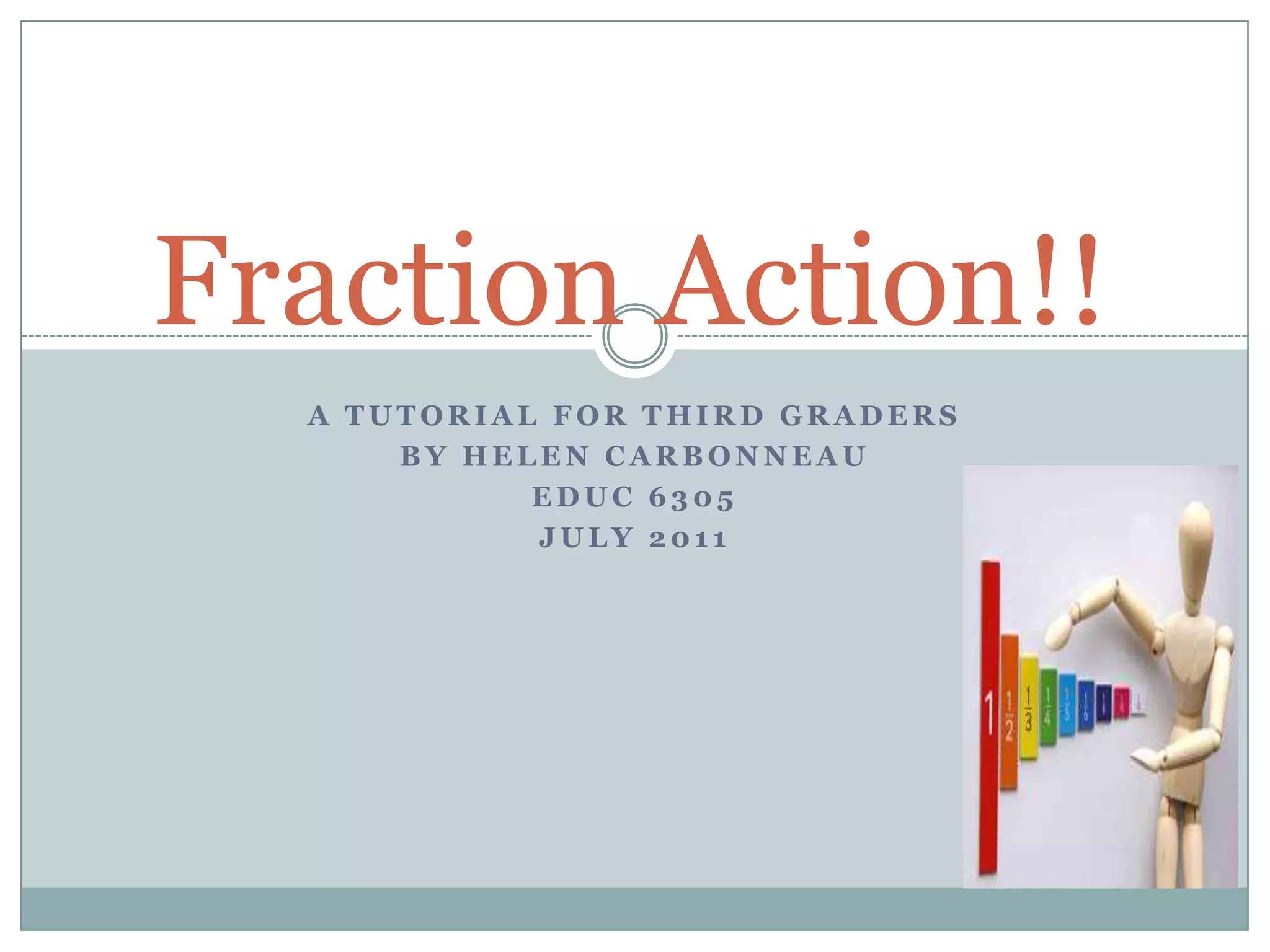
A Tutorial for Third GradersBy Helen CarbonneauEDUC 6305 July 2011Fraction Action!!
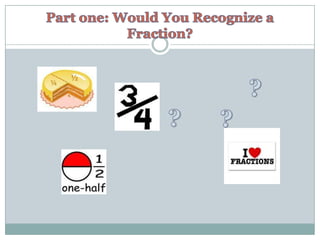
Part one: Would You Recognize a Fraction????
Which of these is a fraction?5/33/55/5All of the above
Which one is a fraction?5/33/5		5/5All of the above(Keep reading. Fractions are easier to understand when you can see them.)Surprise!!
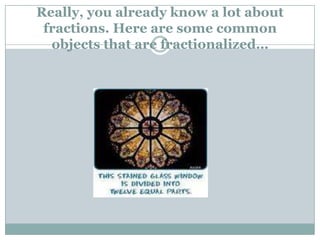
Really, you already know a lot about fractions. Here are some common objects that are fractionalized

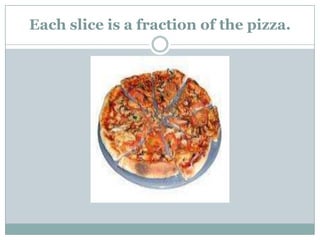
Each slice is a fraction of the pizza.
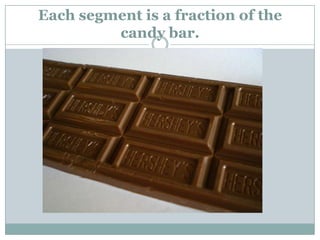
Each segment is a fraction of the candy bar.
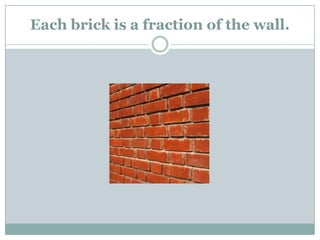
Each brick is a fraction of the wall.
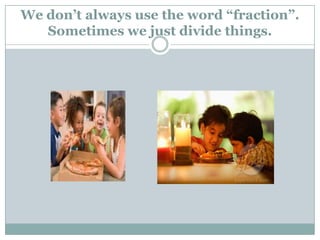
We don’t always use the word “fraction”. Sometimes we just divide things.
“Fraction” is the math word. But there are other words that mean the same thing:A small pieceA sliceA little bitMost of itA share ofThe lion’s shareA portion ofLeftovers and remainders
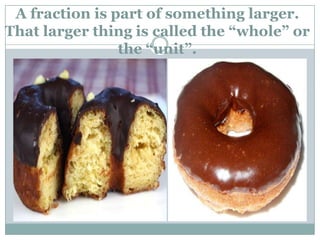
A fraction is part of something larger.  That larger thing is called the “whole” or the “unit”.
Did you like that picture?Here it is again

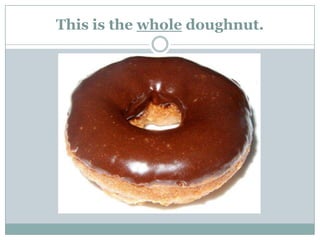
This is the wholedoughnut.
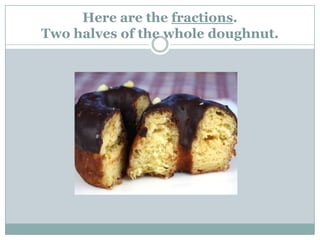
Here are the fractions.                                           Two halves of the whole doughnut.
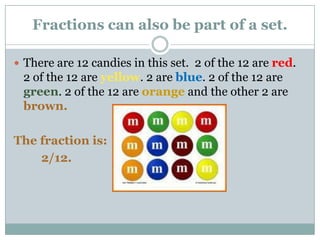
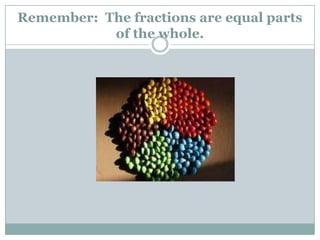
Fractions can also be part of a set.There are 12 candies in this set.  2 of the 12 are red.  2 of the 12 are yellow. 2 are blue. 2 of the 12 are green. 2 of the 12 are orange and the other 2 are brown.The fraction is:2/12.
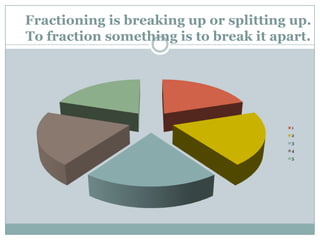
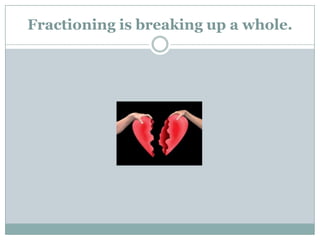
Fractioning is breaking up or splitting up. To fraction something is to break it apart.
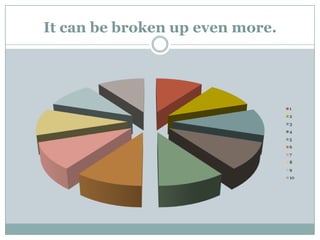
It can be broken up even more.
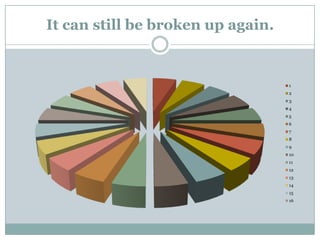
It can still be broken up again.
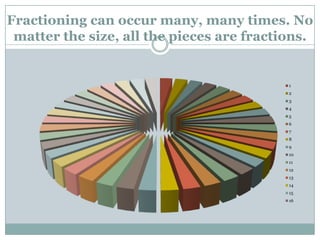
Fractioning can occur many, many times. No matter the size, all the pieces are fractions.
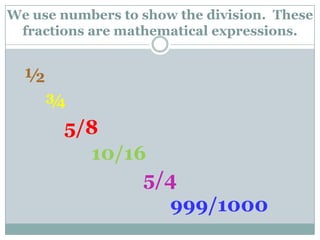
We use numbers to show the division.  These fractions are mathematical expressions.œ Ÿ 5/8 10/165/4               999/1000
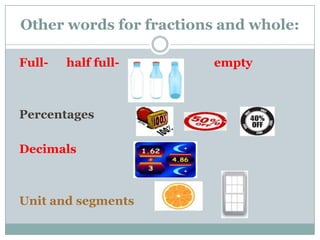
Other words for fractions and whole:Full-      half full-                               emptyPercentages        DecimalsUnit and segments
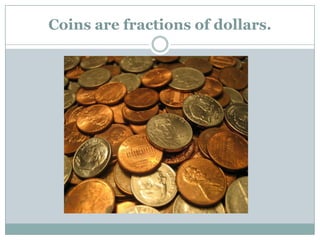
Coins are fractions of dollars.
End of Part OneCooperative group assignment:  In your group, read about “Animal Clutches” on p. 218 in your Student Reference Book.  In journals, write three observations about animal clutches. Bring Reference Books and Journals to Math group.In Math group, complete a parts-and-total chart using data from “Animal Clutches”.Assessment: At your desk, complete Math Boxes in Student Math Journal, p. 36.
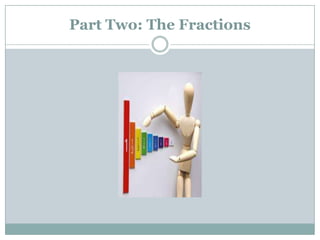
Part Two: The Fractions
Fractioning is breaking up a whole.
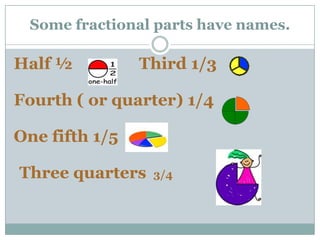
Some fractional parts have names.Half œ                Third 1/3 Fourth ( or quarter) 1/4                  One fifth 1/5 Three quarters 3/4                         
Money fractions have these names:Cent or penny (1 Âą)Nickel (5 Âą)Dime (10 Âą)Quarter (25 Âą)Half Dollar (50 Âą)
Remember:  The fractions are equal parts of the whole.
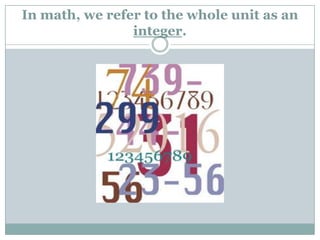
In math, we refer to the whole unit as an integer.
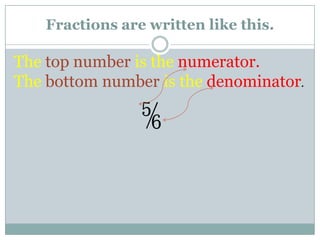
Fractions are written like this.  The top number is the numerator.The bottom number is the denominator.⅚
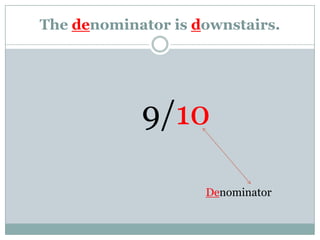
The denominator is downstairs.					9/10Denominator
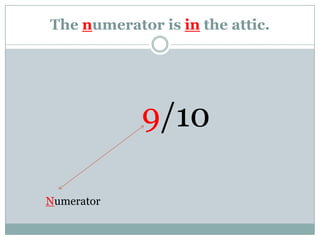
The numerator is in the attic.9/10Numerator
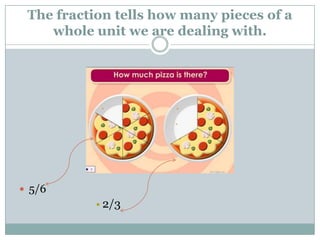
The fraction tells how many pieces of a whole unit we are dealing with.5/62/3
End of Part 2Journaling activity: Use geometry blocks (2 colors)to construct fractional models. Refer to the instructions at the table.Assessment: At your desk, write a paragraph in your journal about what your understanding of fractions.
Part three: Fun Fraction Sites
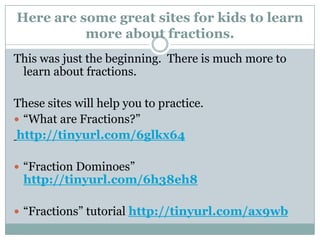
Here are some great sites for kids to learn more about fractions.This was just the beginning.  There is much more to learn about fractions.  These sites will help you to practice.“What are Fractions?”http://tinyurl.com/6glkx64“Fraction Dominoes” http://tinyurl.com/6h38eh8“Fractions” tutorial http://tinyurl.com/ax9wb
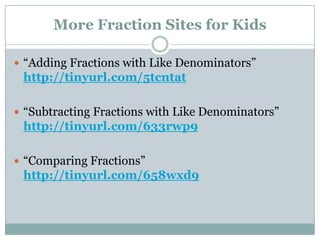
More Fraction Sites for Kids“Adding Fractions with Like Denominators” http://tinyurl.com/5tcntat“Subtracting Fractions with Like Denominators” http://tinyurl.com/633rwp9“Comparing Fractions” http://tinyurl.com/658wxd9
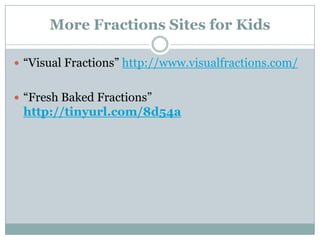
More Fractions Sites for Kids“Visual Fractions” http://www.visualfractions.com/“Fresh Baked Fractions” http://tinyurl.com/8d54a
West Virginia CSO referenceM.O.3.1.5 demonstrate an understanding of fractions as part of a whole/one and as part of a set/group using models and pictorial representations.Source: http://tinyurl.com/6camqbz

Fraction action!222

  • 1.
    A Tutorial forThird GradersBy Helen CarbonneauEDUC 6305 July 2011Fraction Action!!
  • 2.
    Part one: WouldYou Recognize a Fraction????
  • 3.
    Which of theseis a fraction?5/33/55/5All of the above
  • 4.
    Which one isa fraction?5/33/5 5/5All of the above(Keep reading. Fractions are easier to understand when you can see them.)Surprise!!
  • 5.
    Really, you alreadyknow a lot about fractions. Here are some common objects that are fractionalized

  • 6.
    Each slice isa fraction of the pizza.
  • 7.
    Each segment isa fraction of the candy bar.
  • 8.
    Each brick isa fraction of the wall.
  • 9.
    We don’t alwaysuse the word “fraction”. Sometimes we just divide things.
  • 10.
    “Fraction” is themath word. But there are other words that mean the same thing:A small pieceA sliceA little bitMost of itA share ofThe lion’s shareA portion ofLeftovers and remainders
  • 11.
    A fraction ispart of something larger. That larger thing is called the “whole” or the “unit”.
  • 12.
    Did you likethat picture?Here it is again

  • 13.
    This is thewholedoughnut.
  • 14.
    Here are thefractions. Two halves of the whole doughnut.
  • 15.
    Fractions can alsobe part of a set.There are 12 candies in this set. 2 of the 12 are red. 2 of the 12 are yellow. 2 are blue. 2 of the 12 are green. 2 of the 12 are orange and the other 2 are brown.The fraction is:2/12.
  • 16.
    Fractioning is breakingup or splitting up. To fraction something is to break it apart.
  • 17.
    It can bebroken up even more.
  • 18.
    It can stillbe broken up again.
  • 19.
    Fractioning can occurmany, many times. No matter the size, all the pieces are fractions.
  • 20.
    We use numbersto show the division. These fractions are mathematical expressions.œ Ÿ 5/8 10/165/4 999/1000
  • 21.
    Other words forfractions and whole:Full- half full- emptyPercentages DecimalsUnit and segments
  • 22.
  • 23.
    End of PartOneCooperative group assignment: In your group, read about “Animal Clutches” on p. 218 in your Student Reference Book. In journals, write three observations about animal clutches. Bring Reference Books and Journals to Math group.In Math group, complete a parts-and-total chart using data from “Animal Clutches”.Assessment: At your desk, complete Math Boxes in Student Math Journal, p. 36.
  • 24.
    Part Two: TheFractions
  • 25.
  • 26.
    Some fractional partshave names.Half œ Third 1/3 Fourth ( or quarter) 1/4                  One fifth 1/5 Three quarters 3/4                         
  • 27.
    Money fractions havethese names:Cent or penny (1 Âą)Nickel (5 Âą)Dime (10 Âą)Quarter (25 Âą)Half Dollar (50 Âą)
  • 28.
    Remember: Thefractions are equal parts of the whole.
  • 29.
    In math, werefer to the whole unit as an integer.
  • 30.
    Fractions are writtenlike this. The top number is the numerator.The bottom number is the denominator.⅚
  • 31.
    The denominator isdownstairs. 9/10Denominator
  • 32.
    The numerator isin the attic.9/10Numerator
  • 33.
    The fraction tellshow many pieces of a whole unit we are dealing with.5/62/3
  • 34.
    End of Part2Journaling activity: Use geometry blocks (2 colors)to construct fractional models. Refer to the instructions at the table.Assessment: At your desk, write a paragraph in your journal about what your understanding of fractions.
  • 35.
    Part three: FunFraction Sites
  • 36.
    Here are somegreat sites for kids to learn more about fractions.This was just the beginning. There is much more to learn about fractions. These sites will help you to practice.“What are Fractions?”http://tinyurl.com/6glkx64“Fraction Dominoes” http://tinyurl.com/6h38eh8“Fractions” tutorial http://tinyurl.com/ax9wb
  • 37.
    More Fraction Sitesfor Kids“Adding Fractions with Like Denominators” http://tinyurl.com/5tcntat“Subtracting Fractions with Like Denominators” http://tinyurl.com/633rwp9“Comparing Fractions” http://tinyurl.com/658wxd9
  • 38.
    More Fractions Sitesfor Kids“Visual Fractions” http://www.visualfractions.com/“Fresh Baked Fractions” http://tinyurl.com/8d54a
  • 39.
    West Virginia CSOreferenceM.O.3.1.5 demonstrate an understanding of fractions as part of a whole/one and as part of a set/group using models and pictorial representations.Source: http://tinyurl.com/6camqbz

Editor's Notes

  • #24 Everyday Math, grade 3. Math Boxes assess prior knowledge about fractions.