THE MARKETING
PLANJESSICA FARMER
Steps to take to
organize your way
to success
A MARKETING PLAN IS A WRITTEN DOCUMENT
COMPOSED OF:
Analysis of the current
marketing situation
Opportunities & Threats for
the firm
Marketing objectives &
Strategy specified in terms of
the four Ps
Projected income & other
financial statements
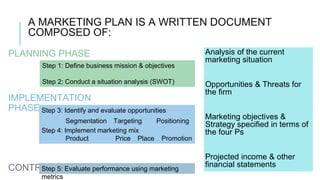
PLANNING PHASE
IMPLEMENTATION
PHASE
CONTROL PHASE
Step 1: Define business mission & objectives
Step 2: Conduct a situation analysis (SWOT)
Step 3: Identify and evaluate opportunities
Segmentation Targeting Positioning
Step 4: Implement marketing mix
Product Price Place Promotion
Step 5: Evaluate performance using marketing
metrics
DEFINE THE
BUSINESS
MISSION
The mission statement is a broad
description of a firm’s objectives and the
scope of activities it plans to undertake,
attempts to answer two main questions:
> What type of business are it plans to
undertake?
> What do we need to do to accomplish
our goals and objectives?
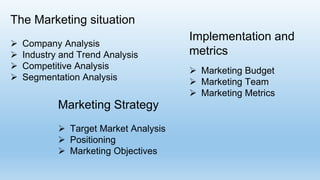
The Marketing situation
 Company Analysis
 Industry and Trend Analysis
 Competitive Analysis
 Segmentation Analysis
Marketing Strategy
 Target Market Analysis
 Positioning
 Marketing Objectives
Implementation and
metrics
 Marketing Budget
 Marketing Team
 Marketing Metrics
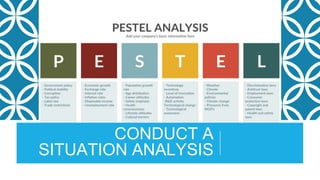
CONDUCT A
SITUATION ANALYSIS
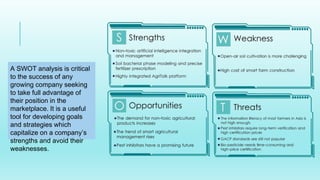
A SWOT analysis is critical
to the success of any
growing company seeking
to take full advantage of
their position in the
marketplace. It is a useful
tool for developing goals
and strategies which
capitalize on a company’s
strengths and avoid their
weaknesses.
IDENTIFY & EVALUATE
OPPORTUNITIES USING STP
STP is used to identify
opportunities to
increase sales and
profits through
targeted, measured
planning.
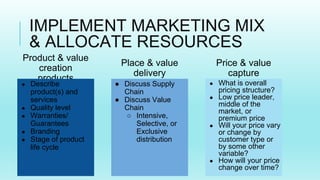
IMPLEMENT MARKETING MIX
& ALLOCATE RESOURCES
Product & value
creation
products
● Describe
product(s) and
services
● Quality level
● Warranties/
Guarantees
● Branding
● Stage of product
life cycle
Price & value
capture
● What is overall
pricing structure?
● Low price leader,
middle of the
market, or
premium price
● Will your price vary
or change by
customer type or
by some other
variable?
● How will your price
change over time?
Place & value
delivery
● Discuss Supply
Chain
● Discuss Value
Chain
○ Intensive,
Selective, or
Exclusive
distribution
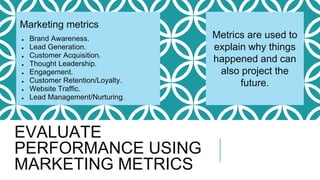
EVALUATE
PERFORMANCE USING
MARKETING METRICS
Metrics are used to
explain why things
happened and can
also project the
future.
Marketing metrics
● Brand Awareness.
● Lead Generation.
● Customer Acquisition.
● Thought Leadership.
● Engagement.
● Customer Retention/Loyalty.
● Website Traffic.
● Lead Management/Nurturing.
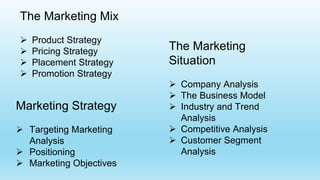
The Marketing
Situation
 Company Analysis
 The Business Model
 Industry and Trend
Analysis
 Competitive Analysis
 Customer Segment
Analysis
Marketing Strategy
 Targeting Marketing
Analysis
 Positioning
 Marketing Objectives
The Marketing Mix
 Product Strategy
 Pricing Strategy
 Placement Strategy
 Promotion Strategy
THE END Make your own marketing plan
now!

Foundations of marketing presentation

  • 1.
    THE MARKETING PLANJESSICA FARMER Stepsto take to organize your way to success
  • 2.
    A MARKETING PLANIS A WRITTEN DOCUMENT COMPOSED OF: Analysis of the current marketing situation Opportunities & Threats for the firm Marketing objectives & Strategy specified in terms of the four Ps Projected income & other financial statements PLANNING PHASE IMPLEMENTATION PHASE CONTROL PHASE Step 1: Define business mission & objectives Step 2: Conduct a situation analysis (SWOT) Step 3: Identify and evaluate opportunities Segmentation Targeting Positioning Step 4: Implement marketing mix Product Price Place Promotion Step 5: Evaluate performance using marketing metrics
  • 3.
    DEFINE THE BUSINESS MISSION The missionstatement is a broad description of a firm’s objectives and the scope of activities it plans to undertake, attempts to answer two main questions: > What type of business are it plans to undertake? > What do we need to do to accomplish our goals and objectives?
  • 4.
    The Marketing situation Company Analysis  Industry and Trend Analysis  Competitive Analysis  Segmentation Analysis Marketing Strategy  Target Market Analysis  Positioning  Marketing Objectives Implementation and metrics  Marketing Budget  Marketing Team  Marketing Metrics
  • 5.
  • 6.
    A SWOT analysisis critical to the success of any growing company seeking to take full advantage of their position in the marketplace. It is a useful tool for developing goals and strategies which capitalize on a company’s strengths and avoid their weaknesses.
  • 7.
    IDENTIFY & EVALUATE OPPORTUNITIESUSING STP STP is used to identify opportunities to increase sales and profits through targeted, measured planning.
  • 8.
    IMPLEMENT MARKETING MIX &ALLOCATE RESOURCES Product & value creation products ● Describe product(s) and services ● Quality level ● Warranties/ Guarantees ● Branding ● Stage of product life cycle Price & value capture ● What is overall pricing structure? ● Low price leader, middle of the market, or premium price ● Will your price vary or change by customer type or by some other variable? ● How will your price change over time? Place & value delivery ● Discuss Supply Chain ● Discuss Value Chain ○ Intensive, Selective, or Exclusive distribution
  • 9.
    EVALUATE PERFORMANCE USING MARKETING METRICS Metricsare used to explain why things happened and can also project the future. Marketing metrics ● Brand Awareness. ● Lead Generation. ● Customer Acquisition. ● Thought Leadership. ● Engagement. ● Customer Retention/Loyalty. ● Website Traffic. ● Lead Management/Nurturing.
  • 10.
    The Marketing Situation  CompanyAnalysis  The Business Model  Industry and Trend Analysis  Competitive Analysis  Customer Segment Analysis Marketing Strategy  Targeting Marketing Analysis  Positioning  Marketing Objectives The Marketing Mix  Product Strategy  Pricing Strategy  Placement Strategy  Promotion Strategy
  • 11.
    THE END Makeyour own marketing plan now!