Journal of Science and Technology
ISSN: 2456-5660 Volume 5, Issue 4, July-August 2020
www.jst.org.in DOI: https://doi.org/10.46243/jst.2020.v5.i4.pp173-187
Published by: Longman Publishers 173 | Page
Formulation, Development and Evaluation of Lopinavir Loaded
Polymeric Micelles
1
Shilpa Praveen. Chaudhari, 2
Nikita Manik. Handge
1,2
(DepartmentofPharmaceutics,Dr.D.Y.P.CollegeofPharmacy,Akurdi,Pune, Maharashtra,India)
2
Corresponding Author: nikitahandge@gmail.com
To Cite this Article
Shilpa Praveen. Chaudhari, 2
Nikita Manik. Handge, “Formulation , Development and Evaluation of Lopinavir
Loaded Polymeric Micelles”, Journal of Science and Technology, Vol. 05, Issue 04, July-August 2020, pp173-187
Article Info
Received: 05-04-2020 Revised: 08-07-2020 Accepted: 10-07-2020 Published: 12-07-2020
Abstract: Lopinavir is the anti HIV drug which is used to treat the HIV-1 infection. In this study we used the single
lopinavir drug to formulate the polymeric micelle. This study was done with the two main objectives as
Objective:first to enhance the solubility and bioavailability of the BCS class IV drug and second to avoid the
combination of lopinavir rand ritonavir and use single lopinavir to preparation of polymeric micelle also to avoid
the disadvantages related to the oral administration. Method:The different pluronic (F188 &F127) and co-solvent
(Tween80) were chosen & the micelles were prepared by using different Drug: polymer ratio with or without co-
solvent and drug Lopinavir. Formulations were been characterized by critical micelle concentration(CMC) value,
micellesize,DSC, XRD, loading efficiency, % drug loading and stability.Result:Mixed micelle (hydrophobic
&hydrophilic) obtained from optimized batch shows the highest entrapment of 29%with the pluronic F68 with the
use of co-solvent and the vesicle size of 0.156µm the DSC, FTIR, XRD study was also done for lopinavir and
optimized formulation .Conclusion: The pluronic F68 with the co-solvent showed fairly high entrapment efficiency,
loading capacity than the mixed Pluronic in combination.
Keywords:Pluronic F68, Pluronic F127, Tween 80, Micelles, Solubilization
_____________________________________________________________________________________
I. Introduction
Pharmaceutical technology, have attracted the incredible attraction in the development of theefficient in drug
delivery systems from last two decades. The principal reason for the implausible growth of the drug technology is
the best prospect for achieving large improvement over the current therapies will occur when there will be improve
in the delivery of the exiting drug. This is necessary because the drug molecule should overcome the unwanted
barriers before reaching the target site within the body, where they can show its biological role [1]
.
There are some of the serious problems that are associated with the therapeutic application of the drugs that are
hydrophobic, poorly water soluble agent, since the low water solubility leads to result in the low absorption which
lead to low bioavailability.[3]
to overcome this problems the promising approach is the application of the drug loaded
nano sized drug carriers, such as the noisome, liposome, nanoparticles, polymeric micelles etc.[4,5]
Polymeric micelles are the nano sized particles which are the assemblies of the amphiphilic block copolymers
exhibiting an unique core-corona structure. The outer hydrophilic layer is very important to stabilize the micelle in
the aqueous environment and after the systemic administration it minimizes the clearance by the mononuclear
phagocytic system. Where the inner layer is hydrophobic core whose function is to reservoir the drug. [6]
The
assembled polymers are in the dynamic equilibrium with the free unimers, in contrast to the polymeric
nanoparticles. The polymeric micelles are usually smaller in size (10-100nm).
Block copolymers are available as linear triblocks of type ABA and BAB (pluronics®) which are made of
polyethylene oxide (POE) polypropylene oxide (PPO) with varying in the hydrophilic and lipophilic balance (HLB).
These then self-assemble polymeric amphiphile to form nano size micelles (aggregates)in the aqueous solution and
exhibit a unique core shell with a fairly low polydispersity which is strongly depend on the temperature ,
concentration with spherical, rod like morphology [8,9]
. Pluronic® aggregates have the micelle core that consist of a
hydrophobic poly(polypropylene oxide) or PPO block surrounded by the heavily hydrated, hydrophilic
poly(ethylene oxide) or POE block[9]
the pluronic micelles have the slower rate of dissociation and allow the
Formulation, Development and Evaluation of Lopinavir Loaded PolymericMicelles
174 | Page
retention of the loaded drug for the longer duration than the other conventional surfactant based drug delivery
systems, and hence these surfactants may allow the higher accumulation of the active species at the target site and
thus the Pluronics® have found the significant application in the delivery of the drug.[10,11]
The size, solubilizing
capacity and the morphology of the micelles depends on the different factors such as the chemical structure of
amphiphile and the drug molecule, temperature, ionic strength and pH[12]
. The solubilizing power of the polymeric
surfactant is considered to be better than conventional surfactant due to their lower CMC and the thermal stability of
micelles.[13]
The different block polymers can be used to form the polymeric micelles.[14]
In this study we used block co-polymer
such as Pluronic F68, Pluronic F127, and Tween 80 as a co-solvent which are difunctional block copolymer
surfactant maintaining the primary hydroxyl group from BASE.
HIV is the Human immunodeficiency virus that infects the cell of the immune system by destroying them or
impairing their function. Infection with this virus results in the progressive deterioration of the immune system
which leads to the immune deficiency. The immune system is said to be deficient when it can no longer fight against
infection or disease. The advanced stage of HIV is AIDS which can be transmitted to other people and in order to
prevent this, the quick management is required. Intravenous administration allows direct transport of drug into blood
thus provide unique feature and better option to target drug (eg- Lopinavir).
II. Need
• HIV is an affective disorder, in which HIV virus targets and alters the immune system, increasing the risk of
infections and diseases in human. It is a chronic disease and usually requires the long term treatment in order to
prevent the advance stage of HIV that is AIDS.
• According to WHO about 37.9 million people suffer from HIV worldwide from which 36.2 million people are
adult and 1.7 million people are children.
• First line drug treatment given to treat the HIV are the Antiretroviral (ARV) drugs that are Tenofovirfumarate
(TDF) + Efavirenz (EFV) 600 mg which have the side effects like depression, backache, dizziness, vomiting, fever
etc.
• Lopinavir is the Antiretroviral drug, with the protease inhibitor class, with 98% pgp binding and also
undergoes the first pass metabolism, Lopinavir is BSC class IV drug with the low solubility and low permeability
with bioavailability less that 5%.
• The half- life of the drug is 2to 3 hours and it’s eliminated rapidly mainly by hepatobiliary processes and
excreted via faeces .
• Lopinavir is given as a second line treatment as a monotherapy in the treatment of HIV virus.
• Thus its necessary to increase the solubility as well as permeability of drug to increase the high % of drug at
the site of action that gradually will lead to increase the bioavailability of drug.
• It have the adverse action like vomiting, headache, stomach upset when given orally.
• Thus the polymeric micelle are used to increase the permeability , solubility which gradually increase the
bioavailability of drug at site of action and also the polymers used will help overcomes the effect of pgp binding of
drug as the polymer used have the action of pgp inhibition. And also leads to avoid the rapid metabolism of drug by
cytochrome P450 and CYP 3A4 isoenzyme present in liver.
III. Material and Method
3.1 Materials
Pluronic F68, Pluronic F127 and Tween 80 were purchased from Sigma Aldrich Lopinavir drug was purchased from
Chika Pvt.LtdAhmadabad all the other chemicals and the components used were of analytical grade.
3.2 Method
3.2.1 Preformulation study
Preformulation study is the primary stage in the objective development of the dosage form of drug. It’s used to
characterize the drug for its physical and the chemical properties and also used to determine the compatibility of
the drug and the excipient. [26]
3.2.2. Detection of Melting point
Melting point of substance is defined as the temperature at which the solid phase goes in equilibrium with its liquid
phase. Its help determination and compound identification or in estimation of its purity. Pure substance show sharp
melting points, while impurity will melt over a broad range of temperature.
Melting point of Lopinavir was determined by taking a small amount of sample in a capillary tube closed at one end
and placed in Thiele’s melting point apparatus. [26]
Formulation, Development and Evaluation of Lopinavir Loaded PolymericMicelles
175 | Page
3.2.3 Study of Block Polymer for Solubilization (CMC)
The surface tension method was used to determine the CMC of Pluronic F68, Pluronic F127 polymers and Tween
80. The CMC of the block copolymer was determined in the pure water at 25º. The determination of CMC for
Pluronics was based on the change in the surface tension with surface concentration. Stalagnometer was used to
measure the surface tension. Each surface tension was been repeated for three times and the typical error was less
than 5%.[1]
IV. Preparation Of The Drug-Loaded Polymeric Micelles
Polymeric micelle containing Lopinavir drug were prepared by direct dissolution technique using block
copolymer(pluronic F127 and Pluronic F68) and the co-solvent (Tween 80) the co-polymers were used alone as well
as in combination (1:1) with or without co-solvent. The Block co-polymer were dissolved completely in the distilled
water and then Lopinavir drug was added to the polymer solution and then polymeric solution was continuously
stirred using the mechanical stirrer at room temperature at different rpm for 6hrs to optimize the RPM for the
preparation of the micelles. The non-entrapped drug was separated by the filtration of the micelle solution through
the 0.2μm membrane filter. Then the filtrate solution was then diluted 10 times with the polymeric solution. The
Lopinavir concentration in the filtrate solution was then determined by measuring the UV absorbance at λ max
257nm.[17]
Independent variable parameter Levels
-1 +1
A Drug :polymer Ratio 1 5
B Time of stirring 8 36
C
Type of block co-
polymer F127 F68 F68:F127
D Effect of Co-solvent With Without
Dependent variable
Y1 %Drug Loading
Y2 Particle size
Ru
Run
Factor 1
A- Drug: Polymer Ratio
Factor 2
B-Time of stirring
Factor 3
C -Type of block copolymer
Factor 4
D – Effect of co-solvent
1 4.68 28.72 F68 With
2 1.13924 23.82 F127 With
3 1 36 F68 With
4 2.8 17.1 F68:F127(1:1) With
5 1 30.54 F68:F127(1:1) Without
Formulation, Development and Evaluation of Lopinavir Loaded PolymericMicelles
176 | Page
6 3.2 12.06 F68:F127(1:1) Without
7 1 8 F68:F127(1:1) With
88 8 5 13.6 F68:F127(1:1) With
9 4.68 28.72 F68 With
10 5 8 F68 Without
11 2.22 26.48 F68 Without
12 4.86 19.9 F127 Without
13 2.8 32.22 F68:F127(1:1) With
14 2.22 26.48 F68 Without
15 2.43205 11.5 F68 Without
16 2.94 35.3 F127 With
17 1.68 10.38 F68 With
18 2.48 36 F127 Without
19 3.08 8.7 F127 Without
20 3.52 8 F127 With
21 1 8 F127 Without
22 1.13924 23.82 F127 With
23 3.2 12.06 F68:F127(1:1) Without
24 5 31.94 F68:F127(1:1) With
25 5 36 F68:F127(1:1) Without
26 5 36 F127 With
27 1.68 10.38 F68 With
V. Optimization of The Polymeric Micelle
Twenty seven lopinavir loaded polymeric micelles formulation were prepared according the Design of expert12
software as shown in the table.
VI. Evaluation Of The Polymeric Micelles
6.1 Drug Entrapment
The filtered solution of the polymeric micelle containing drug was diluted 10 times with methanol. Blank
experiment without lopinavir was done to determine the solubility of the drug in water. The lopinavir concentration
in the polymeric solution was determined by measuring the UV absorbance at λmax 257nm.After estimating the
drug content by using UV, the %entrapped drug can be calculated by fallowing equation [18]
% Drug Entrapped = (a/b)*100
Drug weight in the micelle = (a / (b+c)) *100
Where a is the amount of the drug loaded in the micelle (mg), b is the amount of drug used in the micelle
preparation (mg) and c is the amount of the polymer used in the micelle preparation (mg).
Formulation, Development and Evaluation of Lopinavir Loaded PolymericMicelles
177 | Page
6.2 Determination of particle size
The micelle size determination were done by using the digital microscope 1ml of micelle solution was diluted 10 ml
of water slowly to form dispersion . Diluted sample is slowly placed into slide for measuring the globule size.
6.3 Stability Studies
Stability study of the polymeric micelles was done by the visual inspection as well as the analytical measurement for
the drug content determination. For this study the lyophilized and the aqueous solution of the Lopinavir loaded
polymeric micelles were placed in the stability chamber at 25±2ºand 60 % RH for three months. Lyophilized powder
was placed in 2ml Eppendorf tubes and the aqueous solution was placed in the 5ml bottle with lid .The sample were
taken to determine the drug content at the beginning and at the end of the 3 months. The drug content was measure
by UV spectroscopy by diluting the polymeric solution and lyophilized sample into methanol and then determined
for the drug content.[10]
VII. Characterization Of The Lyophilized Lopinavir Loaded Polymeric Micelle
Solution
7.1 FTIR study of lyophilized formulation
The lyophilized formulation FTIR was determined by using the Shimadzu, IRAffinity-1s,and Japan. The sample was
laced in the sample holder and the scanning was performed between 4000cm-1
to 400cm-1
range.
7.2 Differential Scanning calorimetry (DSC)
The molecular state of the drug in the lyophilized formulation was evaluated by performing DSC analysis. The DSC
curve of the sample was obtained by the differential scanning calorimeter. The sample of 3mg was placed in the
standard aluminium pans, and dry nitrogen was used as the effluent gas. The sample was scanned at the temperature
rpm speed of 5ºC/min and the heat flow from 0 to 280ºC.
7.3 XRD study of lyophilized formulation
The XRD pattern of the pure drug and the lyophilized formulation were obtained using X- Ray diffractometry. The
measuring conditions were as fallow: CuK radiation, nickel filtered, graphite monochromatic; 45kV voltage and
40mA current with X’celerrator detector. Sample were runed at 1º (2ɵ) min-1
from 3º to 45º (2ɵ)
VIII. Result And Discussion
8.1 Organoleptic Properties Of Drug
The drug was characterized for the colour, odour, taste appearance and the result was recorded using the descriptive
terminology, and the result is shown in table below:
Table 1- Organoleptic property
Sr.No Parameter Observation
1 Colour White
2 Appreance White crystalline powder
a. Solubility study of Drug
Table 2- solubility study
Sr.No Chemicals Result
1 Ethanol 20mg/ml
Formulation, Development and Evaluation of Lopinavir Loaded PolymericMicelles
178 | Page
2 Dimethyl sulfoxide (DMSO) 14mg/ml
3 Dimethyl Formamide (DMF) 14mg/ml
4 Water 7.7 X 10⁻³
mg/L
8.3 Melting point of Drug
Table 3- Melting Point
Property Observation
Melting point
• By Thiele’s Tube method
Reported Observed
124-1270
C 1260
C
N=3±SD
8.4 Determination of critical micelle concentration
The critical micelle concentration CMC was determined by carrying out the surface tension method by using the
stalagnometer. The drop count method .as carried out by using the different series of pluronic concentration of F127,
F68 as well as tween 80. The obtained critical micelle concentration value of polymer in aqueous solution was found
to be 4mg/ ml, 0.039 mg/ml and 13mg/lit for pluronic F68, pluronic F127 and tween 80 respectively
8.5 Drug polymer computability study
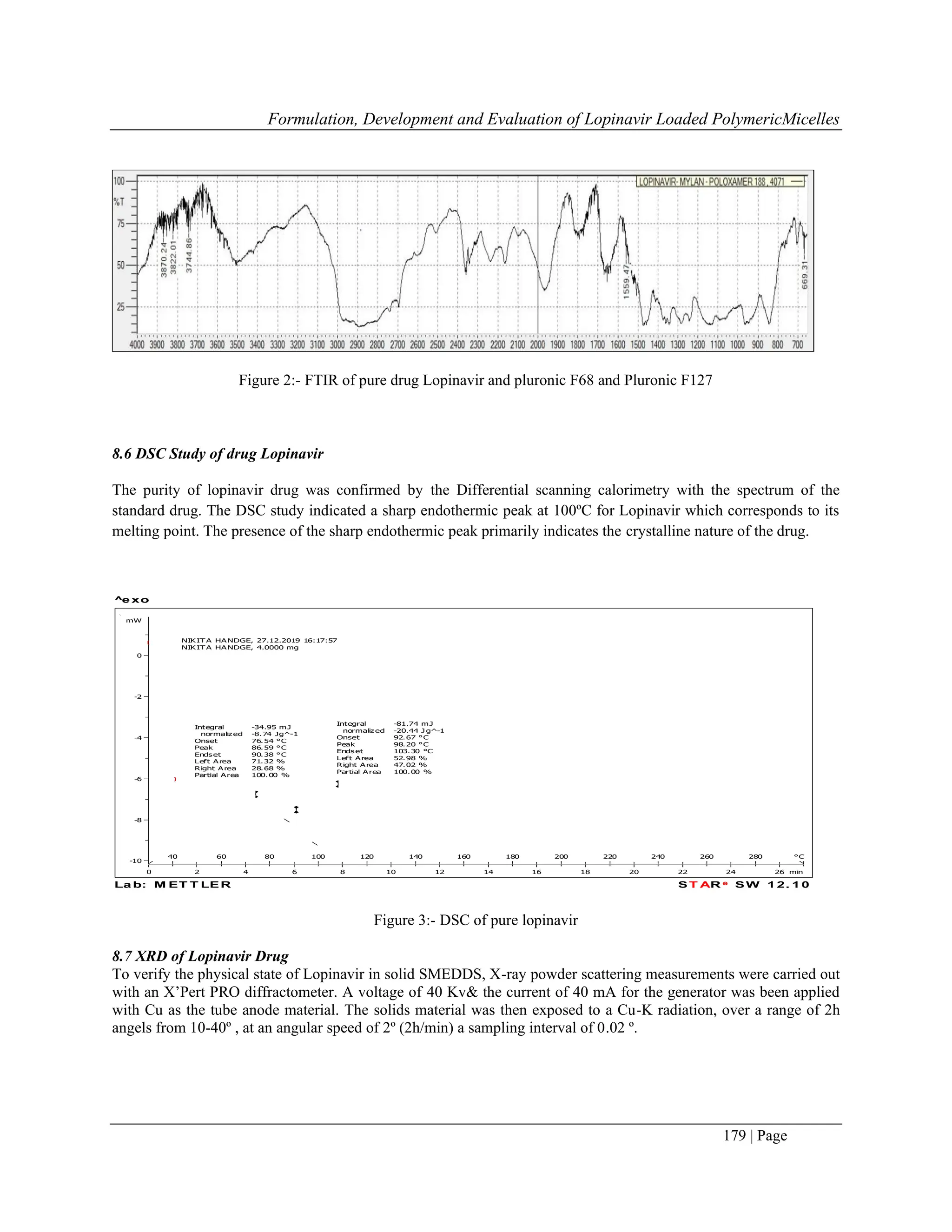
The drug polymer compatibility plays the very important role in any formulation. The pure drug Lopinavir and the
pluronic F68 and F127 were mixed togetherwith IR grade KBr and were scanned over the range 400-4500cm-1
using
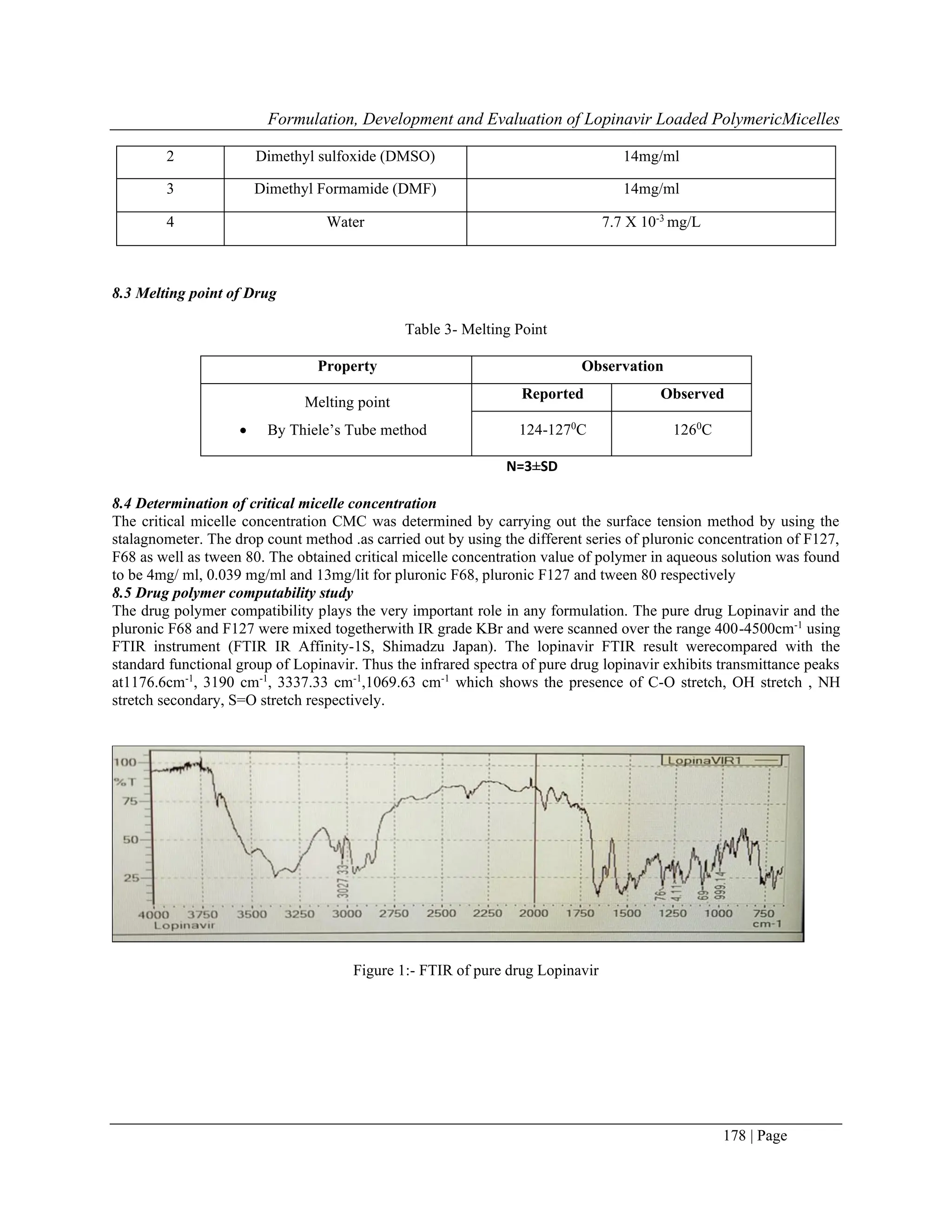
FTIR instrument (FTIR IR Affinity-1S, Shimadzu Japan). The lopinavir FTIR result werecompared with the
standard functional group of Lopinavir. Thus the infrared spectra of pure drug lopinavir exhibits transmittance peaks
at1176.6cm-1
, 3190 cm-1
, 3337.33 cm-1
,1069.63 cm-1
which shows the presence of C-O stretch, OH stretch , NH
stretch secondary, S=O stretch respectively.
Figure 1:- FTIR of pure drug Lopinavir
Formulation, Development and Evaluation of Lopinavir Loaded PolymericMicelles
179 | Page
Figure 2:- FTIR of pure drug Lopinavir and pluronic F68 and Pluronic F127
8.6 DSC Study of drug Lopinavir
The purity of lopinavir drug was confirmed by the Differential scanning calorimetry with the spectrum of the
standard drug. The DSC study indicated a sharp endothermic peak at 100ºC for Lopinavir which corresponds to its
melting point. The presence of the sharp endothermic peak primarily indicates the crystalline nature of the drug.
Figure 3:- DSC of pure lopinavir
8.7 XRD of Lopinavir Drug
To verify the physical state of Lopinavir in solid SMEDDS, X-ray powder scattering measurements were carried out
with an X’Pert PRO diffractometer. A voltage of 40 Kv& the current of 40 mA for the generator was been applied
with Cu as the tube anode material. The solids material was then exposed to a Cu-K radiation, over a range of 2h
angels from 10-40º , at an angular speed of 2º (2h/min) a sampling interval of 0.02 º.
Integral -34.95 mJ
normaliz ed -8.74 Jg^-1
Onset 76.54 °C
Peak 86.59 °C
Ends et 90.38 °C
Left Area 71.32 %
Right Area 28.68 %
Partial Area 100.00 %
Integral -81.74 mJ
normaliz ed -20.44 J g^-1
Onset 92.67 °C
Peak 98.20 °C
Ends et 103.30 °C
Left Area 52.98 %
Right Area 47.02 %
Partial Area 100.00 %
NIK IT A HANDGE, 27.12.2019 16:17:57
NIK IT A HANDGE, 4.0000 mg
mW
-10
-8
-6
-4
-2
0
min
°C
40 60 80 100 120 140 160 180 200 220 240 260 280
0 2 4 6 8 10 12 14 16 18 20 22 24 26
^e xo
S T AR e S W 1 2. 1 0
La b: M ET T LE R
Formulation, Development and Evaluation of Lopinavir Loaded PolymericMicelles
180 | Page
Figure 4:- XRD of Lopinavir drug
8.8 Effect Of Particle Size
ANOVA test for observed data of Particle size indicates that the quadratic model was significant and fitting for the
data. The model was found to be significant.
Response P value F value Equation Significance
Particle size 0.0043 4.94
+0.1835-0.0024A-
0.0001B+0.0075C[1]-
0.0294C[2]+0.0108D-
0.0398AB+0.0136AC[1]-
0.0097AC[2]-0.0355AD-
0.0122BC[1]+0.0003BC[2]-
0.0080BD-
0.0132C[1]D+0.0226C[2]D
significant
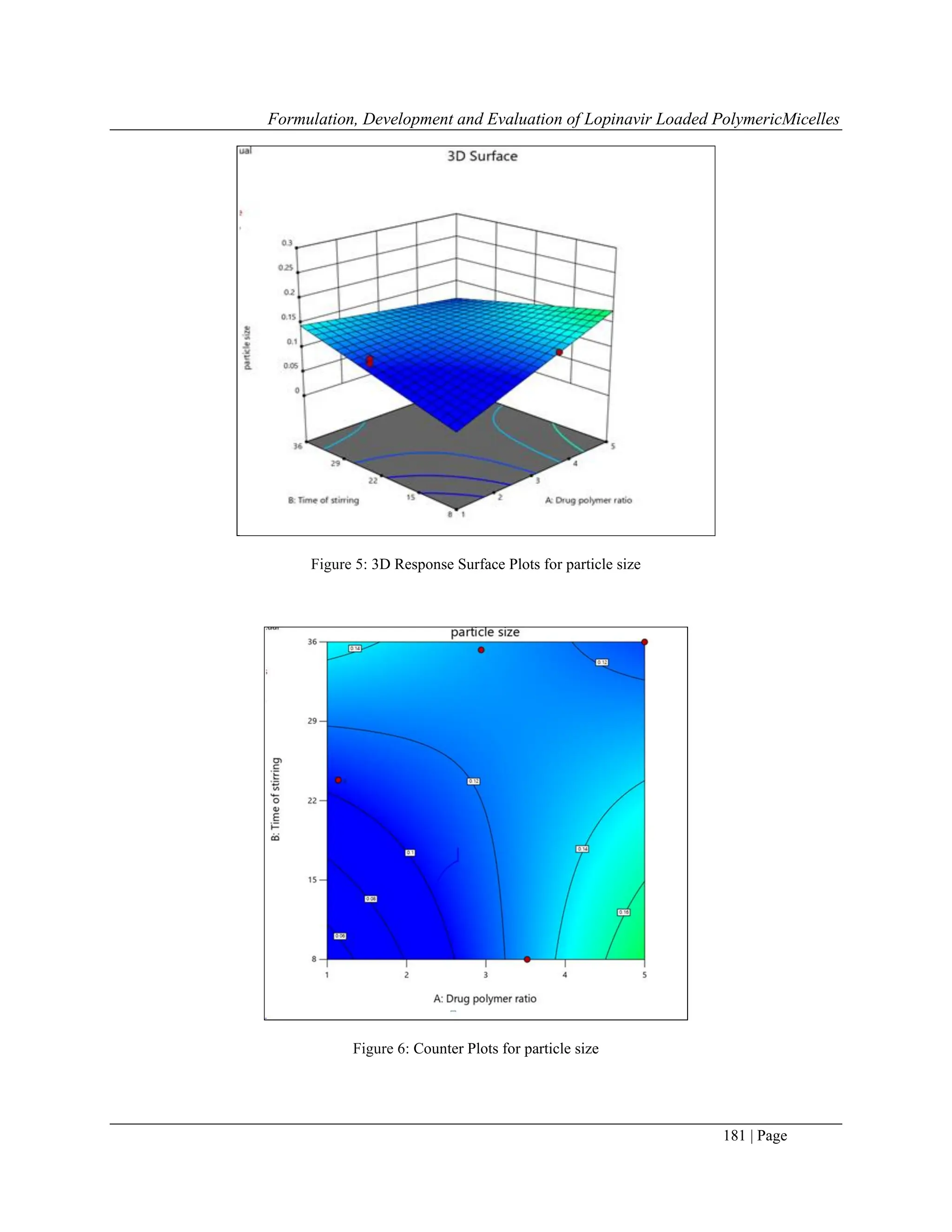
The particle size of the all the polymeric micelle batches were found between ranges of 0.1nm ± 0.28nm. From the
result obtained from the Response surface plot was as found that the particle size of the formed micelle using
pluronic F127 was larger in size as compared to the particle size of micelles prepared by using Pluronic F68.It was
found that the micelle size increases as the length of the PO and EO chain in the pluronic increases and their ratios
are related to the mean diameter of the Pluronics micelles.[19]
This suggests that the obtained result from the
response surface graph showed that the particle size of micelle formed using pluronic F68 was smaller in size as
compared to pluronic F127.
Formulation, Development and Evaluation of Lopinavir Loaded PolymericMicelles
181 | Page
Figure 5: 3D Response Surface Plots for particle size
Figure 6: Counter Plots for particle size
Formulation, Development and Evaluation of Lopinavir Loaded PolymericMicelles
182 | Page
8.9 Effect On Entrapment Efficiency
ANOVA test for observed data of the entrapment efficiency for the drug shows that the quadratic model was
significant and fitting for the data
Response P value F value Equation Significance
% drug loading < 0.0001 24.27
+17.49-1.96A-0.4553B-
0.4553C[1]+0.8345C[2] -
2.43D+1.56AB-
1.08AC[1]+0.7891AC[2]+2.0
1AD-
2.16BC[1]+2.57BC[2]+0.5574
BD-1.26C[1]D-0.3140C[2]D
significant
The %Entrapment of the drug in all the polymeric micelle batches was found between 12% ± 28%. The result
obtained from the Response Surface methods showed that the highest % entrapment of the drug was found by using
the binary mixture of pluronic F68 and co-solvent Tween 80.By comparison with the micelle that were prepared
with the use of pluronic F127 individual as well as with combination of both the pluronic F127:F68 (in the ratio of
1:1) with and without use of co-solvent showed the low entrapment of the drug and also concluded that the
comparison with the micelles that were prepared with the low the low molecular weight surfactant those polymeric
micelles were more stable, also exhibit the remarkable low cmc value, thus due to this it indicated a strong tendency
towards the formation of the aggregates and also show the increase in stability of micelle in the solution on the
dilution[20]
. It was also noted that the micelles are been extreme diluted before i.v injection [20]
.The better entrapment
found using tween 80 solvent might be due to the long chain polymer when forms the polymer lead to the formation
of gaps between them this might be due to the repel in the chain molecule or due to steric hindrance that occurs
which causes the chain not forming the compact spherical shape and thus leads to form the gaps in between it the
use of tween 80 has the small molecular chain that seals the gap between it and thus leads to prevent the leakage of
the drug in between them and thus give the good entrapment of drug.
Figure 7: 3D Response Surface Plots for Entrapment efficiency of Drug
Formulation, Development and Evaluation of Lopinavir Loaded PolymericMicelles
183 | Page
Figure 8: Counter Plots for Entrapment efficiency of Drug
IX. Desirability and Optimized Batch
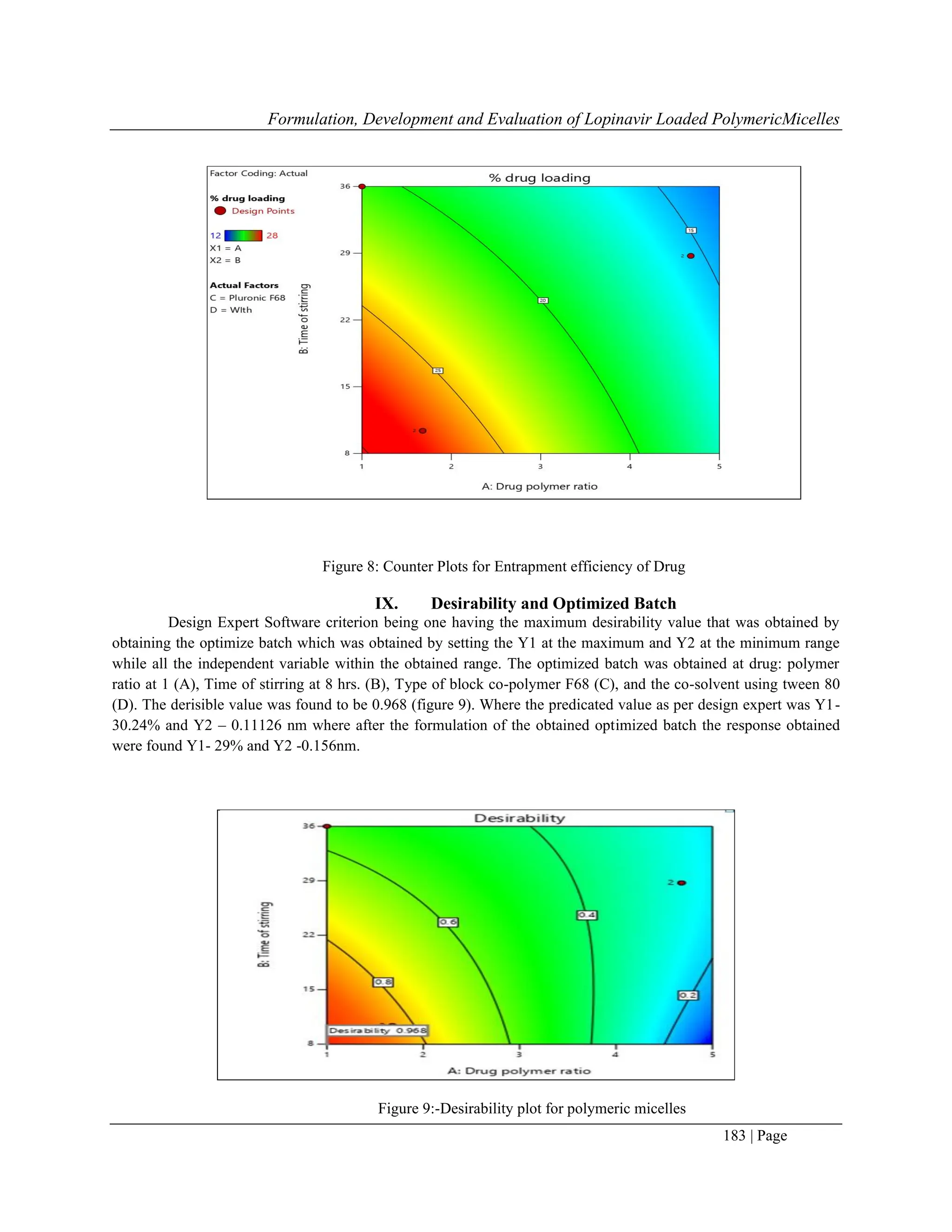
Design Expert Software criterion being one having the maximum desirability value that was obtained by
obtaining the optimize batch which was obtained by setting the Y1 at the maximum and Y2 at the minimum range
while all the independent variable within the obtained range. The optimized batch was obtained at drug: polymer
ratio at 1 (A), Time of stirring at 8 hrs. (B), Type of block co-polymer F68 (C), and the co-solvent using tween 80
(D). The derisible value was found to be 0.968 (figure 9). Where the predicated value as per design expert was Y1-
30.24% and Y2 – 0.11126 nm where after the formulation of the obtained optimized batch the response obtained
were found Y1- 29% and Y2 -0.156nm.
Figure 9:-Desirability plot for polymeric micelles
Formulation, Development and Evaluation of Lopinavir Loaded PolymericMicelles
184 | Page
X. Characterization of The Lyophilized Lopinavir Loaded Polymeric Micelle
Solution
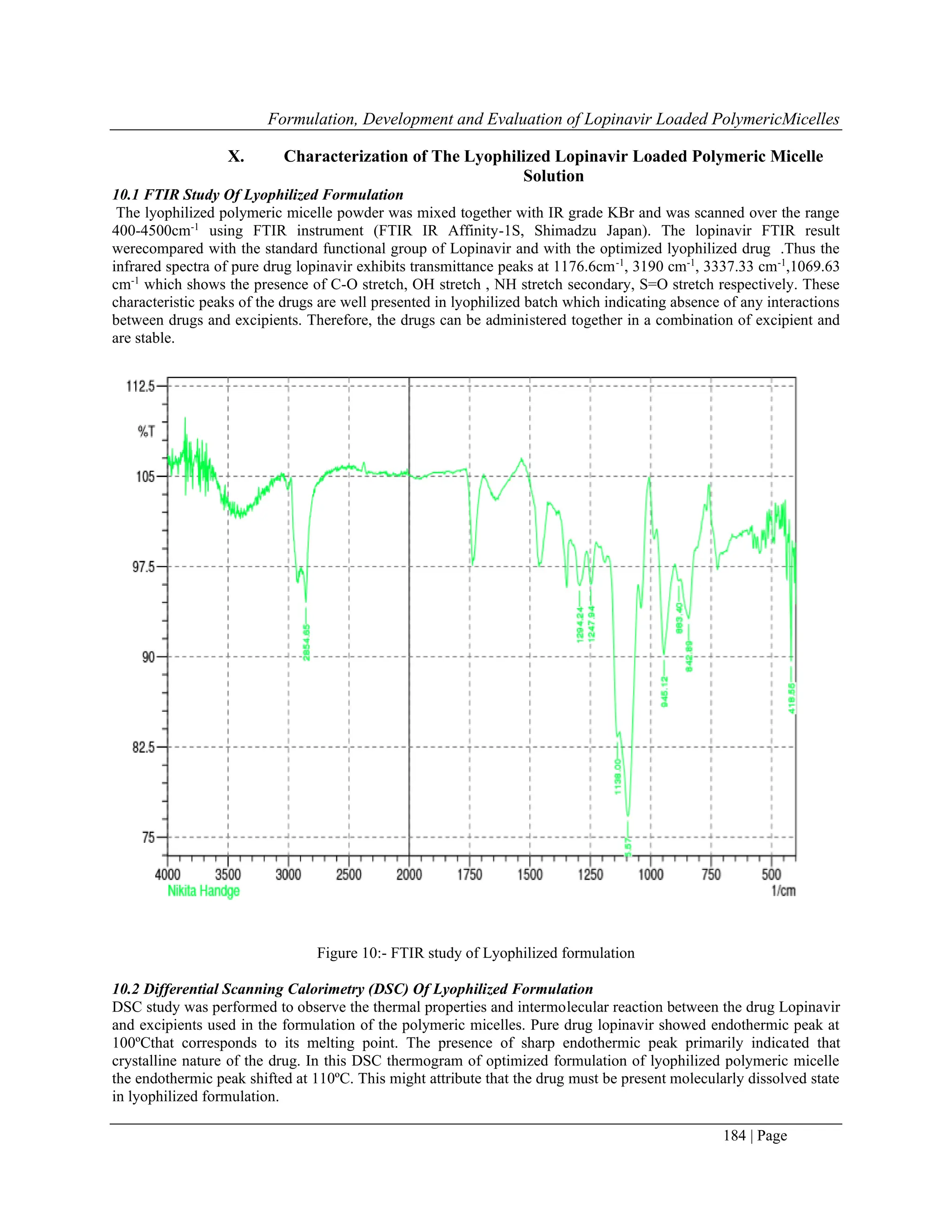
10.1 FTIR Study Of Lyophilized Formulation
The lyophilized polymeric micelle powder was mixed together with IR grade KBr and was scanned over the range
400-4500cm-1
using FTIR instrument (FTIR IR Affinity-1S, Shimadzu Japan). The lopinavir FTIR result
werecompared with the standard functional group of Lopinavir and with the optimized lyophilized drug .Thus the
infrared spectra of pure drug lopinavir exhibits transmittance peaks at 1176.6cm-1
, 3190 cm-1
, 3337.33 cm-1
,1069.63
cm-1
which shows the presence of C-O stretch, OH stretch , NH stretch secondary, S=O stretch respectively. These
characteristic peaks of the drugs are well presented in lyophilized batch which indicating absence of any interactions
between drugs and excipients. Therefore, the drugs can be administered together in a combination of excipient and
are stable.
Figure 10:- FTIR study of Lyophilized formulation
10.2 Differential Scanning Calorimetry (DSC) Of Lyophilized Formulation
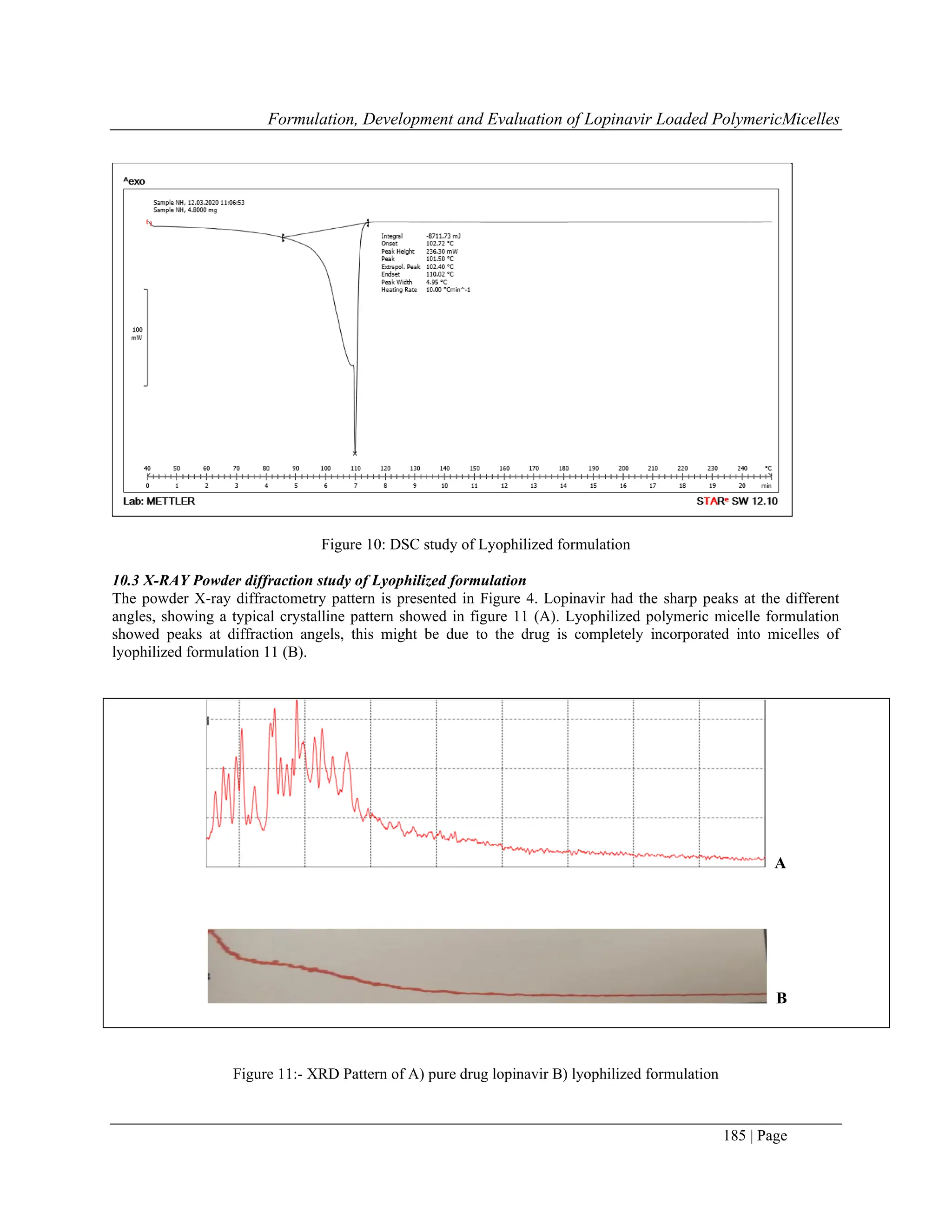
DSC study was performed to observe the thermal properties and intermolecular reaction between the drug Lopinavir
and excipients used in the formulation of the polymeric micelles. Pure drug lopinavir showed endothermic peak at
100ºCthat corresponds to its melting point. The presence of sharp endothermic peak primarily indicated that
crystalline nature of the drug. In this DSC thermogram of optimized formulation of lyophilized polymeric micelle
the endothermic peak shifted at 110ºC. This might attribute that the drug must be present molecularly dissolved state
in lyophilized formulation.
Formulation, Development and Evaluation of Lopinavir Loaded PolymericMicelles
185 | Page
Figure 10: DSC study of Lyophilized formulation
10.3 X-RAY Powder diffraction study of Lyophilized formulation
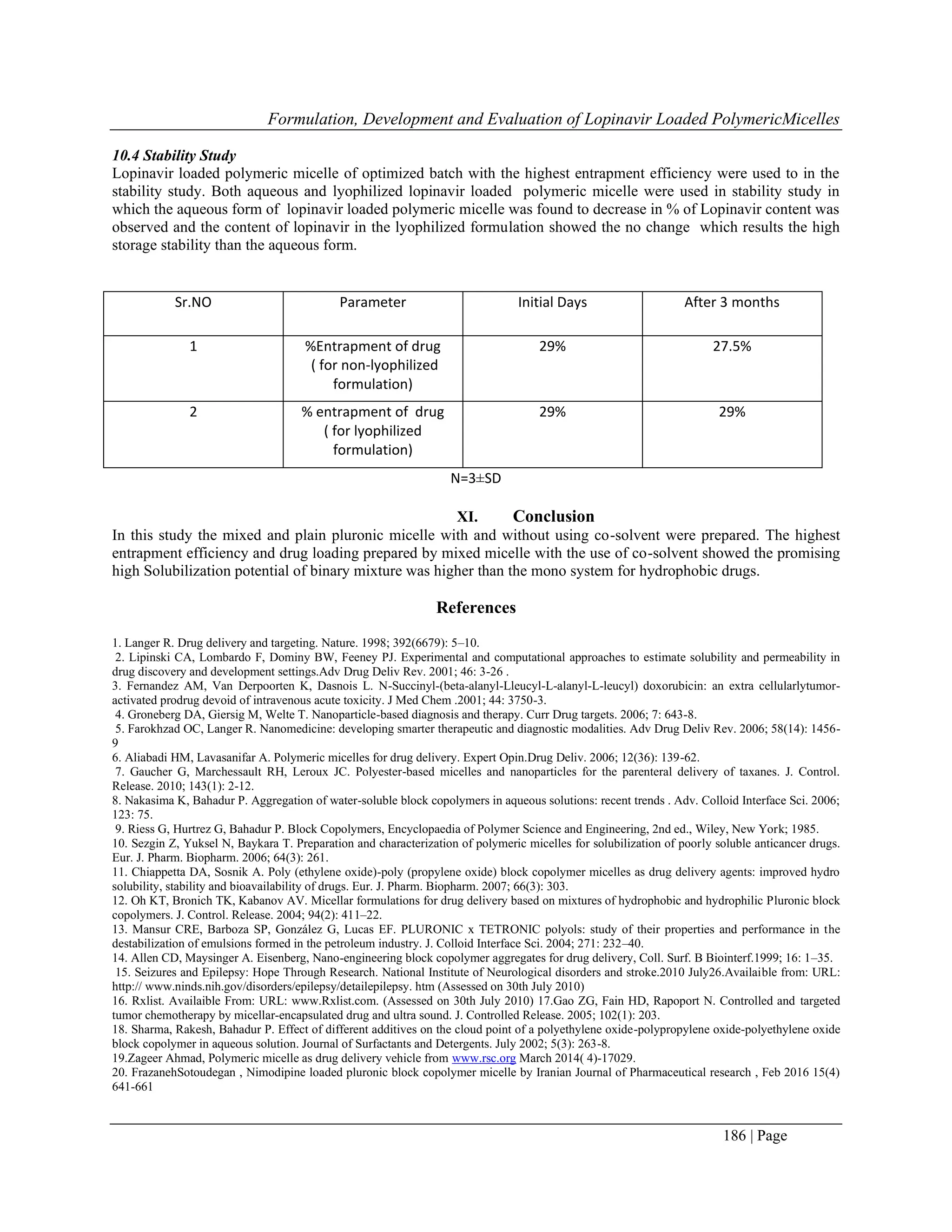
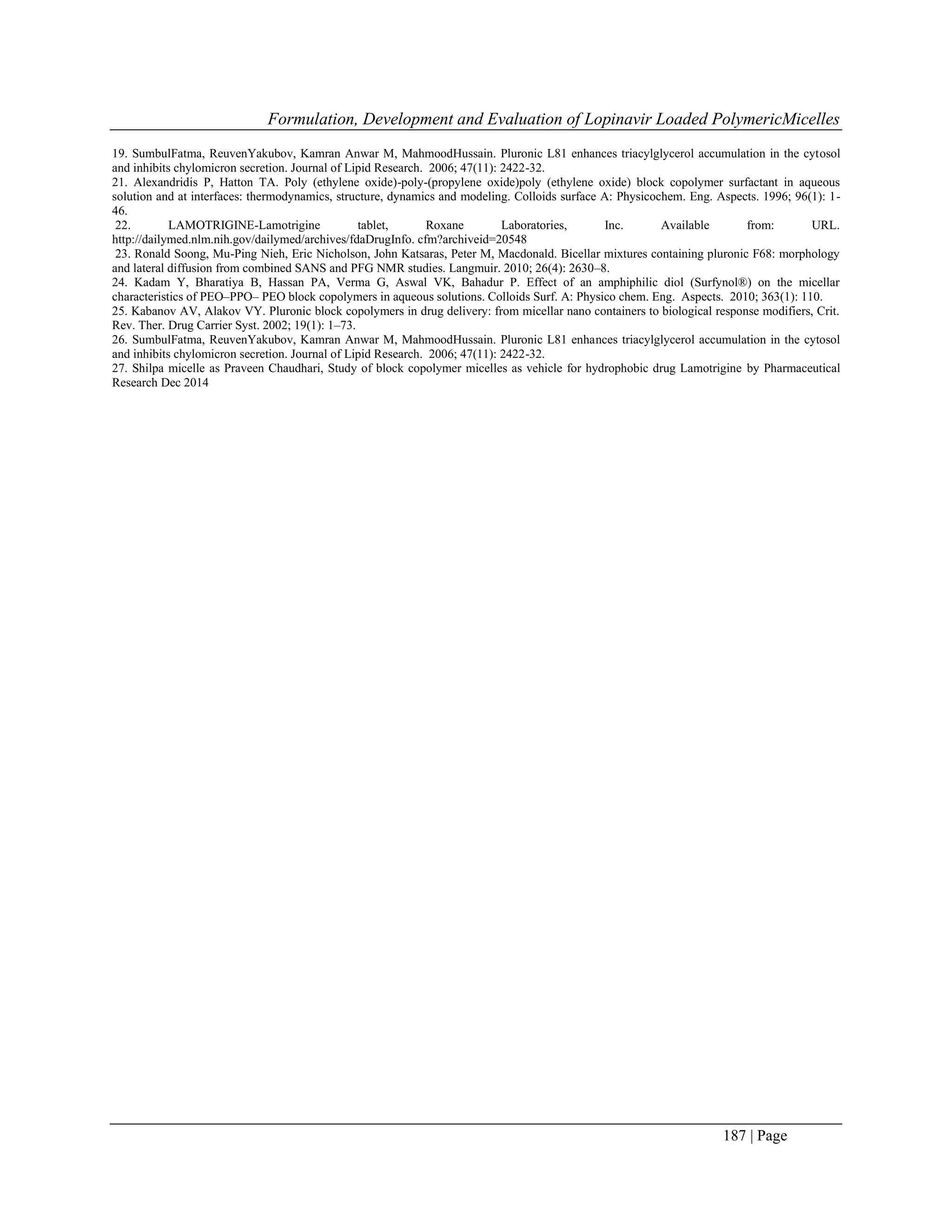
The powder X-ray diffractometry pattern is presented in Figure 4. Lopinavir had the sharp peaks at the different
angles, showing a typical crystalline pattern showed in figure 11 (A). Lyophilized polymeric micelle formulation
showed peaks at diffraction angels, this might be due to the drug is completely incorporated into micelles of
lyophilized formulation 11 (B).
A
B
Figure 11:- XRD Pattern of A) pure drug lopinavir B) lyophilized formulation
Formulation, Development and Evaluation of Lopinavir Loaded PolymericMicelles
186 | Page
10.4 Stability Study
Lopinavir loaded polymeric micelle of optimized batch with the highest entrapment efficiency were used to in the
stability study. Both aqueous and lyophilized lopinavir loaded polymeric micelle were used in stability study in
which the aqueous form of lopinavir loaded polymeric micelle was found to decrease in % of Lopinavir content was
observed and the content of lopinavir in the lyophilized formulation showed the no change which results the high
storage stability than the aqueous form.
Sr.NO Parameter Initial Days After 3 months
1 %Entrapment of drug
( for non-lyophilized
formulation)
29% 27.5%
2 % entrapment of drug
( for lyophilized
formulation)
29% 29%
N=3±SD
XI. Conclusion
In this study the mixed and plain pluronic micelle with and without using co-solvent were prepared. The highest
entrapment efficiency and drug loading prepared by mixed micelle with the use of co-solvent showed the promising
high Solubilization potential of binary mixture was higher than the mono system for hydrophobic drugs.
References
1. Langer R. Drug delivery and targeting. Nature. 1998; 392(6679): 5–10.
2. Lipinski CA, Lombardo F, Dominy BW, Feeney PJ. Experimental and computational approaches to estimate solubility and permeability in
drug discovery and development settings.Adv Drug Deliv Rev. 2001; 46: 3-26 .
3. Fernandez AM, Van Derpoorten K, Dasnois L. N-Succinyl-(beta-alanyl-Lleucyl-L-alanyl-L-leucyl) doxorubicin: an extra cellularlytumor-
activated prodrug devoid of intravenous acute toxicity. J Med Chem .2001; 44: 3750-3.
4. Groneberg DA, Giersig M, Welte T. Nanoparticle-based diagnosis and therapy. Curr Drug targets. 2006; 7: 643-8.
5. Farokhzad OC, Langer R. Nanomedicine: developing smarter therapeutic and diagnostic modalities. Adv Drug Deliv Rev. 2006; 58(14): 1456-
9
6. Aliabadi HM, Lavasanifar A. Polymeric micelles for drug delivery. Expert Opin.Drug Deliv. 2006; 12(36): 139-62.
7. Gaucher G, Marchessault RH, Leroux JC. Polyester-based micelles and nanoparticles for the parenteral delivery of taxanes. J. Control.
Release. 2010; 143(1): 2-12.
8. Nakasima K, Bahadur P. Aggregation of water-soluble block copolymers in aqueous solutions: recent trends . Adv. Colloid Interface Sci. 2006;
123: 75.
9. Riess G, Hurtrez G, Bahadur P. Block Copolymers, Encyclopaedia of Polymer Science and Engineering, 2nd ed., Wiley, New York; 1985.
10. Sezgin Z, Yuksel N, Baykara T. Preparation and characterization of polymeric micelles for solubilization of poorly soluble anticancer drugs.
Eur. J. Pharm. Biopharm. 2006; 64(3): 261.
11. Chiappetta DA, Sosnik A. Poly (ethylene oxide)-poly (propylene oxide) block copolymer micelles as drug delivery agents: improved hydro
solubility, stability and bioavailability of drugs. Eur. J. Pharm. Biopharm. 2007; 66(3): 303.
12. Oh KT, Bronich TK, Kabanov AV. Micellar formulations for drug delivery based on mixtures of hydrophobic and hydrophilic Pluronic block
copolymers. J. Control. Release. 2004; 94(2): 411–22.
13. Mansur CRE, Barboza SP, González G, Lucas EF. PLURONIC x TETRONIC polyols: study of their properties and performance in the
destabilization of emulsions formed in the petroleum industry. J. Colloid Interface Sci. 2004; 271: 232–40.
14. Allen CD, Maysinger A. Eisenberg, Nano-engineering block copolymer aggregates for drug delivery, Coll. Surf. B Biointerf.1999; 16: 1–35.
15. Seizures and Epilepsy: Hope Through Research. National Institute of Neurological disorders and stroke.2010 July26.Availaible from: URL:
http:// www.ninds.nih.gov/disorders/epilepsy/detailepilepsy. htm (Assessed on 30th July 2010)
16. Rxlist. Availaible From: URL: www.Rxlist.com. (Assessed on 30th July 2010) 17.Gao ZG, Fain HD, Rapoport N. Controlled and targeted
tumor chemotherapy by micellar-encapsulated drug and ultra sound. J. Controlled Release. 2005; 102(1): 203.
18. Sharma, Rakesh, Bahadur P. Effect of different additives on the cloud point of a polyethylene oxide-polypropylene oxide-polyethylene oxide
block copolymer in aqueous solution. Journal of Surfactants and Detergents. July 2002; 5(3): 263-8.
19.Zageer Ahmad, Polymeric micelle as drug delivery vehicle from www.rsc.org March 2014( 4)-17029.
20. FrazanehSotoudegan , Nimodipine loaded pluronic block copolymer micelle by Iranian Journal of Pharmaceutical research , Feb 2016 15(4)
641-661
Formulation, Development and Evaluation of Lopinavir Loaded PolymericMicelles
187 | Page
19. SumbulFatma, ReuvenYakubov, Kamran Anwar M, MahmoodHussain. Pluronic L81 enhances triacylglycerol accumulation in the cytosol
and inhibits chylomicron secretion. Journal of Lipid Research. 2006; 47(11): 2422-32.
21. Alexandridis P, Hatton TA. Poly (ethylene oxide)-poly-(propylene oxide)poly (ethylene oxide) block copolymer surfactant in aqueous
solution and at interfaces: thermodynamics, structure, dynamics and modeling. Colloids surface A: Physicochem. Eng. Aspects. 1996; 96(1): 1-
46.
22. LAMOTRIGINE-Lamotrigine tablet, Roxane Laboratories, Inc. Available from: URL.
http://dailymed.nlm.nih.gov/dailymed/archives/fdaDrugInfo. cfm?archiveid=20548
23. Ronald Soong, Mu-Ping Nieh, Eric Nicholson, John Katsaras, Peter M, Macdonald. Bicellar mixtures containing pluronic F68: morphology
and lateral diffusion from combined SANS and PFG NMR studies. Langmuir. 2010; 26(4): 2630–8.
24. Kadam Y, Bharatiya B, Hassan PA, Verma G, Aswal VK, Bahadur P. Effect of an amphiphilic diol (Surfynol®) on the micellar
characteristics of PEO–PPO– PEO block copolymers in aqueous solutions. Colloids Surf. A: Physico chem. Eng. Aspects. 2010; 363(1): 110.
25. Kabanov AV, Alakov VY. Pluronic block copolymers in drug delivery: from micellar nano containers to biological response modifiers, Crit.
Rev. Ther. Drug Carrier Syst. 2002; 19(1): 1–73.
26. SumbulFatma, ReuvenYakubov, Kamran Anwar M, MahmoodHussain. Pluronic L81 enhances triacylglycerol accumulation in the cytosol
and inhibits chylomicron secretion. Journal of Lipid Research. 2006; 47(11): 2422-32.
27. Shilpa micelle as Praveen Chaudhari, Study of block copolymer micelles as vehicle for hydrophobic drug Lamotrigine by Pharmaceutical
Research Dec 2014

Formulation, Development and Evaluation of Lopinavir Loaded Polymeric Micelles

  • 1.
    Journal of Scienceand Technology ISSN: 2456-5660 Volume 5, Issue 4, July-August 2020 www.jst.org.in DOI: https://doi.org/10.46243/jst.2020.v5.i4.pp173-187 Published by: Longman Publishers 173 | Page Formulation, Development and Evaluation of Lopinavir Loaded Polymeric Micelles 1 Shilpa Praveen. Chaudhari, 2 Nikita Manik. Handge 1,2 (DepartmentofPharmaceutics,Dr.D.Y.P.CollegeofPharmacy,Akurdi,Pune, Maharashtra,India) 2 Corresponding Author: nikitahandge@gmail.com To Cite this Article Shilpa Praveen. Chaudhari, 2 Nikita Manik. Handge, “Formulation , Development and Evaluation of Lopinavir Loaded Polymeric Micelles”, Journal of Science and Technology, Vol. 05, Issue 04, July-August 2020, pp173-187 Article Info Received: 05-04-2020 Revised: 08-07-2020 Accepted: 10-07-2020 Published: 12-07-2020 Abstract: Lopinavir is the anti HIV drug which is used to treat the HIV-1 infection. In this study we used the single lopinavir drug to formulate the polymeric micelle. This study was done with the two main objectives as Objective:first to enhance the solubility and bioavailability of the BCS class IV drug and second to avoid the combination of lopinavir rand ritonavir and use single lopinavir to preparation of polymeric micelle also to avoid the disadvantages related to the oral administration. Method:The different pluronic (F188 &F127) and co-solvent (Tween80) were chosen & the micelles were prepared by using different Drug: polymer ratio with or without co- solvent and drug Lopinavir. Formulations were been characterized by critical micelle concentration(CMC) value, micellesize,DSC, XRD, loading efficiency, % drug loading and stability.Result:Mixed micelle (hydrophobic &hydrophilic) obtained from optimized batch shows the highest entrapment of 29%with the pluronic F68 with the use of co-solvent and the vesicle size of 0.156µm the DSC, FTIR, XRD study was also done for lopinavir and optimized formulation .Conclusion: The pluronic F68 with the co-solvent showed fairly high entrapment efficiency, loading capacity than the mixed Pluronic in combination. Keywords:Pluronic F68, Pluronic F127, Tween 80, Micelles, Solubilization _____________________________________________________________________________________ I. Introduction Pharmaceutical technology, have attracted the incredible attraction in the development of theefficient in drug delivery systems from last two decades. The principal reason for the implausible growth of the drug technology is the best prospect for achieving large improvement over the current therapies will occur when there will be improve in the delivery of the exiting drug. This is necessary because the drug molecule should overcome the unwanted barriers before reaching the target site within the body, where they can show its biological role [1] . There are some of the serious problems that are associated with the therapeutic application of the drugs that are hydrophobic, poorly water soluble agent, since the low water solubility leads to result in the low absorption which lead to low bioavailability.[3] to overcome this problems the promising approach is the application of the drug loaded nano sized drug carriers, such as the noisome, liposome, nanoparticles, polymeric micelles etc.[4,5] Polymeric micelles are the nano sized particles which are the assemblies of the amphiphilic block copolymers exhibiting an unique core-corona structure. The outer hydrophilic layer is very important to stabilize the micelle in the aqueous environment and after the systemic administration it minimizes the clearance by the mononuclear phagocytic system. Where the inner layer is hydrophobic core whose function is to reservoir the drug. [6] The assembled polymers are in the dynamic equilibrium with the free unimers, in contrast to the polymeric nanoparticles. The polymeric micelles are usually smaller in size (10-100nm). Block copolymers are available as linear triblocks of type ABA and BAB (pluronics®) which are made of polyethylene oxide (POE) polypropylene oxide (PPO) with varying in the hydrophilic and lipophilic balance (HLB). These then self-assemble polymeric amphiphile to form nano size micelles (aggregates)in the aqueous solution and exhibit a unique core shell with a fairly low polydispersity which is strongly depend on the temperature , concentration with spherical, rod like morphology [8,9] . Pluronic® aggregates have the micelle core that consist of a hydrophobic poly(polypropylene oxide) or PPO block surrounded by the heavily hydrated, hydrophilic poly(ethylene oxide) or POE block[9] the pluronic micelles have the slower rate of dissociation and allow the
  • 2.
    Formulation, Development andEvaluation of Lopinavir Loaded PolymericMicelles 174 | Page retention of the loaded drug for the longer duration than the other conventional surfactant based drug delivery systems, and hence these surfactants may allow the higher accumulation of the active species at the target site and thus the Pluronics® have found the significant application in the delivery of the drug.[10,11] The size, solubilizing capacity and the morphology of the micelles depends on the different factors such as the chemical structure of amphiphile and the drug molecule, temperature, ionic strength and pH[12] . The solubilizing power of the polymeric surfactant is considered to be better than conventional surfactant due to their lower CMC and the thermal stability of micelles.[13] The different block polymers can be used to form the polymeric micelles.[14] In this study we used block co-polymer such as Pluronic F68, Pluronic F127, and Tween 80 as a co-solvent which are difunctional block copolymer surfactant maintaining the primary hydroxyl group from BASE. HIV is the Human immunodeficiency virus that infects the cell of the immune system by destroying them or impairing their function. Infection with this virus results in the progressive deterioration of the immune system which leads to the immune deficiency. The immune system is said to be deficient when it can no longer fight against infection or disease. The advanced stage of HIV is AIDS which can be transmitted to other people and in order to prevent this, the quick management is required. Intravenous administration allows direct transport of drug into blood thus provide unique feature and better option to target drug (eg- Lopinavir). II. Need • HIV is an affective disorder, in which HIV virus targets and alters the immune system, increasing the risk of infections and diseases in human. It is a chronic disease and usually requires the long term treatment in order to prevent the advance stage of HIV that is AIDS. • According to WHO about 37.9 million people suffer from HIV worldwide from which 36.2 million people are adult and 1.7 million people are children. • First line drug treatment given to treat the HIV are the Antiretroviral (ARV) drugs that are Tenofovirfumarate (TDF) + Efavirenz (EFV) 600 mg which have the side effects like depression, backache, dizziness, vomiting, fever etc. • Lopinavir is the Antiretroviral drug, with the protease inhibitor class, with 98% pgp binding and also undergoes the first pass metabolism, Lopinavir is BSC class IV drug with the low solubility and low permeability with bioavailability less that 5%. • The half- life of the drug is 2to 3 hours and it’s eliminated rapidly mainly by hepatobiliary processes and excreted via faeces . • Lopinavir is given as a second line treatment as a monotherapy in the treatment of HIV virus. • Thus its necessary to increase the solubility as well as permeability of drug to increase the high % of drug at the site of action that gradually will lead to increase the bioavailability of drug. • It have the adverse action like vomiting, headache, stomach upset when given orally. • Thus the polymeric micelle are used to increase the permeability , solubility which gradually increase the bioavailability of drug at site of action and also the polymers used will help overcomes the effect of pgp binding of drug as the polymer used have the action of pgp inhibition. And also leads to avoid the rapid metabolism of drug by cytochrome P450 and CYP 3A4 isoenzyme present in liver. III. Material and Method 3.1 Materials Pluronic F68, Pluronic F127 and Tween 80 were purchased from Sigma Aldrich Lopinavir drug was purchased from Chika Pvt.LtdAhmadabad all the other chemicals and the components used were of analytical grade. 3.2 Method 3.2.1 Preformulation study Preformulation study is the primary stage in the objective development of the dosage form of drug. It’s used to characterize the drug for its physical and the chemical properties and also used to determine the compatibility of the drug and the excipient. [26] 3.2.2. Detection of Melting point Melting point of substance is defined as the temperature at which the solid phase goes in equilibrium with its liquid phase. Its help determination and compound identification or in estimation of its purity. Pure substance show sharp melting points, while impurity will melt over a broad range of temperature. Melting point of Lopinavir was determined by taking a small amount of sample in a capillary tube closed at one end and placed in Thiele’s melting point apparatus. [26]
  • 3.
    Formulation, Development andEvaluation of Lopinavir Loaded PolymericMicelles 175 | Page 3.2.3 Study of Block Polymer for Solubilization (CMC) The surface tension method was used to determine the CMC of Pluronic F68, Pluronic F127 polymers and Tween 80. The CMC of the block copolymer was determined in the pure water at 25º. The determination of CMC for Pluronics was based on the change in the surface tension with surface concentration. Stalagnometer was used to measure the surface tension. Each surface tension was been repeated for three times and the typical error was less than 5%.[1] IV. Preparation Of The Drug-Loaded Polymeric Micelles Polymeric micelle containing Lopinavir drug were prepared by direct dissolution technique using block copolymer(pluronic F127 and Pluronic F68) and the co-solvent (Tween 80) the co-polymers were used alone as well as in combination (1:1) with or without co-solvent. The Block co-polymer were dissolved completely in the distilled water and then Lopinavir drug was added to the polymer solution and then polymeric solution was continuously stirred using the mechanical stirrer at room temperature at different rpm for 6hrs to optimize the RPM for the preparation of the micelles. The non-entrapped drug was separated by the filtration of the micelle solution through the 0.2μm membrane filter. Then the filtrate solution was then diluted 10 times with the polymeric solution. The Lopinavir concentration in the filtrate solution was then determined by measuring the UV absorbance at λ max 257nm.[17] Independent variable parameter Levels -1 +1 A Drug :polymer Ratio 1 5 B Time of stirring 8 36 C Type of block co- polymer F127 F68 F68:F127 D Effect of Co-solvent With Without Dependent variable Y1 %Drug Loading Y2 Particle size Ru Run Factor 1 A- Drug: Polymer Ratio Factor 2 B-Time of stirring Factor 3 C -Type of block copolymer Factor 4 D – Effect of co-solvent 1 4.68 28.72 F68 With 2 1.13924 23.82 F127 With 3 1 36 F68 With 4 2.8 17.1 F68:F127(1:1) With 5 1 30.54 F68:F127(1:1) Without
  • 4.
    Formulation, Development andEvaluation of Lopinavir Loaded PolymericMicelles 176 | Page 6 3.2 12.06 F68:F127(1:1) Without 7 1 8 F68:F127(1:1) With 88 8 5 13.6 F68:F127(1:1) With 9 4.68 28.72 F68 With 10 5 8 F68 Without 11 2.22 26.48 F68 Without 12 4.86 19.9 F127 Without 13 2.8 32.22 F68:F127(1:1) With 14 2.22 26.48 F68 Without 15 2.43205 11.5 F68 Without 16 2.94 35.3 F127 With 17 1.68 10.38 F68 With 18 2.48 36 F127 Without 19 3.08 8.7 F127 Without 20 3.52 8 F127 With 21 1 8 F127 Without 22 1.13924 23.82 F127 With 23 3.2 12.06 F68:F127(1:1) Without 24 5 31.94 F68:F127(1:1) With 25 5 36 F68:F127(1:1) Without 26 5 36 F127 With 27 1.68 10.38 F68 With V. Optimization of The Polymeric Micelle Twenty seven lopinavir loaded polymeric micelles formulation were prepared according the Design of expert12 software as shown in the table. VI. Evaluation Of The Polymeric Micelles 6.1 Drug Entrapment The filtered solution of the polymeric micelle containing drug was diluted 10 times with methanol. Blank experiment without lopinavir was done to determine the solubility of the drug in water. The lopinavir concentration in the polymeric solution was determined by measuring the UV absorbance at λmax 257nm.After estimating the drug content by using UV, the %entrapped drug can be calculated by fallowing equation [18] % Drug Entrapped = (a/b)*100 Drug weight in the micelle = (a / (b+c)) *100 Where a is the amount of the drug loaded in the micelle (mg), b is the amount of drug used in the micelle preparation (mg) and c is the amount of the polymer used in the micelle preparation (mg).
  • 5.
    Formulation, Development andEvaluation of Lopinavir Loaded PolymericMicelles 177 | Page 6.2 Determination of particle size The micelle size determination were done by using the digital microscope 1ml of micelle solution was diluted 10 ml of water slowly to form dispersion . Diluted sample is slowly placed into slide for measuring the globule size. 6.3 Stability Studies Stability study of the polymeric micelles was done by the visual inspection as well as the analytical measurement for the drug content determination. For this study the lyophilized and the aqueous solution of the Lopinavir loaded polymeric micelles were placed in the stability chamber at 25±2ºand 60 % RH for three months. Lyophilized powder was placed in 2ml Eppendorf tubes and the aqueous solution was placed in the 5ml bottle with lid .The sample were taken to determine the drug content at the beginning and at the end of the 3 months. The drug content was measure by UV spectroscopy by diluting the polymeric solution and lyophilized sample into methanol and then determined for the drug content.[10] VII. Characterization Of The Lyophilized Lopinavir Loaded Polymeric Micelle Solution 7.1 FTIR study of lyophilized formulation The lyophilized formulation FTIR was determined by using the Shimadzu, IRAffinity-1s,and Japan. The sample was laced in the sample holder and the scanning was performed between 4000cm-1 to 400cm-1 range. 7.2 Differential Scanning calorimetry (DSC) The molecular state of the drug in the lyophilized formulation was evaluated by performing DSC analysis. The DSC curve of the sample was obtained by the differential scanning calorimeter. The sample of 3mg was placed in the standard aluminium pans, and dry nitrogen was used as the effluent gas. The sample was scanned at the temperature rpm speed of 5ºC/min and the heat flow from 0 to 280ºC. 7.3 XRD study of lyophilized formulation The XRD pattern of the pure drug and the lyophilized formulation were obtained using X- Ray diffractometry. The measuring conditions were as fallow: CuK radiation, nickel filtered, graphite monochromatic; 45kV voltage and 40mA current with X’celerrator detector. Sample were runed at 1º (2ɵ) min-1 from 3º to 45º (2ɵ) VIII. Result And Discussion 8.1 Organoleptic Properties Of Drug The drug was characterized for the colour, odour, taste appearance and the result was recorded using the descriptive terminology, and the result is shown in table below: Table 1- Organoleptic property Sr.No Parameter Observation 1 Colour White 2 Appreance White crystalline powder a. Solubility study of Drug Table 2- solubility study Sr.No Chemicals Result 1 Ethanol 20mg/ml
  • 6.
    Formulation, Development andEvaluation of Lopinavir Loaded PolymericMicelles 178 | Page 2 Dimethyl sulfoxide (DMSO) 14mg/ml 3 Dimethyl Formamide (DMF) 14mg/ml 4 Water 7.7 X 10⁻³ mg/L 8.3 Melting point of Drug Table 3- Melting Point Property Observation Melting point • By Thiele’s Tube method Reported Observed 124-1270 C 1260 C N=3±SD 8.4 Determination of critical micelle concentration The critical micelle concentration CMC was determined by carrying out the surface tension method by using the stalagnometer. The drop count method .as carried out by using the different series of pluronic concentration of F127, F68 as well as tween 80. The obtained critical micelle concentration value of polymer in aqueous solution was found to be 4mg/ ml, 0.039 mg/ml and 13mg/lit for pluronic F68, pluronic F127 and tween 80 respectively 8.5 Drug polymer computability study The drug polymer compatibility plays the very important role in any formulation. The pure drug Lopinavir and the pluronic F68 and F127 were mixed togetherwith IR grade KBr and were scanned over the range 400-4500cm-1 using FTIR instrument (FTIR IR Affinity-1S, Shimadzu Japan). The lopinavir FTIR result werecompared with the standard functional group of Lopinavir. Thus the infrared spectra of pure drug lopinavir exhibits transmittance peaks at1176.6cm-1 , 3190 cm-1 , 3337.33 cm-1 ,1069.63 cm-1 which shows the presence of C-O stretch, OH stretch , NH stretch secondary, S=O stretch respectively. Figure 1:- FTIR of pure drug Lopinavir
  • 7.
    Formulation, Development andEvaluation of Lopinavir Loaded PolymericMicelles 179 | Page Figure 2:- FTIR of pure drug Lopinavir and pluronic F68 and Pluronic F127 8.6 DSC Study of drug Lopinavir The purity of lopinavir drug was confirmed by the Differential scanning calorimetry with the spectrum of the standard drug. The DSC study indicated a sharp endothermic peak at 100ºC for Lopinavir which corresponds to its melting point. The presence of the sharp endothermic peak primarily indicates the crystalline nature of the drug. Figure 3:- DSC of pure lopinavir 8.7 XRD of Lopinavir Drug To verify the physical state of Lopinavir in solid SMEDDS, X-ray powder scattering measurements were carried out with an X’Pert PRO diffractometer. A voltage of 40 Kv& the current of 40 mA for the generator was been applied with Cu as the tube anode material. The solids material was then exposed to a Cu-K radiation, over a range of 2h angels from 10-40º , at an angular speed of 2º (2h/min) a sampling interval of 0.02 º. Integral -34.95 mJ normaliz ed -8.74 Jg^-1 Onset 76.54 °C Peak 86.59 °C Ends et 90.38 °C Left Area 71.32 % Right Area 28.68 % Partial Area 100.00 % Integral -81.74 mJ normaliz ed -20.44 J g^-1 Onset 92.67 °C Peak 98.20 °C Ends et 103.30 °C Left Area 52.98 % Right Area 47.02 % Partial Area 100.00 % NIK IT A HANDGE, 27.12.2019 16:17:57 NIK IT A HANDGE, 4.0000 mg mW -10 -8 -6 -4 -2 0 min °C 40 60 80 100 120 140 160 180 200 220 240 260 280 0 2 4 6 8 10 12 14 16 18 20 22 24 26 ^e xo S T AR e S W 1 2. 1 0 La b: M ET T LE R
  • 8.
    Formulation, Development andEvaluation of Lopinavir Loaded PolymericMicelles 180 | Page Figure 4:- XRD of Lopinavir drug 8.8 Effect Of Particle Size ANOVA test for observed data of Particle size indicates that the quadratic model was significant and fitting for the data. The model was found to be significant. Response P value F value Equation Significance Particle size 0.0043 4.94 +0.1835-0.0024A- 0.0001B+0.0075C[1]- 0.0294C[2]+0.0108D- 0.0398AB+0.0136AC[1]- 0.0097AC[2]-0.0355AD- 0.0122BC[1]+0.0003BC[2]- 0.0080BD- 0.0132C[1]D+0.0226C[2]D significant The particle size of the all the polymeric micelle batches were found between ranges of 0.1nm ± 0.28nm. From the result obtained from the Response surface plot was as found that the particle size of the formed micelle using pluronic F127 was larger in size as compared to the particle size of micelles prepared by using Pluronic F68.It was found that the micelle size increases as the length of the PO and EO chain in the pluronic increases and their ratios are related to the mean diameter of the Pluronics micelles.[19] This suggests that the obtained result from the response surface graph showed that the particle size of micelle formed using pluronic F68 was smaller in size as compared to pluronic F127.
  • 9.
    Formulation, Development andEvaluation of Lopinavir Loaded PolymericMicelles 181 | Page Figure 5: 3D Response Surface Plots for particle size Figure 6: Counter Plots for particle size
  • 10.
    Formulation, Development andEvaluation of Lopinavir Loaded PolymericMicelles 182 | Page 8.9 Effect On Entrapment Efficiency ANOVA test for observed data of the entrapment efficiency for the drug shows that the quadratic model was significant and fitting for the data Response P value F value Equation Significance % drug loading < 0.0001 24.27 +17.49-1.96A-0.4553B- 0.4553C[1]+0.8345C[2] - 2.43D+1.56AB- 1.08AC[1]+0.7891AC[2]+2.0 1AD- 2.16BC[1]+2.57BC[2]+0.5574 BD-1.26C[1]D-0.3140C[2]D significant The %Entrapment of the drug in all the polymeric micelle batches was found between 12% ± 28%. The result obtained from the Response Surface methods showed that the highest % entrapment of the drug was found by using the binary mixture of pluronic F68 and co-solvent Tween 80.By comparison with the micelle that were prepared with the use of pluronic F127 individual as well as with combination of both the pluronic F127:F68 (in the ratio of 1:1) with and without use of co-solvent showed the low entrapment of the drug and also concluded that the comparison with the micelles that were prepared with the low the low molecular weight surfactant those polymeric micelles were more stable, also exhibit the remarkable low cmc value, thus due to this it indicated a strong tendency towards the formation of the aggregates and also show the increase in stability of micelle in the solution on the dilution[20] . It was also noted that the micelles are been extreme diluted before i.v injection [20] .The better entrapment found using tween 80 solvent might be due to the long chain polymer when forms the polymer lead to the formation of gaps between them this might be due to the repel in the chain molecule or due to steric hindrance that occurs which causes the chain not forming the compact spherical shape and thus leads to form the gaps in between it the use of tween 80 has the small molecular chain that seals the gap between it and thus leads to prevent the leakage of the drug in between them and thus give the good entrapment of drug. Figure 7: 3D Response Surface Plots for Entrapment efficiency of Drug
  • 11.
    Formulation, Development andEvaluation of Lopinavir Loaded PolymericMicelles 183 | Page Figure 8: Counter Plots for Entrapment efficiency of Drug IX. Desirability and Optimized Batch Design Expert Software criterion being one having the maximum desirability value that was obtained by obtaining the optimize batch which was obtained by setting the Y1 at the maximum and Y2 at the minimum range while all the independent variable within the obtained range. The optimized batch was obtained at drug: polymer ratio at 1 (A), Time of stirring at 8 hrs. (B), Type of block co-polymer F68 (C), and the co-solvent using tween 80 (D). The derisible value was found to be 0.968 (figure 9). Where the predicated value as per design expert was Y1- 30.24% and Y2 – 0.11126 nm where after the formulation of the obtained optimized batch the response obtained were found Y1- 29% and Y2 -0.156nm. Figure 9:-Desirability plot for polymeric micelles
  • 12.
    Formulation, Development andEvaluation of Lopinavir Loaded PolymericMicelles 184 | Page X. Characterization of The Lyophilized Lopinavir Loaded Polymeric Micelle Solution 10.1 FTIR Study Of Lyophilized Formulation The lyophilized polymeric micelle powder was mixed together with IR grade KBr and was scanned over the range 400-4500cm-1 using FTIR instrument (FTIR IR Affinity-1S, Shimadzu Japan). The lopinavir FTIR result werecompared with the standard functional group of Lopinavir and with the optimized lyophilized drug .Thus the infrared spectra of pure drug lopinavir exhibits transmittance peaks at 1176.6cm-1 , 3190 cm-1 , 3337.33 cm-1 ,1069.63 cm-1 which shows the presence of C-O stretch, OH stretch , NH stretch secondary, S=O stretch respectively. These characteristic peaks of the drugs are well presented in lyophilized batch which indicating absence of any interactions between drugs and excipients. Therefore, the drugs can be administered together in a combination of excipient and are stable. Figure 10:- FTIR study of Lyophilized formulation 10.2 Differential Scanning Calorimetry (DSC) Of Lyophilized Formulation DSC study was performed to observe the thermal properties and intermolecular reaction between the drug Lopinavir and excipients used in the formulation of the polymeric micelles. Pure drug lopinavir showed endothermic peak at 100ºCthat corresponds to its melting point. The presence of sharp endothermic peak primarily indicated that crystalline nature of the drug. In this DSC thermogram of optimized formulation of lyophilized polymeric micelle the endothermic peak shifted at 110ºC. This might attribute that the drug must be present molecularly dissolved state in lyophilized formulation.
  • 13.
    Formulation, Development andEvaluation of Lopinavir Loaded PolymericMicelles 185 | Page Figure 10: DSC study of Lyophilized formulation 10.3 X-RAY Powder diffraction study of Lyophilized formulation The powder X-ray diffractometry pattern is presented in Figure 4. Lopinavir had the sharp peaks at the different angles, showing a typical crystalline pattern showed in figure 11 (A). Lyophilized polymeric micelle formulation showed peaks at diffraction angels, this might be due to the drug is completely incorporated into micelles of lyophilized formulation 11 (B). A B Figure 11:- XRD Pattern of A) pure drug lopinavir B) lyophilized formulation
  • 14.
    Formulation, Development andEvaluation of Lopinavir Loaded PolymericMicelles 186 | Page 10.4 Stability Study Lopinavir loaded polymeric micelle of optimized batch with the highest entrapment efficiency were used to in the stability study. Both aqueous and lyophilized lopinavir loaded polymeric micelle were used in stability study in which the aqueous form of lopinavir loaded polymeric micelle was found to decrease in % of Lopinavir content was observed and the content of lopinavir in the lyophilized formulation showed the no change which results the high storage stability than the aqueous form. Sr.NO Parameter Initial Days After 3 months 1 %Entrapment of drug ( for non-lyophilized formulation) 29% 27.5% 2 % entrapment of drug ( for lyophilized formulation) 29% 29% N=3±SD XI. Conclusion In this study the mixed and plain pluronic micelle with and without using co-solvent were prepared. The highest entrapment efficiency and drug loading prepared by mixed micelle with the use of co-solvent showed the promising high Solubilization potential of binary mixture was higher than the mono system for hydrophobic drugs. References 1. Langer R. Drug delivery and targeting. Nature. 1998; 392(6679): 5–10. 2. Lipinski CA, Lombardo F, Dominy BW, Feeney PJ. Experimental and computational approaches to estimate solubility and permeability in drug discovery and development settings.Adv Drug Deliv Rev. 2001; 46: 3-26 . 3. Fernandez AM, Van Derpoorten K, Dasnois L. N-Succinyl-(beta-alanyl-Lleucyl-L-alanyl-L-leucyl) doxorubicin: an extra cellularlytumor- activated prodrug devoid of intravenous acute toxicity. J Med Chem .2001; 44: 3750-3. 4. Groneberg DA, Giersig M, Welte T. Nanoparticle-based diagnosis and therapy. Curr Drug targets. 2006; 7: 643-8. 5. Farokhzad OC, Langer R. Nanomedicine: developing smarter therapeutic and diagnostic modalities. Adv Drug Deliv Rev. 2006; 58(14): 1456- 9 6. Aliabadi HM, Lavasanifar A. Polymeric micelles for drug delivery. Expert Opin.Drug Deliv. 2006; 12(36): 139-62. 7. Gaucher G, Marchessault RH, Leroux JC. Polyester-based micelles and nanoparticles for the parenteral delivery of taxanes. J. Control. Release. 2010; 143(1): 2-12. 8. Nakasima K, Bahadur P. Aggregation of water-soluble block copolymers in aqueous solutions: recent trends . Adv. Colloid Interface Sci. 2006; 123: 75. 9. Riess G, Hurtrez G, Bahadur P. Block Copolymers, Encyclopaedia of Polymer Science and Engineering, 2nd ed., Wiley, New York; 1985. 10. Sezgin Z, Yuksel N, Baykara T. Preparation and characterization of polymeric micelles for solubilization of poorly soluble anticancer drugs. Eur. J. Pharm. Biopharm. 2006; 64(3): 261. 11. Chiappetta DA, Sosnik A. Poly (ethylene oxide)-poly (propylene oxide) block copolymer micelles as drug delivery agents: improved hydro solubility, stability and bioavailability of drugs. Eur. J. Pharm. Biopharm. 2007; 66(3): 303. 12. Oh KT, Bronich TK, Kabanov AV. Micellar formulations for drug delivery based on mixtures of hydrophobic and hydrophilic Pluronic block copolymers. J. Control. Release. 2004; 94(2): 411–22. 13. Mansur CRE, Barboza SP, González G, Lucas EF. PLURONIC x TETRONIC polyols: study of their properties and performance in the destabilization of emulsions formed in the petroleum industry. J. Colloid Interface Sci. 2004; 271: 232–40. 14. Allen CD, Maysinger A. Eisenberg, Nano-engineering block copolymer aggregates for drug delivery, Coll. Surf. B Biointerf.1999; 16: 1–35. 15. Seizures and Epilepsy: Hope Through Research. National Institute of Neurological disorders and stroke.2010 July26.Availaible from: URL: http:// www.ninds.nih.gov/disorders/epilepsy/detailepilepsy. htm (Assessed on 30th July 2010) 16. Rxlist. Availaible From: URL: www.Rxlist.com. (Assessed on 30th July 2010) 17.Gao ZG, Fain HD, Rapoport N. Controlled and targeted tumor chemotherapy by micellar-encapsulated drug and ultra sound. J. Controlled Release. 2005; 102(1): 203. 18. Sharma, Rakesh, Bahadur P. Effect of different additives on the cloud point of a polyethylene oxide-polypropylene oxide-polyethylene oxide block copolymer in aqueous solution. Journal of Surfactants and Detergents. July 2002; 5(3): 263-8. 19.Zageer Ahmad, Polymeric micelle as drug delivery vehicle from www.rsc.org March 2014( 4)-17029. 20. FrazanehSotoudegan , Nimodipine loaded pluronic block copolymer micelle by Iranian Journal of Pharmaceutical research , Feb 2016 15(4) 641-661
  • 15.
    Formulation, Development andEvaluation of Lopinavir Loaded PolymericMicelles 187 | Page 19. SumbulFatma, ReuvenYakubov, Kamran Anwar M, MahmoodHussain. Pluronic L81 enhances triacylglycerol accumulation in the cytosol and inhibits chylomicron secretion. Journal of Lipid Research. 2006; 47(11): 2422-32. 21. Alexandridis P, Hatton TA. Poly (ethylene oxide)-poly-(propylene oxide)poly (ethylene oxide) block copolymer surfactant in aqueous solution and at interfaces: thermodynamics, structure, dynamics and modeling. Colloids surface A: Physicochem. Eng. Aspects. 1996; 96(1): 1- 46. 22. LAMOTRIGINE-Lamotrigine tablet, Roxane Laboratories, Inc. Available from: URL. http://dailymed.nlm.nih.gov/dailymed/archives/fdaDrugInfo. cfm?archiveid=20548 23. Ronald Soong, Mu-Ping Nieh, Eric Nicholson, John Katsaras, Peter M, Macdonald. Bicellar mixtures containing pluronic F68: morphology and lateral diffusion from combined SANS and PFG NMR studies. Langmuir. 2010; 26(4): 2630–8. 24. Kadam Y, Bharatiya B, Hassan PA, Verma G, Aswal VK, Bahadur P. Effect of an amphiphilic diol (Surfynol®) on the micellar characteristics of PEO–PPO– PEO block copolymers in aqueous solutions. Colloids Surf. A: Physico chem. Eng. Aspects. 2010; 363(1): 110. 25. Kabanov AV, Alakov VY. Pluronic block copolymers in drug delivery: from micellar nano containers to biological response modifiers, Crit. Rev. Ther. Drug Carrier Syst. 2002; 19(1): 1–73. 26. SumbulFatma, ReuvenYakubov, Kamran Anwar M, MahmoodHussain. Pluronic L81 enhances triacylglycerol accumulation in the cytosol and inhibits chylomicron secretion. Journal of Lipid Research. 2006; 47(11): 2422-32. 27. Shilpa micelle as Praveen Chaudhari, Study of block copolymer micelles as vehicle for hydrophobic drug Lamotrigine by Pharmaceutical Research Dec 2014