Feb 4, 2015
Formative Assessment
But 1st…
 Teachers with Courage
 PARCC Training
 Index Cards
Index Cards
Topic Standards Examples
Formative
Assessme
nts
I-B-1 Variety
of
Assessment
Methods
I-B-II
Adjustment
to Practice
 Warm up (connected to
objectives)
 Exit ticket (connected to
objectives)
 Variety of strategies for
checking for understanding
 Effective questioning
 Positive, specific feedback
(written or verbal)
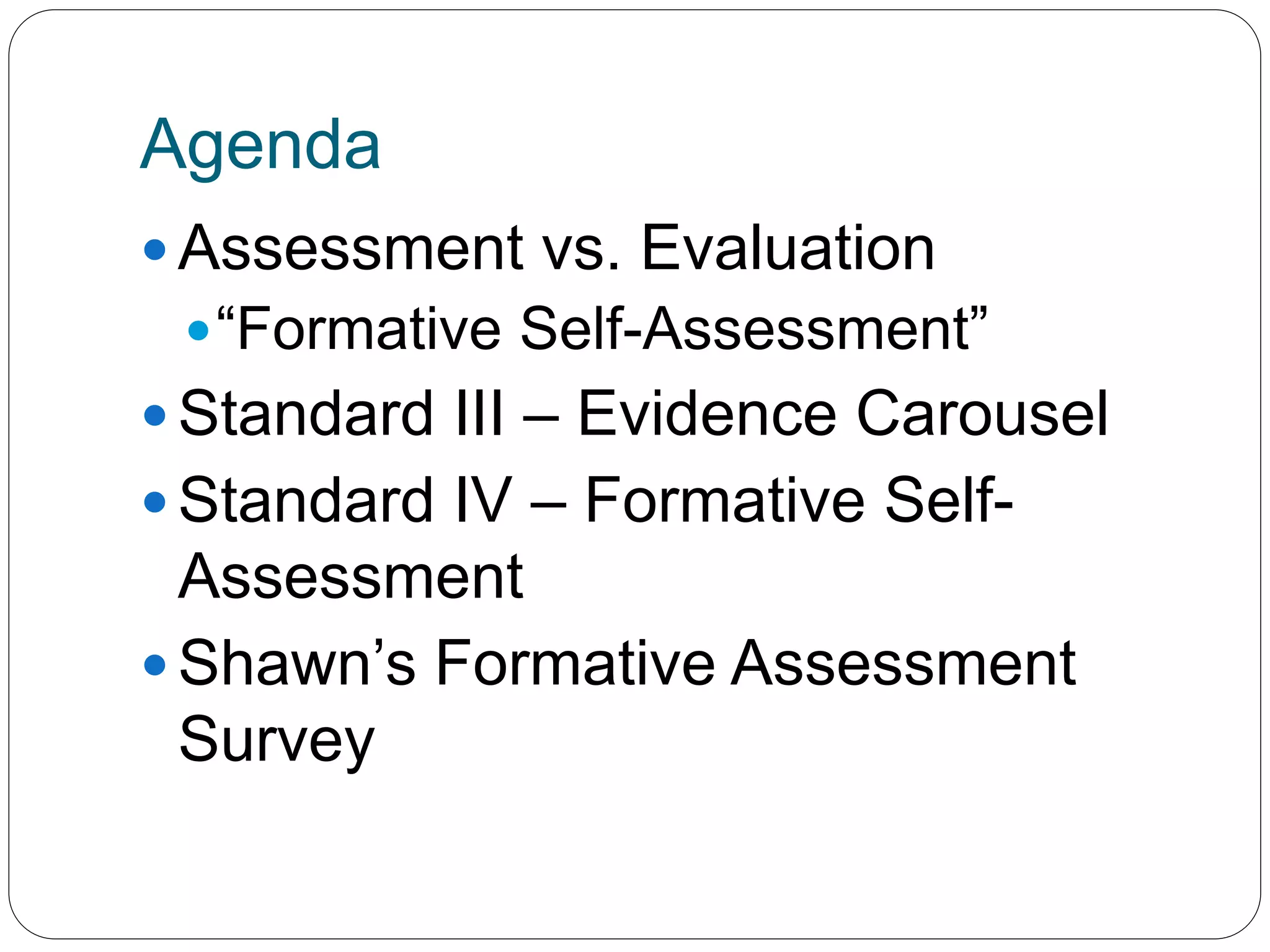
Agenda
 Assessment vs. Evaluation
“Formative Self-Assessment”
 Standard III – Evidence Carousel
 Standard IV – Formative Self-
Assessment
 Shawn’s Formative Assessment
Survey
The educator…
 Demonstrates the capacity to reflect
on and improve the educator’s own
practice…
 Actively pursues opportunities to
improve quality of practice…
 Collaborates effectively with
colleagues on a wide range of tasks.
 Shares responsibility for the
performance of all students within the
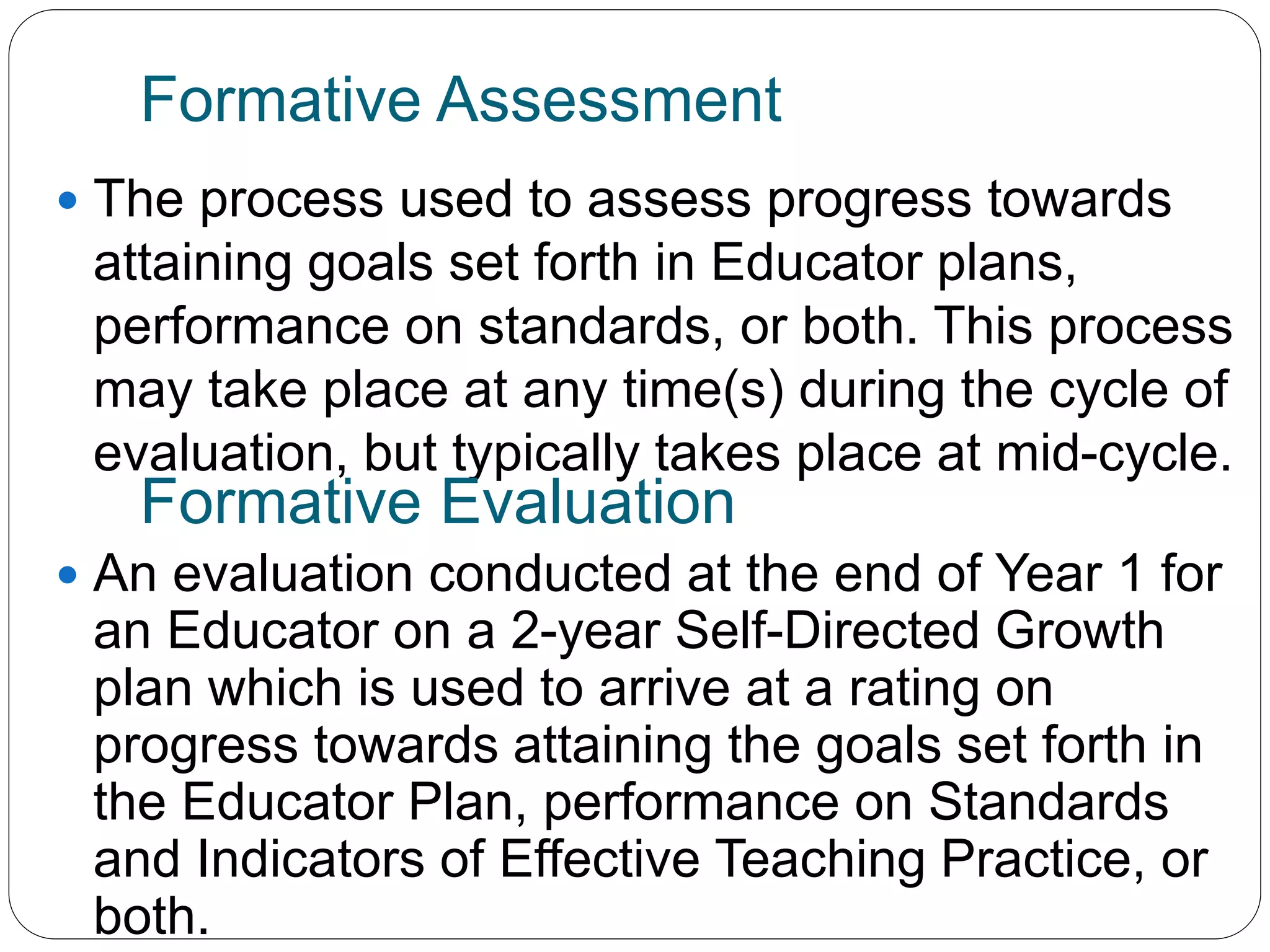
Formative Assessment
 The process used to assess progress towards
attaining goals set forth in Educator plans,
performance on standards, or both. This process
may take place at any time(s) during the cycle of
evaluation, but typically takes place at mid-cycle.
Formative Evaluation
 An evaluation conducted at the end of Year 1 for
an Educator on a 2-year Self-Directed Growth
plan which is used to arrive at a rating on
progress towards attaining the goals set forth in
the Educator Plan, performance on Standards
and Indicators of Effective Teaching Practice, or
both.
Teachers on one year plans…
Sep-Jan
Teachers on two year plans…
Year 1 Year 2
Formative
assessme
nt
Summativ
e
evaluatio
n
Jan-Jun Sep-Jan Jan-Jun
Formative
assessme
nt
Summativ
e
evaluatio
n
Formative
evaluatio
n
Summativ
e
evaluatio
Standard III: Family and Community
Engagement.
 The teacher promotes the learning
and growth of all students through
effective partnerships with families,
caregivers, community members,
and organizations.
 Evidence?
Formative Self-Assessment
Indicator IV-E. Shared Vision: Continuously engages all stakeholders in the creation of a shared educational vision in which every
student is prepared to succeed in postsecondary education and become responsible citizens and community
contributors.
IV-E.
Elements
Unsatisfactory Needs Improvement Proficient Exemplary
IV-E-1.
Shared Vision
Development
Does not engage stakeholders in the
creation of a shared educational
vision, or the vision is disconnected
from college and career readiness,
civic engagement, and/or community
contributions.
Engages staff, students, families, and
community members in developing a
vision focused on some aspects of
student preparation for college and
career readiness, civic engagement,
and community contributions.
At all grade levels, continuously
engages staff, students, families,
and community members in
developing a vision focused on
student preparation for college and
career readiness, civic
engagement, and community
contributions.
Leads staff, students of all ages,
families, and community members to
develop and internalize a shared
educational vision around preparation
for college and careers and
responsible citizenship. Is able to
model this element.
Indicator IV-F. Managing Conflict: Employs strategies for responding to disagreement and dissent, constructively resolving conflict and
building consensus throughout a district/school community.
IV-F.
Elements
Unsatisfactory Needs Improvement Proficient Exemplary
Indicator IV-D. Continuous Learning: Develops and nurtures a culture in which staff members are reflective about their practice and use
student data, current research, best practices and theory to continuously adapt instruction and achieve improved
results. Models these behaviors in the administrator’s own practice.
IV-D.
Elements
Unsatisfactory Needs Improvement Proficient Exemplary
IV-D-1.
Continuous
Learning of
Staff
Accepts the practice of educators
working largely in isolation, without
consideration of data and best
practices, or discourages reflection
among staff.
May encourage educators and teams
to reflect on the effectiveness of
instruction and interactions with
students and to use data and best
practices to adapt instruction but does
not support educators in these
practices.
Leads all educators and teams to
reflect on the effectiveness of
lessons, units, and interactions
with students. Ensures that staff
use data, research, and best
practices to adapt instruction to
achieve improved results.
Models for educators how to reflect on
the effectiveness of lessons, units,
and interactions with students and
uses data, research, and best
practices to adapt instruction to
achieve improved results. Supports all
educators to work in teams as often
as is feasible and appropriate. Is able
to model this element.
IV-D-2.
Continuous
Learning of
Administrator
Does not reflect on personal practice
or demonstrate new ways of thinking
about administration and leadership.
Occasionally reflects on personal
practice, sets meaningful goals,
and/or researches ways to improve
efficiency and practice.
Reflects on and improves personal
practice, sets meaningful goals,
and develops new approaches in
order to improve the efficiency and
practices of the school.
Demonstrates openness and
commitment to learning; reflects on
personal practice; and relies on
student data, current research, and
best practice to improve own
leadership. Is able to model this
element.
Exit Ticket
 Formative Self-Assessment on
Standard IV
 Share one thing with a neighbor.
 Have a great day!
Formative assessment 2 4

Formative assessment 2 4

  • 1.
  • 2.
    But 1st…  Teacherswith Courage  PARCC Training  Index Cards
  • 3.
    Index Cards Topic StandardsExamples Formative Assessme nts I-B-1 Variety of Assessment Methods I-B-II Adjustment to Practice  Warm up (connected to objectives)  Exit ticket (connected to objectives)  Variety of strategies for checking for understanding  Effective questioning  Positive, specific feedback (written or verbal)
  • 4.
    Agenda  Assessment vs.Evaluation “Formative Self-Assessment”  Standard III – Evidence Carousel  Standard IV – Formative Self- Assessment  Shawn’s Formative Assessment Survey
  • 5.
    The educator…  Demonstratesthe capacity to reflect on and improve the educator’s own practice…  Actively pursues opportunities to improve quality of practice…  Collaborates effectively with colleagues on a wide range of tasks.  Shares responsibility for the performance of all students within the
  • 6.
    Formative Assessment  Theprocess used to assess progress towards attaining goals set forth in Educator plans, performance on standards, or both. This process may take place at any time(s) during the cycle of evaluation, but typically takes place at mid-cycle. Formative Evaluation  An evaluation conducted at the end of Year 1 for an Educator on a 2-year Self-Directed Growth plan which is used to arrive at a rating on progress towards attaining the goals set forth in the Educator Plan, performance on Standards and Indicators of Effective Teaching Practice, or both.
  • 7.
    Teachers on oneyear plans… Sep-Jan Teachers on two year plans… Year 1 Year 2 Formative assessme nt Summativ e evaluatio n Jan-Jun Sep-Jan Jan-Jun Formative assessme nt Summativ e evaluatio n Formative evaluatio n Summativ e evaluatio
  • 8.
    Standard III: Familyand Community Engagement.  The teacher promotes the learning and growth of all students through effective partnerships with families, caregivers, community members, and organizations.  Evidence?
  • 9.
    Formative Self-Assessment Indicator IV-E.Shared Vision: Continuously engages all stakeholders in the creation of a shared educational vision in which every student is prepared to succeed in postsecondary education and become responsible citizens and community contributors. IV-E. Elements Unsatisfactory Needs Improvement Proficient Exemplary IV-E-1. Shared Vision Development Does not engage stakeholders in the creation of a shared educational vision, or the vision is disconnected from college and career readiness, civic engagement, and/or community contributions. Engages staff, students, families, and community members in developing a vision focused on some aspects of student preparation for college and career readiness, civic engagement, and community contributions. At all grade levels, continuously engages staff, students, families, and community members in developing a vision focused on student preparation for college and career readiness, civic engagement, and community contributions. Leads staff, students of all ages, families, and community members to develop and internalize a shared educational vision around preparation for college and careers and responsible citizenship. Is able to model this element. Indicator IV-F. Managing Conflict: Employs strategies for responding to disagreement and dissent, constructively resolving conflict and building consensus throughout a district/school community. IV-F. Elements Unsatisfactory Needs Improvement Proficient Exemplary Indicator IV-D. Continuous Learning: Develops and nurtures a culture in which staff members are reflective about their practice and use student data, current research, best practices and theory to continuously adapt instruction and achieve improved results. Models these behaviors in the administrator’s own practice. IV-D. Elements Unsatisfactory Needs Improvement Proficient Exemplary IV-D-1. Continuous Learning of Staff Accepts the practice of educators working largely in isolation, without consideration of data and best practices, or discourages reflection among staff. May encourage educators and teams to reflect on the effectiveness of instruction and interactions with students and to use data and best practices to adapt instruction but does not support educators in these practices. Leads all educators and teams to reflect on the effectiveness of lessons, units, and interactions with students. Ensures that staff use data, research, and best practices to adapt instruction to achieve improved results. Models for educators how to reflect on the effectiveness of lessons, units, and interactions with students and uses data, research, and best practices to adapt instruction to achieve improved results. Supports all educators to work in teams as often as is feasible and appropriate. Is able to model this element. IV-D-2. Continuous Learning of Administrator Does not reflect on personal practice or demonstrate new ways of thinking about administration and leadership. Occasionally reflects on personal practice, sets meaningful goals, and/or researches ways to improve efficiency and practice. Reflects on and improves personal practice, sets meaningful goals, and develops new approaches in order to improve the efficiency and practices of the school. Demonstrates openness and commitment to learning; reflects on personal practice; and relies on student data, current research, and best practice to improve own leadership. Is able to model this element.
  • 11.
    Exit Ticket  FormativeSelf-Assessment on Standard IV  Share one thing with a neighbor.  Have a great day!