FORMATIVE
STUDENT-CENTERED
ASSESSMENTAT THE
CLASSROOM LEVEL
PRESENTERS
MR. GREGORY LEWIS
MS. SARAH BAKKAR
Jeddah Knowledge school
Teacher induction
SY 2021-2021
Student-centeredassessmentJeopardy
https://www.youtube.com/watch?v=1i5JimVj3Go&t=11s
FORMATIVE
ASSESSMENT VS
SUMMATIVE
ASSESSMENT
Formative assessment: Is a measure of
what students know and can do
during the lesson or unit to guide
instruction and reinforce learning.
Summative assessment: Takes place at
the end of a unit of study to
determine the level of student
understanding or skill. Examples:
formal tests, final exams, final
projects, term papers, etc. The
information is often used in
determining a grade, placement, or
promotion.
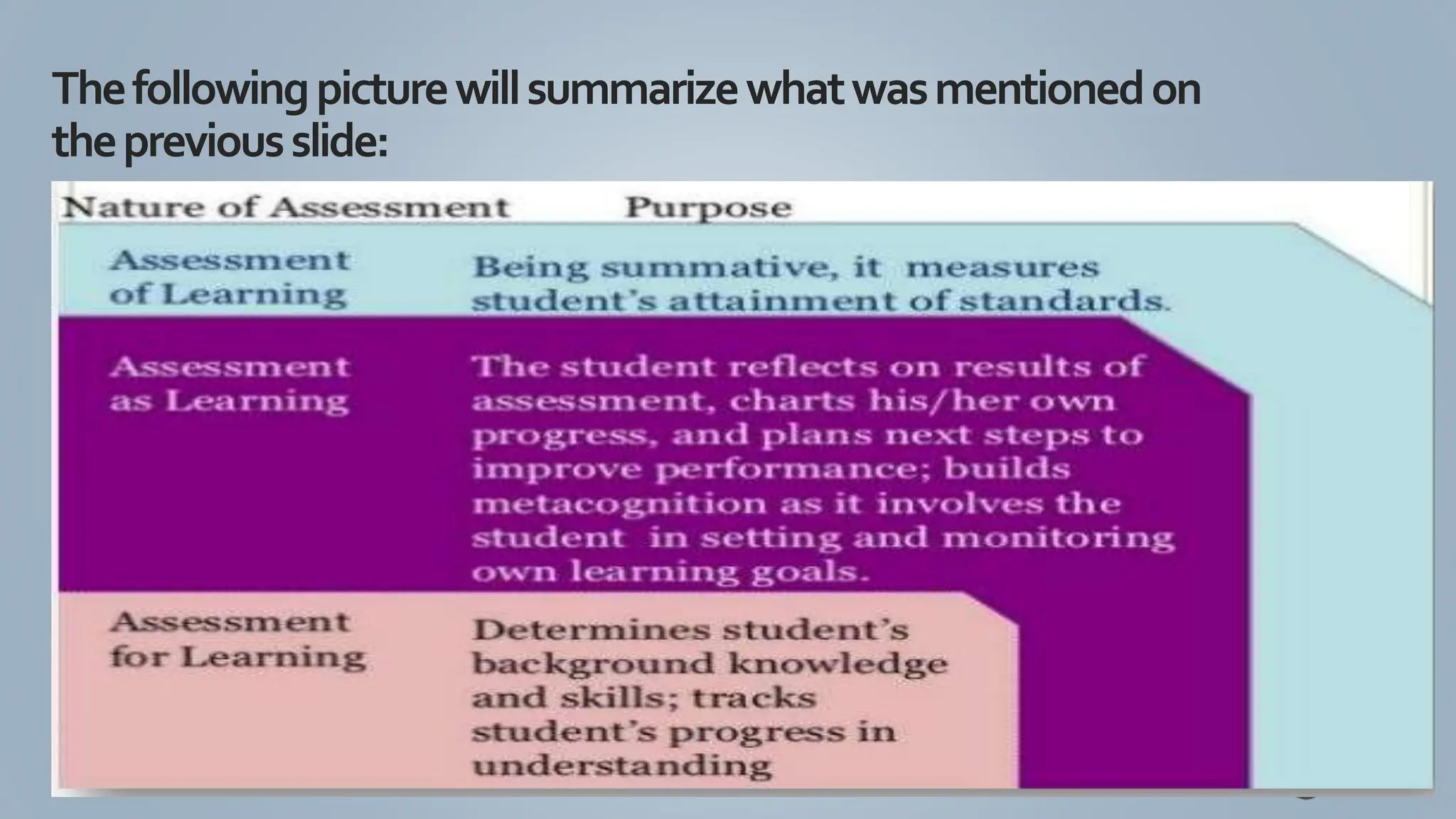
Thefollowingpicturewillsummarizewhatwasmentionedon
thepreviousslide:
4
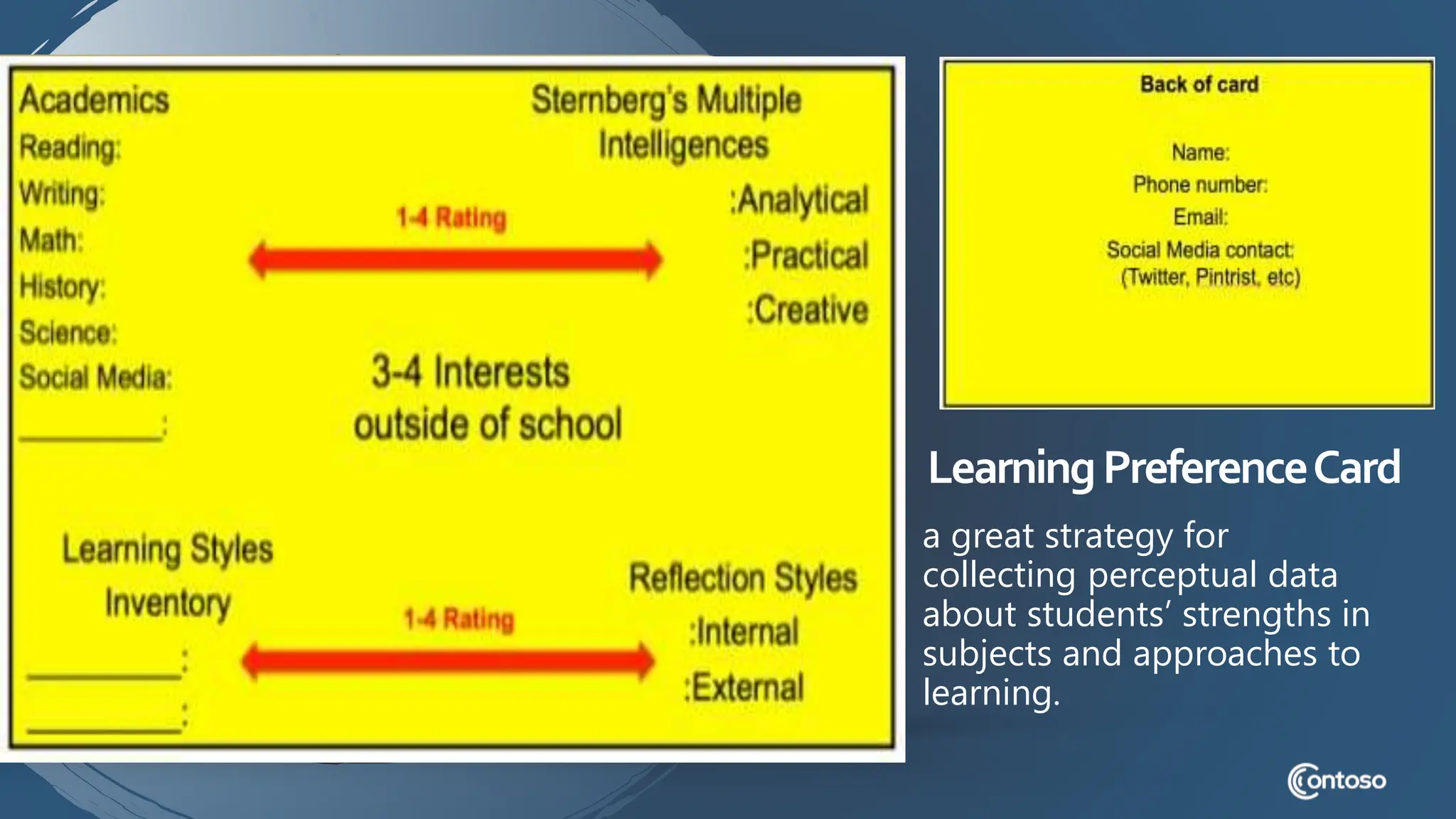
LearningPreferenceCard
a great strategy for
collecting perceptual data
about students’ strengths in
subjects and approaches to
learning.
We know that some of our students
collaborate better than others, just as some
students have more global empathy than
others.
If we assess for these success or 21st-
century skills, we can provide experiences
and instructions that foster those skills and
allow our students to grow in areas that are
more than simply content knowledge or
skills.
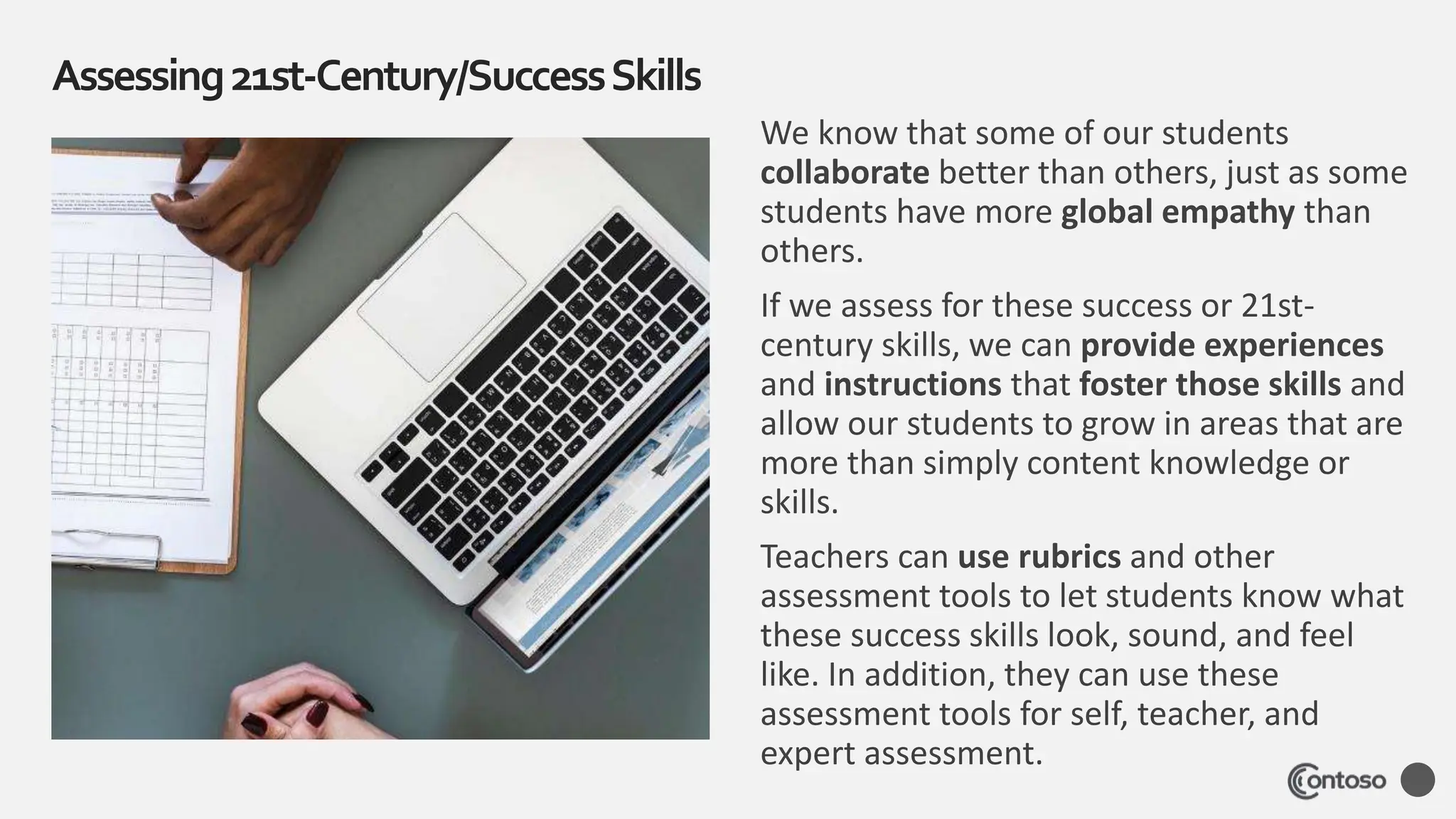
Teachers can use rubrics and other
assessment tools to let students know what
these success skills look, sound, and feel
like. In addition, they can use these
assessment tools for self, teacher, and
expert assessment.
Assessing21st-Century/SuccessSkills
FORMATIVE
STUDENT-
CENTERED
ASSESSMENTAT
THECLASSROOM
LEVEL
7
The purpose of classroom-based
assessment in a balanced, student-
centered system is to provide timely
information to students and teachers
about where students are in their
learning, what gaps in knowledge and
understanding exist, and how teachers
and students can work to deepen
learning (Perie, Marion, & Gong 2009).
Particularly student-centered forms of
classroom assessment include self-
and peer assessment, process
portfolios, and formative tests.
Student-centeredAssessmentMethods
SELF-ASSESSMENT
To identify areas of strength and weakness in one’s
work in order to make improvements and promote
learning, achievement, and self-regulation.
Self regulation and student achievement are closely
related: Students who set goals, make flexible plans
to meet them, and monitor their progress tend to
learn more and do better in school than students
who do not.
PEER ASSESSMENT
The focus is on growth through feedback,
followed by opportunities to revise,
improve, and promote mastery. Peer
feedback is informative and useful for all in
a peer feedback group as they take turns
giving and receiving feedback on works in
progress.
Angelica Astrom
8
Student-centeredAssessmentMethods–FORMATIVE/SUMMATIVE
STUDENT-CENTEREDASSESSMENTATTHESCHOOLLEVEL:
PORTFOLIOS
a purposeful collection of student
work that includes student
involvement in its construction and
student reflection on its contents
Ms. Magda/ Ms. Afnan/Ms.
Natasha/Mr. Greg/ Mr. Adil/Mr.
Alasdair/ Mr. Aandre
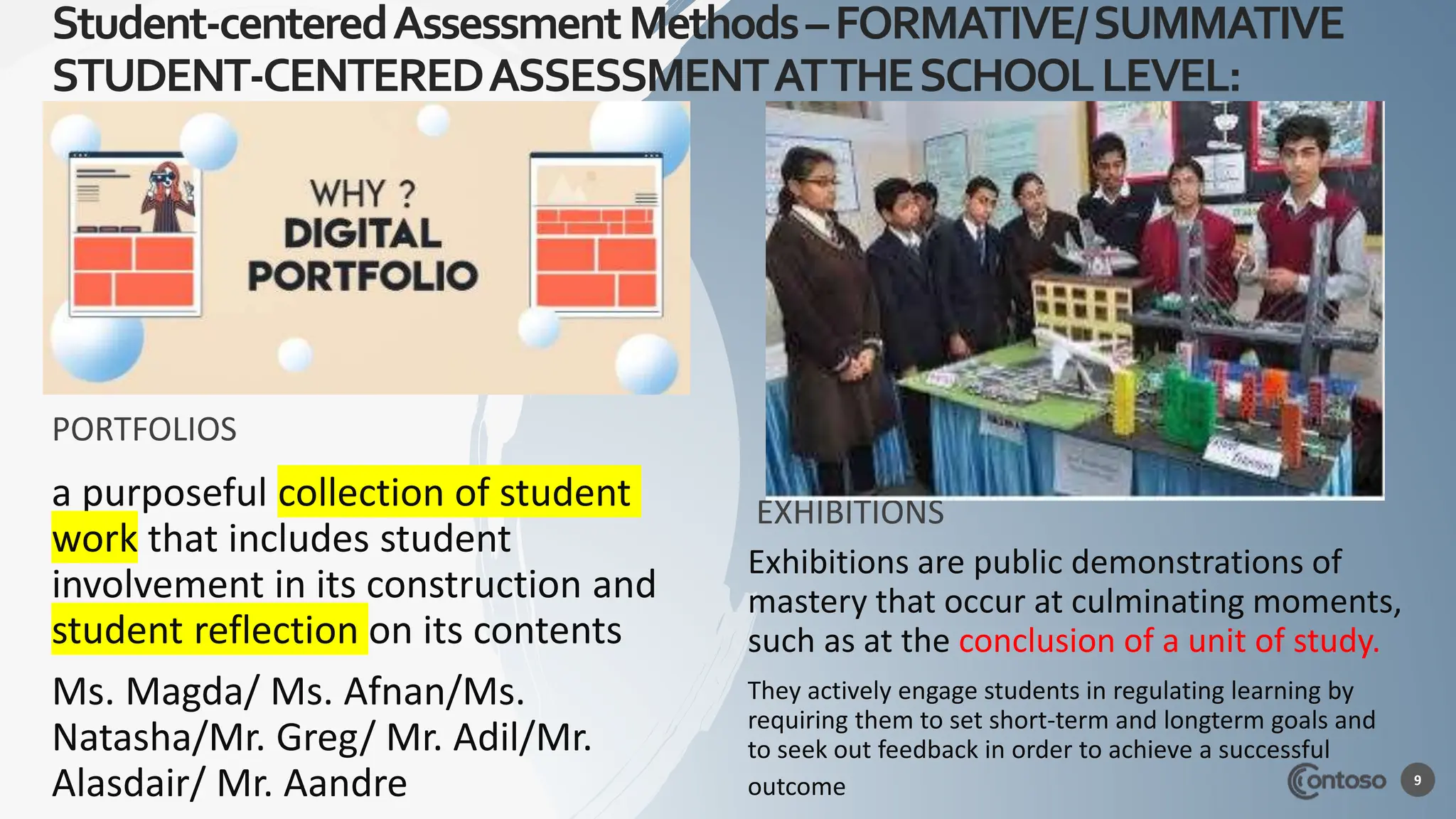
EXHIBITIONS
Exhibitions are public demonstrations of
mastery that occur at culminating moments,
such as at the conclusion of a unit of study.
They actively engage students in regulating learning by
requiring them to set short-term and longterm goals and
to seek out feedback in order to achieve a successful
outcome
Angelica Astrom
9
THANKYOU
10

Formative and Summative assessment.pptx

  • 1.
    FORMATIVE STUDENT-CENTERED ASSESSMENTAT THE CLASSROOM LEVEL PRESENTERS MR.GREGORY LEWIS MS. SARAH BAKKAR Jeddah Knowledge school Teacher induction SY 2021-2021
  • 2.
  • 3.
    FORMATIVE ASSESSMENT VS SUMMATIVE ASSESSMENT Formative assessment:Is a measure of what students know and can do during the lesson or unit to guide instruction and reinforce learning. Summative assessment: Takes place at the end of a unit of study to determine the level of student understanding or skill. Examples: formal tests, final exams, final projects, term papers, etc. The information is often used in determining a grade, placement, or promotion.
  • 4.
  • 5.
    LearningPreferenceCard a great strategyfor collecting perceptual data about students’ strengths in subjects and approaches to learning.
  • 6.
    We know thatsome of our students collaborate better than others, just as some students have more global empathy than others. If we assess for these success or 21st- century skills, we can provide experiences and instructions that foster those skills and allow our students to grow in areas that are more than simply content knowledge or skills. Teachers can use rubrics and other assessment tools to let students know what these success skills look, sound, and feel like. In addition, they can use these assessment tools for self, teacher, and expert assessment. Assessing21st-Century/SuccessSkills
  • 7.
    FORMATIVE STUDENT- CENTERED ASSESSMENTAT THECLASSROOM LEVEL 7 The purpose ofclassroom-based assessment in a balanced, student- centered system is to provide timely information to students and teachers about where students are in their learning, what gaps in knowledge and understanding exist, and how teachers and students can work to deepen learning (Perie, Marion, & Gong 2009). Particularly student-centered forms of classroom assessment include self- and peer assessment, process portfolios, and formative tests.
  • 8.
    Student-centeredAssessmentMethods SELF-ASSESSMENT To identify areasof strength and weakness in one’s work in order to make improvements and promote learning, achievement, and self-regulation. Self regulation and student achievement are closely related: Students who set goals, make flexible plans to meet them, and monitor their progress tend to learn more and do better in school than students who do not. PEER ASSESSMENT The focus is on growth through feedback, followed by opportunities to revise, improve, and promote mastery. Peer feedback is informative and useful for all in a peer feedback group as they take turns giving and receiving feedback on works in progress. Angelica Astrom 8
  • 9.
    Student-centeredAssessmentMethods–FORMATIVE/SUMMATIVE STUDENT-CENTEREDASSESSMENTATTHESCHOOLLEVEL: PORTFOLIOS a purposeful collectionof student work that includes student involvement in its construction and student reflection on its contents Ms. Magda/ Ms. Afnan/Ms. Natasha/Mr. Greg/ Mr. Adil/Mr. Alasdair/ Mr. Aandre EXHIBITIONS Exhibitions are public demonstrations of mastery that occur at culminating moments, such as at the conclusion of a unit of study. They actively engage students in regulating learning by requiring them to set short-term and longterm goals and to seek out feedback in order to achieve a successful outcome Angelica Astrom 9
  • 10.