






FOREIGN INVESTMENT
           PRESENTING BY-
  Monica Kalwani , Surabhi Agarwal, Vivek
  Singh, Madhu Verma, Anurag Kushwaha
Flows of capital from one nation to another in
  exchange for significant ownership stakes in
  domestic companies or other domestic
  assets. Typically, foreign investment denotes
  that foreigners take a somewhat active role in
  management as a part of their investment.
  Foreign investment typically works both
  ways, especially between countries of
  relatively equal economic stature.
There are various ways to invest in foreign
 business but there are three main options that
 many investors use. Consider the following.
You can choose to invest in an equity acquisition.
 In this situation, you are buying shares of an
 existing company. You could also be purchasing
 shares in an enterprise just created.
Another option is to make loans. You may be a
 parent company loaning funds to others.
You may be a profit reinvestment option. In this
 situation, you invest in the further expansion of
 businesses.
Domestic capital is inadequate for purpose of
 economic growth.

During the period in which the capital market
 is in the process of development, foreign
 capital is essential as a temporary measure.

Foreign capital brings with it other scarce
 productive     factors;   technical  know
 how, business experience and knowledge.
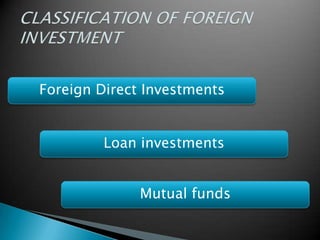
Foreign Direct Investments


         Loan investments


              Mutual funds
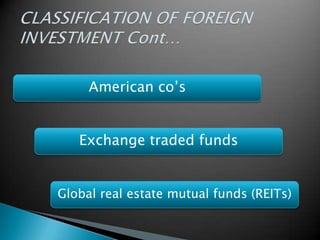
American co’s


   Exchange traded funds


Global real estate mutual funds (REITs)
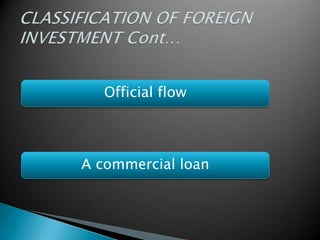
Official flow


A commercial loan
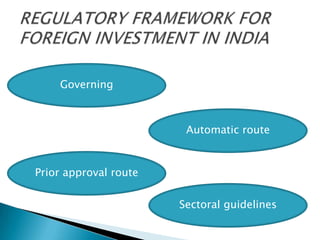
Governing


                        Automatic route


Prior approval route


                       Sectoral guidelines
Foreign Investment Promotion Board(FIPB)
 Expedite clearance process
 Periodically review implementation of cleared
  proposals
 Review general and sectoral policy guidelines
 Undertake investment promotion activities


Secretariat for industrial assistance(SIA)
 Acts as gateway to industrial investment in india
 Assist entrepreneurs & investors in setting up
  projects
 Liaise with govt.bodies to seek necessary clearance.
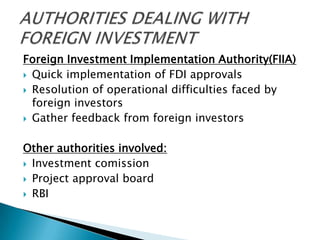
Foreign Investment Implementation Authority(FIIA)
 Quick implementation of FDI approvals
 Resolution of operational difficulties faced by
  foreign investors
 Gather feedback from foreign investors


Other authorities involved:
 Investment comission

 Project approval board
 RBI
Foreign investment is allowed in all areas
  except following sectors where foreign
  investment is prohibited:
 Atomic energy
 Agriculture(except
  floriculture,horticulture,seed development
  etc.)
 Lottery business/gambling & betting
 Plantations(except tea plantations)
Different options for Indian Corporates
 Investment through GDRs & ADRs
 Mobilization of funds through preference
  shares
 Mobilization of fund through external
  commercial borrowings
 Foreign currency exchangeable bonds
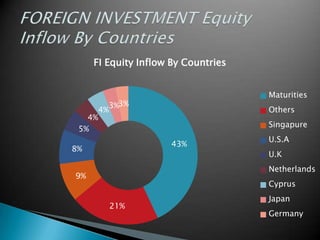
FI Equity Inflow By Countries


                                     Maturities
             3%3%
        4%                           Others
   4%
                                     Singapure
 5%
                                     U.S.A
                     43%
8%
                                     U.K
                                     Netherlands
9%
                                     Cyprus
                                     Japan
             21%
                                     Germany
 Local market demand-86%
 Low cost operations-29%
 Ease of making FDI-29%
 Labour availability-29%
 Entry of other players-24%
 Political stability-24%
 Time zone advantage-14%
 Play a complementary role in overall capital
  formation.
 Employment generation & productivity
  enhancement.
 Encourages the transfer of management
  skills, intellectual property,& technology.
 Improves Forex position of the country.
 Promotion of the competition within the local
  input market.
 Development of the human capital resources.
 Increase in exports.
 Increase tax revenues.
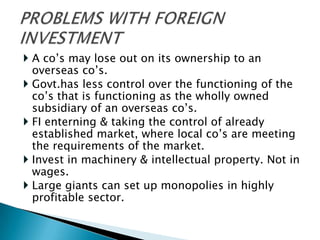
 A co’s may lose out on its ownership to an
  overseas co’s.
 Govt.has less control over the functioning of the
  co’s that is functioning as the wholly owned
  subsidiary of an overseas co’s.
 FI enterning & taking the control of already
  established market, where local co’s are meeting
  the requirements of the market.
 Invest in machinery & intellectual property. Not in
  wages.
 Large giants can set up monopolies in highly
  profitable sector.
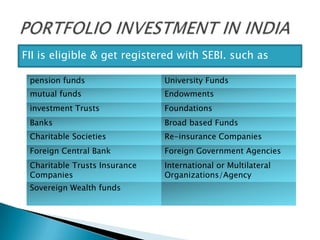
FII is eligible & get registered with SEBI. such as

 pension funds                 University Funds
 mutual funds                  Endowments
 investment Trusts             Foundations
 Banks                         Broad based Funds
 Charitable Societies          Re-insurance Companies
 Foreign Central Bank          Foreign Government Agencies
 Charitable Trusts Insurance   International or Multilateral
 Companies                     Organizations/Agency
 Sovereign Wealth funds
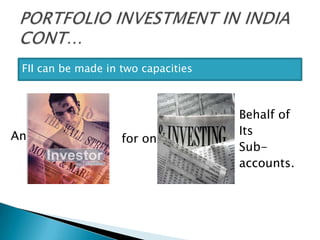
FII can be made in two capacities


                                     Behalf of
An                                   Its
                    for on
                                     Sub-
                                     accounts.
SEBI grants registration to the FII and subaccount
which is permanent unless suspended or cancelled
by SEBI, subject to payment of fees and filing
information every three years.


The FIIs can also access FDI route for investments in
an Indian company.
Foreign investments in india

Foreign investments in india

  • 2.
    FOREIGN INVESTMENT PRESENTING BY- Monica Kalwani , Surabhi Agarwal, Vivek Singh, Madhu Verma, Anurag Kushwaha
  • 3.
    Flows of capitalfrom one nation to another in exchange for significant ownership stakes in domestic companies or other domestic assets. Typically, foreign investment denotes that foreigners take a somewhat active role in management as a part of their investment. Foreign investment typically works both ways, especially between countries of relatively equal economic stature.
  • 4.
    There are variousways to invest in foreign business but there are three main options that many investors use. Consider the following. You can choose to invest in an equity acquisition. In this situation, you are buying shares of an existing company. You could also be purchasing shares in an enterprise just created. Another option is to make loans. You may be a parent company loaning funds to others. You may be a profit reinvestment option. In this situation, you invest in the further expansion of businesses.
  • 5.
    Domestic capital isinadequate for purpose of economic growth. During the period in which the capital market is in the process of development, foreign capital is essential as a temporary measure. Foreign capital brings with it other scarce productive factors; technical know how, business experience and knowledge.
  • 6.
    Foreign Direct Investments Loan investments Mutual funds
  • 7.
    American co’s Exchange traded funds Global real estate mutual funds (REITs)
  • 8.
  • 9.
    Governing Automatic route Prior approval route Sectoral guidelines
  • 10.
    Foreign Investment PromotionBoard(FIPB)  Expedite clearance process  Periodically review implementation of cleared proposals  Review general and sectoral policy guidelines  Undertake investment promotion activities Secretariat for industrial assistance(SIA)  Acts as gateway to industrial investment in india  Assist entrepreneurs & investors in setting up projects  Liaise with govt.bodies to seek necessary clearance.
  • 11.
    Foreign Investment ImplementationAuthority(FIIA)  Quick implementation of FDI approvals  Resolution of operational difficulties faced by foreign investors  Gather feedback from foreign investors Other authorities involved:  Investment comission  Project approval board  RBI
  • 12.
    Foreign investment isallowed in all areas except following sectors where foreign investment is prohibited:  Atomic energy  Agriculture(except floriculture,horticulture,seed development etc.)  Lottery business/gambling & betting  Plantations(except tea plantations)
  • 13.
    Different options forIndian Corporates  Investment through GDRs & ADRs  Mobilization of funds through preference shares  Mobilization of fund through external commercial borrowings  Foreign currency exchangeable bonds
  • 14.
    FI Equity InflowBy Countries Maturities 3%3% 4% Others 4% Singapure 5% U.S.A 43% 8% U.K Netherlands 9% Cyprus Japan 21% Germany
  • 15.
     Local marketdemand-86%  Low cost operations-29%  Ease of making FDI-29%  Labour availability-29%  Entry of other players-24%  Political stability-24%  Time zone advantage-14%
  • 16.
     Play acomplementary role in overall capital formation.  Employment generation & productivity enhancement.  Encourages the transfer of management skills, intellectual property,& technology.  Improves Forex position of the country.  Promotion of the competition within the local input market.  Development of the human capital resources.  Increase in exports.  Increase tax revenues.
  • 17.
     A co’smay lose out on its ownership to an overseas co’s.  Govt.has less control over the functioning of the co’s that is functioning as the wholly owned subsidiary of an overseas co’s.  FI enterning & taking the control of already established market, where local co’s are meeting the requirements of the market.  Invest in machinery & intellectual property. Not in wages.  Large giants can set up monopolies in highly profitable sector.
  • 18.
    FII is eligible& get registered with SEBI. such as pension funds University Funds mutual funds Endowments investment Trusts Foundations Banks Broad based Funds Charitable Societies Re-insurance Companies Foreign Central Bank Foreign Government Agencies Charitable Trusts Insurance International or Multilateral Companies Organizations/Agency Sovereign Wealth funds
  • 19.
    FII can bemade in two capacities Behalf of An Its for on Sub- accounts.
  • 20.
    SEBI grants registrationto the FII and subaccount which is permanent unless suspended or cancelled by SEBI, subject to payment of fees and filing information every three years. The FIIs can also access FDI route for investments in an Indian company.