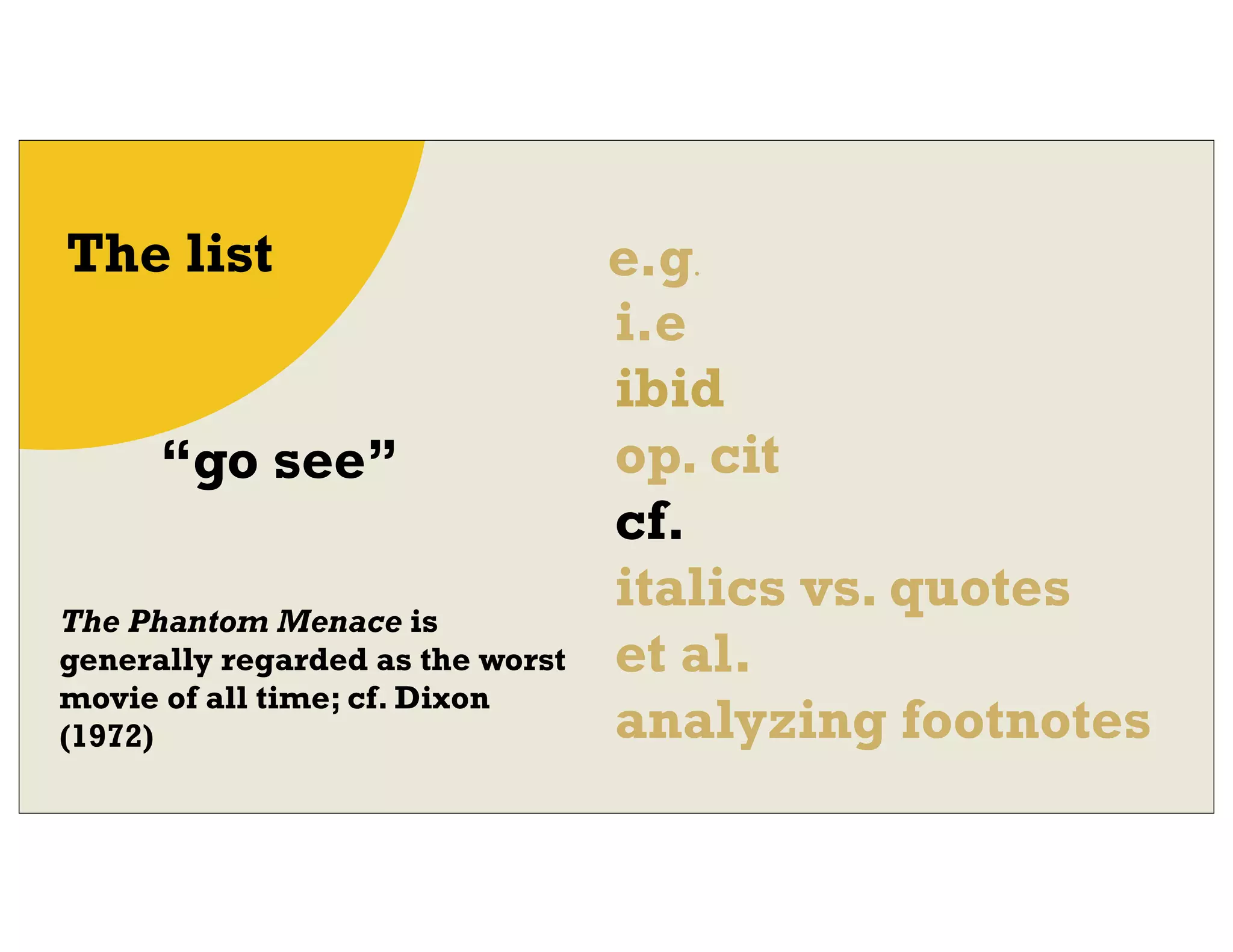
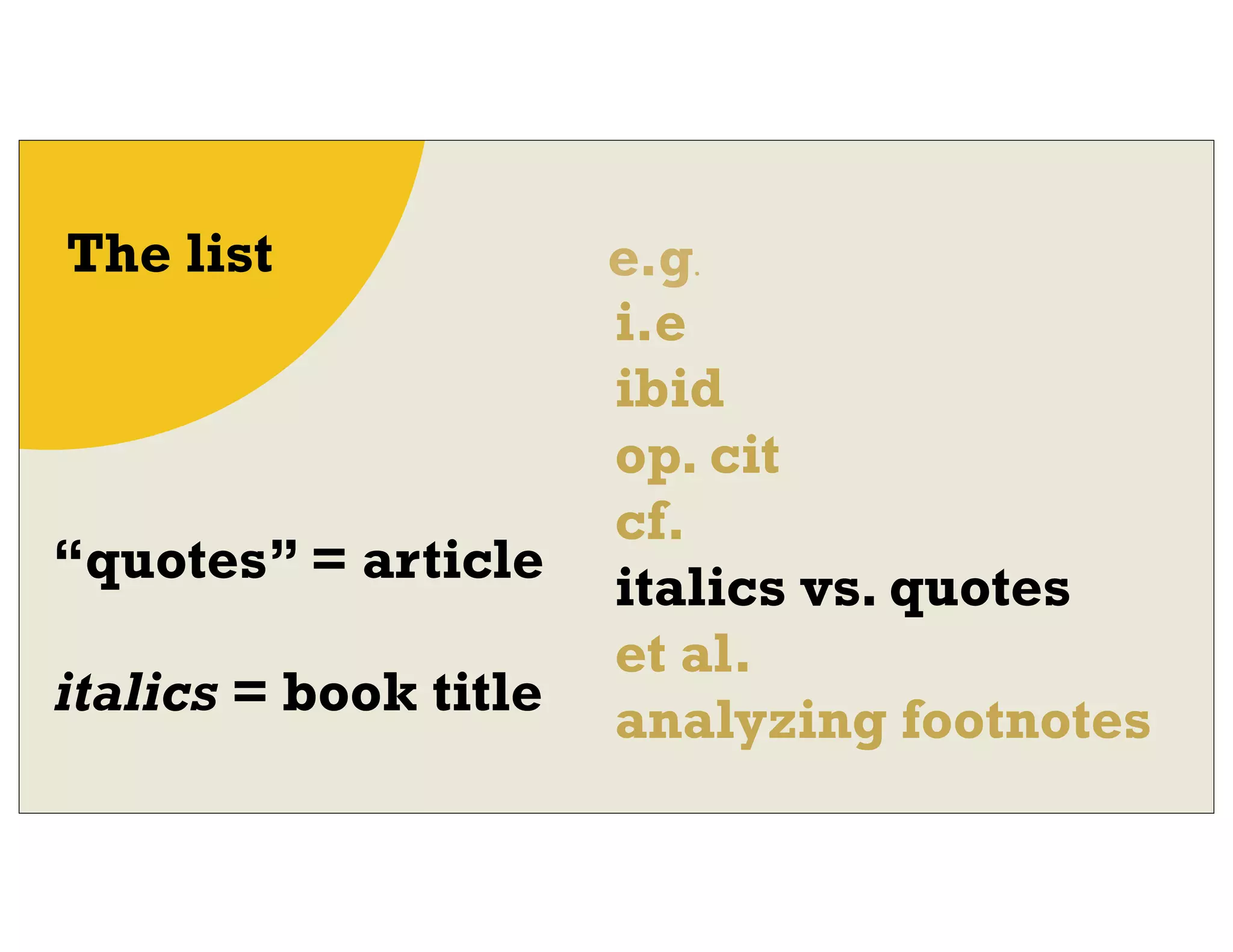
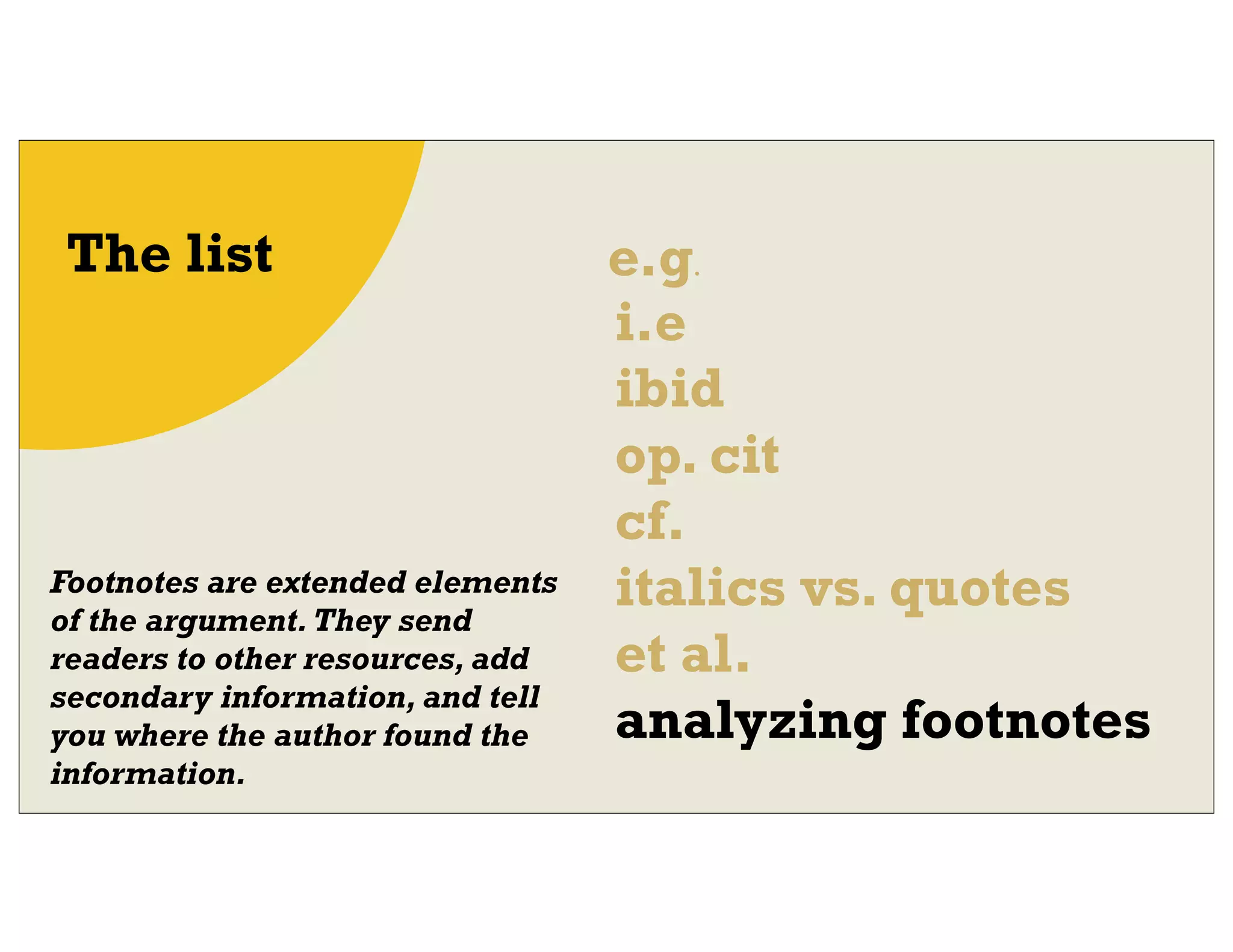
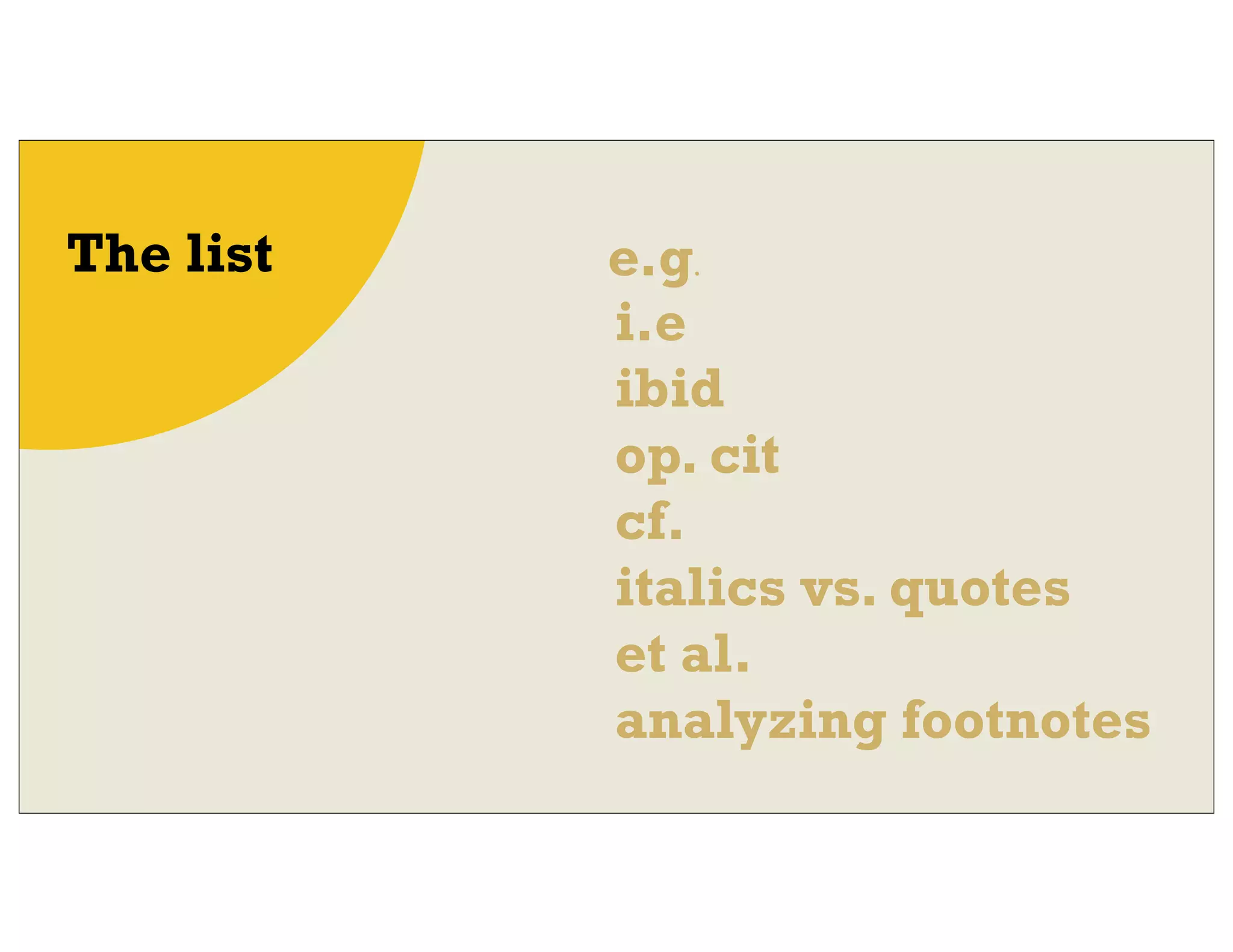
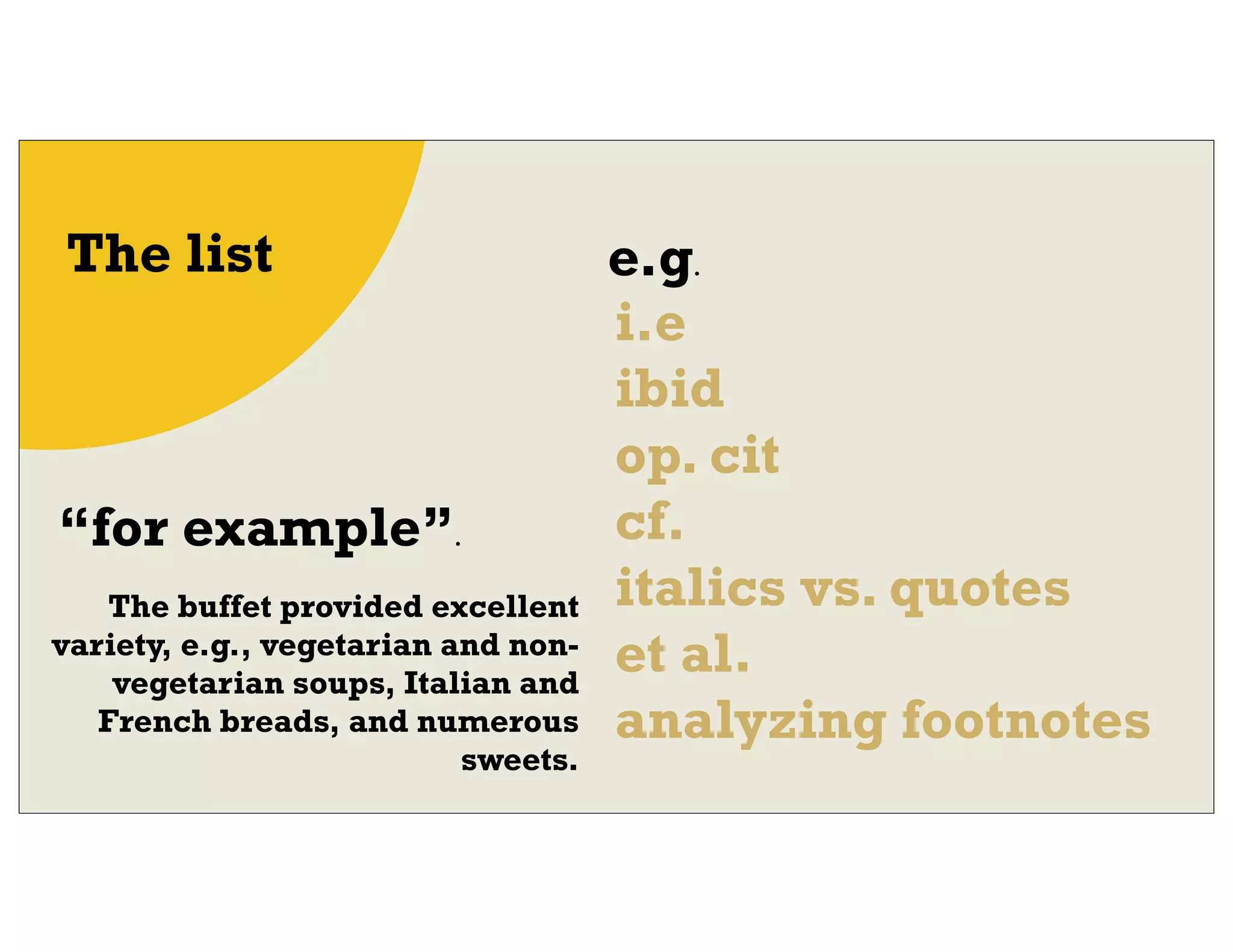
This document defines and provides examples of common footnote abbreviations: e.g. (for example), i.e. (in other words), ibid (see the last citation), op. cit (already cited), cf. (go see), italics vs quotes (quotes indicate articles, italics indicate book titles), et al. (and others). It explains that footnotes send readers to other resources, provide additional information, and cite where the author found the information, effectively extending the argument presented in the text. The document encourages analyzing footnotes in the context of how they modify or support the overarching argument.

![e.g.
i.e
ibid
op. cit
cf.
italics vs. quotes
et al.
analyzing footnotes
The list
“see the last
citation”
[1] E.Vijh, Latin for Dummies
(NewYork: Academic, 1997), p.
23.
[2] Ibid.
[3] Ibid., p. 29.](https://image.slidesharecdn.com/footnoteterminology-140428091213-phpapp01/75/Footnote-terminology-5-2048.jpg)