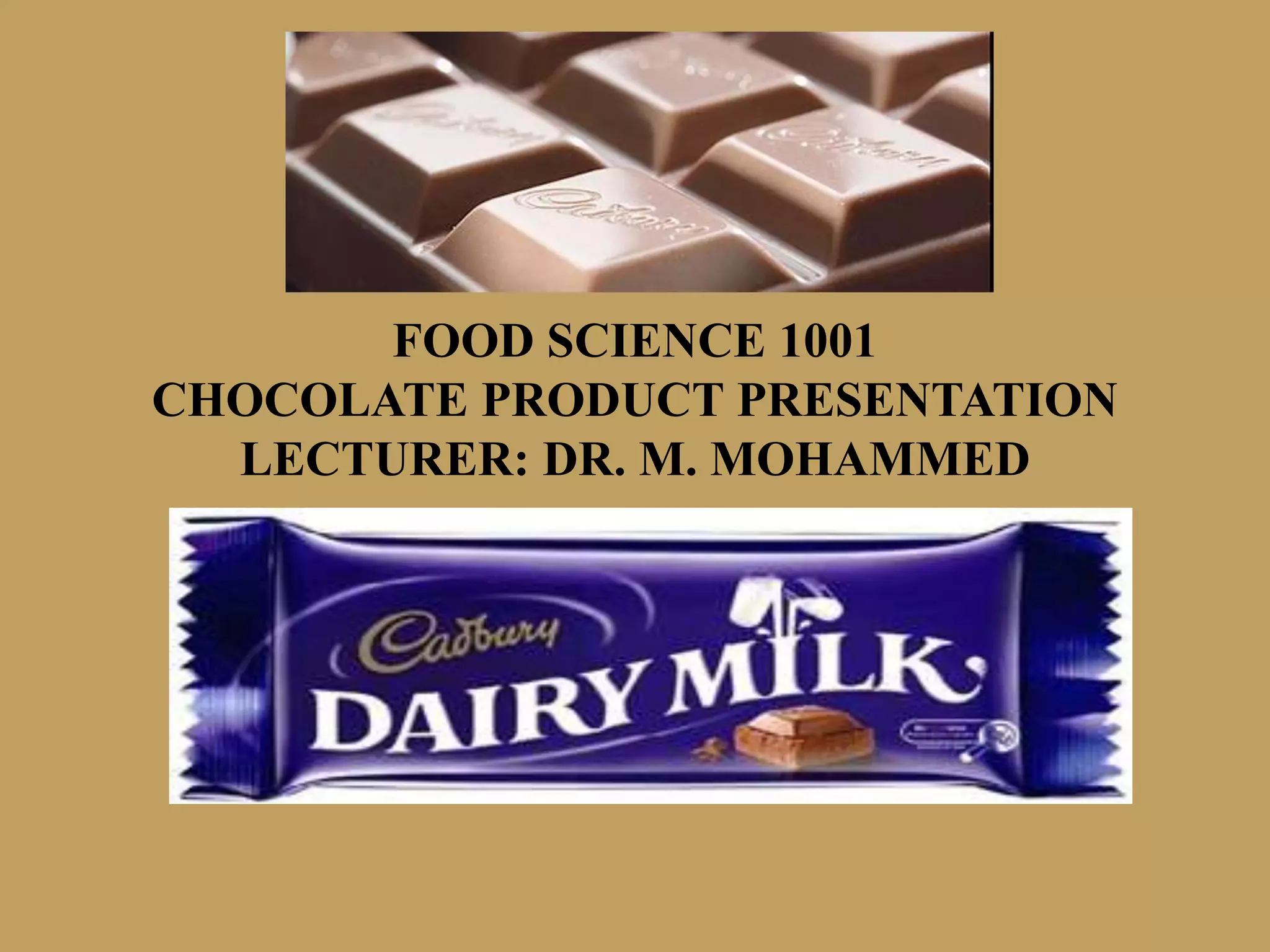



FOOD SCIENCE 1001
CHOCOLATE PRODUCT PRESENTATION
  LECTURER: DR. M. MOHAMMED
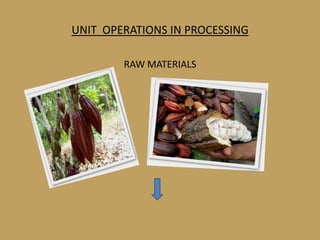
UNIT OPERATIONS IN PROCESSING

        RAW MATERIALS
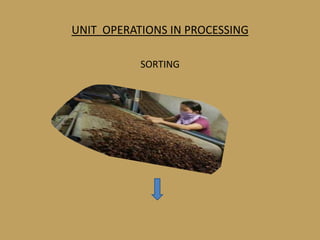
UNIT OPERATIONS IN PROCESSING

           SORTING
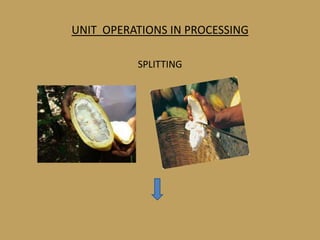
UNIT OPERATIONS IN PROCESSING

          SPLITTING
UNIT OPERATIONS IN PROCESSING

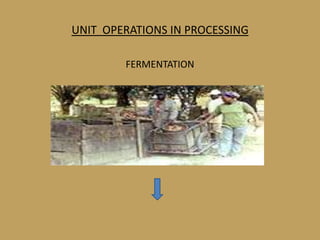
        FERMENTATION
UNIT OPERATIONS IN PROCESSING

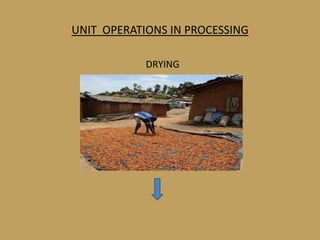
            DRYING
UNIT OPERATIONS IN PROCESSING

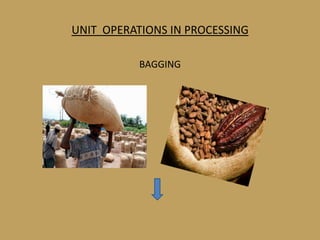
           BAGGING
UNIT OPERATIONS IN PROCESSING

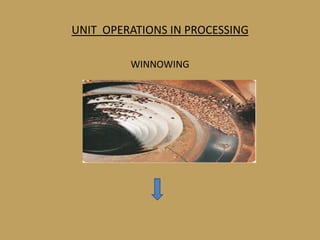
         WINNOWING
UNIT OPERATIONS IN PROCESSING

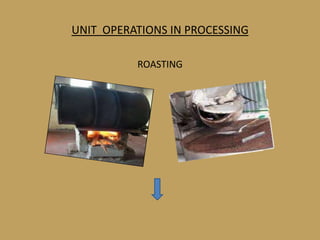
          ROASTING
UNIT OPERATIONS IN PROCESSING


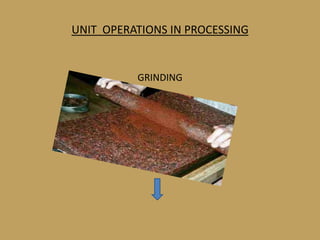
          GRINDING
UNIT OPERATIONS IN PROCESSING

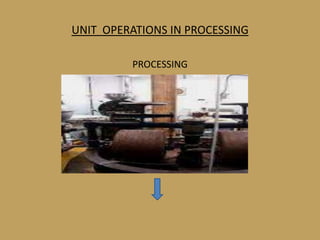
         PROCESSING
UNIT OPERATIONS IN PROCESSING

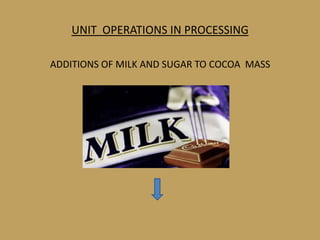
ADDITIONS OF MILK AND SUGAR TO COCOA MASS
UNIT OPERATIONS IN PROCESSING

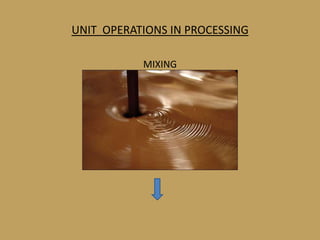
           MIXING
UNIT OPERATIONS IN PROCESSING

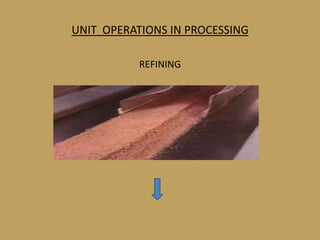
           REFINING
UNIT OPERATIONS IN PROCESSING

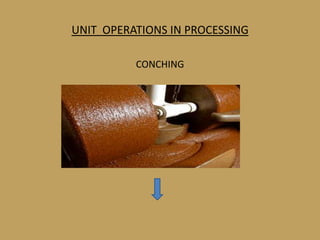
          CONCHING
UNIT OPERATIONS IN PROCESSING

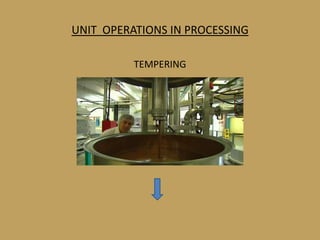
          TEMPERING
UNIT OPERATIONS IN PROCESSING

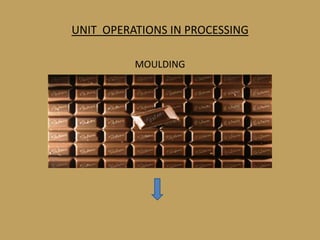
          MOULDING
UNIT OPERATIONS IN PROCESSING

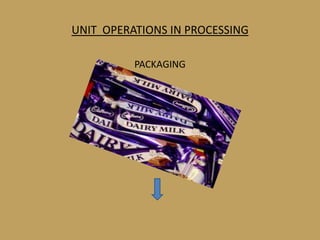
          PACKAGING
UNIT OPERATIONS IN PROCESSING

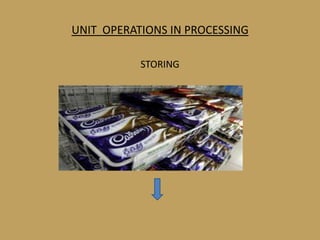
           STORING
UNIT OPERATIONS IN PROCESSING


         DISTRIBUTION
CRITICAL CONTROL POINTS FOR QUALITY CONTROL

ROASTING- Nibs are roasted at temperatures between 105-120
  degrees celsius for 30-120 minutes.

CONCHING- The semi liquid mixture is mixed at about 60
  degrees celsius for 96-120 hours.

STORAGE- While waiting on distribution, the chocolate is stored
  at 18 degrees celsius with a relative humidity of less than 75
  percent.
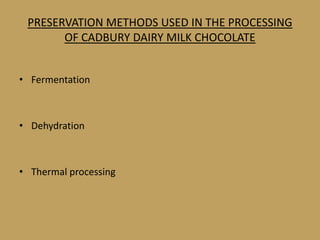
PRESERVATION METHODS USED IN THE PROCESSING
       OF CADBURY DAIRY MILK CHOCOLATE


• Fermentation


• Dehydration


• Thermal processing
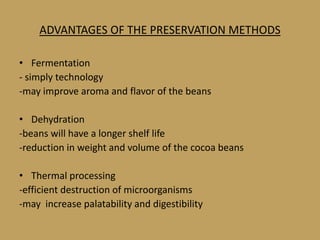
ADVANTAGES OF THE PRESERVATION METHODS

• Fermentation
- simply technology
-may improve aroma and flavor of the beans

• Dehydration
-beans will have a longer shelf life
-reduction in weight and volume of the cocoa beans

• Thermal processing
-efficient destruction of microorganisms
-may increase palatability and digestibility
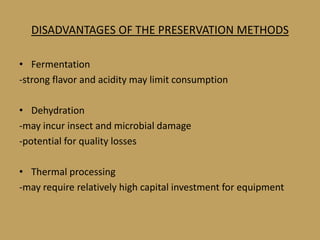
DISADVANTAGES OF THE PRESERVATION METHODS

• Fermentation
-strong flavor and acidity may limit consumption

• Dehydration
-may incur insect and microbial damage
-potential for quality losses

• Thermal processing
-may require relatively high capital investment for equipment
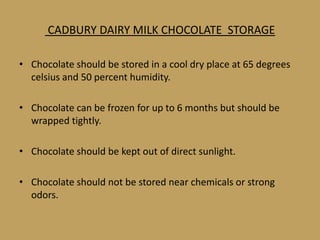
CADBURY DAIRY MILK CHOCOLATE STORAGE

• Chocolate should be stored in a cool dry place at 65 degrees
  celsius and 50 percent humidity.

• Chocolate can be frozen for up to 6 months but should be
  wrapped tightly.

• Chocolate should be kept out of direct sunlight.

• Chocolate should not be stored near chemicals or strong
  odors.
CADBURY PACKAGING
The material used to package the chocolate bar is called
  polyethylene aluminium.

• Advantages
-cost is relatively low
-good barrier properties against moisture and gases

• Disadvantages
-poor handling can cause tearing
-if not coated with aluminium, exposure to sunlight affects the
    chocolate nutrients and colour
CADBURY LABELING

• All labeling information must appear on the packaging

• Label must be clearly visible on the packaging
  ( Food Standards Agency UK )

• Chocolate labels must list additives, ingredients and nutrition
  information such as fat and protein content
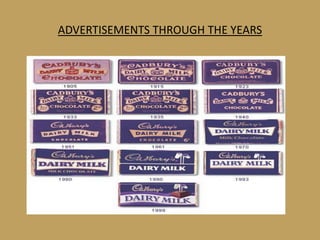
ADVERTISEMENTS THROUGH THE YEARS
THE GLASS AND A HALF PHENOMENOM

• The iconic “glass and a half” measure of milk has made
  Cadbury one of the most recognizable brands out on the
  market.

• The “glass and a half” measurement being poured onto the
  chocolate bar was to show that the bar is made of a glass and
  a half of milk. The product and advert were supposed to
  highlight the fact that the chocolate was nutritional.

• The target audience of Cadbury chocolate , are people of all
  ages.
SENSORY EVALUATION AND CONSUMER ACCEPTABILITY

• Sensory evaluation of Cadbury chocolate is conducted as a
  means of quality control, product improvement and to ensure
  inter-batch consistency.

• Sensory properties drive consumer acceptability and
  purchasing behaviour of the product.

• In conducting sensory evaluation Cadbury utilizes the senses:
  sight, touch, smell and taste.
FOOD LAW REGULATIONS
• Milk chocolate
-not less than 25 percent total dry cocoa solids
-not less than 14 percent dry milk solids obtained by partly or
   wholly dehydrated whole milk, semi skimmed or skimmed
   milk, cream or from partly or wholly dehydrated cream, butter
   or milk fat
-not less than2.5 percent dry non fat cocoa solids
-not less than 3.5 percent milk fats
-not less than 25 percent total fat( cocoa butter and milk fat)
( Food Standards Agency UK)
CADBURY CHOCOLATE WASTE DISPOSAL


• On July 2007, Cadbury chocolate company embarked on an
  environmental campaign entitled “ Purple Goes Green”.


• Cadbury waste has diverted from landfill disposal to recycling
  and recovery by the recycling company called Greyhound.
GROUP MEMBERS

•   JOSANNE AGUILAL
•   GABRIELLA ALPHONSO
•   ROSHNI SINGH
•   KEZIA DALRYMPLE
•   KERN ROCKE
•   RENELL NURSE
•   RHONDA CHARLES
•   GARVIN RAMSOOK
•   NATHALIA RUPERT
•   TESSA BLACKMAN
THANK YOU!

Food science project

  • 1.
    FOOD SCIENCE 1001 CHOCOLATEPRODUCT PRESENTATION LECTURER: DR. M. MOHAMMED
  • 2.
    UNIT OPERATIONS INPROCESSING RAW MATERIALS
  • 3.
    UNIT OPERATIONS INPROCESSING SORTING
  • 4.
    UNIT OPERATIONS INPROCESSING SPLITTING
  • 5.
    UNIT OPERATIONS INPROCESSING FERMENTATION
  • 6.
    UNIT OPERATIONS INPROCESSING DRYING
  • 7.
    UNIT OPERATIONS INPROCESSING BAGGING
  • 8.
    UNIT OPERATIONS INPROCESSING WINNOWING
  • 9.
    UNIT OPERATIONS INPROCESSING ROASTING
  • 10.
    UNIT OPERATIONS INPROCESSING GRINDING
  • 11.
    UNIT OPERATIONS INPROCESSING PROCESSING
  • 12.
    UNIT OPERATIONS INPROCESSING ADDITIONS OF MILK AND SUGAR TO COCOA MASS
  • 13.
    UNIT OPERATIONS INPROCESSING MIXING
  • 14.
    UNIT OPERATIONS INPROCESSING REFINING
  • 15.
    UNIT OPERATIONS INPROCESSING CONCHING
  • 16.
    UNIT OPERATIONS INPROCESSING TEMPERING
  • 17.
    UNIT OPERATIONS INPROCESSING MOULDING
  • 18.
    UNIT OPERATIONS INPROCESSING PACKAGING
  • 19.
    UNIT OPERATIONS INPROCESSING STORING
  • 20.
    UNIT OPERATIONS INPROCESSING DISTRIBUTION
  • 21.
    CRITICAL CONTROL POINTSFOR QUALITY CONTROL ROASTING- Nibs are roasted at temperatures between 105-120 degrees celsius for 30-120 minutes. CONCHING- The semi liquid mixture is mixed at about 60 degrees celsius for 96-120 hours. STORAGE- While waiting on distribution, the chocolate is stored at 18 degrees celsius with a relative humidity of less than 75 percent.
  • 22.
    PRESERVATION METHODS USEDIN THE PROCESSING OF CADBURY DAIRY MILK CHOCOLATE • Fermentation • Dehydration • Thermal processing
  • 23.
    ADVANTAGES OF THEPRESERVATION METHODS • Fermentation - simply technology -may improve aroma and flavor of the beans • Dehydration -beans will have a longer shelf life -reduction in weight and volume of the cocoa beans • Thermal processing -efficient destruction of microorganisms -may increase palatability and digestibility
  • 24.
    DISADVANTAGES OF THEPRESERVATION METHODS • Fermentation -strong flavor and acidity may limit consumption • Dehydration -may incur insect and microbial damage -potential for quality losses • Thermal processing -may require relatively high capital investment for equipment
  • 25.
    CADBURY DAIRY MILKCHOCOLATE STORAGE • Chocolate should be stored in a cool dry place at 65 degrees celsius and 50 percent humidity. • Chocolate can be frozen for up to 6 months but should be wrapped tightly. • Chocolate should be kept out of direct sunlight. • Chocolate should not be stored near chemicals or strong odors.
  • 26.
    CADBURY PACKAGING The materialused to package the chocolate bar is called polyethylene aluminium. • Advantages -cost is relatively low -good barrier properties against moisture and gases • Disadvantages -poor handling can cause tearing -if not coated with aluminium, exposure to sunlight affects the chocolate nutrients and colour
  • 27.
    CADBURY LABELING • Alllabeling information must appear on the packaging • Label must be clearly visible on the packaging ( Food Standards Agency UK ) • Chocolate labels must list additives, ingredients and nutrition information such as fat and protein content
  • 28.
  • 29.
    THE GLASS ANDA HALF PHENOMENOM • The iconic “glass and a half” measure of milk has made Cadbury one of the most recognizable brands out on the market. • The “glass and a half” measurement being poured onto the chocolate bar was to show that the bar is made of a glass and a half of milk. The product and advert were supposed to highlight the fact that the chocolate was nutritional. • The target audience of Cadbury chocolate , are people of all ages.
  • 30.
    SENSORY EVALUATION ANDCONSUMER ACCEPTABILITY • Sensory evaluation of Cadbury chocolate is conducted as a means of quality control, product improvement and to ensure inter-batch consistency. • Sensory properties drive consumer acceptability and purchasing behaviour of the product. • In conducting sensory evaluation Cadbury utilizes the senses: sight, touch, smell and taste.
  • 31.
    FOOD LAW REGULATIONS •Milk chocolate -not less than 25 percent total dry cocoa solids -not less than 14 percent dry milk solids obtained by partly or wholly dehydrated whole milk, semi skimmed or skimmed milk, cream or from partly or wholly dehydrated cream, butter or milk fat -not less than2.5 percent dry non fat cocoa solids -not less than 3.5 percent milk fats -not less than 25 percent total fat( cocoa butter and milk fat) ( Food Standards Agency UK)
  • 32.
    CADBURY CHOCOLATE WASTEDISPOSAL • On July 2007, Cadbury chocolate company embarked on an environmental campaign entitled “ Purple Goes Green”. • Cadbury waste has diverted from landfill disposal to recycling and recovery by the recycling company called Greyhound.
  • 33.
    GROUP MEMBERS • JOSANNE AGUILAL • GABRIELLA ALPHONSO • ROSHNI SINGH • KEZIA DALRYMPLE • KERN ROCKE • RENELL NURSE • RHONDA CHARLES • GARVIN RAMSOOK • NATHALIA RUPERT • TESSA BLACKMAN
  • 34.