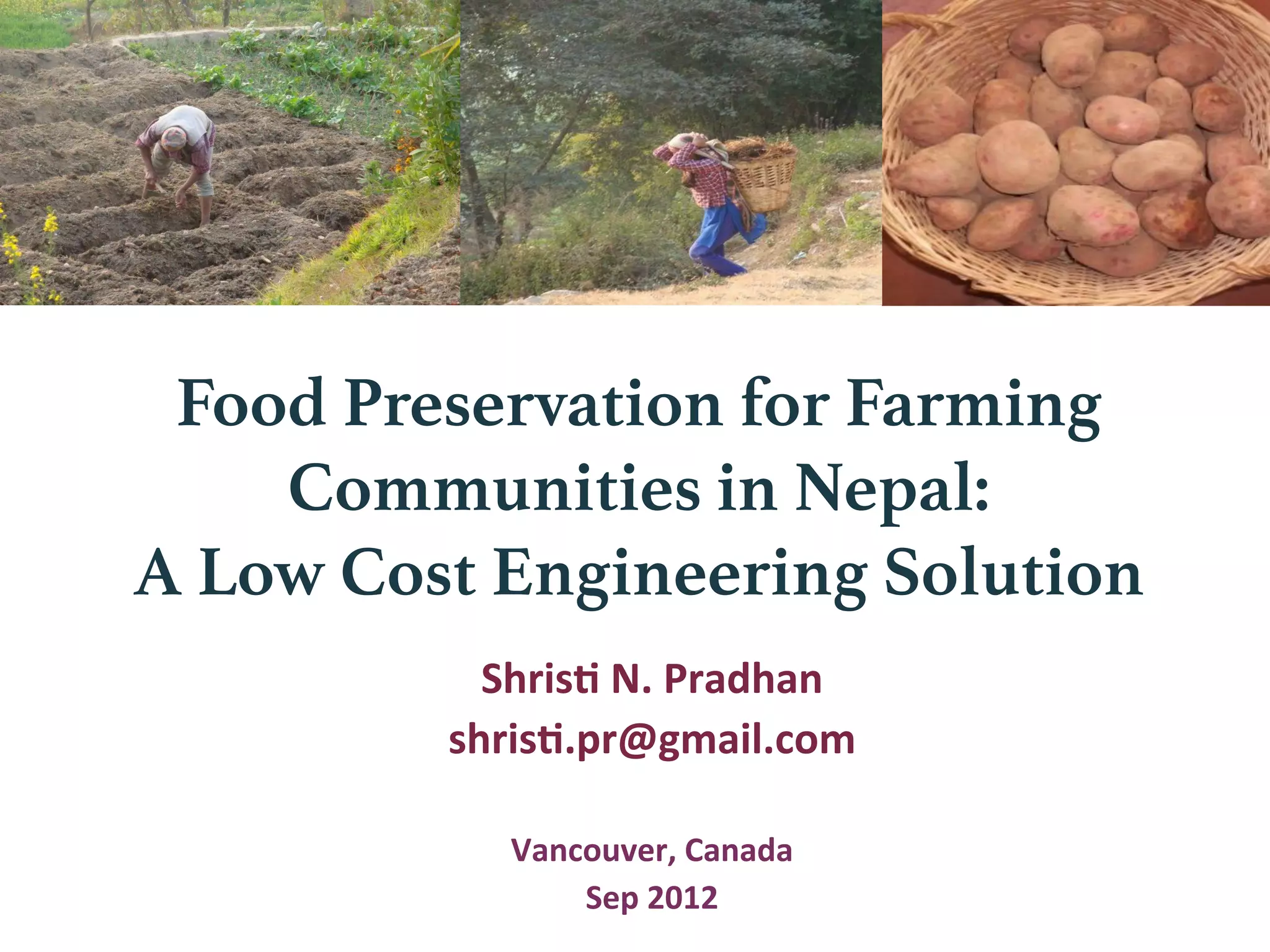

Food Preservation for Farming
Communities in Nepal:!
A Low Cost Engineering Solution
Shris&	
  N.	
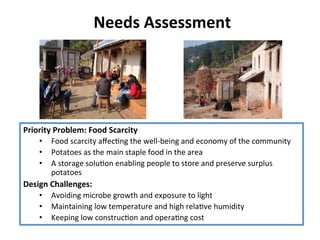
  Pradhan	
  
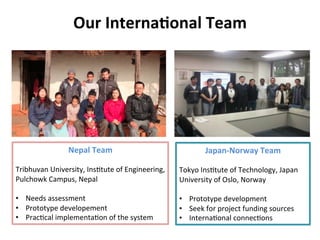
shris&.pr@gmail.com	


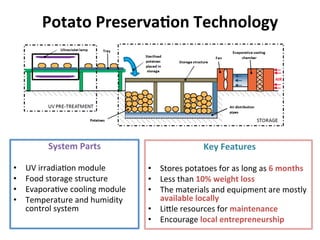
Vancouver,	
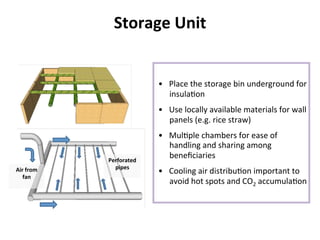
  Canada	
  
Sep	
  2012	
  
Outline	
  
•  Nepal	
  Agricultural	
  Background	
  
•  Needs	
  Assessment	
  in	
  Various	
  Villages	
  
•  Our	
  Interna8onal	
  Team	
  
•  Technology	
  for	
  Food	
  Preserva8on	
  
•  Mondialogo	
  Engineering	
  Award	
  2009	
  
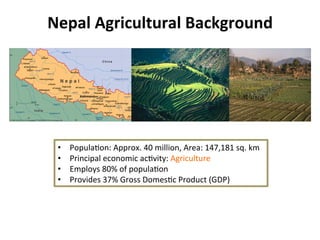
Nepal	
  Agricultural	
  Background	
  
•  Popula8on:	
  Approx.	
  40	
  million,	
  Area:	
  147,181	
  sq.	
  km	


•  Principal	
  economic	
  ac8vity:	
  Agriculture	
  
•  Employs	
  80%	
  of	
  popula8on	
  
•  Provides	
  37%	
  Gross	
  Domes8c	
  Product	
  (GDP)	
  
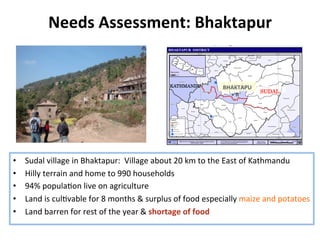
Needs	
  Assessment:	
  Bhaktapur	
  
•  Sudal	
  village	
  in	
  Bhaktapur:	
  	
  Village	
  about	
  20	
  km	
  to	
  the	
  East	
  of	
  Kathmandu	
  	
  
•  Hilly	
  terrain	
  and	
  home	
  to	
  990	
  households	
  	
  
•  94%	
  popula8on	
  live	
  on	
  agriculture	
  
•  Land	
  is	
  cul8vable	
  for	
  8	
  months	
  &	
  surplus	
  of	
  food	
  especially	
  maize	
  and	
  potatoes	
  
•  Land	
  barren	
  for	
  rest	
  of	
  the	
  year	
  &	
  shortage	
  of	
  food	
  
SUDAL	
BHAKTAPU
R	
KATHMANDU
Needs	
  Assessment	
  
Priority	
  Problem:	
  Food	
  Scarcity	
  
•  Food	
  scarcity	
  affec8ng	
  the	
  well-­‐being	
  and	
  economy	
  of	
  the	
  community	
  
•  Potatoes	
  as	
  the	
  main	
  staple	
  food	
  in	
  the	
  area	
  
•  A	
  storage	
  solu8on	
  enabling	
  people	
  to	
  store	
  and	
  preserve	
  surplus	
  
potatoes	
  
Design	
  Challenges:	
  
•  Avoiding	
  microbe	
  growth	
  and	
  exposure	
  to	
  light	


•  Maintaining	
  low	
  temperature	
  and	
  high	
  rela8ve	
  humidity	
  
•  Keeping	
  low	
  construc8on	
  and	
  opera8ng	
  cost	
  
Our	
  Interna&onal	
  Team	
  
Nepal	
  Team	


Tribhuvan	
  University,	
  Ins8tute	
  of	
  Engineering,	
  	
  
Pulchowk	
  Campus,	
  Nepal	


•  Needs	
  assessment	
  
•  Prototype	
  developement	
  
•  Prac8cal	
  implementa8on	
  of	
  the	
  system	
  
Japan-­‐Norway	
  Team	


Tokyo	
  Ins8tute	
  of	
  Technology,	
  Japan	
  
University	
  of	
  Oslo,	
  Norway	


•  Prototype	
  development	
  
•  Seek	
  for	
  project	
  funding	
  sources	
  
•  Interna8onal	
  connec8ons	
  
Potato	
  Preserva&on	
  Technology	
  
System	
  Parts	
  
•  UV	
  irradia8on	
  module	
  	
  
•  Food	
  storage	
  structure	
  
•  Evapora8ve	
  cooling	
  module	
  
•  Temperature	
  and	
  humidity	
  
control	
  system	


  Key	
  Features	


•  Stores	
  potatoes	
  for	
  as	
  long	
  as	
  6	
  months	
  	
  
•  Less	
  than	
  10%	
  weight	
  loss	
  
•  The	
  materials	
  and	
  equipment	
  are	
  mostly	
  
available	
  locally	
  
•  Lible	
  resources	
  for	
  maintenance	
  
•  Encourage	
  local	
  entrepreneurship	
  
Storage	
  Unit	
  
•  Place	
  the	
  storage	
  bin	
  underground	
  for	
  
insula8on	
  
•  Use	
  locally	
  available	
  materials	
  for	
  wall	
  
panels	
  (e.g.	
  rice	
  straw)	
  	
  
•  Mul8ple	
  chambers	
  for	
  ease	
  of	
  
handling	
  and	
  sharing	
  among	
  
beneficiaries	
  
•  Cooling	
  air	
  distribu8on	
  important	
  to	
  
avoid	
  hot	
  spots	
  and	
  CO2	
  accumula8on	


Perforated	
  
pipes	
  Air	
  from	
  
fan	
  
Cooling	
  Control	
  System	
  
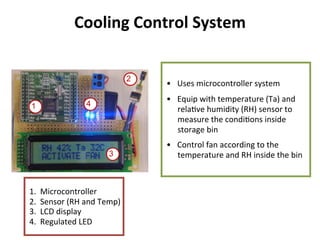
•  Uses	
  microcontroller	
  system	
  
•  Equip	
  with	
  temperature	
  (Ta)	
  and	
  
rela8ve	
  humidity	
  (RH)	
  sensor	
  to	
  
measure	
  the	
  condi8ons	
  inside	
  
storage	
  bin	
  
•  Control	
  fan	
  according	
  to	
  the	
  
temperature	
  and	
  RH	
  inside	
  the	
  bin	


1.  Microcontroller	
  
2.  Sensor	
  (RH	
  and	
  Temp)	
  
3.  LCD	
  display	
  
4.  Regulated	
  LED	
  
2
1
3
4
Mondialogo	
  Engineering	
  Project	
  
United	
  Na&ons	
  Millennium	
  
Development	
  Goals	
  
•  Food	
  security	
  
•  Poverty	
  reduc8on	
  
•  Environmental	
  protec8on	
  
Mondialogo	
  Engineering	
  Gold	
  Award	
  Winner	
  2008/09	
  !!	
  
•  Selected	
  among	
  932	
  submibed	
  
project	
  ideas	
  from	
  94	
  coun8es	
  
•  Awarded	
  with	
  €15,000	
  as	
  seed	
  
funding	
  for	
  the	
  implementa8on	
  
of	
  the	
  project	


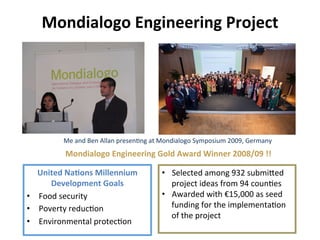
Me	
  and	
  Ben	
  Allan	
  presen8ng	
  at	
  Mondialogo	
  Symposium	
  2009,	
  Germany	
  
Thank	
  You	
  !	
  

Food Preservation for Farming Communities in Nepal: A Low Cost Engineering Solution

  • 1.
    Food Preservation forFarming Communities in Nepal:! A Low Cost Engineering Solution Shris&  N.  Pradhan   shris&.pr@gmail.com     Vancouver,  Canada   Sep  2012  
  • 2.
    Outline   •  Nepal  Agricultural  Background   •  Needs  Assessment  in  Various  Villages   •  Our  Interna8onal  Team   •  Technology  for  Food  Preserva8on   •  Mondialogo  Engineering  Award  2009  
  • 3.
    Nepal  Agricultural  Background   •  Popula8on:  Approx.  40  million,  Area:  147,181  sq.  km       •  Principal  economic  ac8vity:  Agriculture   •  Employs  80%  of  popula8on   •  Provides  37%  Gross  Domes8c  Product  (GDP)  
  • 4.
    Needs  Assessment:  Bhaktapur   •  Sudal  village  in  Bhaktapur:    Village  about  20  km  to  the  East  of  Kathmandu     •  Hilly  terrain  and  home  to  990  households     •  94%  popula8on  live  on  agriculture   •  Land  is  cul8vable  for  8  months  &  surplus  of  food  especially  maize  and  potatoes   •  Land  barren  for  rest  of  the  year  &  shortage  of  food   SUDAL BHAKTAPU R KATHMANDU
  • 5.
    Needs  Assessment   Priority  Problem:  Food  Scarcity   •  Food  scarcity  affec8ng  the  well-­‐being  and  economy  of  the  community   •  Potatoes  as  the  main  staple  food  in  the  area   •  A  storage  solu8on  enabling  people  to  store  and  preserve  surplus   potatoes   Design  Challenges:   •  Avoiding  microbe  growth  and  exposure  to  light       •  Maintaining  low  temperature  and  high  rela8ve  humidity   •  Keeping  low  construc8on  and  opera8ng  cost  
  • 6.
    Our  Interna&onal  Team   Nepal  Team     Tribhuvan  University,  Ins8tute  of  Engineering,     Pulchowk  Campus,  Nepal     •  Needs  assessment   •  Prototype  developement   •  Prac8cal  implementa8on  of  the  system   Japan-­‐Norway  Team     Tokyo  Ins8tute  of  Technology,  Japan   University  of  Oslo,  Norway     •  Prototype  development   •  Seek  for  project  funding  sources   •  Interna8onal  connec8ons  
  • 7.
    Potato  Preserva&on  Technology   System  Parts   •  UV  irradia8on  module     •  Food  storage  structure   •  Evapora8ve  cooling  module   •  Temperature  and  humidity   control  system      Key  Features     •  Stores  potatoes  for  as  long  as  6  months     •  Less  than  10%  weight  loss   •  The  materials  and  equipment  are  mostly   available  locally   •  Lible  resources  for  maintenance   •  Encourage  local  entrepreneurship  
  • 8.
    Storage  Unit   • Place  the  storage  bin  underground  for   insula8on   •  Use  locally  available  materials  for  wall   panels  (e.g.  rice  straw)     •  Mul8ple  chambers  for  ease  of   handling  and  sharing  among   beneficiaries   •  Cooling  air  distribu8on  important  to   avoid  hot  spots  and  CO2  accumula8on     Perforated   pipes  Air  from   fan  
  • 9.
    Cooling  Control  System   •  Uses  microcontroller  system   •  Equip  with  temperature  (Ta)  and   rela8ve  humidity  (RH)  sensor  to   measure  the  condi8ons  inside   storage  bin   •  Control  fan  according  to  the   temperature  and  RH  inside  the  bin     1.  Microcontroller   2.  Sensor  (RH  and  Temp)   3.  LCD  display   4.  Regulated  LED   2 1 3 4
  • 10.
    Mondialogo  Engineering  Project   United  Na&ons  Millennium   Development  Goals   •  Food  security   •  Poverty  reduc8on   •  Environmental  protec8on   Mondialogo  Engineering  Gold  Award  Winner  2008/09  !!   •  Selected  among  932  submibed   project  ideas  from  94  coun8es   •  Awarded  with  €15,000  as  seed   funding  for  the  implementa8on   of  the  project     Me  and  Ben  Allan  presen8ng  at  Mondialogo  Symposium  2009,  Germany  
  • 11.