THE FOOD LABEL
Why a it is a source of consumer education it is mandatory food statements must meet FDA/USDA definitions health claims and affects of diet on health makes comparison of products easy helps you balance food choices FOOD LABEL?
FOOD LABELS AND  THE NUTRITION FACTS   all foods have pros  +  and cons  - look at the total label for the total picture  can find 14 pieces of information
1. SERVING SIZES must give the servings size in a consistent realistic household and metric measures uniform across product lines sizes are close to amount people eat * 28g = 1oz. * 1g = 1,000mg ~total servings per container are listed
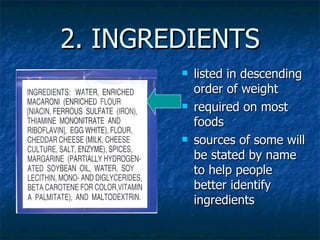
2. INGREDIENTS listed in descending order of weight required on most foods sources of some will be stated by name to help people better identify ingredients
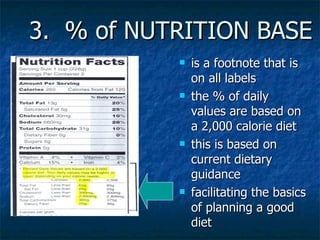
3.  % of NUTRITION BASE is a footnote that is on all labels the % of daily values are based on a 2,000 calorie diet this is based on current dietary guidance facilitating the basics of planning a good diet
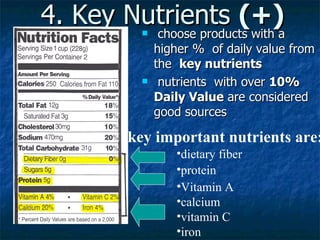
4. Key Nutrients  (+) choose products with a higher %  of daily value from the  key nutrients   nutrients  with over  10% Daily Value  are considered good sources  dietary fiber protein Vitamin A calcium vitamin C iron key important nutrients are:
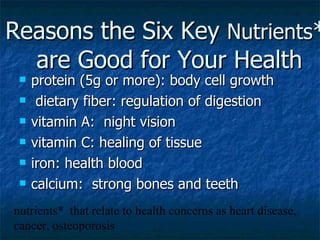
Reasons the Six Key  Nutrients *  are Good for Your Health protein (5g or more): body cell growth dietary fiber: regulation of digestion vitamin A:  night vision vitamin C: healing of tissue iron: health blood calcium:  strong bones and teeth nutrients*  that relate to health concerns as heart disease, cancer, osteoporosis
5.  Excessive Nutrients  too much can cause health problems eat in  moderation over 200 calories is too many 10 % or more of fat, cholesterol, and sodium is excessive
SUMMARY in order to“get the total picture” when reading a food label, one needs to understand the complete label, not just one portion, in order to make an informed decision about the  planned daily food intake  use the % of Daily Value to quickly compare foods and understand how the serving fits into a 2,000 calorie diet plan a daily menu to meet the % Daily Value  to help one eat a balanced diet the  nutritions should = 100% of the key nutrition for a health daily menu plan avoid buying and consuming foods with excessive nutrition's
… With this new “tool”  one’s  decision making related to nutrition food intake and purchasing is made easier.  Good nutrition eating!

Food Label

  • 1.
  • 2.
    Why a itis a source of consumer education it is mandatory food statements must meet FDA/USDA definitions health claims and affects of diet on health makes comparison of products easy helps you balance food choices FOOD LABEL?
  • 3.
    FOOD LABELS AND THE NUTRITION FACTS all foods have pros + and cons - look at the total label for the total picture can find 14 pieces of information
  • 4.
    1. SERVING SIZESmust give the servings size in a consistent realistic household and metric measures uniform across product lines sizes are close to amount people eat * 28g = 1oz. * 1g = 1,000mg ~total servings per container are listed
  • 5.
    2. INGREDIENTS listedin descending order of weight required on most foods sources of some will be stated by name to help people better identify ingredients
  • 6.
    3. %of NUTRITION BASE is a footnote that is on all labels the % of daily values are based on a 2,000 calorie diet this is based on current dietary guidance facilitating the basics of planning a good diet
  • 7.
    4. Key Nutrients (+) choose products with a higher % of daily value from the key nutrients nutrients with over 10% Daily Value are considered good sources dietary fiber protein Vitamin A calcium vitamin C iron key important nutrients are:
  • 8.
    Reasons the SixKey Nutrients * are Good for Your Health protein (5g or more): body cell growth dietary fiber: regulation of digestion vitamin A: night vision vitamin C: healing of tissue iron: health blood calcium: strong bones and teeth nutrients* that relate to health concerns as heart disease, cancer, osteoporosis
  • 9.
    5. ExcessiveNutrients too much can cause health problems eat in moderation over 200 calories is too many 10 % or more of fat, cholesterol, and sodium is excessive
  • 10.
    SUMMARY in orderto“get the total picture” when reading a food label, one needs to understand the complete label, not just one portion, in order to make an informed decision about the planned daily food intake use the % of Daily Value to quickly compare foods and understand how the serving fits into a 2,000 calorie diet plan a daily menu to meet the % Daily Value to help one eat a balanced diet the nutritions should = 100% of the key nutrition for a health daily menu plan avoid buying and consuming foods with excessive nutrition's
  • 11.
    … With thisnew “tool” one’s decision making related to nutrition food intake and purchasing is made easier. Good nutrition eating!