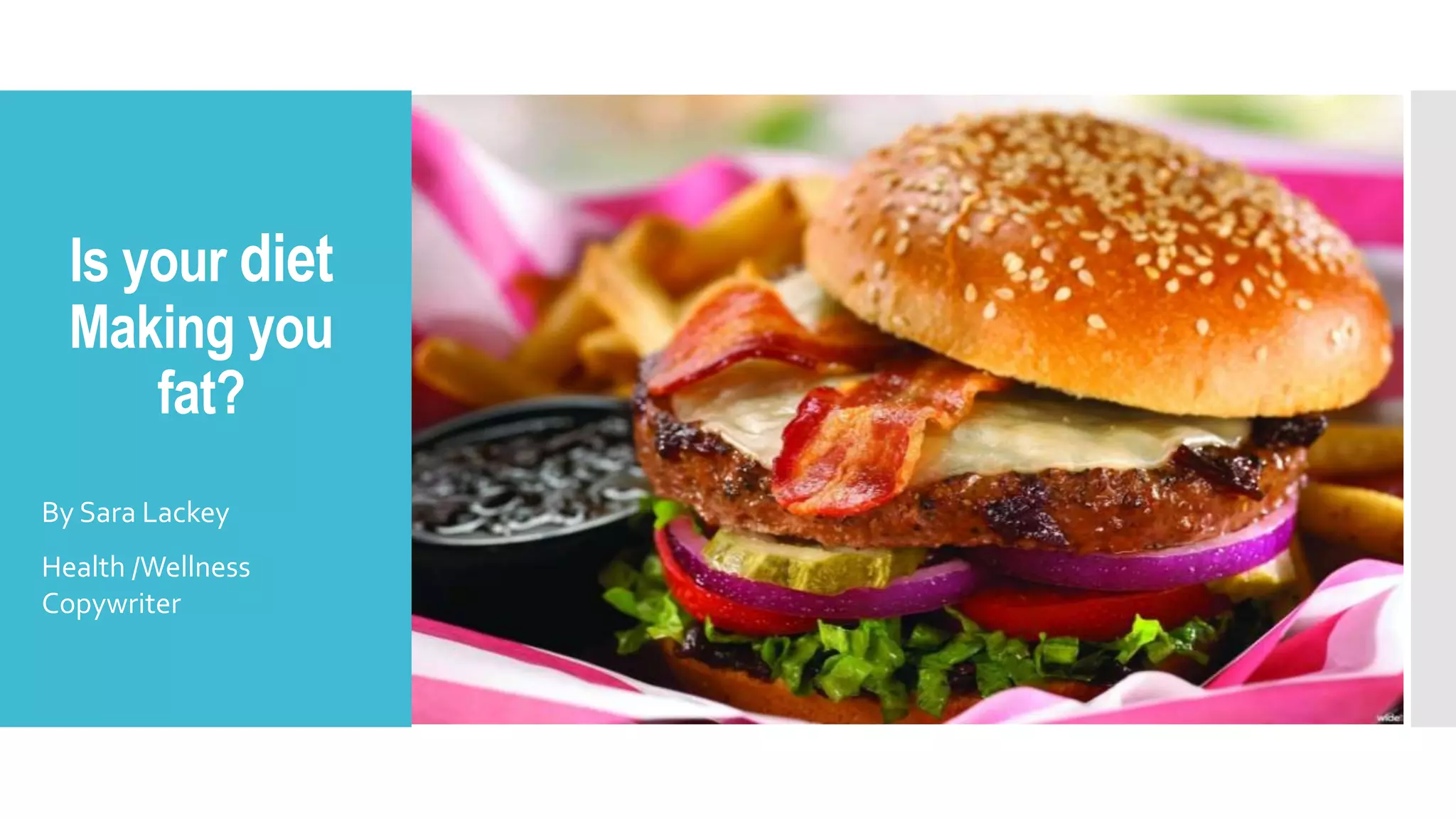
Is your diet
Making you
fat?
By Sara Lackey
Health /Wellness
Copywriter
An Obesity
Epidemic
ď‚– According to a 2017 CDC study, 25% of American adults are
obese. Obesity results in heart disease, stroke, low energy,
high blood pressure, arthritis, diabetes, and other illnesses.
ď‚–
How Healthy is
Your
Healthfood?
Lifestyle changes aren’t always enough.
When you go grocery shopping, it’s impossible to miss the
shelves jammed with foods labeled as “light, fat free, all natural,
low calorie, or sugar free. It must be nutritious right?
It turns out the “health food” sold in stores isn’t so healthy after
all. Most of the claims on the package are just marketing
gimmicks.
No doubt everyone has seen food labels claiming the product is
all natural. It might be all natural but loaded with sugar, salt
and fats.
Look Out for
Additives!
ď‚– Sugar- free, low calorie foods are packed with artificial
sweeteners and fillers. Aspartame, high fructose corn syrup,
soy lecithin, and maltodextrin (MSG) are common additives.
MSG goes by many names so its true identity is hidden.
ď‚– The nutrients are stripped out of the food before all the
chemicals are added.
What else is in
there?
ď‚– Those are only some of the toxic ingredients found in food.
Others include BHT, (additive in rocket fuel) titanium
dioxide, TBHQ (Tertiary Butylhydroquinone) Most of the
time these ingredients are listed on the label.
ď‚– According to Calorie Bee, three commonly used food dyes are
made from petroleum or coal are:
ď‚– Blue 1 "Brilliant blue" is derived from coal tar and is not
digestable by the body, which can lead to green poop. Blue 1
has been linked to ADHD, allergies, and asthma.
ď‚– Blue 2 "Indigotine" is the same dye used to make blue jeans
blue. Blue 2 is a synthetic dye based off the chemical make-up
of the natural dye indigo. It has been linked to ADHD and
food allergies.
ď‚– Green 3 "Fast Green FCF" has been linked to testicular and
bladder cancers and tumors in lab animals and causes
irritation of the gastrointestinal tract. Green 3 is not a
common dye, but it is used frequently in candy.
ď‚–
ď‚–
Follow The Money
Trail
ď‚– Production costs go down when synthetic ingredients are
added because they extend the shelf life. That way product
sales increase and corporate profits rise.
ď‚– Using high quality natural ingredients is great, but expensive
for businesses. Organic products cost more to produce which
means higher prices for customers.
GMO Food
Anyone?
ď‚– Most food companies manufacture food with genetically
engineered crops to resist disease.
“Big Ag companies have a vested interest in GMO seeds, and
the pesticides they use. GMO cotton, soy, sugar beets and corn,
which are manipulated to make sweeteners and fats along with
other additives like high-fructose corn syrup and soy lecithin,
are in ready-made food, snacks, condiments, juice, soda and
cereal.”
ď‚– Reader Supported News, August 2012
It’s NotAll bad
News
ď‚– Have you been gaining weight from eating too much
processed food? Have you been irritable, groggy and unable
to concentrate?
ď‚– Those problems can be reversed by eating more organic food
and taking high quality nutritional supplements.
ď‚– The cheap vitamins and minerals sold in the stores are
generally useless. They are usually artificial or don’t contain
enough nutrients to be effective.
ď‚– Just by doing these few things, your health will improve in no
time.

Food For Thought

  • 1.
    Is your diet Makingyou fat? By Sara Lackey Health /Wellness Copywriter
  • 2.
    An Obesity Epidemic ď‚– Accordingto a 2017 CDC study, 25% of American adults are obese. Obesity results in heart disease, stroke, low energy, high blood pressure, arthritis, diabetes, and other illnesses. ď‚–
  • 3.
    How Healthy is Your Healthfood? Lifestylechanges aren’t always enough. When you go grocery shopping, it’s impossible to miss the shelves jammed with foods labeled as “light, fat free, all natural, low calorie, or sugar free. It must be nutritious right? It turns out the “health food” sold in stores isn’t so healthy after all. Most of the claims on the package are just marketing gimmicks. No doubt everyone has seen food labels claiming the product is all natural. It might be all natural but loaded with sugar, salt and fats.
  • 4.
    Look Out for Additives! ď‚–Sugar- free, low calorie foods are packed with artificial sweeteners and fillers. Aspartame, high fructose corn syrup, soy lecithin, and maltodextrin (MSG) are common additives. MSG goes by many names so its true identity is hidden. ď‚– The nutrients are stripped out of the food before all the chemicals are added.
  • 5.
    What else isin there? ď‚– Those are only some of the toxic ingredients found in food. Others include BHT, (additive in rocket fuel) titanium dioxide, TBHQ (Tertiary Butylhydroquinone) Most of the time these ingredients are listed on the label. ď‚– According to Calorie Bee, three commonly used food dyes are made from petroleum or coal are: ď‚– Blue 1 "Brilliant blue" is derived from coal tar and is not digestable by the body, which can lead to green poop. Blue 1 has been linked to ADHD, allergies, and asthma. ď‚– Blue 2 "Indigotine" is the same dye used to make blue jeans blue. Blue 2 is a synthetic dye based off the chemical make-up of the natural dye indigo. It has been linked to ADHD and food allergies. ď‚– Green 3 "Fast Green FCF" has been linked to testicular and bladder cancers and tumors in lab animals and causes irritation of the gastrointestinal tract. Green 3 is not a common dye, but it is used frequently in candy. ď‚– ď‚–
  • 6.
    Follow The Money Trail ď‚–Production costs go down when synthetic ingredients are added because they extend the shelf life. That way product sales increase and corporate profits rise. ď‚– Using high quality natural ingredients is great, but expensive for businesses. Organic products cost more to produce which means higher prices for customers.
  • 7.
    GMO Food Anyone?  Mostfood companies manufacture food with genetically engineered crops to resist disease. “Big Ag companies have a vested interest in GMO seeds, and the pesticides they use. GMO cotton, soy, sugar beets and corn, which are manipulated to make sweeteners and fats along with other additives like high-fructose corn syrup and soy lecithin, are in ready-made food, snacks, condiments, juice, soda and cereal.”  Reader Supported News, August 2012
  • 8.
    It’s NotAll bad News Have you been gaining weight from eating too much processed food? Have you been irritable, groggy and unable to concentrate?  Those problems can be reversed by eating more organic food and taking high quality nutritional supplements.  The cheap vitamins and minerals sold in the stores are generally useless. They are usually artificial or don’t contain enough nutrients to be effective.  Just by doing these few things, your health will improve in no time.