FOOD ALLERGENS
3
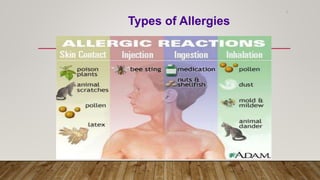
Types of Allergies
4
An adverse reaction is
any abnormal reaction to
a food or food
components and other
ingredients, whether
caused by an allergic or
non allergic reaction.
Allergy
Intolerances
Adverse Food Reaction
5
A Food Allergy (Food Hypersensitivity)
has its basis in an immunologic response
after food consumption.
What is a Food Allergy?
6
•Food allergens, are
substances that initiate
chemical change in the
body producing the
symptoms of an allergic
reaction.
What is an Allergen?
7
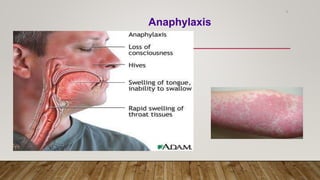
Anaphylaxis is a severe allergic
reaction that can sometimes be
fatal. It occurs after exposure to an
antigen (allergen) to which a
person was previously sensitized.
What is Anaphylaxis?
8
What is Anaphylaxis?
9
Anaphylaxis
10
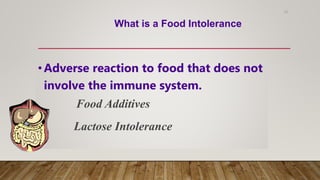
• Adverse reaction to food that does not
involve the immune system.
Lactose Intolerance
Food Additives
What is a Food Intolerance
11
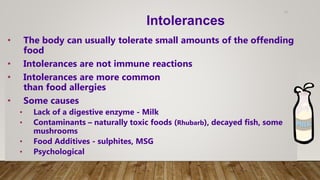
• The body can usually tolerate small amounts of the offending
food
• Intolerances are not immune reactions
• Intolerances are more common
than food allergies
• Some causes
• Lack of a digestive enzyme - Milk
• Contaminants – naturally toxic foods (Rhubarb), decayed fish, some
mushrooms
• Food Additives - sulphites, MSG
• Psychological
Intolerances
13
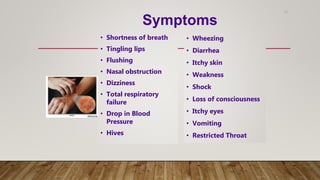
• Shortness of breath
• Tingling lips
• Flushing
• Nasal obstruction
• Dizziness
• Total respiratory
failure
• Drop in Blood
Pressure
• Hives
• Wheezing
• Diarrhea
• Itchy skin
• Weakness
• Shock
• Loss of consciousness
• Itchy eyes
• Vomiting
• Restricted Throat
Symptoms
SYMPTOMS OF FOOD ALLERGIES
•Reaction within minutes to two hours
•How soon and how severe depend on
sensitivity to food, how much was consumed,
other foods consume, and preparation
•May have minor symptoms at first
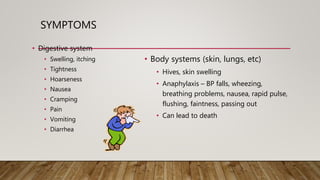
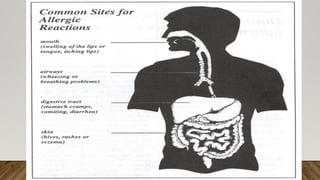
SYMPTOMS
• Digestive system
• Swelling, itching
• Tightness
• Hoarseness
• Nausea
• Cramping
• Pain
• Vomiting
• Diarrhea
• Body systems (skin, lungs, etc)
• Hives, skin swelling
• Anaphylaxis – BP falls, wheezing,
breathing problems, nausea, rapid pulse,
flushing, faintness, passing out
• Can lead to death
SYMPTOMS
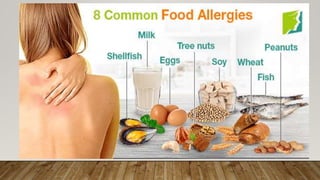
•Severe reactions more common in
peanuts, tree nuts, shellfish, fish, and
eggs
•Also more common in those with
asthma
•Death usually seen in peanuts or tree
HOME REMEDIES
• Ginger is known for its anti-inflammatory,
antioxidant and antibacterial properties and is an
excellent home remedy for treating various
gastrointestinal discomforts like nausea,
vomiting, indigestion and diarrhea. Chew ginger
daily or consume 2 to 3 cups of ginger tea daily
for a few days.
YOGURT
•To overcome stomach pain and diarrhea,
consume 1 cup of yogurt daily. It helps
in maintaining ‘good’ bacteria in the gut
and treats digestive problems.
VITAMIN C RICH FOODS
•help in restraining the buildup of toxins
in the body. Include more fruits and
vegetables that are loaded with vitamin
C like lemons, oranges, broccoli,
grapefruit, kiwi,, strawberries and
tomatoes.
•Castor oil coats your stomach and
eases the gastrointestinal
discomforts related to food allergy.
Mix 1/2 tsp of castor oil in a glass of
water every morning on an empty
stomach.
APPLE CIDER VINEGAR
• has anti-histamine properties and other
medicinal properties, so it is beneficial to fight
various symptoms of food allergies. Add a tsp
of apple cider vinegar to a glass of warm water.
Now, add a tsp of honey and drink it 2-3 times
a day.

Food allergens

  • 1.
  • 3.
  • 4.
    4 An adverse reactionis any abnormal reaction to a food or food components and other ingredients, whether caused by an allergic or non allergic reaction. Allergy Intolerances Adverse Food Reaction
  • 5.
    5 A Food Allergy(Food Hypersensitivity) has its basis in an immunologic response after food consumption. What is a Food Allergy?
  • 6.
    6 •Food allergens, are substancesthat initiate chemical change in the body producing the symptoms of an allergic reaction. What is an Allergen?
  • 7.
    7 Anaphylaxis is asevere allergic reaction that can sometimes be fatal. It occurs after exposure to an antigen (allergen) to which a person was previously sensitized. What is Anaphylaxis?
  • 8.
  • 9.
  • 10.
    10 • Adverse reactionto food that does not involve the immune system. Lactose Intolerance Food Additives What is a Food Intolerance
  • 11.
    11 • The bodycan usually tolerate small amounts of the offending food • Intolerances are not immune reactions • Intolerances are more common than food allergies • Some causes • Lack of a digestive enzyme - Milk • Contaminants – naturally toxic foods (Rhubarb), decayed fish, some mushrooms • Food Additives - sulphites, MSG • Psychological Intolerances
  • 13.
    13 • Shortness ofbreath • Tingling lips • Flushing • Nasal obstruction • Dizziness • Total respiratory failure • Drop in Blood Pressure • Hives • Wheezing • Diarrhea • Itchy skin • Weakness • Shock • Loss of consciousness • Itchy eyes • Vomiting • Restricted Throat Symptoms
  • 14.
    SYMPTOMS OF FOODALLERGIES •Reaction within minutes to two hours •How soon and how severe depend on sensitivity to food, how much was consumed, other foods consume, and preparation •May have minor symptoms at first
  • 15.
    SYMPTOMS • Digestive system •Swelling, itching • Tightness • Hoarseness • Nausea • Cramping • Pain • Vomiting • Diarrhea • Body systems (skin, lungs, etc) • Hives, skin swelling • Anaphylaxis – BP falls, wheezing, breathing problems, nausea, rapid pulse, flushing, faintness, passing out • Can lead to death
  • 17.
    SYMPTOMS •Severe reactions morecommon in peanuts, tree nuts, shellfish, fish, and eggs •Also more common in those with asthma •Death usually seen in peanuts or tree
  • 18.
    HOME REMEDIES • Gingeris known for its anti-inflammatory, antioxidant and antibacterial properties and is an excellent home remedy for treating various gastrointestinal discomforts like nausea, vomiting, indigestion and diarrhea. Chew ginger daily or consume 2 to 3 cups of ginger tea daily for a few days.
  • 19.
    YOGURT •To overcome stomachpain and diarrhea, consume 1 cup of yogurt daily. It helps in maintaining ‘good’ bacteria in the gut and treats digestive problems.
  • 20.
    VITAMIN C RICHFOODS •help in restraining the buildup of toxins in the body. Include more fruits and vegetables that are loaded with vitamin C like lemons, oranges, broccoli, grapefruit, kiwi,, strawberries and tomatoes.
  • 21.
    •Castor oil coatsyour stomach and eases the gastrointestinal discomforts related to food allergy. Mix 1/2 tsp of castor oil in a glass of water every morning on an empty stomach.
  • 22.
    APPLE CIDER VINEGAR •has anti-histamine properties and other medicinal properties, so it is beneficial to fight various symptoms of food allergies. Add a tsp of apple cider vinegar to a glass of warm water. Now, add a tsp of honey and drink it 2-3 times a day.