Tim Lorenz
April 9, 2021
MSc Healthy Ageing
How we assess students' EBMgt attitudes & skills
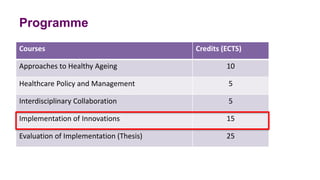
Programme
Courses Credits (ECTS)
Approaches to Healthy Ageing 10
Healthcare Policy and Management 5
Interdisciplinary Collaboration 5
Implementation of Innovations 15
Evaluation of Implementation (Thesis) 25
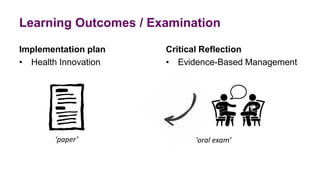
Learning Outcomes / Examination
Implementation plan
• Health Innovation
Critical Reflection
• Evidence-Based Management
‘paper’ ‘oral exam’
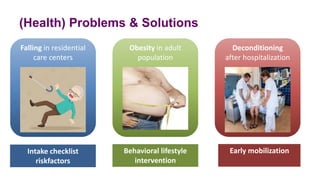
(Health) Problems & Solutions
Falling in residential
care centers
Deconditioning
after hospitalization
Obesity in adult
population
Intake checklist
riskfactors
Behavioral lifestyle
intervention
Early mobilization
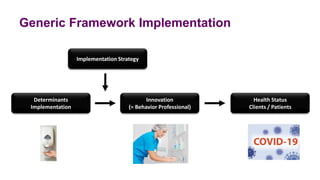
Generic Framework Implementation
Health Status
Clients / Patients
Innovation
(= Behavior Professional)
Determinants
Implementation
Implementation Strategy
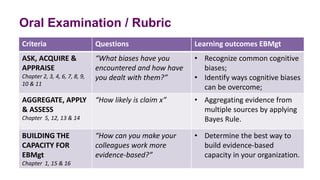
Oral Examination / Rubric
Criteria Questions Learning outcomes EBMgt
ASK, ACQUIRE &
APPRAISE
Chapter 2, 3, 4, 6, 7, 8, 9,
10 & 11
“What biases have you
encountered and how have
you dealt with them?”
• Recognize common cognitive
biases;
• Identify ways cognitive biases
can be overcome;
AGGREGATE, APPLY
& ASSESS
Chapter 5, 12, 13 & 14
“How likely is claim x” • Aggregating evidence from
multiple sources by applying
Bayes Rule.
BUILDING THE
CAPACITY FOR
EBMgt
Chapter 1, 15 & 16
“How can you make your
colleagues work more
evidence-based?”
• Determine the best way to
build evidence-based
capacity in your organization.
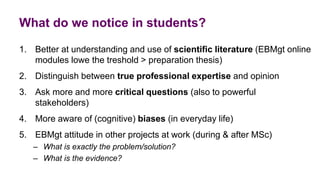
What do we notice in students?
1. Better at understanding and use of scientific literature (EBMgt online
modules lowe the treshold > preparation thesis)
2. Distinguish between true professional expertise and opinion
3. Ask more and more critical questions (also to powerful
stakeholders)
4. More aware of (cognitive) biases (in everyday life)
5. EBMgt attitude in other projects at work (during & after MSc)
– What is exactly the problem/solution?
– What is the evidence?
Fontys - EBMgt Master Healthy Ageing

Fontys - EBMgt Master Healthy Ageing

  • 1.
    Tim Lorenz April 9,2021 MSc Healthy Ageing How we assess students' EBMgt attitudes & skills
  • 2.
    Programme Courses Credits (ECTS) Approachesto Healthy Ageing 10 Healthcare Policy and Management 5 Interdisciplinary Collaboration 5 Implementation of Innovations 15 Evaluation of Implementation (Thesis) 25
  • 3.
    Learning Outcomes /Examination Implementation plan • Health Innovation Critical Reflection • Evidence-Based Management ‘paper’ ‘oral exam’
  • 4.
    (Health) Problems &Solutions Falling in residential care centers Deconditioning after hospitalization Obesity in adult population Intake checklist riskfactors Behavioral lifestyle intervention Early mobilization
  • 5.
    Generic Framework Implementation HealthStatus Clients / Patients Innovation (= Behavior Professional) Determinants Implementation Implementation Strategy
  • 6.
    Oral Examination /Rubric Criteria Questions Learning outcomes EBMgt ASK, ACQUIRE & APPRAISE Chapter 2, 3, 4, 6, 7, 8, 9, 10 & 11 “What biases have you encountered and how have you dealt with them?” • Recognize common cognitive biases; • Identify ways cognitive biases can be overcome; AGGREGATE, APPLY & ASSESS Chapter 5, 12, 13 & 14 “How likely is claim x” • Aggregating evidence from multiple sources by applying Bayes Rule. BUILDING THE CAPACITY FOR EBMgt Chapter 1, 15 & 16 “How can you make your colleagues work more evidence-based?” • Determine the best way to build evidence-based capacity in your organization.
  • 7.
    What do wenotice in students? 1. Better at understanding and use of scientific literature (EBMgt online modules lowe the treshold > preparation thesis) 2. Distinguish between true professional expertise and opinion 3. Ask more and more critical questions (also to powerful stakeholders) 4. More aware of (cognitive) biases (in everyday life) 5. EBMgt attitude in other projects at work (during & after MSc) – What is exactly the problem/solution? – What is the evidence?