EVIDENCE FOLDER
TEACHER: Alejandra Aguilar
BIS 12
Diana Elizabeth Chávez Hernández
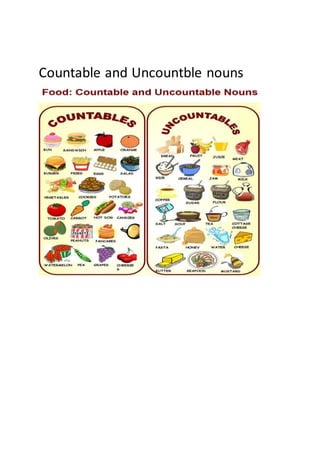
Countable and Uncountble nouns
A, an, some, any
We usea A with use countable nouns:
Examples:
A pear, a peach, a tomato, a sofa.
We use AN when te words star with a vowel.
Examples:
An Orange, an umbrella.
We use SOME with countable and uncountable nouns. (with
specifyng the exact number) in affirmative sentences:
Examples:
Some potatoes, some sugar, some books, some cds.
We use ANY with countable and uncontable nouns in negative and
interrogative sentences:
Examples:
Any coffe, any chair, any furniture.
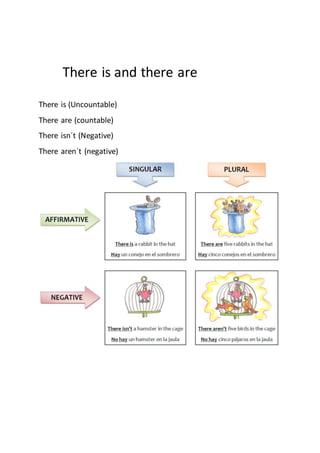
There is and there are
There is (Uncountable)
There are (countable)
There isn´t (Negative)
There aren´t (negative)
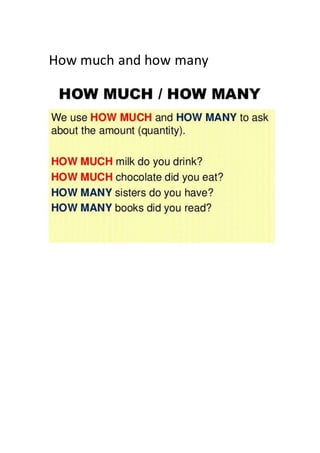
How much and how many
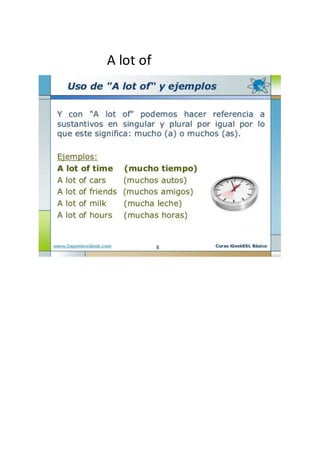
A lot of
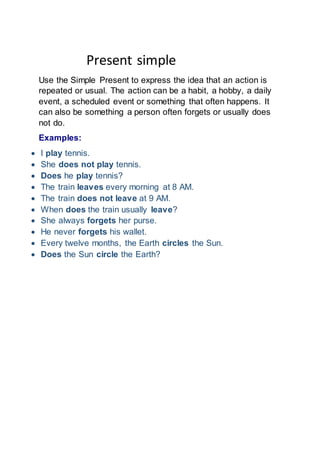
Present simple
Use the Simple Present to express the idea that an action is
repeated or usual. The action can be a habit, a hobby, a daily
event, a scheduled event or something that often happens. It
can also be something a person often forgets or usually does
not do.
Examples:
 I play tennis.
 She does not play tennis.
 Does he play tennis?
 The train leaves every morning at 8 AM.
 The train does not leave at 9 AM.
 When does the train usually leave?
 She always forgets her purse.
 He never forgets his wallet.
 Every twelve months, the Earth circles the Sun.
 Does the Sun circle the Earth?
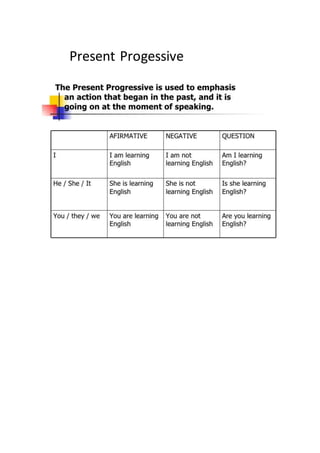
Present Progessive
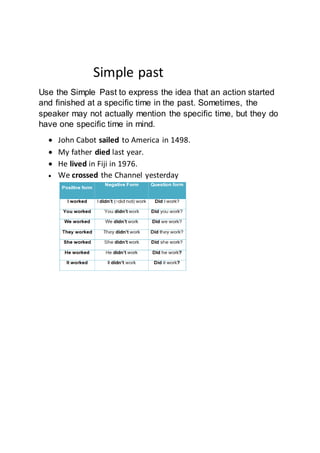
Simple past
Use the Simple Past to express the idea that an action started
and finished at a specific time in the past. Sometimes, the
speaker may not actually mention the specific time, but they do
have one specific time in mind.
 John Cabot sailed to America in 1498.
 My father died last year.
 He lived in Fiji in 1976.
 We crossed the Channel yesterday
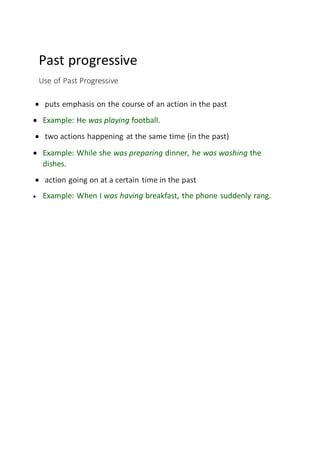
Past progressive
Use of Past Progressive
 puts emphasis on the course of an action in the past
 Example: He was playing football.
 two actions happening at the same time (in the past)
 Example: While she was preparing dinner, he was washing the
dishes.
 action going on at a certain time in the past
 Example: When I was having breakfast, the phone suddenly rang.
Folder Evidence
Folder Evidence
Folder Evidence

Folder Evidence

  • 1.
    EVIDENCE FOLDER TEACHER: AlejandraAguilar BIS 12 Diana Elizabeth Chávez Hernández
  • 2.
  • 3.
    A, an, some,any We usea A with use countable nouns: Examples: A pear, a peach, a tomato, a sofa. We use AN when te words star with a vowel. Examples: An Orange, an umbrella. We use SOME with countable and uncountable nouns. (with specifyng the exact number) in affirmative sentences: Examples: Some potatoes, some sugar, some books, some cds. We use ANY with countable and uncontable nouns in negative and interrogative sentences: Examples: Any coffe, any chair, any furniture.
  • 4.
    There is andthere are There is (Uncountable) There are (countable) There isn´t (Negative) There aren´t (negative)
  • 5.
    How much andhow many
  • 6.
  • 7.
    Present simple Use theSimple Present to express the idea that an action is repeated or usual. The action can be a habit, a hobby, a daily event, a scheduled event or something that often happens. It can also be something a person often forgets or usually does not do. Examples:  I play tennis.  She does not play tennis.  Does he play tennis?  The train leaves every morning at 8 AM.  The train does not leave at 9 AM.  When does the train usually leave?  She always forgets her purse.  He never forgets his wallet.  Every twelve months, the Earth circles the Sun.  Does the Sun circle the Earth?
  • 8.
  • 9.
    Simple past Use theSimple Past to express the idea that an action started and finished at a specific time in the past. Sometimes, the speaker may not actually mention the specific time, but they do have one specific time in mind.  John Cabot sailed to America in 1498.  My father died last year.  He lived in Fiji in 1976.  We crossed the Channel yesterday
  • 10.
    Past progressive Use ofPast Progressive  puts emphasis on the course of an action in the past  Example: He was playing football.  two actions happening at the same time (in the past)  Example: While she was preparing dinner, he was washing the dishes.  action going on at a certain time in the past  Example: When I was having breakfast, the phone suddenly rang.