LECTURER : DR JOAN
PRESENTER: BYAMUKAMA ALEX
MAINTENANCE FLUID
Sick patient with
Reduce intake
Increase output
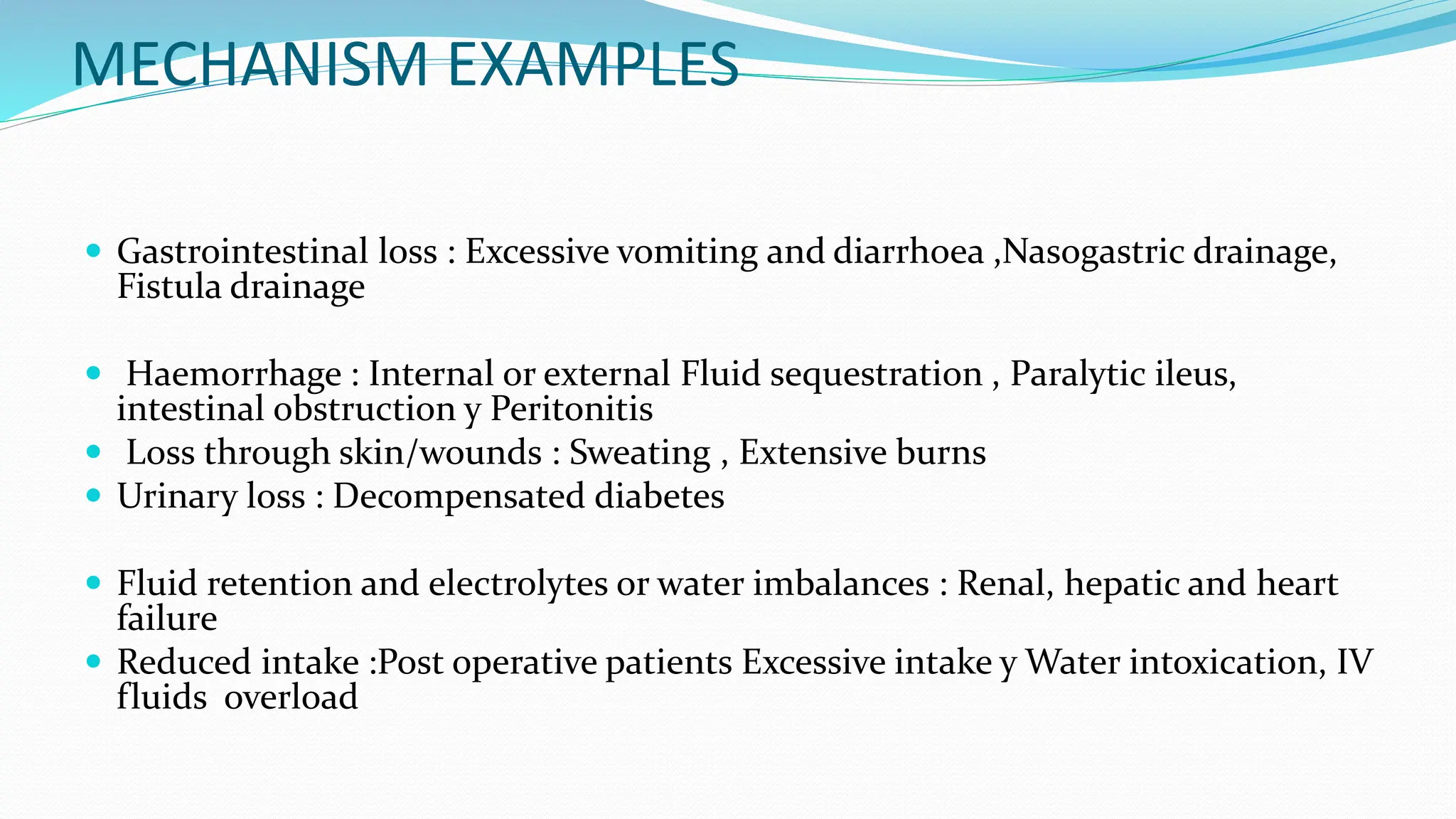
MECHANISM EXAMPLES
 Gastrointestinal loss : Excessive vomiting and diarrhoea ,Nasogastric drainage,
Fistula drainage
 Haemorrhage : Internal or external Fluid sequestration , Paralytic ileus,
intestinal obstruction y Peritonitis
 Loss through skin/wounds : Sweating , Extensive burns
 Urinary loss : Decompensated diabetes
 Fluid retention and electrolytes or water imbalances : Renal, hepatic and heart
failure
 Reduced intake :Post operative patients Excessive intake y Water intoxication, IV
fluids overload
Daily necessities: 1500ml – 2000/m2BSA/24hrs
How to calculate
Severe bacterial infection: 1500 - 2000ml/m2/24hrs
Heart failure: 800ml/m2/24hrs
Respiratory diseases: 1000ml/m2/24hrs
Nervous infection: 1000ml/m2/24hrs
Vaso-occlusive crises of sickle cell disease:
2000ml/m2 /24hrs
Poisoning: 2000ml/m2 /24hrs
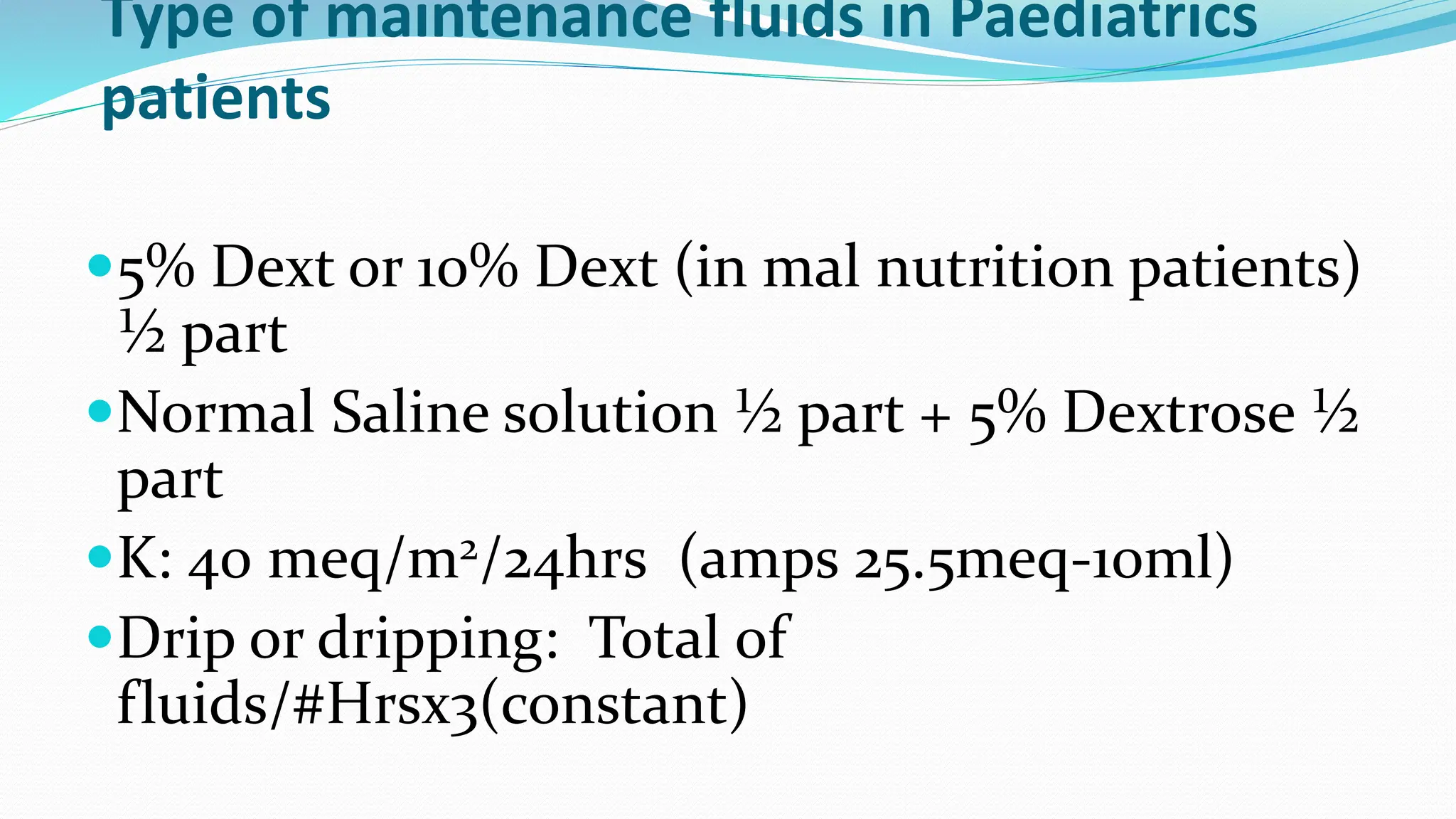
Type of maintenance fluids in Paediatrics
patients
5% Dext or 10% Dext (in mal nutrition patients)
½ part
Normal Saline solution ½ part + 5% Dextrose ½
part
K: 40 meq/m2/24hrs (amps 25.5meq-10ml)
Drip or dripping: Total of
fluids/#Hrsx3(constant)
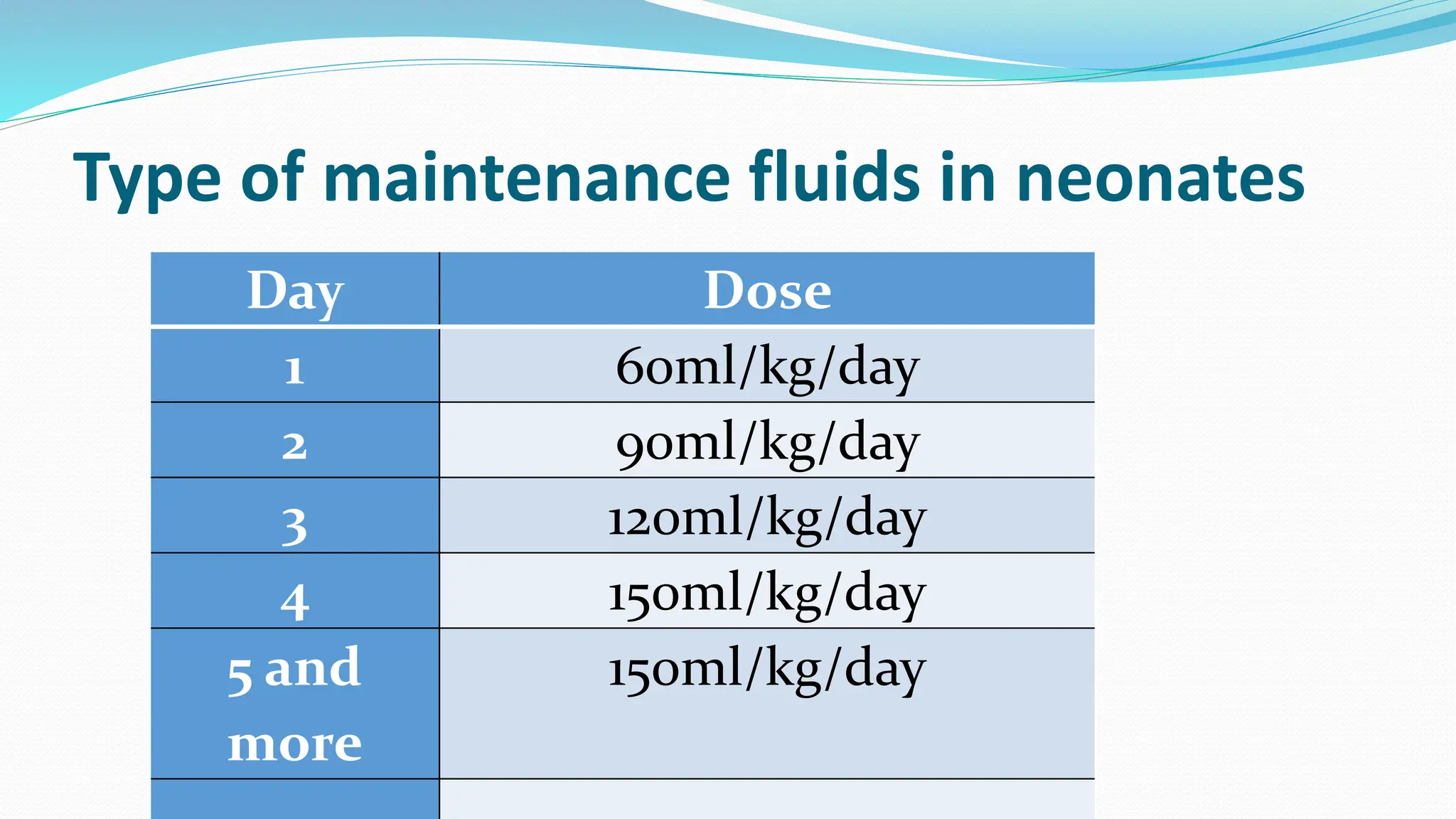
Type of maintenance fluids in neonates
Day Dose
1 60ml/kg/day
2 90ml/kg/day
3 120ml/kg/day
4 150ml/kg/day
5 and
more
150ml/kg/day
Type of maintenance fluids in neonates
10% Dext
Na: 3meq/kg/day after 48 hrs (amps 34meq-
10ml) and (75.5meq-20ml)
K: 3 meq/kg/day after 72 hrs (25.6meq-10ml)
Ca: 200mg/kg/day after 24 hrs (amp 100mg-iml)
Mg: 50mg/kg/day after 24 hrs (amp 1g-10ml)
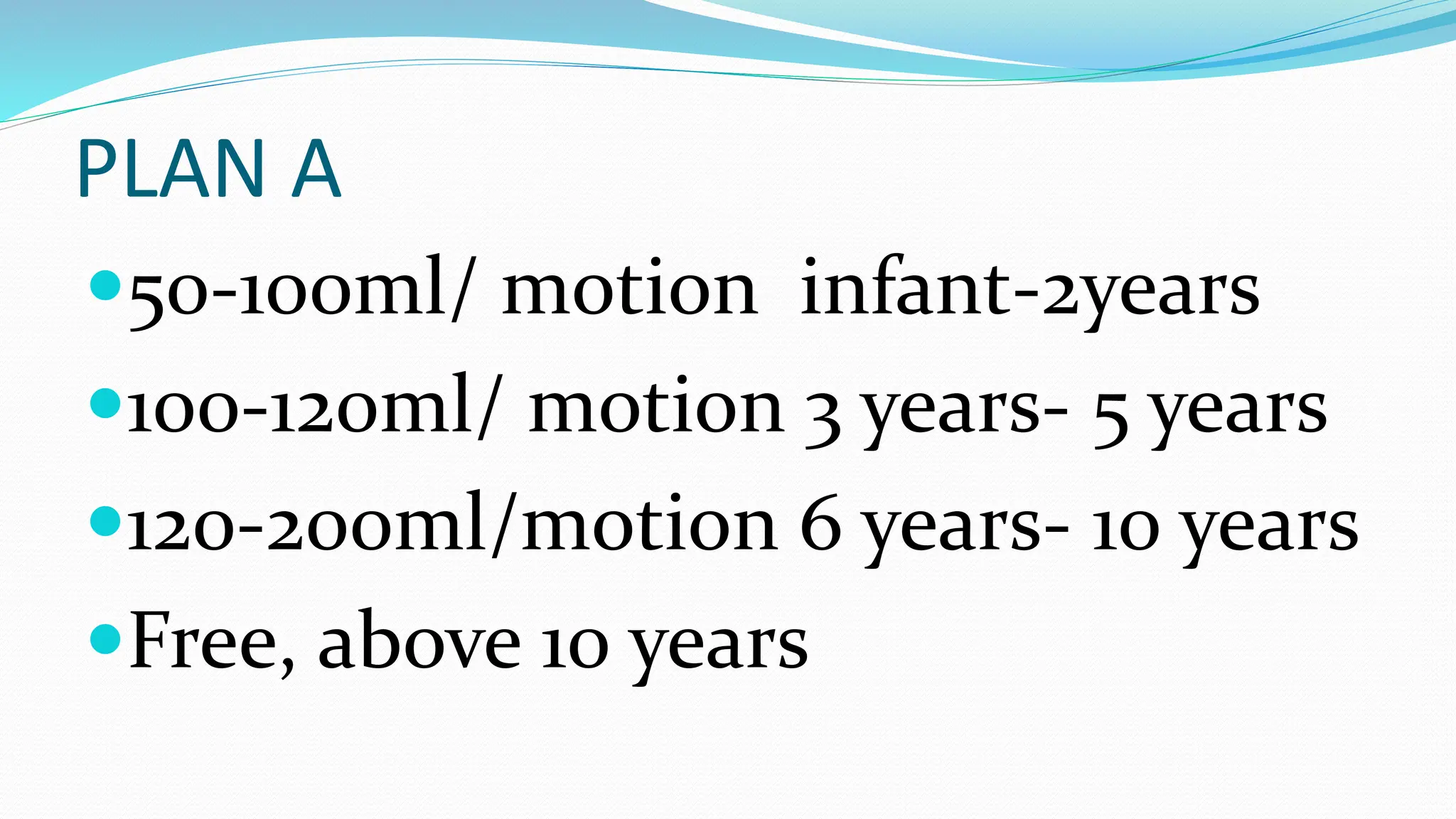
PLAN A
50-100ml/ motion infant-2years
100-120ml/ motion 3 years- 5 years
120-200ml/motion 6 years- 10 years
Free, above 10 years
Plan B
75-100ML/Kg/ 6 or 4 hours
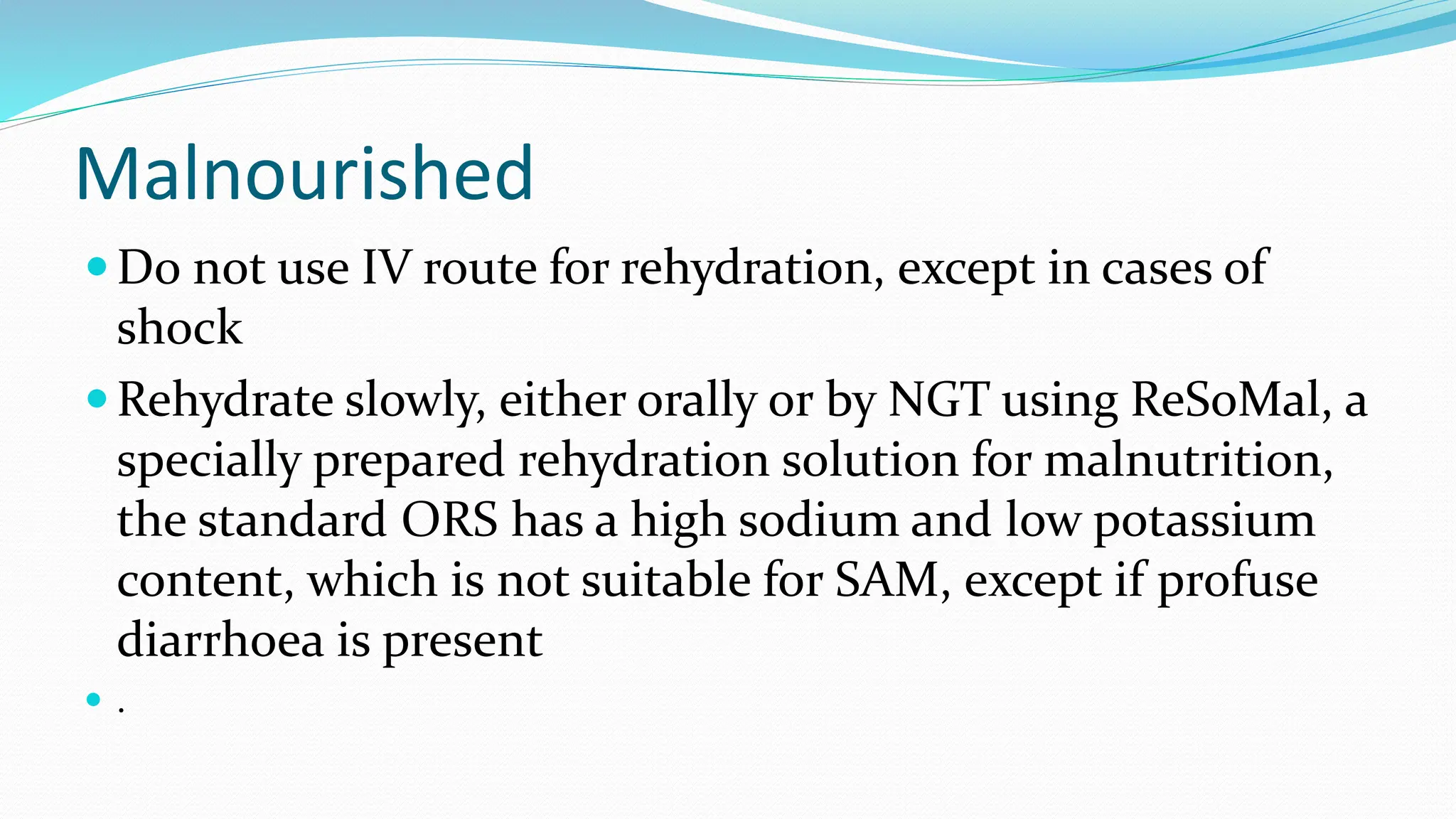
Malnourished
Do not use IV route for rehydration, except in cases of
shock
Rehydrate slowly, either orally or by NGT using ReSoMal, a
specially prepared rehydration solution for malnutrition,
the standard ORS has a high sodium and low potassium
content, which is not suitable for SAM, except if profuse
diarrhoea is present
 .
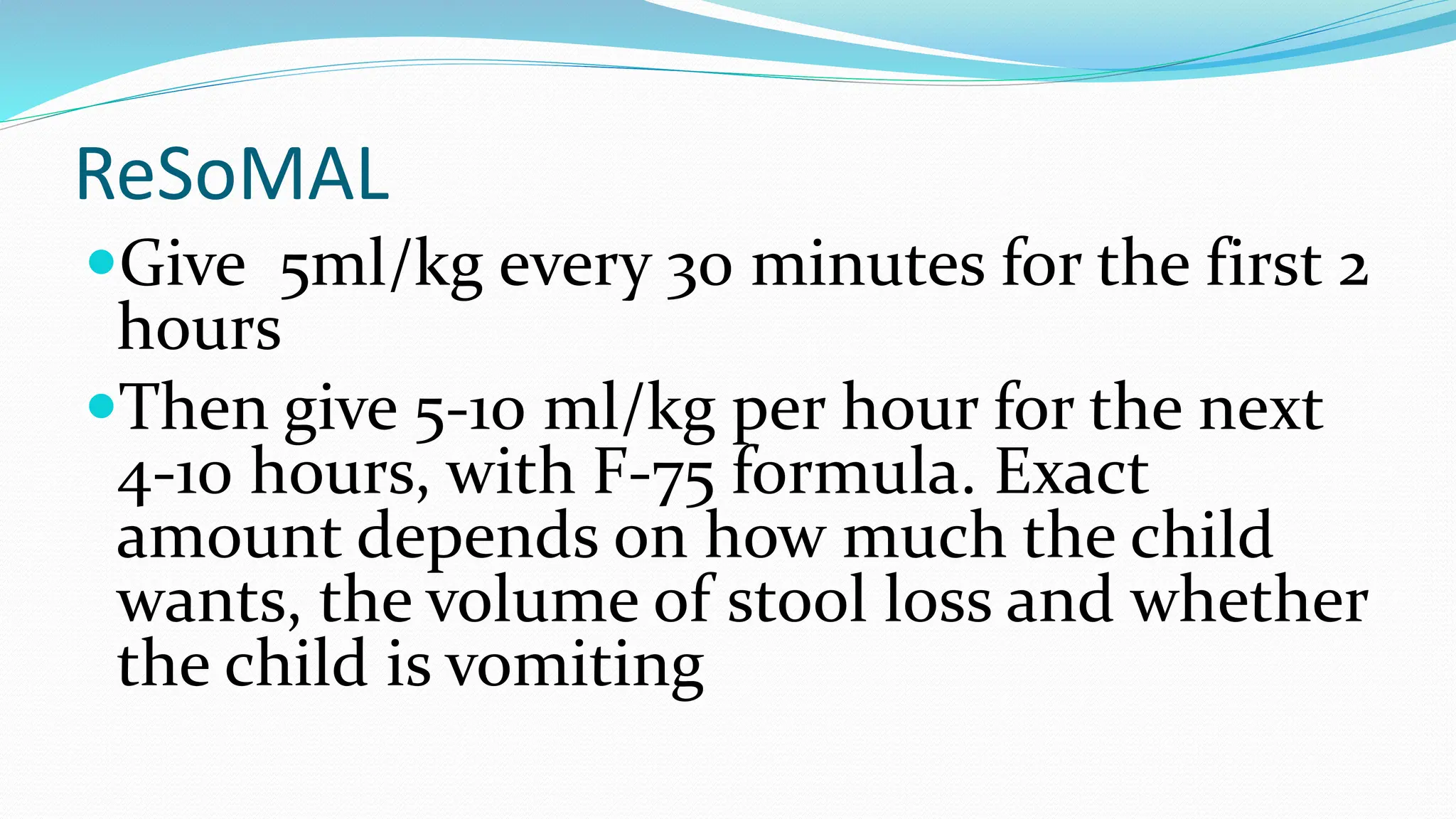
ReSoMAL
Give 5ml/kg every 30 minutes for the first 2
hours
Then give 5-10 ml/kg per hour for the next
4-10 hours, with F-75 formula. Exact
amount depends on how much the child
wants, the volume of stool loss and whether
the child is vomiting
REFERENCES
UGANDA CLINICAL GUIDELINES2020
IMAM 2020
NATIONAL GUIDELINES FOR MANAGEMENT OF COMMON
CONDITIONS
END
 THANKS FOR ATTENDING , LISTENING AND PARTICIPATING
WELCOME TO THE WORLD OF
DISCOVERY

FLUID IN PAEDIATRICS PATIENTS333kk3.pptx

  • 1.
    LECTURER : DRJOAN PRESENTER: BYAMUKAMA ALEX
  • 2.
    MAINTENANCE FLUID Sick patientwith Reduce intake Increase output
  • 3.
    MECHANISM EXAMPLES  Gastrointestinalloss : Excessive vomiting and diarrhoea ,Nasogastric drainage, Fistula drainage  Haemorrhage : Internal or external Fluid sequestration , Paralytic ileus, intestinal obstruction y Peritonitis  Loss through skin/wounds : Sweating , Extensive burns  Urinary loss : Decompensated diabetes  Fluid retention and electrolytes or water imbalances : Renal, hepatic and heart failure  Reduced intake :Post operative patients Excessive intake y Water intoxication, IV fluids overload
  • 4.
    Daily necessities: 1500ml– 2000/m2BSA/24hrs
  • 5.
    How to calculate Severebacterial infection: 1500 - 2000ml/m2/24hrs Heart failure: 800ml/m2/24hrs Respiratory diseases: 1000ml/m2/24hrs Nervous infection: 1000ml/m2/24hrs Vaso-occlusive crises of sickle cell disease: 2000ml/m2 /24hrs Poisoning: 2000ml/m2 /24hrs
  • 6.
    Type of maintenancefluids in Paediatrics patients 5% Dext or 10% Dext (in mal nutrition patients) ½ part Normal Saline solution ½ part + 5% Dextrose ½ part K: 40 meq/m2/24hrs (amps 25.5meq-10ml) Drip or dripping: Total of fluids/#Hrsx3(constant)
  • 7.
    Type of maintenancefluids in neonates Day Dose 1 60ml/kg/day 2 90ml/kg/day 3 120ml/kg/day 4 150ml/kg/day 5 and more 150ml/kg/day
  • 8.
    Type of maintenancefluids in neonates 10% Dext Na: 3meq/kg/day after 48 hrs (amps 34meq- 10ml) and (75.5meq-20ml) K: 3 meq/kg/day after 72 hrs (25.6meq-10ml) Ca: 200mg/kg/day after 24 hrs (amp 100mg-iml) Mg: 50mg/kg/day after 24 hrs (amp 1g-10ml)
  • 9.
    PLAN A 50-100ml/ motioninfant-2years 100-120ml/ motion 3 years- 5 years 120-200ml/motion 6 years- 10 years Free, above 10 years
  • 10.
  • 11.
    Malnourished Do not useIV route for rehydration, except in cases of shock Rehydrate slowly, either orally or by NGT using ReSoMal, a specially prepared rehydration solution for malnutrition, the standard ORS has a high sodium and low potassium content, which is not suitable for SAM, except if profuse diarrhoea is present  .
  • 12.
    ReSoMAL Give 5ml/kg every30 minutes for the first 2 hours Then give 5-10 ml/kg per hour for the next 4-10 hours, with F-75 formula. Exact amount depends on how much the child wants, the volume of stool loss and whether the child is vomiting
  • 13.
    REFERENCES UGANDA CLINICAL GUIDELINES2020 IMAM2020 NATIONAL GUIDELINES FOR MANAGEMENT OF COMMON CONDITIONS
  • 14.
    END  THANKS FORATTENDING , LISTENING AND PARTICIPATING WELCOME TO THE WORLD OF DISCOVERY