Bower (2005)
when faculty provided formative
feedback to the student using
automated assessment, test scores
increased by 20%
Online assessment applications
have generally been developed with clear
criteria outlining the value of increased
management of the grading process to
facilitate the feedback and timeliness of
communication from faculty to student
(Lumsden, et al., 2010;
Sadler, 2010; Wells, 2006)
(Alden, 2011; Brewer, 2004).
The move toward an increase in online
higher education had prompted the need
to effectively communicate with students
and assess their performance in new and
innovated ways
Ferguson and Tryjankowski (2009)
and Bower (2005)
providing learners with feedback in a non-
preferred method, such as text-based
summative comments, annotated
assignments, or direct communication,
significantly hindered their academic
performance
Bouck (2006)
the amount of feedback and the
timeliness of assessment are factors that
significantly affect individual student
performance and
the personal satisfaction of learners.
The traditional grading process, as
dictated by assignment submissions and
individual instructor evaluation without
set criteria, often results in faculty
boredom and leads to large variations in
student feedback along with fluctuations
in grade results.
(Anglin, et al., 2008)
Potential use of online
marking and formative
feedback tools to increase
academic performance
through” m-learning” as
platform learning.
Traditional grading delay feedback low academic performance.
Online grading rapid feedback increase academic performance.
Research questions
How can online
marking
decrease the
time on task for
grading
assignments?
How can online
marking increase
the depth of
feedback on the
grading of
assignments?
Methodology
(Quantitative)
experimental design
sample
measurements
Students
30 per
group
Teachers
4
Control
group
(traditional
grading)
treatment
group
(online
grading)
They have
to be
trained on
online
marking
Time-on-
Task
measure
Brooke’s
SUS
instruments
self-
reporting
instruments
Survey
&interview All data organize through
statistical processes.

Flow chart- preparing for PhD proposal

  • 1.
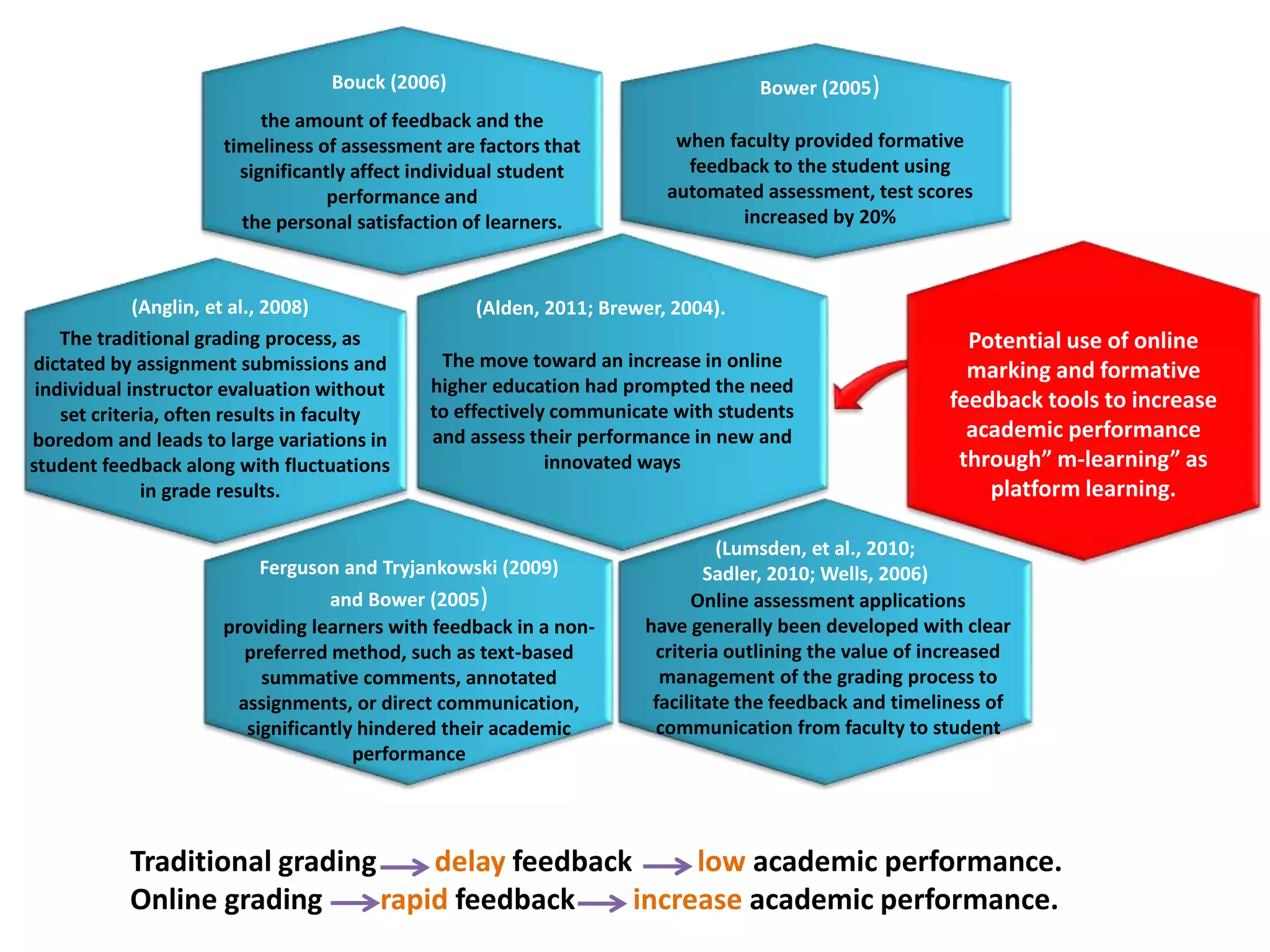
    Bower (2005) when facultyprovided formative feedback to the student using automated assessment, test scores increased by 20% Online assessment applications have generally been developed with clear criteria outlining the value of increased management of the grading process to facilitate the feedback and timeliness of communication from faculty to student (Lumsden, et al., 2010; Sadler, 2010; Wells, 2006) (Alden, 2011; Brewer, 2004). The move toward an increase in online higher education had prompted the need to effectively communicate with students and assess their performance in new and innovated ways Ferguson and Tryjankowski (2009) and Bower (2005) providing learners with feedback in a non- preferred method, such as text-based summative comments, annotated assignments, or direct communication, significantly hindered their academic performance Bouck (2006) the amount of feedback and the timeliness of assessment are factors that significantly affect individual student performance and the personal satisfaction of learners. The traditional grading process, as dictated by assignment submissions and individual instructor evaluation without set criteria, often results in faculty boredom and leads to large variations in student feedback along with fluctuations in grade results. (Anglin, et al., 2008) Potential use of online marking and formative feedback tools to increase academic performance through” m-learning” as platform learning. Traditional grading delay feedback low academic performance. Online grading rapid feedback increase academic performance.
  • 2.
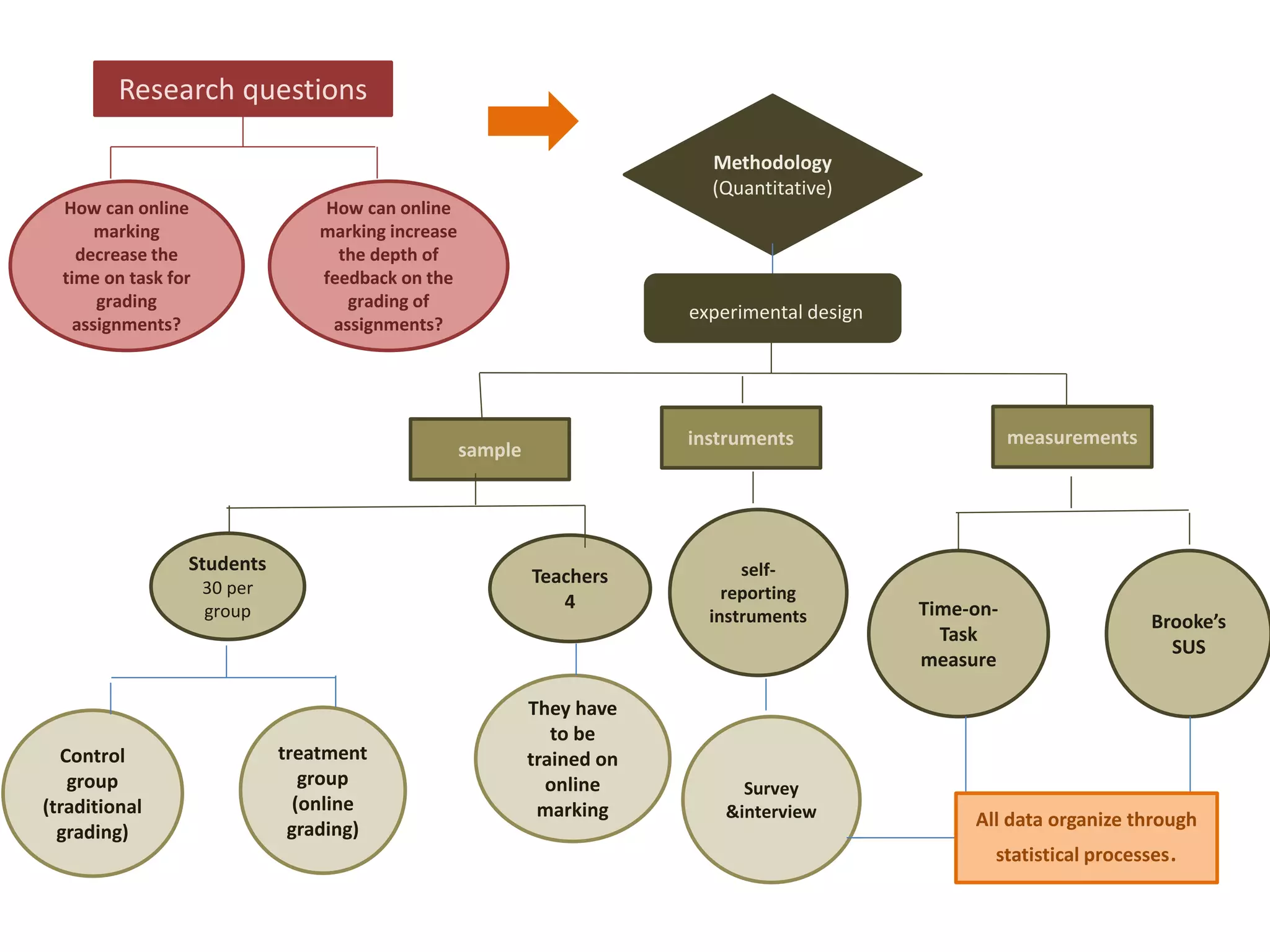
    Research questions How canonline marking decrease the time on task for grading assignments? How can online marking increase the depth of feedback on the grading of assignments? Methodology (Quantitative) experimental design sample measurements Students 30 per group Teachers 4 Control group (traditional grading) treatment group (online grading) They have to be trained on online marking Time-on- Task measure Brooke’s SUS instruments self- reporting instruments Survey &interview All data organize through statistical processes.